Best AI App Builders for Turning Your Small Business Into a Digital Powerhouse
Updated on
Published on

You’ve got big ambitions for your small business, but your budget might not always match. It can feel like you’re playing a different game than the big companies. The great news is that 2025 is the year this all changes. With the rise of AI-powered tools, creating a custom app, launching effective marketing campaigns, and building a beautiful website are all within your reach.
This guide will walk you through the best AI app builders that are leveling the playing field. These tools help you build a powerful digital foundation for your business, combining the impact of a custom app, a professional web design, and smart marketing. You’ll see how you can turn your small business into a digital powerhouse, without needing a huge team or a massive budget.
TL;DR
- AI app builders empower small businesses to create custom applications, enhancing customer experience, brand presence, and audience reach.
- Investing in these tools can yield significant returns, such as a 40% increase in foot traffic for retail shops.
- Features to consider include ease of use, built-in marketing tools, and mobile-first design capabilities.
- Successful businesses have automated processes that saved hours of work and improved customer loyalty through custom apps.
- Launch strategies and consistent promotion are key to making your app a success in today's competitive market.
The Digital Powerhouse Framework
So, what does it mean to be a "digital powerhouse"? It’s a business that has mastered three key areas to create a smooth and engaging customer journey.
- Customer Experience: This is where custom apps shine. An app offers a direct, convenient way for customers to interact with your business, whether it’s booking appointments, tracking orders, or accessing exclusive content.
- Brand Presence: A stunning web design creates a strong first impression and builds trust. Your website is your digital storefront, and it needs to reflect the quality of your business.
- Audience Reach: Smart marketing helps you connect with new customers and keep existing ones coming back. This includes everything from email campaigns to social media engagement.
In the past, managing these pillars required separate tools and teams. Now, an AI app builder no code solution brings them all together seamlessly. For small businesses, the return on investment is significant, going digital can drive increased sales, improve customer loyalty, and streamline operations.
Why Small Businesses Need Custom Apps (Not Just Websites)
A great website is essential, but a custom app takes your business to the next level. While a website is great for attracting new customers, an app is perfect for serving your existing ones and building long-term loyalty.
Apps solve real business problems and create new opportunities to drive revenue.
Customer Portals:
Reduce the time you spend on support emails by giving clients a place to find answers and manage their accounts.
Booking Systems:
Let customers schedule appointments 24/7, filling your calendar even when you’re not working.
Inventory Trackers:
Avoid running out of popular items with a tool that helps you manage stock levels.
Loyalty Programs:
Encourage repeat business with a rewards program that keeps customers engaged.
From a marketing perspective, an app is a direct line to your most valuable customers. It lives on their phone, keeping your brand top-of-mind. While a responsive website is the baseline today, an interactive app is what sets you apart from the competition.
Evaluation Criteria - What to Look For
Ready to build your app but not sure where to start? When choosing an AI app builder, here are a few things to consider to find the right fit for your business. Think about how easy it is to use, what features are included, and whether it aligns with your branding and budget. A great app builder will not only help you create a functional app, but also give you the tools to grow your business and improve your AI Visibility.
- Ease of Use: You’re busy running your business, so you need a tool that’s intuitive and easy to learn.
- Built-in Features: Look for a platform that includes the business tools you need, like booking systems or e-commerce capabilities.
- Marketing Tools: The ability to connect with your marketing tools, like email and CRM, is crucial for growth.
- Web Design: You want a builder that offers beautiful designs and the flexibility to customize them.
- Pricing: Find a platform with pricing that can scale with you as your business grows.
- Support: Good customer support and a strong community can be a lifesaver when you have questions.
- Time to Launch: The best tools let you get your app live in days, not months.
The Top AI App Builders for Small Business
Here are some of the best platforms that can help you turn your small business into a digital force.
Base44
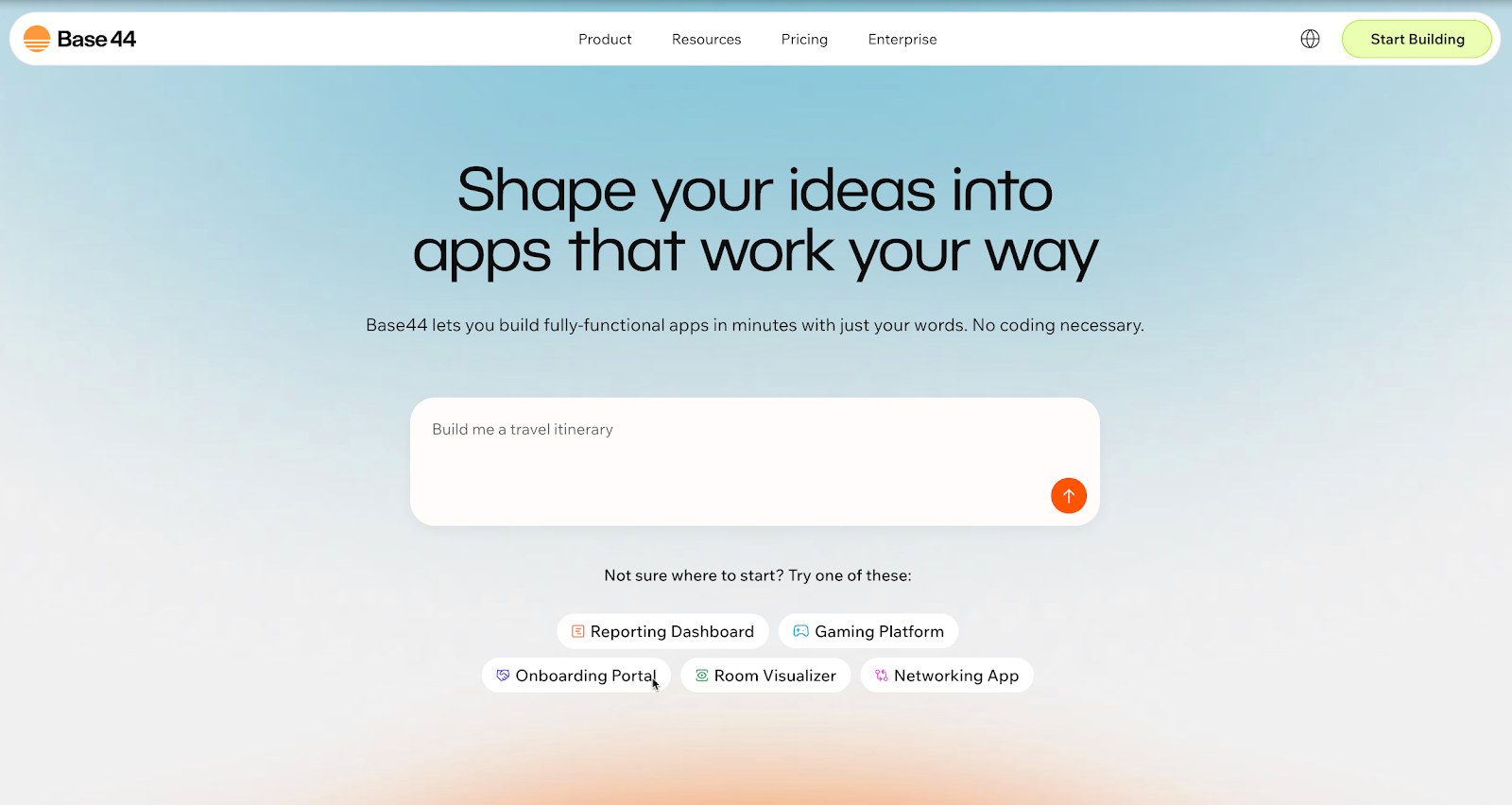
Base44 is a conversational AI platform that builds complete, functional apps from simple text descriptions. It’s designed for anyone who wants to create custom tools quickly, without touching a single line of code.
Best for: Rapidly creating custom business tools and internal applications.
Standout Features: The natural language interface is the star of the show, you just describe what you want, and Base44 builds it. It automatically handles the backend, including user authentication, databases, and hosting. It also has built-in integrations for email, SMS, and other APIs, and your app is deployed instantly.
Marketing Integration: You can create custom marketing workflows and analyze user behavior directly within the platform.
Web Design Capabilities: Apps are responsive by default and use modern UI components that you can style to match your brand.
Use Case Example: A local plumbing company could use Base44 to create a customer portal. Clients could log in to book appointments, view their service history, and get automated reminders, all from a custom app.
Pros: It’s the fastest way to go from idea to launch, requires no technical background, and allows you to refine your app through simple conversation.
Cons: It’s best suited for standard business applications rather than highly specialized or graphically intense systems.
Glide
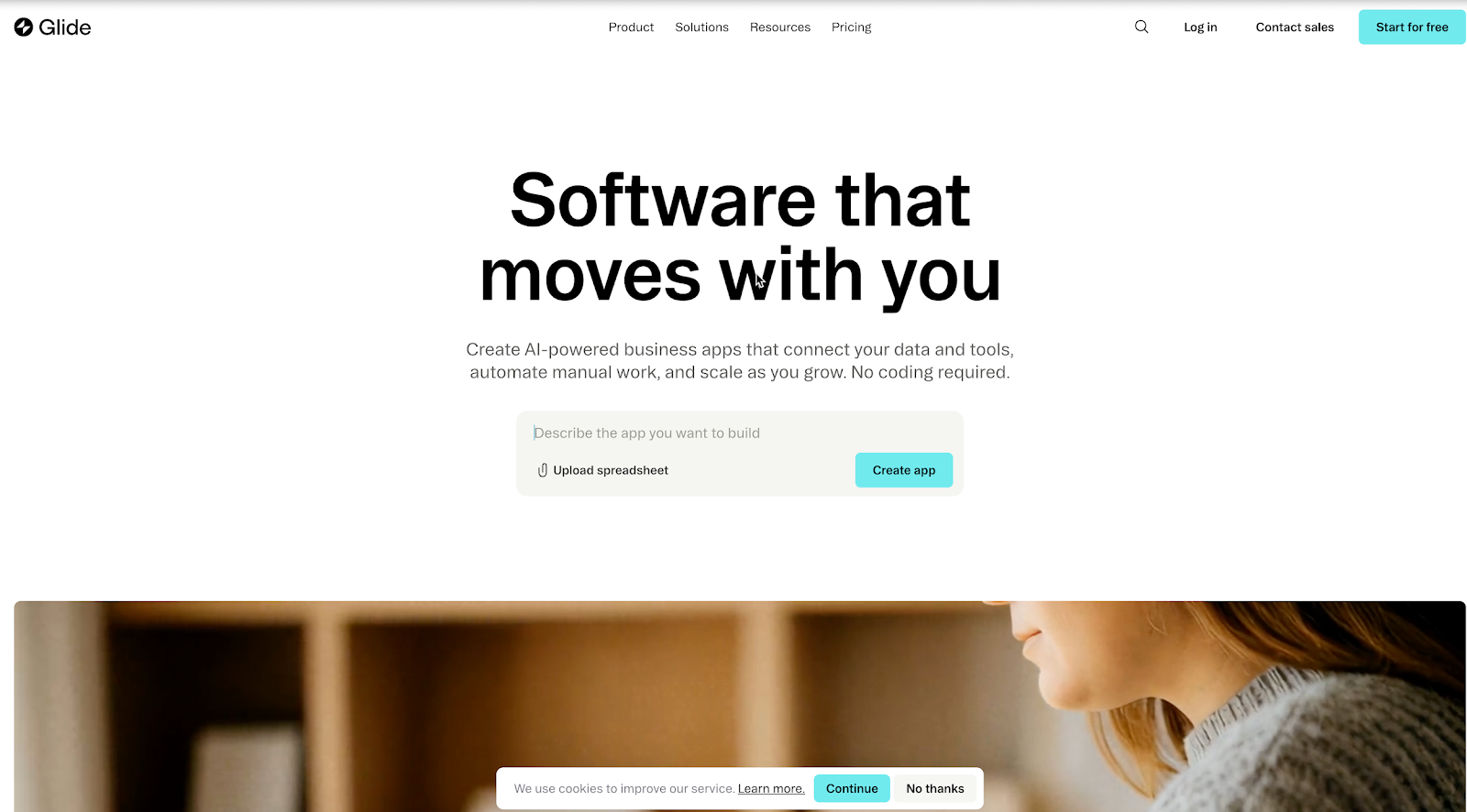
Glide is brilliant for turning data you already have in a spreadsheet into a beautiful, functional app. If you can use Google Sheets or Excel, you can build an app with Glide.
Best for: Creating data-driven apps like directories, inventory trackers, and simple client portals.
Standout Features: The direct integration with Google Sheets is seamless. Any change you make in the spreadsheet instantly updates in the app. Glide offers a library of templates to get you started quickly, and its AI features can help you generate layouts and content.
Marketing Integration: You can collect user information that syncs back to your spreadsheet, which you can then connect to your email marketing tools.
Web Design Capabilities: Glide focuses on clean, mobile-first designs that look great on any device. Customization is straightforward, so you can easily match the app to your brand.
Use Case Example: A real estate agent could use Glide to create a property listing app for clients, pulling all the data from a simple Google Sheet.
Pros: Incredibly easy to use for anyone familiar with spreadsheets; fast to build and update.
Cons: Functionality is tied to the structure of your spreadsheet, which can be limiting for more complex apps.
Adalo
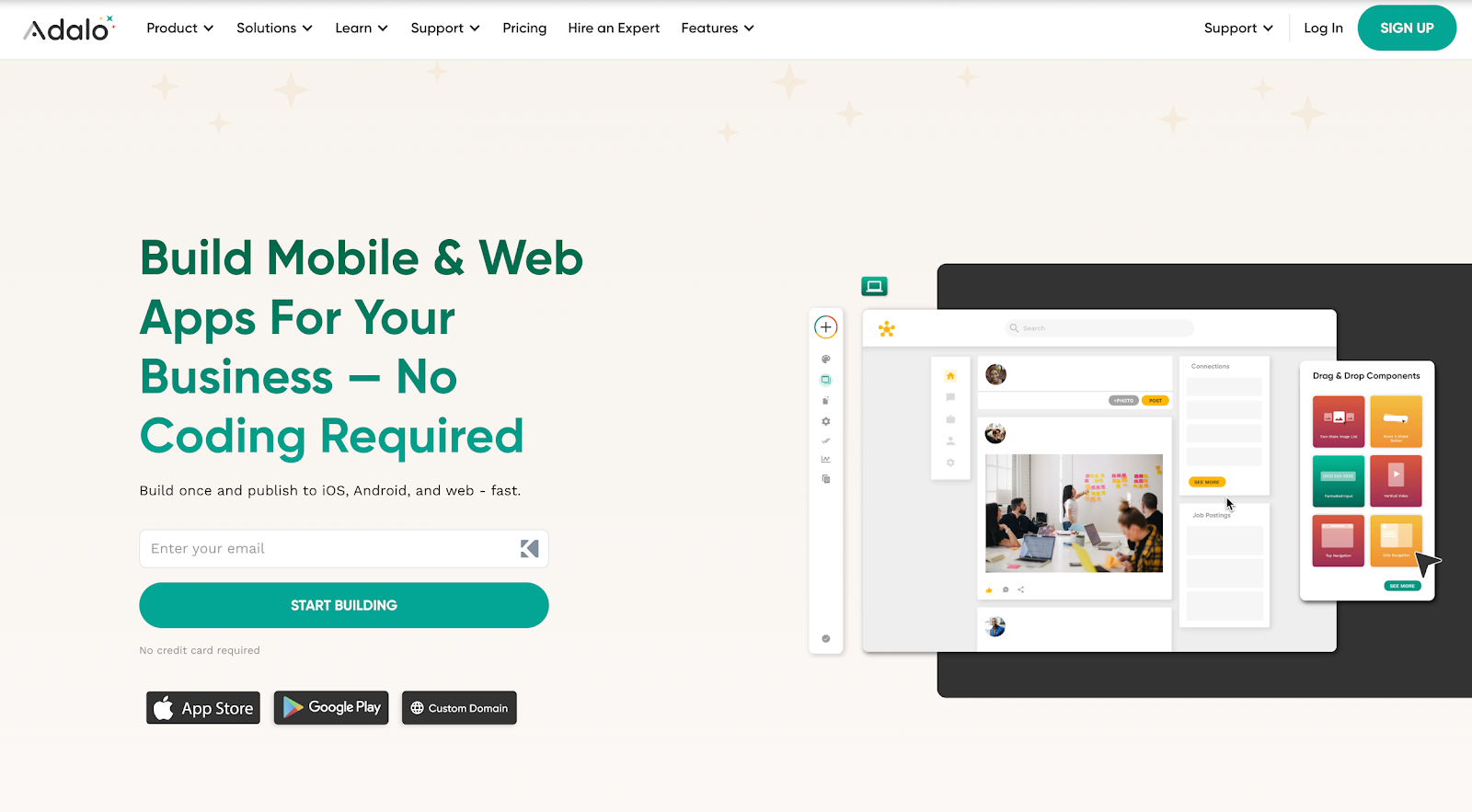
Adalo is a visual app builder that gives you a ton of creative freedom. It feels like designing a slide deck, but the result is a powerful mobile or web app.
Best for: Building consumer-facing apps like marketplaces, social networks, or custom booking platforms.
Standout Features: Adalo’s drag-and-drop interface is very intuitive. It has a marketplace of pre-built components that you can use to add features like push notifications, payments, and user chat.
Marketing Integration: You can connect Adalo to marketing automation tools like Zapier to trigger emails or add users to your CRM.
Web Design Capabilities: You have full control over the design, allowing you to create a unique look and feel.
Use Case Example: A personal trainer could build a custom app for clients with workout plans, progress tracking, and direct messaging.
Pros: High degree of design flexibility; great for building apps with user-to-user interaction.
Cons: Has a slightly steeper learning curve than some other builders and may require more setup for complex logic.
Marketing Superpowers: How AI App Builders Amplify Your Reach
An app is not just a tool; it's a powerful marketing engine. It helps you collect valuable data that can fuel your growth.
Apps are great at capturing customer behavior and preferences. This first-party data is gold because it tells you exactly what your customers want. You can use these insights to personalize your marketing at scale. Imagine sending a special offer to customers who frequently buy a certain product, that’s the kind of targeted marketing an app makes possible.
You can also set up automated marketing workflows. For example, you could trigger a welcome email when a user signs up or send a push notification to re-engage someone who hasn't used the app in a while. Loyalty programs can also run on autopilot, rewarding your best customers and encouraging them to come back. One boutique shop, for example, used their custom app to grow their email list by 300% and significantly increase repeat purchases.
Web Design That Works: Building Digital Experiences That Convert
A custom app elevates your brand in a way that a generic template can't. AI app builders help you create a professional design without needing to be a designer. They provide pre-built components that look great, allow for easy customization, and ensure your app is responsive on all devices.
The design of your app communicates a lot about your business. A professional look inspires trust, smooth interactions suggest quality service, and modern aesthetics show that you're competitive. When deciding whether to use an app builder or hire a designer, consider starting with the builder for your first version. You can always bring in a designer later to add a final layer of polish.
For instance, a local restaurant replaced its static website with an interactive app built with Base44. The app featured menu browsing, online ordering, and table reservations. The result was a much better customer experience and an increase in online orders.
Real Small Business Success Stories
Here’s how real small businesses are using these tools.
The Solo Consultant: A consultant built a client portal to automate onboarding and project updates. This freed up 10 hours a week, which they used for business development. The professional design also helped them attract larger enterprise clients.
The Retail Shop: A small shop created an inventory management and customer loyalty app. They used it to run SMS campaigns that drove a 40% increase in foot traffic.
The Service Provider: A massage therapist launched a booking system with automated reminders. This reduced no-shows by 60% and made it easier for clients to book appointments on the go.
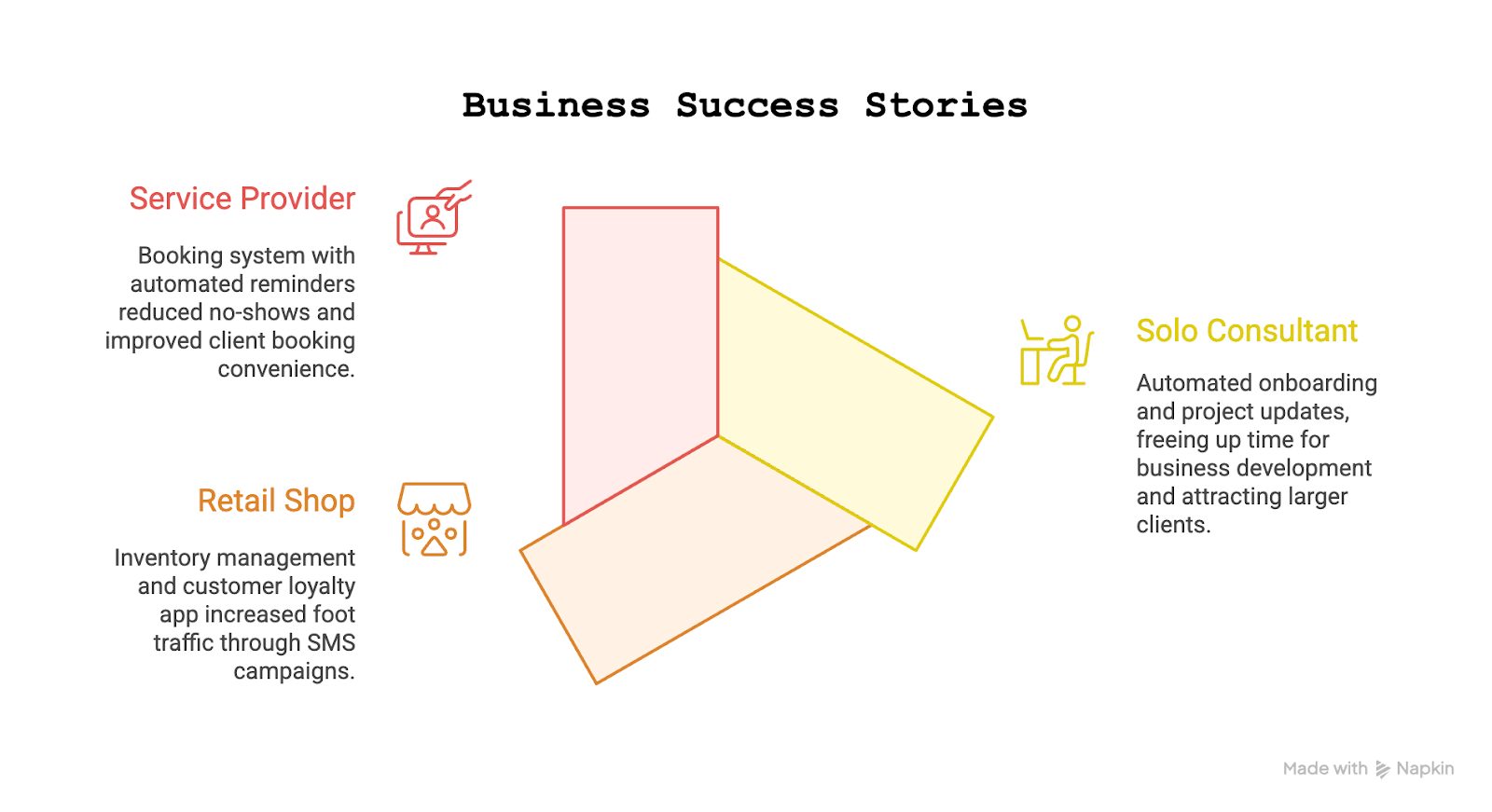
The key takeaway is that none of these business owners knew how to code. They used AI app builders to turn their ideas into reality.
Integration Strategy: Connecting Your Digital Ecosystem
Your app shouldn't live in a silo. It needs to connect to the other tools you use to run your business, like your email marketing platform, payment processor, and analytics tools. AI app builders simplify this process with pre-built connectors that let you sync your data without any custom coding.
This allows you to create a seamless customer journey. A potential customer might see your ad on social media, visit a landing page on your website, sign up for your app, and then receive an automated welcome email. A consistent brand experience across all these touchpoints is key to building trust.
Marketing Your New App: Launch Strategies That Work
A great app needs a great launch plan. Start by building buzz with your existing customers before you launch. You can offer early access or a special discount to get them excited.
On launch day, announce it to your email list and promote it on your website and social media. Your website should now feature your app as the star of the show. After the launch, continue to promote it through customer success stories and other content.
Common Pitfalls and How to Avoid Them
As you start building, try to avoid these common mistakes:
- Overcomplicating Your First Version: Start simple and add features based on user feedback.
- Ignoring Mobile Users: Most people will use your app on their phone, so design for mobile first.
- Forgetting to Market Your App: A great app with no promotion won't get any users.
- Inconsistent Branding: Make sure your app feels like a natural extension of your business.
- Not Collecting Feedback: Your users will tell you exactly what they want and need.
From App to Ecosystem - Growing Your Digital Presence
Your first app is just the beginning. Over time, you can expand its features, add marketing automation, and even build complementary apps for different functions. This creates a powerful digital ecosystem where each part strengthens the others. You’ll evolve from having a static website to a dynamic web app, and eventually, a full digital presence that drives your business forward.
Future-Proofing Your Digital Strategy
The world of AI is moving fast. To stay competitive, you need to keep an eye on emerging trends like voice interfaces and hyper-personalization. The great thing about using an AI app builder is that the platform is constantly being updated with the latest technology. This allows you to move just as fast as the big enterprises.
Conclusion
Becoming a digital powerhouse is no longer a dream reserved for large corporations. AI app builders have made it possible for any small business to build a custom app, create a stunning web design, and run effective marketing campaigns.
These tools are here, they’re accessible, and they’re getting more powerful every day. Your competitors are likely already exploring them, so there’s no time to wait. The best time to transform your business was yesterday. The second-best time is right now. Choose a platform, start building, and see just how much you can achieve.
FAQ
What are AI app builders and how can they help small businesses?
AI app builders are tools that enable small businesses to create custom applications without needing coding skills. They allow businesses to design apps that streamline customer interactions, enhance marketing efforts, and improve overall brand presence. By using AI app builders, small businesses can save on development costs, reduce time to market, and create a powerful digital foundation to support their growth.
Why does a small business need a custom app instead of just a website?
While a website is essential for attracting new customers, a custom app offers enhanced functionality for serving existing clients and building loyalty. Apps provide direct access to services such as booking systems and customer portals, facilitate engagement through push notifications, and gather valuable customer data to personalize marketing efforts. This direct line of communication keeps your brand top-of-mind and helps foster long-term relationships.
What features should I look for in an AI app builder?
When choosing an AI app builder, consider ease of use, built-in features (like booking systems or e-commerce capabilities), integration with marketing tools, web design customization options, scalable pricing, good customer support, and the speed to launch. A strong app builder will empower you to create a functional app that resonates with your brand and meets your business needs effectively.
Can I integrate my app with other tools and platforms?
Yes, most AI app builders are designed to connect seamlessly with other business tools, such as email marketing platforms, CRMs, and payment processors. This ensures that your app can synchronize data and create a cohesive customer experience across various touchpoints, which is essential for building trust and enhancing engagement.
What common pitfalls should I avoid when building my app?
To avoid common mistakes, keep your first version simple and focus on essential features, design with mobile users in mind, remember to promote your app actively, ensure consistent branding, and consistently collect user feedback. This approach will help you create an effective app that evolves based on user needs and maximizes impact.