











Award-Winning
Branding & Web
Design Agency

Brand Vision is an award-winning branding, web design, and digital consultancy, strengthening identities and digital presence.

Selected Clients
Trusted by
Leading Brands
Building real partnerships with top global brands. Delivering results that last well beyond the launch.






Services
Brand Vision's Web Design & Branding Services
One team for branding, web, and marketing. Every strategy shaped by a single point of view.


The right brand positioning, guidelines, and design decide whether every marketing and advertising effort that follows will succeed. As a Toronto branding agency, Brand Vision offers market research, brand strategy, user research, naming, logo design, and visual identity, all built to give every brand a clear, lasting presence. Behind every project are years of research into how markets behave and what separates successful brands from forgettable ones, and our brand specialists apply that directly to the strategies we build.

Brand Vision designs websites that are as functional as they are beautiful, with the same attention paid to user experience, navigability, and accessibility, meeting ADA, AODA, and WCAG standards. Every project starts with understanding who the site is for, how they'll move through it, and what must work flawlessly from day one. Brand Vision, a multi-award-winning Toronto web design agency, brings that same standard to everything we design and develop, work built to be remembered for the right reasons.
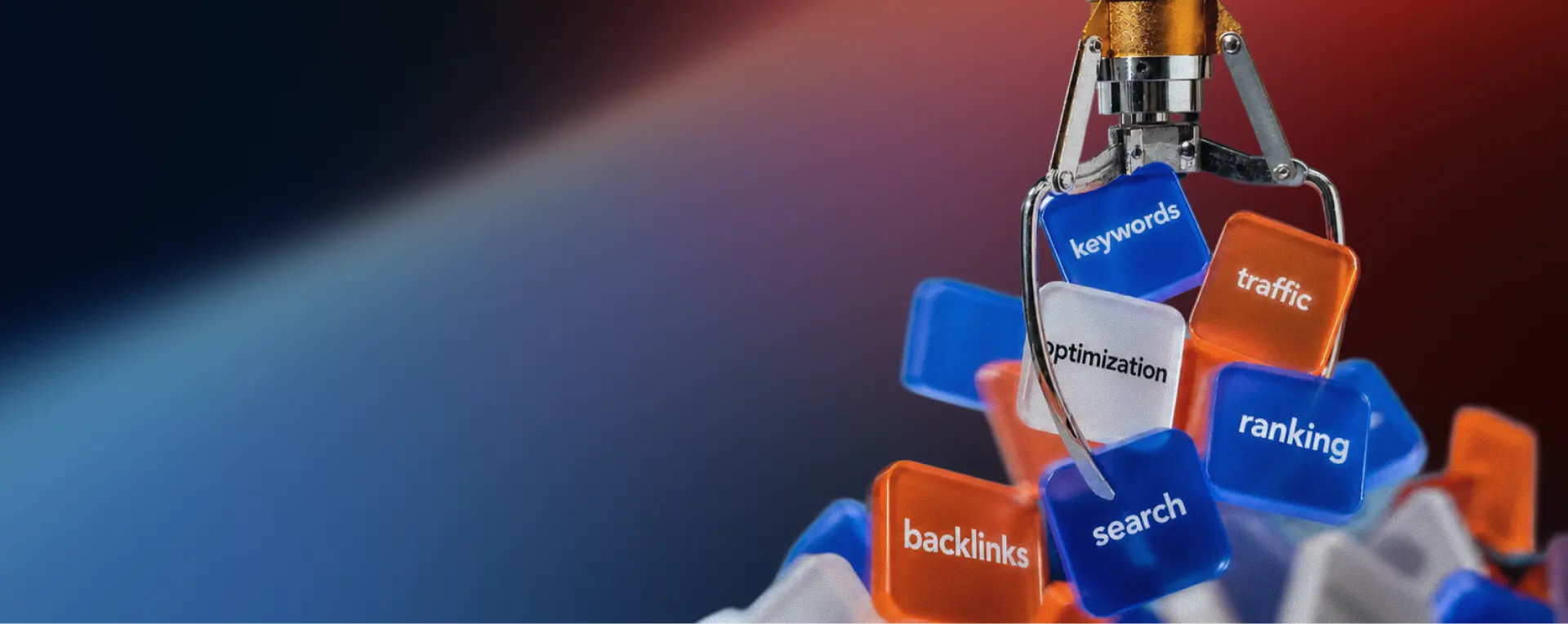
SEO isn't a checklist anyone can run through. It's a set of strategic, competitive decisions that determine whether your brand outranks the others fighting for the same positions. And the ground keeps shifting. As AI reshapes how people search, a new discipline now sits alongside SEO. Generative Engine Optimization (GEO) is the work of getting your brand cited inside the answers that tools like ChatGPT and Google's AI Overviews generate, not just ranked in the results beneath them. Brand Vision brings years of SEO experience, advanced tooling, and real thought leadership to both disciplines, strategizing and winning on behalf of our clients.

Good design is felt before it's noticed. UX and UI decide whether a product feels effortless or frustrating, from the logic of how someone moves through it to the details of every screen they touch. Brand Vision treats both as a discipline grounded in research and testing rather than guesswork, studying how real people behave and shaping each interface around what they actually need. The result is websites and products that feel intuitive from the first moment, and stay that way as people go deeper.


Brand Vision was built on a simple principle. We recommend what you actually need, not what we could upsell. We work alongside your team to audit your branding, web design, SEO, and wider marketing, then deliver a clear report that surfaces the problems worth solving, the opportunities worth pursuing, and a practical roadmap for reaching them.


Reach is easy to buy and hard to earn. Anyone can put a brand in front of a crowd, but marketing only works when the right people see it and remember it. Brand Vision builds custom programs around each brand's goals, pulling from paid advertising (PPC), social media, PR, and more as the strategy demands. What sets our marketing services apart is where they come from. As a web design and branding agency, we understand the brands and sites we promote from the inside, so every campaign extends an identity we already know rather than decorating one we don't.
Selected Work
Branding & Web Design Work
Recent work across web design, branding, and strategy. Built for the brands that trusted us to deliver it.
Industries
Industries
We Collaborate With
As a Toronto branding agency, we don't reuse one playbook across every field. We shape design, messaging, and strategy around the industry we're building for, so the work reads as though it came from inside your world, not from an agency guessing at it.

Technology

Professional Services

Healthcare

Legal

Real Estate

Ecommerce

Startups

Education

Nonprofit

Food & Beverage

Entertainment

Hospitality
Technology, SaaS, and B2B Software
Product depth shouldn’t slow the story down. We partner with SaaS, platform, and enterprise software teams to translate technical capability into focused narratives. Clear paths to demo, trial, or contact serve both buyers and technical evaluators. Systems are built for product-led growth with composable components, editor guardrails, and instrumented analytics that tie directly to pipeline.
- Feature and use-case pages
- Clear product messaging
- Demo and trial signup flows
- Resource hubs that rank
- CMS your team can run
- Pipeline and signup analytics
B2B, Consulting, and Professional Services
Complex services sell on clarity, not volume. We help consulting, financial, and advisory firms structure their digital presence around buyer tasks: understanding capabilities, comparing options, and starting a brief. Every touchpoint earns trust through specificity and proof. Content is organized by audience need, so the people making the hiring decision find answers quickly and move to contact without friction.
- Service pages by client need
- Credentials that build trust
- Consultation and intake flows
- Content for decision-makers
- Case studies that convert
- Visibility for core services
Health, Wellness, and Medical
Patients and practitioners make high-stakes decisions under pressure. We design trust-first experiences for healthcare and wellness brands, keeping clinical accuracy intact while making it simple for people to find the right provider, service, or next step. Accessibility, privacy-compliant forms, and plain-language content are standard. Local visibility for practices and clinics is built into the foundation, not bolted on later.
- Provider and service finders
- Accessible design for all patients
- Privacy-compliant intake forms
- Patient education content
- Local visibility for practices
- Compliant messaging and structure
Law Firms and Legal Services
Prospective clients searching for legal help are often under pressure and comparing firms quickly. We help law firms present practice areas with credibility, surface the right contact paths, and build a digital presence that earns trust before the first conversation. Clear structure, plain language, attorney profiles, and consultation flows make it easy for people to take the next step with confidence. Ethical advertising compliance is built in from the start.
- Practice pages that rank
- Attorney profiles and credentials
- Consultation booking flows
- Local visibility for firms
- Client-facing FAQs and guides
- Ethical advertising compliance
Real Estate, Construction, and Property Development
Buyers, investors, and project owners move on trust and timing. We work with brokerages, developers, general contractors, and property management firms to present listings, projects, and capabilities with clarity. Content is organized around what prospects actually need: proof of work, service scope, location context, and a direct path to inquire. Pre-construction launches and trade portfolios get the same strategic rigor as resale platforms.
- Listing and project showcases
- Pre-construction campaigns
- Maps, galleries, and floor plans
- Buyer and investor lead capture
- Neighborhood and market content
- IDX and MLS integration
Ecommerce, Retail, and Direct-to-Consumer
Conversion lives in the details. We work with consumer and ecommerce brands to build fast, clear shopping experiences where product pages explain value quickly, checkout flows reduce friction, and the entire system scales with the catalog. Promotional templates, collection architecture, and performance monitoring keep the storefront sharp as demand and inventory shift with seasons. The result is a store your team can run day to day without developer dependency.
- Product pages that convert
- Checkout flow optimization
- Category and collection structure
- Mobile search and filtering
- Seasonal promo templates
- Speed and performance tracking
Startups and Emerging Companies
Early-stage companies need focus over flash. We help startups define positioning, build a credible identity, and launch a conversion-ready presence that clearly communicates what the product does, who it’s for, and how to get started. Everything is built to scale: component systems, content structures, and analytics foundations grow with the roadmap instead of needing a rebuild at Series A. The pitch and the website tell the same story.
- Launch-ready sites built fast
- Positioning that resonates
- Pitch-aligned web narrative
- Demo and signup conversions
- Scales without a rebuild
- Investor-ready credibility
Education, Schools, and Institutions
Students, parents, and administrators all need different answers from the same site. We help schools, universities, and training organizations structure digital experiences by task: apply, visit, inquire, enroll. Accessible design and plain-language content serve diverse audiences without alienating any of them. A manageable CMS means internal teams keep program pages, event listings, and admissions information current without outside help or bottlenecks.
- Admissions pages that convert
- Program and course structure
- Campus visit and event flows
- Accessible for all users
- Easy updates for lean teams
- Student and parent journeys
Nonprofits and Mission-Driven Organizations
Nonprofits compete for attention, funding, and volunteers simultaneously. We build accessible digital experiences that make programs clear, donation paths intuitive, and calls to action specific enough to drive real participation and support. Content governance is designed for lean teams, so pages, campaigns, and impact reports stay current without bottlenecks. The organizations doing the most important work deserve a digital presence that matches their mission.
- Donation and volunteer flows
- Program pages that drive action
- Fully accessible experiences
- Campaign and event pages
- Easy updates for small teams
- Impact and grant reporting
Food, Beverage, and Restaurant
From restaurants to packaged goods, this industry sells on quality and convenience. We help food and beverage brands connect story with logistics: clear menus, product lines, ordering options, and wholesale paths that make it obvious how to buy and reorder. Identity and digital experience work in tandem so visitors see quality and know exactly what to do next, whether they’re a consumer walking in or a distributor placing a first order.
- Menus and catalogs that sell
- Ordering and reservation systems
- Wholesale inquiry pathways
- Locations and hours upfront
- Visual brand storytelling
- Local SEO and Google Business
Entertainment, Media, and Performing Arts
Audiences decide in seconds. We work with labels, venues, talent agencies, and event companies to build media-rich, performance-optimized experiences where the work is front and center. Booking, inquiry, and ticket paths stay visible and fast across devices. Campaign templates and component systems let teams launch content for new shows, releases, and events without starting from scratch each time. The creative comes first; the infrastructure stays invisible.
- Roster and release showcases
- Media galleries and video
- Ticketing and booking flows
- Campaign and launch pages
- Social media integration
- Fast loading on all devices
Travel, Hospitality, and Tourism
Guests research and book across multiple touchpoints. We help hotels, resorts, tourism brands, and event venues present their experience with clarity, connecting visual storytelling with practical booking flows, local discovery, and seasonal content that stays current. The systems we build make it straightforward for teams to update rates, packages, and promotions without depending on a developer for every change. The experience starts online, and it should feel as considered as the stay itself.
- Room and package showcases
- Booking flows that convert
- Seasonal content updates
- Local maps and discovery
- Photo galleries and storytelling
- Reviews and social proof
Our Record
Why Choose
Brand Vision

113 Reviews

60+ verified reviews
Performance and accessibility checks before launch

Clutch Top Brand Development & Web Design Agency
2023, 2024, 2025






Common Questions
Frequently Asked Questions
Still have questions? Contact us to discuss.
Who is Brand Vision?
Brand Vision is an award-winning branding and web design agency, headquartered in Toronto with offices in Chicago, San Francisco, and Miami, working with clients across North America and beyond. Established in 2018, built on more than fifteen years of experience, and more than 500 projects delivered since.
Six connected disciplines, every one of them staffed in-house.
Branding and visual design. Market and brand research, brand strategy, naming, logo design, visual identity, and rebranding.
Web design and development. Marketing sites, ecommerce, and custom builds on Webflow, WordPress, and Shopify, designed to ADA, AODA, and WCAG standards.
Search, meaning SEO and GEO. Technical SEO, content strategy, and local search, plus the work of getting a brand cited inside ChatGPT and Google's AI Overviews instead of only ranked beneath them.
UX and UI design. User research, interaction design, prototyping, and usability testing.
Consultation and audits. An outside read on the brand, the site, search, and the marketing, with a roadmap you can act on with or without us.
Digital marketing. Paid search and social, PR, and campaign work built on brands we already understand from the inside.
We work across nearly every industry, from ambitious startups to established global names. ArcelorMittal, Safeway, Albertsons, McGill University, First Horizon Bank, Alberta Municipalities, Flipp, and Dress for Success have all been part of that list, and the range is deliberate.
One number worth putting on the record with its limits attached. On the engagements where a retest against the original benchmark was possible, leads have averaged a 250 percent increase. That describes work already delivered instead of forecasting yours, the spread behind the average is wide, and every report we produce measures leads, pipeline and revenue instead of impressions.
What holds it together is that nothing gets handed off. Most agencies do one discipline well and buy in the rest, which is how a company ends up with a website that bears no obvious relationship to the strategy it was supposed to come from. Keeping all six under one roof, run by our own team in a single workstream, is the only reason the thinking still shows up at launch.
Why work with Brand Vision?
Because the people who build your strategy are the same people who design and build the work, and most of the reasons below trace back to that single structural decision. It is unusual enough in this industry to be worth saying first.
One senior team, start to finish. The strategist who defines your positioning reviews the website copy. The designers who build the brand identity build the site that carries it. Most agencies pass research to one team, creative to a second, and development to a third, and the original thinking erodes at every handoff. Here there is no handoff, no junior team executing what a senior person pitched, and no account manager sitting between you and the work.
Everything is in-house. Nothing is white-labelled, offshored, or passed to a subcontracted studio. Strategy, design, development, search, and marketing are all handled by our own people across four offices.
Design that answers a commercial objective. Every decision has to earn its place against a business goal and a real user need, or it gets cut. That standard is why some of our recommendations come back smaller than the brief that arrived. Decoration is easy to sell in a presentation and hard to defend twelve months later.
Precision in the parts nobody notices. Typography, grid, motion, microcopy, accessibility, and load performance. Premium gets built into the details most visitors never consciously register, and that is the difference between a site that looks finished and one that still holds up three years on.
We recommend what you need instead of what we could upsell. Some projects do not need a rebrand. Some do not need a new website. Where a focused fix serves you better than a full program, you hear that in the first conversation and not after you have signed.
Independent recognition you can check sits behind all of it, meaning four Awwwards and a Webby, RGD and CGD certification, a 5.0 rating on Clutch from more than 64 verified client interviews, and an A plus with the Better Business Bureau. The work itself is the better test. The full range of services is worth reading before you decide which part you actually need.
How long have you been in business?
The agency was established in 2018, and the senior team behind it had already worked together for more than a decade before that, carrying more than fifteen years of experience between them. Those are two different numbers and both matter.
The company has a documented history you can check. The people running it were shaping brands well before it existed, which is the part a registration date cannot tell you. A two-year-old studio staffed by veterans and a fifteen-year-old agency staffed by juniors produce very different work regardless of what the paperwork says.
Continuity is the genuinely rare part. Agencies churn constantly, and the team that pitches you is frequently not the team that finishes. A group that has stayed together through more than ten years of this work builds something you cannot hire for individually, which is a shared instinct for what holds up once the applause dies down. That instinct is what carried Roncelli Construction and TeraWulf through full enterprise rebrands, and what put us inside the UI research and design work for Albertsons and Safeway, where a wrong call is measured in revenue instead of aesthetics.
Across that stretch the team has worked through the migration from template builders to modern component systems, the collapse of keyword-stuffing search into intent-based search, Core Web Vitals arriving as a ranking factor, and now the shift toward AI search optimization, where the question is no longer only whether Google ranks you but whether ChatGPT and Perplexity cite you.
Two full cycles of design trends came and went in the same window. Flat design gave way to depth and texture. Brutalism arrived and mostly left again. Gradients came back.
None of that history is nostalgia, it is leverage on your behalf. It means that when you bring us a brief, we can usually tell you which parts of it are built to last and which parts are fashion that will date the work within three years. A rebrand based on a trend is one you end up paying for twice.
How big is your team?
More than fifteen people, all senior, all working in-house, and the team is growing. Brand strategists, brand and visual designers, UI and UX designers, front-end and back-end developers, search specialists, and content writers make up the practice, and they are listed by name and discipline on the about page.
Staffing scales with the project instead of with the invoice. A focused visual identity program might pair one strategist with two designers. A website build adds developers, a content writer, and a search specialist. A product or UX engagement brings in researchers and a design system. An enterprise program adds a defined governance structure with a named lead and approval gates your team controls.
That headcount is deliberately boutique for the volume of work we take on, and the trade-off is worth naming. We run fewer projects at once than a large agency staffing junior teams under a creative director. Occasionally that means a start date is a few weeks out, and we would rather tell you that than take a deposit and begin late.
In exchange, everybody working on your project is senior, and the person answering your question is the one who made the decision you are asking about. There is no layer of coordinators translating between you and the work, which is the difference between a question answered in the meeting and a question that becomes an action item.
What that headcount means for you in practice is a ceiling on how much runs at once. A team this size can hold a serious branding program, a full site build, and an ongoing search engagement at the same time. It cannot hold twelve of them. When we are full we say so and give you a real date.
Hiring runs slowly on purpose, because adding a senior person who fits takes months longer than adding one who is available, and the alternative is diluting the exact thing clients are paying for. Current openings sit on the careers page if you arrived from that direction.
Is all the work done in-house?
Everything core is done in-house. Brand strategy, design, web development, search, and marketing are all delivered by Brand Vision employees working from our Toronto, Chicago, San Francisco, and Miami offices. We do not white-label, and your project never gets quietly handed to a subcontracted studio or an offshore development shop.
This matters more than it sounds like it should. A large share of agencies in this market sell a senior team in the pitch and staff the build somewhere else entirely, which is why the site that launches often bears little relationship to the work in the portfolio. The tells are usually visible before you sign. Vague answers about who is writing the code. A project manager who cannot answer a technical question without checking. And timelines that slip in ways nobody can explain.
The way this fails is specific enough that you would recognize it. A build arrives with a commit history full of names nobody introduced, the code follows none of the conventions you were shown in the pitch, and the one person who understands it works nine time zones away and has logged off by the time your feedback lands. Unwinding that costs more than the discount that justified it.
There is one exception and we name it upfront. When a project calls for a specialist we do not employ, usually photography, video, or motion production, we bring that person in under our direction and list them by name in the proposal. You always know exactly who is doing what, and you are never paying an agency margin on work you did not know was being resold.
Trademark and legal work is the other case worth flagging. On a naming project we run the screening and prepare the documentation, and clearance and filing belong with your trademark counsel, because we are not a law firm and will not pretend to be one.
Ask every agency you are considering this same question. Ask who writes the code, where they sit, and whether they are employees. Ask the same about the person who will write your copy. The answers tell you most of what you need to know before any proposal arrives.
Where are you based, and can we work remote?
Brand Vision is headquartered in Toronto, with a US headquarters in Chicago and further offices in San Francisco and Miami. All four are real staffed offices actively taking on clients instead of satellite addresses, and the work itself is not limited by geography.
- Toronto, Canada HQ. 60 Bloor St W, Suite 401, Toronto, ON M4W 3B8. Serving clients across Canada
- Chicago, US HQ. 30 N Michigan Ave, Suite 504, Chicago, IL 60602
- San Francisco. 71 Stevenson St, Suite 400, San Francisco, CA 94105
- Miami. 80 SW 8th St, Suite 2000, Miami, FL 33130
If you are near one of them we would be glad to host you by appointment. Clients regularly use the offices for kickoffs, discovery workshops, and milestone reviews, and the first meeting can happen in person if you would rather start that way. Mention it when you reach out and we will schedule it.
For everybody else, whether that is a different city, a different country, or a different time zone entirely, the remote process is structured instead of improvised.
- A working kickoff where scope, decision-makers, and review dates get locked
- Check-ins at a fixed cadence built around your hours instead of whenever somebody remembers
- A shared channel for the small questions that would otherwise wait a week
- Milestone reviews where direction is approved on record, so nothing gets relitigated in month three
- At least three hours of overlapping working time, which is the only real constraint we impose, since a team eleven hours out means every question costs a day
After several hundred engagements the pattern is clear. Physical proximity is not what decides whether a project goes well. Decision-making speed on your side is. A client three time zones away with one person who can actually approve things will finish faster than a client down the street with five people who need to agree.
We also travel for the sessions that genuinely warrant it, including to cities where we have no office, because a workshop with everybody in one room resolves in two hours what email circles for three weeks.
Who are your clients, and where is the work?
More than 500 projects for brands across nearly every industry, from ambitious startups to established global names. ArcelorMittal, Safeway, Albertsons, First Horizon Bank, McGill University, Alberta Municipalities, Flipp, and Dress for Success are among the names we can share.
The full set lives in the portfolio, and the case studies there explain the reasoning behind each project instead of only showing finished screens. That is the more useful thing to judge. Visual polish is easy to buy. The argument behind a design decision is not, and it is what tells you whether an agency can solve a problem it has not already seen.
A few worth looking at.
- Safeway, part of Albertsons. Reframing a household-name grocer for business buyers
- FHN Financial. Institutional trust made usable for faster decisions
- Flipp. Translating a consumer-famous platform into a focused B2B experience
- Roncelli. A full brand identity transformation paired with a complete website and digital platform redesign for a legacy construction firm
- Dress for Success. Brand and web work for a nonprofit with a national footprint
Verification that does not come from us matters more here than our own claims. Our Clutch profile holds a 5.0 rating built from more than 64 verified client interviews, where named companies describe scope, budget, and outcome. That is a considerably higher bar than the curated pull-quotes most agencies publish, and it is worth reading before you talk to any agency, this one included.
The work has also been covered by the Associated Press, Business Insider, Yahoo Finance, Morningstar, and blogTO, and it has earned four Awwwards and a Webby for design craft.
One honest note about case studies. A portfolio shows what an agency was allowed to do, which is not always the same as what it recommended. So the question worth asking about any project you like is what the client's situation was before it started, and we will answer that on a call. The other question worth asking is what the client had to change internally to make the work land, because the projects that quietly underperform are almost always the ones where nothing changed except the design.
What size companies do you work with?
Everyone from startups to publicly listed enterprises, and the deciding factor is not headcount, it is stakes. We take on work where getting the brand or the website right carries real commercial consequence, and that description fits a twelve-person firm as often as it fits a company with four thousand employees.
The situations that fit tend to look similar regardless of size. A launch that has to land. A repositioning that changes the sales conversation. A site that carries the entire pipeline. A merger that has left two brands where there should be one. Or a category that has moved while the brand stayed still.
What changes across company sizes is scope, timeline, and budget. What does not change is the process.
Startups usually need positioning that can withstand investor and customer scrutiny, an identity that can evolve as the product changes, and a site that converts the traffic a launch generates. What they do not need is the full corporate program, since brand architecture and exhaustive guidelines can wait until there is an organization to govern.
Small and mid-sized businesses benefit most from sequencing. Foundation first and growth second, so a finite budget concentrates where it compounds instead of spreading thin. Positioning, then a site built to convert, then search visibility.
Enterprises need brand architecture across divisions and regions, design systems that keep dozens of contributors consistent, accessibility compliance to ADA, AODA, and WCAG standards, and staged rollouts that protect existing search traffic. The hard part on those projects is rarely the design, it is alignment, and we treat that as part of the work instead of an obstacle to it.
Where we are the wrong choice is worth saying too. If you need the lowest number in the market. If you want execution with no strategic input, which is a legitimate need and the wrong use of this team. If whoever decides will not be part of the process. Or if the requirement is a large pool of hands for volume work.
Sometimes the honest recommendation is a smaller engagement than the one you asked about, and you will hear that in the first conversation.
Branding or the website first?
Almost always the brand, with one real exception, because the website is an expression of decisions the brand work makes. Build the expression before the decision and you spend the entire design process arguing about things that should already be settled.
Start with branding when your positioning is unsettled. The test is simple. Can three people in your company describe what you do, to the same customer, in the same words. If leadership describes the company one way and sales describes it another, a website built now will encode that confusion into every page, and you will pay to fix it in eighteen months for more than getting it right would have cost. Brand strategy work resolves the argument first, which turns the site into an execution problem instead of a debate.
Start with the website when you have genuinely settled the positioning and the site itself is the bottleneck. This happens more than brand purists admit. A company with clear messaging, a strong offer, and a site that loads in six seconds and buries the contact form does not need a rebrand. It needs a redesign and possibly a technical SEO cleanup. Rebranding that company would be an expensive way to avoid the actual problem.
Run both together when the timeline allows, which is what most of our engagements end up being. The identity and the site inform each other, and doing them as one connected project costs less than doing them as two sequential ones, because the research happens once, the messaging gets written once, and the design system gets built once instead of retrofitted later.
The one sequence that reliably goes wrong is commissioning a website from one vendor and a rebrand from another at the same time with no shared brief. Both deliverables will be defensible on their own and they still will not fit together. That is the most common reason a company arrives asking us to reconcile two pieces of work they have already paid for.
Where you genuinely cannot tell which situation you are in, an audit settles it in a couple of weeks for a fraction of either project.
Can you work with our existing website?
We can do both, and we start by working out which one you actually need. A redesign that throws out everything is one of the most reliable ways to destroy value while paying for it, and it happens constantly because nobody audited the old site before replacing it.
What disappears in an unexamined rebuild includes pages that were quietly earning search traffic, integrations that were quietly working, form flows that were quietly converting, and years of accumulated URL equity. The new site looks better and performs worse, and the diagnosis usually arrives three months later when lead volume has not recovered.
So before anything gets designed, we read what is already there.
- Analytics. Which pages earn traffic, which earn enquiries, and which nobody has opened this year.
- Search data. What the site ranks for now, and what would be lost if those pages changed.
- Behaviour. Where people drop, stall, or loop back, which usually reveals the real problem faster than any opinion in the room.
- Technical state. Speed, Core Web Vitals, mobile rendering, accessibility, and whatever has quietly broken since launch.
There is a fifth thing underneath all of that and it is usually the deciding factor, which is how the site was actually built. Most sites we inherit were not built to the standard we hold our own work to. The code is disorganized, undocumented, and patched together by whoever was available instead of architected to last. That is the real reason our default recommendation tends toward a full rebuild, and rebuilding the code is not the same as discarding the content. The rankings, the URLs, and the pages that earn traffic all come across.
That said, we make exceptions often enough that it is worth asking. Where the existing build is solid and we have real confidence working inside it, we will. Sometimes the audit produces three pages rewritten, a navigation fix, and a technical cleanup for a fraction of the cost, and we have talked clients out of redesigns they arrived asking for.
We also take on sites we did not build, whether that means performance work, CMS problems, accessibility remediation, or a build somebody abandoned partway. If you want the diagnosis without committing to the build, a search and site audit is a standalone engagement and its findings carry into whatever you do next.
Can you work with our in-house team?
We can, and a large share of our engagements run exactly this way. Your team holds context about your customers, your product, and your internal politics that an outside agency will never fully have, so the working model is built around that instead of over it.
There are three shapes this usually takes.
We lead, your team executes. We build the strategy, the identity system, and the site, and your people run campaigns, publish content, and handle day-to-day marketing on top of it. Deliverables are structured so your team can extend them without calling us.
We add capacity. Design or development overflow inside your existing process, your tools, and your timeline. Useful when the in-house team knows exactly what it needs and simply cannot produce it fast enough.
We own one discipline. Common with search and paid media, where an internal team wants a specialist function without hiring for it, and with UX research, where a product team needs depth its engineers cannot provide.
In practice the handoff runs in both directions, and we have done it enough ways that none of them feel unusual. We have built the brand and then worked directly with a client's internal web team to implement it. We have taken the strategy and guidelines from another branding agency and built the website on somebody else's foundation. And we have handed a finished system to an internal marketing team, or to another agency, to carry forward.
Whichever shape it takes, roles and decision rights go into the proposal. Who approves what, who owns which channel, and what happens when priorities conflict. Ambiguity there is the single most common reason agency and in-house teams duplicate work or block each other.
The measure of success is your team moving faster after the engagement than before it. If the outcome is that you need an agency permanently in order to function, we built the wrong thing, and the templates and collateral exist partly to prevent it.
How much does a project cost?
Websites run from $7,000 to above $50,000 depending on scope, and branding starts at $4,000 for a refresh or $10,000 for a full identity system. Every project is a different problem, so the honest answer is a range built around what the work actually has to do instead of a single flat number.
For websites.
- A microsite of three to five pages, built to support a single campaign or a narrow offer, runs $7,000 to $15,000
- A full marketing website, typically six to ten pages with custom design and a proper content structure, runs $15,000 to $30,000, with most landing around $20,000
- A Webflow build with custom interactions and a CMS your team can genuinely manage starts at $10,000
- Ecommerce and highly customized builds, meaning portals, membership platforms, and anything with real application logic behind it, are scoped individually and typically start upward of $50,000 depending on catalogue size, integrations, and payment complexity
For branding.
- A brand refresh, working inside an identity that already has equity with your customers, starts at $4,000. This is the right call when the core idea still works and what is missing is consistency instead of direction
- A full identity system, including strategy, logo design, and usage guidelines built from the ground up, starts at $10,000 and moves upward depending on research depth and market complexity
Search is not a separate tier tacked onto either list. It is built into the architecture at every level, because a site that cannot be found does not do its job no matter how it looks.
The number that matters more than any of these ranges is how many decisions the work has to support. How many audiences you serve. How contested your category is. How many stakeholders sign off before direction is locked. A single product with a clear buyer is a different project from a brand that has to hold together across four divisions, or a site that has to generate and qualify its own leads instead of supporting a sales conversation your team is already having.
We price branding and web work separately instead of bundling one in as an upsell to the other, and every proposal is itemized so you can see exactly what you are paying for and remove what you do not need.
How long does a typical project take?
Most website projects run eight to twelve weeks, with focused builds landing in as few as six, and branding runs on a separate clock entirely. Here is the realistic picture for each.
Websites.
- Six weeks for a focused marketing site with defined content and a single decision-maker
- Eight to twelve weeks for most projects, which is where the majority land
- Four to five months for larger builds involving ecommerce, system integrations, or content migration from a large legacy site
Branding.
- Two to four weeks for a focused visual identity sprint
- One to three months where the program includes brand research and strategy
- Longer where naming is involved, because trademark screening and legal review cannot be compressed no matter what anybody promises
Search operates on an entirely different timeline. Technical fixes can move things within weeks where real problems exist. Meaningful ranking and traffic gains take four months to a year, and any agency promising first-page results in thirty days is either misleading you or targeting keywords nobody searches.
The variable that actually decides your timeline is not our capacity. It is content readiness and how quickly feedback comes back. Projects almost never stall in design. They stall when copy is three weeks late, or when six people send conflicting notes and nobody has the authority to resolve them.
That is why the content plan gets built in week one and why decision-makers and review dates get locked at kickoff. It is also why, if you tell us a hard deadline exists, we will tell you honestly whether the scope attached to it is possible. Accepting an impossible date and letting the gap surface later is not something we do.
One more scheduling note worth raising early. For retailers and anybody with a seasonal peak, launch timing matters as much as launch readiness, and we plan the go-live for a shoulder period wherever the calendar allows. Nobody should be migrating URLs in the second week of November, and a launch that slips into a peak is better held until January than pushed live untested.
Project basis or monthly retainer?
Both, matched to the nature of the work instead of applied as a fixed model to everybody. The distinction is whether the value lands on a delivery date or compounds over months.
Fixed-scope projects cover websites, branding programs, UX audits, and marketing audits. Defined deliverables, milestones, and an end date. You know what you are getting and when it finishes, and the proposal is itemized so you can remove a component without renegotiating the whole thing.
Monthly programs cover search and AI visibility, ongoing design support, paid media management, and marketing consultation. These run monthly because their value accumulates instead of arriving all at once. Judging a search program on month two is like judging a garden in March, which is why we work to a minimum term of around six months on that side. Leaving at month four means paying for the investment period and exiting before the return.
The honest case against any minimum term is that it protects the agency as much as it protects the client, and that objection is fair. What makes six months defensible on search is arithmetic instead of preference. The first two months go into fixing and building, the third and fourth are where indexation and rankings start responding, and the compounding that pays for the whole program happens after that.
Plenty of clients start with a project and then move into a monthly program afterward to keep momentum after launch. That is a choice made at the end of the project instead of a condition of starting it, and we would rather you make it having seen how the work goes.
What we do not do is stretch a finished project into a retainer to keep an invoice alive. If the work is done, it is done. Maintenance is available and it is never a condition of the build, and everything is documented well enough for your own team or another partner to run it.
Media spend is a separate matter and worth being explicit about. Budget paid to advertising platforms is yours and goes to them directly, and management is a distinct cost. Any agency blurring the two into one number is making the total harder to evaluate, and our paid media work is charged as a flat fee instead of a percentage of what you spend, because a percentage rewards recommending a bigger budget.
How do we get an estimate for our project?
Start with a conversation and you will have an itemized proposal within three to five business days. No cost, no obligation, and no requirement to arrive with a written brief.
- Tell us what you are trying to fix. Reach us through the contact form, by email at info@brandvm.com, or by phone at (416) 360-3434. Most clients start with a problem instead of a specification. Slow growth, a brand that no longer fits, a site that gets traffic and no enquiries. The services overview is a reasonable place to see what that problem might map to, and you do not need to have decided.
- We do the reading before we talk. Your website, your brand materials, your search presence, and your competitive set all get reviewed ahead of the call, so the conversation starts at the useful part instead of spending forty minutes on basics we could have looked up.
- We have a working call. Goals, constraints, timeline, and budget reality. You get an honest read on where the gaps are whether or not you hire us.
- You get an itemized proposal, shaped to your brand, your timeline, and your budget. Scope, named deliverables, and pricing broken out line by line, so you can compare it honestly against any other agency you are talking to. Comparing two lump sums tells you nothing.
One thing in the proposal is worth expecting in advance. Where a line item depends on something we cannot see yet, meaning content volume, an integration nobody has documented, or a legacy database, it is priced as a range with the trigger for the upper end named. A single confident number on work nobody has scoped yet is a number that gets revised later.
What speeds this up on your side is short. Access to analytics if a site is involved, whatever brand or research material already exists, and a clear sense of who has to approve. What slows it down is a committee with no chair, which is worth resolving before a proposal rather than after.
If the fit is wrong we will say so on the call. That happens, and it is a better outcome for both sides than a project neither party should have started.
What is your process?
Four stages on web projects and three on branding, and every stage closes with a review where direction is approved on record. The structure exists so nobody is relitigating a settled decision in month three.
Web design and development.
- Discover. Goals, audiences, analytics review, competitive analysis, and an audit of the existing site. Ends with a sitemap and a content plan, which is the single most important artefact for keeping a project on schedule.
- Design. Information architecture and UX flows first, then visual design presented in realistic context. A homepage in a browser instead of a screenshot on a white slide, because context changes how people react to work.
- Development. Build, CMS configuration, integrations, and QA across real devices instead of browser emulators. Designers stay involved through the build so what launches matches what was approved.
- Launch. Accessibility checks against ADA, AODA, and WCAG standards, performance tuning, redirects from old URLs, analytics configuration, go-live, and training for your team. Performance is checked against the published Core Web Vitals thresholds, which means cumulative layout shift under 0.1, interaction to next paint under 200 milliseconds, and largest contentful paint under 2.5 seconds. We do not call a build finished until it clears all three on a mid-range phone over a real mobile network.
Branding.
- Discover. Stakeholder interviews, customer research, and competitive audits. This is where the real disagreements inside a company surface, which is uncomfortable and necessary.
- Define and design. Positioning and messaging documented first, then the visual identity built on top of them. Design decisions get argued against the strategy instead of against personal taste.
- Deliver. The system applied across real touchpoints, refined where it breaks, and documented in guidelines with every source file handed over.
The whole method is research-based instead of taste-based, which is the practical difference between a strategy you can defend to a board and a design you can only defend to yourself.
Between stages you get weekly working sessions and a shared channel. What you will not get is a monthly status email summarizing activity you cannot evaluate. Every stage gate produces a document you can forward to somebody who was not in the room, because approval that only exists in a meeting gets reopened.
Who will actually work on our project?
The people you meet at kickoff stay through launch. There is no account manager layer between you and the work, and no junior team quietly executing what a senior person pitched.
You talk directly to the strategist, the designers, and the developers responsible for your project, and all of them are Brand Vision employees.
Staffing scales with scope.
- A focused identity program might be one strategist and two designers
- A website adds developers, a content writer, and a search specialist
- A product engagement adds researchers and brings interaction design into it
- An enterprise program adds a defined governance structure with a named lead and approval gates your team controls
The core group carries the project from first workshop to handover regardless of which of those it is.
The week-to-week reality is simpler than an org chart. The strategist owns the brief and the positioning, and stays on to review the copy. The lead designer owns the visual direction and presents it in person. The developer who will build the site is in the design reviews, so an interaction nobody can actually build gets caught before it is approved instead of after. One of those three is named as your point of contact, and that is a working role instead of an account role.
That continuity is not a nicety, it is the mechanism. It keeps the strategy intact through design. It makes feedback faster to resolve, because nobody needs briefing before they can act on it. And it means the answer to your question comes from the person who made the decision instead of somebody relaying it secondhand and getting the reasoning slightly wrong.
There is an accountability effect that matters more than it sounds. A commitment made by the person who then has to build it tends to be a commitment that survives contact with the work. Once a project changes hands, whatever was promised in the room becomes an inherited problem for somebody who never agreed to it.
Two questions worth asking any agency before you commit. Who specifically will be on this project, and what else are they working on that month. Any agency can answer the first. The second is harder to answer honestly, and we will, along with who runs the work generally.
What do you need from us, and how much time?
Three things, and a few focused hours a week from one person. More during discovery, more at review points, and very little in between.
- Access. Analytics, your CMS or codebase where relevant, and time with the people who genuinely know your customers. Usually sales and leadership, and often support, who tend to know more about customer frustration than anybody else in the building.
- Materials. Existing brand files, past research, and any positioning or messaging work you have already paid for. We would rather build on it than redo it, and clients are frequently sitting on good work they forgot they commissioned.
- A decision-maker. One person who can consolidate internal feedback and approve direction on schedule.
Your team is busiest at two moments. Discovery, when we are interviewing people and gathering material, and phase reviews, when direction gets approved before the next stage starts. Between those, a weekly check-in and a shared channel keep you current without eating your calendar.
The third item is the one that actually decides your timeline. Projects do not stall on design capacity. They stall when feedback comes from six people with conflicting views and nobody has the authority to resolve it. Reviews here are structured to gather input once, resolve it on record, and move forward.
Content is the second most common cause of delay and it is worth deciding early. Either we write it, or you write it against a schedule with real dates, or the launch scope shrinks to what is genuinely ready. Choosing in week one is the difference between eleven weeks and five months. The volume is worth being realistic about too. A ten page site needs more new copy than anybody estimates at kickoff, and the person who will write it has to be identified before design starts, whether that is somebody in your building or us.
The signed proposal comes with an onboarding checklist and the kickoff session walks through it together, so by the end of week one both teams know who decides what and where the gaps are. Where the brand itself turns out to be unresolved, that becomes a strategy conversation before it becomes a design one.
Do you use templates or build custom?
No templates. Every site is designed from scratch for the business it belongs to. Not a purchased theme with your logo dropped in, and not a layout we have already sold to four other clients.
We build on Webflow, WordPress, Shopify, and WooCommerce, and where a project needs it, custom development on React, Vue, Django, and Node. Those are platforms, not templates, and the distinction matters. A platform is the system your site runs on. A template is somebody else's design decisions about a business that is not yours.
Why it matters commercially.
- A template arranges your content into a hierarchy designed for a different company, which is why template sites so often bury the one section that would actually convert
- Templates carry code you do not need, which is a common and invisible cause of poor Core Web Vitals scores
- Customization fights the template, so the second year of edits costs more than the build did
- Your competitor can buy the same one
What we do build is a component library, which is a different thing from a template and worth understanding, because it is what lets your team add pages later without a designer. Defined sections with defined rules, assembled into new pages that cannot come out looking wrong. That is how a site stays consistent as it grows from ten pages to sixty.
Where the platforms genuinely constrain a design is worth knowing before you pick one. Webflow shows a maximum of 100 items from a CMS collection in a single list unless pagination is enabled, allows 40 of those lists and 10 nested ones on a page, and executes no code on the server. Shopify supports 2,048 variants per product and only 3 options, which is why a configurable product often needs an app. WooCommerce hands you hosting and PCI scope, meaning the payment security obligations a hosted platform would otherwise absorb. None of that argues against any of them, and all of it changes what a custom design can honestly promise.
The platform recommendation follows your requirements, your team, and your budget instead of what we prefer to sell. If your marketing team publishes weekly and has no developers, that points one direction. If you have engineers on staff and complex integrations, it points another. We explain the reasoning in plain terms so you can challenge it before committing, and the differences between the platforms are set out properly on the web design side.
Do we own the website and brand files?
Yes, completely. Full ownership transfers to you once the project is paid in full, including source files, with no licensing scheme and no recurring fee owed to Brand Vision.
What that covers.
- Design files. Working source files, brand guidelines, and every export format your vendors will ever ask for, organized by use case
- Code. Custom code written for your project, yours outright
- Content and data. Everything on the site, plus your analytics history
- Accounts. Hosting, domain, CMS, and analytics all registered in your name with full administrative access from day one
There are two standard exceptions and both are written into the agreement instead of buried in it. Exploratory concepts that were not selected stay with us. Third-party assets such as licensed fonts, stock imagery, or paid plugins carry their own terms, itemized in the proposal so you know exactly what you hold and what is licensed.
Font licensing deserves particular attention, since it is where companies most often discover they do not own what they assumed. A licence covering web use frequently does not cover an app or a broadcast, and many commercial typefaces restrict use inside a logo entirely. That is one of the reasons custom letterform work is worth it on a wordmark, and it gets flagged during the identity work instead of afterward. The same trap sits inside stock imagery and paid plugins. Imagery licensed for web use frequently excludes packaging and out of home, and a paid plugin licence commonly covers updates for twelve months and then lapses, which is how a site quietly falls behind on security while nobody is watching.
Nothing we build runs on a proprietary system only we can operate. No agency-owned CMS, no hosting account you cannot access, and no code you would need us to decode.
This is worth confirming with any agency before you sign, and worth reading the contract instead of taking a verbal answer. Ownership language is where a lot of unpleasant surprises live, and it becomes a real issue at exactly the wrong moment, meaning a funding round, a sale, or the day you decide to move on. It is also a standard diligence item.
Can our team update the website ourselves?
Every site we build is configured for the people who will actually run it instead of for developers, so non-technical team members can publish and edit without touching code or breaking the design. That is a decision made during the build and not a feature switched on at the end.
What your team can do without a developer.
- Publish new pages from approved components
- Edit copy, swap imagery, and update navigation
- Add and manage blog posts or news items
- Manage products, collections, and inventory on ecommerce builds
- Update team pages, case studies, locations, and any other structured content
- Edit page titles, descriptions, and metadata, so search work does not require a ticket
Some things have guardrails and that is intentional. Brand elements, image dimensions, and structured content fields are locked or constrained, so a rushed edit on a Friday afternoon cannot break the layout or push an off-brand colour into production.
Permissions are the part most handovers treat as an afterthought. WordPress ships five built-in roles, meaning administrator, editor, author, contributor and subscriber, and the lazy default is handing everybody an administrator account because it is faster than thinking about it. On a WordPress build we map your actual team onto those roles at handover, so a coordinator can publish a post without also being able to deactivate a plugin.
What still needs us. New page types, structural changes to templates, new integrations, and anything requiring design or engineering judgment.
Whether the site runs on Webflow or WordPress, handover includes live training with your team and written documentation in plain language, plus a recorded walkthrough of your actual components instead of a generic platform tutorial. That recording matters more than it sounds, because the person maintaining your site in eighteen months has frequently not been hired yet.
Day-to-day publishing should never require a support ticket. An agency that makes routine edits difficult is protecting its retainer instead of your site, and it is a fair thing to test before you sign by asking to see the editor a client actually uses. The failure mode we get called in to fix is a site where every edit is technically possible and nobody dares make one, because the last person who tried broke a layout on a Tuesday and it stayed broken for a week.
Will a redesign affect our search rankings?
It can, and this is the most common way a good-looking redesign turns into a disastrous quarter. Handled properly, rankings usually hold or improve, because the new site is faster and better structured than the one it replaced. Handled carelessly, traffic falls and nobody notices until the next reporting cycle.
Rankings drop for three reasons and all three are preventable.
- Deleted content. Pages nobody on the marketing team valued turn out to have been earning steady search traffic for years
- Missing redirects. Old URLs are not mapped to new ones, so accumulated link equity evaporates and users hit dead ends. This is the single most common cause of post-launch traffic loss and also the most avoidable
- Broken technical signals. Heading structure, schema, internal linking, and page speed all change at once, so the site reads differently to search engines than it did before
What we do about it on every website redesign.
- Inventory what ranks before anything changes. Which pages earn traffic, which keywords they hold, and which URLs carry links from other sites
- Map every old URL to a new destination. Redirects get built during the project instead of remembered the week of launch, and chains get flattened so no redirect points at another redirect
- Make keep-or-cut decisions from data instead of from which pages the team happens to like
- Preserve the technical foundations. Heading hierarchy, schema markup, internal linking, and Core Web Vitals treated as deliverables
- Protect local visibility. Map listings, citations, and local search signals migrated with everything else
- Monitor daily for the first month, so anything that slips gets caught while it is still small
The honest part is that even a clean migration can show two to six weeks of fluctuation while search engines recrawl and reassess, and we tell you that in advance instead of promising zero impact.
This process is run by the same team that would handle an ongoing search program, which is the practical argument for keeping design, development, and search in one place. When the redesign vendor and the search vendor are different companies, the migration plan is nobody's job.
What happens after launch?
The engagement does not end at launch. Depending on the size of the project we stay on for thirty to ninety days afterward, and that window is included in the project instead of sold as an add-on. It exists because the questions that matter only surface once real people are using the thing.
What that window covers. For websites, performance monitoring, bug fixes, the edge cases nobody found in QA, and an analytics review once there is real data to look at. For branding programs, rollout support as your team applies the new system to material nobody thought about during design, meaning sales decks, trade show graphics, email signatures, and the vendor who needs a file in a format nobody anticipated.
What comes after that is your choice.
- A maintenance plan. Platform and plugin updates, security monitoring, backups, performance checks, accessibility upkeep, and a monthly allocation for content changes and small improvements. Scoped to how actively your site changes, since a stable marketing site needs far less than a store shipping weekly
- An ongoing program. Search and AI visibility, paid media, design support, or UX work on a monthly cadence
- A clean handoff. Documentation, training, and accounts so your team or another partner can run it without us
Maintenance is optional and never a condition of the build. Everything is documented well enough that a competent developer who has never met us could pick it up, which is the standard we hold handover to.
What decays without a plan is worth knowing. Versions drift on the platform and on every plugin, speed degrades as the page count climbs, accessibility slips the moment somebody uploads an untagged image, and internal linking thins out as the content library grows. None of that requires a large retainer, and it does require somebody's name against it.
The formal window is where the obligation ends and not where the relationship ends. If something comes up eight months later you can still reach us. Clients who stay on formally tend to stay because problems get caught before they notice them, which is the only honest argument for a maintenance plan. Making it hard to leave is not a business model.
What awards has Brand Vision won?
Four Awwwards including a Site of the Day win, a Webby Award for design craft, and recognition from Clutch as a top creative agency four years running. Named, because award-winning is a phrase every agency uses and almost nobody itemizes.
- Awwwards, four times, including a Site of the Day win and multiple nominations. Peer-judged by an international jury of designers and developers, awarded on craft, and among the harder recognitions to earn in web design
- A Webby Award, judged by the International Academy of Digital Arts and Sciences on the whole picture instead of visual polish alone
- Clutch, naming us a top creative agency, a top web design agency, and a top branding agency four years in a row, with a 5.0 rating from more than 64 verified client interviews and Premier Verified status
- RGD and CGD certification, which are Canadian professional accreditations held by the practitioners instead of awarded to a project, with case study work published directly on the RGD site
- A Local Excellence Award, three years running
- 250+ verified five-star reviews across Clutch and Google
- An A plus rating with the Better Business Bureau
The Associated Press, Business Insider, Yahoo Finance, Morningstar, and blogTO have also covered our work.
Worth saying plainly that these measure different things. An award measures the work at the moment it launched, judged by people who are not your customers. A verified review measures the client experience. Neither confirms fit for your specific project.
So here is how we would judge an agency, this one included. Read the case studies for the reasoning instead of the screens. Ask who specifically will be on the project and what else they are working on. Ask what they would refuse to do. Ask how you will know inside ninety days whether it is working. And ask what happens to the files and the accounts if you leave.
Then look at the work itself and ask what happened to those companies afterward. A conversation tells you more than any of it, so tell us what you are working with when you are ready.

Research & Findings
Original research and expert perspective on design, branding, and the strategy behind both.

Branding
Message Testing: Validating Brand Claims Before a Website or Campaign Investment
Oct 19, 2026
/ By Arman Tale
Branding
Customer Segmentation Strategy: Choosing Where to Compete and Where to Stop Investing
Oct 18, 2026
/ By Arman Tale.webp)
Branding
B2B Branding Strategy: Positioning, Proof and Buying-Committee Trust
Sep 6, 2026
/ By Hamoun Ani
Let’s Talk
Contact Us
Tell us about your goals and project, and receive a proposal shaped to your brand, your timeline, and your budget.