Previs done with generic placeholder figures answers a narrower question than most directors actually need answered. Testing whether a two-shot works, whether an over-the-shoulder angle reads correctly, whether a specific piece of blocking actually functions, only means something if the test reflects the real cast's actual height, proportions, and physicality rather than a roughly shaped generic stand-in.
The gap between "previs looked fine" and "the blocking did not work on set" usually traces back to exactly this: a test run against the wrong bodies. The camera move was validated, the composition was validated, and yet the one variable the scene actually depended on, the specific people standing in it, was never part of the test at all.
AI filmmaking makes the cast-accurate version of previs practical, part of the broader shift in how AI tools reshaped content creation workflows, and the difference it makes shows up precisely where productions spend the most: the shoot day.
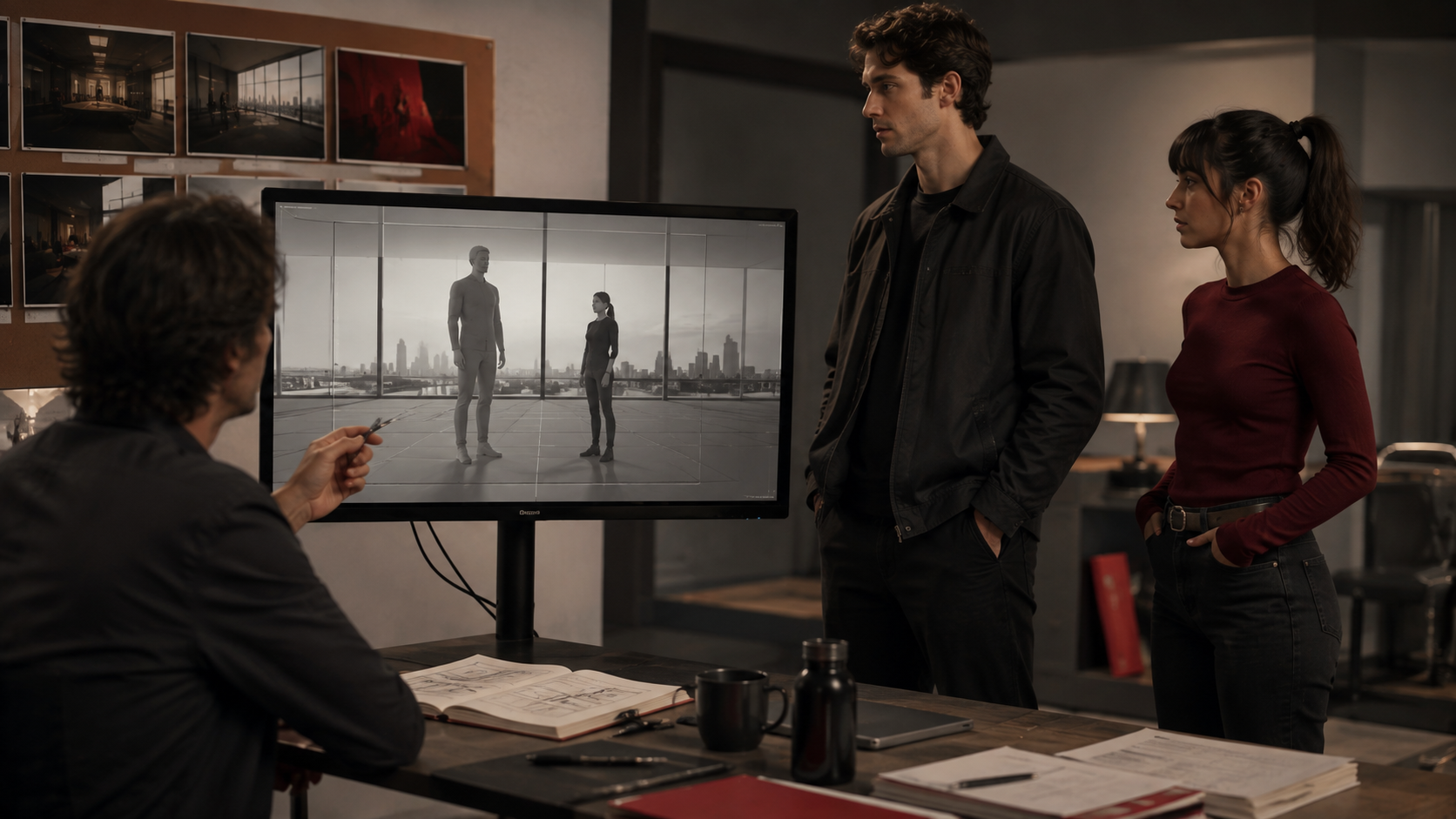
Why Generic Figures Miss What a Real Cast Needs
A pass built around default or placeholder characters tests composition and camera movement in the abstract, but it does not test the specific physical constraints a real scene depends on.
The constraints are concrete and cast-specific. A significant height difference between two actors, physical business that only works at a certain proximity, and a two-shot that depends on how two specific people stand next to each other are all invisible to a generic figure.
Those constraints only surface when the previs reflects the people who will actually be in the scene. A generic figure can confirm a camera angle is interesting; it cannot confirm that a specific over-the-shoulder shot will clear both actors' faces the way the coverage plan assumes.
The distinction is between testing the idea of a scene and testing the scene. Both passes produce frames a team can review; only one of them produces answers the shoot day can rely on.
The abstraction is the trap precisely because it looks like progress. A full previs pass exists, every shot has been reviewed, and the confidence it produces is real, which is what makes the set-day discovery of a physical mismatch feel like a betrayal of the planning rather than a gap in it.
The cost asymmetry is the reason the gap matters. Planning-stage time is cheap and recoverable, while a blocking failure on set burns crew hours and cast availability, the classic sunk cost situation where the money already spent forces a live compromise instead of a considered fix.
Building Previs Around the Actual Cast
The fix is using real reference photos of the cast as the basis for the previs itself, rather than a generic or default character standing in for them. A scene blocked and tested against the actual actors' proportions gives a director a far more reliable answer than one tested against a placeholder that happens to be roughly the right shape.
Invideo Agent can build a scene's previs directly from cast reference photos. Its previs pipeline lets the blocking and coverage tests reflect the real people who will be on set rather than an approximation of them.
The workflow change is smaller than the outcome change. The director plans the same shots and reviews the same frames; the only difference is that the figures in them carry the cast's real proportions, and every answer the pass produces inherits that accuracy.
The reference photos, notably, are an asset the production already holds. Casting produced them; the previs stage simply puts them to work earlier than tradition scheduled, which makes the cast-accurate version an unlocked capability rather than a new expense.
What Agent Two Adds: Coverage Against Real Proportions
The newer invideo Agent Two model can apply named camera-movement presets, an over-the-shoulder, a two-shot, a push-in, directly to a previs frame built from real cast references, calculating real depth and parallax so a director can see whether a specific piece of coverage actually works for these particular actors before the shoot day.
The distinction matters most for blocking decisions sensitive to a cast's specific physicality. A significant height difference, or a particular way two actors need to stand for a two-shot to read correctly, are questions a generic previs figure structurally cannot answer, and they are the questions that decide whether the planned coverage survives contact with the set.
The presets also make the previs test repeatable. The same named move applied to the same referenced frame gives the director a consistent basis for comparing options, which turns coverage selection into an evaluation rather than a series of one-off renders.
Repeatability changes the conversation on the team as well. When two coverage options can be shown against the same referenced frame, the debate settles on evidence, and the strongest opinion in the room stops being the deciding factor.
Precision at this stage compounds downstream. Every blocking question answered in advance is a conversation the set does not have to hold while the crew waits, and those waiting-room conversations are exactly the fragmented coordination time the analysis of the modern workday shows draining teams everywhere.
Testing How the Coverage Cuts Together
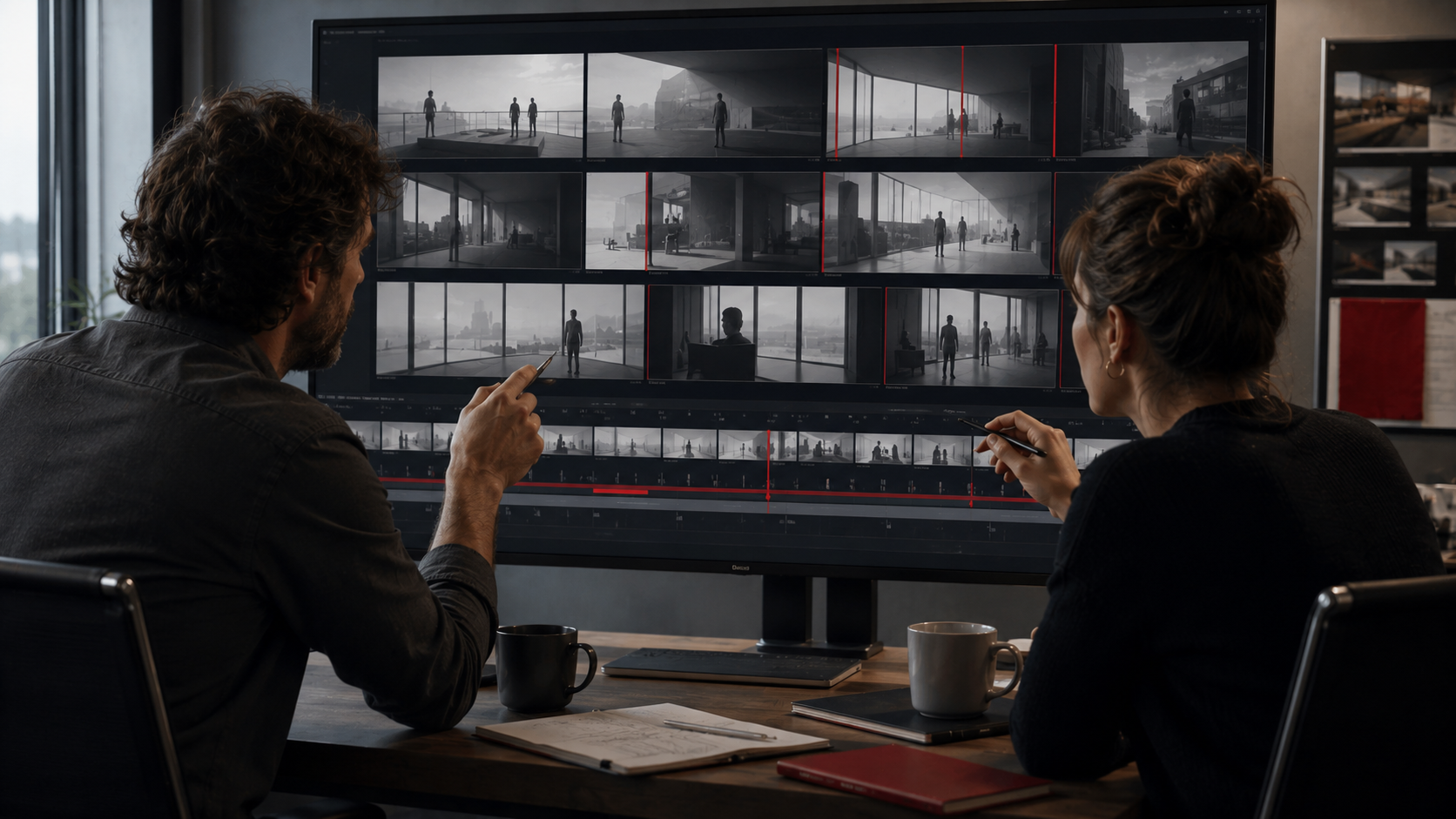
Beyond blocking itself, previs built around the real cast lets a director test a scene's actual coverage pattern: how a shot-reverse-shot exchange will cut together, whether a planned two-shot holds long enough before cutting to singles, before scheduling the actors and crew needed to shoot it for real.
The test is specifically about whether the planned coverage works in the edit, not whether any individual shot looks good on its own. A scene that tests well shot by shot can still fail to cut together if the coverage pattern does not support the pacing the scene needs, and that failure is invisible until the shots are viewed as a sequence.
Viewing the previs as a sequence costs minutes and buys certainty. The exchange either cuts or it does not, and either answer is worth more before the schedule commits than after.
Sequencing the pass like an edit is therefore the discipline that completes it. The coordination habit mirrors what research on effective distributed teams keeps finding, that shared, concrete artifacts beat verbal alignment, and a cut-together pass is exactly that artifact for a director, an editor, and a cinematographer who need to agree before the expensive day.
The edit test also surfaces the quiet timing questions early. How long a two-shot holds, where the singles take over, and whether the exchange breathes correctly are decisions previs can now audition rather than assume.
Editors benefit from the audition as much as directors. Coverage planned against how it cuts arrives in the edit suite already fitting, and the missing-shot discovery that haunts post-production gets made while the missing shot is still free to add.
The Mistakes That Send Problems to the Shoot Day
The failure patterns here are consistent, and each sends a solvable problem to the most expensive place to solve it:
- Testing against a generic figure and assuming it transfers. Height and proportion differences between the placeholder and the real cast can invalidate exactly the blocking decisions the previs was meant to confirm.
- Testing shots without testing the sequence. Individual shots that look right can still fail to cut together, and the coverage pattern deserves the same test the compositions got.
- Leaving the physical mismatch for the set. A height difference or proximity issue discovered on the shoot day forces a live improvisation, with the crew scheduled and the clock running, on a question previs existed to answer in advance.
- Treating previs as a formality rather than a test. A pass that only confirms what the team already intended has not tested anything; the value is in the mismatches it finds while they are still cheap.
The common thread is where the decision lands. Testing against the real cast moves decisions into the planning stage, where they are cheap to adjust and confirm; every shortcut above moves one of them back onto the set.
Building that habit is deliberate work, the kind of process discipline a team develops the way any professional development plan treats a skill: named, practiced, and reviewed until it is simply how scenes get planned.
The Shoot Day Should Confirm the Plan, Not Rescue It
Previs earns its place when it tests the scene that will actually be shot: these actors, this blocking, this coverage, cut together the way the edit will need. Generic figures test an idea of the scene, and the difference between the two is the difference between a shoot day that executes and a shoot day that improvises under pressure with the meter running.
The cast-accurate version is no longer the expensive version. Built from the reference photos the production already holds, tested with named coverage moves against real proportions, and sequenced like the edit it will eventually become, previs finally answers the director's real question, which was never whether the shots look good, but whether this scene, with these people, actually works.
%2520(1).png)
.png)