A generated ad film can look complete and still not be finished. The brand slate, the final logo card with the tagline and call to action, is often the one moment a viewer explicitly registers who made the spot, and a finishing pass that skips or rushes it undercuts everything that came before.
Finishing is not a formality tacked onto the end of production; it is the step that turns generated footage into something that reads as a deliverable commercial rather than a demo reel. The difference lives in the last few seconds, which is exactly where attention on the maker peaks.
The discipline sits squarely inside brand work, because the slate is where the spot's craft hands off to the brand identity itself, and a handoff fumbled at that moment spends recognition the campaign was built to earn. What follows is how the brand slate gets built, checked, and timed properly in AI filmmaking.
Why the Brand Slate Matters More Than Its Runtime
A brand slate is frequently the only moment in an entire spot where the viewer's attention is deliberately pointed at who made it. Everything before it is story, product, emotion; the slate is the explicit handoff to the brand, which makes its design and timing worth far more scrutiny than a few seconds of runtime suggests.
A brand slate that does not match the rest of the film, a different font, a slightly off color, a logo treatment that looks imported from another project, undercuts the handoff at its precise moment.
The mismatch reads as an afterthought bolted onto something that otherwise looked intentional. Viewers register it even when they cannot name it, and what they register attaches to the brand, not to the production process.
The registration is instant and largely subconscious, which is what makes it dangerous. Audiences judge credibility from presentation quality in moments, the pattern usability research has documented in how people read trustworthiness from design.
The final seconds of a spot are presentation at its most exposed. Nothing else is on screen to share the scrutiny; the brand slate carries it alone.
Build the Slate From the Same Locked Reference
The fix is locking the brand's actual guidelines, logo files, exact colors, approved fonts, tagline wording, before generating the brand slate, rather than building a generic end card afterward and hoping it matches.
The source of truth already exists. The same brand reference locked at the start of production, before the first shot was generated, should feed the slate too, instead of the end card becoming a separate decision made fresh at the finishing stage.
Invideo Agent treats the brand slate as part of the same locked reference used throughout an ad film's production, rather than a disconnected final step handled independently once generation wraps.
The sequencing is the entire trick. Because the guidelines were captured before the first frame generated, the slate is constrained before it exists, and matching the film is not an act of care at the end but a property of the setup at the beginning.
One reference serving both jobs is what prevents the classic mismatch. A brand slate built from the production's own lock cannot drift from the film's established look, because it inherits the look from the same source everything else did.
The lock also earns its keep across a campaign. Spots produced months apart draw their brand slate from the same standard, and the end card becomes one of the recurring signatures that make separate pieces read as one brand speaking.
What Agent Two Adds: The Check Before Delivery
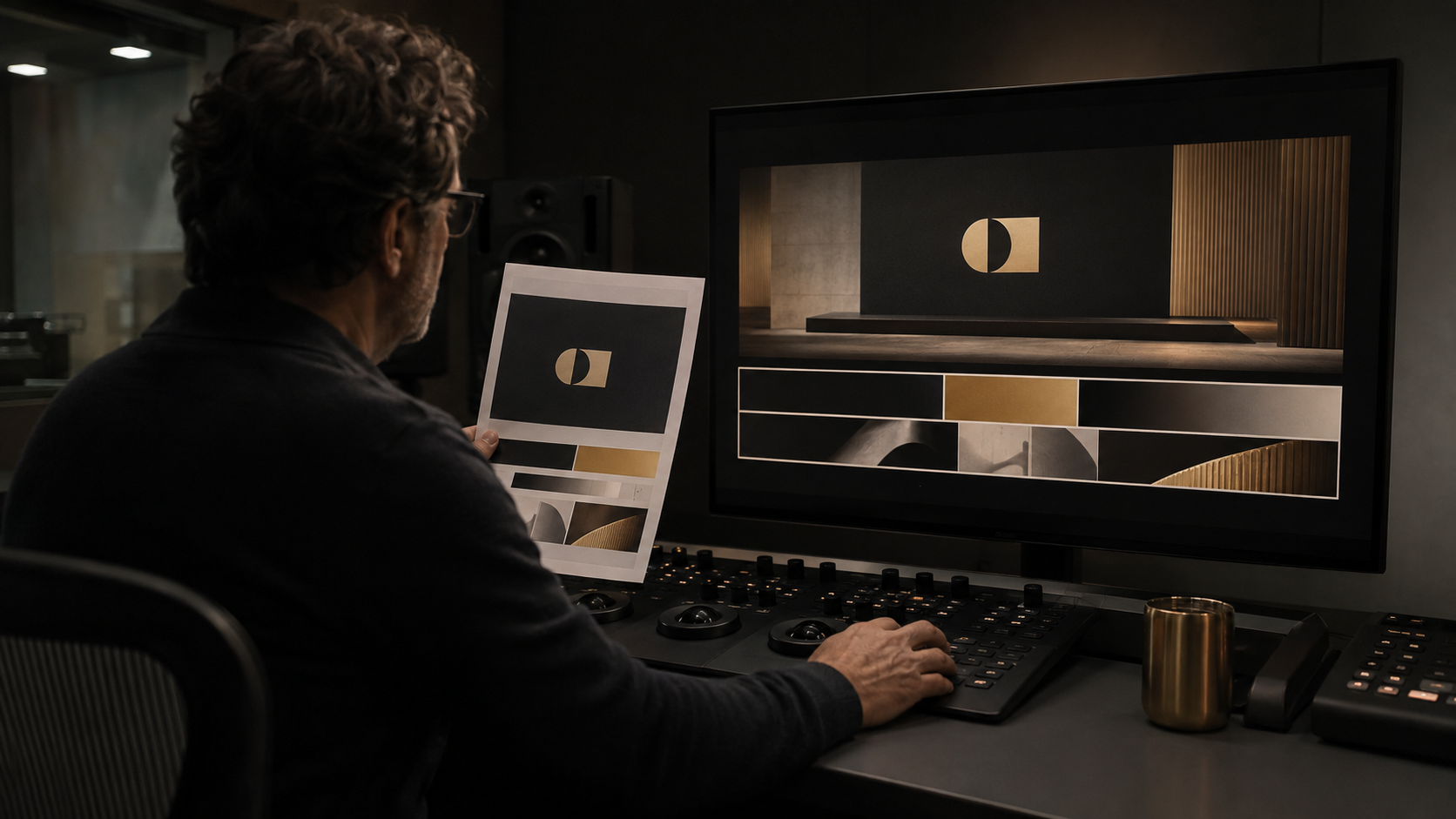
The newer invideo Agent Two model can review a finished cut against the same standard used throughout production, flagging a brand slate whose color or font does not match what was locked earlier, or a color grade that shifts noticeably right at the transition into the slate.
The final brand slate check matters because a mismatch at the very end of a spot is exactly the kind of thing a viewer notices without being able to say why. The last seconds are what linger as the ad ends, and they are also the seconds a tired finishing pass is most likely to rush.
Automating the comparison removes the human failure mode, which was never carelessness but timing. The consistency check falls at the exact point in a project when attention is lowest and the deadline is closest, and a review that runs the same way every time does not get tired.
The flags are also specific enough to act on. A named color mismatch or a grade shift at a timestamp is a fifteen-minute fix before delivery; the same problem noticed by the client after delivery is a relationship conversation.
The check protects the asset the whole spot was building, the accumulated recognition that behaves like brand equity because it is: value stored in the audience's memory of a consistent brand, spent a little every time the presentation slips.
Timing, Placement, and the Call to Action
A brand slate typically holds for two to three seconds, long enough to register without feeling like a delay after the story has resolved. Much shorter reads as an afterthought; much longer feels like the spot forgot to end.
The window is narrow because the viewer's patience at that point is borrowed. The story already resolved, the emotional transaction is complete, and the slate spends the remaining attention on the one fact the whole spot existed to plant.
Placement matters as much as duration. The brand slate usually lands right after the ad's final story beat, giving the narrative a moment to settle before the explicit brand handoff, rather than cutting to the logo mid-emotion and stepping on the very feeling the spot spent its runtime building.
A call to action, when the spot includes one, belongs on or immediately after the brand slate itself. Keeping the identity and the specific ask in the same visual moment gives the viewer one clear handoff instead of two disconnected beats.
The pairing matches how audiences already consume brands. People expect connected, coherent experiences wherever a brand meets them, and an invitation that arrives inside the brand moment lands as part of the same voice.
The ask itself should match the spot's register. A quiet story earns a quiet invitation, and a CTA that changes tone at the last second breaks the same continuity the visual lock was protecting.
Wording belongs in the locked reference alongside the visuals for exactly this reason. An approved tagline and an approved ask, stored with the fonts and colors, mean the finishing stage assembles the ending instead of writing it.
The Mistakes That Undo the Finish
The finishing failures on AI-generated ad films are consistent, and every one is preventable at the reference level:
- Building the brand slate from a separate reference. This is the single most common reason an end card looks like it came from a different project; the slate must draw from the production's original lock.
- Rushing or stretching the timing. Two to three seconds registers cleanly; a truncated brand slate reads as an afterthought and an extended one as a delay after the story has already resolved.
- Separating the call to action from the brand moment. Splitting identity and ask into two beats gives the viewer two weaker handoffs in place of one clear one.
- Exporting without the final consistency pass. Skipping the check against the original brand lock is how font mismatches and grade shifts reach delivery, at the exact spot in the film viewers scrutinize most.
The pattern across all four is the same shortcut: treating the finish as separate from the production, a habit left over from workflows where generation and finishing were different tools.
In the current wave of AI production tooling, they are one pipeline. Every failure above disappears the moment the brand slate is understood as the last shot of the film rather than a card stapled after it.

The Last Shot Is the Brand's Shot
An ad film's finishing pass decides whether everything generated before it lands as a commercial or as a demo, and the brand slate is where that verdict gets rendered.
The properly finished version is not complicated. Built from the same locked reference as the rest of the production, checked against that standard before export, and timed to let the story settle and the ask arrive with the identity, the brand slate completes the work instead of interrupting it.
The craft reflects where the whole field moved: generation got fast, and the differentiating discipline moved to the standards wrapped around it. The teams finishing well are not doing more work at the end; they did the deciding at the start and locked it where every later step could inherit it.
The brand slate at the end simply proves the standard held all the way through. That proof, delivered in the spot's final seconds, is what the audience remembers the brand by.
%2520(1).png)
.png)