














Branding
B2B Branding Strategy: Positioning, Proof and Buying-Committee Trust
Sep 6, 2026
/ By Hamoun Ani
Brand Vision is a transparent PPC agency running paid media on accounts our clients own, with reporting that shows the whole picture rather than the flattering part.
Brand Vision runs paid media across Google Ads, Meta, and LinkedIn for businesses that already know they want to advertise and want to know it is being done properly. Accounts stay in the client's name, reporting shows spend and return in full. Brand Vision pays special attention to creating optimized campaigns and landing pages that improve conversion without harming the brand.

Building real partnerships with top global brands. Delivering results that last well beyond the launch.






Research-based and brand-focused paid media and PPC services.
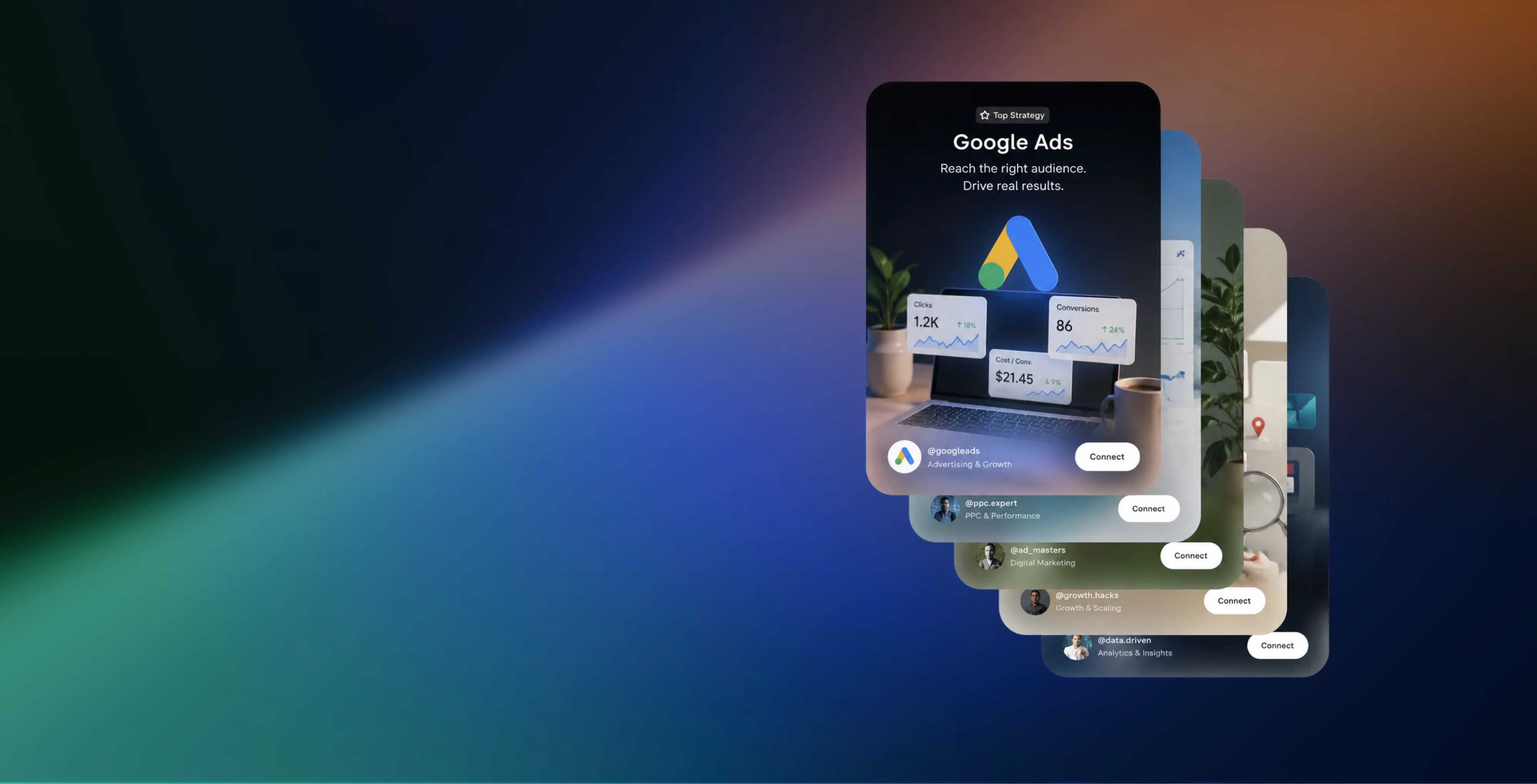
Brand Vision opens every engagement with a market analysis. What competitors are paying, what a click costs in your category, and what a given budget can realistically achieve, delivered before any spend begins. Campaigns across search, shopping, and video are built to those figures. Search terms are reviewed continuously and budget moves toward what converts. As a Google Ads agency, we work only in accounts our clients own and can take with them.
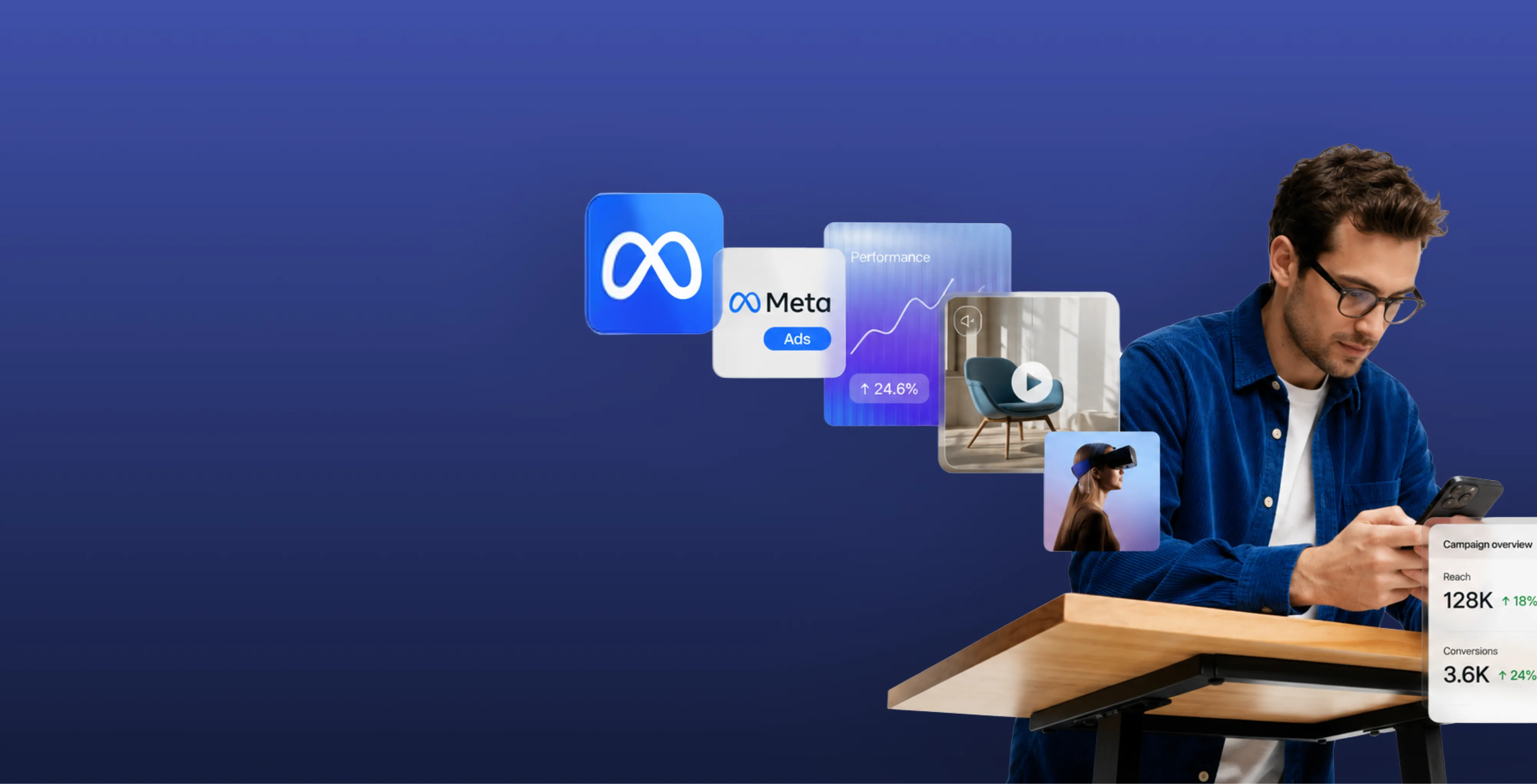
Creative development, audience construction, and continuous testing, run as a single ongoing program. Brand Vision plans the creative pipeline from the first week, since a Meta account declines the moment it stops being fed. Strategy is built around your category, your margins, and the budget genuinely available. As a Facebook ads agency, we design for month six rather than the opening weeks.

Brand Vision assesses fit before recommending LinkedIn, weighing your average contract value against what the platform charges to reach the people who decide. Where the numbers support it, campaigns target by role, company, and seniority with genuine precision, matched to content suited to a long decision. As a LinkedIn ads agency, we will show you the analysis that argues against it as readily as the one that supports it.

Brand Vision builds remarketing around genuine intent, excluding existing customers and the visitors who were never going to convert. Sequences are structured to advance a decision rather than repeat an impression. Every audience appears in the monthly report with its cost and its return stated plainly, and we identify which ones no longer justify the spend before you have to ask.

Landing pages designed and built as part of the campaign, with one clear action, a message that continues from the advertisement rather than restarting, and load speeds that hold on a phone. Brand Vision handles design, copy, and development in-house, then improves each page against live performance. Conversion optimization after the click is consistently cheaper than purchasing more traffic before it.

A Brand Vision PPC audit establishes what an account is genuinely measuring, then reviews structure, wasted spend, the searches being paid for, bidding, creative, and the pages traffic reaches. Each issue is quantified with a monthly cost. You receive a ranked list of fixes in plain language, available on its own whether or not you appoint us as your PPC agency.

Brand Vision runs conversion optimization and user experience optimization across the pages, forms, and checkouts that paid traffic already reaches, working from recorded visitor data rather than assumption. Each test carries a stated reason and runs long enough to be trusted. Improvements are prioritized by what they are worth rather than how quickly they can be made. The same budget returns more without a single additional click purchased.
A sequence built to establish what is true before anything is spent scaling it.
Begins in your account, verifying conversions and the commercial numbers (margin, close rate, customer value).
Which platforms get budget and how much, with structure, allocation, and targets agreed before launch.
Campaigns, creative, audiences, and pages built together, tracking verified before spend, launch staged.
Ongoing testing plus transparent reporting on what to scale, cut, or move.
Accounts we inherited, rebuilt, and hold the results for.
Cost per click, conversion value, and buying cycle vary enormously by sector, and a strategy that performs in ecommerce will lose money in professional services. Brand Vision runs paid media across industries with very different economics, and builds each program around the numbers that actually apply to it.












Product depth shouldn’t slow the story down. We partner with SaaS, platform, and enterprise software teams to translate technical capability into focused narratives. Clear paths to demo, trial, or contact serve both buyers and technical evaluators. Systems are built for product-led growth with composable components, editor guardrails, and instrumented analytics that tie directly to pipeline.
Complex services sell on clarity, not volume. We help consulting, financial, and advisory firms structure their digital presence around buyer tasks: understanding capabilities, comparing options, and starting a brief. Every touchpoint earns trust through specificity and proof. Content is organized by audience need, so the people making the hiring decision find answers quickly and move to contact without friction.
Patients and practitioners make high-stakes decisions under pressure. We design trust-first experiences for healthcare and wellness brands, keeping clinical accuracy intact while making it simple for people to find the right provider, service, or next step. Accessibility, privacy-compliant forms, and plain-language content are standard. Local visibility for practices and clinics is built into the foundation, not bolted on later.
Prospective clients searching for legal help are often under pressure and comparing firms quickly. We help law firms present practice areas with credibility, surface the right contact paths, and build a digital presence that earns trust before the first conversation. Clear structure, plain language, attorney profiles, and consultation flows make it easy for people to take the next step with confidence. Ethical advertising compliance is built in from the start.
Buyers, investors, and project owners move on trust and timing. We work with brokerages, developers, general contractors, and property management firms to present listings, projects, and capabilities with clarity. Content is organized around what prospects actually need: proof of work, service scope, location context, and a direct path to inquire. Pre-construction launches and trade portfolios get the same strategic rigor as resale platforms.
Conversion lives in the details. We work with consumer and ecommerce brands to build fast, clear shopping experiences where product pages explain value quickly, checkout flows reduce friction, and the entire system scales with the catalog. Promotional templates, collection architecture, and performance monitoring keep the storefront sharp as demand and inventory shift with seasons. The result is a store your team can run day to day without developer dependency.
Early-stage companies need focus over flash. We help startups define positioning, build a credible identity, and launch a conversion-ready presence that clearly communicates what the product does, who it’s for, and how to get started. Everything is built to scale: component systems, content structures, and analytics foundations grow with the roadmap instead of needing a rebuild at Series A. The pitch and the website tell the same story.
Students, parents, and administrators all need different answers from the same site. We help schools, universities, and training organizations structure digital experiences by task: apply, visit, inquire, enroll. Accessible design and plain-language content serve diverse audiences without alienating any of them. A manageable CMS means internal teams keep program pages, event listings, and admissions information current without outside help or bottlenecks.
Nonprofits compete for attention, funding, and volunteers simultaneously. We build accessible digital experiences that make programs clear, donation paths intuitive, and calls to action specific enough to drive real participation and support. Content governance is designed for lean teams, so pages, campaigns, and impact reports stay current without bottlenecks. The organizations doing the most important work deserve a digital presence that matches their mission.
From restaurants to packaged goods, this industry sells on quality and convenience. We help food and beverage brands connect story with logistics: clear menus, product lines, ordering options, and wholesale paths that make it obvious how to buy and reorder. Identity and digital experience work in tandem so visitors see quality and know exactly what to do next, whether they’re a consumer walking in or a distributor placing a first order.
Audiences decide in seconds. We work with labels, venues, talent agencies, and event companies to build media-rich, performance-optimized experiences where the work is front and center. Booking, inquiry, and ticket paths stay visible and fast across devices. Campaign templates and component systems let teams launch content for new shows, releases, and events without starting from scratch each time. The creative comes first; the infrastructure stays invisible.
Guests research and book across multiple touchpoints. We help hotels, resorts, tourism brands, and event venues present their experience with clarity, connecting visual storytelling with practical booking flows, local discovery, and seasonal content that stays current. The systems we build make it straightforward for teams to update rates, packages, and promotions without depending on a developer for every change. The experience starts online, and it should feel as considered as the stay itself.









Original research and expert perspective on design, branding, and the strategy behind both.
Still have questions? Contact us to discuss.
A PPC agency decides where money goes, builds the campaigns and the pages behind them, and tells you the truth about what came back. PPC management is mostly the first two, and they are craft. The third is where most of this industry falls down, and it is what separates one PPC company from another, which is why this page leads on transparency instead of on a growth claim.
What an agency should actually own. A read on what a click costs in your category and what a given budget can realistically do, before anything is spent. Campaign structure and bidding that suit your economics. Creative and landing pages built together instead of ads pointed at a page nobody briefed. Continuous review of what you are actually paying for. And reporting that shows the whole picture.
Why clients choose us for it.
The account stays yours. Campaigns are built inside an account in your name that you can take with you. No shared agency account, no rebuilding from nothing if the relationship ends, no leverage held over you. This is the single most important question to ask any paid media agency and a surprising number will not answer it plainly.
Reporting that shows spend and return in full. Every campaign, every audience, and every platform with its cost and its result stated, including the ones that are not working. We identify which audiences no longer justify the spend before you have to ask.
Pages and creative built in-house. Design, copy, and development sit with the same senior team running the campaigns, so a landing page is part of the campaign instead of a request sent somewhere else. The team page shows exactly who that is, before you commit to anything.
Fees that do not reward bigger budgets. Covered properly further down, and it changes what advice you get.
Paid media works best when it sits inside a wider plan, so where organic, content, or email should be carrying part of the load we will say so, and the broader marketing practice is where that gets coordinated.
An award-winning agency, Brand Vision opened in Toronto in 2018, holds over 250 verified five-star reviews, and runs offices in Chicago, San Francisco and Miami. Treat that as background. Choosing who spends your media budget comes down to how the arrangement is built, so here are five parts of ours that should decide it.
The list has a ceiling worth hearing before it flatters us. We carry a deliberately small book of accounts, so we are seldom the cheapest quote, and we are wrong for an advertiser spending seven figures a month across a dozen countries, where an internal buying desk earns its keep. A fixed fee also cuts against a small advertiser, since the work costs the same at five thousand a month or fifty.
Some buyers should hire somebody else. If the job is Google Search alone, with no creative production and no page work, an independent Google Ads specialist will do it well for less than a studio charges. If your volume would keep one buyer busy full time, hire them and use us for the audit. We suit a program where paid is one thread of several, run by one senior group named on the about page.
Seven, run as one program instead of as separate line items. Which platforms get funded is a decision made from your numbers instead of from what an agency is set up to sell.
Google Ads management. Search, Shopping, and video PPC services, built to a market analysis delivered before any spend begins. Search terms reviewed continuously, negatives maintained properly, and budget moved toward what converts. As a Google Ads agency we work only in accounts clients own.
Meta ads agency work. Creative development, audience construction, and continuous testing run as one ongoing program. The creative pipeline gets planned in week one, because a Meta account declines the moment it stops being fed. As a Facebook ads agency we design for month six instead of the opening fortnight.
LinkedIn ads. As a LinkedIn ads agency we assess fit before recommending it at all, weighing your average contract value against what the platform charges to reach the people who decide. Where the numbers support it, targeting by role, company, and seniority is genuinely precise. Common in business-to-business selling and rarely right outside it.
Remarketing. Built around real intent, with existing customers and never-going-to-convert visitors excluded, and sequences structured to advance a decision instead of repeating an impression.
Landing pages. Designed and built as part of the campaign, with one clear action and a message that continues from the ad instead of restarting. That craft sits inside our website design practice.
PPC audits. Available on their own whether or not you appoint us. What the account is genuinely measuring, then structure, wasted spend, search terms, bidding, creative, and destination pages, with each issue quantified as a monthly cost.
Conversion optimization. Testing and improvement across the pages, forms, and checkouts paid traffic already reaches, worked from recorded visitor behaviour instead of assumption. That runs with our interface and usability team.
And where you want a read before committing budget, a wider consultation will tell you whether paid is the right first investment at all. Sometimes the answer is organic search and we will say so.
The ones where the people who buy from you are already looking or already reachable at a cost your margins support. Which for most businesses means fewer platforms than they are currently on.
How the main ones behave.
Google Search. Captures people who have already decided they want something. The highest intent available and the highest cost per click, with a hard ceiling set by how many people are searching. If somebody is typing what you sell, this is where the money goes first. Almost every business should be here.
Google Shopping and product feeds. For anything with a catalogue, this frequently outperforms search text ads on the same budget. Feed quality does more of the work than bidding.
Meta. Interest and behaviour instead of stated intent, which makes it the best place to create demand and the wrong place to expect search-level conversion rates. It rewards creative volume more than clever targeting now, which is why the creative pipeline is planned from week one. Strongest for considered consumer purchases and visual products.
YouTube and video. Good for demand creation and for retargeting at a low cost per impression. Poor as a direct response channel for most businesses, and frequently sold as though it were not.
LinkedIn. Precise targeting by role, company, and seniority, at a click cost frequently several times Google's. That only closes when your average contract value is high, which is why we run the fit assessment first and will show you the analysis that argues against it as readily as the one for it. A business selling a two-hundred-dollar product should not be here.
Microsoft Ads. Smaller volume, often cheaper clicks, and an audience that skews older and more corporate. Worth testing instead of assuming, particularly for B2B and professional services.
What decides it in practice is your average order value or contract value, your margin, your sales cycle, and where your buyers actually are. A strategy that performs in ecommerce will lose money in professional services on the same setup. We would rather run two platforms properly than five thinly, and we will name the ones we think you should switch off.
Nobody can answer that honestly without looking at your category first, which is why we deliver a market analysis before a dollar moves. What competitors are paying, what a click costs in your space, how much search volume genuinely exists, and what a given budget can be expected to produce.
The arithmetic is not complicated and it is rarely done. Take the cost per click in your category, apply a realistic conversion rate for the page traffic will land on, and you have a cost per lead. Apply your close rate and you have a cost per customer. Hold that against what a customer is worth and you know whether the channel works before you fund it. When that arithmetic does not close, more budget makes the loss bigger and we will tell you instead of taking the account.
What actually sets a sensible floor.
Cost per click in your category. A five-dollar click and a fifty-dollar click are different businesses. Legal, insurance, and some medical terms sit at the top end, and consumer categories at the bottom.
Enough volume to learn. Automated bidding needs conversions to work with. A budget producing three conversions a month cannot optimize toward anything, which is why very small budgets often perform worse per dollar than slightly larger ones. Where a budget is genuinely below the floor, the honest recommendation is usually a narrow campaign on your highest-intent terms instead of a broad one spread thin.
Sales cycle length. A ninety-day cycle means a three-month test tells you very little, and the budget needs to survive long enough to read.
Whether the destination converts. Spending into a page that converts at half what it should doubles your real cost per customer. This is the most common reason a budget looks insufficient when it is not.
Two things we will not do. Recommend a number before seeing your economics, and quote a percentage of revenue as though it were a strategy. Where paid genuinely cannot clear the bar at your budget, the wider plan usually has a better answer, and organic visibility is frequently the cheaper long-term one.
Paid search can produce usable data in one to three weeks, and a fair read on whether the channel works takes six to twelve. Anyone promising a verdict in the first fortnight is describing luck.
Why it takes that long. Automated bidding needs a volume of conversions before it optimizes reliably, and on Meta an ad set needs a meaningful number of events each week to leave the learning phase. Then search terms have to accumulate before negatives can be built properly. Then the landing page needs enough traffic to be judged. And if your sales cycle is long, the leads generated in month one have not closed yet, so the numbers that matter are not available.
Across our engagements the average lift in leads has been 300% and the average reduction in cost 25%. Read those the way they are meant. They average accounts of very different sizes and starting points, and most of them were inherited in poor condition, which is the honest reason the lift figures look large. They are a record of what has happened and not a forecast for your account. Any projection we give you gets built from your own numbers with the assumptions written down.
What appears in the monthly report.
Where a number is directional because measurement has genuine limits, the report says so. And if a month goes badly you hear the diagnosis from us with the plan attached. If you want a read on what your current reporting is hiding, a consultation will tell you. Benchmarks differ enormously by sector, which is why we compare against your own history and your own category instead of a general figure, and across industries those economics are not remotely similar.
Almost always the same six things, and usually in the same order. A PPC audit establishes what the account is genuinely measuring first, because everything downstream is unreliable until that is settled.
What gets examined, and what we typically find.
Each finding is quantified with a monthly cost, so the report says how much a specific problem is costing instead of merely describing it. What you receive is a ranked list of fixes in plain language with the value and effort of each one, and it is available on its own whether or not you appoint us. Where the finding is technical and not campaign-level, it routes to development, and where the same problems exist on the organic side an SEO and site audit covers that ground.
The platform is optimizing toward the thing you told it to value, and you told it to value form fills. So it found the cheapest people who will fill in a form, which is exactly what it was asked to do.
Where it breaks, in the order we usually find it.
The conversion you are counting is the wrong one. Optimizing toward a form submission gets you form submissions. Optimizing toward a qualified opportunity gets you fewer and better ones. Feeding real outcomes back into the platform, so it learns which leads became customers, is the single highest-return change available on most accounts and almost nobody does it.
Nothing distinguishes a good lead from a bad one in the data. If your CRM knows which leads closed and the ad platform does not, you are paying to acquire more of whatever came last.
The targeting is buying the wrong intent. Broad match on a category term collects researchers, students, competitors, job seekers, and people in countries you do not serve. Tight match types, a real negative list, and geographic precision at the level you actually serve are the baseline.
The page appeals to everybody. A landing page that avoids saying who you are for produces enquiries from everybody. Stating plainly what you do, who you serve, what you do not do, and roughly what it costs reduces volume and raises quality. Clients resist this and then complain about lead quality, and in high-value categories like legal services the difference is stark.
The form is too easy in the wrong way. One or two qualifying questions filter more effectively than any bidding change, at the cost of some volume you did not want.
Nobody has checked for junk. Bot submissions, click fraud on Display, and repeated fills from the same source. Worth looking at before assuming a strategy problem.
The way to find out which applies is to watch the actual path and read the actual leads. Behavioural research on the form and the page, plus a review of thirty real enquiries against what your sales team says about them, resolves this faster than any amount of bid adjustment.
Because the ad only has to earn a click and the page has to earn everything after it, and improving the page is consistently cheaper than buying more traffic. A page converting at two percent instead of four is doubling your cost per customer on every campaign at once.
What separates a landing page that works.
Message continuation. The page picks up the exact promise the ad made, in the same words. A visitor who has to work out whether they are in the right place has already half left, and this is the most common break we find.
One action. A landing page with a navigation bar, three service links, a newsletter box, and a chat widget has four ways to leave and one to convert. Removing choices raises conversion more reliably than adding persuasion.
The action reachable without scrolling on a phone, since most paid traffic arrives on one.
Proof positioned where doubt appears. Not a testimonial block at the bottom. The reassurance sitting next to the moment somebody hesitates.
A form asking the minimum, plus one qualifying question where lead quality matters more than volume.
Load speed that holds under real conditions. Paid traffic is the most expensive traffic you have, and a slow page wastes it before anything else has a chance.
Then conversion optimization takes over, and the discipline matters. Every test carries a stated reason and runs long enough to be trusted, because calling a winner on two hundred visits is how teams convince themselves of things that are not true. Improvements get prioritized by what they are worth instead of how quickly they can be shipped. And the work starts from recorded visitor behaviour and not opinion, which is what the interface and usability practice exists for. A structured review of the post-click path usually finds more money than a bidding change, and where the page itself needs rebuilding that becomes a design and build piece.
The short version is that the same budget returns more without a single additional click purchased, which is the cheapest growth available to any advertiser.
We use it where it earns its place and we constrain it hard, because automation optimizes for the platform's definition of success and not necessarily yours. Refusing it outright is as lazy as accepting it uncritically.
Where automation genuinely helps. Bidding, once there is enough conversion volume to work with. Creative combination testing at a scale no human would attempt. Finding pockets of demand in large catalogues. And broad prospecting on Meta, where audience targeting has become less important than the creative itself.
Where it needs supervising, and this is the part that gets accounts into trouble.
Performance Max absorbing branded traffic. Left unconstrained it will happily serve to people searching your company name and then report an excellent return on them. Those people were already coming. Brand exclusions, and a separate brand campaign you can measure on its own, are the difference between a real number and a flattering one.
Limited visibility into what you paid for. Reporting is thinner than a search campaign, so the account has to be structured deliberately, with feed and asset group segmentation that lets you see performance by product or service instead of as one blended figure.
The conversion goal doing all the steering. Automation is only as good as the signal it optimizes toward. Weak or badly configured tracking plus automated bidding produces confident spend in the wrong direction.
Advantage+ and broad targeting on Meta, which work well and make creative the whole variable. That is fine as long as the creative pipeline exists, and a problem if it does not.
Auto-applied recommendations, which we turn off and review deliberately instead of letting the platform edit the account.
What we hold manually. Brand and non-brand separation. Negative keyword lists. Placement and network exclusions. Geographic and schedule controls. And the decision about which conversion actions count and what each is worth. For catalogue businesses this connects tightly to product and category structure, and on Shopify specifically the feed is usually where the fastest gains are.
By remarketing to intent instead of to everybody who loaded a page, and by capping how often anybody sees you. Most underperforming remarketing is one audience, one message, and no exclusions.
How we build it.
Segment by what somebody actually did. A visitor who read one page and left is not the same person as one who viewed pricing, started a form, or abandoned a cart. Those groups deserve different messages and different budgets, and lumping them together means overpaying for the weakest one.
Exclude the people who should not see it. Existing customers, current leads already in conversation, recent purchasers where there is nothing to buy again, job applicants, your own staff, and visitors who bounced in under a few seconds. Exclusions do more for remarketing efficiency than targeting does.
Set recency windows that match the decision. A one-day window suits an abandoned cart. A ninety-day window suits a considered service purchase. Running everything at thirty days by default wastes money at both ends.
Cap frequency and mean it. There is a point where additional impressions stop persuading and start irritating, and in a small market you reach it quickly. Brand damage from over-serving is real and does not show up in a cost per acquisition figure.
Sequence the message. Each exposure should advance the decision instead of repeating the last one. A reminder, then an objection handled, then a reason to act now. That requires creative built for a sequence, which is where brand consistency matters, since remarketing is the one channel where somebody sees your work repeatedly and notices when it drifts.
Refresh the creative before it fatigues, which the visual system should make straightforward instead of a new project each time.
Report each audience separately, with its cost and its return, and retire the ones that no longer justify the spend. That happens in the monthly report before you have to ask, and the honest position is that remarketing numbers usually look better than they are, because some of those people were coming back anyway. Measuring incrementally where volume allows is how you find out.
You own it, in your name, and you keep it if we part ways. Fees are flat and agreed in advance instead of a percentage of what you spend. Both of those are deliberate and both change the advice you get.
On ownership. Campaigns get built in your own Google Ads, Meta, and LinkedIn accounts. We are granted access and access can be revoked. The historical data, the conversion tracking, the audiences, and the learning all stay with you. Agencies that build inside their own account are holding something you paid for, and the moment you leave you start from nothing. If a prospective agency will not commit to this in writing, that tells you what the relationship is.
On fees. Charging a percentage of ad spend creates an obvious problem, which is that the agency earns more by recommending you spend more. It also means the account that most needs restructuring gets the least attention, because reducing waste reduces the fee. We charge a flat monthly management fee based on the work involved, agreed up front. When the honest recommendation is to cut spend, nobody here loses money by saying it.
What the fee covers. Management, ongoing optimization, creative and copy for ads, reporting, and the monthly call. Landing page design and build, and conversion optimization work, are scoped separately because their size varies enormously. Ad spend is yours and goes to the platforms directly. Any agency blurring management fee and media spend into one number is making the total harder to evaluate on purpose.
On commitment. We work to a minimum term, usually three to six months, because a shorter window cannot produce a fair read and leaving at week six means paying for the learning phase and none of the return. After that it runs monthly.
On what happens if you leave. You keep the account, the data, the audiences, the tracking setup, and the landing pages. We will do a proper handover to whoever takes it on, including documentation of how the account is structured and why. Nothing is withheld and nothing is built in a way that requires us.
If you want a straight read on your current arrangement, including whether your account is genuinely yours, ask us. And where paid is one part of something larger, the full range sits under one roof.
It starts inside your existing account instead of with a proposal, because nothing sensible can be recommended until we know what is actually true. Four stages, and the first two happen before any spend changes.
Audit and access. We get read access to your accounts and analytics, verify what the conversions are really counting, and collect the commercial numbers that make the arithmetic work, meaning margin, close rate, average order or contract value, and sales cycle length. Most accounts have a tracking problem, and finding it here instead of in month three is the whole point.
Strategy and structure. Which platforms get budget and how much, the campaign structure, the audience plan, and the targets. All agreed with you before launch, so nobody is surprised by what a realistic cost per lead looks like.
Build and launch. Campaigns, creative, audiences, and landing pages built together, tracking verified before spend, and launch staged so problems surface at low cost. New accounts start narrow on the highest-intent terms and widen once the data supports it.
Deliver. Ongoing testing, continuous search term and audience review, and a monthly report on what to scale, cut, or move. Every task sits somewhere you can see it, so you are never waiting for a call to find out what happened.
What we need from you, and it sets the pace more than anything we do. Account and analytics access early. The commercial numbers, which are the part clients most often cannot produce quickly and the part that makes everything else meaningful. A named decision-maker for approvals. And honesty about the real budget and the real deadline, since we can plan around a constraint we know about.
Timing-wise, audit and strategy take one to two weeks, build and launch another one to two, and the first meaningful read arrives in weeks six to twelve depending on volume and cycle length.
You can see accounts we inherited and rebuilt in selected work, and where the fix turns out to be technical rather than in the campaigns, the engineering side is part of the same team. Tell us what you are running now and you will get a straight read, including when the honest answer is that paid is not your best next investment.

Tell us about your goals and project, and receive a proposal shaped to your brand, your timeline, and your budget.


%2520(1).png)
.png)