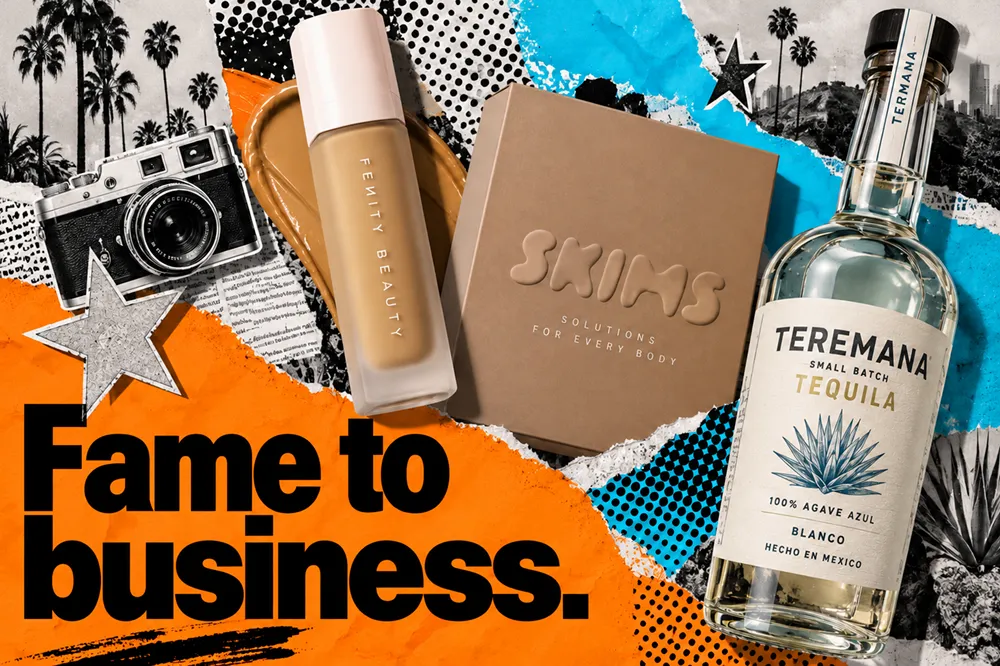
Celebrity-owned brands are often discussed as if ownership were simple. In practice, these businesses range from founder-controlled companies to joint ventures, licensing platforms, strategic partnerships, and brands that celebrities later sold. That distinction matters when comparing the biggest celebrity-owned brands because fame can create attention, but ownership, economics, and control can change over time.
These 19 examples show how celebrity influence can shape consumer behavior and brands that shape pop culture. They also show why a strong branding strategy needs more than a famous founder. Product quality, distribution, pricing, customer experience, and governance determine whether initial attention becomes a durable business. Brand Vision's guide to celebrity-owned brands explores the content side of that equation.
The list below uses current 2026 context where it materially changes the story. Historical sale prices, valuations, and revenue figures are labeled as historical rather than presented as current market values.
Victoria Beckham: Victoria Beckham
Victoria Beckham launched her label in 2008 and spent years moving it beyond the assumption that it was simply a celebrity project. The company now spans fashion and beauty, with tailoring, dresses, accessories, cosmetics, and fragrance contributing to a more diversified luxury business.
The biggest current update is financial: Victoria Beckham Holdings reported its first operating profit for 2025, £7.3 million, on revenue of £129.8 million. That turnaround gives this example a different meaning than it had when the brand was defined primarily by losses. The lesson is long-term credibility. For more on celebrity fashion labels that have outlasted launch hype, see Brand Vision's celebrity fashion brands analysis.
Jessica Simpson Collection: Jessica Simpson
Jessica Simpson launched her footwear business in 2005 and expanded it into apparel, accessories, luggage, and other licensed categories. The collection became one of the most commercially successful celebrity licensing businesses of its era, at one point generating more than $1 billion in annual retail sales.
The ownership story is just as important as the sales story. Simpson and her mother reacquired control of the brand in 2021 after the previous owner entered bankruptcy proceedings. That made the label a useful example of how a celebrity can move from licensor to operator and back toward greater control. Its strategy has generally been less about fashion-industry prestige and more about broad retail access, recognizable style, and products designed for mainstream department-store customers.
Martha Stewart Living: Martha Stewart
Martha Stewart built one of the earliest modern celebrity lifestyle systems by combining publishing, television, instruction, and licensed products. Martha Stewart Living Omnimedia went public in 1999 and later changed hands, so the original public company and today's Martha Stewart licensing ecosystem should not be treated as the same ownership structure.
The enduring lesson is content-commerce integration. Stewart used trusted editorial guidance to make cookware, bedding, crafts, and home products feel like extensions of one point of view. That same model appears in current creator businesses where education and product discovery happen together. Brand Vision's guide to celebrity content shows how that approach anticipated today's creator-led funnels.

Teremana Tequila: Dwayne Johnson
Dwayne Johnson launched Teremana in 2020 with a positioning built around approachable premium tequila and direct founder participation. The brand scaled quickly, but rumored multibillion-dollar valuations should not be treated as verified market values. More useful are observable signals such as distribution growth, case sales, and continued expansion.
Johnson's marketing has made the founder highly visible through tastings, social posts, behind-the-scenes distillery content, and recurring rituals such as “Teremana Tuesday.” The approach works because the personality and the product promise are aligned. For beverage companies, the same principle applies at a smaller scale: food and beverage marketing should connect product, occasion, distribution, and repeat purchase rather than depend on awareness alone.

Aviation Gin: Ryan Reynolds
Ryan Reynolds acquired an ownership stake in Aviation Gin in 2018 and became closely associated with its advertising. His dry comedic style gave the brand a recognizable voice and helped Aviation stand out in a spirits category that often relied on more formal luxury cues.
In 2020, Diageo acquired Davos Brands, including Aviation, in a deal worth up to $610 million. That means Aviation is best understood today as a celebrity-built brand that was sold, not as a brand Reynolds still controls in the same way as before the acquisition. Its influence remains a strong case study in personality-led advertising. Brand Vision's celebrity content analysis explores why Reynolds-style creative can work when the voice is consistent across campaigns.

Armand de Brignac: Jay-Z
Jay-Z turned Armand de Brignac, widely known as Ace of Spades, into a prominent luxury signal in music and nightlife after acquiring the champagne brand. The gold bottle, limited availability, and repeated cultural placement made packaging and celebrity association work together.
In 2021, Moët Hennessy acquired a 50% stake, changing the ownership structure while leaving Jay-Z economically and culturally tied to the brand. This is a useful reminder that celebrity brands can become joint ventures rather than remaining fully founder-owned. Armand de Brignac's strongest marketing lesson is selective visibility: appearing in the right cultural settings can reinforce luxury more effectively than constant mass advertising when exclusivity is part of the product promise.

The Honest Company: Jessica Alba
Jessica Alba founded The Honest Company in 2011 around baby, personal-care, and household products. The company later went public, which makes it one of the more transparent examples on this list because investors can evaluate revenue, margins, and strategy through public filings rather than celebrity-driven estimates.
Alba stepped down as chief creative officer in 2024 but remains a founder and board member. The company reported $371.3 million in 2025 revenue and is now narrowing its portfolio under a profitability-focused plan. The marketing lesson is that founder credibility can open a category, but the operating model has to mature. A consumer brand planning its own expansion can use a marketing agency in Miami to localize message and launch execution without implying any connection between Honest and Brand Vision.

CR7: Cristiano Ronaldo
CR7 is better understood as a celebrity brand platform than a single company with one reliable valuation. Cristiano Ronaldo's name appears across underwear, fragrance, eyewear, gyms, and hospitality, including Pestana CR7 hotels. The commercial structures differ by category, so combining them into one brand-value number can be misleading.
The common asset is Ronaldo's identity: performance, fitness, discipline, and global recognition. He appears in campaigns, product imagery, and social content, making the founder himself the connective tissue across otherwise different businesses. The partnership model behind CR7 hotels also shows why celebrity entrepreneurship often blends ownership, licensing, and co-branding rather than relying on one corporate structure.
Prime: Logan Paul and KSI
Logan Paul and KSI launched Prime in 2022 with distribution and operations handled alongside Congo Brands. The launch demonstrated how creator audiences can accelerate awareness, retail sell-through, and international expansion in a short period.
Early sales reports were extremely large, but exact private-company revenue and valuation figures should be treated cautiously unless tied to a dated company disclosure. What is clear is the marketing mechanism: founders with large youth audiences, product scarcity during the early rollout, sports sponsorships, and constant social content. For consumer brands, this is also a B2C marketing lesson. Hype can drive trial, but repeat demand eventually depends on taste, price, availability, and the product's role after the novelty fades.

Goop: Gwyneth Paltrow
Gwyneth Paltrow launched Goop as a newsletter in 2008 and expanded it into ecommerce, wellness content, events, beauty, and lifestyle products. The company became a model for turning a celebrity's editorial point of view into a commerce platform.
Goop has also faced sustained criticism and regulatory scrutiny over some historical wellness claims, which makes it a useful example of the risk side of founder-led authority. Attention does not remove the need for evidence, careful product language, and consumer trust. Paltrow remains central to the brand, and the company continues to operate across media and products. Brand Vision's profile of Gwyneth Paltrow and other celebrity beauty founders provides more category context.
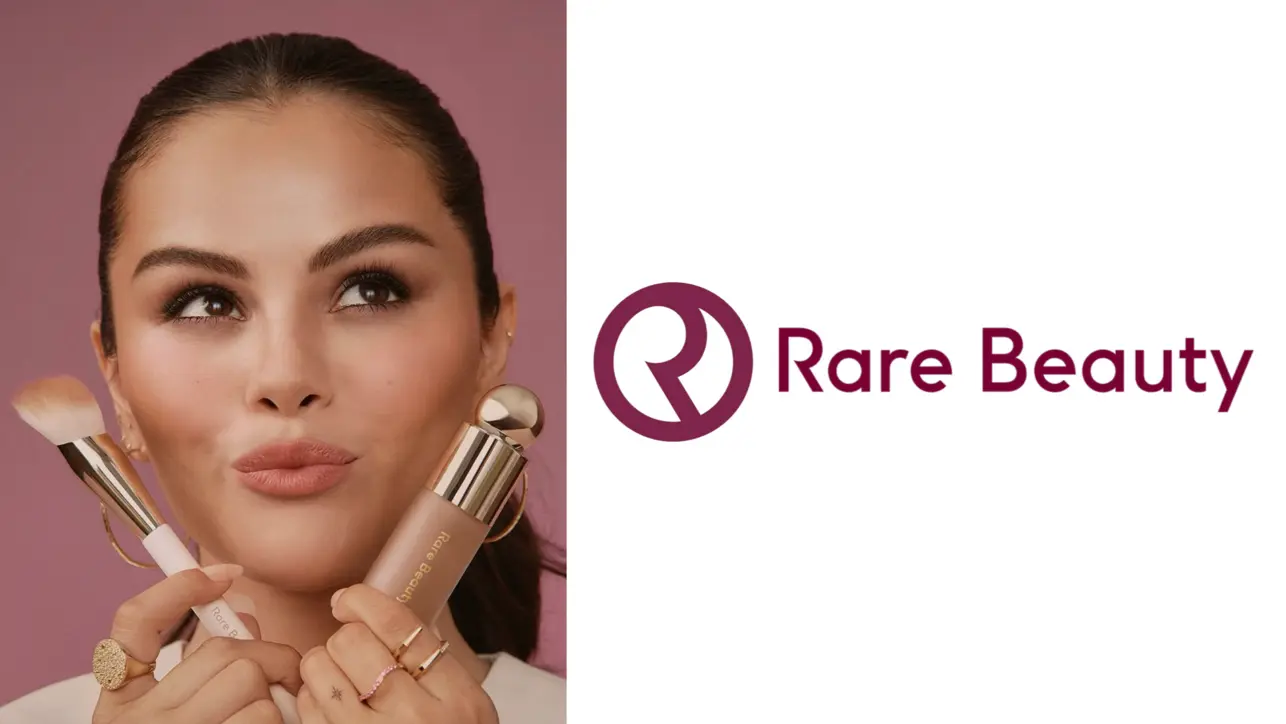
Rare Beauty: Selena Gomez
Selena Gomez launched Rare Beauty in 2020 with product accessibility, inclusive shades, and mental-health advocacy built into the brand narrative. The Soft Pinch Liquid Blush became a particularly visible hero product, helping the business earn recognition beyond Gomez's existing fanbase.
The Rare Impact Fund receives 1% of Rare Beauty sales and has become part of the company's purpose positioning. Valuation estimates have circulated widely, but private-company estimates should be labeled as estimates rather than presented as settled fact. The stronger strategic lesson is that the brand gives customers a reason to talk about product performance and community at the same time. Celebrity reach can accelerate discovery, but the product has to remain strong enough to create repeat purchase without the founder being present in every interaction.
Casamigos: George Clooney, Rande Gerber and Mike Meldman
Casamigos began as a tequila project among George Clooney, Rande Gerber, and Mike Meldman before becoming a commercial brand. Diageo agreed to acquire it in 2017 in a transaction worth up to $1 billion, so it is now a celebrity-founded exit story rather than a celebrity-owned tequila company.
Its early marketing relied heavily on provenance, founder friendship, nightlife visibility, and word of mouth. That made the origin story feel less like a conventional endorsement deal and more like a product the founders wanted for themselves. Brand Vision's celebrity marketing guide also uses Casamigos as an example of how a believable founder narrative can reduce the distance between celebrity promotion and product credibility.

Cîroc: former Sean Combs partnership
Cîroc is a Diageo-owned vodka brand. Sean Combs began a profit-sharing and marketing relationship with Diageo in 2007 and became closely associated with Cîroc's nightlife positioning and celebrity-led promotion during the brand's growth years.
That relationship is no longer current. In January 2024, Diageo and Combs announced that they had resolved their disputes and had no ongoing business relationship with respect to Cîroc or DeLeón tequila. That makes the ownership distinction especially important for a 2026 article: Cîroc should not be described as a current Combs-owned brand. The historical case remains relevant because it showed how a celebrity operator could shape positioning without owning the underlying brand.

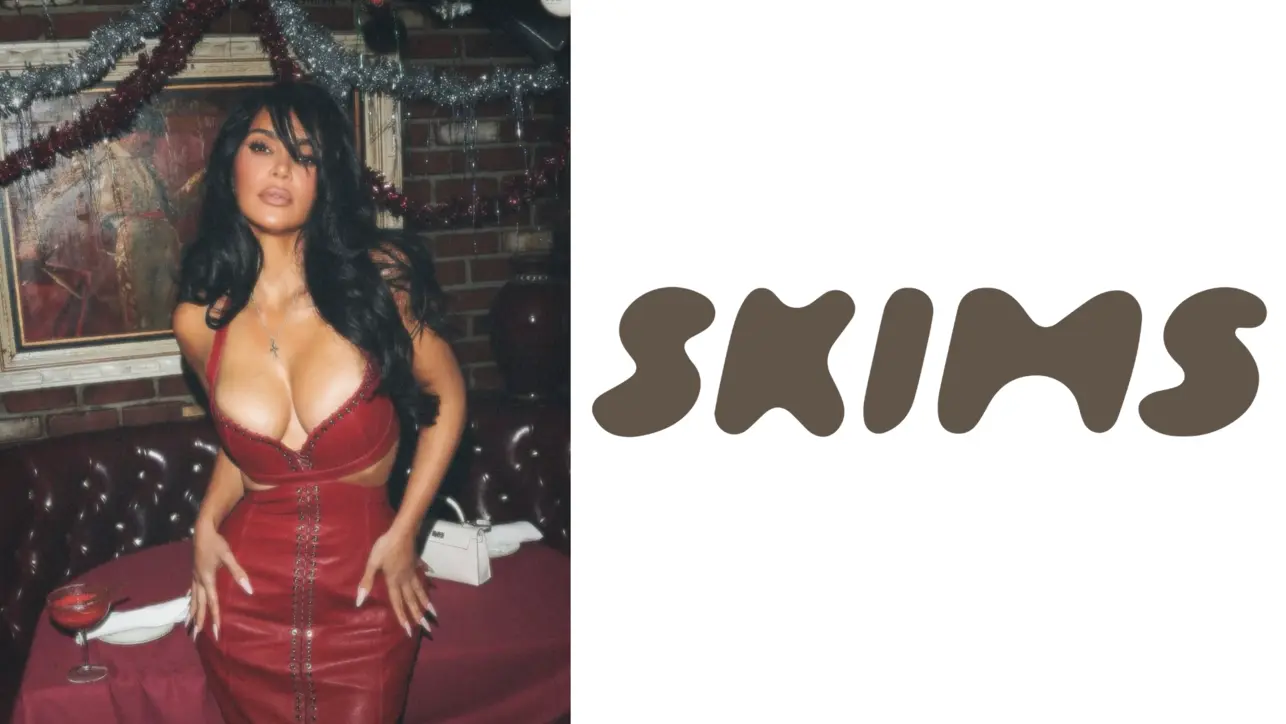
SKIMS: Kim Kardashian
Kim Kardashian co-founded SKIMS in 2019 and helped turn shapewear into a broader apparel platform covering underwear, loungewear, menswear, and activewear. Inclusive sizing, neutral shade ranges, highly visible launches, and constant product iteration helped the company expand beyond the initial celebrity story.
In November 2025, SKIMS raised $225 million at a $5 billion valuation and said it expected more than $1 billion in 2025 net sales. The company has also been expanding physical retail and launched NikeSKIMS with Nike. That combination makes SKIMS one of the strongest current examples of a celebrity-founded brand developing institutional scale. It also shows why brand research matters as a company moves into new categories with customers who may evaluate performance differently from its original shapewear audience.
Beats by Dre: Dr. Dre and Jimmy Iovine
Beats was co-founded by Dr. Dre and Jimmy Iovine and became a major premium-headphone brand by treating audio hardware as a fashion and culture product rather than focusing only on technical specifications. Artist and athlete visibility made the headphones recognizable in music videos, sidelines, and everyday streetwear.
Apple acquired Beats for $3 billion in 2014, so Beats is not a current celebrity-owned company. Its importance is historical: it demonstrated how celebrity credibility, product design, and strategic placement can create a category-defining brand that becomes valuable to a larger technology company. Brand Vision's celebrity Beats example highlights the role of repeated cultural placement in turning hardware into a status symbol.

Yeezy: Ye
Yeezy became a landmark sneaker and streetwear business through Ye's partnerships with Nike and, later, Adidas. The Adidas era made limited drops, minimalist footwear, and scarcity central to the brand's global influence. At its peak, Adidas Yeezy generated substantial revenue and shaped the broader sneaker market.
The current status is very different. Adidas terminated the partnership in October 2022, sold its remaining Yeezy inventory through 2024, and reported no Yeezy revenue in 2025. The brand therefore should not be described as an active Adidas growth engine in 2026. Its lasting lesson is both positive and cautionary: founder magnetism can create enormous cultural value, but concentration around one personality can also create material business risk when a partnership breaks.
Kylie Cosmetics: Kylie Jenner
Kylie Jenner turned Lip Kits into Kylie Cosmetics, using direct-to-consumer drops and social media to make product launches feel immediate and scarce. The model helped define the first generation of Instagram-native celebrity beauty businesses.
Coty acquired 51% of the beauty business in a transaction announced in 2019, leaving Jenner connected to the brand while bringing a large beauty company into the operating structure. Historical revenue claims around the business were later disputed, so dated deal terms are more reliable than repeating early founder-reported sales as current fact. Limited-edition collabs remain part of the playbook, but retail distribution and product performance matter more now that the business operates at a larger scale.

Fenty Beauty: Rihanna and Kendo
Rihanna’s Fenty Beauty launched in 2017 with an unusually broad foundation range and made shade inclusivity a visible category challenge. The brand is a joint venture between Rihanna and Kendo Brands, the LVMH-owned beauty incubator, rather than a wholly celebrity-owned company.
It is also important not to merge Fenty Beauty with Savage X Fenty. They are separate businesses with different ownership structures. Fenty Beauty's advantage came from product-market fit, Sephora distribution, and a message that addressed consumers who felt underserved by traditional shade ranges. Social content amplified that promise, but the product assortment made the positioning tangible. That is a useful example of why a celebrity launch works best when it solves a real customer problem rather than relying on fame alone.

Air Jordan: Michael Jordan and Nike
Air Jordan is one of the most important celebrity-linked brands in modern consumer culture, but it is a Nike-owned brand rather than a company owned by Michael Jordan. Jordan's endorsement, royalties, and identity are fundamental to the brand, while Nike controls the corporate platform and distribution.
Jordan Brand generated $7.27 billion in Nike revenue in fiscal 2025, down from $8.70 billion the year before but still operating at enormous scale. Retro releases, athlete signings, fashion partnerships, and high-profile collaboration drops keep the brand connected to basketball and streetwear generations that never watched Jordan play live. The lesson is longevity: a celebrity association can become an independent brand asset when symbols, products, and community remain relevant after the founder's peak media moment.

What the Biggest Celebrity Brands Actually Have in Common
These celebrity-founded brands do not share one ownership model, one category, or one path to scale. Some founders still control their companies, some share ownership with strategic partners, and others sold long ago. What they do share is the ability to convert attention into cultural resonance when the product and story reinforce each other.
The biggest risk is assuming fame can replace product-market fit. Consumers may try a celebrity product once because they recognize the name, but repeat purchase depends on performance, price, availability, service, and trust. For a company building at national scale, a marketing agency in the United States can help translate positioning into channel priorities without treating celebrity reach as a substitute for strategy.
As more influencers and celebrities launch businesses, the ownership details will matter even more. A licensing deal, joint venture, acquisition, endorsement, and founder-controlled company can all look similar from the outside while creating very different economics and risks. For help evaluating your own brand's positioning, audience, and growth plan, a Brand Vision marketing consultation can provide a structured next step.