Website cost in 2026 varies because “a website” can mean anything from a five-page brochure site to a multilingual ecommerce platform or a product-led SaaS experience. Platform subscriptions may cost only a few dozen dollars per month, while strategy, research, design, content, development, integrations, migration, and governance can push professional projects into five or six figures.
The useful question is not whether a website should be “cheap” or “expensive.” It is what the site must do, what risks it carries, and which capabilities belong in the build. Performance, accessibility, analytics, security, and SEO may all affect scope.
For planning purposes, Brand Vision, a branding agency, treats website cost as a function of scope, platform, customer journey, integrations, content, and long-term ownership. The ranges below are planning benchmarks, not quotes for every business.
2026 website pricing benchmarks
Current 2026 sources show why a single “average website cost” can be misleading. GoodFirms surveyed more than 300 web-development companies across 31 countries and found a wide spread by scope and market.
- DIY or builder-led site. Wix says a simple site can start at about $17 per month before extra apps, professional services, or other operating costs. (Wix)
- Freelancer-built small-business site. Elementor’s current guide places a professional custom WordPress build around $2,000–$8,000. (Elementor)
- Basic website or MVP. GoodFirms’ 2026 survey most commonly puts this at $1,000–$3,000. (GoodFirms)
- Mid-sized or CMS business website. The same survey most commonly places these projects at $5,000–$20,000.
- Ecommerce website. GoodFirms reports a common $5,000–$50,000 range, while Shopify’s own cost guide shows how platform, design, apps, payments, and development all affect the total. (Shopify)
- Custom web application or enterprise site. GoodFirms reports $20,000–$50,000 as the most common custom-app band and $20,000–$200,000+ for enterprise websites. (GoodFirms)
Those are survey and platform benchmarks, not a promise that a North American project will land in one band. Scope, seniority, research depth, content, integrations, location, and governance still determine the actual quote.
The 7 biggest drivers of website cost in 2026
You can think of website pricing as a function of seven main variables. Understanding these will help you see where you can simplify and where cutting too far will cost you later.
Scope and Page Count
The most visible driver is scope.
A five to eight page brochure site with one contact form, a services overview and a handful of team bios sits at the lower end of most ranges. Once you want a structured blog or resource library, multiple service lines, case studies, gated content, and dedicated landing pages, the scope expands quickly.
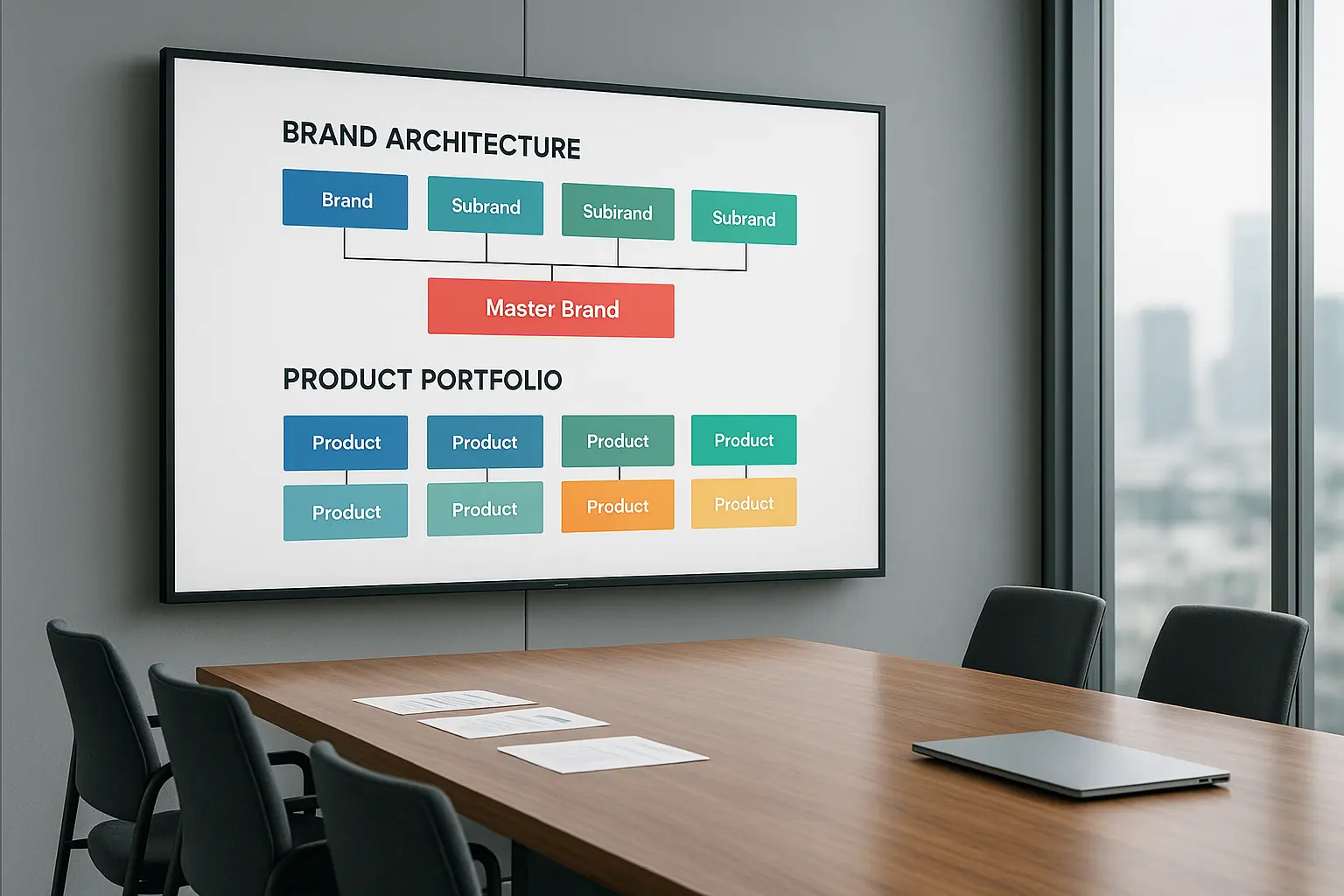
More pages do not just mean more design time. They require information architecture, reusable templates, migration, content production, and QA. Multiple service or product families can add another layer of navigation and taxonomy work; Brand Vision’s guide to product line naming and architecture covers that portfolio problem in more detail.
UX, UI and Content Strategy Depth
Many price differences reflect how much thinking goes into the experience before anyone opens a design file.
A minimalist project might involve a short discovery call, a basic sitemap and a designer working directly into high fidelity layouts. At the other end of the spectrum, a UX-led process includes research, interviews, user journeys, wireframes, prototypes, and content strategy.
For higher-stakes sites, deeper discovery and UI/UX design can add research, user journeys, wireframes, prototypes, testing, and design-system work. Those activities increase project cost because they require more specialist time before and during implementation.
Brand readiness matters too. If positioning, messaging, or the visual system is changing, the website scope may need parallel branding services rather than simply reskinning old content.
Platform and Tech Stack
The underlying platform changes both the budget and the long-term website cost.
- Hosted builders can keep infrastructure predictable. Wix currently lists annual-billing reference prices from about $18/month for Light, with Core and Business higher; pricing varies by location (Wix pricing).
- Open-source WordPress has no core licence fee, but it requires separate hosting, maintenance, updates, and often paid themes or plugins.
- Webflow changed its Site plans in May 2026. Its current U.S. pricing lists Basic at $15/month billed yearly and Premium at $25/month billed yearly (Webflow pricing).
- Custom stacks can support highly specific requirements, but they increase engineering, hosting, QA, and maintenance responsibilities.
If you know you want a custom WordPress marketing site, working with a WordPress web design agency will shape both scope and business website cost. The same is true for a Webflow web design agency if you prioritize visual development, complex animations or CMS driven content.
Integrations and Automation
Modern websites rarely stand alone. They connect to:
- CRM and marketing automation platforms
- Booking and scheduling tools
- Payment gateways and e-commerce systems
- Membership, learning or portal tools
- Analytics and BI dashboards
Each integration adds planning, configuration, testing and sometimes custom development. A single newsletter form that sends contacts to one list is simple. A multi-form, multi-pipeline CRM setup with lead scoring and automations is not. If you want the website to orchestrate customer journeys, budget accordingly.
Performance, Security and Compliance
In 2026, performance and security are table stakes rather than extras.
Performance work can include image optimization, caching, front-end cleanup, hosting decisions, and Core Web Vitals testing. Google says Core Web Vitals are used by its ranking systems, but good scores do not guarantee top rankings; the goal should be an overall strong page experience (Google Search Central).
Security also carries weight. SSL, firewalls, backups, uptime monitoring and access controls are essential for any serious business. If your organization handles sensitive data or works in regulated sectors, there may be additional requirements for compliance, logging, and penetration testing. Those are not add-ons to be squeezed into the last week of a project.
SEO and Analytics Requirements
SEO is often underestimated in website budgets.
Technical SEO can include URL structure, canonicals, redirects, sitemaps, structured data, crawlability, and migration planning. Strategic SEO adds keyword research, content planning, on-page optimization, and authority building. Analytics can require event tracking, funnel definitions, dashboards, and integrations with advertising or CRM systems.
If search visibility and measurement matter, it is sensible to treat SEO and analytics as core project work rather than “phase two”. That will lift both upfront cost and ongoing investment, especially if you partner with an SEO agency for long-term organic growth.
Team and Location
Finally, who does the work and where they are based makes a measurable difference.
- Builders and templates can be very cost-effective for simple needs.
- Freelancers can keep overheads low and offer flexible pricing.
- A specialized web design agency will usually be more expensive than individual freelancers, but will bring a team of strategists, designers, developers and marketers, along with project management and quality assurance.
- Larger digital consultancies and enterprise partners often have the highest rates, but also handle complex governance and integration environments.
Geography affects rates and collaboration style. GoodFirms’ 2026 survey reports higher hourly bands in the U.S., U.K., and Canada than in many lower-cost regions. If regional strategy or workshop access matters, businesses may compare a branding agency in Chicago or a branding and web design agency in Canada with distributed or offshore delivery models. Hybrid teams can combine local strategy with remote production.

Business website cost by build path
Different build paths change both the budget and the level of risk you are taking on.
DIY Website Builders
Hosted builders can launch a simple site with relatively low platform fees, but the subscription is not the same thing as the full cost of planning, writing, designing, or operating the site. Wix currently starts around the high teens per month on annual billing in its U.S. reference pricing. Shopify’s U.S. Basic plan is currently $29/month billed yearly, while Canadian Basic is CAD$37/month billed yearly (Shopify pricing).
DIY is usually a good fit if:
- You are at an early stage and need a credible presence more than a complex funnel.
- You have the time and appetite to learn the platform.
- You can live with template constraints and lighter UX strategy.
Expect to invest a few hundred dollars a year in platform fees and apps, plus your own time. You will still need to think about basic structure, copy and brand consistency to get real value.
Freelancers
Freelancers can be a strong middle path for a defined site. Elementor’s 2026 guide puts a professional custom small-business WordPress site at roughly $2,000–$8,000. The final quote still depends on content, integrations, design depth, migration, and how much strategy the freelancer is expected to provide.
Freelancers are often a strong choice when:
- You have a clear brief and someone internally who can manage scope.
- You need more custom design than a template, but do not require intense UX research.
- You are comfortable with a single point of failure for updates and fixes.
The trade-off is resilience. If the freelancer becomes unavailable or moves on, you may have to bring in a new partner who will first need to understand and stabilize the existing work.
Web Design Agencies
A focused web design agency may combine discovery, UX, design, development, content support, launch planning, and QA in one engagement. That broader scope can make agency quotes higher than a narrowly defined freelance build.
GoodFirms’ 2026 survey is a useful benchmark for development scope rather than a universal agency rate card:
- Mid-sized and CMS websites most commonly landed at $5,000–$20,000 in the survey.
- Custom web applications most commonly landed at $20,000–$50,000.
- Enterprise websites showed the widest spread, from $20,000 into $200,000+ depending on integrations, scale, governance, and requirements.
The advantage is not just polish. A strong agency will help connect the website to your positioning, brand and growth strategy, and will be accountable for delivering something stable, measurable and extensible.
In-House or Hybrid Builds
For product companies or larger organizations, building and running the website in-house can make sense. Costs are then borne as salaries, tools and time rather than a single project fee.
In-house teams often work well when:
- The website is tightly connected to the product roadmap.
- You need constant experimentation on conversion, onboarding or self-serve flows.
- You can justify ongoing headcount for design, development and content.
Hybrid models are increasingly common. For example, an internal team may own day-to-day optimization, while partnering with a specialist agency for a periodic brand and UX overhaul, or for specific projects such as a new positioning or product launch.
Cost by website type: from local brochure to SaaS platform
Another simple way to frame website pricing is by what the site must do for the business.
Local Services or Brochure Website
These are sites for local or regional businesses that rely heavily on referrals and offline sales, but still need a credible online presence.
Typical characteristics:
- 5 to 12 pages
- Services overview, about page, team profiles, testimonials, contact
- Basic blog or news section, if any
- Simple enquiry forms and maybe a booking tool
For a simple brochure site, the GoodFirms survey’s $1,000–$3,000 basic/MVP band and $5,000–$20,000 mid-sized band are better starting points than a single “local business” price. DIY platform fees can be much lower, but professional copy, photography, booking, local SEO, migration, and custom design add cost.
Content-Driven B2B or Professional Services Site
For B2B firms and professional services, the website is often the main place where prospects research your expertise.
Characteristics often include:
- Multiple service lines and sector pages
- Deep resources, such as whitepapers, case studies and articles
- CRM integration and marketing automation
- Clear journeys for different buyer roles and stages
A content-rich B2B site may begin in the same $5,000–$20,000 mid-sized/CMS band, but integrations, research, migration, custom components, and many service or industry pages can move it higher. Ongoing support from a B2B marketing agency is a separate operating cost from the initial build.
E-commerce Store
E-commerce costs vary widely.
Hosted ecommerce platforms lower the infrastructure barrier, but professional setup still adds theme or custom design, catalog work, apps, payments, data migration, shipping, analytics, and testing.
GoodFirms’ 2026 survey places ecommerce projects most commonly at $5,000–$50,000. Headless commerce, internationalization, complex filtering, subscriptions, ERP/PIM integrations, and custom checkout work can move projects above that range.
SaaS or Product Led Site
SaaS and product-led sites carry both marketing and product responsibilities. They must:
- Explain the product clearly to multiple audiences
- Support free trials and signups
- Guide users through onboarding and self-serve education
- Integrate tightly with product analytics and in-app experiences
For technology marketing, the website often sits close to the product experience. GoodFirms’ 2026 survey places custom web applications most commonly at $20,000–$50,000, while enterprise work has a much wider range. Product tours, trials, onboarding, localization, design systems, and analytics can push SaaS marketing sites above a standard CMS build.

Ongoing and hidden costs
A website budget that only accounts for launch is incomplete. The more useful model is a three to five year view that includes the cost of owning, securing and improving the site over time.
Key ongoing costs to account for are:
- Domains, hosting and infrastructure. Entry-level shared hosting can start around 10 to 20 dollars a month after introductory offers. Higher-performance managed hosting or dedicated infrastructure can cost significantly more, especially for e-commerce and high-traffic sites.
- Security, maintenance and support. Core and plugin updates, uptime monitoring, backups, bug fixes and minor enhancements often sit in the 1,000 to 5,000+ per year range for small to mid-sized businesses, depending on complexity.
- Content and SEO. Regular publishing, on-page optimization, link building and CRO are part of the true cost of making the site perform. Many teams retain an SEO agency or content partner because the work is ongoing and specialized.
- Licences and tools. Premium plugins, form tools, CDNs, analytics, personalization and A/B testing all come with monthly or annual fees.
Do not apply a fixed maintenance percentage to every site. Forecast recurring costs line by line: hosting, support, licences, security, content, SEO, analytics, and planned improvements. GoodFirms’ 2026 survey found monthly retainers of $500–$3,000 for nearly 58% of respondents, but that is a market observation, not a required budget rule (GoodFirms).
A simple budgeting framework for 2026
There is no single correct percentage of revenue to spend on a website. There is, however, a simple way to reason about the budget.
Step 1: Decide what role the website plays in your funnel.
- If it is mainly a credibility asset that supports offline sales, you can often invest at the lower end of the range for your business size.
- If most of your inbound demand or online revenue flows through the site, it deserves investment in line with its importance, often at the mid or upper end of the range.
Step 2: Anchor the budget to the website’s economic role.
Avoid a fixed percentage-of-revenue rule. Instead, estimate how much revenue, lead generation, customer service, recruitment, or online sales depend on the site, then compare that value with the cost and risk of the proposed scope.
Step 3: Separate one-off and recurring investments.
When planning budgets, treat:
- Strategy, UX, visual design, architecture, and build as largely one-off or episodic.
- Content, SEO, CRO, analytics and incremental enhancements as continuous.
This keeps conversations with finance and leadership clearer. It also reduces the temptation to squeeze ongoing work into one build, which tends to dilute both.
Timelines, process, and what each budget level can cover
Price and timeline usually move together. Short timelines either require higher budgets and larger teams, or they compress important steps in ways that create risk later.
You can think in three broad tiers.
About $1,000–$3,000
- GoodFirms reports 2–4 weeks as the most common timeline for basic sites and MVPs.
- Template-led or light custom builds are common at this level.
- Discovery, content production, and integrations are usually limited unless scoped separately.
This can be appropriate for early-stage ventures or side projects. Just be clear about what you will not get, such as deep UX research, strong original content, or complex integrations.
About $5,000–$20,000
- GoodFirms reports 4–8 weeks as the most common timeline for mid-sized and CMS websites.
- This band can support more structured information architecture, custom design, migration, and QA.
- Complex content or integrations can extend the timeline and budget.
This tier is a sensible target for many small to mid-sized businesses that want a durable foundation. It often includes enough structure for future content and campaigns rather than just the launch set of pages.
$20,000 and above
- Custom web applications and enterprise sites commonly move into this band, with GoodFirms reporting timelines from roughly 8 weeks to 36+ weeks depending on scale.
- Research, stakeholder alignment, design systems, migrations, integrations, localization, accessibility, and governance can all add time.
- A higher budget does not guarantee quality; it usually reflects a larger or more complex scope.
At this level, scope often includes strategy, UX, design, engineering, content, migration, integrations, and governance. A partner such as Brand Vision may cover several of those disciplines in one engagement, but the final quote still depends on the actual work required.

How to compare proposals and avoid costly mistakes
When you start collecting proposals, the hardest part is often comparing them fairly. A lower headline price can mask significant gaps.
A strong proposal usually includes:
- Clear scope, with page types, features and integrations listed.
- A defined process for discovery, UX, design, development, content and QA.
- Responsibility for technical SEO, migration, and redirects, or a clear note if this is out of scope.
- Post-launch support terms and response times.
- Assumptions about content creation, photography and copywriting.
Warning signs include:
- Very short timelines with little or no discovery or UX work.
- No mention of analytics, SEO, accessibility or security.
- Vague language such as “modern, responsive website” without detail.
- Ownership that sits with the provider rather than your company.
If you are choosing between several options, it can help to map each proposal back to the drivers in this guide. Where does one vendor invest more in strategy or UX? Where are integrations and long-term support better thought through?
If you want a neutral view before committing, a structured website and marketing performance audit can surface risks and opportunities so you can choose partners and scopes with a clearer picture.
When higher investment can make sense: ROI, revenue, and risk
For many leaders, the most useful question is not “How do we minimize cost” but “At what level does the investment make sense given the upside and downside?”
Use explicit assumptions instead of promising a conversion lift. For example, a B2B firm closing 50 website-sourced deals a year at $30,000 in revenue per deal generates $1.5 million in top-line revenue from that channel. Five additional deals at the same value would equal $150,000 in additional revenue before delivery cost, margin, sales cost, and attribution are considered. The right model should connect website conversion assumptions to cost per acquisition and actual profit economics.
Underinvestment can also create risk through poor performance, fragile integrations, weak security, accessibility problems, or costly emergency rebuilds. Quantify those risks where possible instead of assuming a premium build always pays for itself.
The point is not that every business needs an expensive website. Higher investment becomes easier to justify when the site carries a meaningful share of revenue, reputation, operations, or customer service and the scope is tied to measurable business needs.
Next steps for your 2026 website project
If you are planning a website in 2026, a few principles will keep the project focused and the budget under control.
- First, clarify the website’s job. Is it a simple, credible presence, or a core sales and delivery channel?
- Second, decide which build path fits your stage and risk tolerance, from DIY through freelancer to specialist agency or hybrid model.
- Third, frame budgets across three to five years, not just at launch, including maintenance, content, SEO and tools.
- Fourth, look past the surface design and into the underlying UX, integrations, performance and security. That is where reliability and return live.
- Finally, treat proposals as strategic documents, not just prices. The partner you choose will shape how prospects see and experience your business every day.
If you are considering a new site or redesign and want to connect branding, UX, and web design, discuss your website scope with Brand Vision. A useful first conversation should clarify the site’s job, platform, content, integrations, migration risk, and ongoing ownership before a budget is treated as final.