Juicy Couture turned a velour tracksuit into one of the most recognizable symbols of early-2000s celebrity culture. Rhinestones, candy-colored sets, logo-heavy accessories, and relentless paparazzi visibility gave the Los Angeles label a visual language that could be recognized at a glance. celebrity marketing became one of its most powerful distribution channels, with Paris Hilton among its most visible unofficial ambassadors, but the marketing lesson was bigger than any one celebrity: Juicy built a lifestyle people wanted to participate in.
The Juicy Couture story combines founder-led identity, celebrity seeding, mass retail expansion, ownership changes, and a later nostalgia-driven comeback. Founded in Los Angeles in 1997 by Pamela Skaist-Levy and Gela Nash-Taylor, the label became a defining Y2K fashion brand before losing some of its cultural momentum and then finding new relevance through collaborations, licensing, resale culture, and renewed interest in early-2000s style. The useful marketing question is not simply why the tracksuit became famous, but how Juicy created such durable visual identity codes that later generations could recognize and revive them.
How Juicy Couture Built Its Original Brand
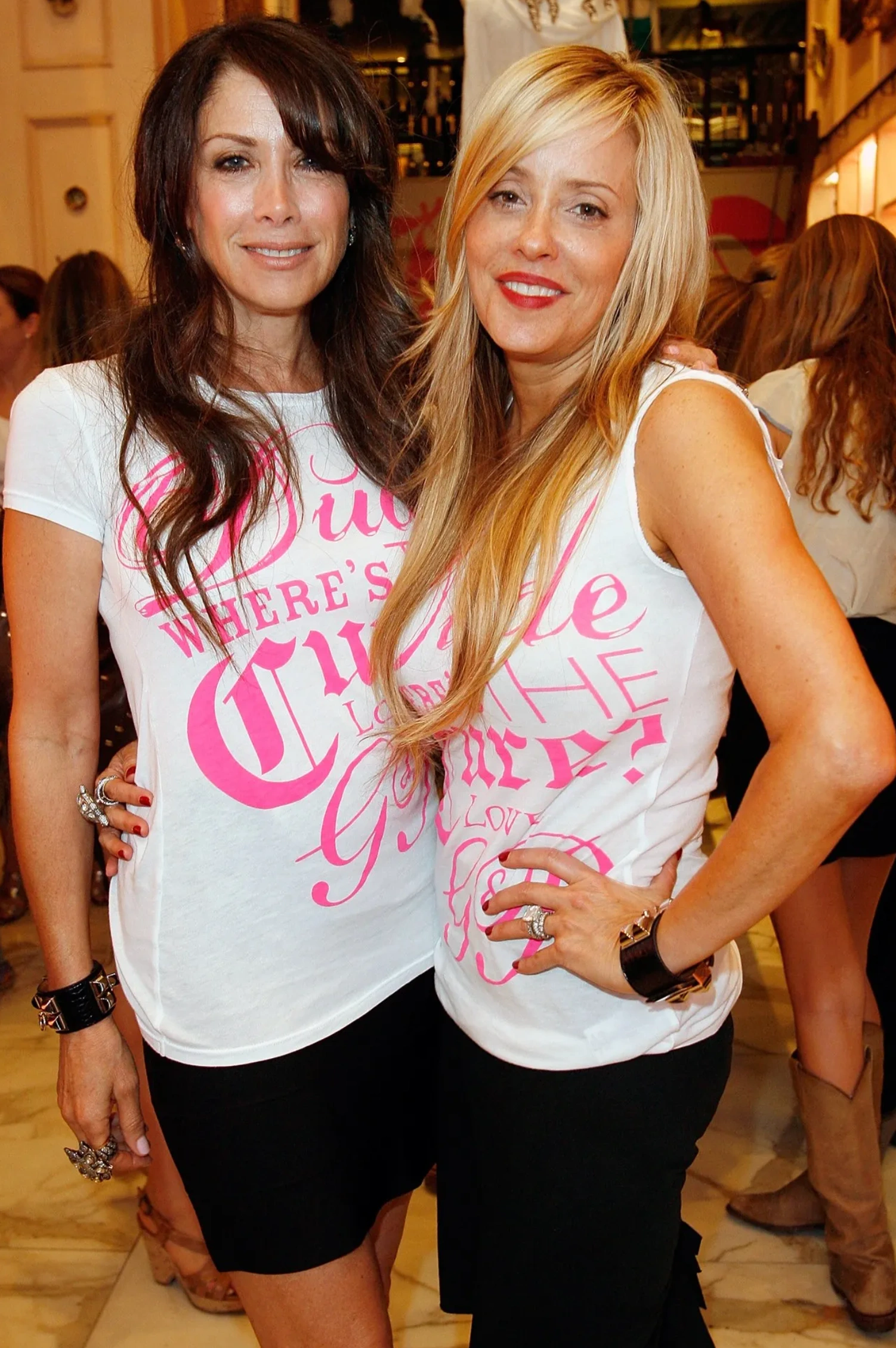
Before Juicy Couture, Skaist-Levy and Nash-Taylor were building a small apparel business under the Travis Jeans name. founders Pamela Skaist-Levy and Gela Nash-Taylor were designing chic clothes for moms-to-be under the name Travis Jeans for the Baby Juicy, then moved beyond that niche as they developed a broader Los Angeles lifestyle label. Juicy Couture was founded in 1997, and the founders gradually built a distinct mix of comfort, femininity, humor, and conspicuous branding. That combination was a brand strategy, not just a styling choice: the product and the personality reinforced each other.
The early designs were playful, feminine, and deliberately more visible than the minimalist fashion surrounding them. Celebrity gifting helped turn that identity into distribution. The founders famously sent tracksuits to high-profile women, including Madonna, creating organic paparazzi exposure before influencer marketing had a name. The tactic worked because the product itself was easy to identify in photographs: color, velour, rhinestones, and the Juicy wordmark did much of the advertising.
The Rise of the Tracksuit and a Cultural Takeover
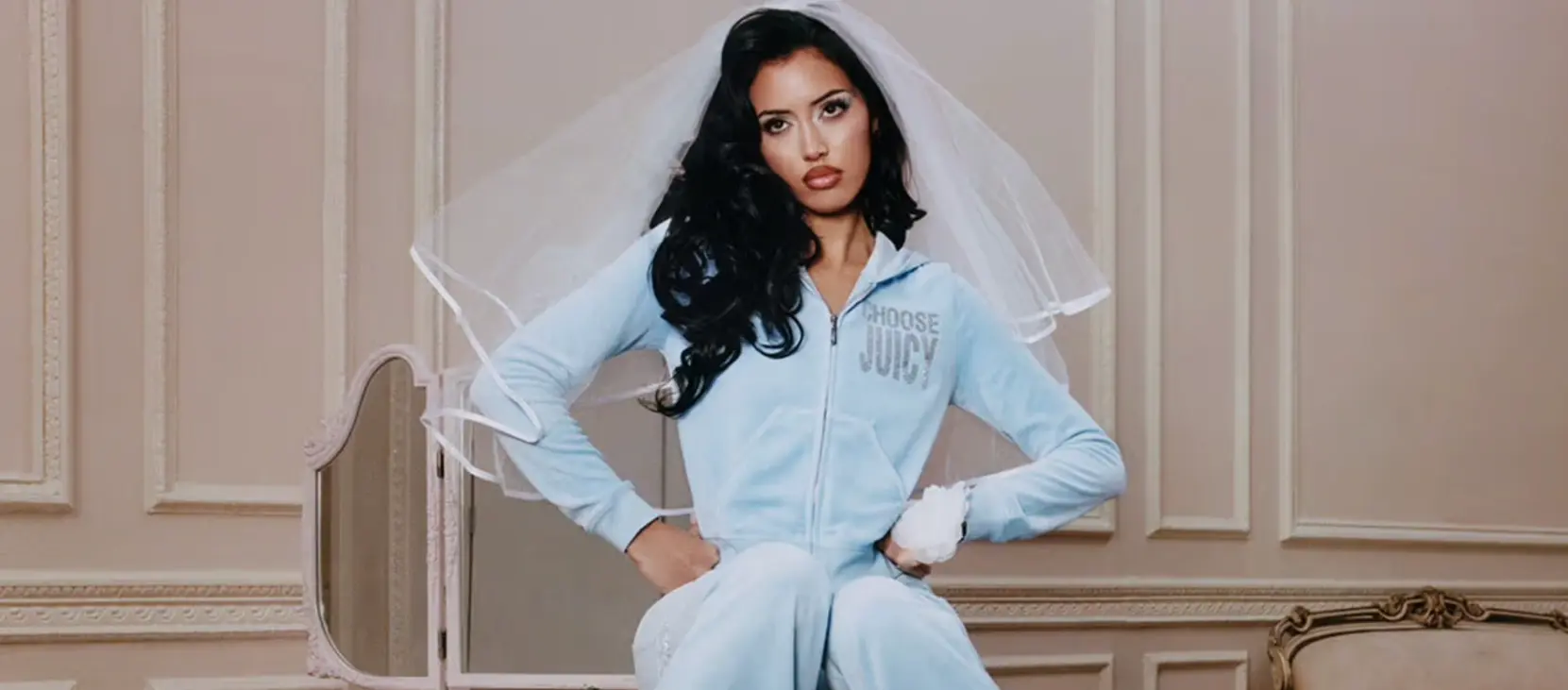
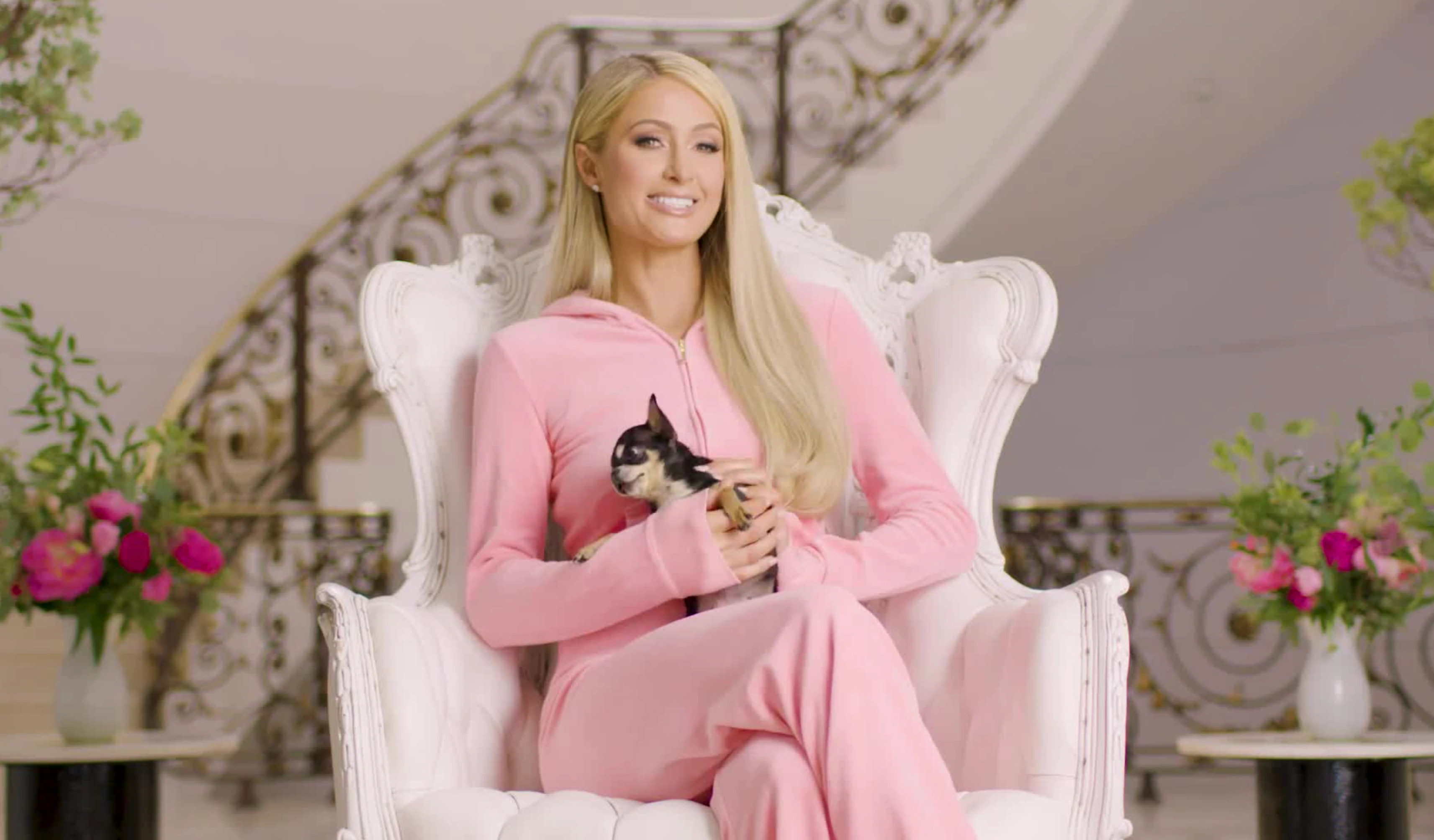
The product that consolidated the brand’s identity was the matching velour tracksuit. In 2001, Juicy Couture introduced its pièce de résistance: the velour tracksuit. In candy-colored hues with “JUICY” across the back, it gave consumers something both comfortable and highly recognizable. The tracksuit worked like a wearable logo system: silhouette, fabric, color, and lettering all reinforced the same brand codes.
Stars including Paris Hilton and later Kim Kardashian helped make the tracksuit a recurring paparazzi image. That visibility turned everyday loungewear into aspirational celebrity merchandise and helped Juicy bridge luxury cues with mass familiarity. By 2003, the brand had launched into department stores and opened boutiques around the world. For modern fashion marketing, the lesson is still relevant: a distinctive hero product can carry a brand farther when it is visually consistent enough to be recognized without explanation.
Juicy Couture Brand Identity: Feminine, Flirty, and Totally Iconic
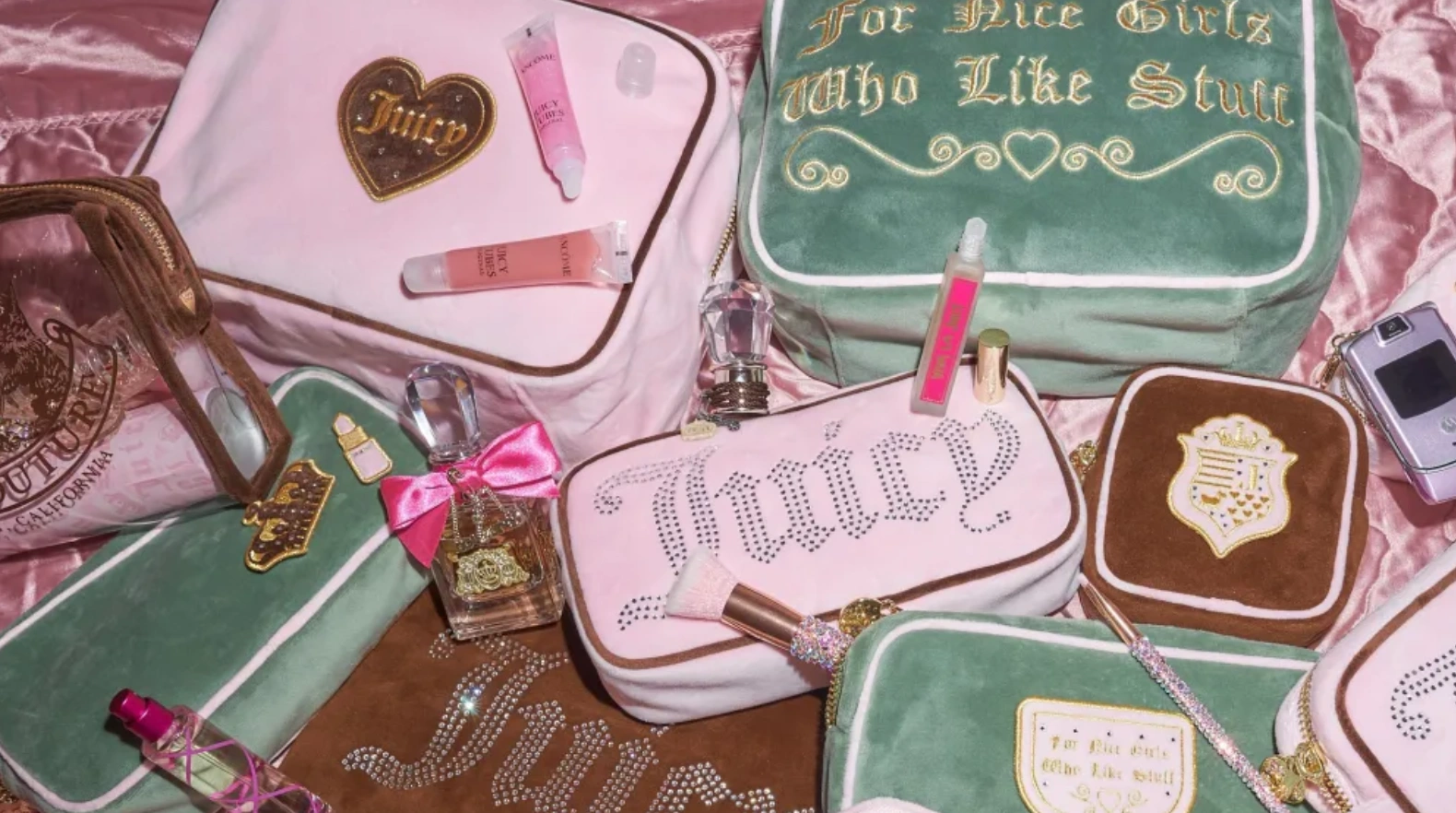
The Juicy Couture brand identity was built around a clear tension: comfort made glamorous, with an intentionally exaggerated feminine point of view. Blush velour, rhinestones, crest graphics, charms, and prominent wordmarks made the label instantly identifiable. Those assets worked because they were repeated across apparel, handbags, fragrance, stores, and celebrity placements rather than treated as isolated design details.
Everything Juicy touched extended the same attitude. The “JUICY” lettering, playful handbag charms, gothic-style crest, saturated colors, and monogrammed pieces created a system rather than a single logo. That is what made the brand portable across categories. The personality could move from tracksuits to accessories and fragrance while still feeling related. For B2C marketing, this kind of consistency matters because recognition has to survive across retail, social content, packaging, and product pages.
JUICY COUTURE TRACKSUITS https://t.co/rtJ8ZHeK61 pic.twitter.com/eu4Wu7IUzn
Kim Kardashian (@KimKardashian), January 14, 2016
Juicy Couture and 2000s Nostalgia: Hollywood’s Favorite Tracksuit
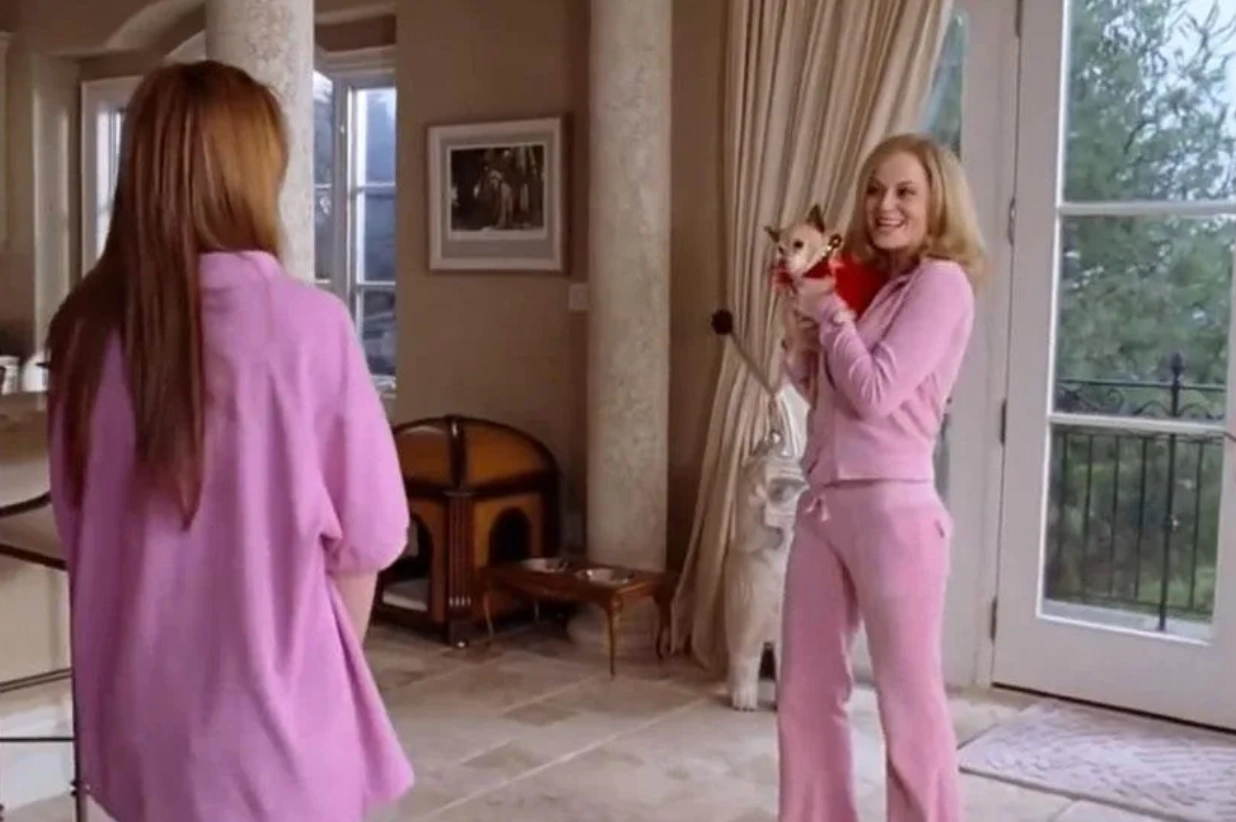
Juicy Couture became inseparable from 2000s pop culture because the tracksuit appeared repeatedly in celebrity photography, film, and television. In Mean Girls, Amy Poehler’s “cool mom” practically trademarked the vibe with her hot pink Juicy set, turning the product into part of the film’s visual shorthand for early-aughts status and excess. That kind of cultural placement gave the brand recognition that conventional advertising alone would have struggled to reproduce.
Television reinforced the same association. Characters on The O.C. wore Juicy as a marker of Southern California affluence, while And then there was The Simple Life, where Paris Hilton and Nicole Richie brought highly stylized celebrity fashion into an intentionally ordinary setting. The repeated exposure helped make Juicy feel like part of the culture rather than a brand interrupting it. Years later, that archive became useful fuel for nostalgia marketing, because audiences already had specific memories attached to the product.
Sparkles, Fragrance, and Total World Domination
Juicy did not stop with tracksuits. At its peak, the brand expanded into handbags, jewelry, fragrance, and accessories, including Viva La Juicy and other products that extended the same decorative codes beyond apparel. The expansion worked best when those categories still looked and felt recognizably Juicy, turning a hero product into a wider lifestyle system.
By the mid-2000s, Juicy had become a recurring part of celebrity fashion, magazine coverage, television, and music culture. Britney Spears, Lindsay Lohan, Jennifer Lopez, Paris Hilton, and other stars reinforced the association between the label and highly visible early-2000s glamour. That cultural repetition mattered as much as any single campaign because it kept the brand codes circulating across multiple forms of media.
Ownership Changes and Brand Dilution
As Juicy grew, the business structure changed. Some retrospective coverage describes the 2003 transaction as Liz Claiborne, Inc. (later Kate Spade & Company) for $250 million. The company’s SEC filings provide a more precise structure: Liz Claiborne acquired 100 percent of Juicy Couture in April 2003 for $53.1 million upfront, including debt and fees, plus contingent payments tied to Juicy’s later earnings. The founders remained involved for several years, but the label eventually operated without the same founder-led creative control.
At the same time, fashion moved away from the overt logos and highly embellished look that had helped Juicy dominate the previous decade. Wider distribution also made the once-exclusive tracksuit feel less scarce. The decline was not caused by one decision alone: changing taste, ownership transition, retail exposure, and loss of distinctiveness all contributed. It is a useful brand-comeback lesson: recognition can survive a downturn, but relevance still has to be rebuilt around what made the brand distinctive in the first place.
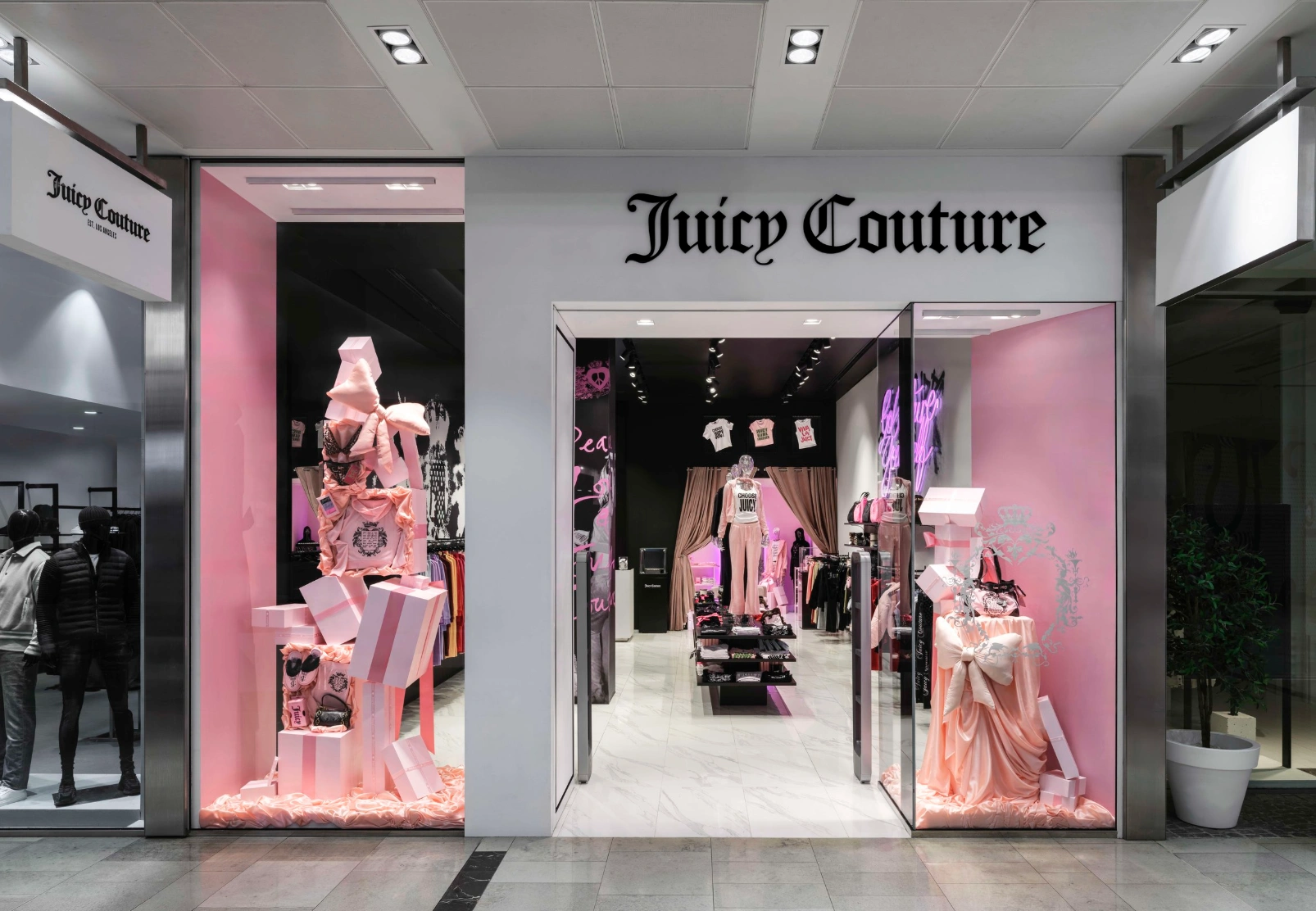
Reinvention: From the Clearance Rack to the Catwalk
The next major ownership change came in 2013. In 2013, the brand was sold again, this time to Authentic Brands Group (ABG). Fifth & Pacific’s SEC filing records a $195 million cash sale of the Juicy Couture brand name and related intellectual property to Authentic, completed on November 6, 2013. The former operating company retained a temporary license while winding down parts of the business. Under Authentic, licensing, partnerships, and collaborations became central ways to extend the brand across markets and product categories.
The brand’s next wave of visibility came from fashion’s growing interest in the very Y2K codes that had once looked dated. The Spring 2017 Vetements collection, unveiled in Paris in July 2016, included the Vetements x Juicy Couture collaboration in 2017. Rather than hiding Juicy’s velour heritage, the collaboration exaggerated it for a high-fashion audience. That reframing mattered because it treated the archive as an asset, not something the brand needed to escape.
The Vintage Resale Boom and Gen Z’s Juicy Obsession
As Y2K style returned around the turn of the 2020s, resale platforms, vintage sellers, creators, and fashion media gave original Juicy pieces another circulation cycle. Rare colors, older bags, graphic hoodies, and heavily embellished tracksuits became collectible again. Resale helped younger consumers encounter the brand through authentic archive pieces before or alongside new releases, giving the comeback a consumer-led layer rather than making it depend entirely on corporate relaunch messaging.
Authentic leaned into that recognition through collaborations and licensing while keeping familiar brand codes visible. The strategy shows why nostalgia works best when a brand has distinctive assets to revive. Consumers were not being asked to remember a vague era; they were responding to specific colors, fabrics, silhouettes, logos, and celebrity associations that already carried meaning.
Juicy Couture’s Modern Comeback
Juicy Couture remains active well beyond its original 2000s peak. Authentic’s March 2026 brand profile describes Juicy as available through 14 freestanding stores and select department stores across approximately 94 countries, alongside a large fragrance business. That makes the current model broader than a simple nostalgia relaunch: apparel, accessories, fragrance, collaborations, and licensed categories all help keep the name in circulation.
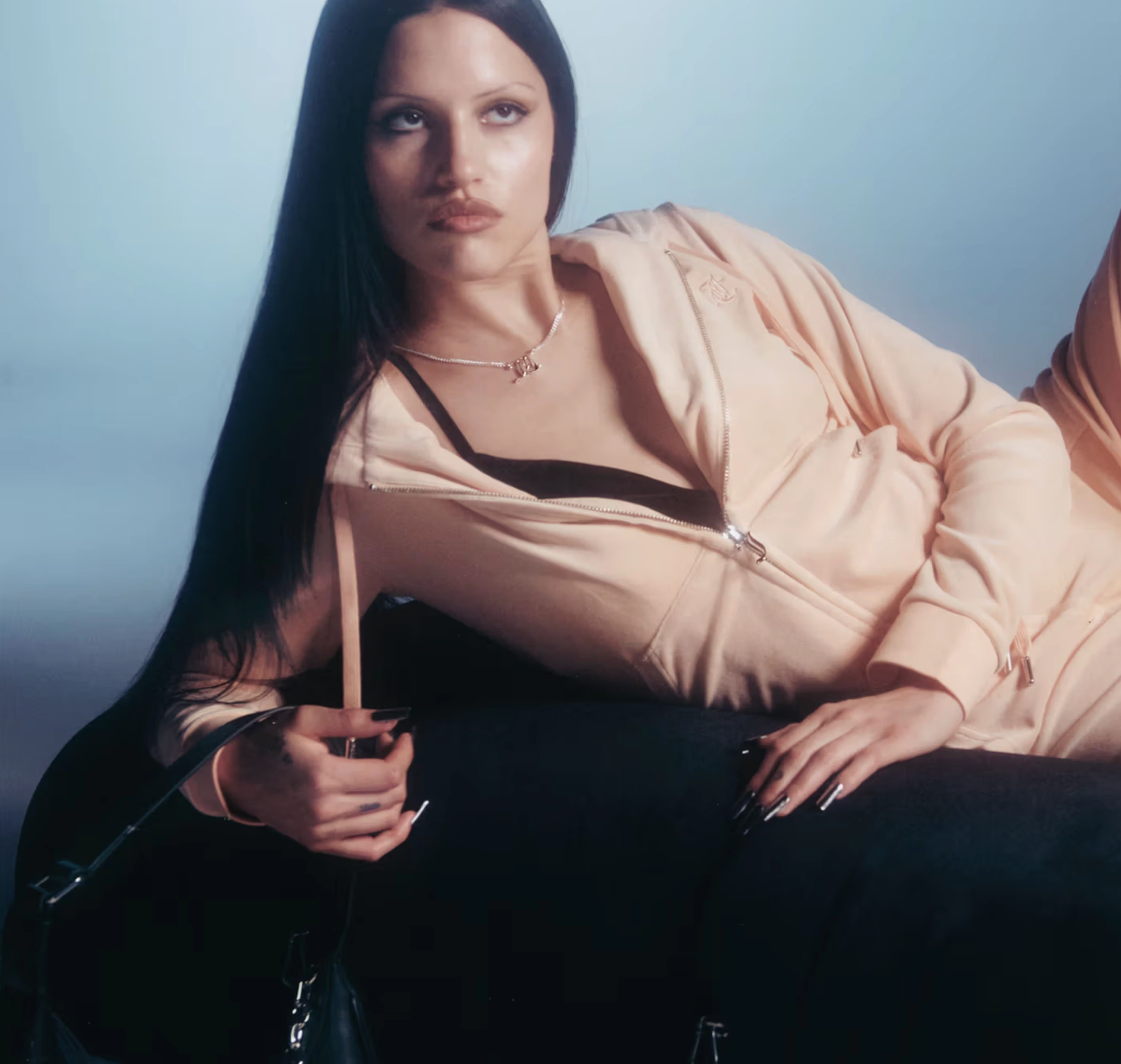
Recent launches continue to reuse recognizable Juicy codes rather than erase them. Authentic has highlighted the return of the Daydreamer handbag and a new denim collection, while describing the brand as rooted in Los Angeles “casual glamour.” That continuity is important. A comeback works more naturally when new products feel connected to an existing memory structure instead of borrowing nostalgia as a temporary costume.
Why Juicy Still Matters
Juicy Couture’s lasting marketing value comes from the clarity of its brand codes. It made loungewear visually loud, treated comfort as aspiration, and used celebrity culture as distribution. The same choices that once made the label easy to parody also made it unusually easy to remember, which is one reason the archive could become commercially useful again when Y2K style returned.
The broader lesson is that a comeback does not require pretending the past never happened. Juicy’s strongest revivals have reused the velour, rhinestones, crests, bags, and Los Angeles attitude that already belonged to the brand, then placed them in new collaborations and channels. Fashion and lifestyle companies considering a similar revival need to know which assets are genuinely ownable before they modernize them. For brands seeking that kind of positioning and identity work, Brand Vision provides branding and marketing support in Los Angeles.
View this post on Instagram
A post shared by madhappy (@madhappy)
Frequently Asked Questions About Juicy Couture
Why is Juicy Couture so iconic?
The Juicy Couture brand became iconic thanks to its rhinestone-studded tracksuits, celebrity endorsements, and unapologetically feminine aesthetic. It defined 2000s loungewear and helped shape the Y2K fashion movement.
Is Juicy Couture still relevant today?
Yes. Juicy Couture continues to sell apparel, accessories, and fragrance internationally, while collaborations and revived archive products keep its Y2K identity visible to newer audiences.
What celebrities made Juicy Couture famous?
Paris Hilton, Kim Kardashian, Britney Spears, Lindsay Lohan, Jennifer Lopez, and other celebrities helped make Juicy Couture a recurring part of early-2000s pop culture. Their visibility gave the tracksuit and accessories repeated exposure outside conventional advertising.
Where can I shop Juicy Couture now?
New Juicy Couture apparel and accessories are sold through the brand’s own site and retail partners, while vintage pieces circulate through resale marketplaces. Collectors looking for older tracksuits, bags, or graphic pieces can also browse Depop!
What is Juicy Couture’s legacy in fashion?
The Juicy Couture story represents a fashion movement rooted in fun, femininity, and freedom. Its lasting legacy is seen in the continued popularity of Y2K fashion brands, its influence on celebrity fashion, and the way it turned loungewear into luxury.
If your brand is deciding what to preserve, what to modernize, and how to make the next chapter feel connected to the original, contact Brand Vision to discuss the brand system and rollout.