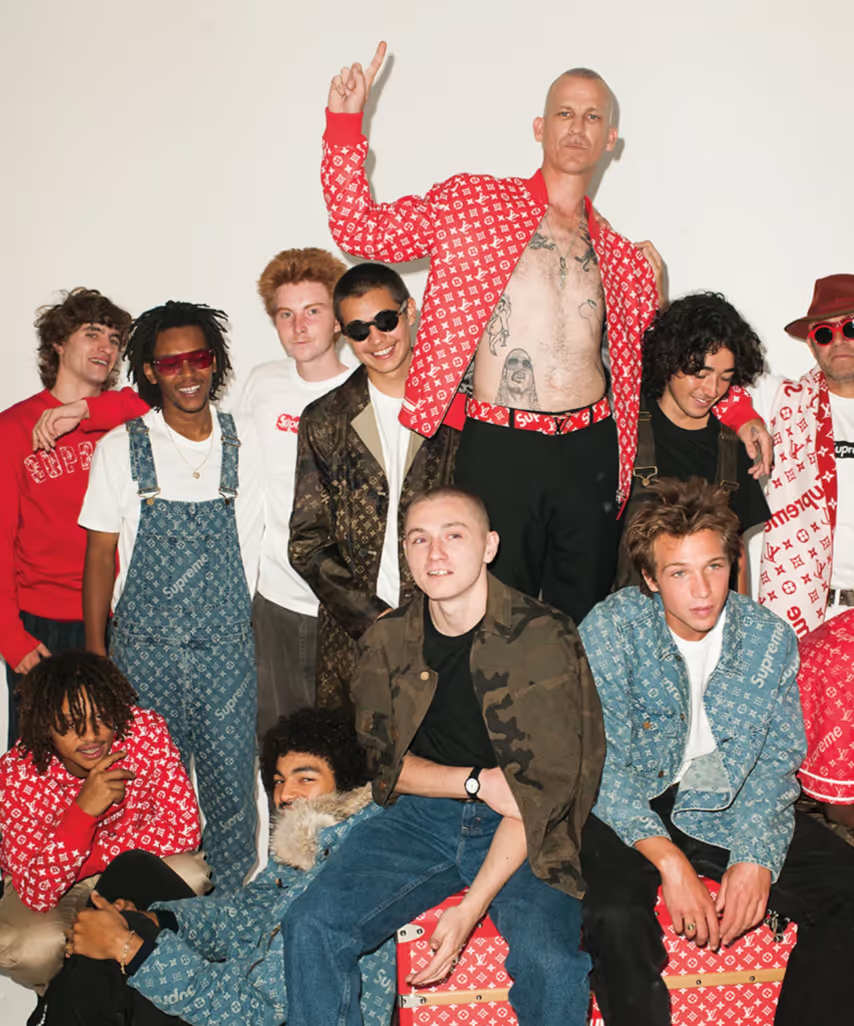
The fashion marketing strategies that worked even two years ago are not enough for 2026. Attention is fragmented, product cycles are faster, and the gap between desire and purchase is shrinking. For leadership teams, the question is no longer whether fashion brand marketing needs to evolve, but whether the operating system behind it is built for speed, proof, and taste.
A strong fashion marketing strategy in 2026 sits at the intersection of culture and infrastructure. It needs creative that feels alive and systems that keep the experience consistent across social commerce, retail, and the website experience. For a brand operating in South Florida, a fashion marketing agency in Miami can help connect campaign, web, and local-market execution without making geography the strategy itself.
The New Rules of Fashion Attention in 2026
Fashion has always been a game of recognition, not reach. In 2026, recognition is still the advantage, but it is earned in smaller moments and measured across more surfaces. A campaign can be beautiful and still fail if the purchase path is slow, the product story is unclear, or the brand code disappears when the content is cropped into a vertical frame.
Many teams treat fashion marketing strategies as channel tactics. The winners treat them as a system: identity, product narrative, distribution, and conversion working together. You can see this shift in how brands are building around drops, creators, and experience-led retail, and in how resale and transparency are reshaping expectations around value and trust. The State of Fashion agenda for 2026 also frames a world where consumer behavior and technology are in rapid flux, rewarding brands that adapt quickly and operate with more agility (McKinsey).
At a Glance
- The best fashion marketing strategies begin with a clear brand code that stays recognizable in every format.
- A modern fashion marketing strategy treats drops, merchandising, and content as one narrative system.
- Fashion brand marketing wins when social commerce is designed like a storefront, not a feed.
- Digital fashion marketing needs creator distribution, retail experiences, and a high-performing website to work together.
- Measurement and governance protect the brand while keeping the team fast.
1. Build A Brand Code People Can Recognize In One Scroll
A fashion marketing strategy fails quietly when the brand becomes hard to identify. In a feed environment, you do not get much time to explain who you are. Your job is to be recognizable before you are persuasive, and that starts with codifying what the brand looks and sounds like, then enforcing it across every touchpoint.
This is one of the most overlooked fashion marketing strategies because it can feel subjective. A brand code is a set of repeatable decisions that make the work easier to recognize even when the logo is not present. In fashion brand marketing, that consistency helps teams scale output without asking every campaign to reinvent the identity. If the system itself is unclear, branding services can define the broader identity rules before channel templates are built.
Define Your Brand Code
Your brand code is typically a mix of creative and product signals. It shows up in silhouette, styling, casting, pacing, typography, lighting, soundtrack, copy rhythm, and the way products are named and merchandised.
- Document 6 to 10 brand code rules that are non-negotiable across campaigns and product storytelling.
- Translate those rules into templates for shoots, motion, social posts, PDP imagery, and email.
- Align the brand code with your brand strategy so creative decisions map to positioning, not trends.
Make Recognition Measurable
A disciplined fashion marketing strategy uses simple recognition metrics. You can test whether your brand is recognizable without asking for opinions.
- Run quick “logo covered” recognition tests with internal teams, retail staff, and small customer panels.
- Track brand search lift alongside campaign flights and creator pushes.
- Audit whether your visual identity rules survive common crops, templates, and platform UI overlays.
2. Make Drops, Merchandising, And Storytelling Work As One System
Fashion moves through chapters, but many brands market like every launch is a one-off. In 2026, drops work best when they are episodes in a longer narrative, with continuity that trains the customer to pay attention. This is where fashion marketing strategies become product strategy, because the story must be embedded into the assortment itself.
You can see the industry talking about strategic renewal and brand building pressure in recent reporting, and you can feel it in how many labels are trying to balance creativity with commercial outcomes. Vogue Business has also highlighted how newer brands are building momentum through clearer brand building moves and hero products that act as shorthand for the label (Vogue Business).
Plan Drops Like Episodes, Not Announcements
A strong fashion marketing strategy defines what the drop means in the context of the brand. It also defines what the customer should do next.
- Build a release calendar that pairs each drop with a theme, a styling narrative, and a conversion target.
- Create a repeatable “drop kit”: lookbook assets, short form video prompts, retail guidelines, PDP modules, and email flows.
- Treat each launch as a learning loop: what sold, what was saved, what was returned, and what the comments actually asked for.
Use Scarcity Carefully
Scarcity can drive desire, but it can also train customers to wait for restocks or resale. The best fashion marketing strategies use scarcity as a design choice, not a panic button.
- Use limited runs to spotlight craftsmanship, collaboration, or a seasonal story.
- Communicate restock logic clearly, so scarcity does not feel like manipulation.
- Tie scarcity to experience: early access, community drops, or retail events, not just low inventory.
3. Turn Social Commerce Into A Measured Revenue Channel
Social platforms can function as storefronts as well as discovery channels. In Emplifi’s 2025 U.S. survey of nearly 1,000 consumers, 53% of Gen Z respondents and 56% of Millennial respondents said they had made a purchase through social media in the previous three months (Emplifi). For brands serving those audiences, social content should connect cleanly to product detail and purchase paths rather than assuming engagement will become revenue on its own.
Digital fashion marketing teams often treat commerce as a separate layer that comes later. A better fashion marketing strategy designs for the buying moment upfront: the content structure, the product selection, and the frictionless handoff into checkout.
Treat Social As Storefront
Fashion brand marketing should mirror how customers shop: by vibe first, then detail, then proof.
- Assign a weekly “social assortment” of hero items designed to convert on platform.
- Build short form content that answers three things fast: what it is, how it fits, and why it is worth it.
- Use creator content as PDP support, not just awareness, and bake it into site modules.
Reduce Friction In The Buying Moment
The most practical fashion marketing strategies reduce decision load at the exact moment attention peaks.
- Keep product naming and variation logic simple, so users can find the exact item they saw.
- Use size and fit guidance that is consistent across social, PDPs, and customer support.
- Make the purchase path fast on mobile, and treat page speed as a brand signal via your web design agency standards.
4. Use Creators As A Distribution System, Not Just Content
Creators can provide both creative and distribution, but their value depends on fit, audience, format, and the offer behind the content. The mistake is treating creator work as a single campaign deliverable rather than a program with governance, measurement, and a clear role in the broader fashion marketing system.
A modern fashion marketing strategy also recognizes that “creator” is not a genre. It is a job. Some creators sell. Some style. Some explain. Some document. Fashion marketing strategies succeed when you recruit for the role you need, then give creators the structure to win.
Creator Fit Over Follower Size
Fashion brand marketing often overpays for reach that does not convert. Fit is what scales, especially when the creator’s style language overlaps with the brand code.
- Build a creator matrix: brand fit, audience fit, content format strength, and commerce ability.
- Prioritize creators who can show product in motion and speak clearly about fit and materials.
- Treat creators as long-term partners where possible, because consistency builds trust.
Build An Affiliate Engine With Guardrails
Affiliate programs are not just a discount layer. They can be a reliable distribution engine when set up properly, especially for digital fashion marketing teams that need predictable performance.
- Create tiered affiliate rules based on performance and content quality.
- Standardize do’s and do not’s: brand claims, sustainability language, and retouching expectations.
- Route high-performing creator content into paid amplification with a PPC agency or in-house paid-media team, so strong assets can be tested across channels without confusing paid distribution with organic SEO.
5. Design Retail As A Media Channel
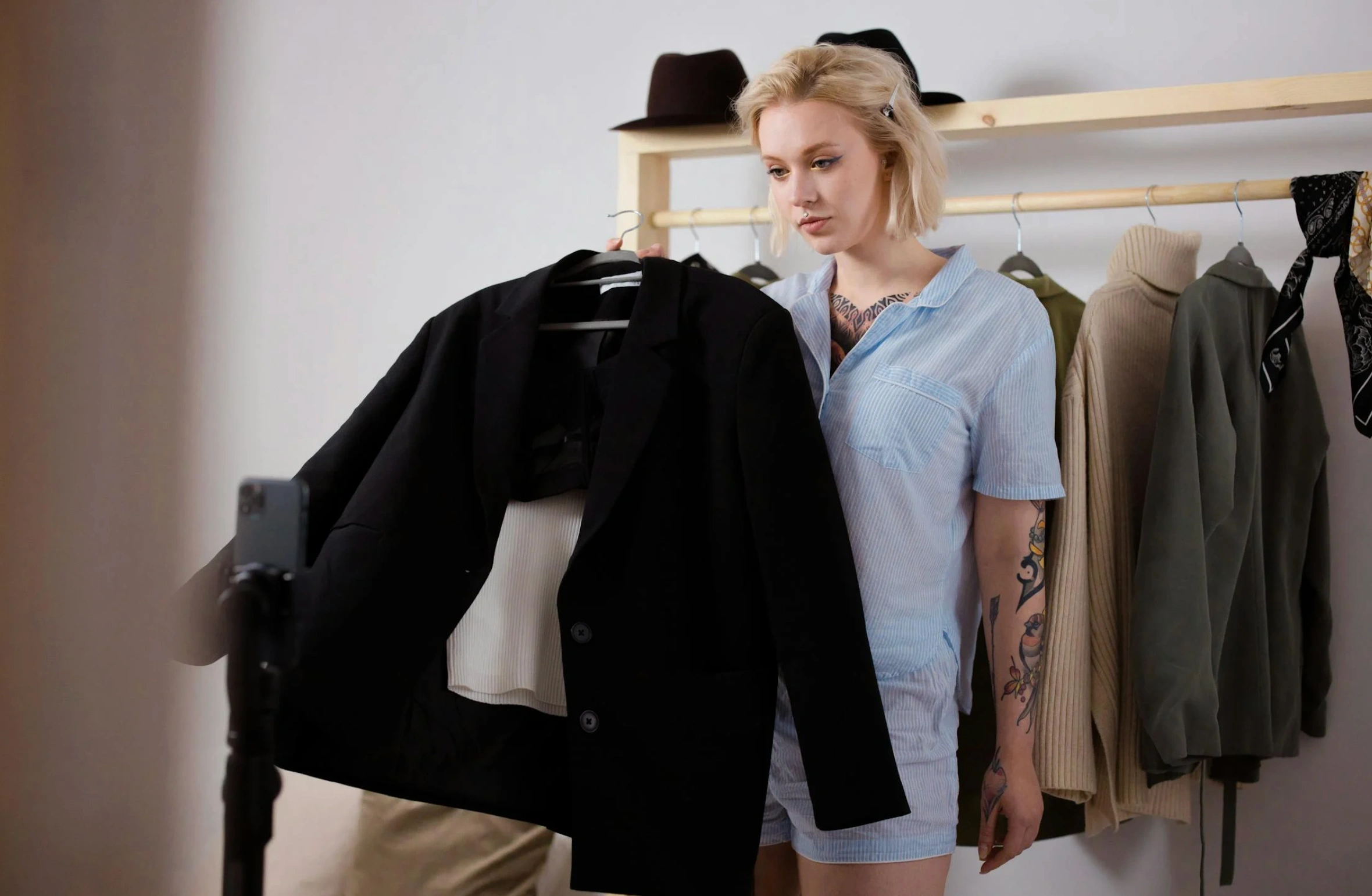
Retail is not only a place to buy. It is a place to believe. In 2026, stores are increasingly positioned as multi-purpose spaces that function as cultural hubs, with brands exploring retail formats that deliver community and experience alongside commerce (Vogue Business). This matters even for brands without a large footprint, because the logic applies to pop-ups, partnerships, and event-led retail.
The best fashion marketing strategies treat retail as content creation infrastructure. The store becomes a set, staff become storytellers, and customers become participants. For teams designing pop-ups or flagship moments, the same planning principles also appear in immersive and sensory marketing, where the physical experience is connected to the digital follow-up instead of treated as an isolated event.
Stores As Community Infrastructure
A fashion marketing strategy that uses retail well has a clear reason for customers to show up beyond inventory.
- Build programming around styling, care, repair, customization, or archive storytelling.
- Train staff on the brand code so the experience is consistent with your fashion brand marketing message.
- Use retail moments to gather real product feedback that informs the next drop.
Events That Create Content, Not Just Footfall
Events should produce assets that extend beyond the day. Digital fashion marketing teams can plan this like a shoot.
- Design a content capture plan: angles, formats, talent, and usage rights.
- Create “repeatable rituals” that customers recognize, then document them consistently.
- Use QR journeys that connect retail to your site and email list, so retail becomes a pipeline channel.
6. Make Resale And Circularity Part Of The Brand, Not A Side Project
Resale is now a meaningful part of the apparel market rather than a fringe behavior. ThredUp’s 2025 report estimated that the global secondhand market grew 15% in 2024 and represented 9% of global apparel spend that year (ThredUp). That historical benchmark is useful because fashion brand value can now be experienced across first sale, resale, and long-term ownership.
A modern fashion marketing strategy can use resale as customer acquisition. It can also use it as proof of durability and desirability, especially when the brand’s design language holds value across seasons.
Resale As Customer Acquisition
Some of the strongest fashion marketing strategies treat resale customers as future first-party customers.
- Offer trade-in credits that pull resale buyers into the brand ecosystem.
- Spotlight “best sellers on resale” as social proof, without framing it as discount culture.
- Use resale data to learn which items become long-term icons, then build new drops around that signal.
Brand-Owned Paths To Circularity
Fashion brand marketing benefits when circularity is brand-led rather than outsourced.
- Pilot authenticated resale, repairs, or buyback programs with clear customer terms.
- Create product pages that include care instructions and longevity cues.
- Make circular programs easy to find and consistent with the brand code, so they feel designed, not bolted on.
7. Communicate Sustainability Without Greenwashing
Sustainability language is under pressure. Customers are skeptical, regulators are sharpening definitions, and vague claims are risky. In fashion, sustainability is also emotional. It touches identity, ethics, and status. That means the bar for proof is higher.
The most responsible fashion marketing strategies treat sustainability claims like product claims: specific, verifiable, and consistently expressed across every channel. This is where a disciplined fashion marketing strategy protects the brand as much as it attracts the customer.
Prove Claims With Receipts
If you cannot prove it, do not lead with it. Fashion brand marketing earns trust through specificity.
- Replace broad statements with concrete details: materials, processes, certifications, and traceability.
- Standardize sustainability language across site, social, and creator toolkits.
- Build a simple internal approval process so claims are reviewed before launch.
Prepare For The Next Wave Of Product Transparency
Transparency is becoming structural. The European Commission’s textiles strategy and related initiatives signal increasing focus on durability, repairability, and anti-greenwashing measures (European Commission). Even if you do not sell in the EU, expectations travel through culture and platforms.
- Improve product data quality now, including materials, sourcing details, and care.
- Design your product pages to make transparency easy to access without overwhelming the aesthetic.
- Treat traceability as part of digital fashion marketing content, not only compliance.
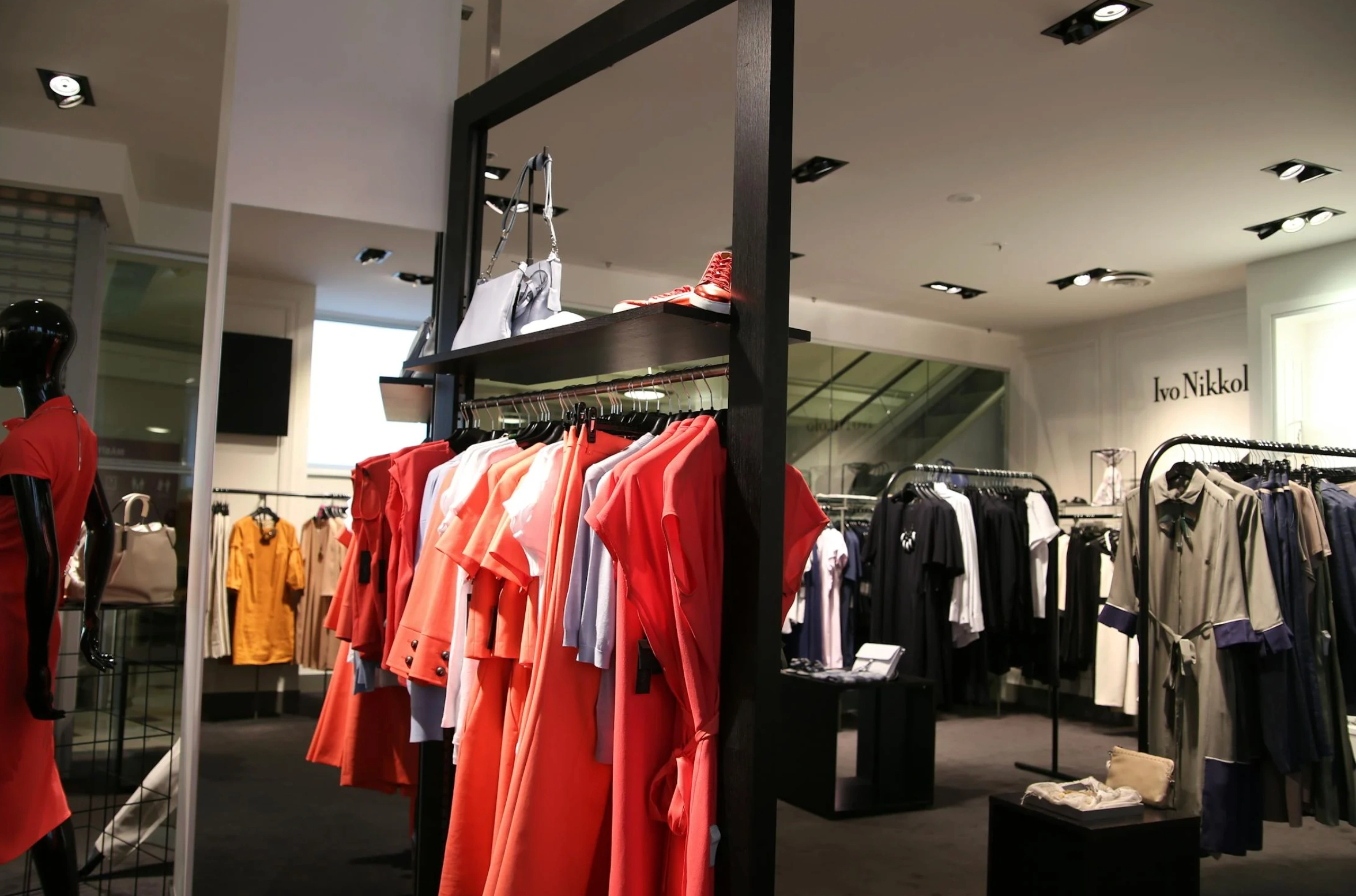
8. Treat Your Website As The Flagship Store
A fashion marketing strategy can create desire, but the website must close. For many brands, the website is the flagship store, the archive, and the fit room. If it feels slow, confusing, or inconsistent, customers notice. They may still like the brand, but they buy less, return more, and hesitate longer.
This is where fashion marketing strategies connect to ecommerce performance. The work is not only creative. It includes experience design, page performance, information architecture, and organic discoverability. A broader SEO strategy can support category and brand discovery, while ecommerce SEO focuses more specifically on product, category, platform, and commercial search opportunities.
Luxury-Level UX, For Every Price Point
Luxury is a feeling, not a price. A strong fashion marketing strategy makes the experience feel intentional at every step.
- Build product pages that answer fit, fabric, care, and styling with clarity.
- Use consistent imagery rules so products look coherent across categories.
- Create navigation that matches how customers shop, not how your org chart is structured, supported by a UI UX design agency mindset.
Accessibility And Performance As Brand Signals
Accessibility is not a checkbox. It is a signal of care and quality. Speed is the same.
- Treat site speed as part of digital fashion marketing performance, especially on mobile.
- Fix common blockers: heavy video, uncompressed images, and poor font loading.
- Use accessibility best practices so more customers can browse and buy with confidence, backed by the standards you expect from a web design agency.
Build A Measurement And Governance Layer That Protects The Brand
Fashion moves fast, but speed without governance creates inconsistency. A modern fashion marketing strategy needs a scorecard and clear ownership. It also needs a release discipline that prevents last-minute chaos from degrading the brand experience.
This is one of the most important fashion marketing strategies for leadership teams because it turns marketing into a repeatable system. It makes fashion brand marketing less fragile and more scalable.
A Simple Fashion Marketing Scorecard
You do not need dozens of KPIs. You need a small set that reflects demand, conversion, and retention.
- Demand: brand search lift, save rate, and creator content share of voice.
- Conversion: product page conversion rate, checkout completion, and return rate by item.
- Retention: repeat purchase rate, email engagement, and resale trade-in participation.
Governance For Speed Without Chaos
Governance sounds slow, but it is how you move faster with less rework.
- Create a weekly cross-functional release review: marketing, ecommerce, retail, and customer support.
- Standardize launch checklists: product data, content assets, fit guidance, and claim approvals.
- Use a marketing consultation and audit cadence to spot leaks in the funnel and fix them before the next drop.
Modern Fashion Marketing Strategy That Scales
The strongest fashion marketing strategies in 2026 are not louder. They are clearer. They build recognition, connect product to story, and reduce friction at the moment of purchase. They treat creators and retail as distribution, and they treat the website as the flagship store where trust is won or lost.
If you want these fashion marketing strategies to work, the system has to be designed end to end. That is where a measured approach pays off: brand strategy, UX, performance, and governance working together so your marketing stays beautiful and effective at the same time.
If you are refining your fashion marketing strategy for the year ahead, explore more Brand Vision articles or contact our team about connecting brand, ecommerce experience, and marketing execution. You can also review Brand Vision for the broader agency approach. If you are building in Canada and want local context, our teams also support brands through a full-service Toronto marketing agency.