McDonald’s advertising has spent decades turning simple products, slogans, promotions, and celebrity partnerships into recognizable cultural moments. The best McDonald’s advertisements are not all built the same way. Some rely on jingles, some on humor, some on collectibility, and others on the reach of a famous collaborator. What connects them is a clear understanding of how a restaurant brand can use repetition, entertainment, and familiarity to stay memorable.
That makes the campaigns useful beyond fast food. For brands working in food and beverage marketing, McDonald’s shows how product, packaging, promotion, media, and brand voice can reinforce one another. The eight examples below trace that evolution from early jingles to global celebrity meals.
1. “You Deserve a Break Today” (1971)
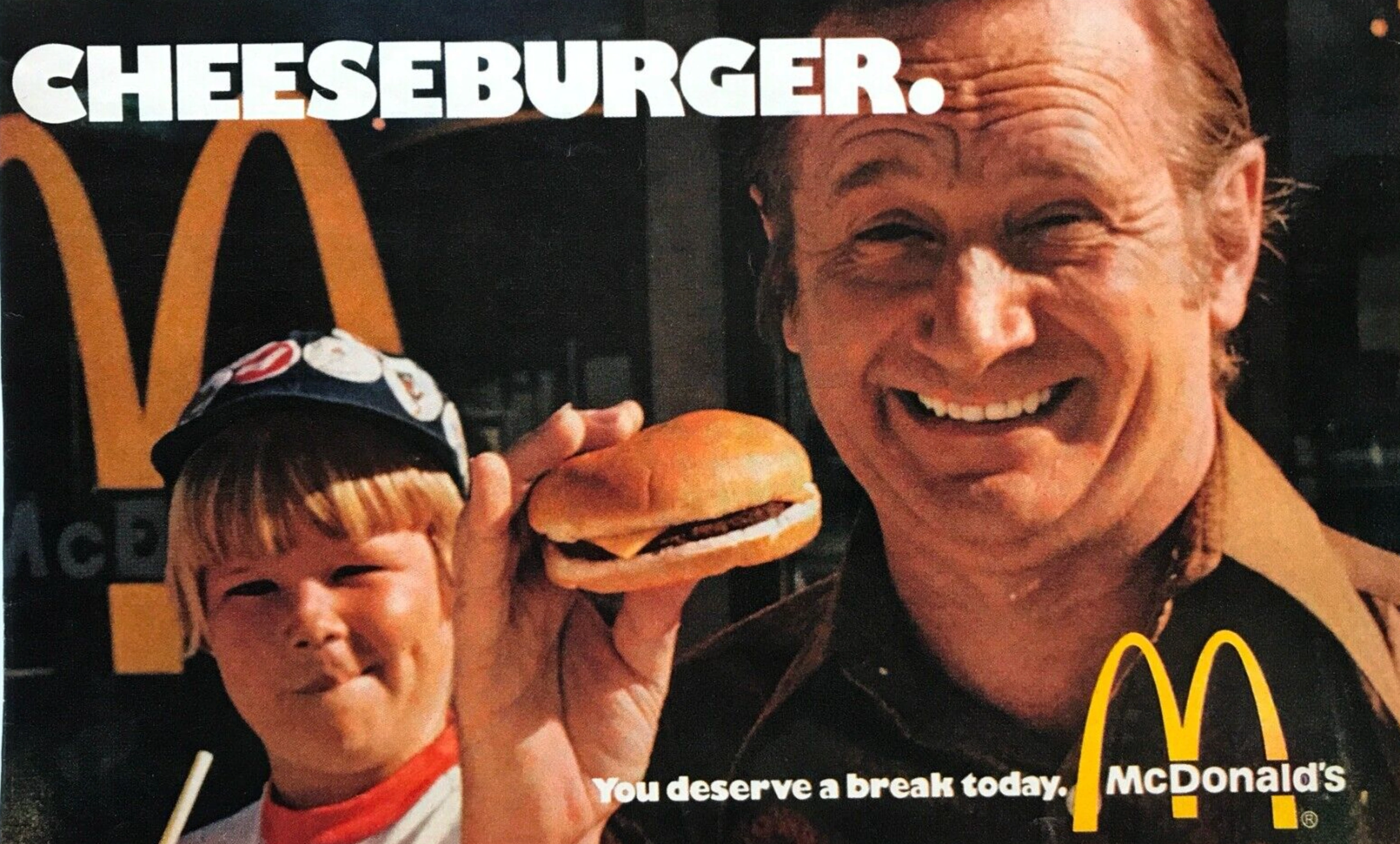
Launched in 1971, “You Deserve a Break Today” helped McDonald’s frame a visit as a reward rather than only a convenient meal. The commercial showed employees preparing a clean, welcoming restaurant while the jingle invited customers to take a break from their daily routine.
The campaign’s strength was emotional simplicity. Instead of explaining the menu in detail, it attached McDonald’s to a familiar feeling: relief, comfort, and an easy moment away from work or household responsibilities. That made the slogan adaptable across television, print, and restaurant messaging. It also gave McDonald’s a repeatable emotional promise that could sit above individual menu items. A promotion could change, but the broader idea of the restaurant as an easy, familiar break remained understandable.
2. Big Mac’s “Two All-Beef Patties…” Jingle (1974)
In 1974, McDonald’s introduced a fast, memorable description of the Big Mac: “two all-beef patties, special sauce, lettuce, cheese, pickles, onions on a sesame seed bun.” The line turned the ingredients themselves into a memory device rather than leaving them as ordinary product information.
McDonald’s used the phrase in promotions and challenges that encouraged customers to repeat it. That participation mattered. A product description became something people could recite, share, and recognize, showing how repetition can turn even basic menu information into a distinctive brand asset. It is also a reminder that memorable copy does not always need to be abstract. Sometimes the most useful creative move is to make a product truth unusually easy to repeat.
3. Happy Meal Launch (1979)
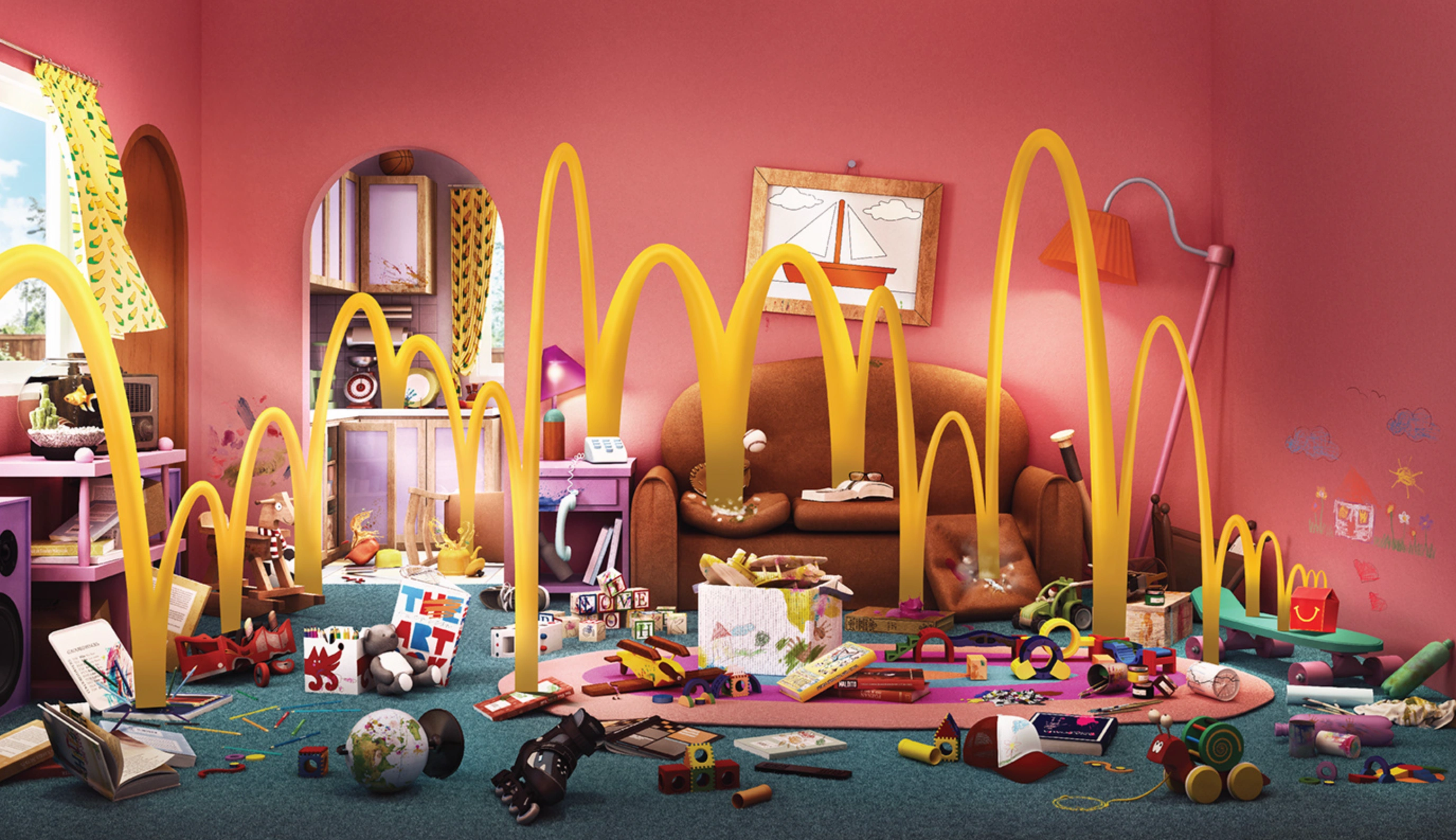
When McDonald’s unveiled the Happy Meal in 1979, it created a product format in which the food, packaging, and toy were part of one experience. Early advertising centered on the excitement of opening the box and discovering what came with the meal.
That packaging system gave McDonald’s a flexible platform for family marketing, character tie-ins, and later entertainment partnerships. It also shows how branding can extend beyond logos into the physical format of the product itself. The box, toy, and meal worked together as a recognizable unit. That combination created room for new themes without changing the basic experience customers recognized. In brand-system terms, the format stayed stable while the creative layer could keep changing around it.
4. “The Showdown” with Michael Jordan and Larry Bird (1993)
In 1993, McDonald’s aired a Super Bowl commercial that pitted NBA legends Michael Jordan and Larry Bird against each other in a trick-shot contest for a Big Mac and fries. The setup was simple enough to understand immediately: two famous competitors keep escalating the difficulty of the shots because neither wants to give up the meal.
The commercial combined celebrity recognition with a repeatable comedic structure. The product stayed at the center of the contest without needing a long sales pitch, while the escalating shots made the spot entertaining on its own. It is a useful example of using celebrity talent to strengthen an existing product story rather than letting the celebrity become the entire story. The audience still knows what is being competed for, and the meal remains visible throughout the premise. That balance is important whenever a partnership risks drawing more attention than the product itself.
5. “I’m Lovin’ It” (2003)
In 2003, McDonald’s introduced “I’m Lovin’ It,” its first global advertising campaign. The slogan gave McDonald’s one flexible phrase that could travel across markets while leaving room for local executions, products, languages, and media.
Fronted by Justin Timberlake’s involvement in some early music spots, the campaign connected the brand with contemporary music and youth culture. Its longevity demonstrates the value of a brand strategy that gives a global organization a recognizable core without requiring every advertisement to be identical. The phrase can sit beside different menu items, celebrities, markets, and media formats because it functions as a broad brand platform rather than a one-campaign headline.
6. McDonald’s Monopoly (First Launched in 1987)
Among McDonald’s recurring promotions, Monopoly stands out because the purchase becomes part of a game. Debuting in 1987, the “peel-and-win” game format invited customers to collect property stickers and instantly redeem prizes. The promotion gave customers another reason to inspect packaging, return, and compare pieces with other players. It also created anticipation after the purchase, extending the experience beyond the moment food was ordered. That extra layer of participation helped the campaign operate as both promotion and recurring ritual.
The marketing lesson is not simply to copy a contest. The stronger idea is to build participation into the product experience. When the mechanic is easy to understand and clearly connected to the purchase, packaging and promotion can become part of the entertainment rather than functioning only as containers or announcements.
7. The Travis Scott Meal (2020)
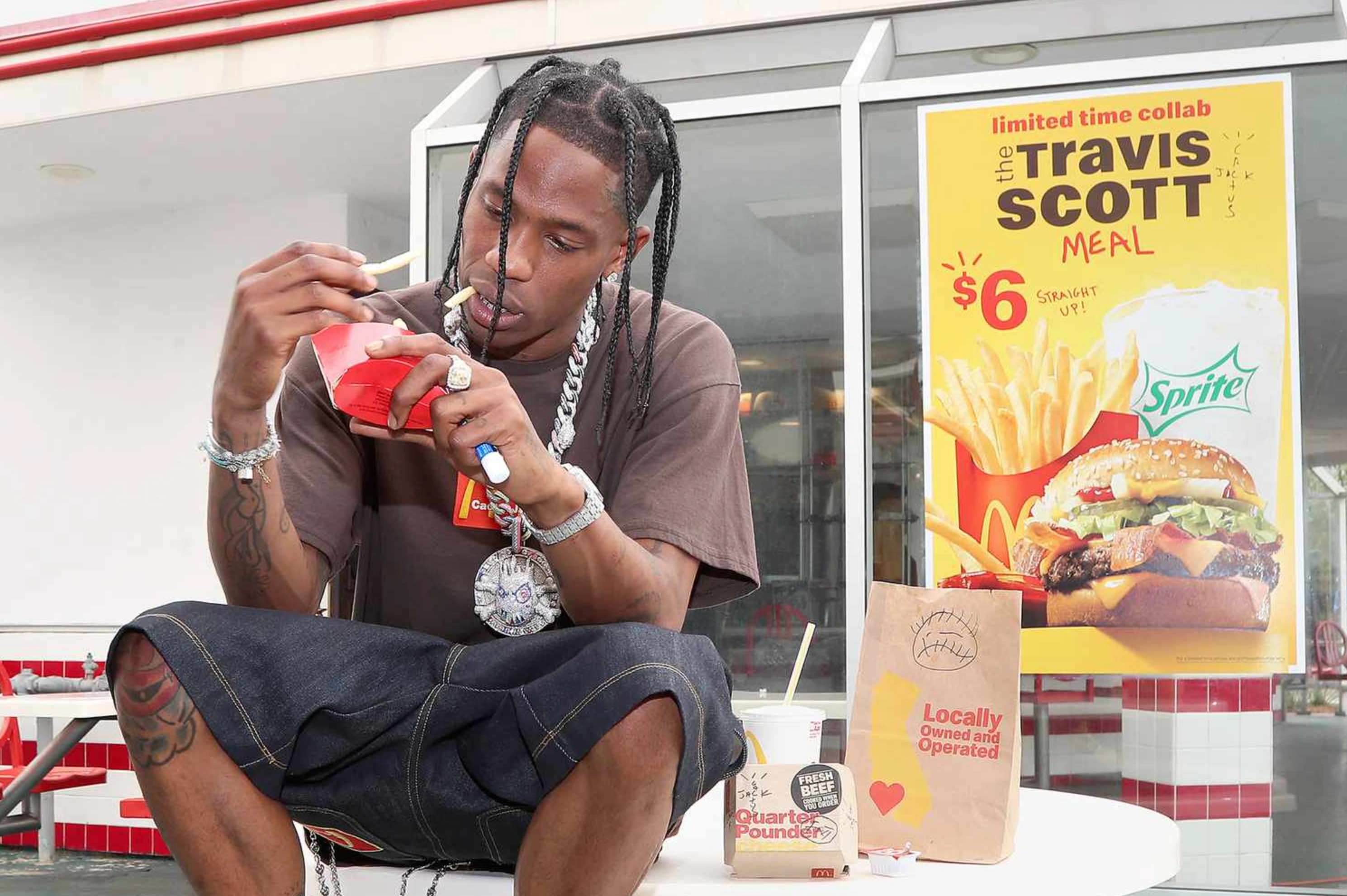
In September 2020, McDonald’s teamed up with rapper Travis Scott for a special “Travis Scott Meal,” bringing his usual McDonald’s order to participating restaurants across the U.S. McDonald’s described it as the first time since 1992 that a celebrity’s name had appeared on its menu.
The campaign worked as a product collaboration and a cultural signal at the same time. The order was familiar food, but attaching a specific celebrity preference gave fans a simple way to participate. Social content around ordering the meal extended the campaign beyond paid media and helped the collaboration travel through fan behavior. The collaboration also worked because the order itself was easy to imitate. Fans did not need access to a limited product design or special event to participate; they could order the same combination and share the experience.
8. The BTS Meal (2021)
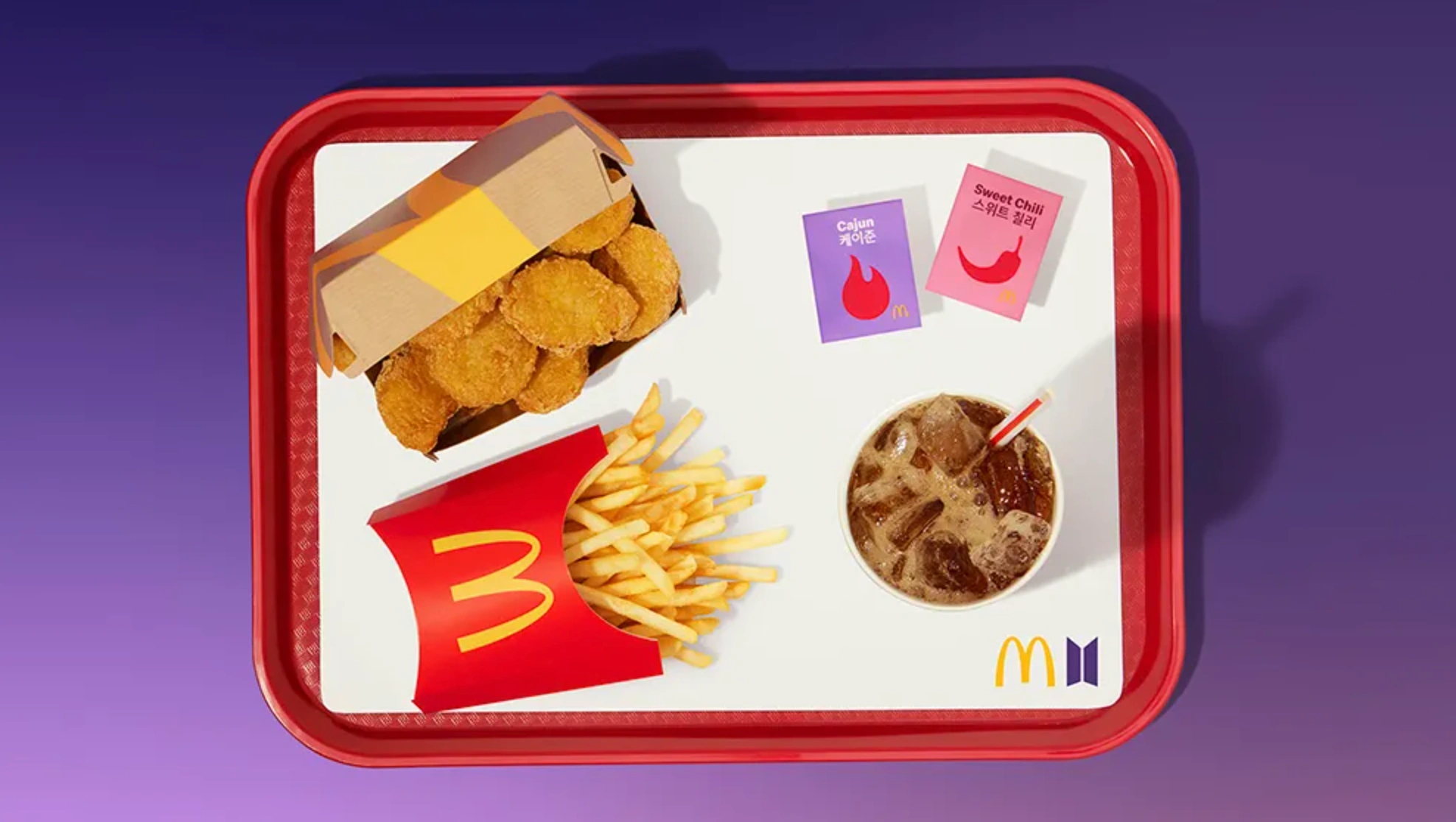
Following the Famous Orders program’s earlier celebrity collaborations, McDonald’s launched the BTS Meal in May 2021 across 50 countries. The meal used familiar McDonald’s products plus Sweet Chili and Cajun dipping sauces inspired by McDonald’s South Korea, giving the collaboration both a global format and a specific connection to the group.
The rollout showed how a partnership can travel across markets without requiring each country to invent a completely separate campaign. Fans could recognize the same collaboration through menu items, packaging, sauces, and social content, while local availability and execution still varied by market. That balance between a global campaign idea and market-level execution is useful for any brand expanding across regions: the central concept should travel, but the way customers encounter it still needs local operational flexibility.
What These McDonald’s Ads Have in Common
These campaigns span very different eras, but several patterns repeat. McDonald’s often starts with something easy to understand, then gives it a memorable wrapper: a jingle, a challenge, a celebrity order, a game, or a family ritual. The strongest examples do not ask the audience to absorb a complicated message before participating.
From Brand Vision’s agency perspective, the useful lesson is the relationship between brand consistency and campaign flexibility. McDonald’s can change the creative format dramatically while keeping recognizable products, language, symbols, and customer expectations in place. For restaurant and retail operators, a broader marketing strategy should work the same way: campaigns can change, but they should still feel connected to one brand system.
How Businesses Can Apply the Lessons
First, build campaign ideas around behavior that is easy to explain. If customers need a paragraph of instructions before they understand the promotion, the concept may be doing too much. Second, make the product part of the idea. The Big Mac jingle, Happy Meal packaging, Monopoly pieces, and celebrity orders all give the product a visible role rather than treating it as an afterthought.
Third, choose media formats that fit how the idea spreads. A celebrity collaboration may depend heavily on social content, while a product demonstration may be better suited to video marketing. For a restaurant operator selecting outside support in a major market, choosing a branding agency in Chicago, or another relevant region, can add local market context while specialist campaign, web, and search needs remain separate.
The best McDonald’s advertisements show that longevity does not require repeating the same commercial forever. It comes from creating recognizable brand assets, then finding new formats that make them relevant to each generation. If you are planning a restaurant or consumer-brand campaign, you can discuss the brand and campaign direction with Brand Vision before deciding which channels and creative formats deserve the most investment.