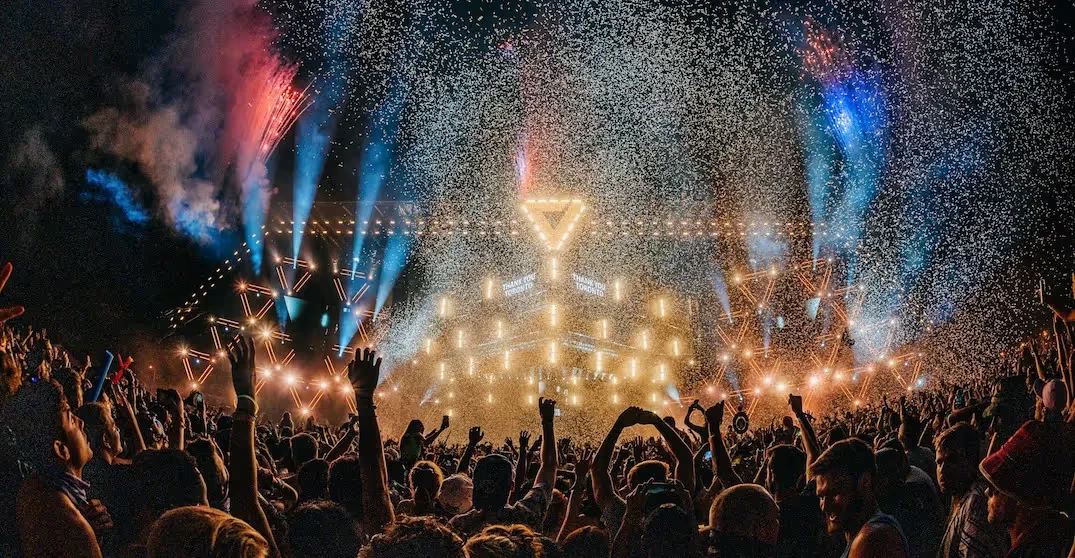
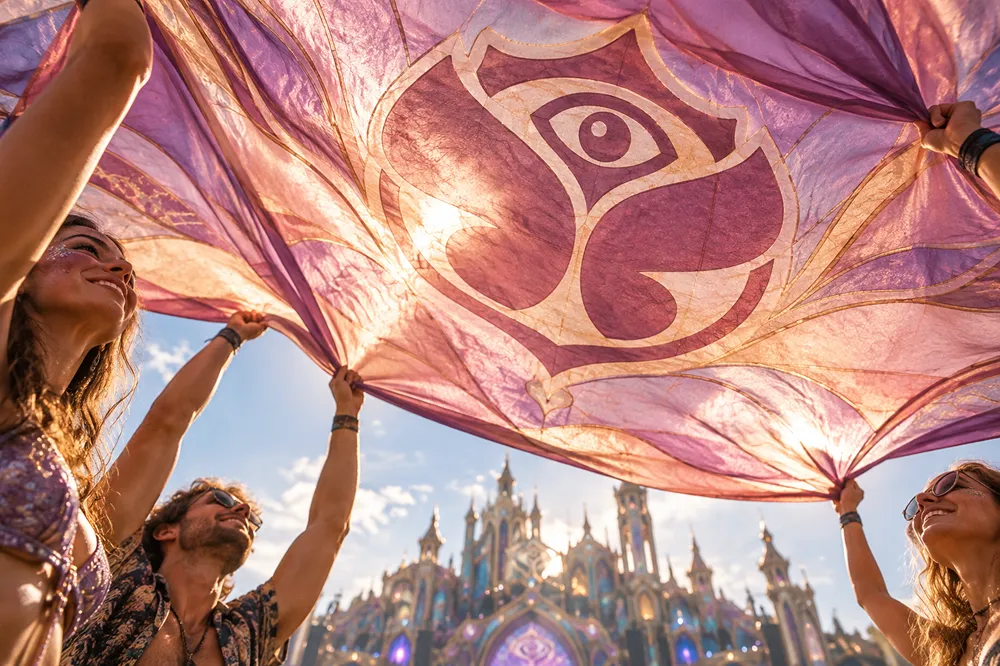
Tomorrowland has grown from a Belgian electronic-music festival into a global entertainment brand whose marketing is built around worldbuilding, community, digital distribution and partnerships. Its 2024 Belgium edition welcomed more than 400,000 people from over 200 countries across two weekends, according to Tomorrowland. That scale makes the festival a useful case study for entertainment marketing: the event itself is only one part of a much larger brand system. (Tomorrowland)
The strongest lesson is coordination. Themes shape stages and stories; artists amplify the event; video carries the experience beyond Belgium; ticketing and merchandise convert attention; and partnerships keep the brand active between festival weekends. Those pieces reinforce one another instead of competing for attention.

Immersive Storytelling Gives Tomorrowland a Brand World
Tomorrowland's immersive experiences are built around recurring fantasy worlds, visual motifs and mythical stories. Themes such as The Elixir of Life, The Book of Wisdom and Amicorum Spectaculum give stage design, copy, merchandise and video a shared narrative. The "Planaxis" theme, for example, used an underwater world as the creative frame for the 2018 edition.
The original article overstated secrecy around these themes. Tomorrowland announced the 2024 Belgium theme, LIFE, on November 15, 2023, around eight months before the festival, and later extended the story through trailers and a theme novel. The useful marketing principle is not last-minute surprise. It is a consistent brand strategy that gives audiences material to anticipate long before opening day. (Tomorrowland)
The same pattern appears across editions. Coverage of Tomorrowland's theme announcements shows how dates, visual identity and story can be released in stages, keeping the audience engaged without requiring the main stage itself to remain secret.
Artists and Community Extend the Festival's Reach
Tomorrowland benefits from artists who are both performers and media channels. DJs share line-ups, behind-the-scenes material and performance clips with audiences that already care about electronic music. That helps the festival reach beyond its owned channels while reinforcing the sense of a global Tomorrowland community.
The mechanism is more credible than any single viral metric. Martin Garrix, Armin van Buuren, Dimitri Vegas & Like Mike, Alok and other artists bring their own followings into the event story. Tomorrowland's existing feature on DJ Alok's Instagram activity is a useful example of artist-led amplification, but the former claim that one post reached one million likes in 24 hours was not supported by the linked source and has been removed.
Smaller creators can contribute too, but the value comes from audience fit rather than follower count. A festival does not need every creator to reach everyone. It needs enough credible voices to make Tomorrowland's marketing feel present across the communities most likely to attend, watch or share.

Social Media and Video Turn One Event Into Year-Round Content
Tomorrowland's YouTube channel, livestreams, full sets and aftermovies let the brand distribute the festival long after the physical event ends. Instagram and other social platforms add real-time updates, artist clips and user-generated content. For marketers, the important lesson is that a live event can become a library of video marketing assets rather than a one-weekend campaign.
Livestreaming is especially valuable because high-quality production and engagement on social media can give people who cannot travel an inclusive experience and creates another layer of social media engagement. The previous article claimed that Tomorrowland 2024 drew more than 50 million livestream viewers, but the linked Tomorrowland material does not substantiate that number. A better documented benchmark is Tomorrowland Around the World in 2020, which Tomorrowland said drew more than one million viewers worldwide. (Tomorrowland)
That digital extension matters because it expands the audience without pretending the virtual experience is identical to attending in person. The video product works best as a gateway into the brand, an archive for fans, and a reason to keep following between editions.
Technology Works Best When It Supports Participation
NFT Membership and Digital Access
Tomorrowland experimented with Web3 through NFT sales and a member program tied to perks such as ticket pre-sale access, giveaways and festival experiences. The earlier $2.2 million revenue figure has been removed because it was not independently verified. Tomorrowland's own NFT member page is stronger evidence for the utility model than an unsupported revenue estimate. (Tomorrowland NFT)

Digital Worlds and Immersive Experiences
Tomorrowland has also used digital environments to make its fictional worlds explorable. The 2020 Around the World festival used a browser-based 3D environment called Pāpiliōnem that visitors could navigate on computers, tablets and phones. Tomorrowland's own press material confirms that Pāpiliōnem was an interactive digital island visitors could explore across devices. (Tomorrowland)
Later, The Great Library of Tomorrow brought the brand's stories into a physical immersive exhibition with a free-roaming VR component in Madrid. Some coverage described the project as Tomorrowland VR; the official immersive-experience site confirms the VR adventure and its connection to Tomorrowland's recurring themes. (Tomorrowland Immersive Experience)
Ticketing, Merchandise and Partnerships Convert Attention
Ticketing and Digital Buying Experience
Ticketing is where brand demand meets operational clarity. Tomorrowland uses multiple pass types, sale phases, travel packages and accommodation options, creating a pricing strategy that can serve different levels of commitment. Tomorrowland's 2024 sales information documented multiple ticket options, sale phases, travel packages and DreamVille accommodations.
For ticket prices, the article now points to Tomorrowland's own pass information rather than repeating the old inaccurate 2024 price list. Clear sale dates, inventory status, fees and mobile purchase flows are also part of UI/UX design, because a high-demand ticket launch can expose friction very quickly. (Tomorrowland)
Merchandise Extends the Visual Identity
Tomorrowland's merchandise gives fans a way to carry the festival identity into everyday life. Limited apparel, accessories and brand collaborations turn stage aesthetics and storytelling into physical products. The article's existing reference to Tomorrowland and Off-White is retained, but the former claim that a 2024 Off-White collection sold out in record time could not be verified from the linked store page and has been removed.
Current Tomorrowland store material confirms that limited collaborations remain part of the model across music, technology, lifestyle and fashion. The marketing lesson is less about one partner and more about translating the brand system into collectible graphic design and merchandise that still feels recognizably Tomorrowland. (Tomorrowland Store)
Sponsorships Can Become Participatory Media
Tomorrowland partnerships work best when the sponsor contributes something people can use or share. The collaboration with BMW did exactly that in 2023, when BMW created an AI-powered tool that let fans generate personalized dance tracks, lyrics and social assets. The previous draft incorrectly dated that collaboration to 2021. BMW's press release places it in July 2023. (BMW Group)
The older claim that Tomorrowland partnered with Google in 2024 on an AI music recommender could not be verified and has been removed. That distinction matters: technology examples should show what the partnership actually did, not simply attach an AI label to the event.

Community, Personalization and Responsibility Strengthen Retention
Data and Paid Distribution
Tomorrowland can use registration, purchase and engagement data to segment communications, but the article should not invent campaign performance. Personalized email, retargeting and targeted social media ads are useful tactics when they help the right audience understand dates, passes, travel or content. For other entertainment brands, the transferable lesson is disciplined paid media planning, not unsupported claims about Tomorrowland's conversion rate.
Community Is Bigger Than a Loyalty Program
"People of Tomorrow" is primarily Tomorrowland's community identity, not a conventional points-based loyalty program. The previous article treated it as a formal program with unverified secret-party benefits. A more accurate interpretation is that the People of Tomorrow language creates continuity across ticket holders, viewers, merchandise buyers and international editions.
Sustainability Needs Measurable Evidence
Tomorrowland's sustainability work is documented through Love Tomorrow rather than through vague claims about being "green." Its 2024 sustainability report records 900 custom sorting bins, 560 Recycle Team volunteers and 25,000 recycle kits, along with compostable food-service materials and other waste initiatives. The former claim that Tomorrowland’s “Green Warriors” initiative drew 10,000 participants was not supported by the linked material and has been removed. (Love Tomorrow)

Global Editions and Digital Formats Keep the Brand Moving
Tomorrowland Winter extends the brand into a very different physical setting. The fourth edition ran in Alpe d'Huez from March 16 to 23, 2024 and welcomed more than 22,000 people, with more than 150 artists across eight indoor and outdoor stages. The older claim that Tomorrowland’s 2024 Winter edition featured a specific mountain projection show was not independently verified, so it has been replaced with figures from Tomorrowland's own winter press material. (Tomorrowland Winter)

Digital formats have played a similar expansion role. Tomorrowland Around the World was launched in 2020 as a two-day digital festival with more than 60 artists and eight stages. Tomorrowland later reported more than one million viewers worldwide. The previous claim about a global DJ competition and a guaranteed future festival slot was not supported by the official source and has been removed. (Tomorrowland)


What Marketers Can Learn From Tomorrowland
The Tomorrowland marketing strategy works because experience design, content, community and commercial infrastructure support the same brand promise. Themes create a recognizable world. Artists and creators distribute it. Video keeps it alive between events. Tickets and merchandise convert attention. Partnerships add new forms of participation. Sustainability and international editions give the brand more dimensions than a single festival weekend. For event marketers, that means the brand plan should account for what happens before the gates open, while the audience is on site, and after the final set ends.
The more practical lesson is to avoid confusing spectacle with strategy. Tomorrowland's strongest ideas are repeatable systems: a narrative platform, a distinctive visual language, consistent content formats and clear paths from attention to participation. That is why the brand can move from Boom to winter festivals, digital experiences and partner activations without feeling unrelated.
For entertainment brands planning that kind of coordinated system, Brand Vision can help align strategy, creative, paid distribution and digital execution through integrated marketing support.

The 2024 Tomorrowland Brasil edition also provides a cleaner version of the article's old drone-show claim. Tomorrowland said a collaboration with Alok used 600 drones and was the first drone show at a Tomorrowland event, not the first drone show at any festival. (Tomorrowland)