Las Vegas Sphere marketing has become a useful case study in what happens when digital out-of-home advertising becomes a destination in its own right. The venue opened in September 2023, and its exterior, the Exosphere, gives brands a highly visible canvas near the Las Vegas Strip. For marketers, the more useful question is not whether the Sphere attracts attention, but how that attention can be turned into a campaign that is legible, measurable, and connected to a broader brand idea.
Why the Sphere Works as an Advertising Medium
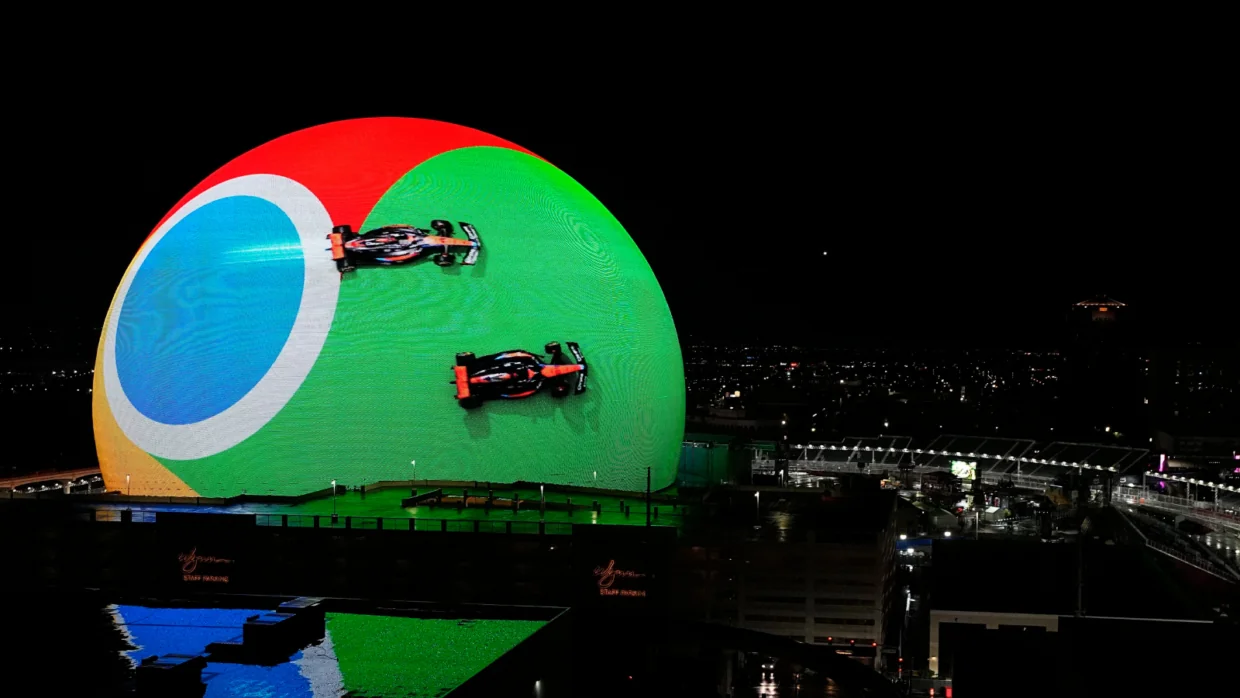
Sphere is 366 feet tall and 516 feet wide, and the company describes the Exosphere as a 580,000-square-foot programmable LED exterior. Its official technology overview calls the Exosphere a major creative canvas for art and brand activations. That scale changes the creative problem. A campaign is not being placed on a conventional rectangle that people view from one predictable angle. It must work around a curved surface, remain recognizable from different vantage points, and still make sense in photographs and social clips after the physical placement ends.
The size is only part of the appeal. The venue sits just off the Las Vegas Strip, where entertainment, tourism, sports, and major events create a constant flow of potential viewers. The building itself is recognizable enough that the medium can become part of the message. That makes the format relevant to entertainment marketing, but it is also a lesson in broader brand storytelling: the surface works best when the creative idea is simple enough to be understood quickly and distinctive enough to be remembered later.
A giant screen can tempt advertisers to add more movement, more copy, and more effects. The opposite can be more effective. Strong campaign graphics need clear proportion, contrast, motion, and recognizability, especially when the display is viewed from different distances and angles. The creative should also be tested as a still image and a short vertical video, because those may be the versions most people eventually encounter online.
The medium has a second life beyond Las Vegas. Photos and videos of the Exosphere can circulate through news coverage, creator posts, and social feeds, extending the campaign beyond the physical placement. That earned distribution can be valuable, but it should not be treated as automatic. A spectacular visual may generate attention without necessarily improving consideration, search demand, site activity, or sales. The creative and distribution plan still need a clear purpose.
What Sphere Advertising Cost in Its Early Launch Period
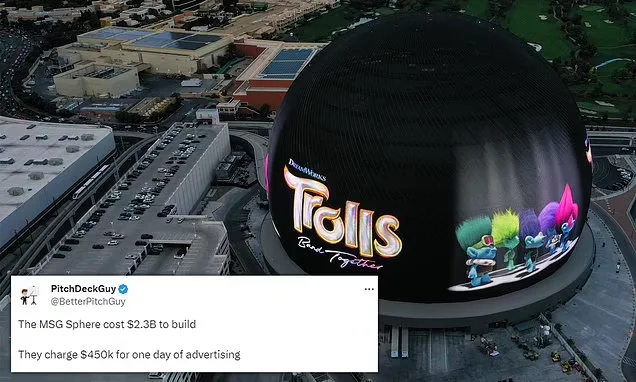
Early reporting on Sphere advertising relied on a 2023 sales deck rather than a permanent public rate card. The Drum reported a quoted price of about $450,000 for a one-day takeover and $650,000 for a one-week campaign, along with an estimated 4.7 million daily impressions. The deck broke that estimate into roughly 300,000 in-person impressions and 4.4 million social impressions. Those figures should be treated as historical launch-period pricing and projections, not current guaranteed rates or independently audited outcomes.
The package was also reported to include collaboration with Sphere’s creative team on a 90-second execution. That matters because a format this unusual involves more than buying media. Brands need concept development, motion design, technical adaptation, and testing for a surface that behaves very differently from a standard billboard. Production requirements can therefore be part of the real campaign cost even when some creative support is included in the media package.
Impression estimates alone are not enough to establish effectiveness. A large reach number can help frame media value, but it does not tell a marketer whether the campaign changed awareness, search behaviour, consideration, or revenue. The placement should therefore sit inside a wider campaign measurement plan with pre-campaign baselines, defined business outcomes, and a method for separating paid exposure from the additional attention generated by news coverage and social sharing.
A useful comparison is the Super Bowl because both formats charge a premium for concentrated attention. CBS reported that a 30-second television spot during the 2024 Super Bowl cost about $7 million. That corrects the $7.5 million figure previously stated in this article. It still does not make one format automatically better value than the other. The audiences, creative formats, distribution patterns, and measurement models are different. The better question is whether the placement fits the campaign objective and whether the brand has enough creative and follow-through around it to justify the spend.
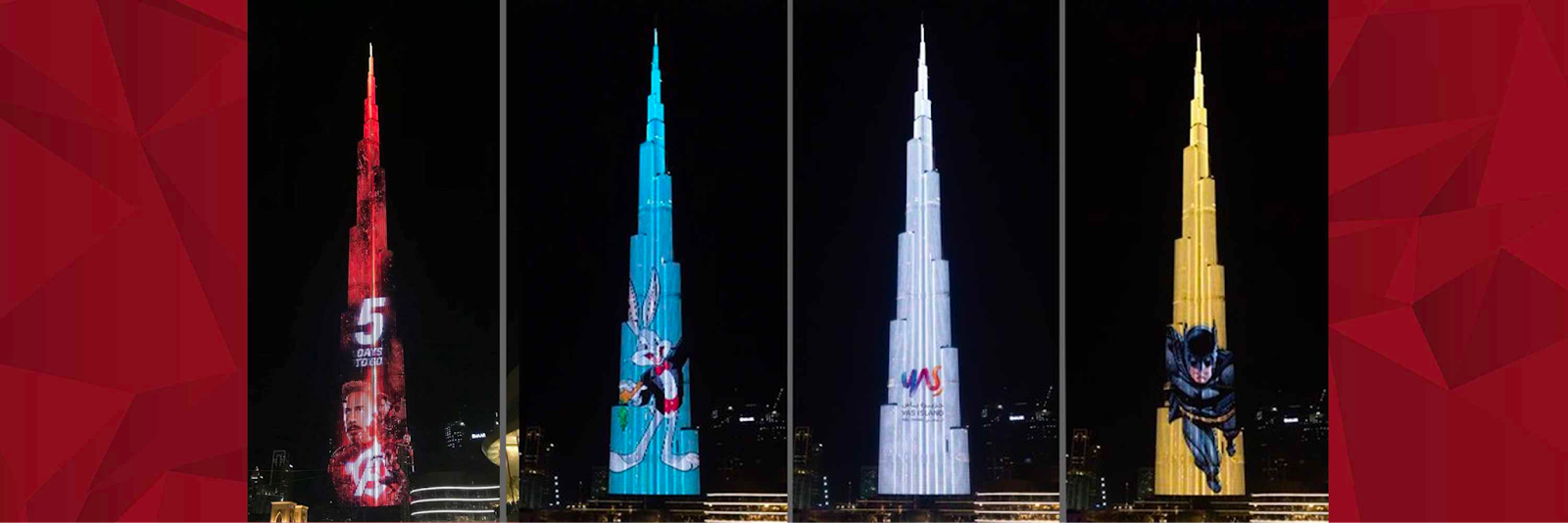
The Sphere can also be compared with advertising on the Burj Khalifa, another landmark format where the media surface itself becomes part of the story. In both cases, the brand is buying more than screen space. It is buying association with a recognizable location and the possibility that the execution will travel through press coverage and user-generated content. That potential should be planned for, not assumed.
Early Brand Campaigns on the Sphere
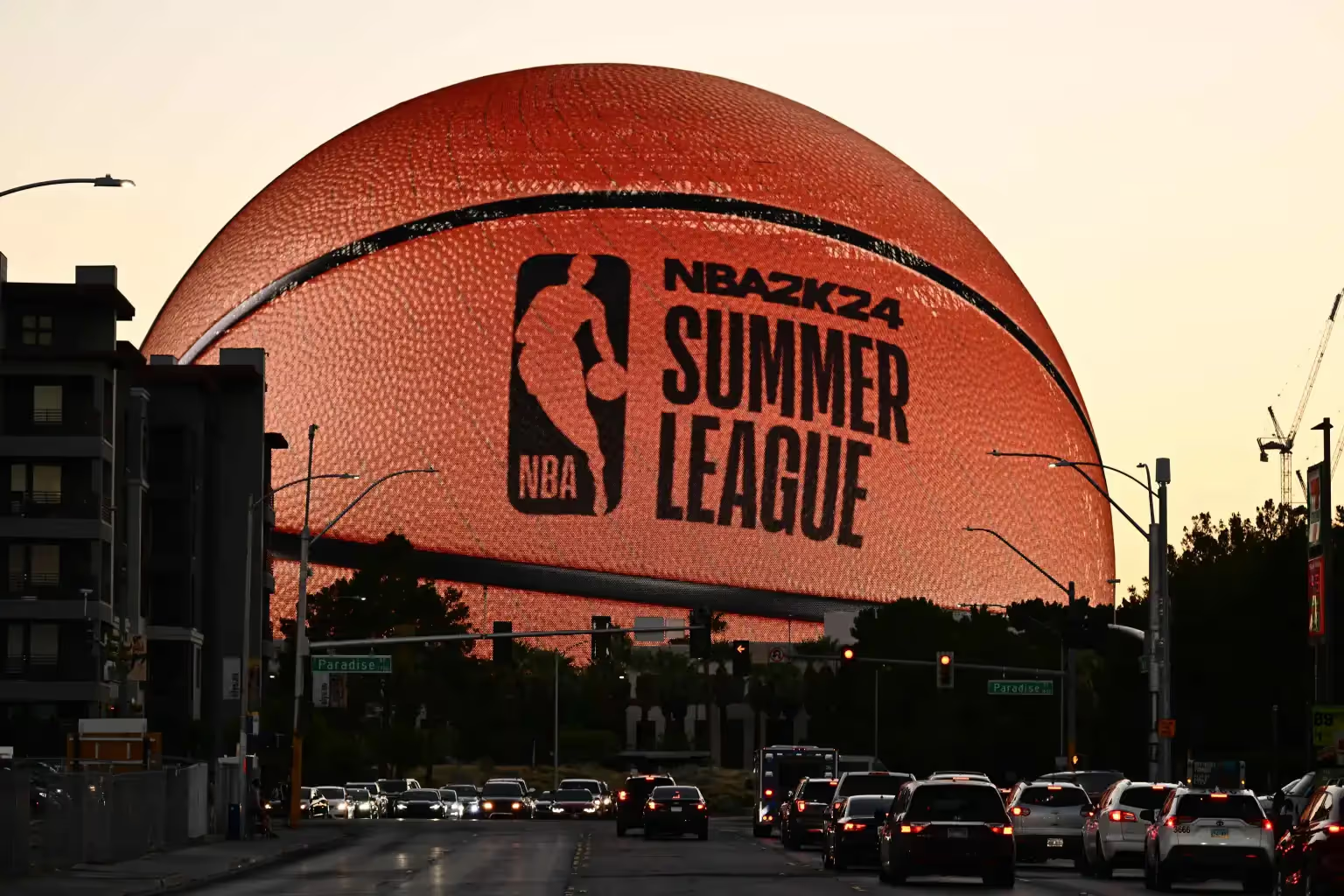
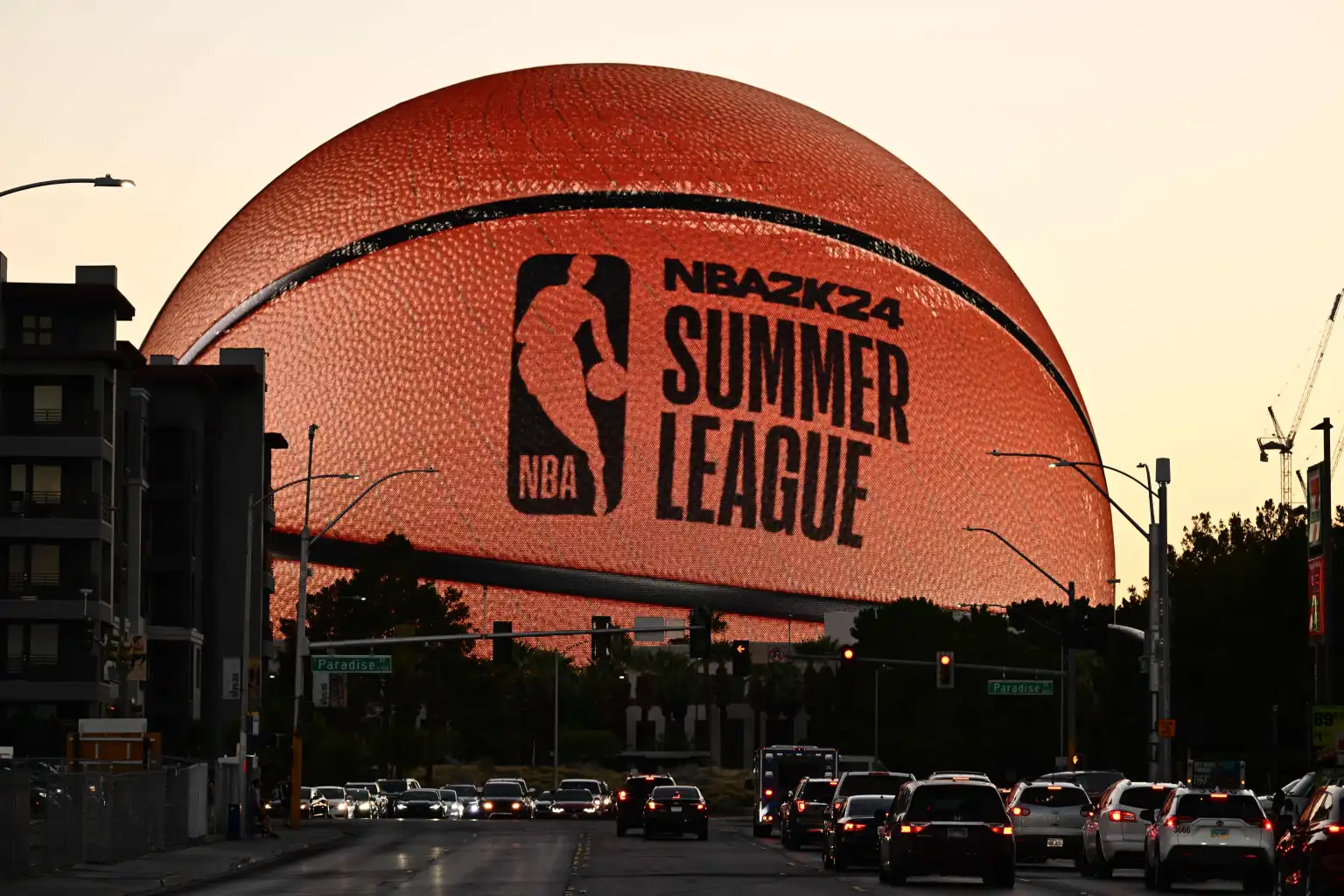
The first wave of Sphere campaigns demonstrated how recognizable forms can exploit the venue’s shape. The NBA turned the Exosphere into a giant basketball around the 2023 Summer League, an execution that fit the spherical canvas instead of fighting it. YouTube later used the exterior for NFL Sunday Ticket creative, showing how a simple object or familiar visual language can read clearly from a distance and travel well in social clips.
These campaigns also illustrate why the Sphere is more than a conventional digital billboard. The building can become a prop within the campaign concept. A round object, face, planet, eye, or other form can use the geometry of the venue as part of the idea. That opens creative possibilities, but it also creates a practical constraint: the best concept for a normal screen may not be the best concept for this one.
The venue also became part of the visual environment around the 2023 Formula 1 Las Vegas Grand Prix. That reinforced another advantage of the format: timing a takeover around a major event can give the creative more context and potentially increase the amount of secondary coverage it receives. The trade-off is competition. When a city is already full of major sponsors, entertainment, and media activity, even a huge placement still needs a distinctive idea to earn attention.
Target’s Holiday Sphere Campaign
Target used the Exosphere for a 2023 holiday campaign that turned the venue into a snowglobe-like scene with an 11-story gingerbread-inspired Target and an oversized version of Bullseye. Marketing Dive reported that the placement complemented Target’s wider holiday push and connected the virtual spectacle to a real branded gingerbread house sold to shoppers. The useful lesson is not the scale alone. The campaign gave the Sphere creative somewhere to go beyond the initial view by connecting it to a retail object and a broader seasonal message.
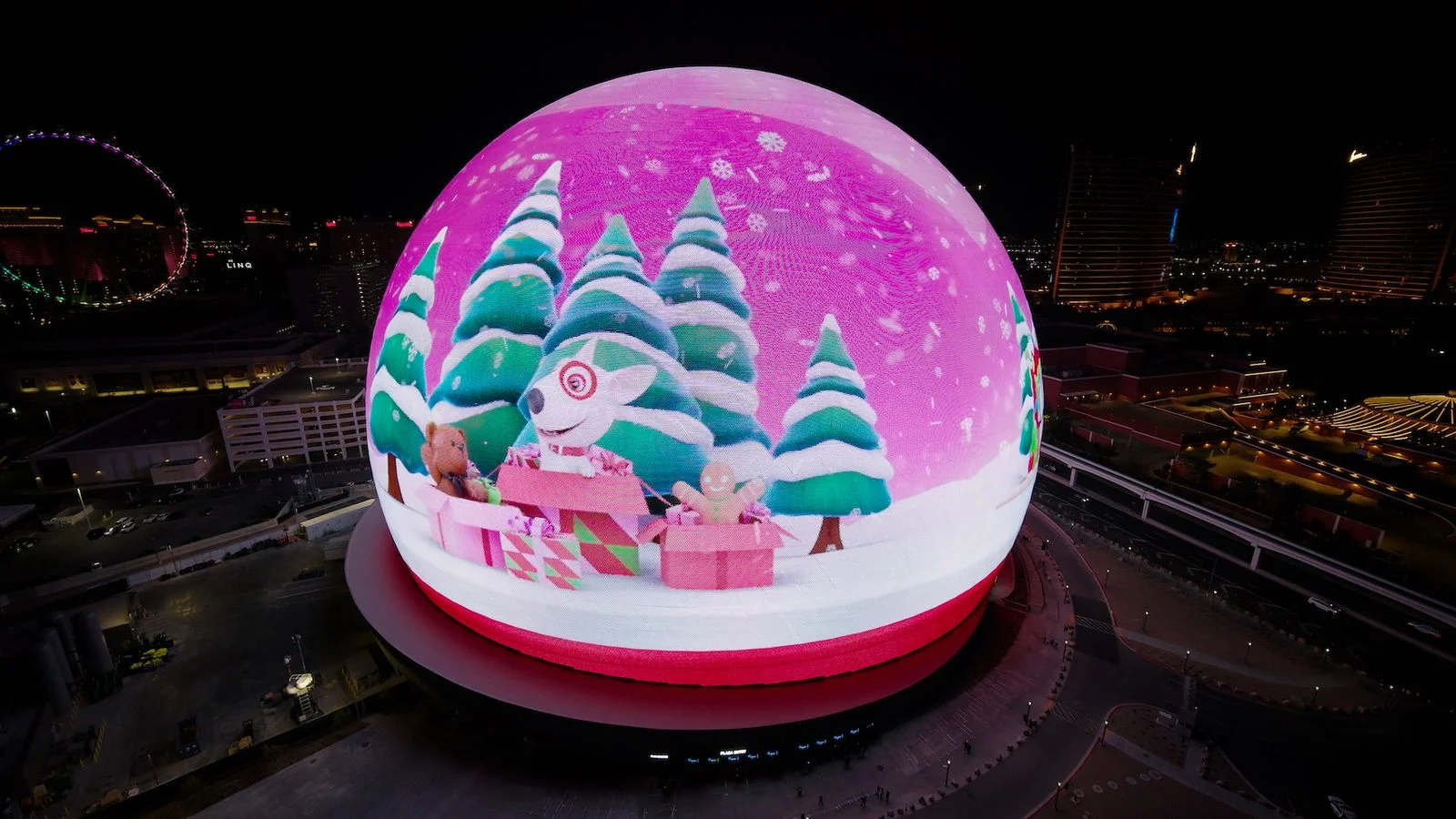
That type of integration is especially relevant to B2C marketing. A high-profile awareness moment becomes more useful when customers can connect it to a product, landing page, event, store experience, or other next step. The Sphere can generate a memorable impression, but the campaign still needs a customer journey outside the venue.
What Marketers Can Learn From Las Vegas Sphere Advertising
The first lesson is creative restraint. On an unusual media surface, one clear visual idea can have more value than a conventional ad packed with messages. The creative needs to survive distance, motion, changing angles, competing lights, and reposting on much smaller screens.
The second lesson is to separate projected reach from measured effect. Historical Sphere sales materials emphasized impressions, but a campaign should define the audience action it wants to influence before the media is purchased. Brand search, site visits, social engagement, foot traffic, leads, and sales may all be relevant depending on the objective. Without that framework, a viral clip can look successful even when the business impact is unclear.
The third lesson is that distribution should be designed, not assumed. A visually distinctive execution may earn social sharing and press coverage, but marketers should still plan the supporting content, landing pages, creator outreach, and paid amplification that turn one physical placement into a broader campaign system. The strongest Sphere idea should still make sense when the viewer encounters it as a six-second clip with no context.
The fourth lesson is timing. Major sports, entertainment, and holiday moments can make the placement more culturally relevant, but the creative has to compete with everything else happening around the event. A brand should decide whether it is trying to dominate the conversation, add to an existing event narrative, or use the Sphere as a launch moment for a longer campaign.
Finally, the Sphere shows how the advertising medium itself can become part of the brand experience. That can be powerful, but it raises the creative bar. The campaign has to fit the venue, the surrounding event calendar, the audience’s viewing conditions, and the next step after the spectacle. Scale alone is not a strategy.
Las Vegas Sphere marketing is therefore less a replacement for traditional advertising than an example of premium experiential media. Its strongest campaigns combine a simple visual concept, a reason for the format, a plan for secondary distribution, and measurement that continues after the lights go off.
If you are evaluating a high-visibility campaign and need help deciding whether the concept, budget, and follow-through fit the objective, Brand Vision can support the planning through a marketing consultation.


.webp)