The history of marketing is not a single invention. It is a long progression of ways people communicated value, built trust, distinguished one seller from another, and used new media to reach larger audiences. What we now call marketing developed gradually alongside trade, printing, mass production, broadcasting, computing, and networked media. For a modern business, marketing consultation starts from the same basic question that runs through this history: who is the audience, what matters to them, and how should the offer be communicated?
Today, branding services, performance media, ecommerce, search, creators, retail media, and AI-assisted tools can all sit inside one marketing plan. That complexity did not appear overnight. It grew through repeated changes in technology and consumer behavior, from local signs and printed notices to radio, television, search engines, social platforms, and automated media buying. A modern branding partner works in a very different media environment from an eighteenth-century printer, but both still face the problem of making a message recognizable and useful.
This timeline follows the major shifts from early commercial communication through print, agencies, radio, television, the internet, mobile, social media, and the AI era. It also separates documented milestones from popular marketing lore. Some “firsts” are contested, and historical sources do not always support the simplified versions repeated in advertising histories.
Ancient and Classical Foundations
Marketing in the modern professional sense did not exist in antiquity, but commercial communication did. One frequently repeated advertising-history example says that 3,000 BC, an Egyptian weaver in Thebes used a papyrus advertisement to promote his textiles while also offering a reward for a runaway slave. The date and interpretation are often repeated in secondary marketing histories, so the safest way to use the example is as an early commercial notice rather than as proof that “marketing” had already formed as a discipline.
Commercial writing was common in ancient economies, but individual artifacts need careful interpretation. The linked Babylonian example, merchants scribbled short messages on clay tablets, is actually a customer-complaint tablet rather than an advertisement. It is evidence of written commerce, not proof of ancient advertising. Pompeii provides clearer evidence of public promotional writing. Its walls preserve political slogans, shop notices, rental notices, and messages connected with spectacles; surviving wall paintings, essentially early graffiti, that announced upcoming gladiatorial games sit within that much broader culture of public writing.
Even the notion of branding had a primitive form in ancient times, as artisans sometimes marked their wares with distinctive symbols. For instance, a potter might etch a personal mark into pottery so buyers could identify the maker’s quality. Although these behaviors were not systematically studied, the fundamental principle behind the history of advertising, communicate clearly and stand out, had already taken hold. Such practices underscore how basic marketing was always about forging recognition and trust within the local community.

The Middle Ages and Early Modern Period
Fast-forward to the medieval era, and we see a world where many people were illiterate, but simple signage continued to flourish. Tradesmen identified their shops with pictorial symbols, like a boot sign for a cobbler or a loaf for a baker, making it easier for townsfolk to navigate winding streets. Monks copied texts by hand, occasionally creating elaborate manuscripts that highlighted sponsors or patrons. Yet it was the invention of the printing press by Johannes Gutenberg around 1450 that truly propelled the marketing evolution.
With the printing press, mass-produced handbills and pamphlets became feasible. By the late 15th century, printers in England were producing small leaflets to advertise various services. One of the oldest surviving printed ads in English is from 1472, promoting a prayer book. This marks a turning point in the history of marketing: when printed text could be widely distributed, making advertising more consistent and less reliant on word of mouth. Over time, newspapers arose in the 17th century, soon featuring paid ads. In the American colonies, the Boston News-Letter published the first paid newspaper advertisement in 1704, inviting colonists to buy real estate or obtain goods.
Magazines emerged in the 18th century, offering marketers another specialized channel for targeting certain readers. By the 19th century, mass printing technology enabled illustrated posters, handbills, and eventually early forms of billboards. In major cities like London, posters became so pervasive that legislation tried to curb them. All these developments show that marketing evolution is always tied to technology and consumer behavior. As literacy rates rose, newspapers and magazines carrying advertisements became central to daily life, and so the idea of marketing, though not yet defined as a science, took on a broader, more structured form in society.

The 19th Century – Birth of Agencies and Mass Marketing
The Industrial Revolution fundamentally reshaped production and consumption. Factories churned out standardized goods, and marketers needed ways to reach vast new audiences with consistent messages. This is the period where the question “when did marketing start to become a full-fledged profession?” finds its turning point. The formal “advertising agency” model took shape. In 1841, Volney B. Palmer opened the first known ad agency in Philadelphia, brokering space in newspapers and helping clients place ads. By the late 1800s, agencies were creating ads for soap, patent medicines, canned foods, and other mass-market products. The same shift toward larger markets and more complex products still shapes modern B2B marketing, where a clear proposition has to travel across longer buying journeys.
For a present-day company choosing a marketing agency in Chicago, the historical lesson is not that nineteenth-century agency practices should be copied. It is that specialist intermediaries emerged because media, audience access, and message development became complicated enough to require dedicated expertise.
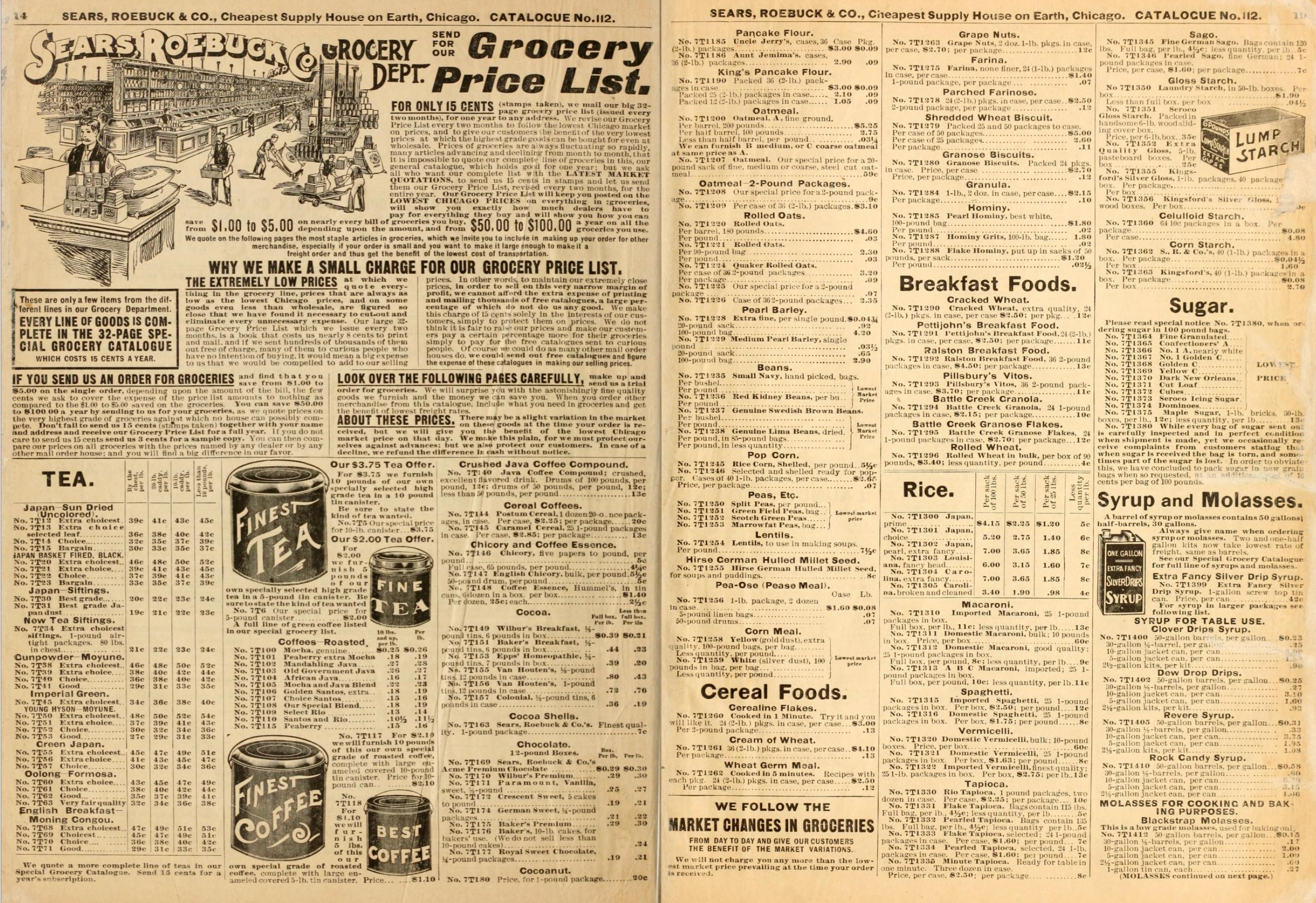
Branding also flourished in this era. One notable milestone in the history of advertising is the Bass red triangle, registered in 1876 as the UK’s first official trademark. Companies began to craft visual logos and slogans to differentiate their products. The growing railroad system enabled national distribution, so brand consistency mattered. The Sears Roebuck mail-order catalog in the 1890s exemplifies how companies reached rural consumers with glossy illustrations, proving that marketing evolution meant bridging regional divides as well.
It was an era of transformation, but also some dubious practices. Patent medicines, for example, used exaggerated claims, and it worked so well that the ads often funded entire newspapers. The public loved reading these flamboyant promotions. Even then, the basic principle remained: get attention, persuade quickly, and ensure people remember your brand. The pace of the marketing evolution sped up with each new technology: telegraphs allowed faster coordination, printing costs dropped, and rail systems transported products nationwide. By the dawn of the 20th century, advertising had become a recognizable industry with dedicated professionals.
Early 20th Century – The Advertising Age Takes Off
As the 1900s began, marketing was a flourishing business. The phrase “history of marketing” might conjure images of old newspaper clippings, but in fact radio was about to flip the script. Around the 1920s, commercial radio erupted in popularity. The first radio ad, a 15-minute real estate pitch, aired in 1922 on New York’s WEAF station. Suddenly, marketers could speak directly to families in their living rooms. Sponsored radio shows, especially soap operas, were common, and brand jingles became earworms that swept the nation. Brand Vision's guide to the best jingles of all time shows how many of those sonic techniques persisted into television and digital media.
At the same time, pioneers like Claude C. Hopkins introduced scientific testing methods. He believed in measuring advertising results, using coupons to track redemptions, and refining copy based on real-world data. This approach laid the groundwork for many direct-response marketing tactics we see today. Meanwhile, the term “marketing” itself started to take its modern form around the early 1900s. In the 1940s, the stage was set for an even bigger shift with television. On July 1, 1941, the first TV commercial aired—a brief 10-second spot for Bulova Watch proclaiming, “America runs on Bulova time.” Though only a few thousand sets were tuned in, that tiny ad signaled a coming revolution. Once the post–WWII boom made TV sets common in American households, marketing soared to new creative and financial heights.
Mid-20th Century – TV Dominance and the Marketing Concept
Television in the 1950s and 60s was a dream come true for brands, allowing them to demonstrate products visually and connect emotionally with large, captive audiences. The so-called Golden Age of Advertising was personified by Madison Avenue agencies, where copywriters and art directors crafted iconic campaigns. Ads like Coca-Cola’s “I’d like to buy the world a Coke” or Volkswagen’s witty “Think Small” were cultural phenomena. The best ads resonated so strongly that people remembered them decades later, which is part of why the history of advertising is so intertwined with pop culture.
During this period, the “marketing concept” also took hold among businesses and academics. Scholars like E. Jerome McCarthy proposed the four Ps of marketing—Product, Price, Place, Promotion—as a blueprint for how companies should approach strategy. Around the same time, Theodore Levitt popularized the idea of “marketing myopia,” urging executives to look beyond their immediate product and focus on broader customer needs. This philosophical shift made “marketing evolution” more than just a buzzword; it was an institutional rethinking of how companies served consumers.
Data also started playing a bigger role, though it was rudimentary by today’s standards. With the rise of bigger corporations, marketing departments used market research surveys to gauge consumer sentiment. They tested product concepts, studied brand awareness, and tried to systematically measure ad effectiveness. While still nowhere near modern analytics, these methods showed that marketing was growing into a formal discipline with established best practices.
Late 20th Century – The Dawn of Digital and Global Connectivity
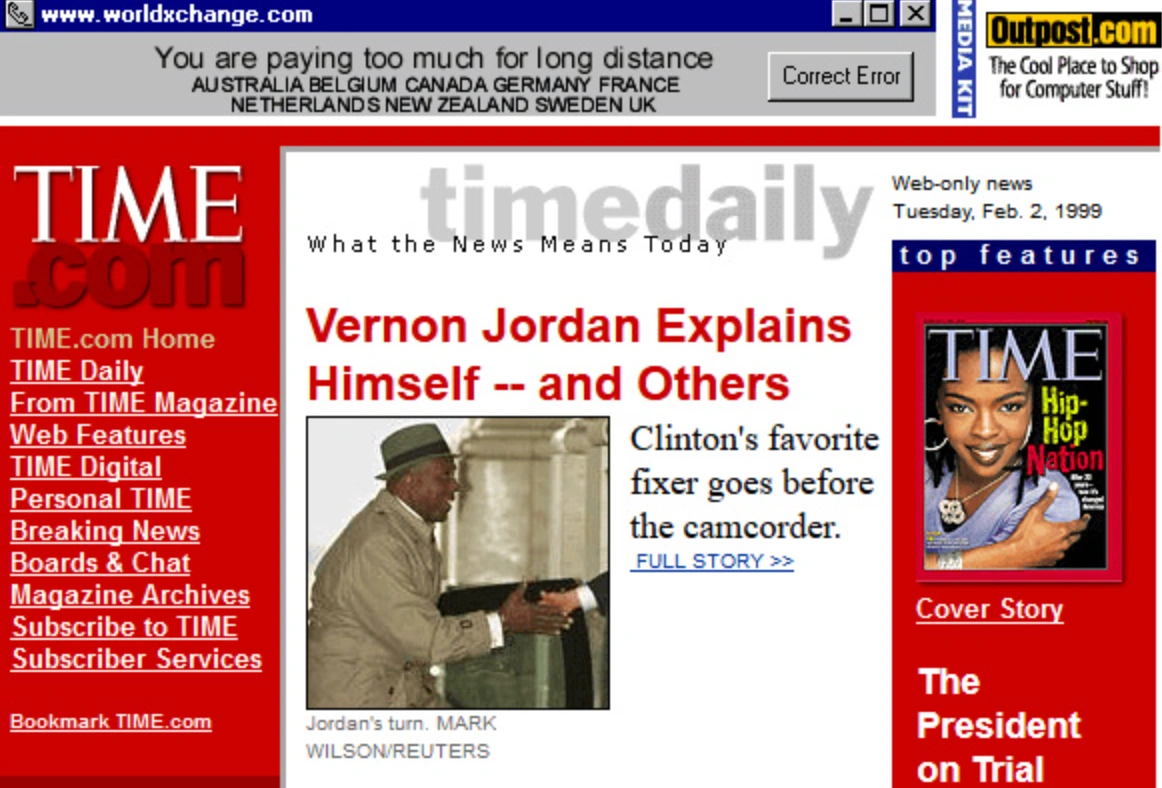
The 1970s and 1980s brought telemarketing, larger customer databases, and more targeted direct mail. The public internet then created a much more measurable advertising environment. When the first banner ad launched on HotWired.com in 1994, it boasted an unprecedented 44% click-through rate, according to one widely repeated historical figure. Retrospective accounts disagree on the exact percentage, so the safer conclusion is simply that early banner ads produced interaction rates far above today's typical display-ad levels because the format was novel.
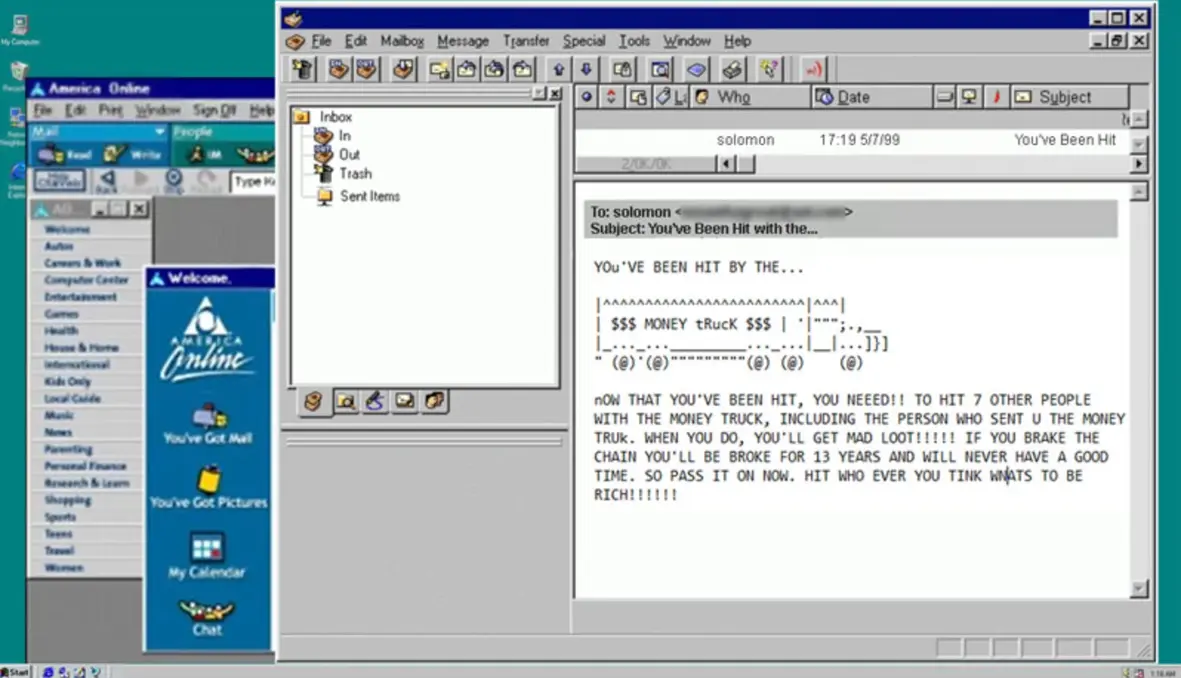
By the mid-1990s, email marketing became a core pillar. While spam proliferated, legitimate newsletters and promotional emails offered a cost-effective way to reach subscribers. Then search engines like Yahoo! and Google redefined how consumers found information, birthing the discipline of search engine optimization. Marketers realized that ranking high in search results could yield massive traffic. Modern SEO services formalize that work across technical foundations, search intent, authority, and content. Paid search ads, introduced by Google AdWords in 2000, let brands target specific keywords, paying only when users clicked. This pay-per-click model fundamentally changed the history of advertising and the “marketing evolution” by aligning costs with actual user interest.
E-commerce also soared in the late 1990s and early 2000s. Amazon and eBay led the charge, showing that people would buy everything from books to electronics online. Marketers adapted by creating product pages optimized for search engines, employing affiliate marketing to leverage third-party blogs, and using content strategy to build trust with audiences. The ability to measure every click, open, or purchase revolutionized marketing. Even a small business could track conversion metrics akin to big players. This data-driven approach was a far cry from the measurement problem captured by the line often attributed to John Wanamaker’s lament, “I know half my advertising is wasted, I just don’t know which half.”
21st Century – Social Media, Mobile, and Future Horizons
The 2000s and 2010s, of course, witnessed the explosive rise of social media. Platforms like MySpace, Facebook, YouTube, Twitter, and eventually Instagram and TikTok turned consumers themselves into content creators. Marketing once again had to adapt as brands created official pages, posted engaging content, and fostered dialogues with followers. Social media marketing was about authenticity and community building, two qualities that represent a more personal dimension in the history of advertising. Instead of one-way broadcasting, companies had to master conversation.
Mobile devices further expanded the marketing evolution. By 2019, a majority of web traffic was mobile, making responsive design and mobile-friendly campaigns essential. Geo-targeted offers and push notifications tapped into location-based marketing. Meanwhile, influencer marketing soared, bridging the gap between celebrity endorsements and everyday user recommendations. A well-liked influencer with the right niche could convert fans to customers more effectively than many traditional ads.
By 2026, AI is no longer a future-only marketing trend. Generative systems are already used for research, creative iteration, personalization, media workflows, and customer-service support. At the same time, marketers face tighter privacy expectations, fragmented measurement, retail-media growth, and pressure to prove that automated output remains accurate and on-brand. Earlier enthusiasm around the metaverse has become more selective, while sustainability claims face greater scrutiny. The pattern is familiar: new technology expands what marketers can do, then the hard work shifts to trust, economics, governance, and customer value.
View this post on Instagram
A post shared by rhode skin (@rhode)
Marketing is All Around Us
From the earliest inscriptions on papyrus to the newest influencer-led campaigns on TikTok, the history of marketing showcases humanity’s inventive spirit in communicating value. If someone asks, “when did marketing start?” the short answer is that it began as long ago as humans had something to sell. From the bustling markets of ancient Egypt to the digital marketplaces of the 21st century, marketing evolution is a testament to how we adapt to new media and shifting cultural landscapes.
The history of advertising has been closely entwined with breakthroughs in printing, radio, television, the internet, and mobile technology. Each medium expanded marketers’ reach, from painting messages on stone walls to whispering brand messages into a smartphone. At each stage, forward-thinking individuals made bold moves—whether launching the first ad agency, crafting the first scientific approach to measuring results, or pioneering new creative techniques that captured the public imagination. These stories remind us that marketing is more than tactics; it’s about understanding people, forging emotional bonds, and telling compelling narratives.
Marketing remains a changing mix of communication, research, distribution, persuasion, service, and measurement. The tools are dramatically different from ancient notices, printed handbills, radio sponsorships, and early web banners, but the recurring problem is recognizable: make value understandable to the right audience and create enough trust for action to follow. The often-cited Egyptian papyrus belongs near the beginning of that story as commercial communication, not as a clean starting date for the modern discipline. Marketing has evolved through many overlapping practices, and every major media shift has changed both what marketers can measure and what audiences expect from them.