Drop culture is a fashion marketing strategy built around releasing products in limited quantities, at specific times, with enough anticipation to make the launch feel like an event. It is different from drip marketing, which usually refers to automated sequences of messages sent over time. In fashion, a product drop uses scarcity, timing, community and distribution to concentrate demand around a release. When the product and audience fit are strong, that concentration can create attention that lasts beyond the transaction.

Why Drop Culture Creates Demand
Scarcity can increase attention because availability becomes part of the product story. Brands such as Supreme and Off-White have trained audiences to expect limited quantities, short buying windows and the possibility that an item will disappear quickly. That can raise the perceived value of the products, but scarcity works best when demand already exists. Artificially limiting an unwanted product does not create cultural relevance on its own.
FOMO is the behavioral side of the strategy. Teasers, countdowns, creator posts and the strategic use of social media compress consideration into a short period. The result can be a faster buying decision, but brands also have to manage expectations carefully. If stock is too limited, checkout fails, or access feels arbitrary, urgency can turn into frustration.
Drops can also strengthen community when customers feel they understand the brand's codes, release calendar and collaborations. That sense of participation can support long-term brand loyalty, especially when a release gives fans a story to discuss before and after launch. The strongest communities form around shared taste and identity, not simply around the difficulty of buying.
The fourth advantage is earned attention. A well-designed drop can generate organic conversation, resale activity, outfit posts and media coverage. That visibility is valuable, but the launch still has to fit the brand's broader brand strategy. Otherwise, hype can become disconnected from what the company wants to be known for.
Six Examples of Drop Culture in Fashion and Beyond
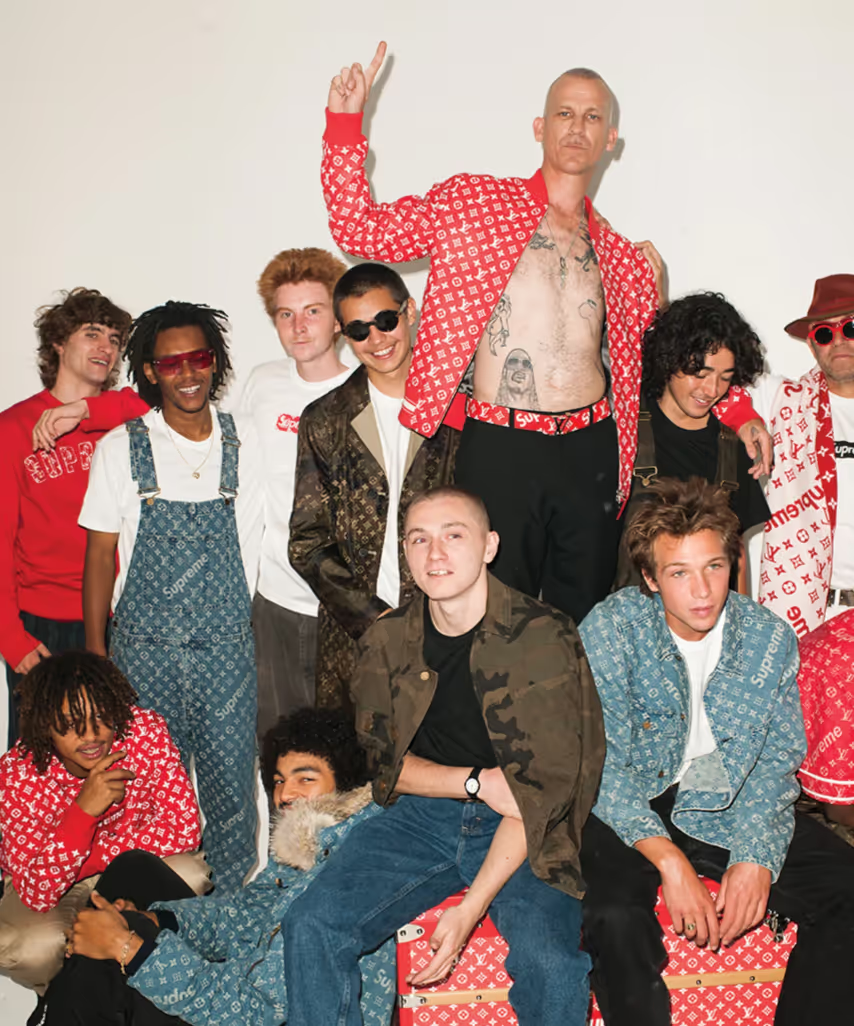
Supreme built its release model around tightly controlled quantities and recurring drops. High-profile collaborations, including Louis Vuitton, pushed that logic into luxury. The 2017 Supreme x Louis Vuitton launch created long queues, limited access and immediate resale activity, with resale prices skyrocketing. The collaboration did not generate a verified $1 billion in revenue. Supreme itself was valued at about $1 billion in 2017, the same year as the collaboration, a distinction documented in later coverage of the company. (Vogue Business) Supreme's status in streetwear culture made scarcity credible, while each marketing campaign benefited from an audience already conditioned to watch for the next release.

Yeezy used limited sneaker releases to turn product availability into part of the cultural conversation. The Yeezy Boost 350 V2 "Zebra" became one of the clearest examples: early resale prices reached roughly $1,200 to $1,400, with premiums above 500% before later restocks pushed prices down sharply. (StockX) That rise and fall shows both sides of scarcity. Limited supply can create extraordinary premiums, but added supply can reset the market quickly. Yeezy's design language and Kanye West's personal influence made the launch meaningful to an audience before scarcity amplified it.

Kylie Cosmetics adapted the drop model to beauty by combining a large social following with small, highly visible launches. The original Lip Kits sold out rapidly, and later releases used teasers and short buying windows to keep attention concentrated. The often-cited figure of over $420 million in sales refers to Kylie Cosmetics' reported retail sales across its first 18 months, not to one Lip Kit launch. Fortune reported that WWD received documentation supporting the $420 million figure. (Fortune) The marketing lesson is the synchronization of audience, product reveal and purchase window.

Travis Scott and McDonald's showed that drop mechanics can extend beyond fashion. The Travis Scott Meal paired a signature order with merchandise and a celebrity-led cultural moment. McDonald's U.S. comparable sales rose 4.6% in the third quarter of 2020, and the company said strategic marketing investment and promotional activity supported September performance. That 4.6% figure was a quarterly U.S. comparable-sales result, not a Travis Scott-only sales increase. (McDonald's) The collaboration's value was also cultural, reinforcing McDonald's brand relevance with an audience that understood the merchandise-and-release language of streetwear.

Beyoncé's Ivy Park x Adidas launch used gifting, social media and a tightly timed release to turn a capsule collection into an event. Contemporary coverage reported that the first collection sold out quickly after launch. (Forbes) The linked commentary also repeats a 20% increase in Adidas's online sales, but that specific percentage is not substantiated by the article itself and should not be treated as an attributable campaign result. The useful lesson is better supported: controlled availability plus a creator with a highly engaged audience can create concentrated attention.

Nike has repeatedly used limited colourways and collaborations to renew interest in archival silhouettes such as the Dunk. Partnerships with designers and cultural collaborators give an old product a new context while the underlying model remains familiar. The strategy is especially effective because drops sit inside a much broader Nike marketing strategy spanning athletes, membership, retail and digital channels. In other words, the drop creates a spike, but the brand system captures the longer-term value.

Strategic Benefits and Risks of Product Drops
- Use a drop as a market test. Limited runs can reveal demand, price sensitivity and audience response before a larger production commitment. A structured brand research process helps separate genuine demand signals from social noise.
- Protect perceived value without assuming scarcity always creates it. A limited item still needs product quality, relevance and clear positioning.
- Use social and creator content to build anticipation, then measure whether attention turns into sign-ups, qualified traffic, conversion and repeat demand.
- Treat sustainability claims carefully. Smaller production runs can reduce inventory risk, but limited quantity alone does not make a product environmentally responsible.
When Drop Culture Can Backfire
Scarcity is not automatically good for a brand. If a launch is consistently inaccessible, customers may decide that following the release calendar is not worth the effort. Bots, confusing queues, surprise sellouts and unclear restock policies can make a drop feel less like exclusivity and more like a broken buying experience. That matters because the most valuable demand is not the same as the loudest frustration.
Drop culture can also distort product decisions. Teams may interpret a fast sell-through as proof of broad demand when the result actually came from very small inventory, one collaborator, or resale speculation. The opposite can happen too: a product may have healthy long-term potential even if it does not create a dramatic first-day sellout. Brands need to separate launch velocity from repeat demand, margin, customer acquisition cost and retention.
There is also a positioning risk. If every product is framed as rare, urgent and exclusive, scarcity stops feeling special. A strong drop strategy leaves room for evergreen products that customers can buy without a countdown. The drop earns attention; the permanent assortment gives that attention somewhere to go afterward. That balance is especially important for brands that want cultural energy without turning every customer interaction into a race.
What Makes a Drop Strategy Work
- Make scarcity real and understandable. Customers should know what is limited without being manipulated by false stock pressure.
- Build anticipation with a clear release calendar, teasers and reminders that match how the audience already follows the brand.
- Stress-test the purchase path before launch. Timed demand exposes weak inventory messaging, queues, cart behavior and payment flows quickly; a focused UX audit can surface those friction points before traffic peaks.
- Coordinate social, email, creators, stores and customer service so the release feels like one campaign rather than disconnected announcements.
- Review the data after the drop. Sell-through, waitlist demand, abandoned carts, repeat purchases and customer feedback should shape the next release.
Drop culture is most effective when scarcity supports a brand customers already want to follow. It can concentrate attention, test demand and create community, but it also magnifies weak positioning and poor checkout experiences. For brands deciding whether a limited-release model fits their product and audience, a focused fashion marketing review can help connect the drop to a broader commercial strategy.