Revenue figures tell part of the story. Brand architecture tells the rest. The biggest video game franchises became billion-dollar businesses through more than game releases alone. IP governance, recognizable identity systems, community participation, licensing, merchandise, and cross-media expansion all shape how a franchise can keep creating value over time. For organizations working in entertainment marketing, these franchises are useful case studies because they show how product experience and brand infrastructure can reinforce one another.
This analysis examines how franchises including Pokémon, Nintendo's core IP portfolio, Minecraft, and Fortnite built durable gaming brands, and what their brand architecture, IP strategy, visual identity decisions, community systems, and merchandise choices can teach organizations at different stages of growth.
What Separates a Game from a Brand
Most games are products. The biggest video game franchises are brands. The distinction is commercially significant.
A product is purchased once and consumed. A brand is a relationship that compounds over time, generating revenue across categories far removed from the original product. The strongest examples of video game franchise branding share four structural qualities that marketing and brand leaders can map directly to their own organizations:
- A consistent visual identity that is immediately recognizable across every platform and format, regardless of how many years have passed.
- A defined IP strategy that protects core assets, governs licensing with discipline, and determines how the brand extends into new categories.
- Community building infrastructure that converts individual consumers into invested participants within a shared culture.
- A merchandise strategy that transforms brand identity into physical and digital goods, reinforcing brand loyalty beyond the screen.
Franchises that master all four build what brand strategists call a defensible brand system. Competitors can replicate mechanics. They cannot replicate decades of accumulated brand equity.

IP Strategy: How Video Game Franchises Protect and Scale Their Intellectual Property
At the foundation of every major video game franchise branding success is a structured IP strategy. Intellectual property, encompassing trademarks, copyrights, character likeness rights, and trade dress, is the architecture that makes long-term brand value possible. Treat it as a legal formality and it erodes. Treat it as a strategic asset and it compounds.
Nintendo: The Benchmark for IP Governance
Nintendo's approach to IP strategy is among the most studied in the entertainment industry. Mario, Zelda, Donkey Kong, and Metroid are not managed casually. Each operates within a brand architecture that controls how characters appear, in what contexts, and through which partners. Nintendo enforced strict limits on third-party and fan-made usage of its characters for decades, a decision frequently criticized but structurally sound from a brand management perspective. Diluted IP loses distinctiveness.
The result is a portfolio where brand identity has remained stable across 40 years of hardware generations, shifting cultural contexts, and intensifying competitive pressure. The Mario visual identity today is functionally identical in its core elements to the one established in the 1980s. That continuity is a function of governance, not coincidence.
Pokémon: IP Strategy Across Games, Cards, and Merchandise
According to The Pokémon Company's official history, its predecessor was established in 1998 by Nintendo, Creatures, and GAME FREAK, and the company later expanded its scope to overall management of the Pokémon brand. That structure gives the franchise a central organization for coordinating games, licensing, merchandise, apps, stores, and other brand activity.
According to reporting by Automaton Media on The Pokémon Company's FY2025 financials, the company posted record sales of about $2.9 billion USD, up 38.1% year-on-year, during a fiscal period with no new mainline game release. The same reporting points to Pokémon TCG Pocket and the wider mix of cards, merchandise, mobile products, and retail activity around the franchise. Those results show how a mature IP can generate revenue across several formats even when the mainline release calendar is quiet, without proving that brand architecture alone caused the increase.
What a Structured IP Strategy Requires
The structural elements of effective IP governance in video game franchise branding include:
- Trademark registration across all relevant product categories and geographic markets, filed proactively rather than reactively.
- Licensing frameworks that define which partners can use brand assets, under what quality controls, and in which categories.
- Brand identity standards codified in governance documents that control visual and tonal expression across every touchpoint.
- Enforcement protocols that address infringement consistently, proportionally, and with long-term brand equity in mind.
Brands that build this infrastructure early have clearer rules for expansion, partner use, and brand consistency. Organizations that defer it often face more cleanup as names, licenses, and visual standards multiply.
Visual Identity in Gaming: Why Consistency Compounds Brand Recognition
The visual identity systems behind the biggest video game franchises are as sophisticated as those behind Fortune 500 consumer brands. In many cases they are more enduring. Video game franchise branding operates across an unusually broad set of touchpoints: physical packaging, in-game interfaces, merchandise, motion pictures, digital storefronts, esports broadcasts, and social media. Maintaining a coherent visual identity across all of these formats requires intentional design systems, not incidental choices.
Mario: A Visual System That Has Outlasted Hardware Generations
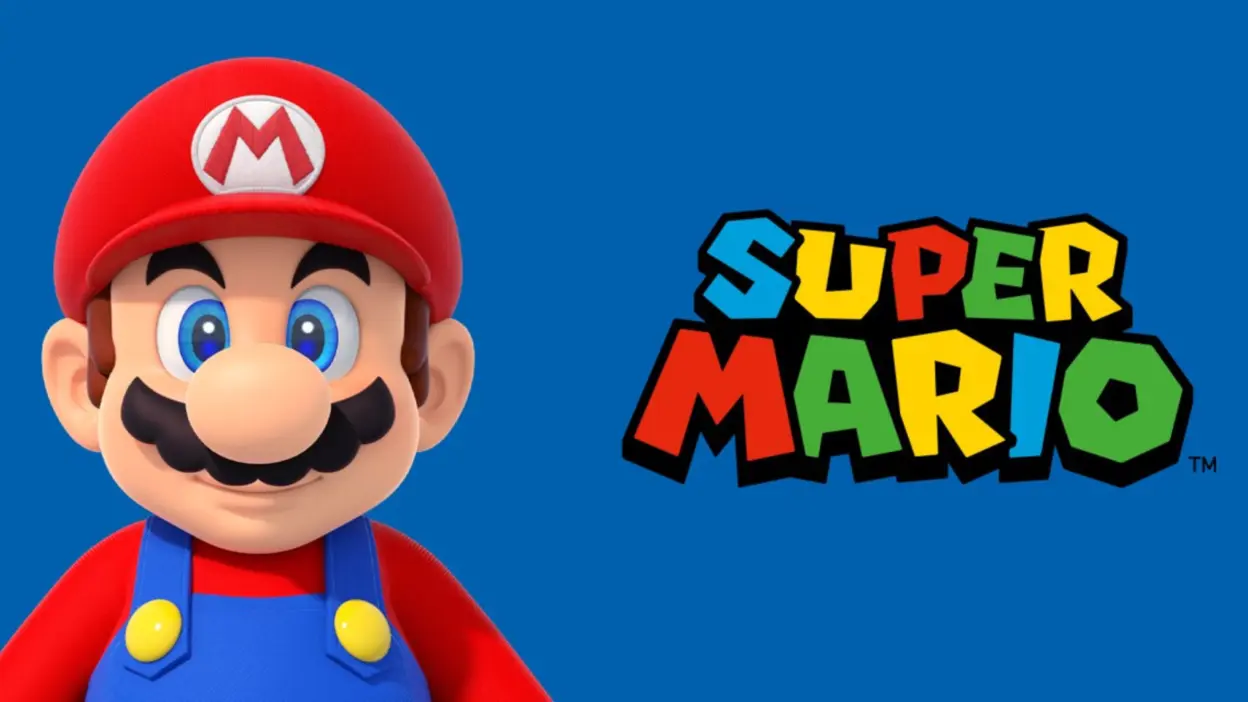
Mario's red cap, blue overalls, and white gloves are not a costume. They are a brand identity framework. Nintendo's visual identity for the Mario franchise has remained structurally consistent since the NES era, evolving in fidelity as technology advanced while preserving the core design language. A player who encountered Mario in 1985 and one encountering him in 2025 perceive the same character because the underlying visual system was designed to endure.
This is foundational brand strategy executed at the highest level. The visual identity communicates character, accessibility, and personality simultaneously. It functions as what branding professionals call a primary brand mark: a visual asset so well-established that it requires no textual explanation to convey meaning.
The Legend of Zelda: Symbolism as Brand Architecture
Zelda's Triforce is one of the most recognizable symbols in entertainment. As a brand identity asset it is exceptional precisely because of its combination of simplicity and depth. The symbol carries decades of narrative meaning while functioning cleanly as a logo, a merchandise motif, and a marketing element across every format. This reflects a deliberate brand architecture decision: define a small number of visual anchors and invest in them consistently across decades, rather than introducing competing design elements that gradually fragment brand recognition.
Translating Visual Identity Discipline to Any Brand Context
The discipline behind video game franchise branding visual systems is directly applicable to any brand-building context. Effective visual identity requires:
- A defined color system applied consistently across all formats and media without exception.
- A logo and symbol hierarchy that scales cleanly from a mobile app icon to a stadium banner.
- Typography standards that communicate brand personality consistently across digital and physical media.
- Design governance that prevents fragmentation as the brand scales across teams, partners, and new channels.
Brands that build these systems early can scale with clearer design rules and fewer conflicting assets. If your organization is auditing its visual standards or building them from the ground up, a structured visual identity agency engagement can map what exists, identify what is missing, and establish governance for future use. Supporting graphic design then carries that system into campaign, merchandise, partner, and event assets.
-1.webp)
Community Building as a Brand Multiplier
Some of the most durable examples of video game franchise branding are strengthened by community as well as advertising. When players create, share, compete, and gather around a franchise, participation can extend the life of the product and give the brand more ways to stay culturally relevant. Community is one part of that system alongside product quality, platform design, content cadence, and distribution.
Fortnite: Platform Thinking and Cultural Collaboration
According to Business of Apps' 2026 Fortnite Statistics Report, Fortnite generated $5.4 billion in revenue in its peak year of 2018 and has reached approximately 650 million registered players. The franchise was built on a brand strategy structured around community identity rather than traditional marketing. Branded crossovers with Marvel, Star Wars, and major music artists, combined with live in-game events, made the gaming brand feel like a cultural platform. Each collaboration reinforced brand loyalty while introducing the franchise to new audience segments.
Fortnite's approach to community building is notable for its intentional brand architecture. The core game is the foundation, but the brand identity is expressed through player customization, community-created content, and live cultural moments. The brand does not simply host a game. It provides a context within which players define a dimension of their identity.
Minecraft: Community as a Core Design Principle
According to the official Microsoft announcement of the Mojang acquisition, Microsoft paid $2.5 billion to acquire Minecraft developer Mojang in 2014, describing the franchise as 'more than a great game franchise, it is an open world platform, driven by a vibrant community.' That framing was strategically precise. Before the acquisition, Minecraft had built one of the most powerful gaming communities in history with minimal traditional marketing. The game's sandbox design made community building intrinsic to the product. Players created, shared, and collaborated by design.
The brand identity that emerged organically from those communities, one of creativity, education, and exploration, was credible because it was not manufactured. Microsoft's post-acquisition brand strategy preserved this identity deliberately. Minecraft's visual identity, voice, and community standards remained consistent with what had been built before the acquisition. That discipline in brand stewardship is itself a case study worth examining.
According to Business of Apps' Minecraft Statistics, Minecraft's mobile version accounts for approximately 50% of the franchise revenue tracked by that source. The figure illustrates the importance of mobile distribution within the wider Minecraft ecosystem, but it does not isolate community infrastructure as the cause of that revenue mix.
Merchandise Strategy: When a Gaming Brand Becomes a Lifestyle Brand
Merchandise is one place where video game franchise branding becomes directly visible in the business model. For mature franchises, licensed goods, cards, apparel, toys, and collectibles can extend the economic footprint well beyond game sales while giving the brand more physical touchpoints.
Pokémon: The Standard for Merchandise-Driven Brand Architecture
According to Automaton Media's reporting on The Pokémon Company's FY2025 results, the company generated record sales of about $2.9 billion in a fiscal year with no new mainline game. The report also notes that Pokémon TCG Pocket reached 100 million downloads in its first four months and more than $1 billion in gross player spending within seven months. Together, those figures show how a franchise can create meaningful commercial activity across cards, merchandise, mobile products, and retail even when its mainline game schedule is quiet.
The Pokémon brand identity was designed with collectibility at its core. 151 original characters became 1,000+ over three decades, each with visual identity standards specific enough to drive product design at scale. A franchise built around collection as its central mechanic is structurally optimized for merchandise. The trading card game, toy lines, apparel, and collectibles are not peripheral to the brand. They are expressions of the brand's core identity.
Minecraft: Brand Extension Through Strategic Licensing
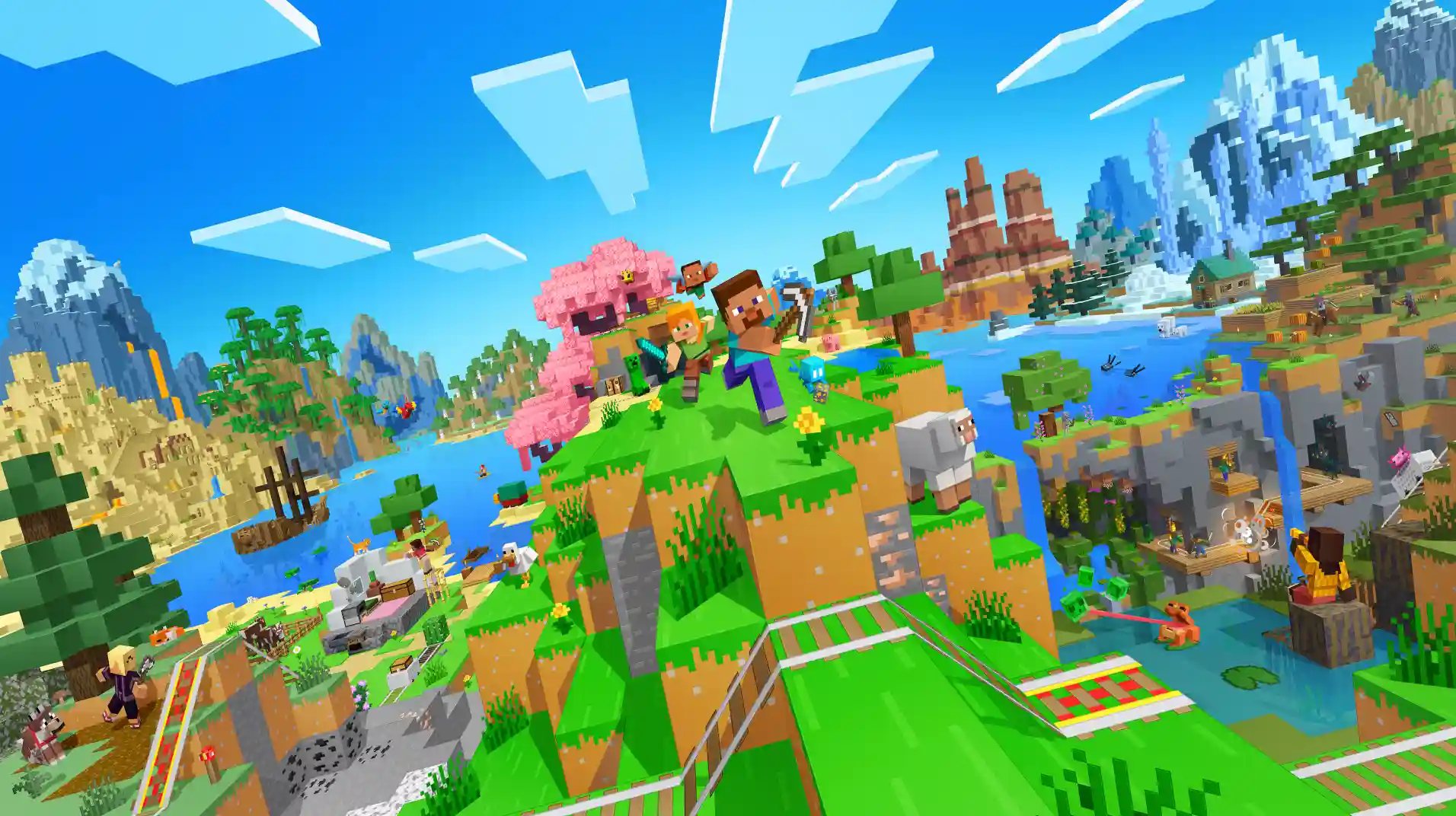
Minecraft's merchandise strategy demonstrates how a visual identity built on deliberate simplicity can scale into broad brand extension. The franchise's blocky aesthetic is immediately reproducible in physical media: Lego sets, apparel, backpacks, and educational materials all translate the game's visual identity cleanly without distortion.
The Minecraft x Lego partnership is a useful licensing case because the block-based visual languages of both brands translate naturally into the same physical format. Brand Vision's breakdown of LEGO's community-led branding offers another view of why audience participation and a recognizable system matter in this kind of extension. Effective merchandise strategy should evaluate partner fit, audience relevance, and quality controls rather than licensing on reach alone.
The Principles Behind Effective Gaming Merchandise Strategy
The strongest merchandise strategies in video game franchise branding follow three governing principles:
- Products should express the franchise's core visual identity and thematic values, not simply attach the brand name to unrelated categories.
- Licensing partners should be selected based on alignment with the brand's positioning and audience, not reach alone.
- Merchandise categories should serve specific audience segments with intentional products, rather than attempting to capture all customers simultaneously through undifferentiated licensing.
Brand Extension: Cross-Media Expansion as Structured Brand Building
The most successful video game franchise branding strategies extend into film, television, and interactive experiences with a clear brand architecture governing each expansion. Cross-media brand extension is not content diversification. It is brand reinforcement executed at scale. Done correctly, it expands brand equity. Done without governance, it dilutes it.
The Super Mario Bros. Movie: $1.36 Billion in Worldwide Box Office
The 2023 Super Mario Bros. Movie generated about $1.36 billion in worldwide box office revenue according to Box Office Mojo's official tracking data. The result shows that Mario characters could support a large theatrical release, but box office alone does not isolate how much demand came from franchise familiarity, marketing, reviews, distribution, release timing, or other factors.
Nintendo's approach reflected its broader IP strategy: maintain creative control, protect visual identity, and select partners who understand the brand's positioning. The film's animation quality, character design, and narrative tone remained consistent with the identity Nintendo had built over decades. That continuity likely helped the extension feel recognizable, while commercial performance still depended on many factors beyond brand consistency.
What Brand Extension Requires Structurally
For any brand considering cross-media or cross-category expansion, video game franchise branding offers a clear structural framework:
- Brand identity clarity before expansion: extensions amplify what exists, positive or negative.
- Governance frameworks that define which brand elements are non-negotiable across all formats and partners.
- Partner selection criteria aligned with brand positioning, not simply audience size or commercial scale.
- Consistency standards that protect brand equity regardless of which creative teams are involved.
Brands that extend without these structures risk brand drift: a gradual erosion of distinctiveness as the brand takes on the character of its extensions rather than shaping them.
What Brand Leaders Can Learn from Video Game Franchise Branding
Video game franchise branding is not a niche discipline. It is an advanced model of brand architecture that any organization building long-term equity can study with direct applicability.
The strategic principles that elevated Nintendo, Pokémon, Minecraft, and Fortnite into billion-dollar gaming brand systems are structurally transferable:
- Build brand identity before scaling distribution. The examples above show the value of having recognizable identity rules before a franchise expands into merchandise, film, licensing, and new platforms. Clear standards make that expansion easier to govern.
- Govern IP as a strategic asset, not a legal formality. The most valuable gaming brands treat intellectual property strategy as a structural business function. Trademark protection, licensing governance, and brand standards are brand infrastructure, not overhead.
- Design for community from the beginning. Community can compound participation over time by giving customers reasons to create, share, return, and recruit others. It should complement product quality and distribution rather than be treated as a replacement for them.
- Treat merchandise as brand strategy, not a revenue supplement. Physical and digital goods are expressions of brand identity that reinforce or dilute core positioning depending entirely on how they are governed.
- Extend with discipline, not opportunism. Cross-media or category expansion should be evaluated against the franchise's core identity before proceeding. Clear strategy reduces the risk that new extensions gradually weaken recognition or confuse the brand's role.
Building a Brand That Lasts: Where to Start
The brands examined in this analysis share a common origin point: a decision, made early, to treat brand identity as a strategic system rather than a visual afterthought. That decision shaped every subsequent move, from IP strategy to merchandise licensing to cross-media expansion.
For organizations building in competitive markets, architecture matters as much as execution. A structured brand strategy defines positioning, messaging, and the governance frameworks that protect brand equity as the organization scales. A disciplined visual identity system ensures consistency across every format and touchpoint. Rigorous brand research grounds positioning decisions in data rather than assumption.
From Brand Vision's agency perspective, the transferable lesson is structural: positioning, identity, governance, and extension decisions work better when teams can see how they fit together. Whether an organization is clarifying positioning, building a visual identity, or auditing its architecture before expansion, the goal is a brand system that teams can apply consistently as the business grows.
A marketing consultation and audit can identify where your current brand architecture is strong and where it requires reinforcement before scaling. For B2B organizations specifically, the principles of video game franchise branding can also inform B2B marketing and positioning: structured IP governance, consistent visual identity, and community-driven brand loyalty are as relevant in professional services markets as they are in consumer entertainment.
.webp)
Frequently Asked Questions About Video Game Franchise Branding
What makes video game franchise branding different from other brand strategies?
Video game franchise branding operates across an unusually broad set of simultaneous touchpoints: games, films, merchandise, esports, digital goods, and licensing. The most successful franchises build brand architecture that governs all of these consistently, requiring IP strategy, visual identity systems, and community building infrastructure to operate in alignment.
How do video game franchises protect their brand identity at scale?
Through structured IP strategy encompassing trademark registration across product categories and geographies, licensing frameworks that control how characters and brand assets are used by third parties, and brand identity guidelines that govern visual and tonal expression across every format and partner.
Why is community building central to sustaining gaming brand loyalty?
Community building can deepen attachment by giving people ways to participate beyond the core product. Communities create content, welcome new members, and can sustain engagement between major releases. That participation can add organic reach and continuity, although it still depends on a product and brand experience people want to remain part of.
What can non-gaming brands learn from gaming merchandise strategy?
That merchandise is a brand extension decision with significant brand identity implications, not simply a peripheral revenue line. The most effective gaming merchandise strategies reflect the franchise's visual identity, serve specific audience segments, and reinforce brand positioning. The same logic applies to any brand: every product or service extension should strengthen the core brand system, not dilute it.
Final Thoughts: Brand Architecture Is the Product
The franchises above illustrate that durable commercial success can involve more than game quality alone. Their IP governance, visual consistency, community programs, licensing, and cross-media extensions give brand leaders useful systems to study without implying that any one branding decision caused the revenue outcomes.
Video game franchise branding is ultimately a lesson in how structure can support expansion. Revenue figures are evidence of scale, not proof that brand architecture caused every result. The transferable starting point is clear positioning, governed visual identity, and a brand strategy that gives teams rules for growth.
To see how Brand Vision approaches scalable brand systems, explore our branding services. Organizations looking for a branding agency in Chicago can also review our local practice, or contact our team to discuss where the current brand system needs reinforcement.