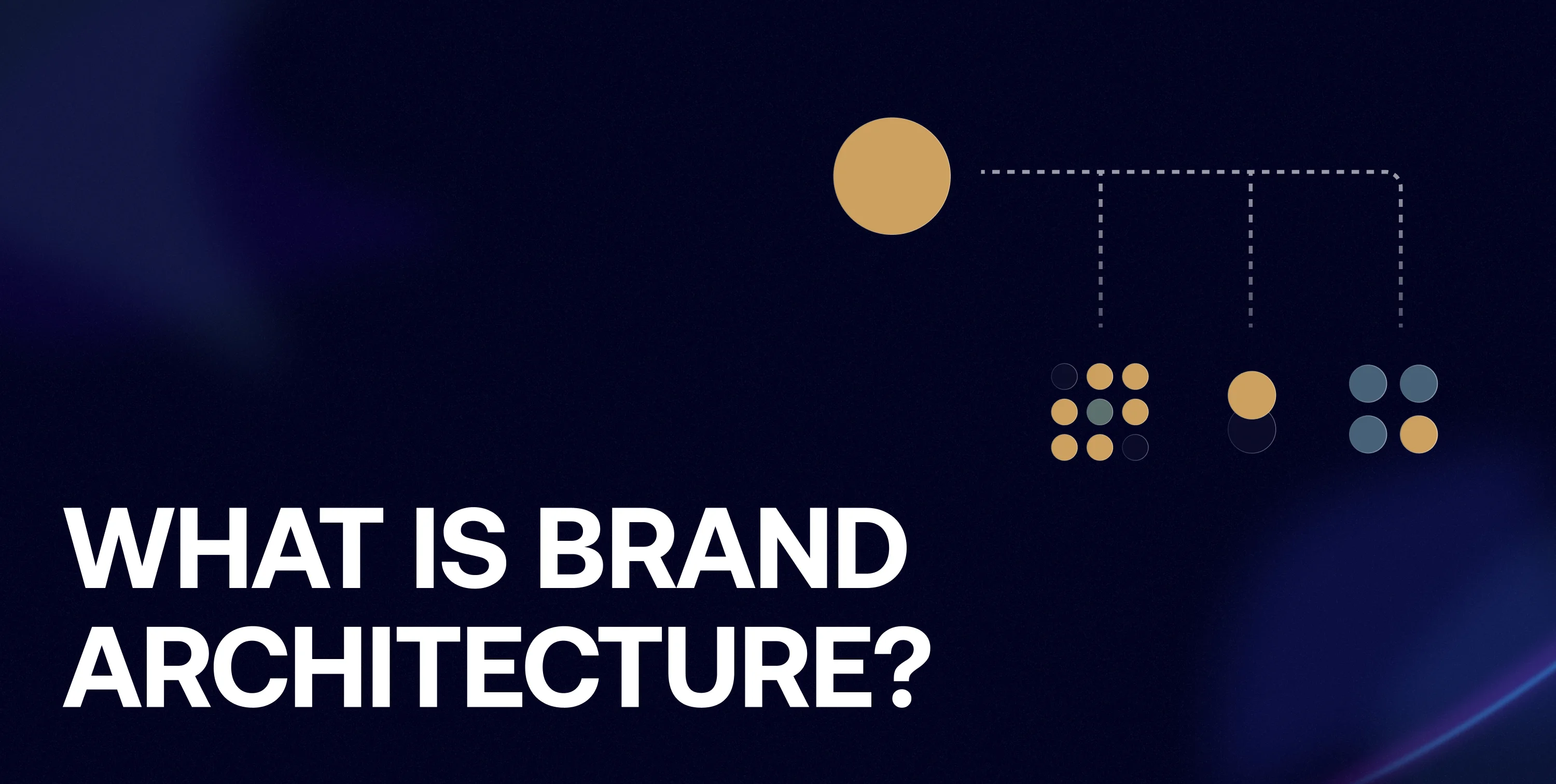
A portfolio can grow while the story gets harder to explain. New products launch, teams spin up new landing pages, acquisitions arrive with their own naming, and suddenly customers cannot tell what belongs together, what is premium, and what is entry level. That confusion shows up as slower decisions, lower trust, and higher support load.
Brand architecture is the operating system behind those choices. It tells customers how to interpret what you sell, and it tells internal teams how to name, design, and structure everything that ships next.
At a Glance
- Brand architecture is the structure that explains how each offer relates to the parent name.
- The right model reduces decision friction, lowers marketing overhead, and protects reputation risk.
- The wrong model creates duplicate work, inconsistent UX, and a brand portfolio that is hard to govern.

Brand Architecture In One Sentence
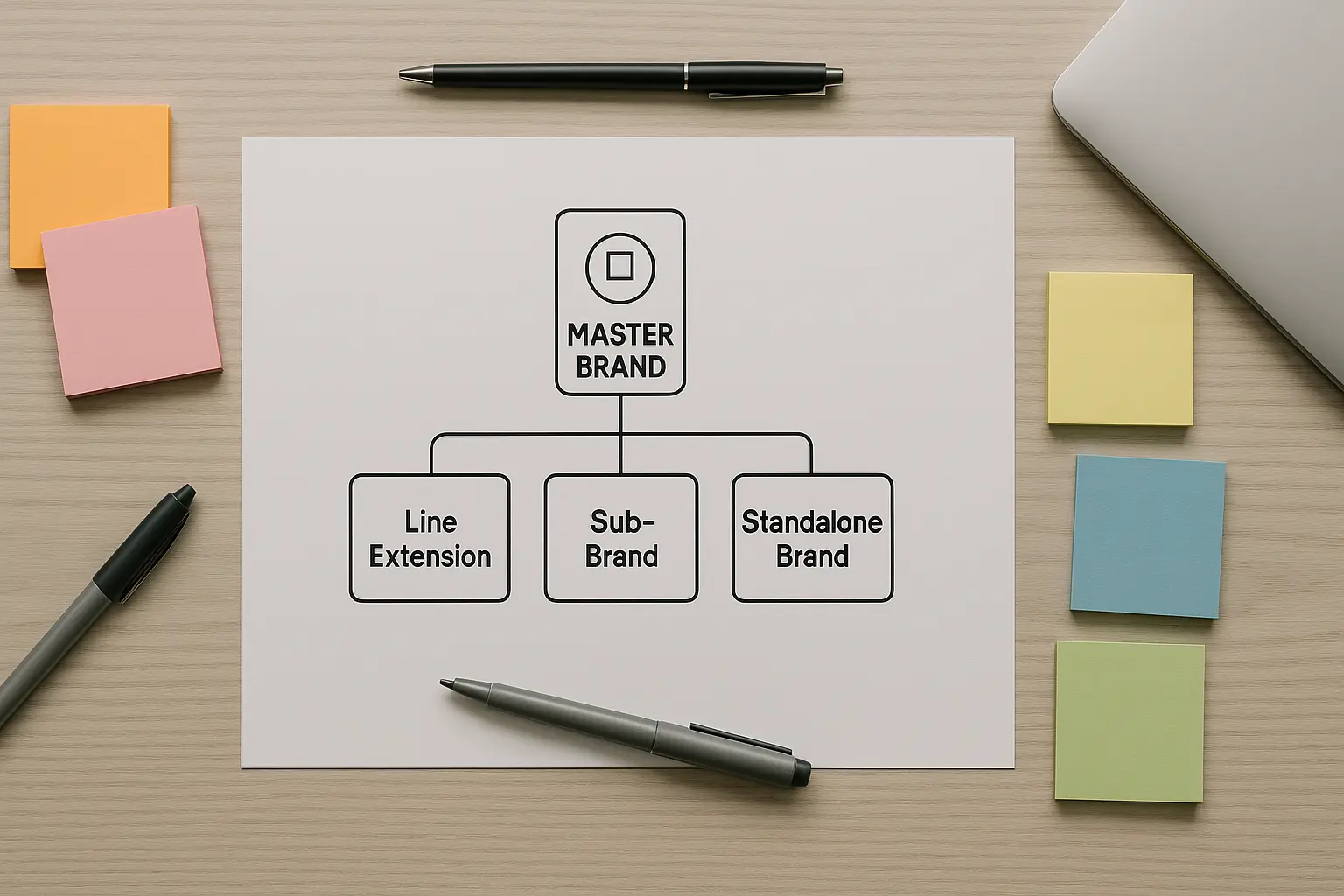
Brand architecture is the strategic structure that defines how the master brand, sub brands, and offers relate, so customers can understand your brand portfolio quickly and teams can scale consistently.
A strong system makes three things easier. It clarifies what to call new offers, it clarifies how to present them visually, and it clarifies how to organize the website so people can find the right path. When the structure is clear, the work becomes repeatable.
A practical way to think about it is this. Brand architecture is not a deck exercise. It is a set of rules that keep the brand portfolio coherent as the business changes.
Why Brand Architecture Matters Now
Modern growth creates more surface area than most teams expect. New channels, new product tiers, and new partnerships all add names, pages, and touchpoints. Without a clear model, each addition becomes a one-off decision that compounds inconsistency.
Brand architecture also affects the economics of marketing. A branded house can concentrate budget and attention on one name, while a house of brands spreads investment across multiple names. That trade off is not abstract. It changes creative volume, media efficiency, and how quickly you can launch new categories.
There is also a governance angle that many leaders miss. Brand architecture determines who owns naming decisions, what gets approved, and how quickly teams can publish without breaking consistency. When governance is vague, the brand portfolio becomes the place where urgent decisions override disciplined ones.
In 2026, brand architecture matters because buyers validate faster than ever. They scan sites, compare offers, and look for signals of stability. A clear architecture reduces the feeling of risk.
The Four Brand Architecture Models
Each brand architecture model solves a different problem. The best choice depends on audience separation, risk tolerance, growth strategy, and how your brand portfolio is expected to expand.
Branded House
A branded house uses one master name across most offers, with descriptive or product level naming beneath it. The benefit is compounding trust. Every launch, every campaign, and every positive experience reinforces the same brand.
A branded house also simplifies operations. Design systems are easier to maintain, tone stays consistent, and the website structure can be organized around one domain and one primary story.
A branded house becomes harder when offerings diverge. If the audience, price point, or promise changes too far, the master name can start to feel stretched. In a branded house, a quality issue in one area can also spill into the rest of the brand portfolio.
House of Brands
A house of brands uses distinct names that stand on their own, often with limited visibility of the corporate parent. The advantage is precision. Each brand can target a specific audience, price tier, and tone without being constrained by a single umbrella promise.
A house of brands can also contain reputational risk. If one brand faces a crisis, the impact is less likely to damage every part of the brand portfolio.
The trade off is cost and complexity. A house of brands requires separate brand building, separate governance, and often separate websites or at least separate sections that operate like standalone properties. A house of brands works best when the business has the resources to fund multiple growth engines.
Endorsed Brand
An endorsed brand sits between the extremes. The offer has its own name, but the parent provides a clear endorsement that transfers credibility. Done well, an endorsed brand lets you keep separation while still benefiting from the parent’s trust.
An endorsed brand model is useful when the customer needs a specialized promise, but still values the reassurance of the parent. It is also useful when a company acquires a respected brand and wants to keep equity while introducing a clearer relationship.
The risk with an endorsed brand is inconsistency. If endorsement rules are not defined, teams improvise lockups, copy, and placement, and the architecture becomes noisy. Endorsed brand success depends on discipline.
Hybrid Brand Architecture
Hybrid brand architecture mixes models across the brand portfolio. One area may operate as a branded house, while another runs as a house of brands, with endorsed brand rules layered where needed. Hybrid brand architecture is common in companies that grew through acquisitions or that serve very different markets under one corporate roof.
Hybrid brand architecture can be effective, but it is harder to govern. The system needs explicit rules for when a launch stays under the master name, when an endorsed brand is required, and when a new standalone brand is justified.
Hybrid brand architecture should not be an accidental outcome. It should be a deliberate model with a map and decision criteria. When hybrid brand architecture is left undefined, teams create brand fragments that look intentional but behave inconsistently.
How To Choose the Right Brand Architecture Strategy
A brand architecture strategy is a decision framework, not a preference. The goal is to choose the model that makes your brand portfolio easier to sell, easier to find, and easier to operate.
The Decision Criteria That Actually Change the Answer
Start with customer clarity. If buyers would naturally group the offers together and expect a consistent experience, a branded house is often more efficient. If buyers need distinct promises that could conflict, a house of brands or endorsed brand approach may be safer.
Then map audience separation. When audiences have different needs, different trust drivers, or different decision processes, separation can reduce confusion. That separation can be achieved through an endorsed brand or through a house of brands, depending on how much distance is required.
Risk is the next filter. In a branded house, reputation spillover is real. In a house of brands, spillover is reduced, but governance and cost increase. In hybrid brand architecture, risk can be contained in specific areas, but only if the rules are clear.
Finally, evaluate operational load. Every additional name creates work. More domains, more social handles, more design variants, and more content to keep current. A brand architecture strategy should account for what your team can realistically govern.
If you need a practical reference point for common models and trade offs, Harvard Business School Online provides a clear overview of brand architecture strategy choices and when to use them (Harvard Business School Online). McKinsey also discusses the branded house and house of brands tension through the lens of corporate brand roles (McKinsey).
A Simple Scorecard for Brand Architecture Strategy
Use a scorecard to avoid over indexing on aesthetics or internal politics. Rate each model against your reality.
Score each from 1 to 5:
- Customer clarity: Will a buyer immediately understand how the brand portfolio fits together?
- Equity transfer: Do you benefit from concentrating trust in one name?
- Audience separation: Do you need distance between offers to avoid confusion?
- Risk insulation: How costly is spillover if one area fails?
- Operating capacity: Can you fund and govern multiple brands consistently?
A branded house tends to score high on equity transfer and operating capacity. A house of brands tends to score high on separation and insulation. Endorsed brand often scores well when both trust transfer and separation matter. Hybrid brand architecture can score high across categories, but only when governance is strong.
Brand Architecture Strategy Process: A Step by Step Workshop
A brand architecture strategy becomes real when it turns into a blueprint that teams can use. This process is designed to produce that blueprint, with clear outputs.
Audit the Brand Portfolio
Start by listing every customer facing name. Include product lines, service tiers, programs, features, and any acquisition brands that still exist in market. This inventory is the true brand portfolio, not the version that lives in the pitch deck.
Then map each name to the customer. What problem does it solve, who buys it, and how does it get discovered. This is where redundancies show up, especially when two teams created similar offers under different labels.
Finally, document the current structure. Many companies are already operating a form of hybrid brand architecture without realizing it. The audit makes the current hybrid brand architecture explicit so you can decide what stays and what gets simplified.
Define Roles, Hierarchy, and Naming Rules
Assign roles inside the brand portfolio. What is the master brand, what is a product family, what is a tier, and what is a feature. Clarity here prevents the most common mistake, which is naming features like products and products like companies.
Then choose the brand architecture model for each major area. Some portfolios are best served by a branded house, while a regulated or high risk line may warrant an endorsed brand or a house of brands. If your reality requires hybrid brand architecture, define it explicitly.
Lock naming rules next. A good naming architecture includes rules for:
- Parent name placement, including when it appears in the offer name
- Tier labels, including what premium and entry level mean
- Capitalization and spacing standards
- What can be trademarked and what remains descriptive
If your teams are actively launching new offers, the fastest way to keep architecture coherent is to align naming decisions with your product line rules. Our piece on naming product lines provides a practical pattern for keeping names clear as the brand portfolio expands (Brand Vision).
.webp)
Stress Test the Model With Real Journeys
A brand architecture strategy should survive real customer behavior. Test it by running common journeys end to end. A buyer lands on a feature page, searches pricing, compares tiers, and then visits About or security pages. Where does confusion appear.
Also test internal workflows. How does a marketer build a landing page, how does sales explain tiers, and how does product add a new feature name. If the architecture requires constant exceptions, the model is too complex.
Finally, stress test against future change. What happens when you launch a new category, add a lower priced tier, or acquire a company. Hybrid brand architecture often fails here because teams have not defined how new additions enter the system.
Naming and Visual Identity Rules That Prevent Confusion
Brand architecture lives in language and visuals. Without rules for naming and identity, the model will drift, even if the strategy is strong.
Naming Architecture That Scales
Naming architecture should make it easy to answer one question. Is this part of the same family, or is it a different brand. In a branded house, the master name typically stays visible. In a house of brands, separation is deliberate. In an endorsed brand model, the endorsement is consistent and predictable.
Naming should also reflect hierarchy. Use a consistent pattern for product families, tiers, and features. When the same word is used for both a tier and a product line, the brand portfolio becomes harder to navigate.
Naming must also account for legal realities. Trademarks and name conflicts are not branding details. They are operational risks that can delay launches. For international checks, WIPO’s Global Brand Database is a useful reference point for trademark searches (WIPO).
Visual Identity Hierarchy and System Rules
Visual identity should mirror the architecture. In a branded house, the master brand’s typography, color, and layout principles should carry through, with controlled variation. In a house of brands, each brand can have its own system, but the corporate parent still needs governance to prevent quality variance.
For endorsed brand and hybrid brand architecture, visual hierarchy matters. The endorsement should look like a system, not a one off badge. Define how the parent name appears, how it scales across formats, and how it behaves in product UI and on websites.
If your teams need a structured approach to building a system that holds together across channels, a branding agency can translate brand architecture decisions into components that designers and developers can actually use.
.webp)
How Brand Architecture Impacts Websites, UX, and Findability
Brand architecture is not only a brand portfolio choice. It shapes how people find offers, how they move through the site, and whether the experience feels consistent.
Navigation and Information Architecture
Navigation should reflect the architecture model. In a branded house, a unified navigation system helps buyers understand the full portfolio quickly. In a house of brands, separation is the point, so each brand’s navigation should match its specific audience and offer set.
In endorsed brand and hybrid brand architecture, the key is clarity. The user should be able to tell what is part of the endorsed family and what is not, without guessing. That clarity often comes from how categories are labeled and how product families are grouped.
This is where website strategy and brand strategy intersect. A web design agency should be able to translate the brand architecture model into navigation, page hierarchy, and templates that reduce friction.
SEO Signals That Follow Structure
Search engines infer structure from linking and relationships, not from internal org charts. A clear site structure helps discovery and reinforces which pages matter most. Google’s guidance on site structure emphasizes that internal links and navigation shape how Google understands the relationships between pages (Google Search Central).
A branded house often benefits from concentrated authority because content and product pages live under one domain with consistent linking. A house of brands can still perform well, but each brand’s site typically has to earn authority on its own.
Endorsed brand and hybrid brand architecture require extra care. If the endorsement is visible in naming but hidden in site structure, the system feels inconsistent. Align naming architecture with page architecture so the brand portfolio is legible to both users and crawlers.
This is also where an SEO agency can help teams avoid common structural problems, like split authority, duplicated pages across brands, and internal links that do not reflect the intended hierarchy.
Consistency, Accessibility, and Trust
Consistency is not a cosmetic preference. It reduces cognitive load, especially when users are comparing offers or switching between product areas. Nielsen Norman Group frames consistency and standards as a core usability principle that helps interfaces make sense (Nielsen Norman Group).
Accessibility is also part of architecture. If one part of the brand portfolio is accessible and another is not, trust erodes. WCAG 2.2 is the current W3C recommendation that defines accessibility requirements for web content (W3C).
Brand architecture decisions should support a consistent experience across the full journey. That includes templates, navigation labels, and interactions. A UI UX design agency can help ensure the architecture holds up inside product flows, not only on marketing pages.
Governance: Keeping Brand Architecture Consistent
Most brand architecture failures are governance failures. The strategy might be sound, but day-to-day decisions drift because teams lack owners, rules, and a shared source of truth.
Owners, Approvals, and Guardrails
Assign ownership for the brand architecture strategy. In practice, this is often a small group that includes brand, product, and growth leaders. The group does not need to approve everything, but it must own the rules.
Set approval thresholds. Minor feature names might follow a template and require no review. New product lines, new tiers, and any new endorsed brand decisions should trigger review. Hybrid brand architecture requires this discipline the most, because the system has more possible paths.
Guardrails should be documented and lightweight. Teams should know what to do without waiting for a committee. Governance works when it increases speed and clarity, not when it blocks launches.
What to Document So Teams Stay Aligned
Document the system in a way that is usable. Include:
- A brand portfolio map with roles and relationships
- Naming architecture rules, with examples
- Endorsed brand and hybrid brand architecture endorsement standards
- Visual identity hierarchy, including lockups and spacing rules
- Website structure principles, including navigation labels and page types
Governance also benefits from practical runbooks for major changes. If you are planning a rebrand or name change, the Brand Vision Insights rebranding checklist lays out the operational updates that protect continuity across web, search, and channels (Brand Vision Insights).
Brand Architecture Examples Worth Studying
Examples are most useful when you focus on the pattern, not the fame of the company. These are recognizable patterns that show how each brand architecture model behaves at scale.
Procter and Gamble and the House of Brands Pattern
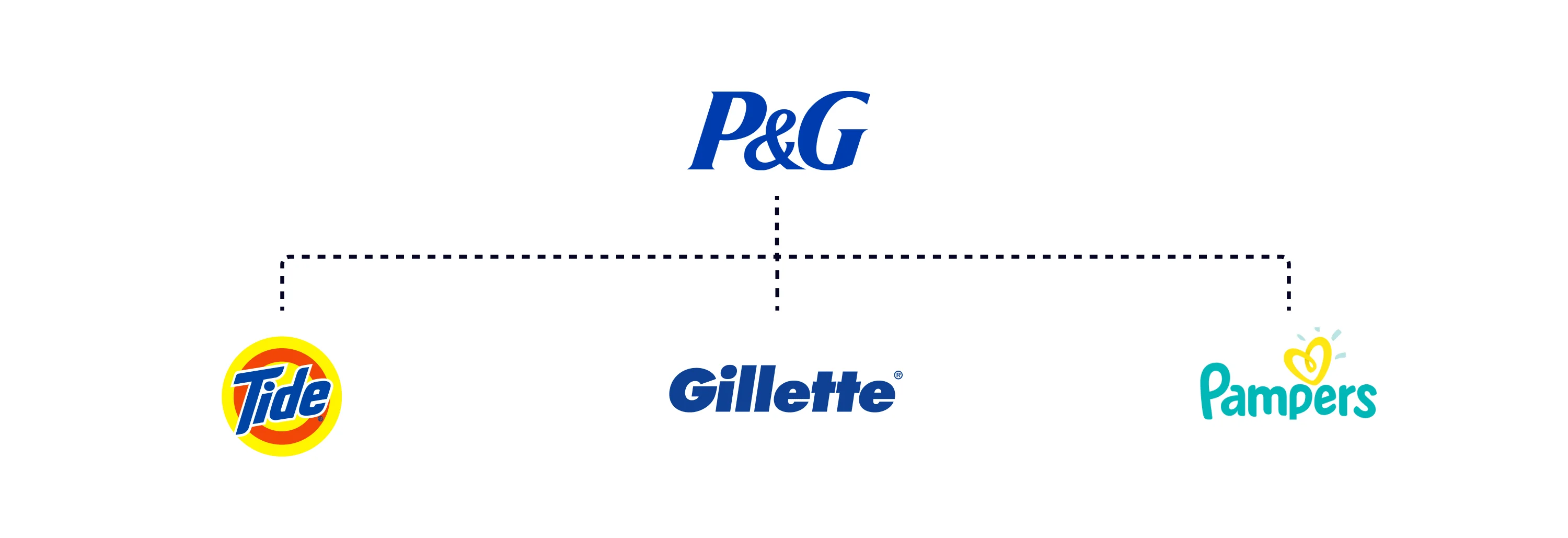
Procter and Gamble is often cited as a house of brands example because distinct product brands are built to stand alone. The pattern is separation with specialization. Each brand targets a specific use case, audience, and price tier, without requiring the parent to be the customer facing hero.
This pattern works when the brand portfolio contains offers that would dilute each other if forced under one promise. It also works when the organization can fund and govern multiple brand systems.
In a house of brands, the discipline is in avoiding unnecessary proliferation. Every new brand should earn its place in the brand portfolio, because operating complexity is real.
Google and the Branded House Pattern
Google is a useful branded house example because the master name carries trust across a wide range of products. The pattern is equity transfer. The master name makes new products easier to try, and it simplifies how users interpret quality.
In a branded house, consistency does much of the selling. Naming architecture signals that the product belongs in the same family, and design systems reinforce that the experience will be familiar.
The risk in a branded house is promise stretch. If a new offer contradicts what the master name stands for, confusion grows. Brand architecture strategy in a branded house should protect what the master name means.
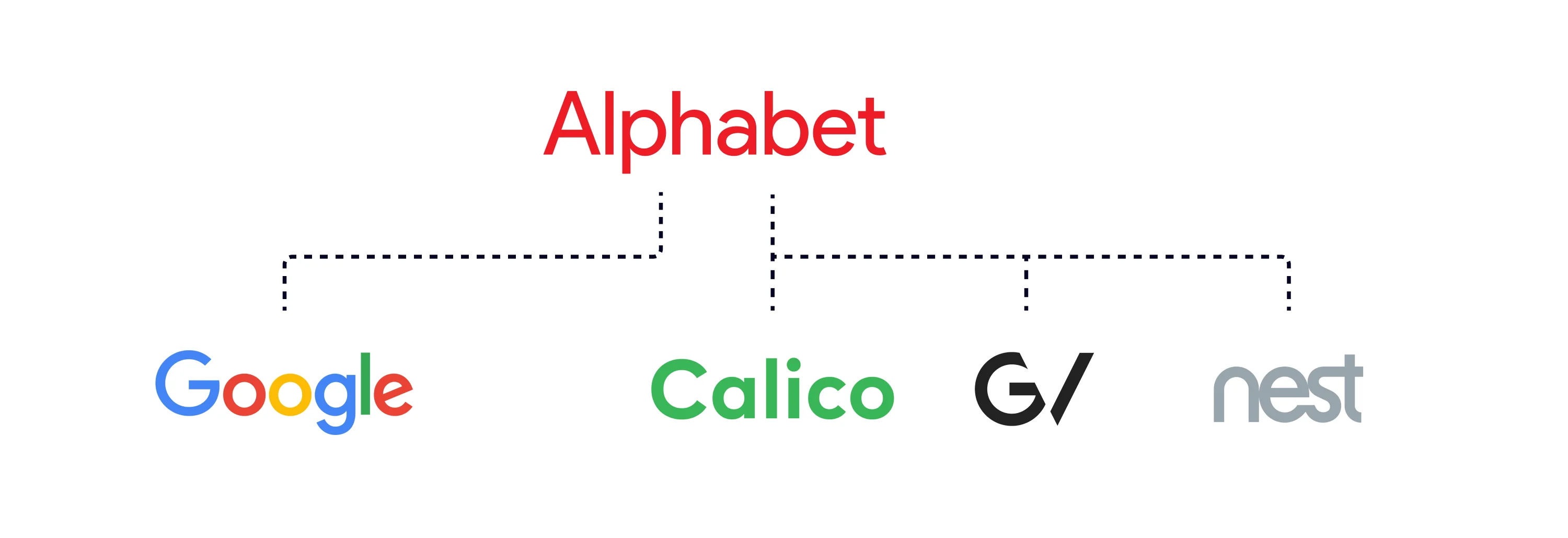
Alphabet (Google): Created in 2015, Alphabet acts as a holding company where Google focuses on internet services, while other ventures like Calico or Nest operate with independence. This approach provides clarity and autonomy for different business arms under one umbrella.
Marriott and the Endorsed Brand Pattern
Marriott is a commonly referenced endorsed brand pattern because sub brands maintain distinct positioning while using endorsement to transfer trust. The pattern is structured variety. Buyers can choose based on budget and experience expectations, while still understanding the relationship.
An endorsed brand system works when the parent can credibly endorse multiple tiers without diluting its own meaning. It also requires consistent endorsement rules, especially in digital contexts where users move quickly between properties.
Endorsed brand architecture becomes fragile when endorsement is applied inconsistently. The brand portfolio then feels like a patchwork of exceptions.
Courtyard by Marriott: Courtyard maintains a distinct position in the mid-tier hotel category, yet leverages Marriott’s endorsement. Travelers see “by Marriott” and immediately trust the service standard.

Common Brand Architecture Mistakes and the Metrics That Reveal Them
Brand architecture mistakes usually show up as friction. Customers hesitate, teams duplicate work, and internal debates about naming never end. The fix is often a simplification of rules, not a redesign.
Mistake 1: Naming features like products
If every feature gets a standalone name, the brand portfolio becomes a maze. This often shows up as higher support volume, lower conversion on product pages, and inconsistent navigation labels.
Mistake 2: Hybrid brand architecture without explicit rules
Hybrid brand architecture can work, but only when teams know when to create separation. Without rules, launches create fragmentation. Watch for rising content maintenance cost, duplicated landing pages, and inconsistent design patterns across product areas.
Mistake 3: Endorsed brand without a clear endorsement system
When endorsement lockups and naming vary by team, trust signals weaken. This often shows up as inconsistent branded search behavior and higher confusion in sales conversations.
Mistake 4: Choosing a house of brands without the operating capacity
A house of brands requires sustained investment. If teams cannot support multiple content engines and multiple design systems, quality diverges. Watch for uneven site performance, inconsistent brand presentation, and slower launch velocity.
Mistake 5: Treating architecture as separate from the website
If brand architecture strategy does not translate into navigation and page structure, users will not feel the logic. Watch for high bounce rates on category pages, higher exit rates during comparison steps, and internal search terms that indicate confusion.
Quarterly metrics that help you assess brand architecture strategy:
- Product page conversion rate by product family
- Support tickets tagged to confusion about tiers, names, or plan differences
- Branded search demand patterns across the brand portfolio
- Content and design production volume required for each launch
- Navigation engagement, especially cross sell paths between related offers
When the structure is working, these signals move in a steady direction. Decisions get faster, content becomes easier to maintain, and the brand portfolio feels predictable in the best way.
FAQ
What is brand architecture in simple terms?
Brand architecture is the structure that explains how your brand portfolio fits together. It defines how the master brand, sub brands, and offers relate so customers can understand what belongs together and teams can scale naming and design consistently. A clear brand architecture strategy reduces confusion when you add new products, tiers, or services.
What is the difference between a branded house and a house of brands?
A branded house uses one primary name across most offers, so trust compounds under a single brand. A house of brands uses separate names for separate offers, which helps with audience separation and risk insulation but increases operational complexity. The best choice depends on how different the offers are, how much separation buyers need, and how much capacity you have to fund and govern multiple brands.
When should a company use an endorsed brand model?
An endorsed brand model is useful when you need a distinct offer name but still want the credibility transfer of the parent. Endorsed brand structures work well for multi tier portfolios, acquisitions you want to preserve, and specialized offers that benefit from reassurance. The key is consistent endorsement rules across naming, design, and web structure.
Why do companies end up with hybrid brand architecture?
Hybrid brand architecture often emerges through acquisitions, rapid expansion, or a shift into new categories where a single promise does not fit. Hybrid brand architecture can be strategic, but it requires explicit rules. Without governance, hybrid brand architecture becomes an accidental collection of exceptions that creates confusion.
How does brand architecture affect websites and SEO?
Brand architecture affects how you structure navigation, categories, and internal links, which changes how easily users find the right offer. Search engines also infer relationships from internal linking and site structure, so a coherent architecture supports discoverability. Brand architecture strategy should align with information architecture so the brand portfolio is clear in both messaging and site structure.
Brand Control with Architecture
Brand architecture is a decision about clarity, cost, and control. When the structure is right, launches get easier, the website becomes simpler to navigate, and the brand portfolio becomes easier to explain in one sentence.
If you are revisiting your brand architecture strategy because the business is expanding, the cleanest next step is a short audit and a blueprint that teams can use. Start a conversation with a branding agency and a brand strategy agency that can translate the model into naming rules, visual hierarchy, and a system your teams can actually govern.











.webp)