AMIRI has grown from a Los Angeles capsule collection into an international luxury fashion house by turning a very specific cultural point of view into a scalable brand. Founded in 2014 by Mike Amiri, the label first appeared as an exclusive capsule at Maxfield in Los Angeles. AMIRI's own timeline now documents a global retail network, Paris runway presence and a 2026 Milan flagship, while OTB has held a minority stake since 2019. (AMIRI; OTB)
View this post on Instagram
A post shared by AMIRI (@amiri)
From Los Angeles Stage Pieces to a Luxury House
Mike Amiri began by hand-crafting stage pieces for musicians in Los Angeles and working with stylists before launching his namesake label. A later Vogue profile describes the basement studio beneath a Thai restaurant on Sunset Boulevard where he developed early work, while AMIRI's official history identifies the 2014 Maxfield capsule as the formal brand debut. The useful marketing lesson is not a startup myth about a precise savings figure or six-piece collection; it is how a founder's local creative network became the first distribution channel for a luxury brand. (Vogue)
View this post on Instagram
A post shared by AMIRI (@amiri)
Los Angeles Became the Core Brand Code
Music, Denim and Modern American Luxury
Amiri's designs combine distressed denim, leather, graphic treatments, sneakers and increasingly refined tailoring. The brand's own Autumn-Winter 2026 framing still describes Los Angeles, California and music as enduring reference points. That consistency gives AMIRI a recognizable brand strategy: its codes can evolve without losing the West Coast identity that made the house distinctive.
Craftsmanship Supports the Luxury Position
AMIRI's premium positioning is supported by visible craft rather than by a generic "quality over quantity" claim. Its official savoir-faire pages describe hand-finished prints, specialized denim treatments, Italian leather and knitwear techniques, and sneakers built with dress-shoe levels of construction. These details help justify luxury pricing because the visual identity is reinforced by materials and finishing, not only by logos. (AMIRI)
View this post on Instagram
A post shared by MIKE AMIRI (@mikeamiri)
Early Retail Placement Built Luxury Credibility
Maxfield Gave AMIRI Its First Luxury Context
AMIRI's official timeline confirms that the 2014 debut was an exclusive capsule for Maxfield in Los Angeles. Starting inside a respected luxury retailer gave the young label immediate context: customers encountered the collection beside established designers instead of having to interpret a completely unknown direct-to-consumer brand. That kind of placement can transfer credibility without implying that the retailer created the brand's demand.
Selective Distribution Came Before Rapid Expansion
Early scarcity made sense because AMIRI began with a narrow luxury distribution strategy, but the brand's later growth shows that exclusivity did not depend on keeping supply artificially tiny. By 2017, AMIRI says it had shop-in-shops with Selfridges, Bergdorf Goodman and Neiman Marcus. The stronger lesson is controlled channel selection: expand where the surrounding retail environment reinforces the price point and image.
Retail Became a Major Growth Engine
Luxury Neighbours Reinforced Positioning
AMIRI continued to appear in established luxury environments. The article's existing examples include Barneys, The Webster, and Holt Renfrew, while AMIRI's own timeline highlights Selfridges, Bergdorf Goodman and Neiman Marcus. The broader luxury marketing principle is consistent: distribution is part of positioning because the stores around a brand shape how customers read it.
Rodeo Drive Turned Brand Codes Into a Physical Experience
In 2020, AMIRI opened its first flagship on Rodeo Drive in Beverly Hills. The house describes that store as the beginning of a distinct retail identity, and Mike Amiri later told Vogue that the location performed within the top 10 percent of its block by business. That is a more supportable measure than the earlier claim that it was the highest-grossing store per square foot. The flagship strengthened Amiri's status in the luxury market by giving its Los Angeles identity a permanent physical expression. (Vogue)
View this post on Instagram
A post shared by AMIRI (@amiri)
Celebrity Visibility Connected Fashion Back to Music and Culture
Organic Celebrity Visibility Added Social Proof
Celebrity visibility fit AMIRI naturally because Mike Amiri's fashion career began around musicians and stylists. Forbes documented the brand on figures including Kendall Jenner, Justin Bieber, Axl Rose, Zayn Malik, Future and Brad Pitt; the article's existing source also discusses celebrities spotted wearing Amiri. More recently, the house has formalized some of that cultural reach through ambassadors such as Canelo Álvarez and Yuta Jinguji and through a formalwear partnership with FC Barcelona. (AMIRI)
View this post on Instagram
A post shared by MIKE AMIRI (@mikeamiri)
View this post on Instagram
A post shared by MIKE AMIRI (@mikeamiri)
Social Platforms Extend the Runway and Celebrity Story
Beyond celebrity sightings, AMIRI uses Instagram, TikTok and campaign content to circulate runway looks, custom celebrity dressing and behind-the-scenes imagery. That makes social media a distribution layer for the brand's visual world rather than a separate mass-market voice. The existing Travis Kelce Super Bowl post is a good example of performance dressing becoming both cultural visibility and product storytelling.
@amiri Arriving at Super Bowl LVIII, Travis Kelce wears a custom sequin-embellished tailored bouclé shirt jacket, and coordinating bouclé baggy trousers. Echoing the reverence of the occasion, the look showcases the house's artisan decoration and inherent sense of performance. #AMIRI ♬ original sound - AMIRI
Clienteling Connects Digital and Physical Luxury Retail
Tulip Supports High-Touch Clienteling
In 2022, AMIRI selected Tulip to support its growing retail footprint with clienteling, appointments, live online assistance, product retrieval and remote payment. The goal was not to replace luxury service with software. It was to give associates more context and more ways to maintain one-to-one relationships across channels. (Tulip)
The Website Extends the Same Luxury System
AMIRI's website carries the same imagery, runway storytelling and product presentation into ecommerce. For luxury retail, the useful design question is whether browsing, editorial content, product details and service options feel like one experience. Strong interaction design helps customers move between inspiration and purchase without flattening the visual world into a generic storefront.
Growth Now Depends on Scaling Without Diluting the Brand
The Retail Footprint Is Expanding Quickly
AMIRI is no longer a narrowly distributed startup. Its official timeline records rapid store expansion across the United States, Asia, the Middle East, India and Africa, and Business of Fashion reported that the company exceeded $300 million in 2025 sales and planned ten new stores in 2026. The challenge is therefore not scarcity for its own sake. It is preserving recognizable brand codes while more customers encounter the house in more markets. (Business of Fashion)
Sustainability Claims Need More Than Product Durability
The earlier article treated Amiri's focus on quality as proof of sustainability. Durability can be relevant, but it is not enough by itself to establish an environmental claim. OTB, which holds a stake in AMIRI, reports group-level progress on renewable electricity, emissions and lower-impact materials, but those figures should not be presented as AMIRI-specific product results without brand-level evidence. (OTB Sustainability Report)
Global Expansion Is Already Underway
From Los Angeles to a Global Store Network
AMIRI's expansion has moved well beyond future plans. In 2024 it added locations across the U.S., Japan, India, the Middle East and Africa; 2025 brought openings in Istanbul, Riyadh and New Jersey; and in 2026 the brand announced a Milan flagship as its first permanent store in Europe. The house has also continued to show collections in Paris, separating runway presence from permanent retail presence. (AMIRI)
Collaborations and Footwear Create New Entry Points
Footwear and collaborations give AMIRI new ways to create attention without changing its core aesthetic. The Amiri Bone Runner sneakers sit within a broader footwear business, while recent limited collaborations with Maison MIHARA YASUHIRO show how a luxury house can use limited releases and collaborations to bring another design language into the brand without making every product scarce.
View this post on Instagram
A post shared by MIKE AMIRI (@mikeamiri)
Mike Amiri Remains Central to the Brand Architecture
Mike Amiri's personal journey remains central to the house because the founder is also its creative director. Los Angeles music culture, West Coast references and his early work with performers continue to shape campaigns and collections. That founder continuity gives the brand a clear creative source even as stores, partnerships and categories expand.
What Marketers Can Learn From AMIRI
AMIRI's growth is better understood as a sequence of positioning decisions than as a single viral success story. A clear Los Angeles identity shaped the product. Maxfield gave the first capsule credible luxury context. OTB added strategic backing in 2019. Rodeo Drive created a physical flagship, and later stores, clienteling tools, celebrity visibility and collaborations scaled the same brand system internationally.
The next challenge is consistency at scale. AMIRI now has to make its craftsmanship, service and California identity feel coherent across a much larger global footprint. For fashion brands working through a similar transition, Brand Vision can help align branding, digital experience and luxury positioning without forcing growth tactics that conflict with the brand's core identity.
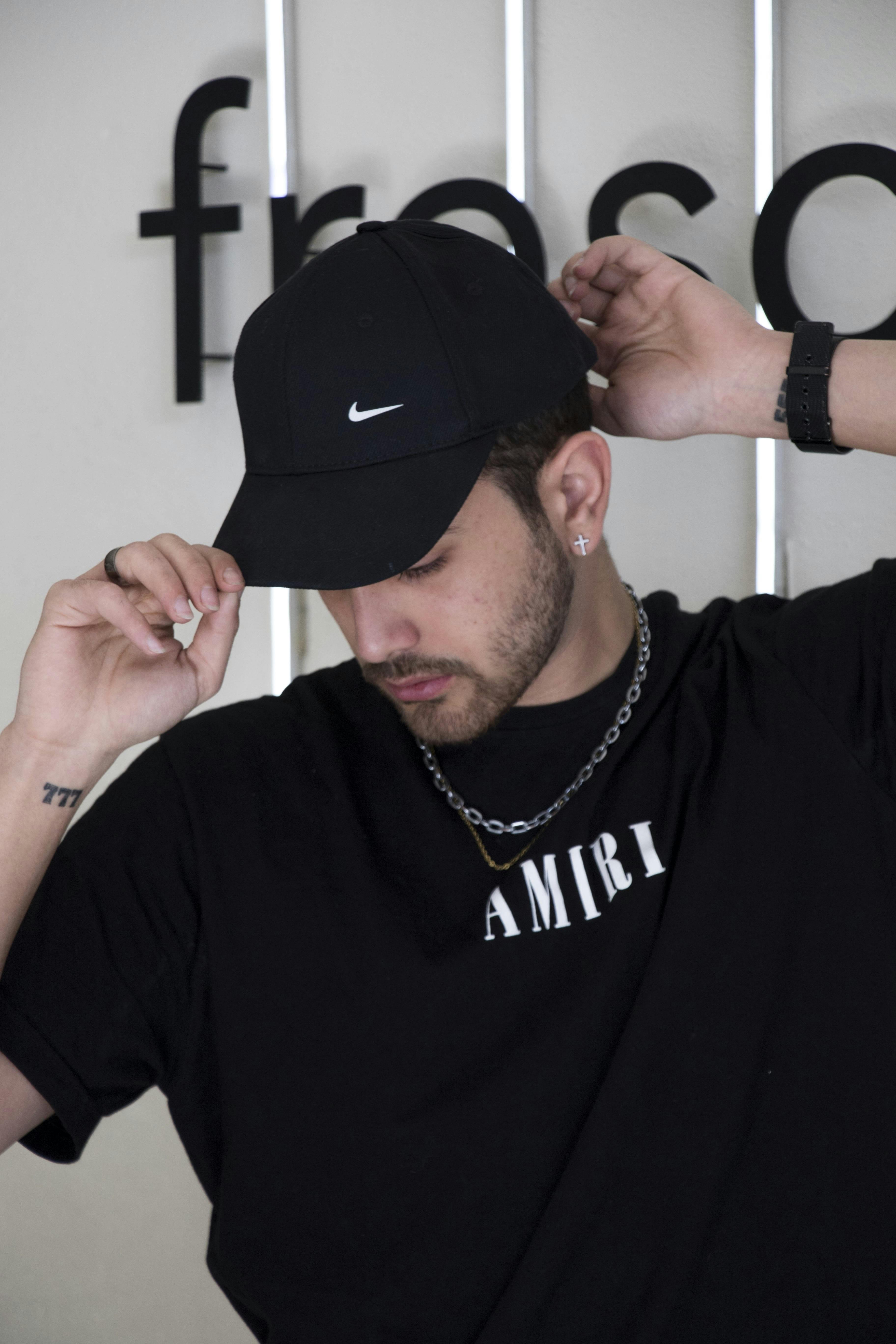
Cover picture by: Mohadese