

Sustainable branding is the practice of aligning a brand’s promises, identity, products, operations, and communications with measurable environmental and social priorities. It is not a guarantee that customers will choose a company, and it is not a substitute for product quality or price. It is a way to make responsible business practices visible and understandable without overstating what the company has achieved.
For consumer-facing companies, that work connects directly to branding services and B2C marketing. The brand story should reflect what the organization can actually substantiate, from materials and packaging to supply-chain practices, emissions targets, repair programs, and progress reporting.
Defining Sustainable Branding
More Than a Marketing Buzzword
Many executives ask: “Where does sustainable brand building fit into our long-term plan?” In reality, the concept goes far beyond offering a few eco-friendly items. When it’s done well, sustainable branding reflects deep-rooted commitments to responsible sourcing, reduced waste, fair labor, community engagement, and transparent reporting. It becomes the lens through which you set priorities, from product development to employee training, rather than a superficial tagline.
The goal is to turn environmental and social priorities into decisions customers can recognize and verify. For a regional business, a marketing agency in San Francisco can help translate those priorities into positioning and customer-facing communication without implying that sustainability begins with advertising. The underlying operations have to come first.
Why Consumers Pay Attention
Many consumers say environmental impact influences their preferences, but stated values do not always translate into purchases when price, convenience, availability, or product performance conflict with them. That gap is important. Sustainable branding works best when the responsible choice is also competitive on the ordinary reasons people buy.
Trust therefore depends on specificity. A company is on firmer ground when it explains what changed, how it measured the change, what part of the product or value chain the claim covers, and what remains unfinished. Broad claims such as “green” or “eco-friendly” are more vulnerable to skepticism and, in some markets, stricter consumer-protection rules.
Why Sustainable Branding Matters in 2026
Rising Consumer Demand
Customers, retailers, investors, employees, and regulators increasingly ask for clearer evidence behind environmental claims. The pressure is not uniform across every category or market, but it has made sustainable branding practices more closely connected with product design, reporting, and risk management rather than a stand-alone campaign theme.
Government Guidelines and Industry Standards
Rules for environmental marketing claims are becoming more specific in several jurisdictions. In the European Union, consumer-protection rules that apply from September 27, 2026 restrict unsupported generic environmental claims and unreliable sustainability labels. In Canada, environmental claims remain subject to the Competition Act, while March 2026 amendments changed the methodology requirement introduced in 2024. The practical branding lesson is simple: legal requirements vary, but claims should be precise, evidence-based, and reviewed for the market where they appear.
Strategic Advantages and Resilience
Some sustainability initiatives can lower energy, material, logistics, or waste costs, while others require substantial investment and may take years to pay back. The value is therefore strategic rather than automatic. Companies practicing sustainable business branding are strongest when operational goals, customer relevance, and financial trade-offs are evaluated together.
Key Elements of a Sustainable Branding Strategy
1. Ingrain Sustainability in the Company Mission
Formalize the priorities that are material to the business and set measurable goals with a baseline, target date, owner, and method of measurement. Avoid turning every sustainability issue into a brand promise. Focus first on the impacts the organization can influence and explain how progress will be tracked.
- Tip: Publish regular progress updates to maintain transparency, even if you’re still working toward your goals. Consumers respect honesty and incremental improvement.
2. Develop Eco-Friendly Products and Packaging
Packaging claims need the same discipline as product claims. Where technically and economically appropriate, companies can evaluate refill systems, lower material use, recycled content, or alternatives such as plant-based packaging. The environmental benefit depends on the material, production method, transport, local waste system, and end-of-life pathway, so “plant-based” or “recyclable” should not be treated as proof of a lower total footprint by itself.
- Tip: Clearly label eco-conscious packaging. People are more likely to recycle or reuse if they understand how.
3. Build Ethical and Transparent Supply Chains
Sustainability is not limited to the final product. Material sourcing, manufacturing, labor conditions, logistics, product use, and end-of-life can all affect the claim a company makes. The long-standing gap between what consumers say and what they buy is one reason environmentally conscious branding should be tied to practical customer value as well as ethical intent.
- Pitfall to Avoid: Claiming “organic” or “responsible” sourcing without verified proof can undermine trust quickly. A reliable third-party certification can demonstrate true accountability.
4. Communicate Openly and Avoid Greenwashing
Greenwashing risk rises when a claim is broader than the evidence behind it. Before a campaign launches, brand research can test whether customers interpret a phrase more broadly than intended. Claims should identify the product or activity covered, the baseline, the time period, and the supporting evidence. Future-facing claims also need credible implementation plans rather than aspirational language alone.
- Tip: Consider releasing a short sustainability report annually, outlining goals met and areas that need attention. Readers appreciate real data over marketing slogans.
5. Engage Customers and Communities
One powerful aspect of eco-friendly branding strategies is the sense of shared purpose they can foster. Encourage customers to recycle packaging, provide discount incentives for returning used products, or invite them to take part in local clean-up campaigns. Turning buyers into partners amplifies the brand’s impact, helping your message reach a broader audience and delivering community-wide benefits.
- Tip: Whether it’s a digital workshop on reducing household waste or a pop-up event for reusing materials, hands-on experiences can spark enduring brand loyalty.
The Future: Trends to Watch in Sustainable Branding
1. Future-Proof Sustainable Branding Through Circular Models
Circular models focus on keeping products and materials in use longer through durability, repair, reuse, resale, refurbishment, or recycling. The branding opportunity is strongest when the circular behavior is built into the product and service model rather than presented only as a campaign message.
2. Leveraging Data for Deeper Insights
Companies are expanding the use of product-level, supplier, emissions, and materials data. Better data can improve decisions and support more specific claims, but technology does not make weak inputs reliable. Governance, methodology, assurance, and clear boundaries remain essential.
3. Innovative Sustainable Branding Through Technology
Digital product information, traceability tools, QR codes, and interactive content can make sourcing and impact information easier to access. The useful innovation is not the novelty of the interface. It is whether the information is accurate, comprehensible, current, and connected to evidence.
4. Collaborative Partnerships
Many sustainability problems sit across shared supply chains, infrastructure, policy, and consumer behavior, so collaboration can be more effective than isolated campaigns. Brands may work with suppliers, recyclers, governments, industry groups, or nonprofit partners when the work requires capabilities beyond one company.
Real-Life Examples of Sustainable Branding Explained
It’s one thing to talk about what is sustainable branding and why it is important, but seeing actual case studies drives the point home. Here are three businesses that excel in sustainable business branding:
Patagonia: Activist at Heart
Patagonia’s sustainability positioning is unusually integrated with ownership, product durability, repair, resale, materials, supplier standards, activism, and impact reporting. Its Worn Wear program supports repair and resale, while its 2025 impact reporting also acknowledges unresolved problems, including products without an end-of-life solution. That willingness to publish both progress and limitations is a useful model for sustainable branding because it makes the brand promise harder to separate from operations.

Unilever: Scaling Sustainability
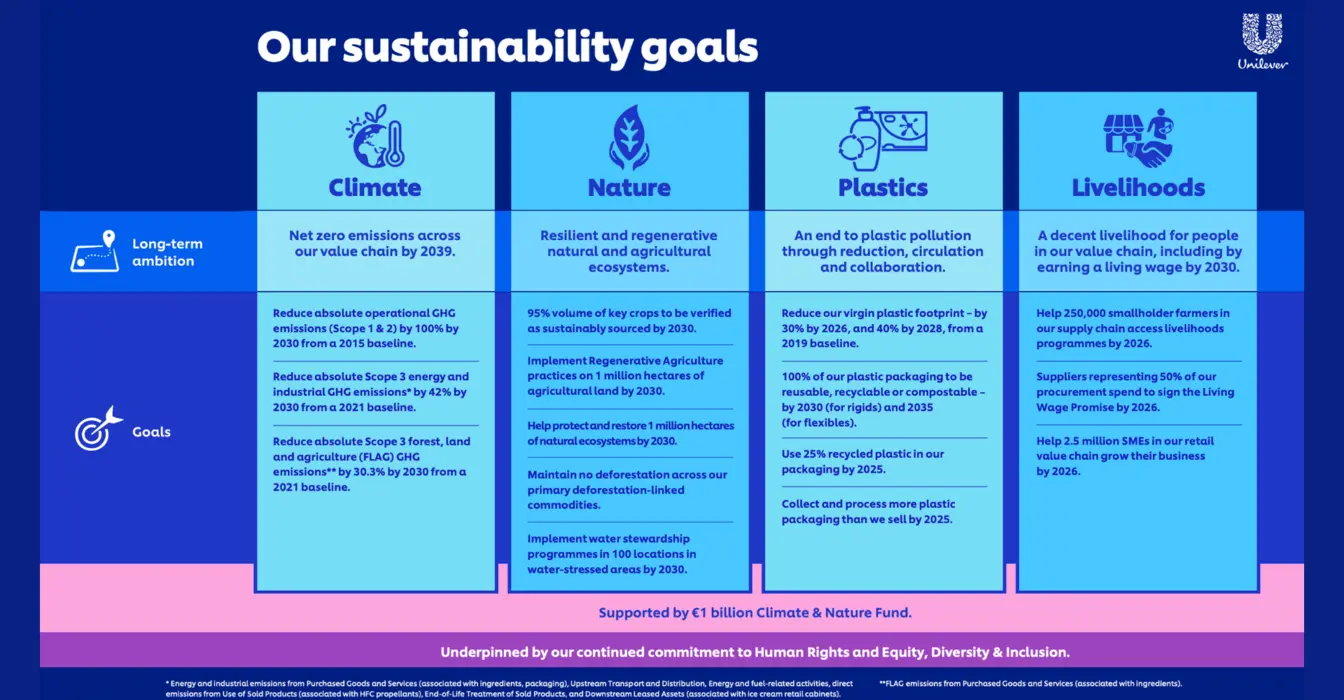
Unilever now organizes its sustainability strategy around climate, nature, plastics, and livelihoods. The earlier Sustainable Living Plan belongs to a previous strategic period and should not be presented as the current framework. By the end of 2025, Unilever reported a 77% reduction in operational Scope 1 and 2 greenhouse gas emissions from its 2015 baseline, while continuing to focus on harder Scope 3 reductions across suppliers, ingredients, packaging, and logistics. The lesson is scale: a corporate sustainability narrative has to be supported by operating systems and supplier programs, not only purpose-led brand campaigns.
IKEA: Accessible Green Design
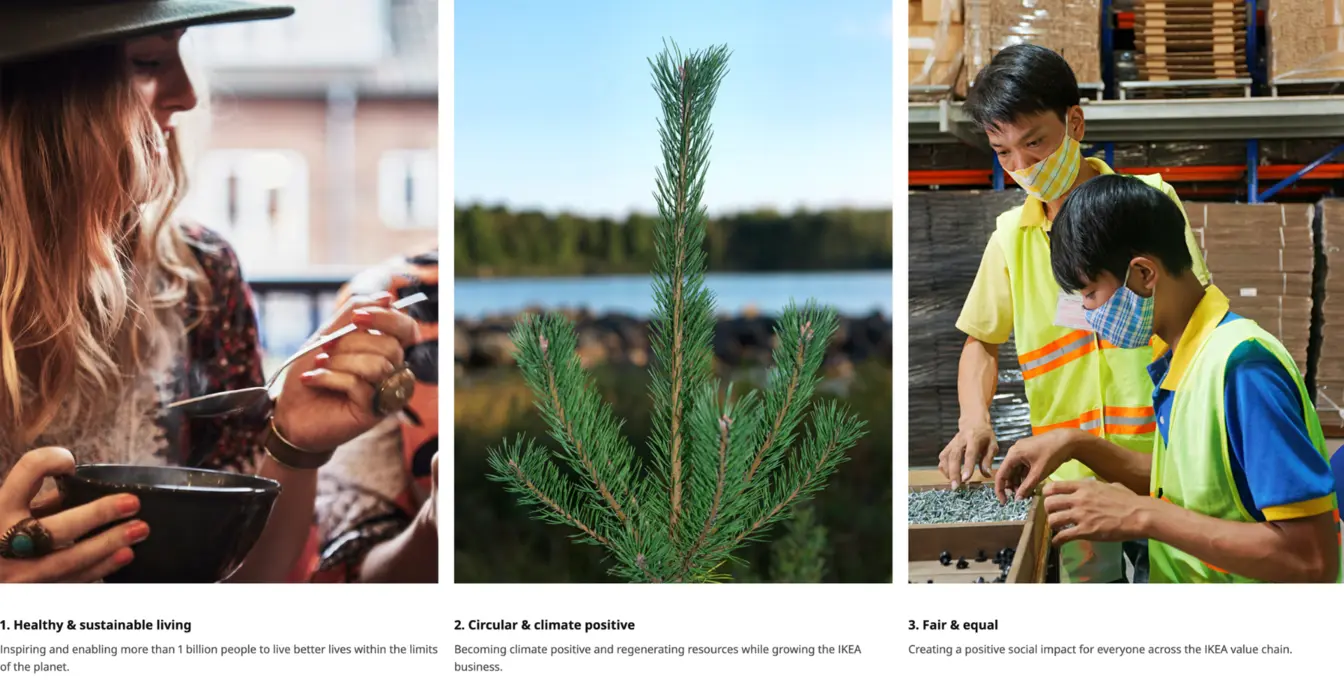
IKEA’s current sustainability strategy focuses on healthy and sustainable living, climate, nature and circularity, and fair and equal outcomes. Its updated strategy uses 2030 objectives and measurable results, including work on emissions, renewable or recycled materials, product longevity, and circular services. IKEA is a useful example because the sustainability story is tied to affordability and everyday product use rather than positioned only as a premium feature.
Sustainable Branding Trends in 2026 and Beyond
As concerns about climate change and social equity intensify, sustainable branding will evolve in several ways:
- Circular Economy Adoption: Businesses will design products for reuse, repair, or recycling, reducing the overall waste cycle.
- Deepening Stakeholder Collaboration: Companies will partner with nonprofit organizations, governments, and even competitors to foster systemic improvements that no single entity can achieve alone.
- Data-Driven Insights: Expect more rigorous metrics, potentially powered by AI or blockchain, for verifying material sources, tracking carbon footprints, and sharing progress with the public.
- Community Co-Creation: In innovative sustainable branding, brands will do more than just sell; they’ll co-create solutions with consumers, employees, and activists to address pressing global issues.
How to Put Sustainable Branding Into Practice
Learning what is sustainable branding is only step one. Putting it into practice requires thoughtful planning, investment, and transparency across every aspect of your operation. Businesses prepared to embrace these changes are discovering that it’s not just about mitigating risks, it’s also about opening new market possibilities, fostering consumer goodwill, and making a meaningful difference.
Sustainability can strengthen a brand when customers see a credible connection between the claim and the way the business operates. It does not guarantee loyalty or growth. The more useful goal is to make environmental and social information specific enough for customers to understand and for the company to defend. A clear content strategy can organize that evidence across product pages, reports, campaigns, and educational content, while a marketing consultation can help identify where the brand promise and customer experience are out of alignment.