
Polestar's marketing strategy in 2026 is built around a focused idea: make electric performance desirable through minimalist design, technology, sustainability and a premium customer experience. That positioning still reflects the brand's Scandinavian roots, but the company itself has changed materially since this article was first published.
Polestar is an independent, publicly listed Swedish electric performance car company rather than simply a Volvo subsidiary. Volvo Cars remains a strategic partner and, after 2026 debt-to-equity conversions, is expected to hold about 19.9% of Polestar, while Geely continues to support the company's development and funding. Polestar's March 2026 capital update explains that structure.

Polestar Marketing Strategy at a Glance
- Positioning: premium electric performance expressed through design restraint, technology and sustainability.
- Brand system: a consistent brand strategy keeps product design, retail, digital experience and environmental messaging pointed at the same idea.
- Customer experience: online research and configuration are now supported by a much larger partner retail network rather than a pure direct-to-consumer model.
- Sustainability proof: Polestar publishes Life Cycle Assessments for its cars instead of relying only on broad environmental claims.
- 2026 growth plan: more retail locations, a larger model range and a stronger focus on Europe.
1. Design-Led Brand Positioning
Polestar's visual language is one of its clearest marketing assets. The brand uses minimal interfaces, sparse retail environments, product-first photography and restrained copy to create distance from more traditional automotive advertising. Polestar's own brand description still centers minimalistic design, technological innovation and sustainable solutions. Polestar's company overview presents design as a tool for making the desirable choice and the more sustainable choice the same.
That consistency matters because the EV category is crowded with similar claims about range, technology and sustainability. Polestar's marketing becomes more distinctive when those claims are expressed through a repeatable design system rather than another list of specifications.
2. From Direct Sales to a Larger Retail Network
The original version of this article described Polestar as primarily direct-to-consumer. That is no longer accurate. Polestar has been shifting to an “active selling” model and adding retail partners and physical sales points. By the end of the first half of 2026, the company said its retail network had reached 235 sites, up 39% year over year. Polestar's July 2026 sales update also reported 30,423 retail sales in the first half of the year.
For marketing, the important point is that digital and physical channels now have to reinforce one another. Customers may research, compare and configure online, then rely on a retail partner for demonstration, test drive, finance or delivery. Strong web development and integrations matter when pricing, configuration, inventory, lead handling and local retail experiences have to work as one system.
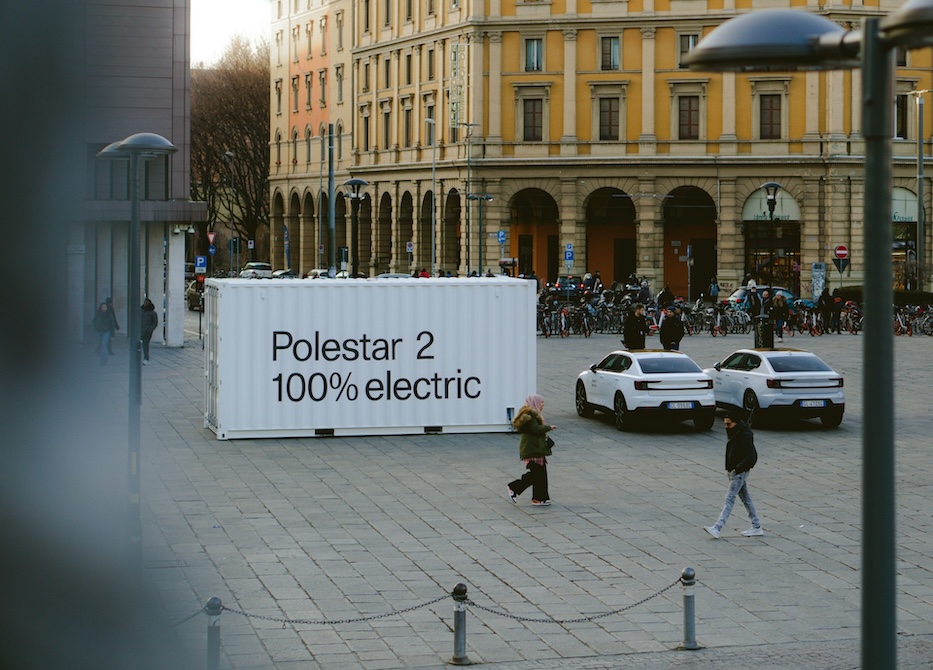
3. Product Experience as Marketing
Polestar's cars are designed to carry the brand story themselves. Google-based infotainment, digital interfaces, performance software and unusual design decisions such as Polestar 4's camera-based rear view give the company tangible product stories that generate discussion beyond conventional advertising.
The customer still has to understand those features quickly. That makes interaction design relevant to the marketing experience: configuration, in-car controls and digital explanations all influence whether advanced technology feels intuitive or unnecessarily complicated.
4. Sustainability Through Transparency
Polestar's sustainability messaging is stronger when it shows evidence rather than asking audiences to accept generic “green” positioning. The company publishes Life Cycle Assessments for its models and says it recalculates the carbon footprint for new model years. Polestar's LCA library covers the Polestar 2, 3, 4 and 5 and explains the difference between cradle-to-gate and cradle-to-grave emissions.
The brand also continues to frame climate neutrality as a long-term product challenge. Its current targets include halving greenhouse-gas emissions per vehicle sold by 2030 and reaching climate neutrality across the value chain by 2040. Those commitments create a more specific story than simply saying EVs are sustainable.
5. Partnerships, Community and Brand Credibility
Polestar relies on partnerships for technology, components, manufacturing, service and brand credibility. Its public partner list includes companies such as Google, Brembo, Öhlins, Bcomp and Circulor. That collaboration model supports a brand position built around specialist engineering rather than claiming every capability is developed internally.
The same logic applies to community and events. Test drives, product launches, Polestar Spaces and owner content turn an unfamiliar EV brand into something customers can experience rather than only research. The goal is not mass familiarity at any cost; it is enough proof and access to make the premium positioning credible.
For comparison, Porsche's marketing strategy uses heritage and controlled exclusivity, while BMW's marketing strategy combines broader scale with premium performance cues. Mercedes-Benz marketing provides another useful contrast in how a much older luxury brand manages technology and status.
Polestar's 2026 Growth Strategy: Europe, Retail and New Models
Polestar's 2026 marketing context is shaped by expansion and constraint at the same time. The company reported record first-half retail sales of 30,423 cars, while its retail network reached 235 sales sites. It is also in the middle of its largest planned model expansion, with Polestar 5 deliveries beginning in 2026, a new Polestar 4 SUV variant, a successor to Polestar 2 planned for 2027 and Polestar 7 scheduled for 2028. Polestar calls this its largest model offensive to date.
At the same time, the company has increased its focus on Europe after a U.S. regulatory decision limited future model-year sales under the Connected Vehicle Rule. Polestar said Europe represented close to 80% of its retail volume in June 2026. That makes regional marketing, retail expansion and local manufacturing strategy more important than a single global playbook. Polestar's June 2026 update explains the shift.
The broader marketing lesson is that Polestar's brand is strongest when its messaging stays consistent while the route to market changes. Minimal design, electric performance and sustainability remain the core promise, but the business model around that promise is becoming more retail-led, more regionally focused and supported by a wider product portfolio.

.webp)