Creating a compelling brand requires more than good visuals or catchy slogans. A major part of that work is brand personality: the set of human-like traits that make your business resonate with customers on an emotional level. If you’ve ever wondered, “What is brand personality?” or sought advice on how to have a strong brand personality, you’re in the right place. This guide will walk through the five dimensions identified by marketing scholar Jennifer Aaker in her 1997 brand personality research: sincerity, excitement, competence, sophistication, and ruggedness, and explain how they can help describe a brand’s character. Along the way, you’ll learn how to find your brand’s personality so you can connect authentically with your audience, stand out from competitors, and anchor your marketing in something more meaningful than mere aesthetics.
What Brand Personality Means
Brand personality is the overarching term for those human-like qualities consumers associate with a business. Imagine your brand as a person attending a party: Does it come across as the warm, caring friend offering thoughtful advice? Or is it the daring soul who energizes the room with bold stories? These impressions matter because emotional associations can influence how people interpret brands, especially when competing products or services have similar functional attributes. What is brand personality if not a unifying force behind consistent marketing messages, product design choices, and social media interactions?
When done right, brand personality clarifies your identity in a saturated marketplace. In a world full of similar items or services, an emotional bond can tip buying decisions. Moreover, having a well-defined persona sets a template for future decisions. Are you the laid-back brand that jokes with customers, or the sophisticated entity that elevates every aspect of presentation? Once you’ve locked in your persona, you can ensure coherence across channels and avoid the confusion that arises from inconsistent brand voice and tone. That’s the essence of how to have a strong brand personality: picking traits that align with both your founding story and the emotions your customers seek.
Why Brand Personality Matters
Finding your brand’s personality is not just a later-stage exercise; it can shape the perceptions that contribute to familiarity, preference, and loyalty when the product and customer experience support the same promise. Think of how Apple embodies creativity and simplicity, making fans eager to invest in products that match that sleek, forward-thinking aura. Similarly, consider how Jeep leans into ruggedness, so customers trust it for off-road adventures. In each case, brand personality cements an intangible promise that shapes user perceptions. Sincerity might lead a small bakery to present itself as a friendly, community-oriented spot, while a cutting-edge VR startup might exude excitement to spark investor interest.
Without a clear brand personality, you risk sending mixed signals. Maybe your social media jokes around with internet memes, but your packaging looks stuffy. Customers sense that mismatch and get confused about who your brand “really is.” Clear personality fosters confidence, reinforcing that people can rely on you for the same vibe in every interaction. If your brand is about competence, customers expect top-tier services that never break, while an excitement-driven brand should consistently thrill fans with new features or bold limited-editions. It is not about isolated stunts. The personality has to remain recognizable in the experiences and messages customers encounter over time.

Aaker’s Five Brand Personality Dimensions
1. Sincerity
Sincerity revolves around warmth, honesty, and a down-to-earth approach. Brands that adopt sincerity often highlight transparency, like behind-the-scenes videos, heartfelt storytelling, or personal notes in their packaging. This fosters trust in a world where many consumers crave genuine connections rather than slick marketing. A food and beverage brand such as a coffee shop that names local farmers, or a skincare line that is open about ingredient sourcing, fits this profile; think of the Clean at Sephora line. If sincerity feels right, remember that consistent kindness and authenticity remain essential. If your brand suddenly adopts a sarcastic tone or appears secretive, you risk betraying the trust that sincerity builds. Maintaining a welcoming voice across social platforms, product labels, and customer support ensures you harness the power of sincerity fully.
2. Excitement
Excitement stands out for its energetic, edgy, or playful character. Think of brands that host spontaneous events, drop bold campaigns, or constantly generate hype around the newest updates. By nature, excitement appeals to younger audiences or risk-takers who enjoy something fresh. An athletic footwear brand might champion adrenaline-fueled stunts, vibrant color palettes, and a dynamic brand voice. Consistency, yet again, is key. Don’t announce a rebellious new line one month, then switch to a formal, corporate tone the next. Staying devoted to a lively, fearless persona helps you maintain relevance for those seeking fun. Perfect for startups that want a splashy entrance or existing companies that aspire to reposition themselves as thrilling trendsetters.
3. Competence
Competence emphasizes intelligence, reliability, and a track record of success, which can be especially relevant for brands in finance, technology, or professional services. Customers lean on these businesses for solutions to tricky problems, so the brand voice should highlight expertise and clarity. The visual system may be restrained when that supports clarity and trust, but no particular color palette creates competence on its own. Building a presence in the competence dimension often involves sharing case studies, data-backed achievements, and endorsements from respected experts. But watch out for becoming too sterile; a human touch, like behind-the-scenes glimpses of your skilled team, can help maintain approachability. Competence does not require coldness. It means demonstrating credibility through thoughtful, factual communication and dependable delivery.
4. Sophistication
Sophistication encapsulates elegance, high-end appeal, and refined aesthetics. Luxury fashion brands, upscale hotels, or premium beverage lines frequently leverage this dimension. From the color scheme (such as black, gold, or silver) to word choice (focusing on quality, heritage, or exclusivity), every detail should exude an air of refined taste. If your brand’s mission is to cater to discerning customers, your digital presence might feature clean typography, high-quality photography, and minimal design flourishes. Subtlety can be more effective than loud statements when aiming for a polished brand. Research on exclusivity, including this Chicago Booth discussion of price and exclusivity, shows how those cues can affect perceived value. The product and service still have to support the elevated positioning. A mismatch, like a poorly packaged item, erodes the sophisticated aura.
5. Ruggedness
Ruggedness resonates with those who prize durability, outdoorsy charm, and a sense of braving tough conditions. Car companies like Ford, known for off-roading, or outdoor gear manufacturers and denim brands often lean on ruggedness, employing nature-oriented visuals and earthy colors. Storytelling might emphasize strength, reliability, or readiness for adventure. If you want to channel a rugged persona, let your brand photography and social media reflect real-world usage, like hikers conquering remote trails or mechanics tuning a vehicle for extreme terrains. That sense of authenticity cements the brand’s promise. Still, be mindful that ruggedness can come across as overly macho or limiting if you exclude audiences who prefer a more inclusive angle. Striking the right balance ensures you appeal to folks longing for an adventurous spirit.
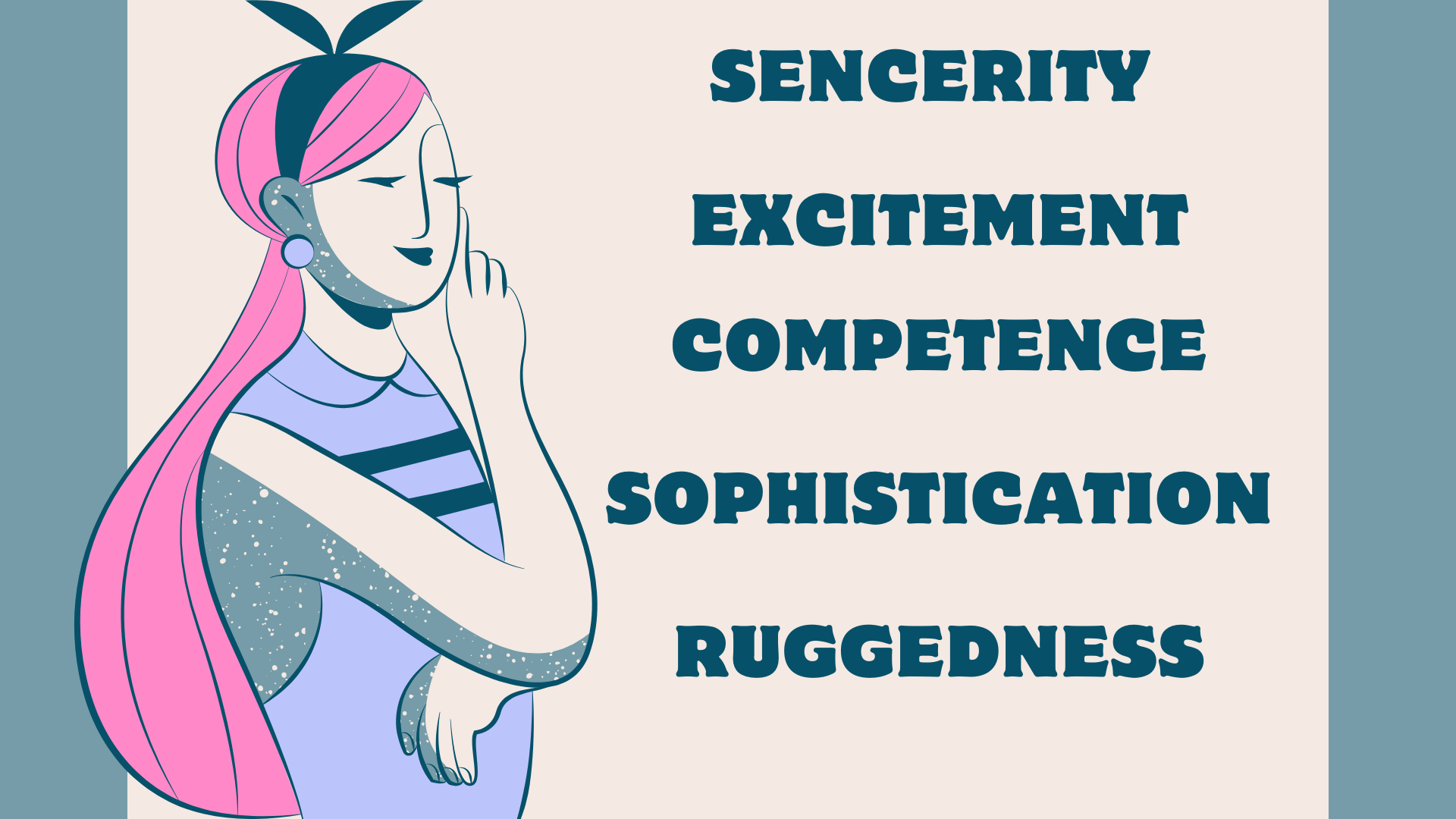
Aaker’s scale is a useful framework for thinking about brand associations, but it should be treated as a starting point rather than a requirement that every company fit neatly into one dimension. The original study developed the five dimensions from U.S. consumer research, so teams should test the language and associations with their own audience, category, and market before turning them into permanent brand rules.
How to Find Your Brand’s Personality
Reflect on Your Origins and Mission
Identify why you launched the brand in the first place. Are you passionate about social impact, leading you to adopt sincerity? Do you have a groundbreaking product that suits a more exciting or competent aura? Maybe your brand was born from a desire for premium craftsmanship, pushing you toward sophistication. The motivations at your inception hold clues to a personality that feels natural rather than forced. Connect those traits to your broader brand strategy so they reinforce the position you want to own.
Research Your Audience
A brand personality should mirror not just your desires but also your audience’s vibe. Survey or talk with potential customers to find out what appeals to them. Structured brand research can also reveal the words customers already use to describe your business and category. For instance, if they’re outdoors enthusiasts, a rugged dimension might be compelling. If they prefer curated elegance, perhaps a sophisticated approach works. This synergy ensures you don’t adopt traits at odds with consumer expectations.
Choose Adjectives and Test Them
A common technique is listing adjectives such as “friendly,” “inventive,” or “edgy” and grouping them under the five main categories. Then, try building hypothetical marketing messages that incorporate these traits. Show them to colleagues or potential customers and observe if they resonate. If people find your words or visuals convincing, you’re on track; if they seem confused, refine further.
Compare With Competitors
If the competition in your sector is uniformly serious, being playful can help you stand out. Conversely, if everyone is flamboyant, being calm and polite might carve a unique identity. Studying how others align with brand personality traits reveals gaps or opportunities. But remember that simply copying a competitor’s vibe undermines authenticity. The key is differentiating in a way that complements your mission and consumer needs.

Maintaining Brand Personality Across All Touchpoints
A brand’s personality can’t be strong if it only appears in certain places, like social media. Your website layout, email tone, store ambiance, product packaging, and customer support approach should all reinforce the same character. A coherent visual identity helps translate those traits into repeatable design choices. If your brand is exciting, maintain that energy through vibrant social media marketing and engaging event promotions. If your brand centers on competence, keep language and design crisp, concise, and data-driven. This uniformity extends to how you handle complaints or respond to crises. Remain calm and knowledgeable if competence is your brand’s hallmark, or react with empathy if sincerity is key.
Learning how to have a strong brand personality means ensuring it isn’t overshadowed by contradictory experiences. For instance, an overtly sophisticated brand might lose credibility if it spams casual memes or uses discount-laden marketing that feels cheap. Meanwhile, a brand built on sincerity could confuse followers if it unexpectedly runs a sarcastic ad campaign. Keep your brand’s main trait as your north star, letting it inform every operational detail. It might sound strict, but building trust often hinges on never deviating from the personality your audience learned to love.
Evolving Brand Personality Without Losing Identity
Brand personalities can shift as companies grow, but abrupt changes may alarm loyal customers. Ideally, changes should be incremental and transparent. For example, a small handmade soap brand might have started as purely sincere and down-to-earth, but after scaling, it could decide to incorporate competence to showcase advanced lab testing or be slightly more sophisticated in packaging. The trick is weaving these new traits into the existing core so the transformation feels organic. Fans who discovered you for your sincerity still want to see glimpses of that genuineness, even if the brand now includes polished design cues.
If a large rebrand is needed, such as after a merger or major change in focus, communicating the rationale to your audience can help preserve continuity. A brand that was once playful might become more refined if it has matured or entered an upscale market. Make sure to keep certain familiar elements, like your brand’s color palette or tone of humor, to show continuity. Reinforcing that you’re the same brand at heart, only evolving to serve customers better, lessens confusion and fosters acceptance of the newer direction. Think of brands like IKEA they may have rebranded but overall they still pose the same persona of reliable, convenient and simple designs that anyone can own.
Putting Your Brand Personality Into Practice
By now, you should have a clearer understanding of what is brand personality and why it’s essential for building meaningful customer relationships. Each dimension (sincerity, excitement, competence, sophistication, and ruggedness) speaks to a different set of emotional triggers that shape how people perceive and interact with your brand. Figuring out how to find your brand’s personality involves introspection about your mission, audience desires, and competitor landscapes. It also requires testing different descriptors and ensuring consistent application across channels.
If you’re wondering how to have a strong brand personality, remember the power of consistency, authenticity, and alignment with real consumer needs. A brand that’s cohesive and genuine can become an emotional touchstone for its audience, cultivating loyalty, advocacy, and a unique position in the market. On the other hand, a brand that ignores or contradicts its stated traits will struggle to maintain trust. In a world full of product similarity, brand personality might just be the edge you need, conveying emotional value and forging a sense of community around your offers. Use the five trait dimensions as a starting framework and personalize them to suit your story, your customers, and your aspirations. When the brand persona truly fits, your audience can recognize it across touchpoints. If your team needs help turning positioning and research into a practical identity system, contact Brand Vision to discuss the strategy and rollout.
FAQ: Brand Personality
What is brand personality and why is it important?
Brand personality refers to the human traits people associate with a brand. A clear personality can make the brand easier to recognize and can support emotional connection when the wider customer experience reinforces the same traits.
How do I choose the right brand personality for my business?
Start by understanding your brand’s mission, values, and audience expectations. Then choose traits that align emotionally with your customers and support your long-term brand goals.
Can a brand have more than one personality trait?
Yes. Brands can combine traits, and one may be more prominent than the others. The important part is that the traits reinforce each other rather than create contradictory expectations.
What are the five brand personality dimensions?
Aaker’s five dimensions are sincerity, excitement, competence, sophistication, and ruggedness. They are broad categories for studying brand associations, not mandatory personality types every company must adopt.
How can brand personality support customer loyalty?
A recognizable personality can support familiarity and trust when it is reinforced by a consistent customer experience. Personality alone cannot create loyalty if the product, service, or claims fail to meet expectations.