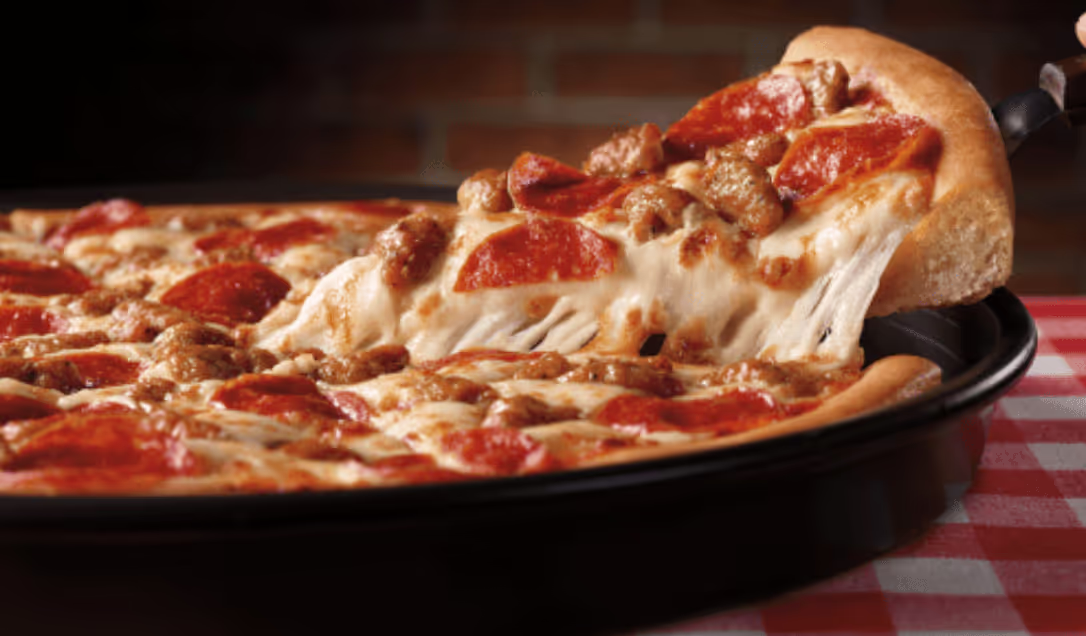
Pizza Hut's marketing strategy combines a familiar global identity with local menu decisions, digital convenience, loyalty mechanics, and decades of brand memory. Yum's 2025 company materials listed Pizza Hut at more than 19,000 restaurants in 108 countries, giving the brand enough scale that consistency and local relevance have to work together.
That makes Pizza Hut a useful food and beverage marketing case study. The strongest parts of the system are not isolated campaigns. They are repeatable cues that make ordering easier, keep the brand recognizable, and give customers reasons to come back.
1. Global Brand, Local Menu Decisions
Pizza Hut operates with one recognizable brand while letting individual markets adapt the menu to local tastes, dietary preferences, and eating occasions. That approach allows the company to keep the red-roof identity and core pizza proposition without assuming every country wants the same toppings or formats.
The marketing lesson is simple: localization should change the offer where customer behavior actually differs, not create a new identity every time the market changes. The parent brand supplies recognition, while local menu choices supply relevance.

2. Convenience Is Part of the Brand Promise
Pizza has always competed on convenience as well as taste. Pizza Hut's app and website make delivery and carryout central to the experience, and its current app page emphasizes ordering, saved orders, deals, and Hut Rewards. The existing Canadian Pizza Builder also lets customers create their own pizza.
A broad UI UX design system matters because the ordering journey has to work across discovery, customization, checkout, delivery, and repeat purchase. More specifically, interaction design shapes the small steps that make a builder, cart, or rewards flow feel easy rather than frustrating.
Pizza Hut is not the only pizza brand to build around delivery and digital ordering. Brand Vision's Domino's success story provides a useful category comparison because Domino's made technology and delivery speed central to its own positioning.
3. Recognition, Rewards, and Nostalgia
Pizza Hut's red roof, Pan Pizza, dining-room memories, and Stuffed Crust give the brand a large store of recognizable cues. Those brand visuals matter because a long-running restaurant brand can use familiarity as an asset instead of redesigning itself around every short-term trend.
That same logic appears in loyalty. Pizza Hut updated Hut Rewards on March 15, 2026. Its current Hut Rewards FAQ says members earn 10 points for every eligible $1 spent and can access challenges, reward choices, and app-only exclusives. The reward system turns convenience into a reason to return, rather than treating every order as a one-off transaction.

Nostalgia also creates marketing material when it is connected to something customers still recognize. Brand Vision's examples of nostalgic marketing campaigns show why familiar cultural references can work when they support a current brand experience instead of simply recycling the past.
4. BOOK IT! Shows the Value of Long-Running Brand Programs
Pizza Hut's Book It relationship with reading has lasted for decades. The program is not merely a historical campaign: the official BOOK IT! program is enrolling schools for the 2026-27 school year, with students earning a Personal Pan Pizza for meeting reading goals.
Programs like BOOK IT! create a different kind of brand memory from a limited-time advertisement. They connect the product with a recurring family or school experience. That does not make every community program equally valuable, but it shows how a consistent initiative can stay culturally recognizable long after a single media campaign ends.
5. Product Innovation Gives the Brand New Reasons to Talk
Pizza Hut's Original Stuffed Crust is one of its clearest product innovations. Pizza Hut's own history dates the launch to 1995. The product became recognizable enough to support anniversary promotions and later crust variations without replacing the core Pizza Hut identity.
Menu innovation works best when it creates a distinct reason to choose the brand. New crusts, formats, sides, and limited-time products can generate attention, but the most durable ideas become part of the brand memory rather than disappearing after the promotion ends.

6. What Businesses Can Learn From Pizza Hut
Pizza Hut's marketing strategy works because the same few ideas repeat across menu, ordering, rewards, campaigns, and brand assets. The company localizes where customer preferences differ, but it keeps enough familiar cues for the brand to remain easy to recognize.
- Protect one clear brand promise. A branding system should make the core identity recognizable even when products or campaigns change.
- Design convenience into the customer journey. A strong website should make the primary action obvious and reduce friction before checkout or booking.
- Use loyalty to support repeat behavior, not just discounts. Rewards work best when they make the product easier or more valuable to buy again.
- Build brand memory through repeatable programs and recognizable assets rather than relying only on new campaign concepts.
- For physical locations, support discovery with local SEO so menus, hours, locations, and business information are easy to find when customers are ready to order.
- Use brand strategy to decide what should remain consistent and what can adapt by market, channel, or customer segment.
- Use SEO services when search demand around products, locations, and customer questions should continue working beyond paid campaigns.
Pizza Hut's strongest lesson is not that every company needs nostalgia or a rewards app. It is that growth becomes easier when brand recognition, customer experience, and repeat purchase support one another.
If you want to connect those pieces around one clearer customer journey, contact Brand Vision to discuss the priorities.