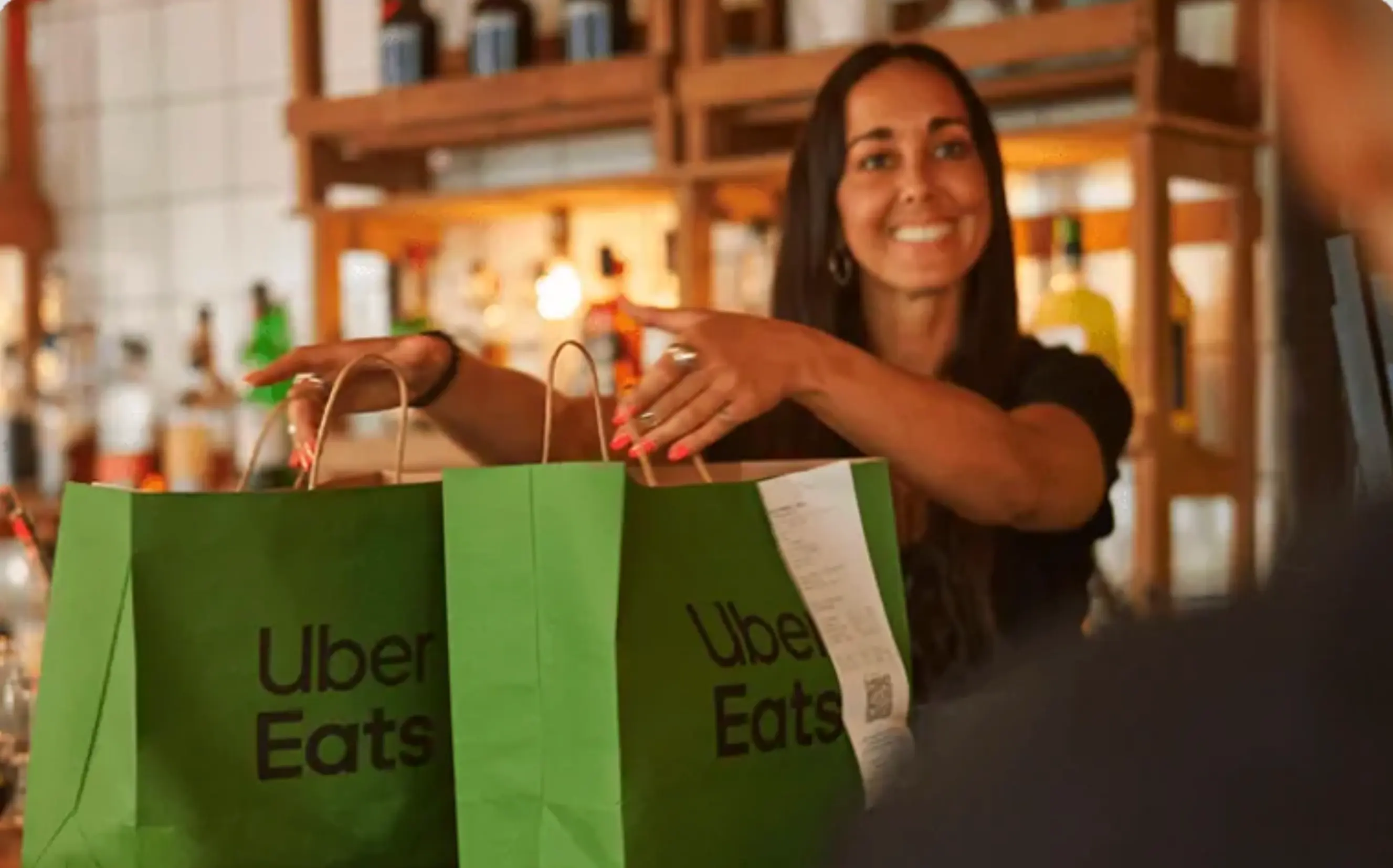
Uber’s marketing strategy starts with utility, then layers culture and media on top. The same platform connects riders, earners, merchants, restaurants, grocery shoppers, and advertisers, so Uber can market both an everyday service and a high-intent audience. Uber Eats adds a more playful consumer layer through food, celebrities, sports, collaborations, and seasonal campaigns, while the core Uber brand keeps the promise of getting people and things where they need to go.
Brand Vision uses Uber as an independent case study, not as an example of work our agency created for the company. For a branding agency, the useful lesson is how a clear platform promise can stretch across products without losing the master brand.
At a glance
- Interbrand lists Uber at a brand value of about $12.8 billion and says the company operates in 75 countries. Interbrand
- Uber’s platform strategy depends on matching consumer intent with riders, couriers, merchants, and other providers through shared fulfillment infrastructure. (Uber)
- Uber Advertising said it passed a $1.5 billion annual revenue run rate in Q1 2025, up more than 60 percent year over year, while expanding Ride Offers across seven countries. (Uber)
- Trade coverage described the 2025 Uber Eats Super Bowl appearance as the brand’s fifth consecutive year in the game, using a celebrity-heavy football conspiracy premise.
- GWI’s “Gen Uber” research found that 81 percent of the profiled audience said they trust Uber. That finding describes the study sample, not every Uber user worldwide. (GWI)
1) Platform-first Uber strategy: monetize movement
At the core of Uber’s strategy is a marketplace that matches consumer intent with available providers. Uber’s 2021 engineering description of its Fulfillment Platform explains how the same infrastructure can support trips, deliveries, and additional verticals at large scale. (Uber) Once the platform has frequent, high-intent use, Uber can also sell media around those moments through its advertising business.
- The Fulfillment Platform handles more than a million concurrent users and billions of trips per year, enabling new products to scale quickly. (Uber)
- Uber’s business model is built around liquidity and a flywheel where more users attract more drivers and merchants, which in turn improves service quality.
- This infrastructure gives Uber’s technology marketing an unusual advantage: the audience is already using the product when many messages appear.
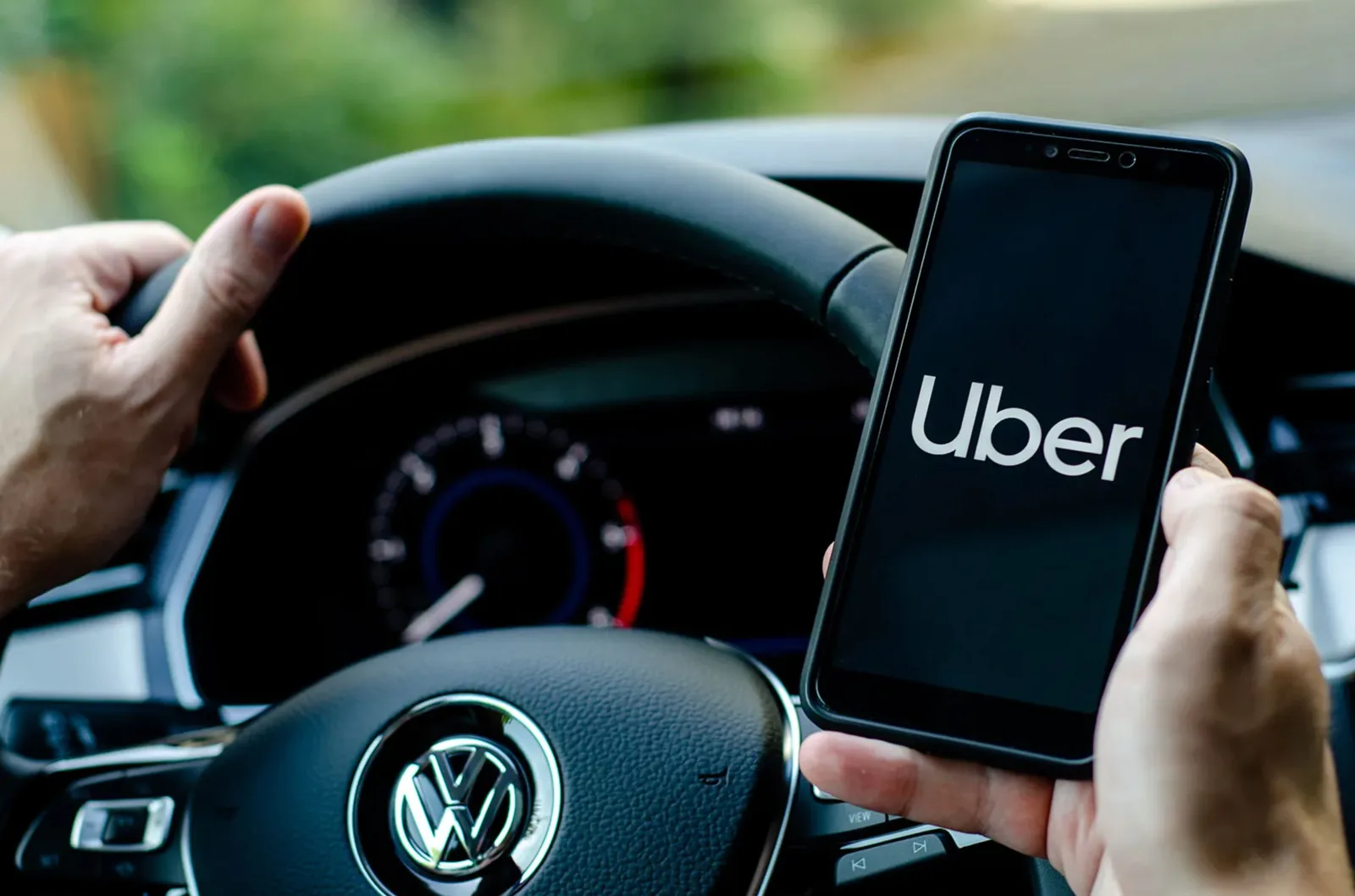
2) Brand positioning: from ride-hail app to everyday utility
Interbrand’s ranking says Uber’s brand value rose 38 percent year over year and lists operations in 75 countries and 14 hubs. (Interbrand) Uber’s branding increasingly frames the company as a broader everyday platform, with rides, Uber Eats, business products, and membership reinforcing one master brand. The brand strategy lesson is that category expansion works better when new offers still connect to a recognizable core promise.
- The master brand “Uber” covers ride, delivery, business and freight, with “Eats” carved out as a distinct but connected sub-brand. (Uber)
- Uber Advertising materials describe the audience as highly connected, on-demand oriented and unusually trusting of Uber, making it a strong brand platform. (GWI)
- This positioning allows Uber campaigns to balance emotional storytelling with simple utility (“press a button, get this thing right now”).
3) Uber marketing strategy: performance plus pop culture
Uber’s marketing strategy mixes always-on acquisition and retention work with high-profile campaigns that create broader attention. App acquisition, CRM, membership, localized offers, and marketplace promotions keep transactions moving; Super Bowl advertising, partnerships, and cultural moments give the brands a larger creative stage. That combination is a useful example of integrated marketing: brand and performance activity support the same platform rather than operating as unrelated programs.
- Uber invests in insight work around its users; GWI’s case study highlights trust, emotional connection and a strong on-demand mindset among Uber’s audience. (GWI)
- Creative platforms like “Tonight, I’ll be eating” (for Uber Eats) and Super Bowl storytelling unify local campaigns under recognizable brand ideas.
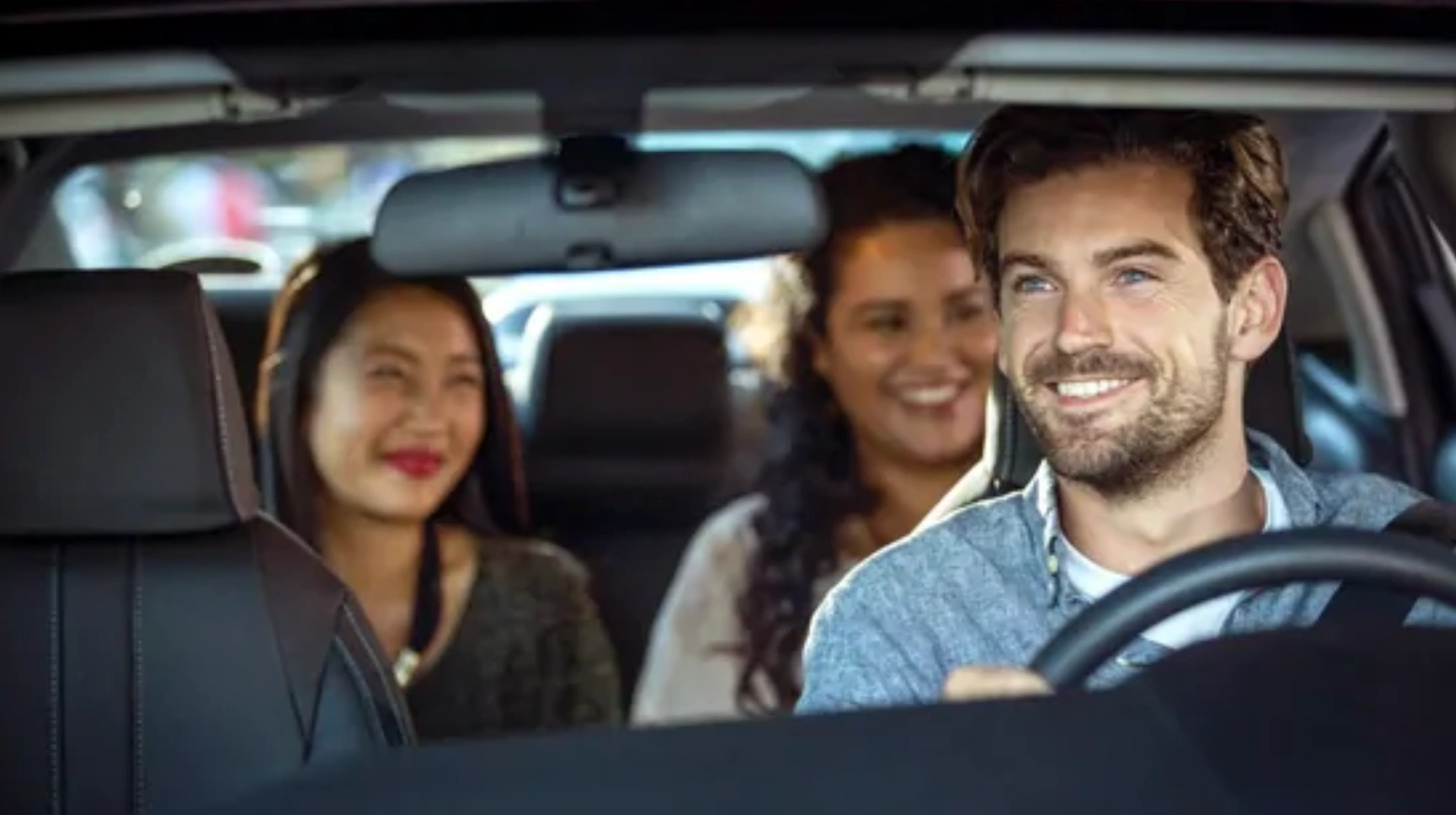
4) Uber Eats marketing: Super Bowl as the annual stage
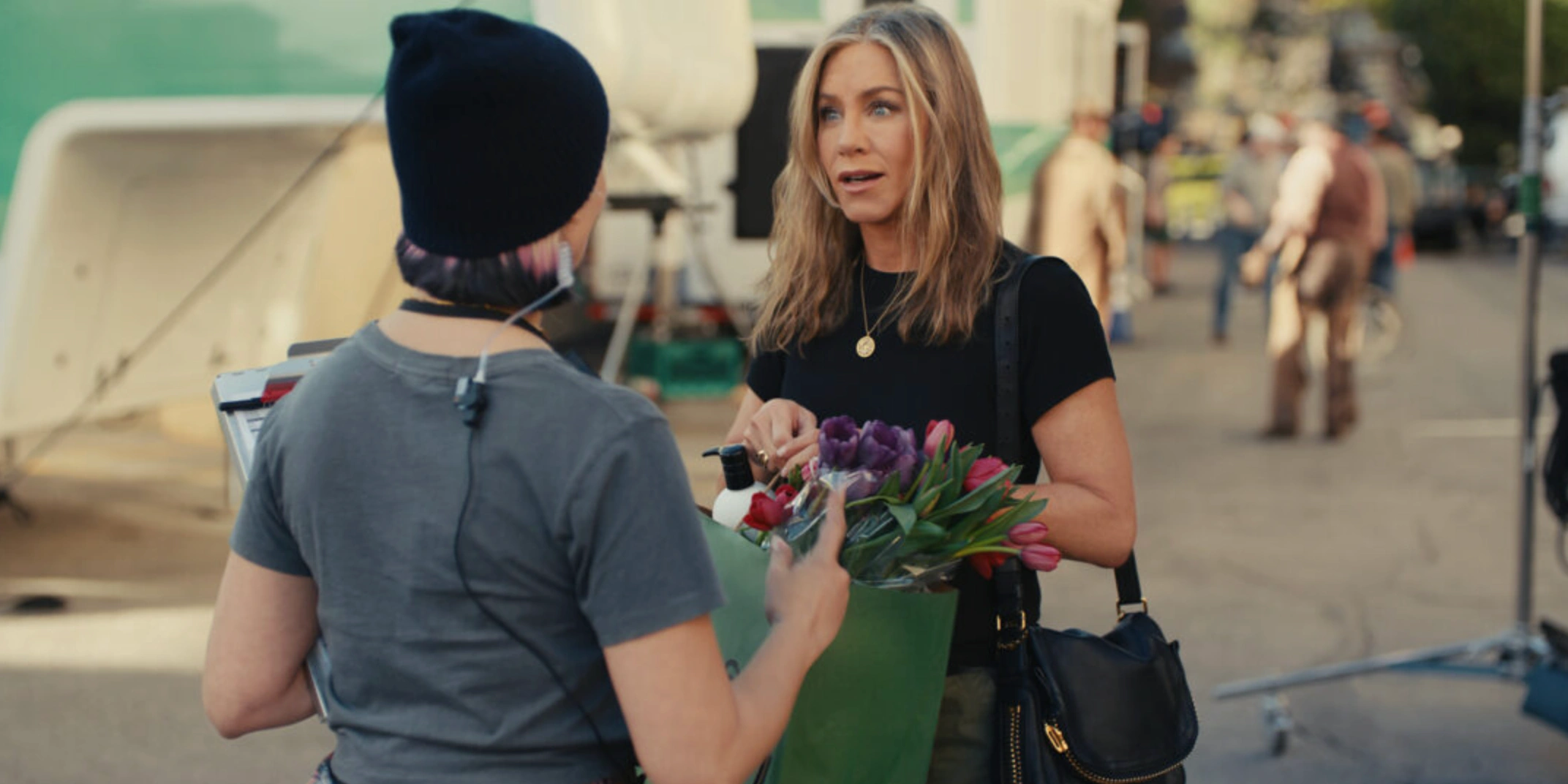
Uber Eats has turned the Super Bowl into its biggest recurring stage. The brand has run five consecutive Super Bowl ads, each one built around a wacky premise and a celebrity ensemble, with the 2025 spot described by Uber’s global head of creative as “a love letter to football fans.” (Sporting News) In 2024, the “Don’t Forget Uber Eats” campaign showed Jennifer Aniston and David Schwimmer forgetting they were ever in Friends, the Beckhams fumbling Spice Girls references, Jelly Roll trying to scrub his tattoos, and Usher forgetting he just played halftime, all to dramatise that “you have to forget something to remember Uber Eats.” (Uber)
- Uber Eats uses the Super Bowl as its annual major stage, running five consecutive ads built around high-profile, wacky premises.
- Celebrity ensembles: Campaigns feature celebrity humor (e.g., Jennifer Aniston, the Beckhams) and a central, memorable theme.
5) Uber campaigns built around cultural moments
Beyond the Super Bowl, Uber campaigns regularly piggyback on cultural flashpoints. The Beckham teaser for the 2024 Super Bowl ad re-staged their viral documentary scene about being “working class,” this time joking about “Hockey Ball” and “Jessica Aniston” to tee up the reveal. (New York Post) In Spain, an Uber Eats campaign around El Clásico turned Iker Casillas and Gerard Piqué’s rivalry into virtual restaurants selling “Las Orejonas” and “Las Manitas,” referencing European Cups and a famous 5–0 win. (Diario AS)
- These Uber campaigns use self-aware humour and local football lore to feel native to each market rather than copy-pasted. (Diario AS)
- Social teasers and influencer commentary extend TV spots into multi-week conversations.
- The transferable lesson is not to chase every meme. Brand research can identify which cultural references a market actually recognizes before creative teams localize the campaign.
6) Uber Eats collaborations: candy, horror films and celebrity menus
Uber Eats collaborations are where the brand really plays with its “get almost anything” proposition. In 2023, Mars launched a new Skittles campaign with Uber, where Skittles were highlighted across Uber and Uber Eats via journey ads, post-checkout placements and an in-app storefront: the first collaboration of its kind for Mars. (Convenience) For Halloween, the “Horror Codes” campaign partnered with Hollywood studios to license iconic horror film quotes, turning them into promo codes for candy and daily word puzzles inside the app. Its award entry reports more than 96 million impressions, two million code redemptions by Halloween and 44 percent new users to Uber Eats grocery and retail; those figures should be read as campaign-submission results rather than independent measurement.
At a local level, Uber Eats collaborations include a Maya Jama “Revive and Thrive” comfort-food menu in the UK and limited-edition virtual restaurants by Casillas and Piqué in Spain, both designed to plug into celebrity fandoms. (The Sun)
- Uber collaborations with brands like Skittles and major studios turn the app into a playground for themed grocery and candy experiences.
- Celebrity collaborations create short, high-impact Uber Eats collaborations that feel like “events” rather than static menu placements.
- These moves reinforce Uber Eats as the place where snacks, pop culture and on-demand convenience intersect.

7) Uber’s strategy in advertising: turning attention into a business
Uber Advertising has become a key pillar of Uber’s strategy. In June 2025, Uber announced that Uber Advertising had surpassed a 1.5 billion dollar annual revenue run rate in Q1 2025, growing over 60 percent year on year, and that its Ride Offers product is expanding across seven countries. (Uber) Ride Offers lets brands subsidise Uber rides with high-value discounts, turning promotions into literal movement.
Uber Advertising also introduced a Custom AU attention metric with Adelaide and Kantar. Uber reported that several formats scored above comparable mobile or tablet benchmarks, with post-checkout video reaching 43 percent above a mobile-video benchmark. (Uber) That is an attention benchmark, not proof that every campaign produces a specific business outcome. GWI’s Uber Advertising case study separately found that the profiled “Gen Uber” audience was highly connected and that 81 percent said they trust Uber. (GWI)
- Uber Advertising gives brands formats across the ride app, Uber Eats and in-car screens, stitched together by first-party data. (Uber)
- The Custom AU work gives advertisers a way to compare attention quality across Uber formats, while campaign-level lift or sales still need separate measurement. (Uber)
- For Uber’s advertiser customers, B2B marketing still has to explain what the format can measure and where reported results come from. Ride Offers are one example of pairing a brand message with direct rider value. (Uber)
8) Uber Eats marketing around value and grocery
Uber Eats marketing is not just about celebrities; it increasingly competes on value and grocery experience. In 2025, Uber Eats launched “Fresh Days,” offering discounts of up to 50 percent on selected fresh groceries in participating markets. (The Verge) The same grocery update introduced AI-assisted replacement suggestions, shopper photo messaging, and a Fresh Guarantee for eligible products. (The Verge) For a consumer platform, B2C and ecommerce marketing has to make the operational experience support the same value promise as the campaign.
- Value-driven Uber campaigns like Fresh Days give users reasons to open Uber Eats for weekly shops, not just restaurant orders.
- Features such as AI substitutions and freshness guarantees address pain points that might otherwise push users back to stores. (The Verge)
- For Uber’s strategy, grocery is a way to grow order frequency and defend against competitors in the “almost anything” delivery space.
FAQ
What is the core Uber marketing strategy in simple terms?
Tie a powerful marketplace and movement platform to culture-first Uber campaigns and Uber collaborations, so that Uber and Uber Eats are both the easiest way to move and the most entertaining way to order.
How does Uber Eats marketing differ from Uber ride marketing?
Uber ride marketing leans more into safety, reliability and everyday utility, while Uber Eats marketing focuses on food culture, humour, celebrities and seasonal stunts like Super Bowl spots and Halloween experiences.
Why does Uber spend so much on Super Bowl ads?
The Super Bowl gives Uber Eats a concentrated national attention window for a large creative idea. It can reinforce familiarity and generate follow-on content, but the article does not have evidence to isolate how much that single event contributes to later orders.
How important is Uber Advertising to overall Uber strategy?
Uber said its advertising business passed a $1.5 billion annual revenue run rate in Q1 2025 and grew more than 60 percent year over year. That makes advertising a meaningful adjacent business, but the cited source does not establish its long-term profit contribution relative to rides or delivery.
How Businesses Can Apply Uber’s Playbook
The transferable lesson is to connect utility, distribution, and creative attention instead of treating them as separate strategies. Start with the job customers already hire the product to do, then decide which cultural moments, partnerships, and channels genuinely strengthen that job.
- Review brand positioning examples to see how strong brands connect a clear category idea to recognizable customer moments before adapting the lesson to your own market.
- Make the owned experience support the campaign promise. For app or service businesses, UI UX design should reduce friction between attention and action.
- If growth spans multiple US markets, a US branding agency can help keep the master brand consistent while adapting campaigns and channel execution to regional context.
Why Uber’s marketing playbook works
Uber’s marketing strategy works because the creative sits on top of a product people already use in moments of intent. Rides, meals, groceries, advertising, celebrity campaigns, and partnerships feel connected because they all reinforce movement, convenience, and access. The broader lesson is to keep the platform promise stable while changing the cultural expression around it. If you want an outside view on how positioning, experience, and campaigns fit together, contact Brand Vision.










.webp)