Successful rebranding examples are useful when they show what changed, why it changed, and what the evidence actually supports. A new logo can make an identity easier to use; a new position can give customers a different reason to consider the business. Neither automatically causes higher sales or repairs a damaged reputation.
The ten modern examples below cover work from the mid-2000s onward, with earlier background where needed. They include visual refreshes, broader identity changes, and campaign-led revitalization. They are not ranked by financial return. Use them to understand the decisions behind effective modern rebrands, then decide which lessons fit your own business.
What Makes a Rebrand Successful?
Start with the problem and a clear brand strategy. An identity designed for one product may no longer explain a wider offer. A mark may fail on small screens. Customers may recognize the company but misunderstand what it now does. These are different problems and need different measures.
For a visual refresh, evaluate recognition, legibility, and consistency across applications. For repositioning, examine whether intended customers understand the new offer and whether the experience supports it. Financial results matter, but product changes, pricing, distribution, advertising, and market conditions can change at the same time.
Before commissioning rebranding services, establish what should stay recognizable and what must change. Brand research provides a starting point for those decisions. Launch publicity, design awards, and positive comments answer different questions from sustained customer understanding or business performance.
Choose the comparison that fits the brief. Google and Instagram are especially useful for digital expression; Starbucks for simplifying a familiar mark; Burger King for coordinating many physical and digital applications; and Old Spice for changing communication without starting the identity over. Burberry, Volkswagen, and Uber also show why the brand's business context belongs in the evaluation.
1. Burberry: Revisit Heritage Without Conflating Different Eras
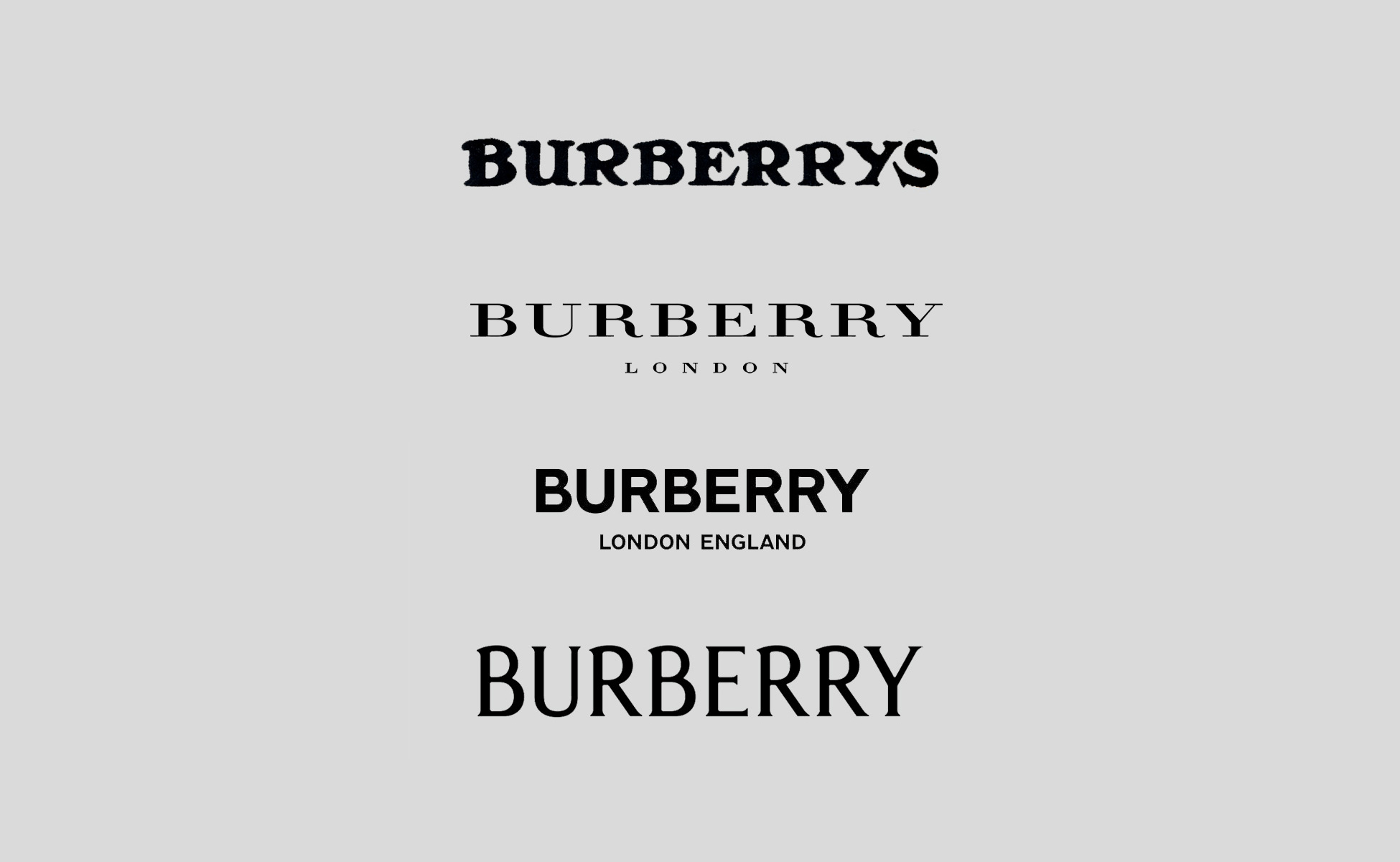
Burberry’s modernization is better understood as several phases than as one makeover. Its earlier repositioning, the simplified identity introduced in 2018, and the archive-inspired direction announced in 2023 happened under different creative circumstances. Combining them into a single growth story obscures what each change was meant to accomplish.
Burberry's February 2023 announcement introduced an archive-inspired logo and an evolved Equestrian Knight Design under Daniel Lee. The new wordmark was serif, not another sans-serif treatment. Contemporaneous design coverage contrasts it with the 2018 identity.
The practical lesson is to distinguish useful heritage from outdated execution. A historic symbol can remain relevant while its scale, typography, photography, and applications change. Review those elements as a visual identity system, rather than treating every return to an old mark as a reversal of strategy.
This case demonstrates a deliberate choice about which assets express the brand. It should not be used to attribute years of revenue growth to a later logo, or to assume each successive identity was equally successful.
2. Old Spice: Change the Voice, Not Necessarily the Name
Old Spice illustrates campaign-led brand revitalization. Wieden+Kennedy's 2010 “The Man Your Man Could Smell Like” campaign used exaggerated confidence and absurd humor to give an established grooming brand a different cultural voice. This was not simply a corporate name change or an exercise in drawing a new logo.
Claims about sales hitting 107% year-over-year need their measurement period kept intact. A July 27, 2010 report relayed Nielsen data supplied by Old Spice: body-wash sales were up 27% over the reported six-month window and 107% in the latest month. The 107% figure was not the company's full-year revenue growth, and these figures do not isolate advertising from other influences.
The broader rebranding lesson is that familiar assets can remain while communication changes substantially. A distinctive voice needs a repeatable idea, not a collection of unrelated jokes. Consider how the personality would work in a product description, a campaign, and a customer response.
Document brand voice and tone separately. An entertaining advertisement does not mean a delayed order or complaint should receive the same comic treatment.
3. Walmart: Connect a New Identity With an Existing Promise
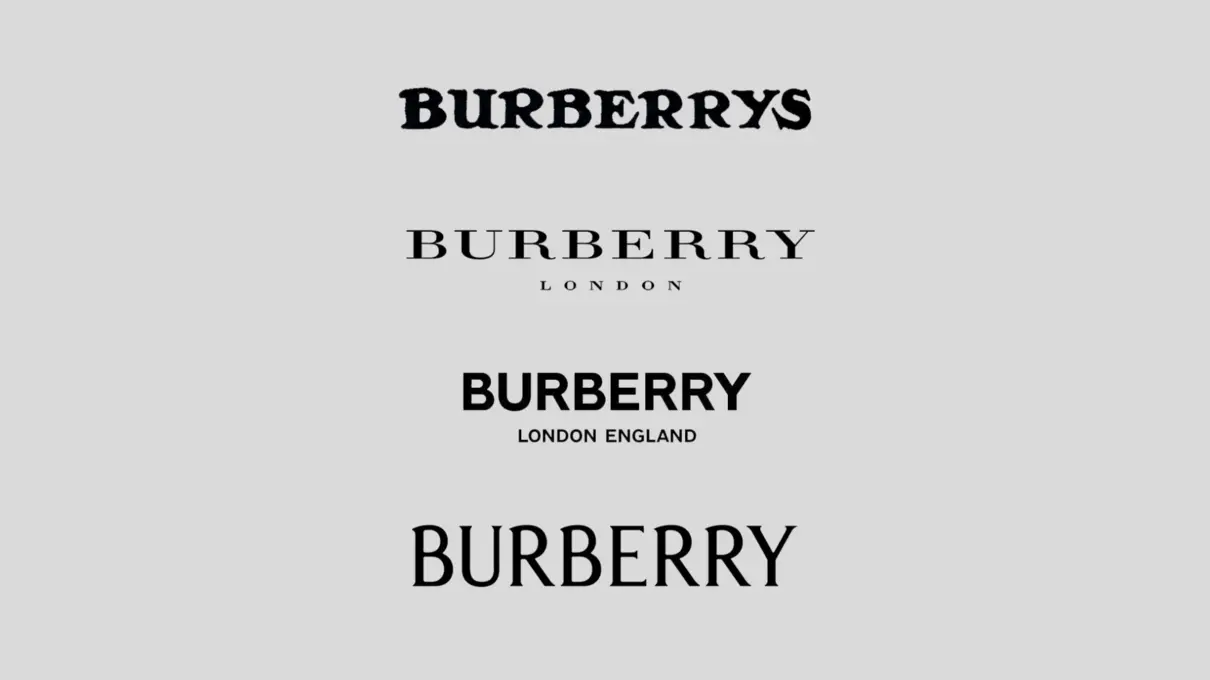
In 2008, Walmart replaced its older wordmark treatment with a softer-looking name and the yellow Spark. Walmart's own Spark history dates the symbol's introduction to 2008. Its “Save Money. Live Better.” slogan had already been introduced in 2007, rather than debuting with that logo change, as reporting from September 2007 records.
The change is useful for studying how a price-led promise can be expressed through benefits to customers. The Walmart case also shows why naming, typography, color, and symbols should be considered together. A softer type treatment does not by itself make a store easier to navigate or improve service.
The Spark's continuing place in Walmart's published identity guidance is evidence of an enduring brand asset, not proof that the 2008 redesign caused later retail performance. For your own identity, specify where the symbol appears with the name, where it can stand alone, and which background combinations remain readable.
4. Google: Build for the Places the Brand Actually Appears
Google introduced its new identity in September 2015, replacing the serif wordmark with a simpler sans-serif design while retaining the familiar color sequence. The accompanying system included the compact multicolor G and animated dots. Google's launch explanation connected the work to a world of different devices, screen sizes, and ways of interacting.
The important change was not simply a preference for modern-looking type. The identity needed several related forms with different jobs: a full name, a small identifying icon, and motion that could communicate activity. Contemporary discussion of Google captured the attention a familiar logo change attracts, but reaction to the reveal is not a usability test.
Apply the lesson by testing a mark in its smallest required placement and alongside real interface content. For motion, define what it communicates through interaction design rather than adding animation only for decoration. A coherent family of assets is more useful than forcing one logo into every space.
5. Starbucks: Simplify Around Recognition Already Earned
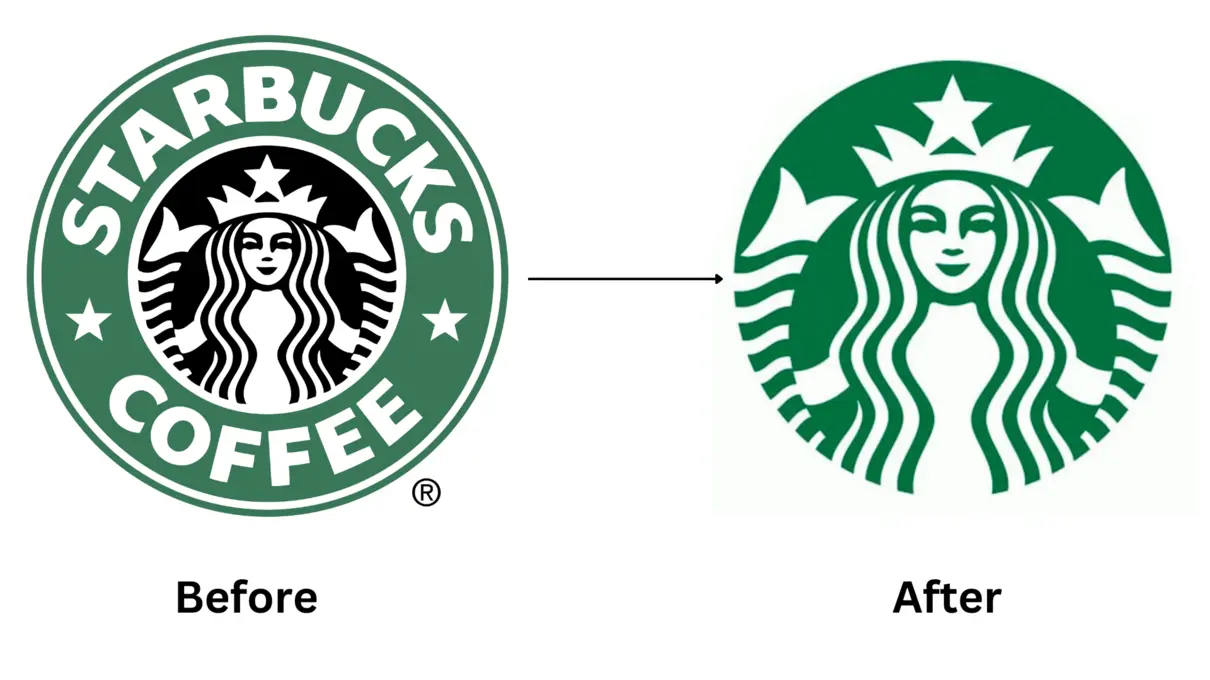
For its 40th anniversary in 2011, Starbucks removed the surrounding name and “Coffee” wording from the logo, leaving the green Siren as the central identifier. The company's official logo history connects the change with the brand's evolution beyond its earlier presentation.
The Starbucks example is especially useful because the simplification retained a familiar asset. It did not start with an unrelated symbol and ask customers to learn the identity again. The practical question was how much identifying information could be removed without losing the connection to the business.
That is a question to test, not a universal instruction to delete the name. A newer company may need its wordmark to explain who is speaking. In logo design, compare named and symbol-only versions at actual sizes, on packaging, and in unfamiliar settings. Removing words creates flexibility only when people can still identify the company.
6. Burger King: Turn a Heritage Reference Into a Complete System
Burger King launched a broad visual identity update in January 2021. The flatter bun-shaped logo drew on an earlier design direction, replacing the blue-swoosh treatment. Work by Jones Knowles Ritchie extended into typography, color, packaging, uniforms, signage, and digital applications.
The company's 2021 launch announcement describes that scope and its emphasis on food quality and digital use. Reporting on Burger King likewise treats it as a system-wide change. These sources document the design and its intended message; they do not establish that retro styling improved the food or independently increased sales.
The transferable idea is to borrow a recognizable visual principle rather than reproduce an old package unchanged. Test whether the typography and palette work on a small screen, a menu, and a delivery bag. Packaging and campaign graphics should feel related while accommodating the information each format needs.
7. Airbnb: Give Positioning a Consistent Visual Expression
Airbnb introduced the Bélo symbol in July 2014 with DesignStudio, connecting its identity to the idea of belonging. Airbnb's company timeline records the launch. The symbol, updated digital presentation, and “Belong Anywhere” message formed a broader identity change rather than an isolated app-icon refresh.
The contemporary account of Airbnb emphasizes the connection between the visual system and its community-oriented story. The useful question is whether a visitor could recognize that same idea in the website, host communication, and booking experience. A memorable symbol can express a position, but the service has to make that position credible.
For a business making a comparable change, test both interpretation and tasks. Ask what the brand appears to offer, then observe whether someone can find and complete the relevant action. Usability testing answers a different question from whether participants like the new logo. Later platform growth cannot, on its own, identify the redesign's contribution.
8. Instagram: Separate the App Icon From the Content Experience
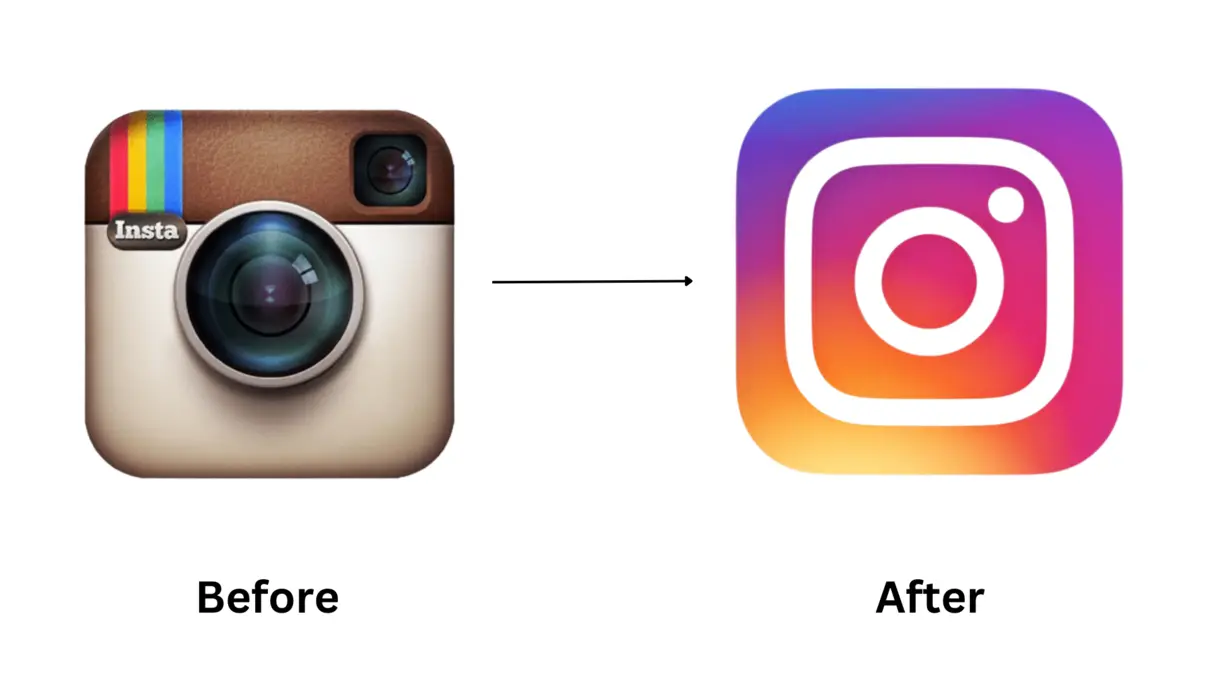
In May 2016, Instagram’s detailed retro-camera icon became a simplified camera outline over a colorful gradient. The interface moved in the opposite direction, using a more restrained black-and-white treatment so the content could take priority. The icon and the interface did not need the same degree of visual expression.
The reaction to Instagram demonstrates how strongly people can respond to changing a familiar symbol. It is not evidence that everyone rejected it, or that later user growth was caused by it. The timeline matters too: Reels was introduced in August 2020, not before the 2016 redesign. Later features should not be described as existing requirements at that launch.
For your own product, distinguish a recognizable entry point from the environment where people read, create, or compare information. Coordinate the identity with UI/UX design so decorative brand expression does not compete with the user's task. Review navigation and content hierarchy as well as the home-screen icon.
9. Volkswagen: Make the Visual Transition Distinct From Reputation Repair
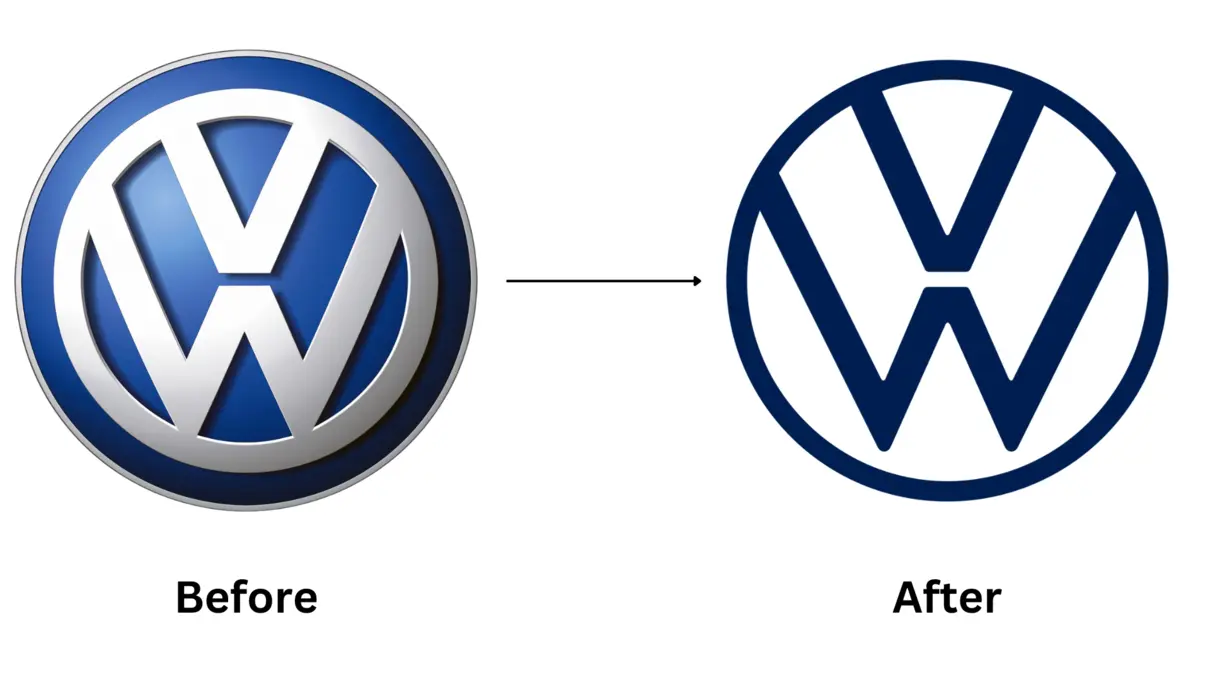
In 2019, VW introduced a flatter, two-dimensional treatment of its circular emblem as part of “New Volkswagen.” Volkswagen's 2019 annual report places the new brand design alongside the ID.3's presentation at the Frankfurt motor show. This connects the identity announcement to a concrete product and strategic moment.
Coverage of VW describes the wider rollout beyond a badge. The enduring circle and letters provided continuity while the presentation changed for digital and physical uses. It is a useful example of changing execution without discarding every identifying feature.
Keep the evaluation of branding separate from claims about restored trust or environmental performance. An emblem cannot verify emissions, fix governance, or demonstrate customer confidence after a scandal. Those questions require operational evidence and their own measures. In a reputation-sensitive rebrand, communicate what has actually changed in the business and avoid asking the new identity to stand in for that proof.
10. Uber: Prefer Clear Identification Over Unnecessary Complexity
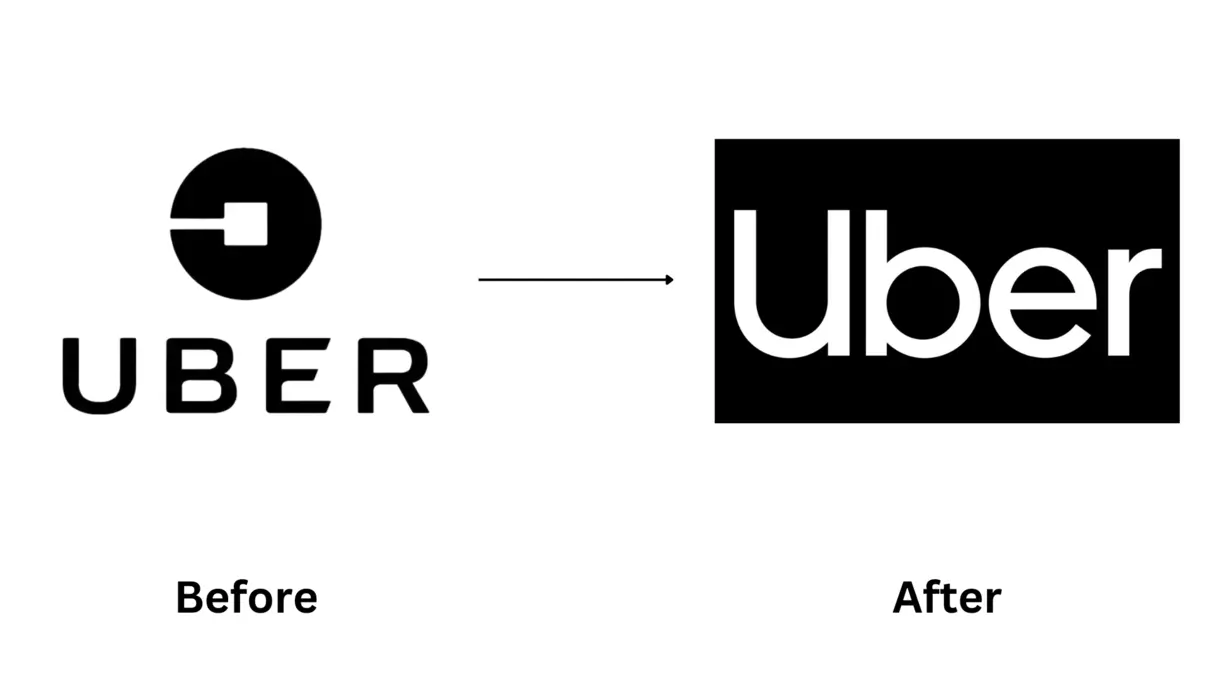
Uber simplified its identity again in 2018 after the more abstract 2016 approach. The new system centered on a clear wordmark, a black-and-white foundation, and coordinated typography. Uber's September 2018 announcement described a recognizable, consistent presentation across its services.
The Uber case highlights a practical issue: an app icon needs to identify the service quickly, including for someone who does not know the thinking behind an abstract symbol. Agency Wolff Olins worked with Uber's internal team on the identity.
Test identification before adding more explanation to a design. Can someone find the app, distinguish the service, and connect its communications to the same company? A simple system can still have a distinctive voice and flexible applications. The 2018 identity should not be described as proof that trust was restored or as the cause of the company's later IPO.
How to Apply These Rebranding Lessons
The value of modern rebranding case studies is in the decisions they reveal, not in a style to copy. Across these cases, the useful patterns are retaining recognizable assets, matching expression to positioning, and designing for real applications. Accounts of successful modern brand overhauls become more useful when they also explain the limits of the available evidence.
Before approving a rebrand, answer five questions:
- What specific business or customer problem needs to change, and would a smaller refresh solve it?
- Which existing names, symbols, colors, or messages still carry useful recognition?
- Can the proposed direction work on a small screen, a dense document, and a relevant physical application?
- Who will update the website, product, sales materials, customer messages, and partner references?
- Which measures will show progress, and what other changes could influence those results?
For example, a hypothetical service firm expanding into a second specialty might keep its name and recognizable color while revising its positioning, service descriptions, and proposal templates. A website redesign would then make both specialties understandable in the navigation and enquiry process. A name change would need a separate reason; it should not be assumed merely because the offer expanded.
Compare concepts using the same realistic content. The visual identity guide expands on evaluating the system, while usable brand guidelines help other people reproduce it after launch. Keep approved files, responsibilities, and exceptions together.
For further comparison, explore high-impact modern rebrands and the broader business questions behind innovative branding transformations. Treat historical examples as evidence to examine, not guarantees that a similar makeover will deliver the same outcome.
Brand Vision can help clarify the scope of a rebrand and connect strategy, visual identity, and the website rollout. Contact our team to discuss the changes your business needs.