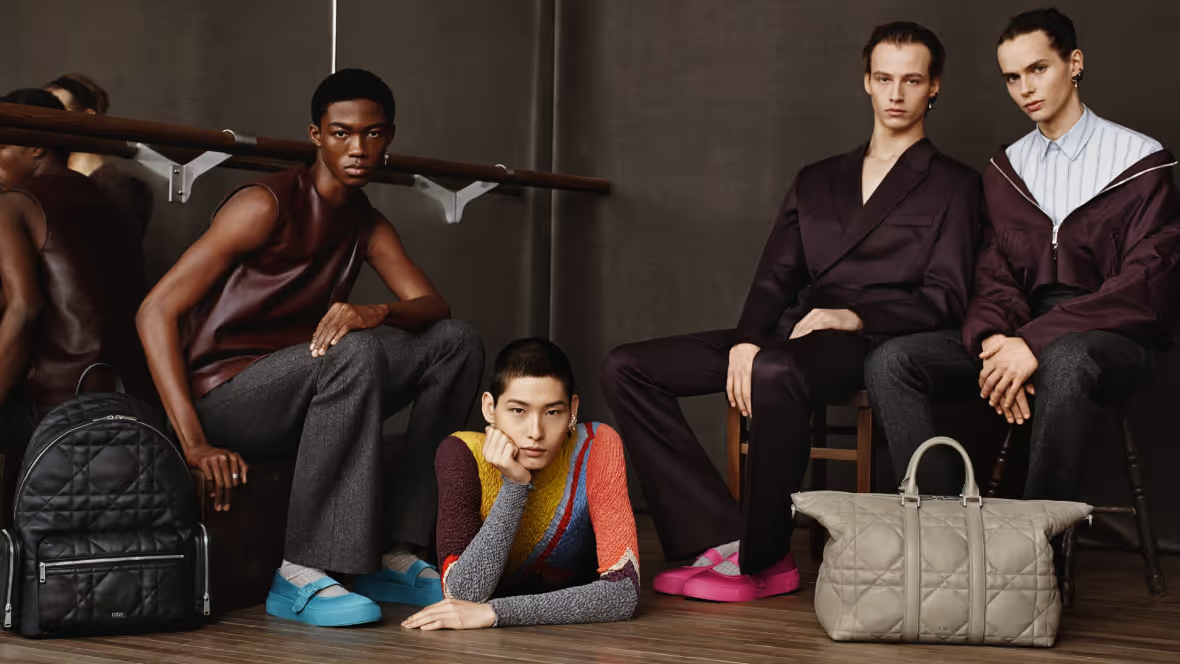
Dior's marketing strategy is built around a remarkably consistent idea: luxury is not presented as a list of product features, but as entry into a carefully constructed world. Couture, handbags, beauty, fragrance, ambassadors, exhibitions, and digital experiences all reinforce a house identity rooted in heritage, craftsmanship, desire, and cultural status.
That consistency matters because Dior sells across very different price points. A couture client, a handbag buyer, and a first-time fragrance customer are not making the same purchase, yet the brand tries to make each interaction feel recognizably Dior. For B2C marketing, that is the useful lesson: different products can serve different roles while the parent brand keeps one coherent promise.
This analysis comes from the brand, web, and growth perspective we use at Brand Vision. The goal is to understand how Dior turns heritage into a repeatable marketing system, not to suggest that every premium brand should imitate its aesthetics.
The Dior Dream Starts With a Clear Brand Idea
Dior's modern brand story still reaches back to February 12, 1947, when Christian Dior presented his first collection at 30 Avenue Montaigne. Dior's own history of the New Look describes the Corolle and En 8 lines and the moment Harper's Bazaar editor Carmel Snow gave the silhouette its famous name.
The New Look became more than an archive reference because Dior kept reinterpreting it. The Bar jacket, structured silhouettes, couture craftsmanship, floral references, and recurring house symbols give later collections a visible relationship to the origin story. That creates a foundation for brand strategy: the brand can evolve without having to invent a new meaning every season.

Marketing Exclusivity Without Making the Brand Static
Dior's target audience cannot be reduced to one demographic. The house serves couture clients, luxury fashion shoppers, fragrance buyers, beauty customers, collectors, and younger audiences entering through lower-priced categories. What connects those groups is an interest in the world Dior presents, even if their purchasing power and reasons for buying differ.
The brand protects exclusivity through price, distribution, craftsmanship, flagship retail, limited products, and image control. At the same time, beauty, fragrance, social media, celebrities, exhibitions, and editorial content expose a much larger audience to the house. This is one of the central tensions in luxury brand marketing: widening reach without making the core offer feel ordinary.
Dior also benefits from having several different ways to enter the brand. A fragrance customer may never buy couture, and a handbag customer may have a completely different relationship with the house than someone who follows runway collections. The marketing system does not need those audiences to behave identically. It needs them to recognize the same hierarchy of craft, prestige, and visual control across categories.

Visual Codes Make Dior Recognizable Across Categories
A strong luxury system depends on more than a logo. Dior repeats motifs, silhouettes, materials, typography, photography, store design, packaging, and recurring stories so that products from different categories still feel connected. The New Look, cannage, toile de Jouy, the star, the Bar jacket, and signature handbag shapes all contribute to that visual vocabulary.
This is why visual identity matters as a system rather than as a collection of isolated assets. Dior can change a campaign's cast or creative direction while retaining enough familiar cues to make the house recognizable.
Repetition does not mean sameness. A fragrance campaign can be cinematic, a handbag campaign can focus on craftsmanship, and a fashion show can lean into architecture or art. What makes them feel connected is the controlled reuse of recognizable signals. That gives creative teams room to experiment without making every campaign feel like it belongs to a different company.

Lady Dior and the Saddle Bag Turn Products Into Brand Memory
The Lady Dior shows how a product can accumulate meaning through association. Dior's own history of the Lady Dior says Lady Diana was offered the bag during a 1995 visit to Paris and became closely associated with it, leading to the Lady Dior name. The bag's cannage pattern, architectural shape, and metal charms then became recurring markers of the house.

The Saddle Bag works differently. Dior's current Saddle collection describes the shape as first introduced in 1999. Its continued reinterpretation shows how a distinctive silhouette can move in and out of fashion cycles while remaining legible as a Dior object.

The marketing lesson is not that every product needs celebrity provenance or a decades-long archive. It is that recognizable product codes can create memory. When customers can identify the product before seeing the logo, the design itself is doing brand work.
Dior Beauty Creates a Lower-Cost Entry Into the House
Beauty and fragrance give Dior a different commercial role from couture or handbags. A lipstick, fragrance, or skincare product can be a first purchase for someone who is not yet a fashion client. That makes beauty an accessible entry point to the brand without requiring Dior to lower the positioning of its flagship categories.
The important distinction is between accessibility and mass positioning. Dior Beauty still uses premium packaging, house codes, celebrity campaigns, selective distribution, and luxury retail environments. The price is lower than couture, but the story remains connected to the same house.
For brands with a wide product ladder, digital discovery matters here too. Ecommerce SEO can support category and product discovery, but the search experience still has to preserve the premium cues that make the product desirable.
The lower entry price can also create a halo effect. Someone who discovers Dior through fragrance or beauty may begin following fashion campaigns, learning the house's motifs, or recognizing signature bags later. That does not guarantee a future high-ticket purchase, but it expands the number of consumers who understand the brand language. In that sense, beauty is both a revenue category and a cultural distribution system for the house.
Fragrance Campaigns Give Different Products Different Personalities
Dior does not ask every fragrance to express the same identity. The house uses ambassadors, films, locations, language, and visual direction to build a distinct world around each line while keeping the Dior name above them.
For Miss Dior, Dior's current product page presents Natalie Portman as the face of a fragrance narrative centered on love, flowers, and couture. The campaign is feminine and romantic without requiring every Dior product to use the same tone.

Sauvage takes a different route. Dior's current Sauvage page stars Johnny Depp and frames the fragrance through nature, woods, spice, and a deliberately rugged visual language. Robert Pattinson belongs to a different line: Dior's current Dior Homme campaign features him around a more nuanced idea of modern masculinity.

That distinction is important. Celebrity marketing works better when the person, product, and story reinforce one another. The ambassador should help make the product proposition clearer, not simply add reach.
Rihanna and J'adore Show How Dior Refreshes an Established Franchise
In 2024, Dior introduced Rihanna as the new face of J'adore. Dior's current J'adore campaign places her at Versailles and explicitly frames the work as a new chapter for the fragrance. The campaign changes the cultural reference while keeping gold, grandeur, femininity, and the language of the Dior dream.

This is a useful example of how an established luxury brand can update relevance without presenting the past as a problem. The new ambassador adds a different energy to an existing franchise rather than asking the audience to forget what J'adore already meant.
Cultural Settings Turn Campaigns Into Brand Theatre
Dior frequently uses architecture, museums, heritage locations, and highly produced runway environments to make launches feel larger than product releases. Paris matters to the house because the brand's history is tied to the city, but the strategic point is broader: place can become part of the narrative when it has a real relationship to the brand.

That does not make every prestigious location useful. The setting has to support the story. When the environment, product, cast, and visual direction all reinforce one idea, the event becomes content that can travel far beyond the people physically present.
The digital afterlife is part of the value. Runway photography, short-form video, interviews, behind-the-scenes footage, celebrity attendance, press coverage, and social reposting turn a physical event into weeks or months of distributed brand material. The location earns its place when it gives that content a stronger narrative, not simply because the venue is famous.
What Businesses Can Apply From Dior's Marketing Strategy
Dior's advantage is not simply budget or aesthetics. It is the discipline of making many channels repeat the same underlying meaning.
- Define the brand promise before scaling campaigns. A branding agency can help connect positioning, messaging, and identity when those pieces have developed separately.
- Build visual codes that can survive different campaigns. A coherent visual system should work across social, packaging, retail, editorial content, and sales materials.
- Create an entry-point ladder. Lower-priced products can introduce new customers to a premium brand when the experience still reflects the parent positioning.
- Treat the website as part of the brand experience. Strong web design services and thoughtful UI UX design should make discovery and purchase easier without making the experience feel generic.
- Use search to capture demand created elsewhere. A long-term SEO strategy can help the brand appear when cultural attention turns into active research or shopping.
- Choose ambassadors and partnerships for narrative fit, not visibility alone. The right cultural figure should sharpen what the product means.
- Measure whether the system is creating the intended behavior. Track product discovery, branded search, qualified traffic, repeat purchase, conversion by category, and the paths people take from entry-level products toward higher-value relationships.
Dior's marketing strategy works because product, celebrity, visual language, retail, events, and digital experience all point toward the same house idea. A business does not need Dior's scale to use that principle. It needs a clear position and the discipline to repeat it.
If your positioning and customer experience are telling different stories, a focused marketing consultation can help identify which part of the system needs attention first.