Mission and vision statements are most useful when they clarify how an organization operates today and where it is trying to go next. For a growing company, they can support internal alignment, brand strategy, and consistent decision-making without trying to summarize the entire business in one sentence.
The labels are not universal. Some companies publish a mission and vision, while others use terms such as purpose, ambition, north star, or long-term direction. Below, we’ll review the vision and mission statement differences and use each company’s current terminology where it is clearly published, rather than forcing every example into the same template.
Mission Statements vs. Vision Statements: What’s the Difference?
Before diving into our best vision and mission statement examples, it helps to separate the roles these statements usually play.
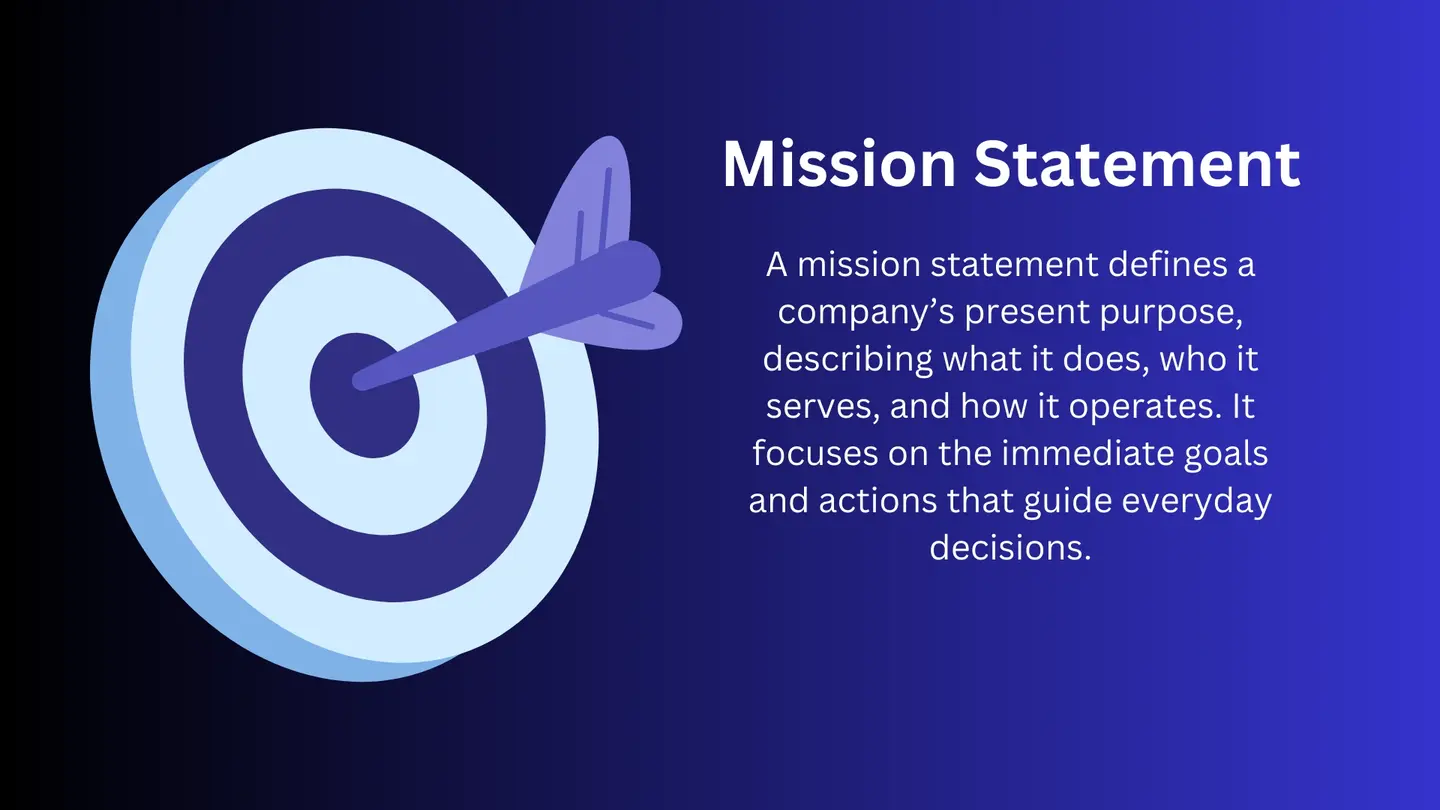
Mission Statement (Present-Focused)
A mission statement explains what an organization exists to do now. It often identifies the people it serves, the value it creates, or the role it intends to play. Useful questions include:
- Who do we serve?
- What do we help them accomplish?
- What purpose guides our decisions today?
A mission should be specific enough to guide priorities while remaining broad enough to survive normal changes in products, channels, and tactics.
Vision Statement (Future-Focused)
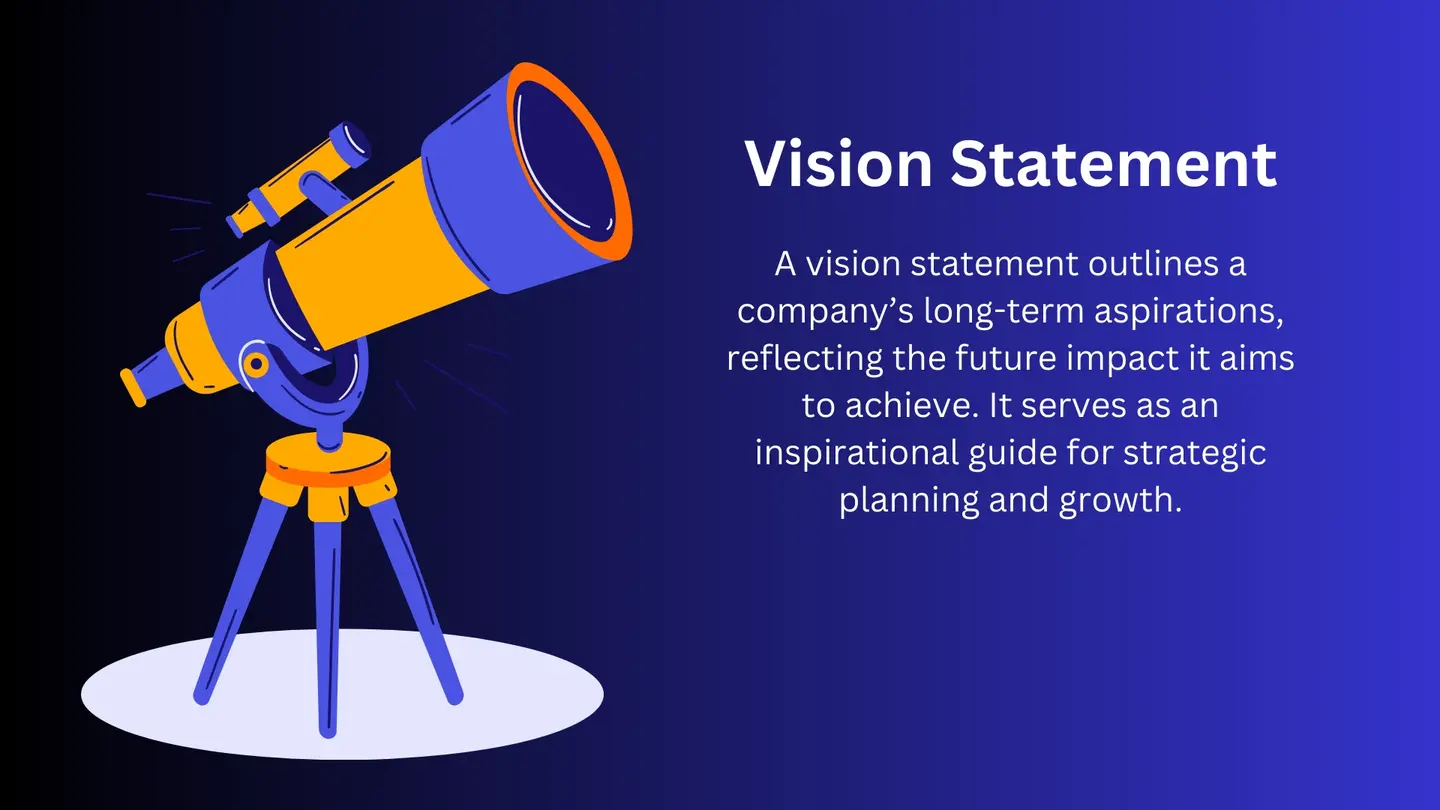
A vision statement describes a desired future state or long-term impact. It is less about the organization’s current activities and more about the direction those activities are meant to support. Useful questions include:
- What future are we trying to help create?
- What long-term change would signal progress?
- What should remain true as the organization grows?
Not every company publishes a separate vision. In those cases, a purpose, ambition, or strategic direction may fill a similar role without being formally labeled a vision.
Mission vs. Vision: A Quick Analogy
- Mission: your route today, defining what you are doing and why.
- Vision: the destination, describing the future you want to reach.
These statements are also different from a value proposition, which explains why a specific customer should choose an offer. Mission and vision work at the organizational level.
15 Mission and Vision Statement Examples
1. American Express
Mission
“To become essential to our customers by providing differentiated products and services to help them achieve their aspirations.”
American Express currently publishes this mission alongside a separate vision. The mission emphasizes relevance to customers rather than a particular card, service, or channel. American Express frames differentiated products and services as the way it intends to become essential.
Vision
“Provide the world’s best customer experience every day.”
The vision is deliberately broader than the mission. It gives the company an experience standard that can apply across products and customer interactions.

2. PayPal
Current Company Direction
PayPal’s current company materials describe the company as having been “revolutionizing commerce globally” for more than 25 years. They emphasize making moving money, selling, and shopping simple, personalized, and secure. PayPal also describes empowering consumers and businesses across approximately 200 markets to participate and thrive in the global economy.
That language gives PayPal a clear long-term direction without treating a descriptive company statement as a formally labeled mission or vision.

3. HubSpot
Mission
“Helping Millions of Organizations Grow Better.”
HubSpot’s current mission is broader and more precise than the shortened “helping millions grow better” version often repeated elsewhere. HubSpot explains “grow better” as aligning a business’s success with the success of its customers.
Long-Term Direction
HubSpot does not need a separate vision statement for that idea to be clear. Its published explanation connects sustainable company growth with stronger customer outcomes, giving the mission a practical direction.
For B2B organizations, the same principle applies beyond the statement itself: the mission should translate into positioning and communication that buying teams can recognize. When outside support is needed, a B2B marketing agency should be able to carry that direction into the website, sales materials, and campaigns.

4. TED
Mission
“Discover and spread ideas that spark conversation, deepen understanding, and drive meaningful change.”
TED’s current mission is more specific than the legacy shorthand “Spread ideas.” TED ties idea-sharing to conversation, understanding, and meaningful change.
Long-Term Direction
TED’s broader organizational language consistently points toward making consequential ideas widely accessible and helping those ideas lead to deeper understanding and action. That direction is better treated as the result of the mission than as a separate official vision quote.
For nonprofits, the mission also has to travel cleanly across donor communications, programs, partnerships, and public outreach. When outside support is needed, a nonprofit marketing agency should be able to preserve that purpose across channels without turning it into generic campaign language.

5. Target
Purpose
“To help all families discover the joy of everyday life.”
Target labels this statement as its purpose. It is intentionally broad enough to guide merchandising, service, design, and community decisions without describing a single retail format.
Ambition
“To be the most delightful experience in retail.”
Target now pairs its purpose with this ambition in its corporate strategy. The distinction is useful: the purpose explains why the company exists, while the ambition describes the experience it wants to become known for.

6. Google
Mission
“To organize the world’s information and make it universally accessible and useful.”
Google continues to publish this long-standing mission. It is broad enough to cover Search and other information products while still defining a clear organizational purpose.
Long-Term Direction
Google does not currently foreground a separate corporate vision on its company-information page. The mission itself provides the direction: improve access to information and make that information useful across products and contexts.

7. Tesla
North Star
“To deliver unconstrained sustainability without compromise.”
Tesla’s language has evolved beyond the older mission-and-vision pair commonly quoted in business articles. In Master Plan Part IV, the company describes this as the north star connecting its vehicles, energy products, manufacturing, autonomy, and robotics.
Current Direction
“We’re accelerating the world’s transition to sustainable abundance.”
This 2025 formulation expands Tesla’s stated direction beyond electric vehicles alone. It frames the company’s future around scalable technology, energy, mobility, and automation.

8. LinkedIn
Mission
“Connect the world’s professionals to make them more productive and successful.”
LinkedIn reaffirmed this mission during its 2026 leadership transition. It keeps the platform focused on professional connection and outcomes rather than general social networking.
Vision
“Create economic opportunity for every member of the global workforce.”
LinkedIn continues to describe this as its single vision. The mission focuses on what the platform does; the vision describes the broader economic opportunity that work is intended to support.

9. Patagonia
Purpose
“We’re in business to save our home planet.”
Patagonia explicitly describes this as its purpose. The wording is more current than the older product-and-harm statement and reflects the ownership structure the company announced in 2022.
Long-Term Direction
Patagonia’s ownership model is designed to protect that purpose over time, with the company stating that money not reinvested in the business is distributed to help fight the environmental crisis. This makes the purpose an operating commitment rather than a separate future-facing vision statement.

10. Amazon
Mission
“To be Earth’s most customer-centric company.”
Amazon still describes customer centricity as its mission. The shorter current formulation is more durable than older versions tied specifically to finding and buying products online.
Operating Direction
Amazon’s company materials connect that mission to making customers’ lives easier through retail, devices, entertainment, cloud services, logistics, and customer service. “Earth’s best employer and safest place to work” has appeared as a workplace ambition, but it should not be presented as Amazon’s general corporate vision.

11. Microsoft
Mission
“To empower every person and every organization on the planet to achieve more.”
Microsoft continues to use this mission across its current company materials. It is intentionally technology-agnostic, allowing the statement to span software, cloud infrastructure, devices, and AI.
Long-Term Direction
Microsoft does not currently foreground a separate corporate vision statement on its About page. Its published company language emphasizes responsible technology that helps people and organizations achieve more, which is better treated as an extension of the mission than as an older “full potential” quote.

12. Meta (Facebook)
Current Mission
“Build the future of human connection.”
Meta’s current corporate language uses this shorter mission across its broader family of technologies. It keeps human connection at the center while spanning social apps, AI, wearables, and immersive technology.
Long-Term Direction
Meta continues to frame its future around human connection, with AI and wearable technologies playing a growing role. This is more current than treating Facebook’s 2017 community statement as Meta’s present-day mission.

13. Starbucks
Mission
“To be the premier purveyor of the finest coffee in the world, inspiring and nurturing the human spirit — one person, one cup and one neighborhood at a time.”
Starbucks updated its mission in 2025, combining its coffee-quality heritage with its long-standing language about human connection. Starbucks now publishes this formulation on its mission page.
Strategic Direction
The company’s current direction centers on the coffeehouse experience, quality coffee, and moments of connection. That is more useful than treating an older growth statement as a separate vision.

14. Coca-Cola
Purpose
“Refresh the world. Make a difference.”
The Coca-Cola Company labels this as its purpose. The wording is concise enough to guide a broad beverage portfolio without limiting the company to one product or market.
Vision
Coca-Cola’s current vision is to build a portfolio of drinks people love while refreshing people in body and spirit and supporting a more sustainable business and better shared future. The company explicitly connects product choice, sustainability, communities, and long-term business value.

15. Samsung
Purpose
“We exist to create human-driven innovations that defy barriers to make a better world for all.”
Samsung currently uses this wording on its U.S. careers site, placing human-centered innovation at the core of how it describes the company.
Future-Facing Direction
“Inspire the world and create the future.”
Samsung’s current U.S. careers page uses this future-facing line alongside its purpose language. Together, the statements connect near-term innovation with a broader ambition to shape the future of technology.

How Mission and Vision Statements Support Brand Clarity
Mission and vision statements do not automatically create loyalty or demand. Their practical value is that they give teams a consistent reference point for strategy, culture, product decisions, and communication. Existing discussions of how mission statements attract customers and brand messaging through mission statements are most useful when the public language is backed by what the organization actually does.
That consistency matters in a brand messaging framework. A mission can define the organization’s role, while a vision, purpose, or ambition can help explain the direction behind that role. Neither should substitute for proof, customer value, or specific positioning.
Crafting Your Own Vision and Mission
If these examples spark ideas for your own brand, start with the strategy rather than the sentence. Brand research can help teams understand audience expectations and existing perceptions before they decide which language truly fits.
- Keep it authentic by reflecting real priorities instead of buzzwords.
- Use clear, direct language that people inside and outside the company can understand.
- State the organization’s role or ambition without claiming a difference the business cannot support.
- Make the statement specific enough to guide decisions.
- Revisit it when the underlying strategy materially changes.
Once the core idea is clear, the wording should connect naturally with the rest of the brand’s positioning, messaging, customer experience, and internal decisions.
Turning Statements Into a Consistent Brand Direction
The strongest examples here do not all use the same labels. American Express publishes a mission and vision, Target uses purpose and ambition, Tesla now uses north-star and sustainable-abundance language, and Patagonia centers its purpose. The common thread is clarity about what the organization is trying to do and the future its work is meant to support.
For a broader branding program, mission and vision statements work best when they connect to positioning, proof, verbal identity, and the customer experience rather than living as isolated copy. That is what turns inspiring mission statements for businesses into usable strategic language.
If you’re refining a brand platform, Brand Vision can help connect purpose, positioning, and messaging into a practical direction for the organization. Talk with Brand Vision about your brand.