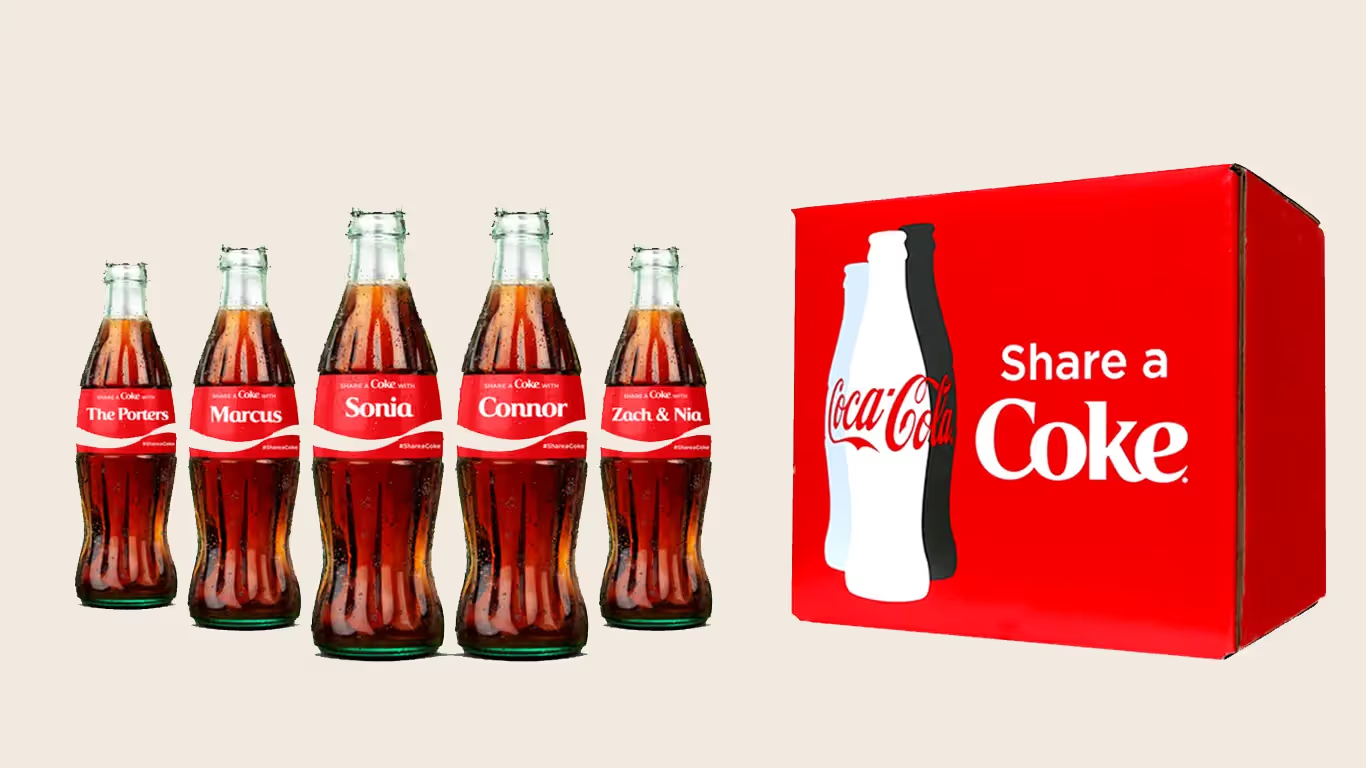
The Share a Coke marketing campaign began in Australia in 2011 and turned Coca-Cola packaging into a personal invitation: find a familiar name, give the drink to that person, and share the moment. The idea connected personalization with a simple social action, rather than asking people to circulate an ordinary advertisement.
For founders, marketers, and students, the useful question is not just why names attracted attention. It is how packaging, brand recognition, retail availability, and participation worked together. This Brand Vision case study examines the campaign's origins, documented results, and practical lessons without treating every later promotion as part of the original launch.
Where Share a Coke Started and Who It Targeted
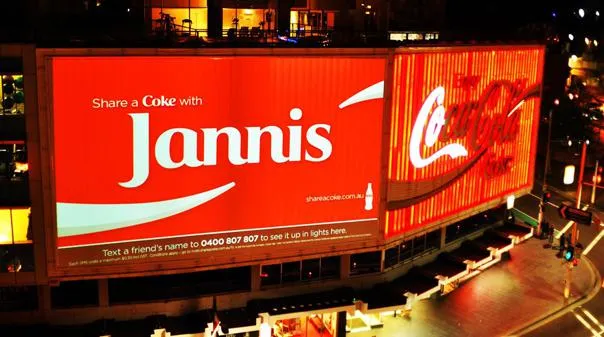
Coca-Cola South Pacific called the initiative Project Connect, with the aim of strengthening its relationship with young adults. Its initial packaging featured 150 popular first names. Coca-Cola's retrospective on the marketing strategy identifies Ogilvy as the agency selected to develop the idea.
The business problem was familiarity without a compelling new reason to choose the product. A name created a different shopping question: not only whether to buy Coke, but who a particular bottle could be for. The campaign changed the invitation around the drink rather than its underlying flavour.
That distinction matters when studying Coca-Cola's broader marketing strategy. Share a Coke was a specific campaign within an established brand, not a replacement for its positioning, distribution, or entire identity.
Why the Personalization Worked
Recognition Did Not Require a Unique Product
Calling the idea deep personalization can obscure how straightforward the original experience was. Many shoppers could buy the same name. The connection came from what that name meant to the person choosing the bottle, not from a unique drink manufactured for each individual.
This is mass personalization: a shared product offers a choice that feels personally relevant. It is different from predicting an individual's preferences through their purchase history. The named packs let the shopper make the match, so the basic experience did not depend on identifying that person online.
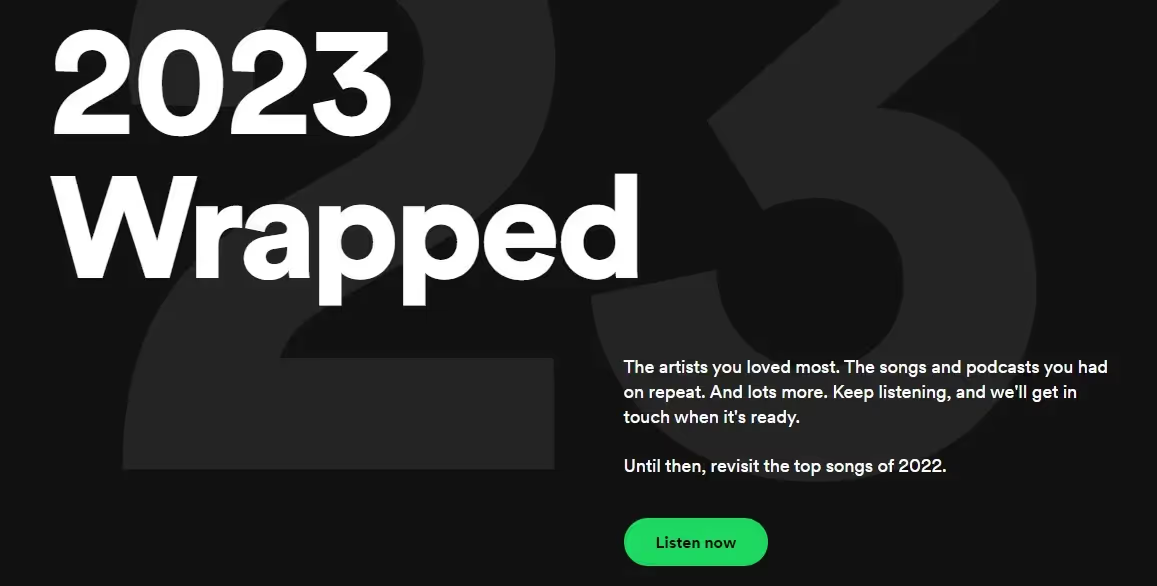
A useful comparison is Spotify Wrapped's approach to personalization, which turns a listener's own activity into shareable content. Coke's name-based packaging and a personalized listening recap use different inputs. The planning question is which input your audience would actually value, not how much data you can collect.
The Name Suggested Someone to Share With
The lasting lesson is that personalization can feel social, not just segmented. A familiar name gives the buyer a possible recipient. The phrase "Share a Coke" then supplies an action, connecting recognition with a small gesture rather than leaving the personalized detail as decoration.
Consider a hypothetical shopper who notices a friend's name while buying lunch. Giving that bottle to the friend supplies its own context; there is no elaborate campaign explanation to repeat. Taking a photo becomes an optional extension of the moment, not the only way to participate.
For a B2C marketing strategy, this is a useful distinction. A promotion can give customers a reason to involve someone else without requiring them to become public advocates or write a testimonial.
The Brand Still Had to Be Recognizable
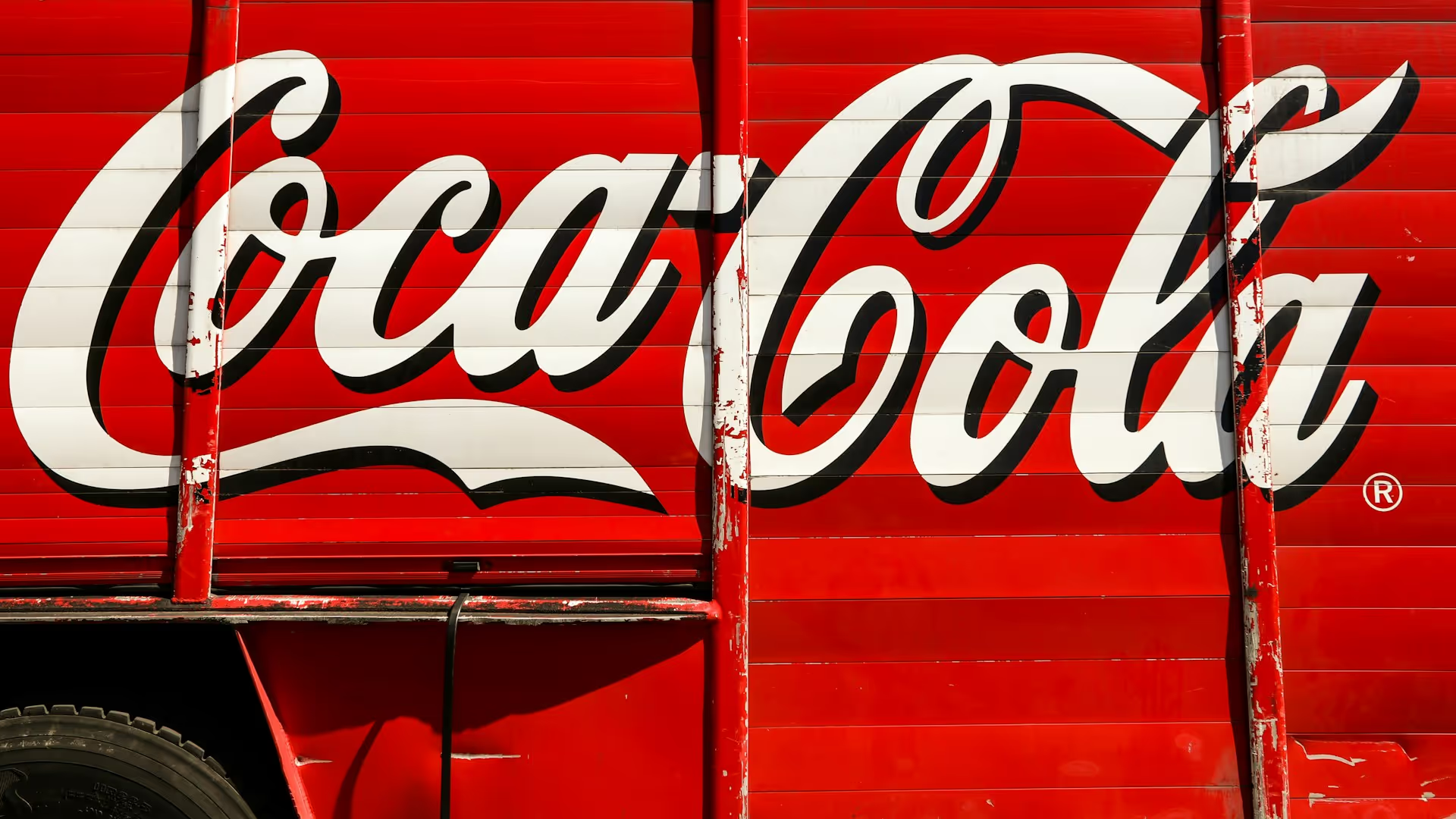
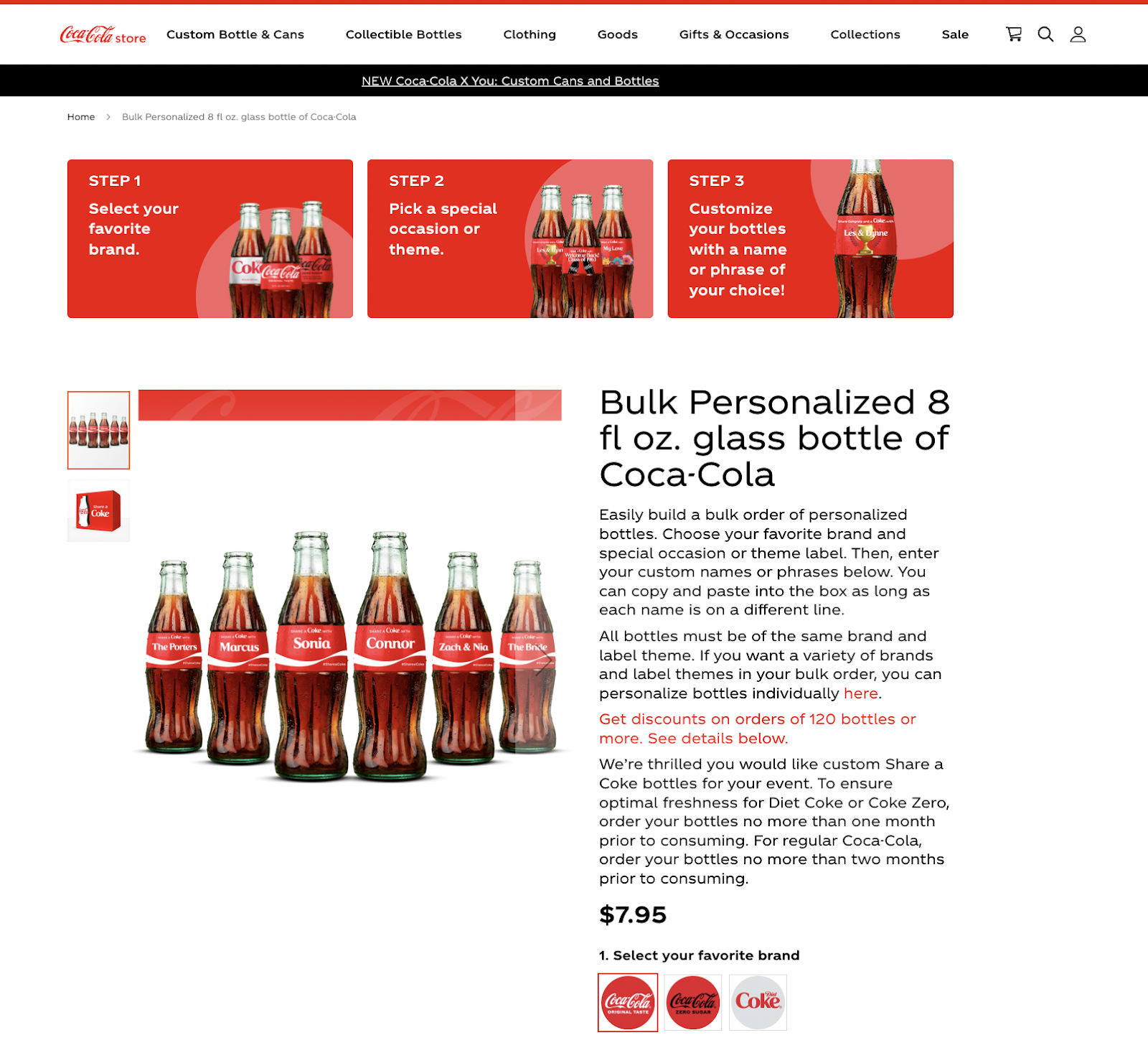
Names changed the focal point of the pack, but the idea still relied on people recognizing it as Coke. The design lesson is not to remove branding indiscriminately. It is to decide which elements can vary while the product remains identifiable.
That is a visual identity decision. Colour, typography, layout, and packaging shape need to work together so that a personalized element does not erase the brand. A less familiar business should test recognition before making the customer's name more prominent than its own.
How Packaging, Social Media, and Activations Worked Together
Coca-Cola's June 2014 U.S. launch announcement described 250 names on 20-ounce bottles across Coke, Diet Coke, and Coke Zero. It also outlined television and cinema advertising, digital billboards, virtual bottles, and a travelling customization tour. The #ShareaCoke hashtag connected customer photos with an online gallery and potential billboard exposure.
These channels had different jobs. Packaging made the idea visible at the point of purchase. Advertising explained the invitation. Customization events offered another way to participate, while social platforms let a personal interaction reach people beyond the original exchange.
Seen as a customer journey, the campaign connected four actions:
- Notice a name or message on a familiar product.
- Choose a bottle for yourself or someone you know.
- Give it to that person or enjoy the drink together.
- Optionally photograph, post, or share the experience online.
This helps explain the role of user-generated content (UGC). The brand provided a prompt, but the customer's relationship supplied the story. It is also why the campaign should not be described as social media alone: the offline action had value even when nobody posted it.
Share a Coke Campaign Results: What the Evidence Shows
The results are more useful when the market, period, and measurement are kept separate. A total number of promotional packs sold is not the same as additional sales caused by the promotion. Nor is dollar-sales growth interchangeable with growth in the amount of drink sold.
Australia's First Summer
In its September 2014 retrospective, Coca-Cola reported selling more than 250 million named bottles and cans during the first Australian summer. That establishes the scale of the named-pack rollout. It does not mean 250 million additional purchases, 250 million different buyers, or a measured return on advertising spend.
U.S. Retail Performance in 2014
BevNET's September 9, 2014 reporting described a Wells Fargo Securities analysis of Nielsen retail data. For the four weeks ending August 30, Coca-Cola's carbonated soft-drink products grew 3.7% in dollar sales and 2.4% in volume compared with the same period a year earlier. The report attributed the analyst's positive assessment partly to Share a Coke.
Those figures concern the company's carbonated soft-drink products in the measured retail data, not named bottles alone or worldwide revenue. They show growth during the promotion, but do not isolate what would have happened without it. Pricing, distribution, other advertising, and the mix of products sold also matter when interpreting commercial results.
Why One Market Cannot Stand for Every Market
The picture was not uniformly positive. Marketing Week reported in August 2014 that UK Coca-Cola retail sales value fell 2.1% and volume fell 6.2% in IRI's 52-week period ending July 19, 2014. The same report noted growth in single-pack sales and a strong prior-year comparison. That annual window is not comparable with the short U.S. window and includes time outside the summer campaign.
The contrast is a warning against a universal success percentage, not proof that the campaign caused the UK decline. Evaluating Share a Coke requires separating a strong creative idea from its effect in a particular market. The evidence above also does not establish campaign profit or long-term customer retention.
How the Campaign Adapted Across Markets and Years
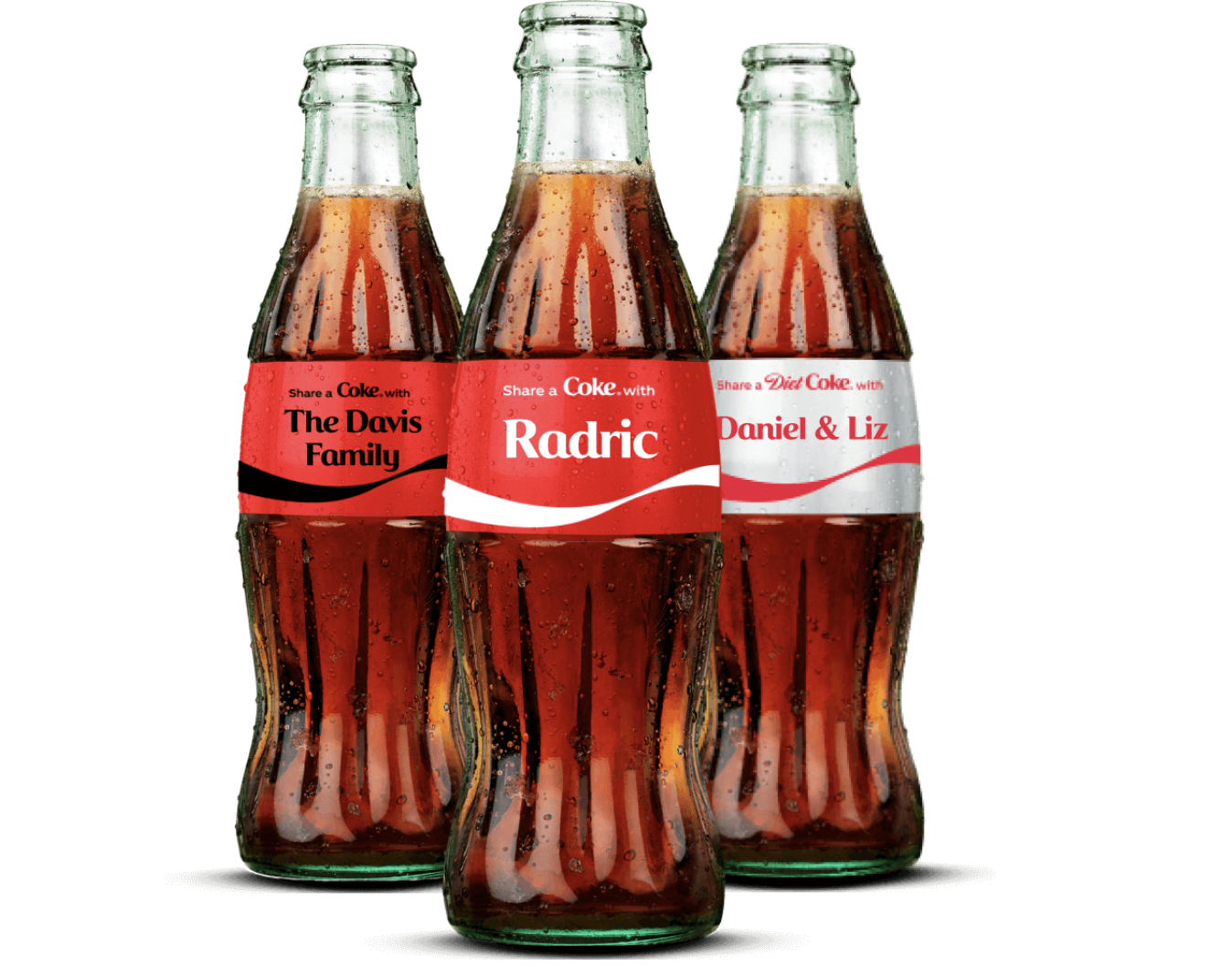
Localizing popular names & phrases is more than translation. A campaign team needs to consider spellings, naming conventions, language, and who is left out of the available choices. A familiar invitation can travel, but its details still need local judgment.
Later executions added new ways to enter the experience. In Australia, a January 2020 Alexa promotion let people start with a voice request. They then received a text message directing them to the Share a Coke website. This was a voice-to-web handoff, not an entirely voice-based ordering process.
Coca-Cola's March 2025 relaunch announcement described on-pack QR codes and an app leading to a digital hub, additional name customization, and a Memory Maker for personalized videos. These were later extensions of the sharing idea, not features of the 2011 launch.
The useful lesson is to let the physical and digital experiences reinforce each other. A new channel earns its place when it helps someone discover, personalize, receive, or share the product. Adding technology without improving that journey makes the campaign more complicated, not necessarily more meaningful.
What Other Brands Should Be Careful About Copying
A name is not automatically a benefit. The product, occasion, and relationship still need to make sense. Personalization that asks for effort without providing something worth receiving can become an obstacle rather than an attraction.
There are practical trade-offs to resolve before launch:
- A limited name list can make some customers feel excluded. Decide what useful alternative exists when a name is missing.
- More packaging variants create production and stock-planning questions. Test whether personalization is worth the extra handling, waste, and complexity.
- Custom text needs clear limits and a review process. Do not assume every submission will be appropriate to print or display.
- A novelty purchase does not establish loyalty. Measure whether customers return once the personalized pack is no longer new.
These are particularly relevant to food and beverage marketing, where packaging must work on a shelf and through a real supply chain. A smaller brand might test a gift sleeve or message card before committing to a large run of variable packaging.
How to Apply the Principles Without Copying the Bottles
Start With a Customer Occasion
Choose a real moment your product can support: thanking someone, marking a milestone, sharing a break, or celebrating a shared interest. Explore the emotional aspects of your product through what customers already do, rather than inventing a sentimental story around an unrelated offer.
Use brand research to test whether the occasion and proposed choice make sense to the intended audience. Ask what people would select, who they would share it with, and what might stop them. Treat an appealing concept as a hypothesis until people can use it.
Design for Sharing on Purpose
Define the action you want someone to take immediately after encountering the campaign. Giving a product, sending a message, inviting a friend, and publishing a photo are different behaviours. Choose the one that supports your brand strategy, and make it clear without a long set of instructions.
For example, a hypothetical coffee company could test a small range of thank-you sleeves for customers buying a drink for a colleague. That tests the social gesture without copying Coca-Cola's name list or assuming a digital tool is necessary.
Make Participation Easy to Understand
Build a personalization option that is easy to spot and explain. In a digital experience, UI/UX design should make the available choices, preview, and next action clear. Test missing-name cases, long entries, and the experience on a phone, not just the ideal desktop journey.
The campaign's website also needs to explain what is available, how to participate, and what happens after submission. Consistent web design helps the landing page continue the promise made on the pack or advertisement, rather than introducing a different message and visual language.
Build a Repeatable Campaign, Not a One-Off Stunt
Decide which parts can change between releases and which must remain recognizable. The occasion, names, or format might vary while the core invitation stays stable. Consistent branding gives those variations a common identity.
Operational leadership matters here: someone needs to own the handoffs between creative, production, retail, customer support, and measurement. Before launch, agree who approves personalized content and who resolves problems when the promised experience cannot be delivered.
Measure Participation and Business Outcomes Separately
Choose a comparison period or test group before launching. Track completed personalizations, shares, purchases, repeat purchases, and fulfilment costs as distinct measures. Where possible, compare similar stores or audiences exposed and unexposed to the promotion, noting differences in price and availability.
A campaign with many photos but little additional purchasing presents a different decision from one that sells well but costs too much to fulfil. Keep the measure tied to the original objective, then refine the participation experience rather than simply increasing advertising.
Share a Coke's enduring lesson is not that every brand needs names on packaging. It is that a clear invitation can connect a familiar product to a meaningful action between people. The execution still needs an appropriate audience, recognizable design, workable operations, and evidence of what changed.
For teams applying these lessons to their own brand, Brand Vision's marketing consultation can help clarify the audience, message, and campaign priorities.