
Most leaders do not choose color to be artistic. They choose it to be remembered, trusted, and easy to buy from. In 2026, brand color psychology matters because attention is expensive, switching costs are low, and a buyer can leave in seconds if the experience feels uncertain.
Brand color psychology is not a shortcut to persuasion. It is a way to reduce friction in consumer behavior by aligning color theory with how people scan, judge, and commit. When color supports clarity, purchase decisions feel simpler, and the brand feels more consistent.
At a Glance
- Brand color psychology works best when it is treated as a system, not a mood board.
- Color theory explains why hue, saturation, and brightness change perceived quality, urgency, and trust.
- A brand color palette should include brand colors, neutrals, and functional colors for states and data.
- Website color scheme choices should support hierarchy, accessibility, and clear actions.
- Strong color choices do not rely on universal meaning. Context and consumer behavior do the deciding.
Why Brand Color Psychology Matters for Decision Makers
Brand color psychology is often treated as decoration. In practice, it is part of risk management. Color choices shape whether a page feels stable, whether an interface feels legible, and whether a brand appears consistent across touchpoints. Those signals influence consumer behavior before a buyer reads a headline or reviews a feature list.
Color psychology also affects how quickly people categorize what they are seeing. Research reviews in marketing argue that color can account for a meaningful share of an initial impression, even though exact percentages vary by context and study design. (University of Winnipeg) Brand color psychology helps the buyer decide what the brand is without extra explanation.
The compounding effect is the point. A consistent brand color palette improves recognition, reduces cognitive load, and supports recall across channels. When the brand color palette is inconsistent, consumer behavior becomes noisier, and purchase decisions slow down because the experience feels less reliable.
- Brand color psychology supports trust when a visual identity stays consistent across product, site, and marketing.
- Color theory supports clarity when contrast and hierarchy are designed, not guessed.
- Consumer behavior improves when the website color scheme makes actions and navigation obvious.

Color Theory Basics That Actually Influence Choice
Color theory becomes useful when it gives you levers you can control. The three levers that show up most in real work are hue, saturation, and brightness. Hue is what most people mean by color, such as blue or red. Saturation is intensity, and brightness is how light or dark a color appears.
In color psychology research, hue often carries the cultural label, like trust or urgency. Saturation and brightness often shape emotional intensity and perceived weight. Research that discusses color emotion relationships frequently points to saturation and brightness as strong drivers of emotional response compared to hue alone. (PMC) This helps explain why two brands can both use blue but feel nothing alike in consumer behavior.
Brand color psychology becomes practical when you treat these levers as constraints. A brand color palette needs shades for text, backgrounds, surfaces, and states. If you pick one perfect swatch with no usable range, the website color scheme drifts, contrast breaks, and the visual identity starts to look improvised.
- Hue is the identity signal inside brand color psychology.
- Saturation is the volume control that changes how assertive a brand feels in a website color scheme.
- Brightness is the legibility and hierarchy lever that protects consumer behavior and purchase decisions.
The Meaning of Major Hues and the Emotions They Trigger
Color psychology is not a dictionary. It is a pattern library. The same hue can communicate different things depending on contrast, typography, imagery, and category expectations. Still, most brands benefit from knowing the baseline associations that appear often in consumer behavior and market conventions.
A useful test is simple. Ask what a buyer expects from the category, then ask whether the brand color palette reinforces or challenges that expectation. Brand color psychology is strongest when the choice is intentional, not accidental.
Blue
Blue is often used to signal reliability, calm, and competence. It tends to show up in categories where trust is part of purchase decisions, such as financial services, infrastructure, healthcare platforms, and enterprise software. In brand color psychology, blue can reduce perceived risk, but only if the website color scheme stays readable and does not become cold or distant.
Blue also performs well as a structural color. In a brand color palette, it can anchor navigation, links, and focus states without overwhelming content. When blue is too saturated, it can feel juvenile. When it is too gray, the visual identity can feel generic.
- Use deeper blues for headers and navigation where stability matters in consumer behavior.
- Use softer blues for backgrounds and supporting UI to keep the website color scheme calm.
- Use clear blues for links and focus states, with contrast checked against WCAG targets.
Red
Red is tied to urgency, arousal, and action. In consumer behavior terms, it can increase attention, but it can also increase perceived stakes. That makes red powerful in brand color psychology when it is used sparingly and consistently, especially for moments that should feel time sensitive.
Red is also a state color in most interfaces. If red means error or critical status in the website color scheme, using red as a primary brand color can create ambiguity. A brand color palette can still include red, but the role has to be governed.
- Use red as an accent, not a default background, to protect purchase decisions from anxiety.
- Reserve red for error states and critical flags so meaning stays consistent across the visual identity.
- Test red CTAs in context, since red can signal both action and warning in color psychology.
Green
Green commonly signals balance, safety, and progress. It is often used for success states, sustainability cues, and financial reassurance. In brand color psychology, green can support calmer purchase decisions by reducing perceived friction and reinforcing positive outcomes.
Green is also a functional color in many design systems. That means the brand color palette should include a green range even if the primary brand hue is not green. Consumer behavior improves when success is clear and consistent.
- Use green for success and confirmation states in product UI and forms.
- Use muted greens for sustainability messaging when the category expects restraint.
- Pair green with stable neutrals so the website color scheme stays legible and balanced.
Yellow
Yellow signals energy and warmth, but it can become hard to read quickly. In brand color psychology, yellow works best when it is treated as a highlight, not a primary text color. It can soften brands that feel too clinical, but it can also signal caution depending on context and culture.
Yellow is one of the fastest ways to break accessibility if it is used carelessly. Color theory helps here, since brightness and contrast decide whether yellow is usable. A brand color palette can include yellow, but it needs tight rules inside the website color scheme.
- Use yellow for small highlights that guide scanning, such as badges and labels.
- Keep yellow out of long form text and avoid low contrast combinations.
- Use yellow for warmth in secondary graphics when the visual identity needs softness.
Black and White
Black and white are not neutral choices. They can signal restraint, authority, and clarity when used well. A monochrome foundation gives the brand color palette room to add one accent that drives purchase decisions without clutter. In brand color psychology, restraint often reads as confidence.
Pure black on pure white can be harsh for long reading and dense UI. Many high performing website color scheme systems use near black and off white to reduce glare. That improves consumer behavior by making long sessions easier.
- Build most layouts on neutrals so content leads and actions stand out.
- Use near black, not pure black, for body text and dense UI.
- Use off white backgrounds to keep the website color scheme calm and readable.
Purple
Purple often signals imagination, rarity, and sophistication. It appears in beauty, creative tools, and niche premium categories, but it can also work in B2B if the rest of the visual identity stays disciplined. Brand color psychology here is about differentiation without losing credibility.
Purple can also feel theatrical if saturation is too high. Color theory helps you keep the hue while tuning saturation and brightness so it works across surfaces. A brand color palette with a controlled purple range can look distinctive and stable.
- Use purple as a signature accent supported by neutrals.
- Choose a purple range that works in both light and dark website color scheme contexts.
- Keep saturation moderate to avoid visual vibration that harms consumer behavior.
Orange
Orange is social and energetic. It tends to feel approachable, especially when a brand wants to look fast and friendly. It can drive attention in consumer behavior, but it can also reduce perceived seriousness if used too broadly in the brand color palette.
Orange is often effective for a single primary action in a website color scheme. It can guide purchase decisions without needing aggressive copy. The key is to keep the role consistent so orange does not become visual noise.
- Use orange for one or two signature moments, such as a primary CTA.
- Keep orange away from error states so meaning stays clean.
- Pair orange with deeper neutrals to stabilize the visual identity and reduce fatigue.
Examples of Color Psychology in Brand Strategies
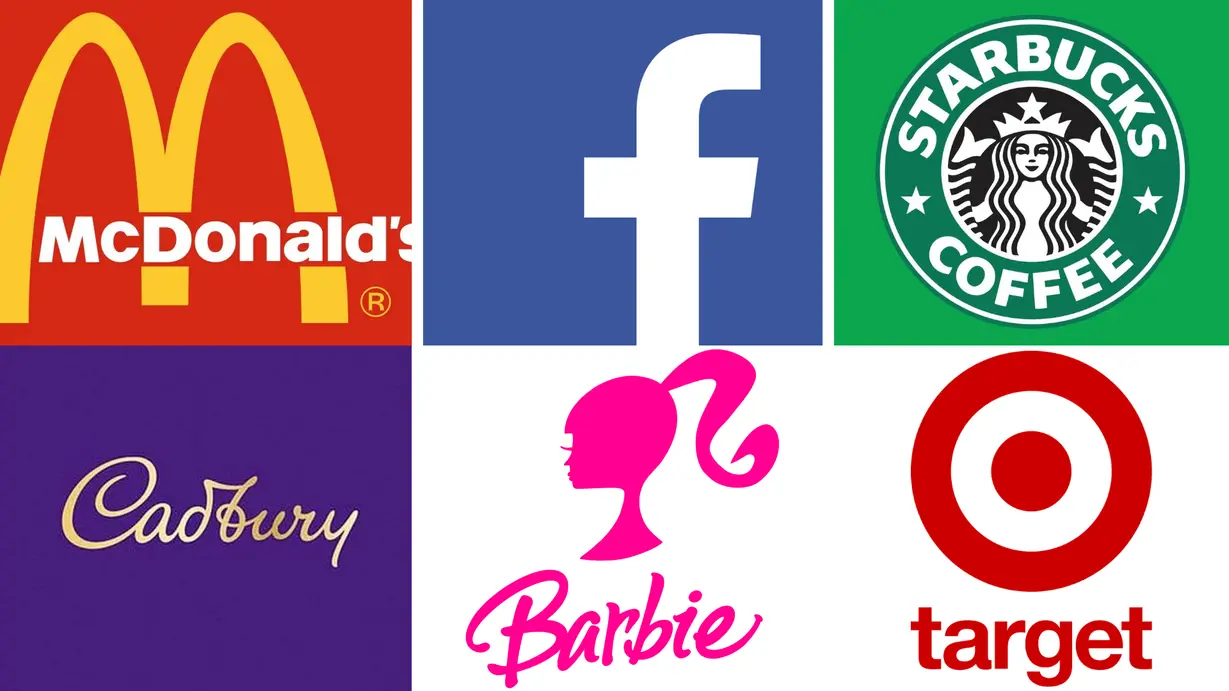
McDonald’s – Red & Yellow
McDonald’s is a classic example of color psychology in branding. Red grabs attention and can heighten appetite, while yellow feels cheerful. This red-yellow combo suggests fast, fun, impulsive eating—part of the reason so many fast-food chains adopt similar color schemes. The result is near-universal recognition of those golden arches and a global sense of familiarity.
Facebook: Blue
Tech companies like Facebook rely heavily on blue. People tend to associate blue with reliability and calm, making it an appealing choice for platforms where you share personal info. Blue also projects confidence: one study found that logos in this hue often make viewers think of success and security. It’s no surprise that countless financial and tech giants use a blue logo to earn consumer trust.
Starbucks: Green
Starbucks takes a different route with green, connecting it to freshness and a sense of relaxation. Green suggests nature, growth, and well-being, which pairs well with Starbucks’ mission around sustainability and ethical sourcing. It also helps Starbucks stand out as a calmer coffee option, especially when compared to fast-food places that rely on bold, appetite-stimulating reds.
Cadbury: Purple
Cadbury’s deep purple wrapping feels luxurious and indulgent. Historically, purple dye was rare, so it symbolized royalty and exclusivity. By using purple, Cadbury communicates that its chocolate is special and worth savoring. Consumers have grown to see that iconic purple as shorthand for creamy, decadent candy—an emotional branding through color that’s paid off in brand loyalty.
Barbie: Pink
Want to think of youth, imagination, and fun? Barbie’s bright pink does exactly that. It exudes a playful energy that appeals to young kids, especially girls who often associate pink with something friendly or adventurous. The pink palette has become so iconic that a glance down a toy aisle reveals Barbie products even if you don’t spot the logo.
Target: Red
Target’s bullseye is a red that practically glows with energy and urgency. This color is impossible to ignore, which is key for a big-box retailer competing for shopper attention. Red can also stimulate impulse buys, so it fits well with Target’s approach to encouraging quick yet fun shopping decisions. Over time, the red bullseye has grown so recognizable that Target barely needs to spell out its name in ads.
Context Changes Everything: Culture, Category, and Buyer Stage
Brand color psychology breaks down when teams assume universal meaning. Color theory is real, but meaning is negotiated. Culture, category conventions, and buyer stage shift how color is read. The same website color scheme can feel premium in one category and confusing in another.
This is why consumer behavior research often cautions that color effects are moderated by context. Color can shape perception, but it does not operate alone. (University of Winnipeg) Brand color psychology should be treated as a set of signals that work together with copy, imagery, and product experience.
B2B and B2C Patterns
In B2B, purchase decisions often involve multiple stakeholders and higher perceived risk. That usually pushes the brand color palette toward stability, readability, and consistent states across UI. In B2C, color psychology can be more expressive, but clarity still matters because consumer behavior is fast and distracted.
The difference is not the hue. The difference is how the hue is deployed across surfaces, text, and actions in the website color scheme. B2B brands often win by being calmer and clearer, especially when combined with strong UX and content architecture.
- B2B website color scheme choices often emphasize contrast, hierarchy, and predictable states.
- B2C patterns often use more saturation in small doses to guide attention and purchase decisions.
- Both benefit when the visual identity is consistent across product, ads, and support content.
If your brand sells to other businesses, brand color psychology should align with a B2B marketing agency lens: clear differentiation, low friction evaluation, and a system that supports long decision cycles.
.webp)
Cultural and Regional Variation
Color associations vary across regions and communities. Even when a hue has a common baseline, the emotional label may shift. This is why global brands build flexible brand color palette systems, then validate them through research rather than assumptions.
Treat brand color psychology as a hypothesis when you work across markets. Use brand research to confirm whether the website color scheme communicates the intended meaning. A careful approach protects consumer behavior and reduces misreads that derail purchase decisions.
- Validate high stakes signals with brand research before scaling.
- Avoid relying on color alone to carry meaning, especially for warnings, pricing, and trust cues.
- Keep the website color scheme adaptable so localization does not break the visual identity.
Building a Brand Color Palette That Performs Across Channels
A brand color palette should be built for operations. That includes marketing campaigns, product UI, sales decks, templates, partner materials, and editorial content. When a brand color palette is built only for a logo, the website color scheme becomes inconsistent, and every new touchpoint forces improvisation.
Brand color psychology works better when the palette is planned as a role based system. Instead of choosing colors by taste, assign jobs. Then choose shades that do those jobs with predictable outcomes in consumer behavior. This is also where brand strategy matters, because your palette should align with positioning and category fit.
Assign Roles Before Picking Shades
Start with roles most brands need. Teams typically need a primary brand color, a secondary brand color, and a neutral foundation. Then add functional colors for states. This is the simplest way to keep brand color psychology consistent across channels.
A practical role map for a brand color palette:
- Brand colors for identity and emphasis
- Neutrals for layout, readability, and calm surfaces
- Functional colors for success, warning, error, and information
If you want the palette to support positioning, anchor it to a documented brand strategy. That keeps the visual identity from drifting when leadership changes or campaigns evolve.
Build a Palette for Systems, Not Moods
A palette should include ranges, not single swatches. For each brand color, you usually need multiple usable shades so the website color scheme can support text, backgrounds, borders, and focus states. Color theory lets you adjust brightness and saturation while keeping the hue stable, which protects the visual identity.
A reliable minimum for each core hue in a brand color palette:
- A dark shade for text, headers, and strong UI states
- A mid shade for accents and interactive elements
- A light shade for backgrounds, tints, and supporting surfaces
This is also where brand color psychology becomes measurable. If the palette cannot support readable hierarchy, consumer behavior will show it quickly in friction and drop offs.
Stress Test the Brand Color Palette
Before a palette ships, stress test it against real interfaces and real content. Avoid judging on a blank canvas. Build a simple set of screens and pages that represent the full customer path, then evaluate the website color scheme in context.
Stress tests that map to consumer behavior and purchase decisions:
- A homepage to product page to pricing page flow
- A form with error, warning, and success states
- A dense content page and a lightweight landing page
- A dashboard view with charts and multiple data series
If you are auditing an existing site, a structured marketing consultation and audit can connect brand color psychology to real performance signals without turning the work into subjective debate.
Website Color Scheme Decisions That Support UX and Conversions
A website color scheme is not the same thing as a brand color palette. The palette is your source. The website color scheme is the distribution of color across surfaces, text, and actions. Brand color psychology fails when a site uses brand color everywhere. The result is visual noise, and consumer behavior becomes erratic.
The goal is simple. Make the important things easy to see and the right things easy to do. That is how color psychology supports purchase decisions without feeling manipulative. It is also why website color scheme work belongs alongside UX and information architecture.
Color for Hierarchy and Scanning
Most pages need a neutral foundation so content can lead. Use color for structure, not decoration. Strong hierarchy makes scanning predictable, and predictable scanning supports consumer behavior. This is where brand color psychology becomes operational, not conceptual.
Rules that hold up across categories:
- Use neutrals for most backgrounds so text is readable at a glance
- Use the primary brand color for selected states and small structural cues
- Use one accent color for emphasis, not multiple competing accents
If your team is rebuilding or redesigning, align the website color scheme with the broader system work of a web design agency that treats performance, readability, and maintainability as part of the same decision.
.webp)
Color for Actions and States
Calls to action should be distinct, consistent, and easy to recognize. If every button is bright, none of them are. Brand color psychology works when color is scarce and meaningful. Consumer behavior improves when the buyer can identify the primary action without thinking.
A disciplined action system inside a website color scheme:
- One primary CTA color for the main action in a flow
- One secondary CTA style that is quieter, often outline based
- Clear state colors for hover, focus, disabled, success, and error
A pattern we see often in practice is simple. Teams change a CTA color to increase clicks, then later discover that downstream purchase decisions weaken because the rest of the visual identity no longer feels coherent. Brand color psychology works best when the whole system stays aligned.
Color for Data and Dashboards
If your product includes data, color theory is not optional. Data colors need contrast, differentiation, and consistent meaning. If red means error in the UI, using red as a positive metric creates confusion in consumer behavior. The website color scheme should keep state colors and data colors distinct.
A safe approach for a brand color palette in data contexts:
- Use a neutral base for charts and reserve saturation for key series
- Use labels, patterns, and tooltips so meaning is not carried by color alone
- Keep dashboard colors consistent with the visual identity so the brand feels stable
If your product experience is complex, website color scheme work is most effective when paired with a UI UX design agency approach that treats hierarchy, states, and accessibility as one system.
Accessibility and Trust: Contrast, Readability, and Inclusion
Accessibility is part of brand color psychology because it shapes who can comfortably use your product. It is also part of trust. When people struggle to read, they do not blame color theory. They blame the brand. That changes purchase decisions and harms consumer behavior, especially in moments that require confidence.
WCAG contrast guidance gives teams clear targets for text and UI components. (W3.org) If the website color scheme is not readable, users leave, support volume rises, and the visual identity starts to feel careless.
Contrast Targets You Can Design Around
Most teams can work with a small set of rules that cover most cases. Treat these as constraints while building the brand color palette. Brand color psychology is still available inside constraints, but accessibility is not negotiable.
Useful targets to guide a website color scheme:
- Contrast rules for text and backgrounds, explained in practical terms. (WebAIM)
- Non text contrast expectations for interactive components and graphical elements. (W3.org)
- Avoid low contrast gray text that is meant to look premium. It often reads as unfinished.
Color Blindness and Redundant Cues
A website color scheme should not require perfect color perception. Use redundant cues for meaning, such as icons, labels, text, or patterns. This keeps consumer behavior consistent across different users, lighting conditions, and screens. It also protects purchase decisions in high stakes moments like pricing, errors, and confirmations.
Where redundant cues matter most:
- Form errors and validation states
- Status dashboards and alerts
- Charts, legends, and analytics summaries
Governance: Keeping Color Consistent as Teams and Products Scale
Brand color psychology becomes fragile when teams do not govern it. The palette expands, duplicates appear, and every campaign invents its own shade. The solution is not stricter taste. The solution is a simple system that makes the right choice easy. Governance protects the brand color palette and keeps the website color scheme coherent.
Governance also prevents trend chasing. The goal is consistency that still allows evolution. You can refresh a visual identity without resetting consumer behavior. You just need clear rules and ownership.
Design Tokens and Color Naming
Teams need names that map to roles, not hex codes. Use tokens that describe function. That helps product, marketing, and editorial teams speak the same language about brand color psychology.
A clean token approach for a brand color palette:
- Brand primary, brand secondary, brand accent
- Neutral background, neutral surface, neutral text
- State success, state warning, state error, state info
Tokens reduce accidental drift in a website color scheme. They also protect accessibility, since approved combinations can be built into the system.
Approval and Change Control
Any change to a brand color palette should have a reason, an owner, and a review path. Treat color changes like product changes. If you adjust the website color scheme, confirm contrast, update documentation, and check downstream screens so consumer behavior is not disrupted.
A governance checklist:
- Document usage rules with examples for each color role
- Require contrast checks for new UI components and new marketing templates
- Audit quarterly to remove duplicates and unused shades
For many teams, this governance work sits naturally with a branding agency relationship, especially when visual identity has to stay consistent across channels and departments.
Measuring Performance Without Chasing Trends
It is tempting to test every color choice. Testing can help, but only if the system stays coherent. Treat tests as questions about clarity, not hacks. Brand color psychology is a long game that supports trust, not a weekly experiment.
Signals worth watching for consumer behavior and purchase decisions:
- Completion rates in key flows, especially forms and checkout
- Engagement on content heavy pages, where readability matters
- Support volume tied to legibility, contrast, or UI confusion
If the brand also relies on organic acquisition, align website color scheme and content readability with a broader SEO agency approach that treats experience and structure as part of growth, not as separate tasks.
FAQ
Is brand color psychology real, or is it marketing folklore?
Brand color psychology is real in the sense that color affects perception, attention, and emotional response. What becomes folklore is the idea that one color has one universal meaning that guarantees purchase decisions.
How do I choose a brand color palette if competitors already use the same hue?
Start with the role the color must play, then differentiate with saturation, brightness, and supporting neutrals. Color theory gives you room to create a distinct visual identity even inside a crowded hue category. The goal is a recognizable brand color palette, not a unique hue at any cost. Typography, spacing, imagery, and motion also shape consumer behavior, so the website color scheme should be judged as part of a full system.
Do website color scheme changes really affect conversion?
They can, usually through clarity rather than persuasion. When a website color scheme improves hierarchy and contrast, people find what they need faster and make purchase decisions with less friction. When contrast is weak or too many accents compete, consumer behavior becomes scattered. Changes should be tested in context, because what works on a landing page can fail inside a product flow if it disrupts the visual identity.
What matters more, color psychology or accessibility?
Accessibility. A brand color palette that cannot be read is a brand that cannot be trusted. This approach also protects reach. It improves the website color scheme for more users and reduces risk.
How do I handle color across packaging, retail, and digital products?
Use one brand color palette, but allow context specific implementation. Packaging can carry more saturation and surface color than a product UI because readability requirements differ. Retail environments also influence consumer behavior through lighting and surrounding colors, so the same hue can read differently in store than on screen.
A Calmer Way to Choose Color
Brand color psychology is at its best when it is quiet and consistent. It uses color theory to make meaning legible and it respects how consumer behavior works in real environments. The winning move is not picking the loudest hue. It is building a brand color palette that stays stable over time and a website color scheme that makes purchase decisions feel obvious.
If you are revisiting visual identity, treat accessibility, hierarchy, and governance as the starting point, not the cleanup step. When the system is built well, teams move faster and the brand feels more trustworthy. If you want a second set of eyes on your brand color palette and website color scheme, start a conversation with Brand Vision or review options with our web design agency and branding agency teams.
Check Out Marketing Strategies of Companies



%2520(1).png)