Duolingo’s TikTok presence works because the social content feels like an extension of the brand rather than a separate advertising channel. The company pairs a playful product, a recognizable mascot, and a fast-moving social voice with platform-native jokes and community interaction. This article looks at Duolingo's marketing strategy, focusing on social media, brand voice, and product-led growth.

Duolingo's Target Audience
Duolingo serves a broad audience of people who want a flexible, accessible way to learn or practice languages. Its free core experience lowers the cost barrier, while paid options add features for users who want more convenience. That model lets the product reach casual learners, students, travelers, and people building language skills for work or everyday communication without defining the audience by one geography or income level.
The social strategy supports that breadth. Instead of speaking only like an education company, Duolingo uses humour and recognizable internet formats to make the brand approachable. Its marketing strategy connects the practical value of language learning with a personality people can recognize outside the app.
Personalized Learning Experience
Duolingo’s product is built around short lessons, progress tracking, streaks, practice, and game-like rewards. These mechanics give users frequent reasons to return and make progress visible. The product experience matters to the marketing because social attention is more useful when the app itself gives people a clear reason to keep engaging after they download it.
That is also where product design and marketing overlap. A strong social personality can attract attention, but retention depends on whether the product is understandable and useful. Brand Vision’s guide to UI and UX explains the distinction between the interface people interact with and the broader experience that supports their goals.
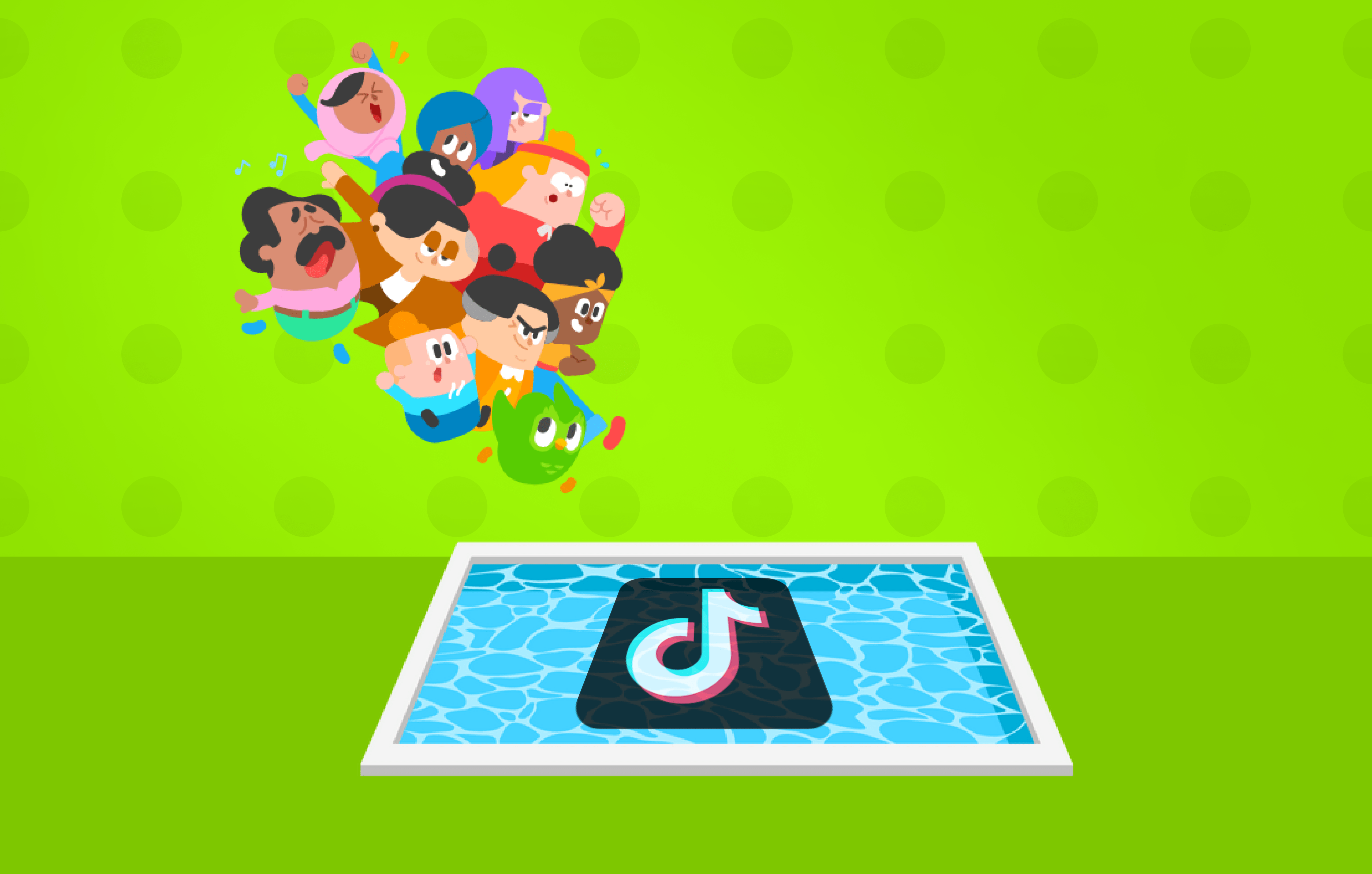
Duolingo’s B2C marketing strategy also benefits from the fact that the product already has characters, rewards, reminders, and a distinct visual world. Social content can borrow those assets without inventing a new personality for every campaign. The use of viral memes and TikTok trends then becomes a distribution tactic rather than the entire brand idea.
That consistency helped make Duolingo a recognizable language-learning app. The important lesson is not that every company needs a mascot. It is that social content works better when the audience can quickly recognize who is speaking and what the brand is known for.
Duolingo Marketing Strategy
Duolingo’s social content often behaves more like entertainment marketing than a traditional product demonstration. Duo the owl acts as a recurring character, while the wider cast gives the company more personalities and situations to work with. That character system helps the account participate in trends without losing its own identity.
The company also carries a consistent visual experience. That continuity extends from the product into social media through bright colours, cartoon characters, and recognizable expressions. The exact format can change from post to post, but the underlying visual identity remains familiar.

Product-Led Growth
Duolingo’s social strategy sits on top of a product-led model. People can begin learning without a traditional sales conversation, and the free experience gives them time to understand the product before deciding whether paid features are useful to them. That makes the product itself part of acquisition and retention rather than treating marketing as the only source of growth.
Product feedback and behavioural data also give the company a way to improve lessons, features, and user journeys over time. Social media contributes a different kind of feedback: comments, jokes, recurring questions, and community reactions show what people associate with the brand. The strongest version of product-led marketing connects those signals instead of treating product, brand, and social as isolated teams.
TikTok Channel and Quirky Brand Voice
Duolingo’s most distinctive social asset is the personality built around Duo. The brand has leaned into the long-running “Evil Duo” joke, lesson reminders, pop-culture references, and the mascot’s exaggerated behaviour on TikTok. The recurring Dua Lipa joke is another example: the humour works because the audience understands the character and can anticipate how Duo might react.
The strategy is responsive without being random. Trend participation is filtered through a recognizable character, which gives the account permission to react quickly while still sounding like Duolingo. For a broader look at the platform itself, Brand Vision’s guide to TikTok’s marketing strategy examines how short-form creativity, creators, and community participation shape brand visibility.

What makes the approach transferable is not the specific jokes. It is the system behind them: a clear character, recognizable brand assets, an understanding of platform culture, and enough flexibility to respond quickly. Brands that copy the surface-level humour without the same strategic foundation risk sounding forced.
Duolingo’s social success also shows why virality should not be the only objective. A strong post can earn attention, but the larger value comes when that attention strengthens brand memory and directs people toward a product experience that matches the personality they encountered online.
If your team is trying to turn a distinctive brand voice into a repeatable content system, a marketing consultation can help connect positioning, content, and channel decisions without relying on one-off trends.
Check Out Marketing Strategies of Other Companies