.webp)
BMW has built one of the automotive industry's most recognizable premium brands by keeping a stable promise while changing how that promise is delivered. In 2026, the marketing challenge is especially clear: BMW is introducing Neue Klasse technology, expanding electric sales, and modernizing the digital experience without abandoning the performance and driving identity people already associate with the marque.
BMW's marketing has moved from print and broadcast into configurators, connected services, social content, retail experiences, and software-led product launches while keeping performance and design at the center. At Brand Vision, the useful lesson is not to imitate BMW's luxury cues. It is to study how positioning, creative, customer experience, and distribution reinforce the same idea across very different touchpoints.
BMW Marketing Strategy: Brand Positioning and Premium Identity
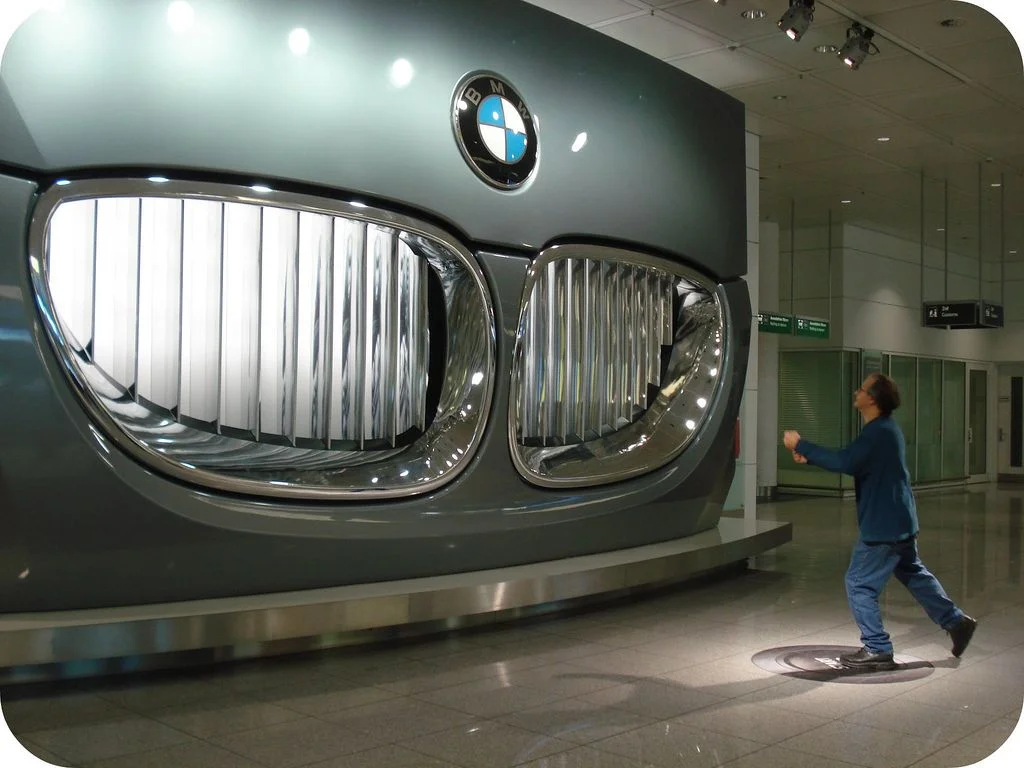
BMW's brand positioning works because it is relentlessly consistent, then carefully modernized at the edges. The company keeps a premium identity anchored in driving performance, design precision, and engineering credibility, then uses brand storytelling to make that promise emotional instead of technical. That's why BMW can introduce new categories like electric models and connected services without confusing what the brand stands for.
A premium identity is also built through repetition of recognizable cues. BMW's design language, signature front end, and cockpit experience create instant recognition long before a customer reads a spec sheet. That consistency protects pricing power, because customers are not comparing a BMW to an average vehicle, they are comparing it to a premium benchmark that BMW has helped define. Strong brand positioning also gives marketing teams a tighter filter for what to say no to, which is often the difference between a luxury brand that feels iconic and one that feels noisy.
BMW's premium identity is backed by long-term product and brand investment, not only campaign creative. Its 2025 third-quarter reporting provides useful historical context for that operating scale (BMW Group Quarterly Statement Q3 2025).
More recently, BMW Group reported around 1.15 million vehicle deliveries in the first half of 2026. Sales rose about 5.4% in Europe and 3.9% in the U.S., while global deliveries declined 4.2% amid weaker results in China and parts of Asia-Pacific. The company also said Neue Klasse demand was building, with the iX3 approaching its next major order milestone. (BMW Group first-half 2026 sales update)
- BMW's focus on brand positioning keeps messaging aligned across performance, luxury, and innovation.
- Campaign themes like a future-forward narrative, including moments like this one, help update the brand without changing its core promise.
Understanding Target Audiences, BMW Target Market
A cornerstone of BMW's marketing strategy is segmentation that feels practical rather than theoretical. BMW does not market one story to every buyer. It adapts product emphasis, creative, and channel choices around motivations such as performance, status, technology, family utility, and electrification. That is where brand research matters: the premium promise can stay consistent while the reasons people enter the brand differ by audience and market.
BMW's target market also shifts by region and lifecycle. The same buyer might begin with brand awareness content on social, move into configuration tools and reviews, and later respond to upgrade messaging based on ownership data. That is how a premium brand stays both aspirational and operational. BMW's consumer marketing strategy succeeds because it is built to catch different motivations, then guide each one into the right product narrative.
- Affluent professionals: premium signal plus daily usability.
- Driving enthusiasts: performance language, handling, and motorsport heritage.
- Tech-savvy consumers: connected features, digital services, and in-car experience.
- Environmentally conscious drivers: electric BMW i storytelling, charging reassurance, and sustainability proof points.
BMW's Most Successful Marketing Campaign
One of BMW's most iconic and successful marketing campaigns remains the early 2000s "BMW Films" series known as The Hire. This was not a campaign that screamed features. It was branded entertainment built around a simple idea: make the car the hero inside a story people actually want to watch. That decision gave BMW cultural relevance and shareability long before social video became the default format.
BMW Films also proved something bigger about premium marketing. When your product is expensive, the marketing has to justify the feeling, not just the function. A cinematic story communicates confidence, taste, and identity in a way that a product comparison never will. That is why the BMW marketing strategy still leans into video, high production creative, and narrative-led launches, especially as the brand evolves deeper into EVs and software-defined experiences.
- BMW Films established storytelling as a performance proof, not just entertainment.
- The format built brand desire without pushing a direct sales pitch.
- The campaign became a reference point for modern branded content.
Emotional Branding
BMW's emotional branding goes beyond technical specifications and vehicle features. The brand excels at linking its products to feelings of excitement, joy, freedom, and aspiration, which is exactly what premium buyers are paying for. BMW's marketing campaigns aim to strengthen an emotional bond by highlighting the experience of driving a BMW, not just the specs. That emotional layer is also what keeps a brand strong when competitors match features, because emotion is harder to copy than technology.
The slogan "Sheer Driving Pleasure" reflects this perfectly. It frames BMW as an experience brand, not a transportation brand. Even when BMW promotes new technology, the message still comes back to a human outcome: control, confidence, and satisfaction. BMW has reinforced this through brand storytelling that pulls in nostalgia and warmth, including moments like the holiday short film referenced in the BMW press story. The point is not the plot. The point is making the brand feel personal.
- BMW uses emotion to turn performance into identity.
- Story-led campaigns protect premium perception even in tech-heavy launches.
- Emotional memory builds loyalty faster than feature memory.

Multi-Channel Marketing Approach
BMW's marketing strategy employs a multi-channel approach that is built for repetition without fatigue. That means the same premium story shows up in different formats and different contexts, without losing clarity. In 2026, that matters because customer journeys are fragmented. People move from social to search, from video to dealership, from configuration tools to financing pages. BMW reduces that complexity by using consistent creative cues and a stable brand promise across every channel.
BMW also treats channels differently based on what each one does best. Broadcast and audio create mass attention. Dealership environments close the gap between desire and decision. CRM and email keep the relationship alive after the first sale, which is where premium brands make lifetime value work. BMW marketing is strongest when it feels like a system, not a set of one-off campaigns.
Television and Radio Advertising
BMW still invests in broad reach channels because premium brands benefit from cultural visibility. High production commercials build desire and status, while radio and audio placements can target commute moments with a message built around mood and aspiration.
- TV creative uses cinematic storytelling and high design fidelity.
- Audio placements reinforce the premium feel with voice and sound design.
On-Premise Marketing (Dealership Experience)
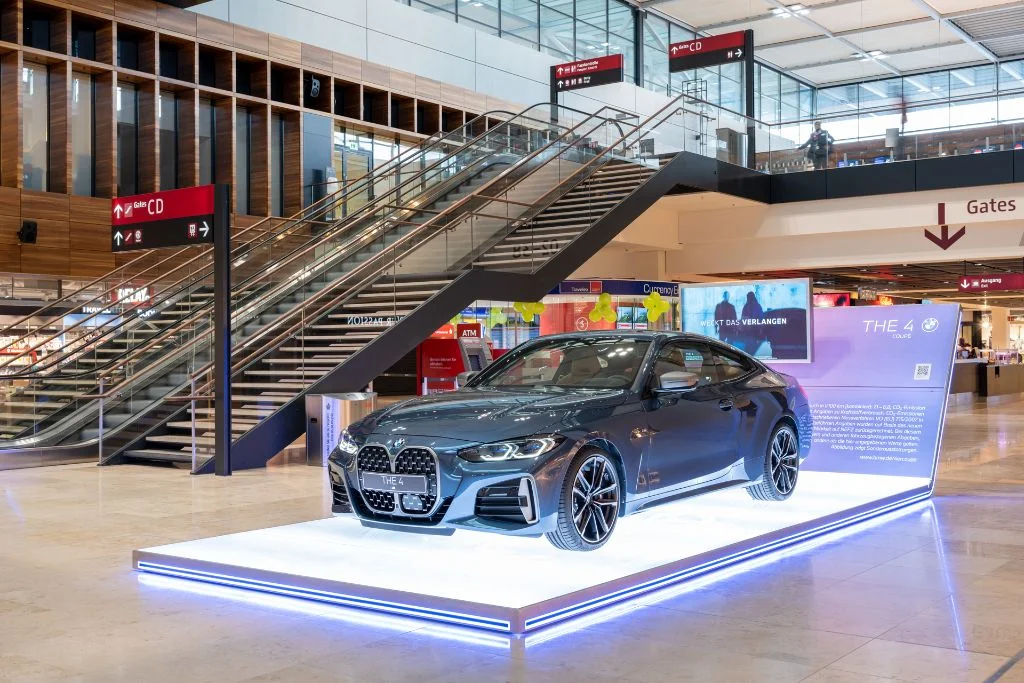
BMW dealerships act like physical brand environments. The space, materials, and customer experience communicate value before a salesperson speaks. Premium brands win when the offline experience matches the online promise.
- Showrooms function as controlled environments for trust and perception.
- Test drives and curated experiences translate brand promise into lived proof.
Direct Mail and Email Marketing
BMW uses direct communication to support retention, service revenue, ownership education, and upgrades. Messaging can be segmented by ownership stage, model interest, or service history, which makes each touchpoint more relevant. For businesses building the same owned-audience discipline, Brand Vision's email marketing guide explains how segmentation and lifecycle messaging can support repeat engagement.
- Email supports launches, ownership education, and retention offers.
- Personalization increases response because it reflects real behavior.
Co-Op Advertising Programs
BMW's dealer network needs local relevance without breaking the brand. Co-op advertising makes that possible by maintaining consistent creative standards while giving space for regional offers and activations.
- Co-op programs keep global brand clarity while enabling local marketing.
- Shared costs expand reach into premium placements.
Digital Innovation and Online Presence
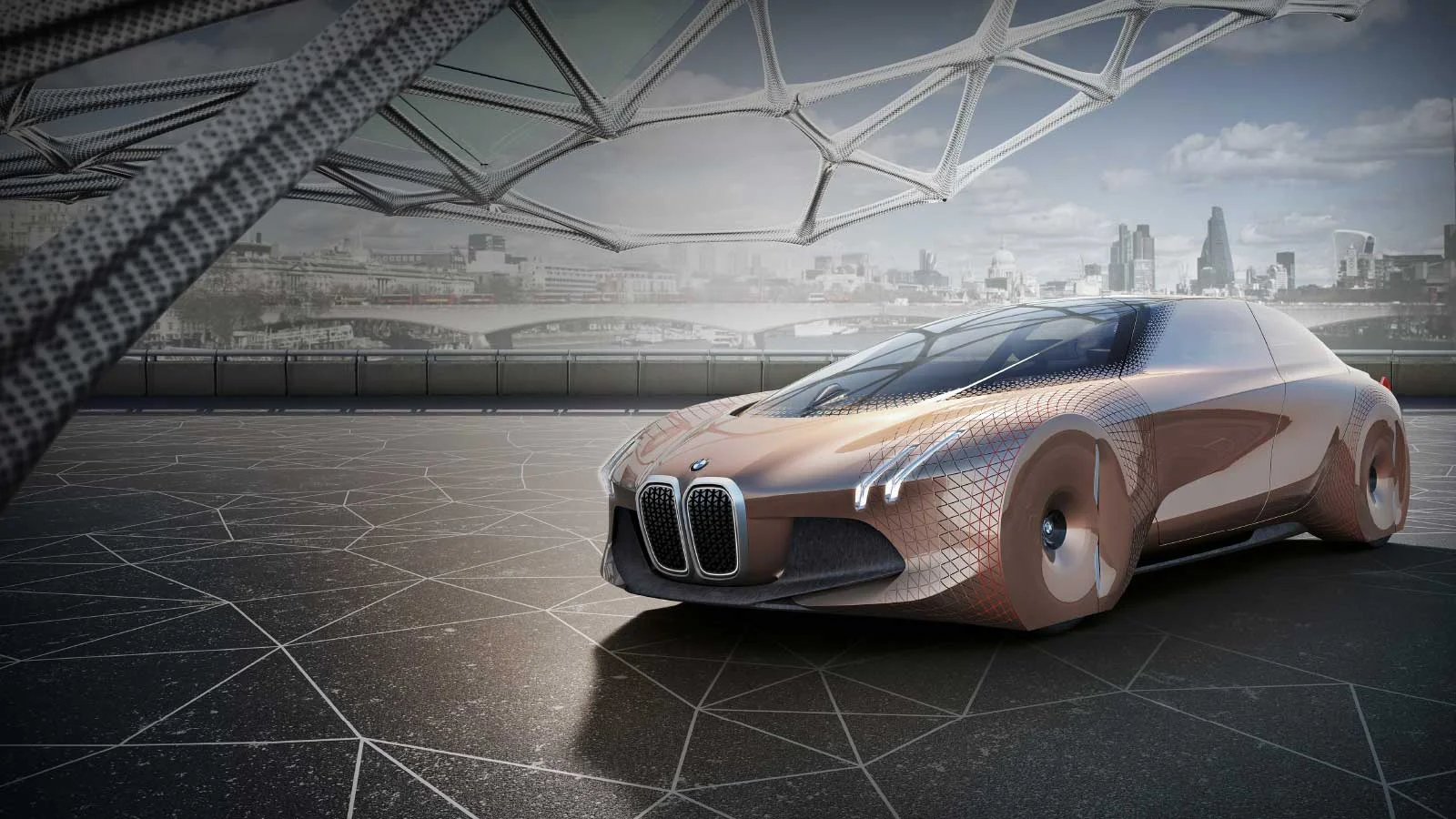
BMW's digital innovation is now moving from concept into production vehicles. The Neue Klasse platform puts digital personalization, interaction design, and the cockpit experience at the center of the product story, with BMW Panoramic iDrive and Operating System X becoming visible parts of how customers experience the brand (BMW Vision Neue Klasse). That matters because automotive brands increasingly compete on the clarity and feel of their software as well as the vehicle itself.
BMW's digital marketing strategy also treats the website and configurator as a digital showroom. Product education, configuration, reservation tools, financing information, and dealership handoffs all need to preserve the same premium feeling while reducing friction. In February 2026, BMW Canada launched an iX3 reservation tool and vehicle configurator before the vehicle's Canadian market arrival, showing how the buying journey itself can become part of a launch.
BMW also treats digital as a lifecycle engine. The brand's apps, CRM, and always-on content strategy extend the experience after purchase, which turns a single transaction into an ongoing relationship. That retention layer is part of why BMW can introduce new services and EV experiences while keeping loyalty stable.
- Social and short-form video stay active for launches and cultural relevance.
- Personalization supports upgrade and retention messaging.
- Immersive tools reduce friction to test drive and purchase.
- Apps and connected services increase retention and upsell.
Environmental Initiatives and Sustainability
BMW has recognized the increasing significance of sustainability and has made it part of its marketing strategy. This messaging has to be specific because sustainability claims are easy to dismiss when they sound vague. BMW succeeds when it ties sustainability to a premium outcome, proving that performance and responsibility can coexist. This is particularly important as the brand pushes EV positioning and future product architecture.
Sustainability messaging lands best when it is tied to specific targets and a visible roadmap. BMW has set a 2035 goal to reduce lifecycle CO2e emissions by at least 60 million metric tons compared with 2019, beyond its existing 2030 target. That gives the message a measurable corporate reference point rather than leaving it as a campaign theme (BMW PressClub).
BMW also benefits from anchoring sustainability in official strategy language. When a brand can connect climate narratives to corporate direction, it sounds less like a campaign and more like a commitment.
- EV leadership narrative: BMW i positions performance with lower-impact mobility.
- Materials and manufacturing: recycled inputs and lower-impact interiors.
- Ecosystem reassurance: charging confidence and route planning messaging.
- Goals with proof points: targets plus public reporting.
- Educational content: ownership guidance that builds trust.
- Circularity and CO2 reduction aren't side notes, they're part of BMW's stated long-term direction across the value chain (BMW Group).
What You Can Apply To Your Own Brand
A strong marketing strategy is rarely about doing something flashy. It is about building a system that repeats your story, protects your positioning, and makes it easy for customers to choose you.
- Build one premium promise, then express it everywhere, from homepage to sales scripts to social content.
- Use emotion to explain value, especially if your price point is higher than category averages.
- Treat your website like your primary sales environment, not a brochure, and make sure it loads fast and reads clearly on mobile.
- Create one consistent visual system so every ad, landing page, and social post feels instantly recognizable.
- Use lifecycle marketing to protect retention, not just acquisition, with segmented email and customer experience touchpoints.
How Business Owners Can Apply BMW's Marketing Strategy in 2026
BMW's playbook becomes easier to translate when you understand the business reality behind it. The brand is operating inside a market that's shifting quickly, so its marketing needs to protect perception while staying agile. That's why the strongest lesson is not copying the creative, it's building systems that hold your positioning steady through uncertainty while your product and channels evolve (BMW Half-Year Report Q2 2025).
BMW's advantage is consistency with evolution. The brand holds a clear premium promise, then updates the way it delivers that promise across digital experiences, content, and product storytelling. In 2026, the businesses that win are the ones that can keep their identity stable while modernizing the buyer journey, especially across mobile, search, and social.
If you want to apply BMW's playbook without copying it, focus on building systems rather than isolated campaigns. Clarify the promise through branding, translate it into a coherent UI UX experience, and build an SEO strategy that makes the brand easier to discover. The goal is for the promise to remain recognizable wherever a customer encounters you.
Practical ways to use the BMW marketing strategy framework this year:
- Rebuild your positioning into a simple, repeatable narrative, then document the strategic choices so every campaign sounds like the same brand.
- Treat your site like your showroom: improve structure, speed, clarity, and the path to action, then align key pages to how people actually search.
- Create a consistent visual system so your ads, landing pages, and social content feel instantly recognizable.
- Run a tight diagnostic before scaling spend: a marketing consultation can reveal where demand drops, what messages are underperforming, and which channels deserve budget.
- Build your content and search footprint like an owned media channel, similar to how Brand Vision's articles support long-term discovery through repeatable publishing.
Check Out Marketing Strategies of Other Companies