The Dyson marketing strategy matters because it solves a problem many leaders face in 2026: how to protect margin while still growing volume. In markets where substitutes are cheap and attention is fragmented, a premium brand needs a repeatable way to justify price, earn trust, and keep the story coherent across channels.
Dyson is still running that system at scale. In its 2024 results, Dyson reported revenue of £6.6bn, sales volumes above 20 million units, and ongoing investment in R&D and patents. (Dyson’s 2024 financial results)
At Brand Vision, we track marketing systems that hold up under scrutiny. The Dyson marketing strategy is a useful reference because it is built around proof, not personality. It also shows how product innovation, premium pricing, direct-to-consumer execution, and brand positioning can reinforce each other instead of competing for budget.
Dyson Marketing Strategy At a Glance
- The Dyson marketing strategy treats product innovation as the primary ad unit. The story starts with a mechanism, not a mood.
- Premium pricing is supported by proof, demonstrations, and design cues that signal performance.
- Direct-to-consumer channels are used to control education, service, and data, not just to capture margin.
- Brand positioning stays consistent by avoiding trend-chasing language and relying on measurable claims.
- Demonstration marketing reduces buyer risk by letting customers see and feel the difference before they commit.
Key Numbers That Anchor the Story
- 2024 revenue: £6.6bn (Dyson-reported).
- 2024 sales volumes: more than 20 million products (Dyson-reported).
- 2024 R&D investment: £8m per week (Dyson-reported).
- 2024 patents filed: 238 (Dyson-reported).
The Market Context Dyson Competes In
Premium Categories Have More Substitutes Than They Admit
The Dyson marketing strategy operates in categories where performance differences can be hard to judge in a quick scroll. Vacuums, hair tools, and air care are crowded, and the price bands are wide. This is exactly where product innovation needs to be translated into claims a buyer can validate.
The hard part is not awareness. The hard part is justification. If a buyer cannot explain why your product costs more, they delay, downgrade, or wait for a promotion. Dyson avoids that trap by tying its price premium to visible evidence and by using direct-to-consumer experiences to reduce uncertainty.
Proof Is the New Trust Signal
In 2026, buyers are more skeptical of broad promises. They look for specs, standards, and real demonstrations. Dyson leans into this by making measurement part of the narrative. It is a choice that strengthens brand positioning because it signals seriousness instead of marketing theater.
Product Innovation as the Message
The Engineering Narrative That Replaces Traditional Advertising
In the Dyson marketing strategy, product innovation is not just a background function. It is the lead story. Dyson spends heavily on engineering, then brings that work into the customer narrative.
Dyson’s 2023 results highlight record revenues of £7.1bn and a reported increase of more than 40% in R&D expenditure in 2023, with total investments including capital expenditure above £2bn since 2021. That context helps explain why the company can keep refreshing its story without chasing trends. (Dyson’s 2023 financial results)
From a marketing operations view, this approach does three things:
- It creates a reason to pay more that is not based on status.
- It gives retail teams a clear script rooted in mechanisms.
- It reduces reliance on constant campaign cycles, because the product itself produces new content.
Mini Case Study: Airwrap and Supersonic as Category Creation
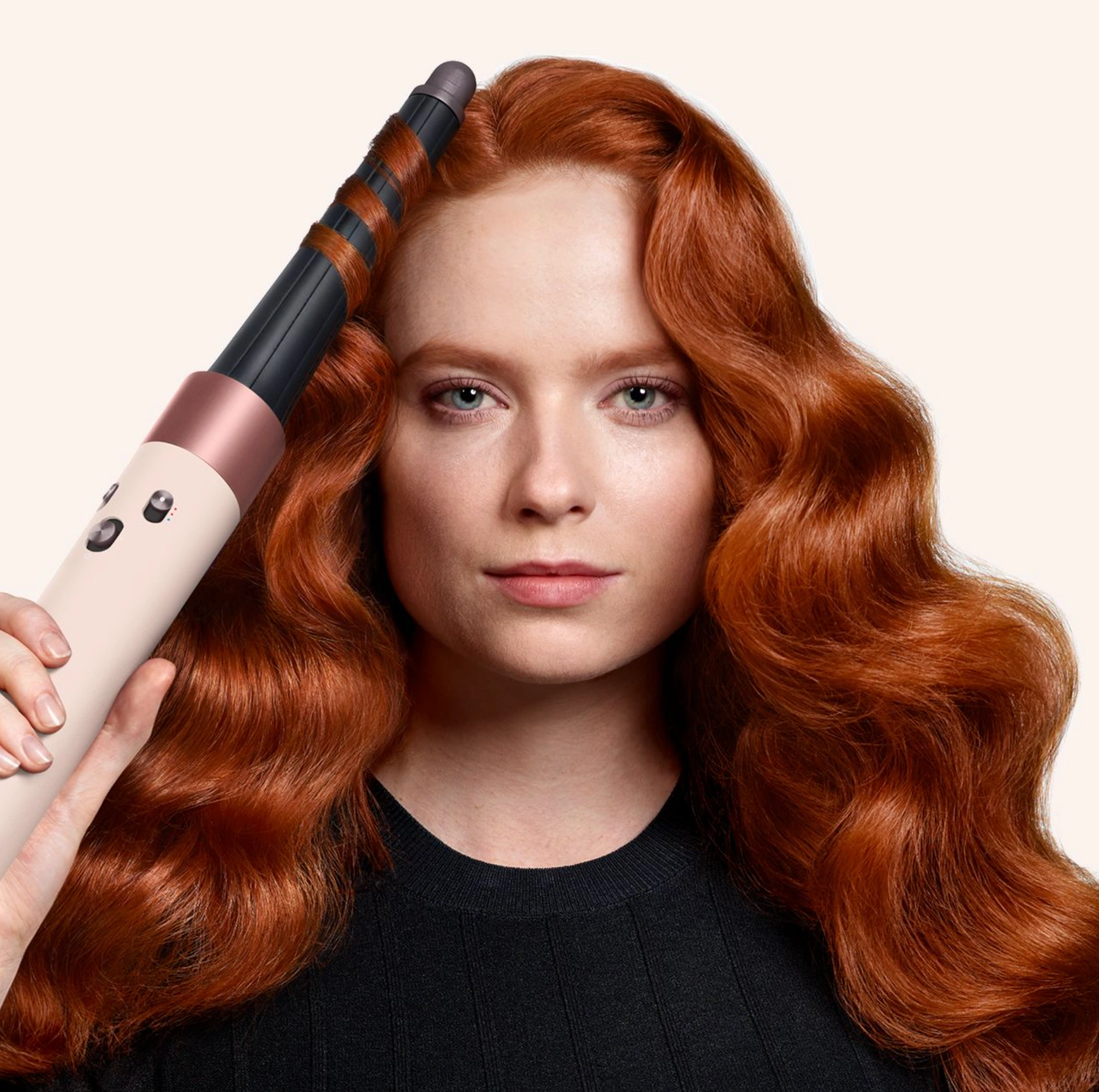
The Dyson marketing strategy uses product innovation to create a new comparison set. Dyson did not win by being a slightly better hair dryer. It reframed the buyer’s question from “Which dryer is cheapest” to “Which dryer protects hair while still performing consistently.”
That reframing is brand positioning work, not just product design. It is also a pricing power move, because it changes what the buyer values. The same pattern shows up in multi-stylers, wet cleaning formats, and robotics: a mechanism is introduced, the brand explains why it matters, and demonstrations make the claim tangible.
Brand Positioning Built on Engineering Proof
What Dyson Chooses Not to Say
A fast way to understand the Dyson marketing strategy is to look at the words it avoids. Dyson rarely leads with broad lifestyle language. When the brand positioning is grounded in function, the creative can stay quiet.
This restraint protects price integrity. It also keeps product innovation credible, because the message is specific. When claims are specific, they can be tested.
How Language and Design Reinforce Authority
Dyson relies on consistency across packaging, product pages, and retail environments. Visual hierarchy is clean. Claims are structured. Proof is placed close to the decision point.
This is where brand positioning becomes operational. It is not a slide deck. It is the interaction between copy, UI, and evidence. If you want to build that kind of system, the place to start is a clear brand strategy that defines what you can credibly claim and what you should leave unsaid.
.webp)
Premium Pricing That Signals Value
Price Integrity as a Brand Asset
In the Dyson marketing strategy, premium pricing is a signal that the product innovation is meaningful. The price communicates confidence in performance, durability, and service.
This only works when the surrounding experience supports it. If the website is slow, the product page is thin, or the retail display is generic, the price starts to look like markup. Dyson avoids that by keeping proof and education close to the purchase moment, especially in direct-to-consumer flows.
Removing Purchase Friction Without Discounting
This approach separates friction reduction from discounting. You can make buying easier without eroding price integrity.
Practical options that keep price integrity:
- Clear comparison tools that explain differences by use case.
- Financing options that preserve price integrity while widening affordability.
- Owner benefits that feel like service, not couponing.
- A refurbished program that improves access without training the market to wait for sales.
Distribution: Direct-to-Consumer Control and Selective Retail
Direct-to-Consumer as a Data and Service Channel
Direct-to-consumer is a control point in the Dyson marketing strategy. The purpose is to own the education layer, the service layer, and the owner relationship.
That matters because product innovation often needs context. If a feature requires explanation, the brand either teaches it well or it becomes noise. Direct-to-consumer also supports pricing power because it reduces channel dependence. When you control the primary buying path, you can protect how products are presented, compared, and supported.
If you manage a high-consideration product, direct-to-consumer is also a UX discipline. The experience needs to load fast, work on mobile, and reduce uncertainty at each step. Core Web Vitals are part of that, especially interaction responsiveness. Google’s overview of Core Web Vitals is a clear baseline for what “fast enough” means.
Retail Partners as Scale, Not the Source of Truth
Dyson uses retail partners for reach, but Dyson does not outsource the story to a shelf tag. Dyson’s 2024 results note a rebalancing from direct retail toward relationships with key retail partners. (Dyson’s 2024 financial results)
This is a common maturity move. Direct-to-consumer remains the reference experience, and retail extends it. In practice, that means:
- Product naming and claims stay consistent.
- Demonstration scripts are standardized.
- Merchandising supports education, not just visibility.
- The customer can move between channels without relearning the brand.
Demonstration Marketing: Showing Performance at Every Touchpoint
Dyson Demo Stores as a Conversion Engine
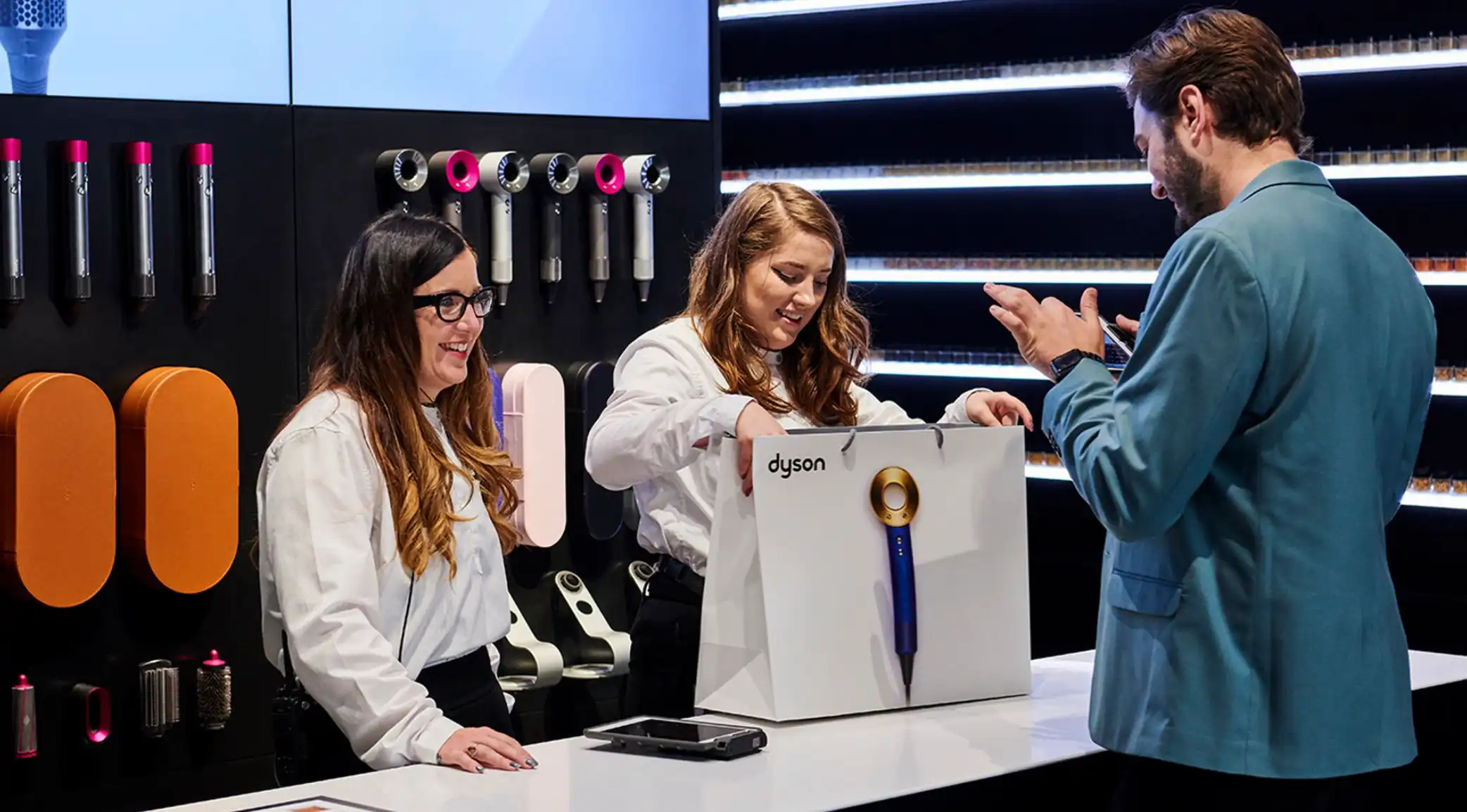
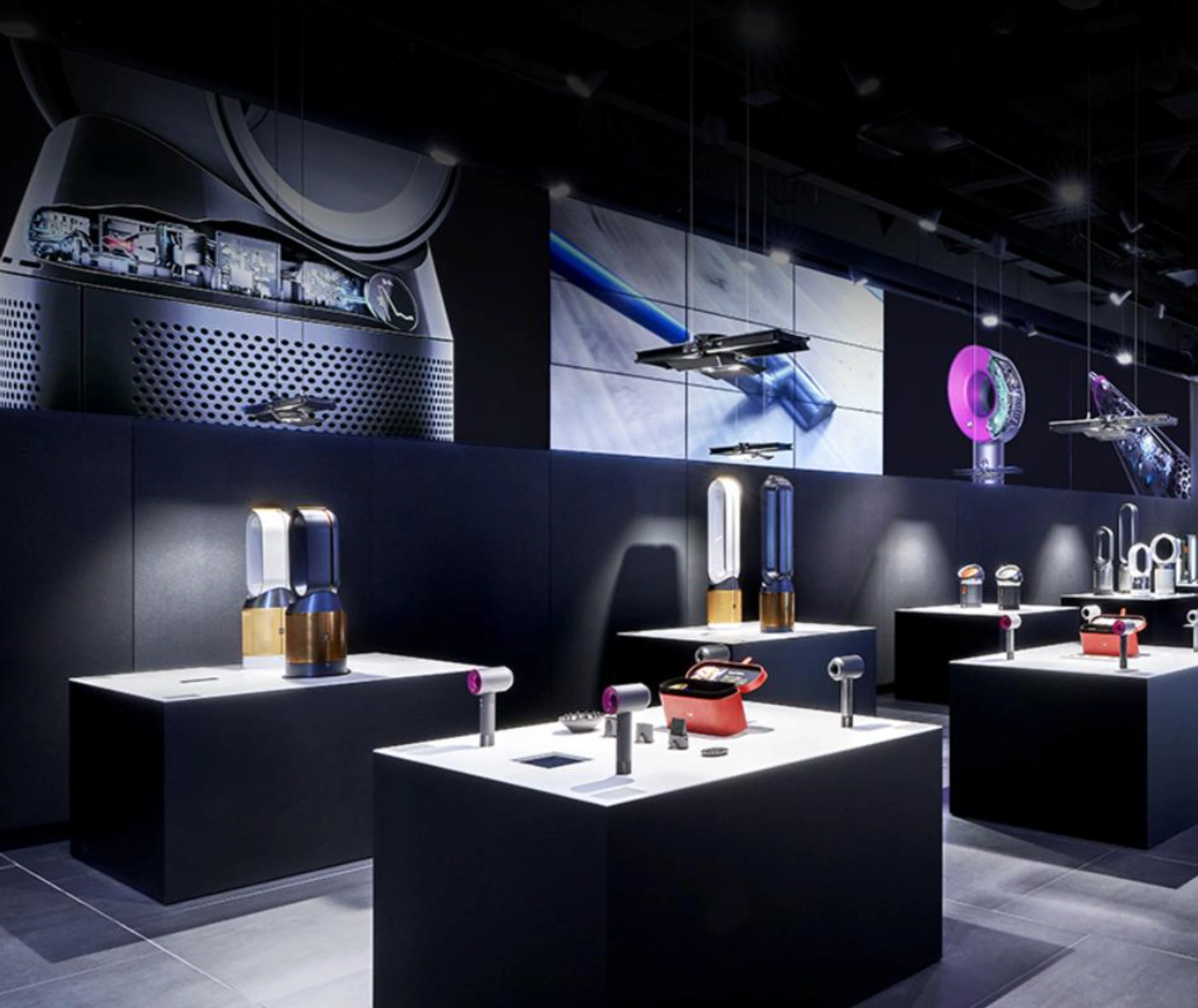
Demonstration marketing is where the Dyson marketing strategy becomes hard to copy. It requires training, space, and operational discipline. Dyson has built this into its retail model with Dyson Demo stores and guided in-store sessions.
Dyson also frames this as a long-running approach to retail, including a push toward virtual retail experiences. See Dyson’s own write-up on reinventing retail with Dyson Demo stores.
Demonstrations do two things standard advertising cannot:
- They make product innovation visible, which protects price integrity.
- They reduce buyer anxiety, which improves conversion without heavy promotion.
Product Pages That Behave Like Demos
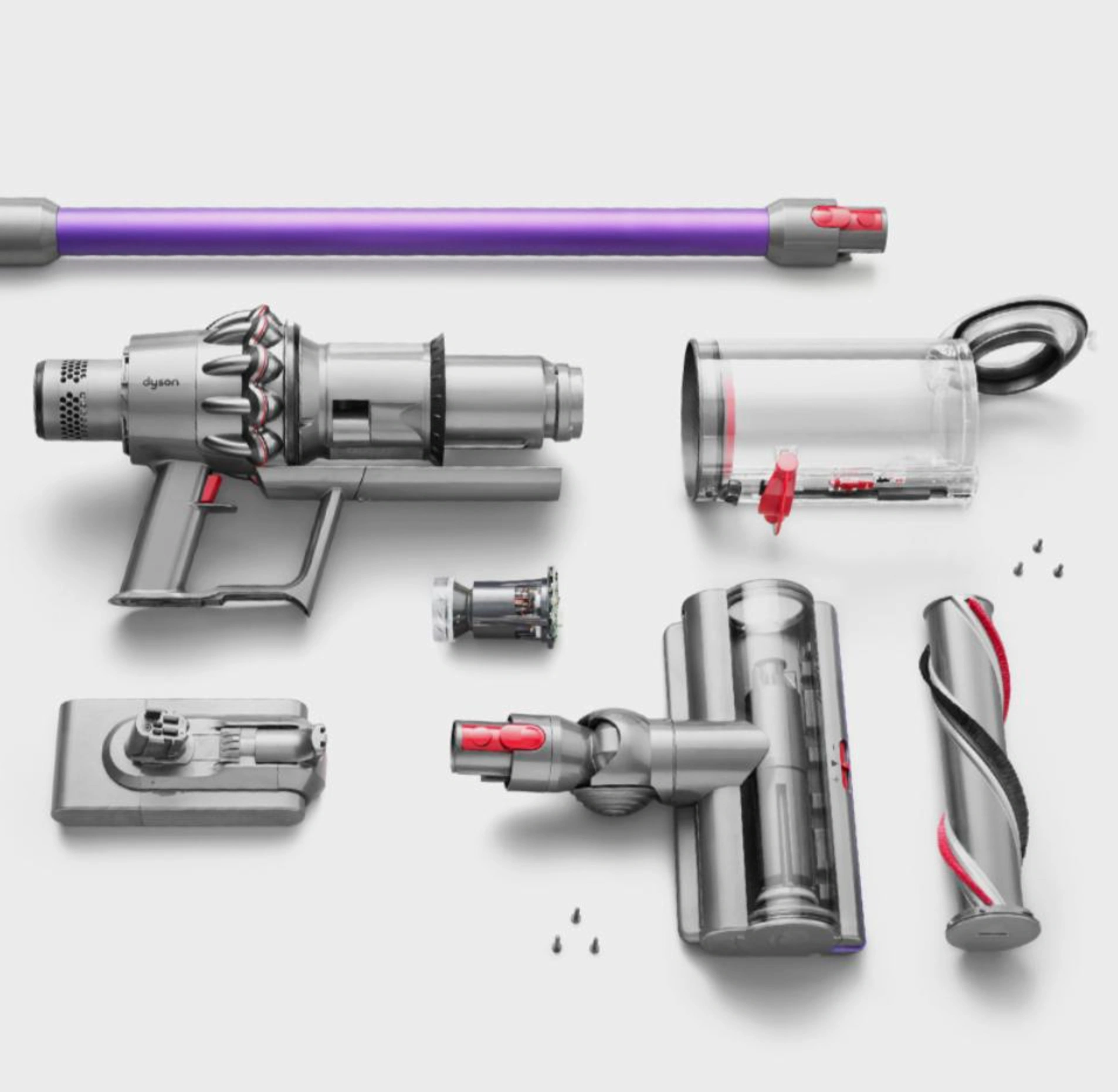
A strong direct-to-consumer product page should function like a guided demo. The Dyson marketing strategy uses structured content to answer buyer questions in the order they appear.
A practical checklist for high-consideration product pages:
- Start with the outcome, then explain the mechanism.
- Show what changes versus the previous model.
- Provide proof, including lab conditions and real-life caveats.
- Use comparison tables that match real use cases.
- Place service information close to the decision point.
This is where your digital experience either supports the story or breaks it. Many teams treat the site as a brochure. Dyson treats it as a sales floor. If your organization is rebuilding that layer, it can help to work with a web design agency and a UI UX design agency that can translate product claims into flows, hierarchy, and conversion logic without diluting brand positioning.
Accessibility is part of conversion, not compliance theater. Standards like WCAG 2.2 offer a baseline for building pages that work for more people and reduce preventable drop-off.
Content and Partnerships: Controlled Visibility, Credible Voices
Influencers as Educators, Not as Loudspeakers
The Dyson marketing strategy uses third parties in a specific way. Instead of outsourcing credibility, Dyson borrows environments that already have it. In hair care, that can mean stylists and professionals. In home categories, that can mean reviewers who test and explain.
This supports brand positioning because it keeps the message aligned with product innovation. It also supports pricing power because the endorsement is framed as a demonstration, not a discount pitch.
The Role of Earned Media and Product Seeding
Earned media works best when it does not need to invent a story. Dyson makes earned media easier by shipping a narrative that already has structure: problem, mechanism, proof, and outcome.
That is the same structure you should use for internal launches, partner briefs, and retail training. It reduces inconsistency, which is one of the fastest ways to weaken price integrity.
Retention and Ecosystem: Turning Owners Into Repeat Buyers
Service, Accessories, and the Owner Relationship
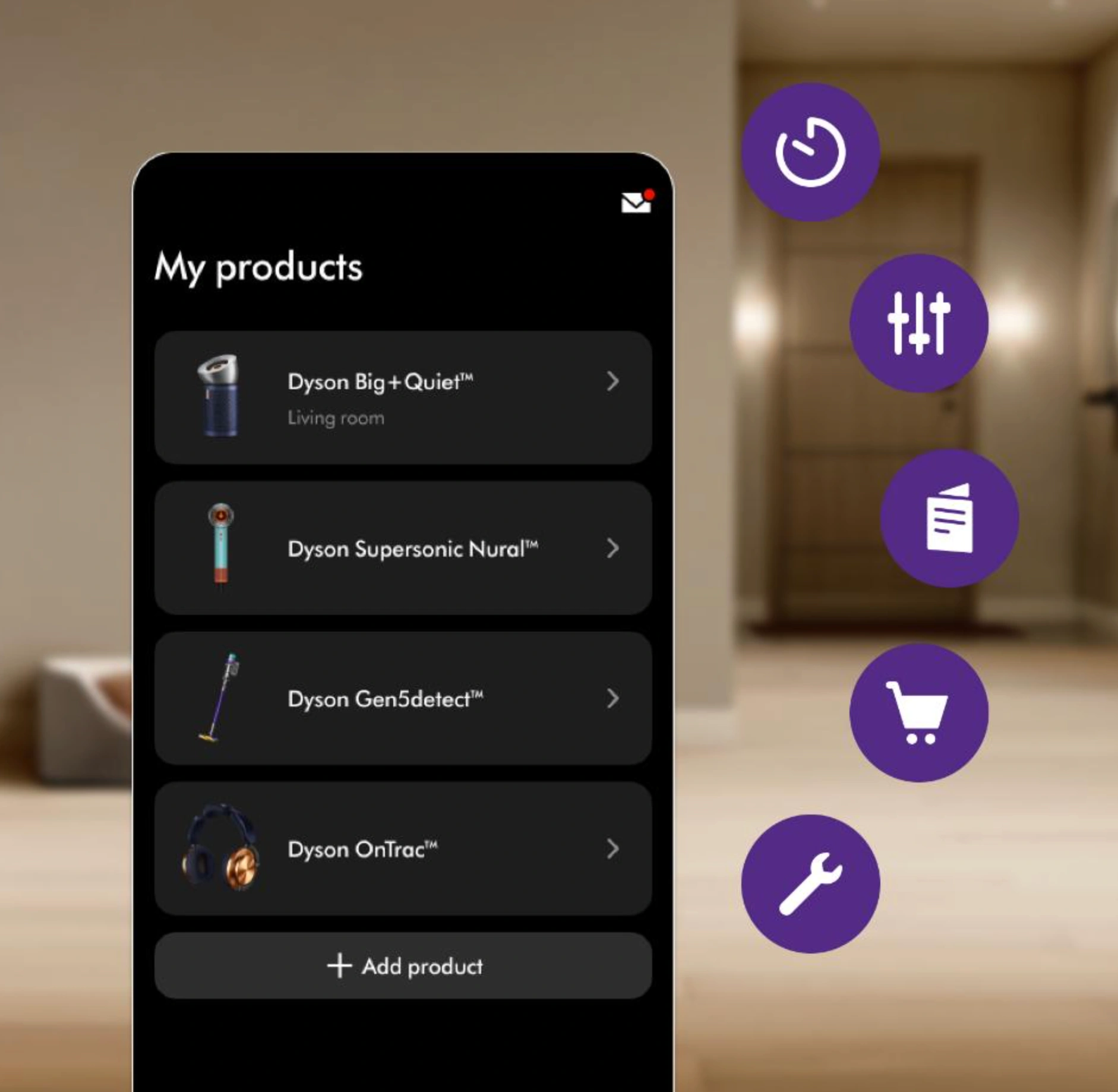
The Dyson marketing strategy treats ownership as a relationship, not a transaction. This matters because a higher price point raises expectations. Buyers expect support, parts, and a clear path to maintenance.
From an economic view, this is where direct-to-consumer becomes a retention tool. Owners can register, order accessories, and resolve issues without relying on a retailer. The result is a tighter feedback loop that can inform product innovation and reduce returns.
The Product Portfolio as a Cross-Sell Map
Dyson’s portfolio strategy supports efficiency. Once trust is earned in one category, the brand can credibly enter adjacent ones. This is why brand positioning matters. It creates permission.
You see the pattern in how Dyson expands across home care, beauty, air, and new cleaning formats referenced in its 2024 results. (Dyson’s 2024 financial results)
The Dyson Proof Loop: A Framework You Can Apply
Step 1: Name the Problem Precisely
The Dyson marketing strategy starts with a problem the customer recognizes. Not “cleaning” in the abstract, but “hair tangles in a brush head” or “heat damage” or “particles you cannot see.” This makes product innovation relevant before it becomes technical.
Step 2: Prove the Mechanism
The next step is proof. Proof can be lab testing, engineering diagrams, or specific metrics. Dyson’s reporting on patents and ongoing invention reinforces that it is an engineering-led organization. (Dyson)
This is where the price is earned. If you cannot prove the mechanism, the buyer assumes the difference is cosmetic.
Step 3: Let Customers Test It
Dyson uses demonstrations to close the gap between claim and belief. In stores, that is hands-on. Online, it is structured content that answers objections. Both support direct-to-consumer conversion because the buyer is not forced to infer the value.
Step 4: Reward Ownership
The final step is retention. A premium brand can only keep price integrity if owners feel supported. Make service easy, parts easy, and upgrades intelligible. Then product innovation becomes a reason to return, not a reason to switch.
Key Lessons and FAQs: What Decision-Makers Should Take From Dyson
What Is the Dyson Marketing Strategy in One Sentence
The Dyson marketing strategy turns product innovation into a proof-led story that supports premium pricing, reinforces brand positioning, and scales through direct-to-consumer control plus selective retail.
How Does Dyson Maintain Premium Pricing Without Constant Promotions
Premium pricing holds when the buyer can see the mechanism, test the outcome, and trust the service layer. Promotions become optional, not structural.
If your team is struggling with price erosion, audit the system in this order:
- Brand positioning clarity. Can a buyer explain the difference in one sentence.
- Proof quality. Are claims measurable and easy to validate.
- Direct-to-consumer experience. Does the site reduce uncertainty at each step.
- Demonstration marketing. Where can the customer feel the difference.
- Ownership. What happens after checkout.
What Channels Matter Most in the Dyson Marketing Strategy
In the Dyson marketing strategy, three channels do the heavy lifting:
- Direct-to-consumer: education, service, data, and conversion.
- Demonstration marketing: stores, video, and guided product pages.
- Retail: reach and convenience, anchored by the same story.
Search also matters because high-consideration buyers research before they buy. That is why a durable SEO strategy is part of modern brand governance, even when the brand is already well known.
.webp)
What Should Brands Avoid When Copying Dyson
The Dyson marketing strategy is not a license to over-engineer your message. One risk is turning product innovation into jargon. Another risk is assuming premium pricing can be sustained by aesthetics alone.
Avoid these common misreads:
- Leading with features without naming the customer problem.
- Using scientific language without clear explanation.
- Treating direct-to-consumer as a store, not a teaching channel.
- Building demonstration marketing without training and measurement.
- Copying Dyson’s tone if your brand positioning is fundamentally different.
If you want comparable examples of disciplined brand systems, see our breakdowns of Nike’s marketing strategy and Coca-Cola’s marketing strategy. For teams building clusters of related content and pages, our guide on internal linking strategy is a practical companion.
A Measured Next Step
The Dyson marketing strategy is not just about launches. It is a system that protects price integrity by making product innovation visible, and by using direct-to-consumer execution to reduce uncertainty at the point of decision.
If you are rebuilding your own system, start with a clear definition of brand positioning, then pressure-test your proof and your purchase path. If you want an outside view, start a conversation with Brand Vision or request a focused marketing audit.



%2520(1).png)