
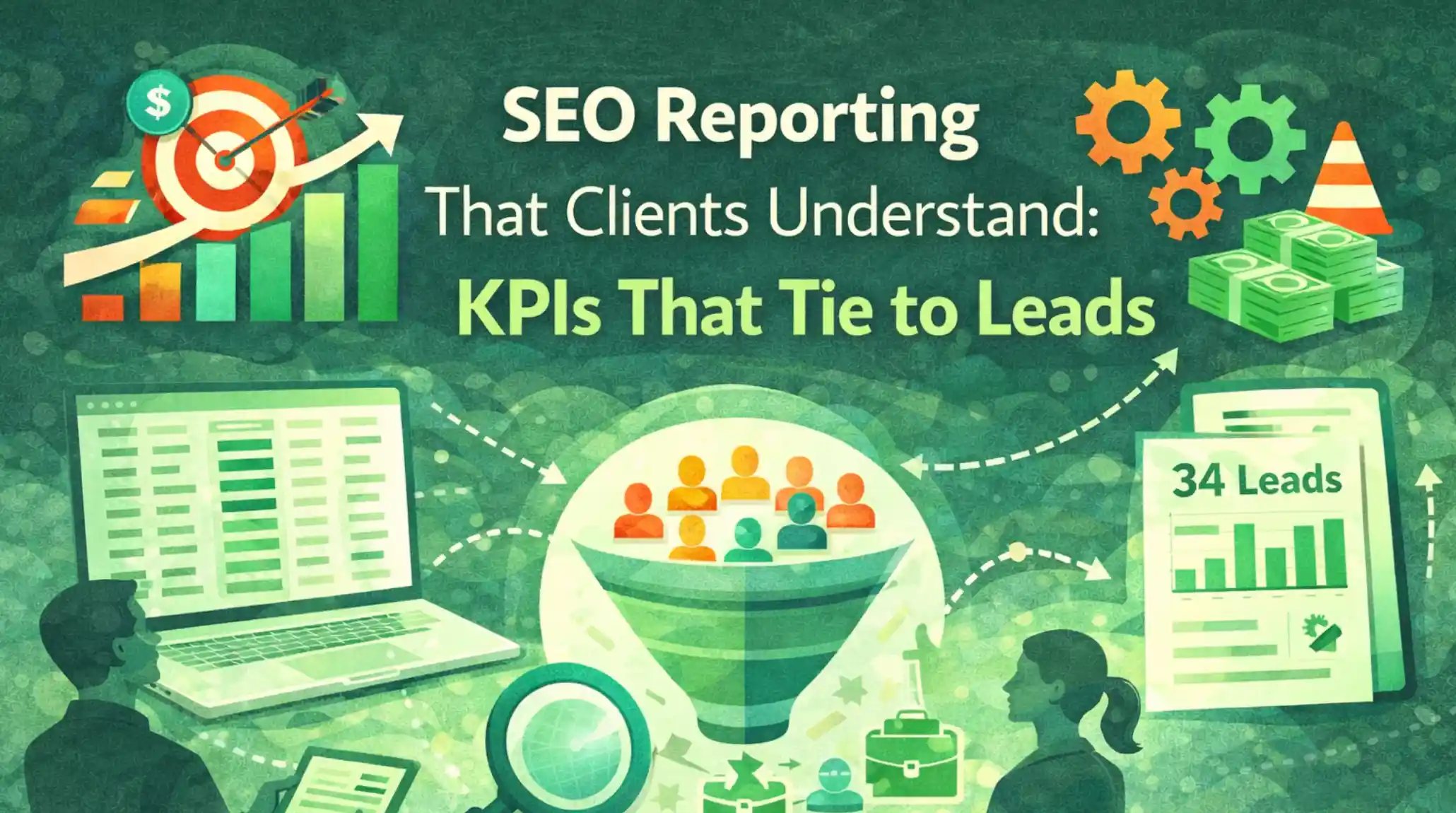
When SEO reporting feels confusing, it is usually not because the work is unclear. It is because the report does not answer the business question behind every meeting: are we getting more leads?
Rankings and traffic can move in the right direction while revenue stays flat. That gap is where clients lose confidence. The fix is not more data. The fix is a cleaner story, built around a small set of SEO KPIs that clients understand, tied directly to lead generation, lead quality, and pipeline.
This guide lays out a practical way to build an SEO report that decision makers can trust. It focuses on what to measure, how to explain it, and how to turn reporting into next steps.
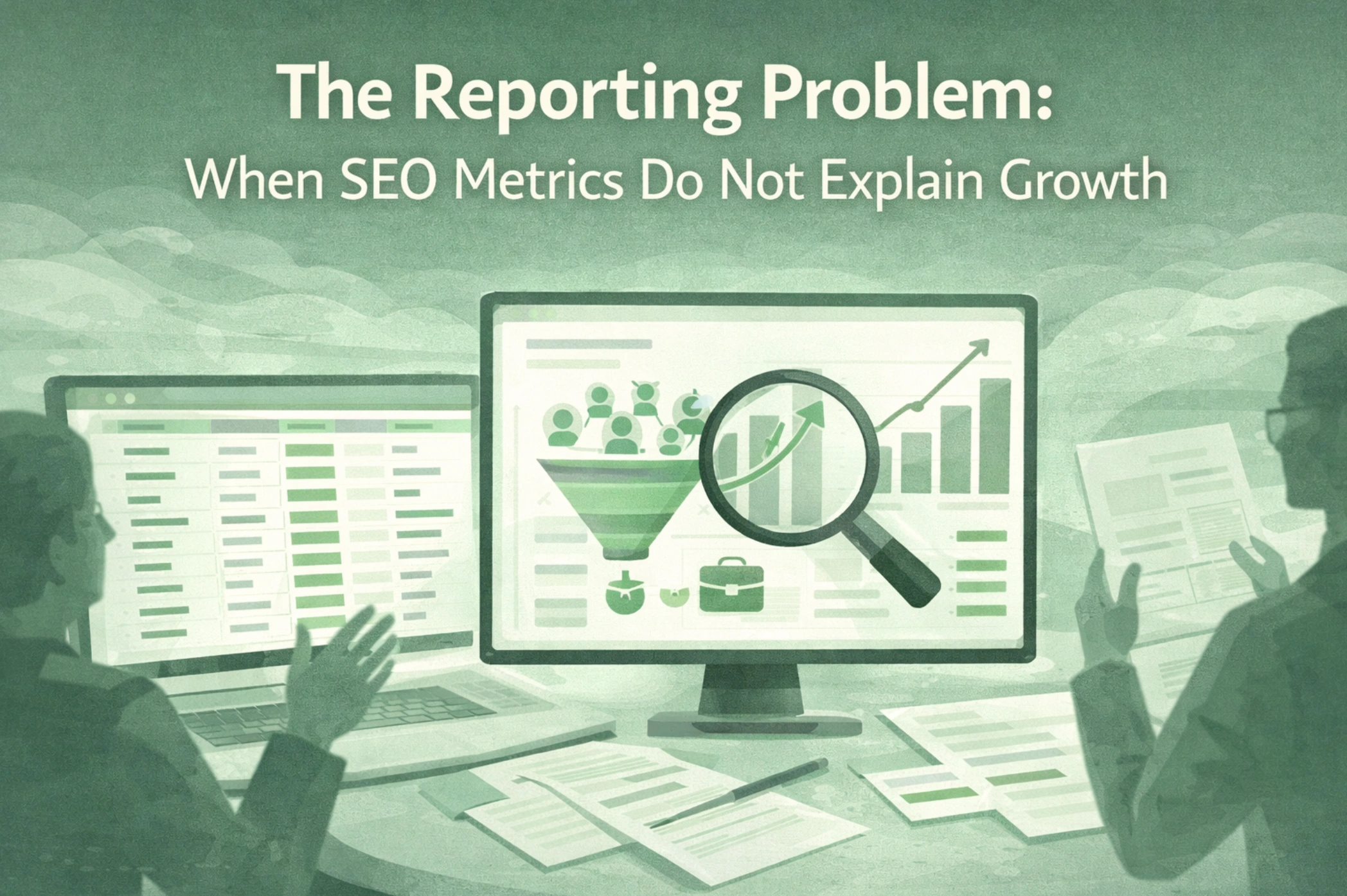
The Reporting Problem: When SEO Metrics Do Not Explain Growth
Most SEO reports start with numbers that feel busy. A table of keywords. A chart of sessions. A note about technical fixes. Then the client scans the page and asks, “Okay, but did this drive lead?”
That happens because many SEO KPIs are indirect. Search visibility is a signal. Traffic is a signal. Even engagement can be a signal. None of them are the outcome the business runs on. Lead generation is the outcome.
Another common issue is timing. SEO creates results on a delay. Visibility can improve before leads do. If the report does not explain the time lag, normal SEO momentum can look like underperformance. That is when the conversation turns into doubt and second guessing.
A strong SEO reporting approach solves this by connecting three things every month.
- Market demand: what people are searching for
- Website performance: where they land and what they do
- Lead outcomes: how many leads came from organic search and how good they were
Define The Lead Before You Measure Anything
Before you choose SEO KPIs, define what a “lead” means for the business. This sounds obvious, but it is where reporting breaks most often.
If the business sells through forms, a lead is a form submission. If the business sells through booked calls, a lead is a booked call. If the business sells through demos, a lead is a demo request. Everything else is supporting evidence, not the headline.
It also helps to separate real leads from early interest. A pricing page view can be a strong sign of intent. A newsletter signup can be useful. But these are not always lead generation, and treating them as leads inflates the story.
A simple structure that works across industries is three tiers.
- Lead actions: contact form submit, demo request, quote request, booked call
- Intent actions: pricing page view, contact page view, key CTA click, deep scroll
- Trust actions: case study view, reviews view, certifications view
Once the lead definition is set, your SEO report becomes easier to understand. Every KPI you include should either predict leads, explain why leads changed, or help improve lead quality.
How We Tie SEO KPIs to Leads
Clean reporting usually comes from three systems working together.
Search Console shows demand and visibility. GA4 shows behavior and conversions. A CRM shows lead quality and pipeline when the business has that in place.
When the data is consistent, you can answer the questions clients care about without guessing.
- Are we showing up for the right searches
- Are the right people clicking
- Are they landing on the right pages
- Are those pages converting into leads
- Are those leads turning into pipeline
Search Console metrics matter because they show what happened in Google Search, not just on the site. Google’s documentation on clicks, impressions, and CTR is the baseline for interpreting those numbers correctly. (Search Console performance metrics)
GA4 matters because it tracks actions, not just pageviews. If lead generation is your goal, the report should be built around events and key events, not vanity engagement. (GA4 recommended events)
Attribution matters too, but only if you treat it carefully. GA4 attribution can help explain paths, but you should avoid claiming more certainty than the data can support. (GA4 attribution overview)
When tracking is incomplete, reporting becomes shaky. In those cases, it is better to fix the foundation than to “report around” the gaps. That is often the role of a marketing consultation and audit, where measurement and conversion paths get clarified before strategy is scaled.
.webp)
The KPI Ladder: A Simple Model Clients Can Follow
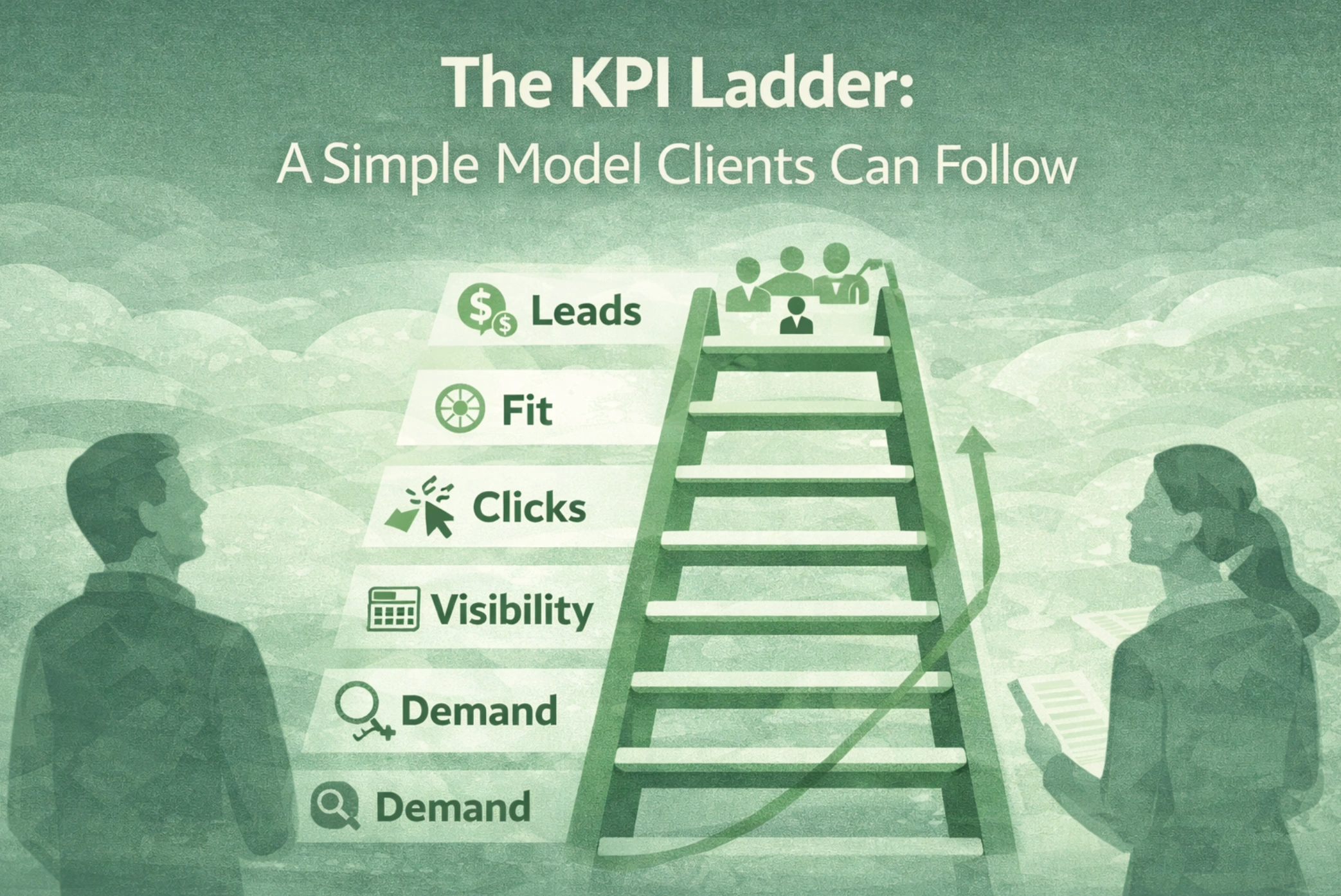
Clients understand SEO faster when you show it as a ladder. Each step answers one question. Each step leads to the next. This makes SEO KPIs feel logical, not random.
- Demand: are people searching for this
- Visibility: are we appearing for those searches
- Clicks: are we earning traffic from that visibility
- Fit: are visitors landing on the right pages
- Leads: are those visits turning into lead generation
- Quality: are those leads becoming pipeline and revenue
This ladder also prevents reporting bloat. You do not need twenty SEO KPIs. You need a small set that tells the full story from search to leads.
The Core SEO KPIs That Map To Leads
There are many ways to report on SEO. These KPIs are the ones that consistently help clients understand what is happening and what to do next.
Demand Signals From Search
Demand KPIs show whether the market is searching, and whether you are capturing that demand. They also help separate brand demand from non brand growth, which matters for long term lead generation.
Use these Search Console KPIs consistently.
- Non brand impressions by theme or service category
- Non brand clicks by theme or service category
- Brand vs non brand click share
- Average position by theme, not just by single keywords
A helpful habit is to call out one demand shift each month. For example, if non brand impressions rise for a service theme, it may mean your visibility improved, demand increased, or both. If they fall, it can be seasonality, algorithm changes, or lost relevance.
Click Quality And Landing Page Fit
This is where many SEO reports become useful. Click quality metrics show whether your visibility is earning meaningful traffic, and whether people are landing on pages that match intent.
Use these KPIs.
- CTR by theme and by priority landing pages
- Clicks to lead focused pages, not just sitewide clicks
- Engagement rate and scroll depth on those pages in GA4
- New vs returning organic users on key pages
CTR is especially valuable because it tells you if your result is compelling. If impressions rise but clicks do not, the issue may be the snippet or the title framing, not your rankings.
If engagement is low, treat it as a potential UX issue, not just a content issue. A confusing layout, weak hierarchy, or unclear CTA can suppress lead generation even when traffic is strong. That is where improvements are needed to happen when working with a UI UX design agency.
Lead Actions And Conversion Rate
This is the point where reporting needs to be direct. Leads should be counted clearly and explained honestly.
Use these KPIs.
- Organic leads, based on defined GA4 key events
- Organic conversion rate by landing page for lead actions
- Assisted conversions for longer sales cycles, when relevant
- Form completion rate, if you track form steps
A strong reporting move is to separate volume from efficiency. Traffic can grow while conversion rate drops, especially if you expand into higher funnel topics. That is not automatically bad. The report should explain what changed and why.
Lead Quality And Pipeline Signals
This is where SEO reporting earns executive trust. It connects lead generation to sales reality.
If you have CRM access, track these monthly.
- MQL rate from organic leads
- SQL rate from organic leads
- Pipeline influenced by organic leads
- Lead to close rate for organic sourced leads
If you do not have CRM access, use practical proxy signals.
- Form fields that indicate fit, like company size or role
- Demo request ratio vs general contact submissions
- Lead conversion rate by page topic
When you can show that certain themes drive higher quality leads, SEO reporting becomes a strategy tool. It stops being about traffic and starts being about category strength.
Build A Client Ready SEO Report: One Page, Three Views
Clients rarely want a longer report. They want a report that is easier to read and easier to act on. A one-page structure works well when it includes three views.
Executive Summary
This is the section decision makers read. Keep it short, clear, and outcome first.
Include.
- Organic lead generation change month over month
- The top two drivers, tied to specific pages or themes
- One constraint or risk that could affect lead results
- The next actions for the next month
If the website is the bottleneck, say it plainly. If key pages convert poorly, call it out. That is where a strong web design agency can matter, because reporting improves nothing unless the site can turn demand into leads.
.webp)
Performance By Landing Page
This view makes reporting concrete. Clients can recognize pages instantly, which makes the report easier to trust.
Include.
- Organic sessions
- Engagement rate
- Lead conversion rate
- Lead volume
- A short note on what to improve next
This is where you identify two types of pages.
- Hero pages: strong traffic and strong lead conversion
- Leak pages: strong traffic but weak lead conversion
Leak pages are not failures. They are opportunities. They tell you where SEO is working, but the page is not finishing the job.
Performance By Theme Or Service Line
This view is the strategy lens. It shows whether the business is winning in the categories it cares about.
Group content into themes, then report.
- Non brand impressions and clicks by theme
- Organic leads and conversion rate by theme
- Priority content gaps and next builds
For B2B focused organizations, this theme based view is often the most valuable. It connects search behavior to how buyers think. It can also align naturally with a B2B marketing agency approach when teams need tighter positioning and funnel clarity.
Attribution Without Confusion: What You Can Prove And What You Should Not Claim
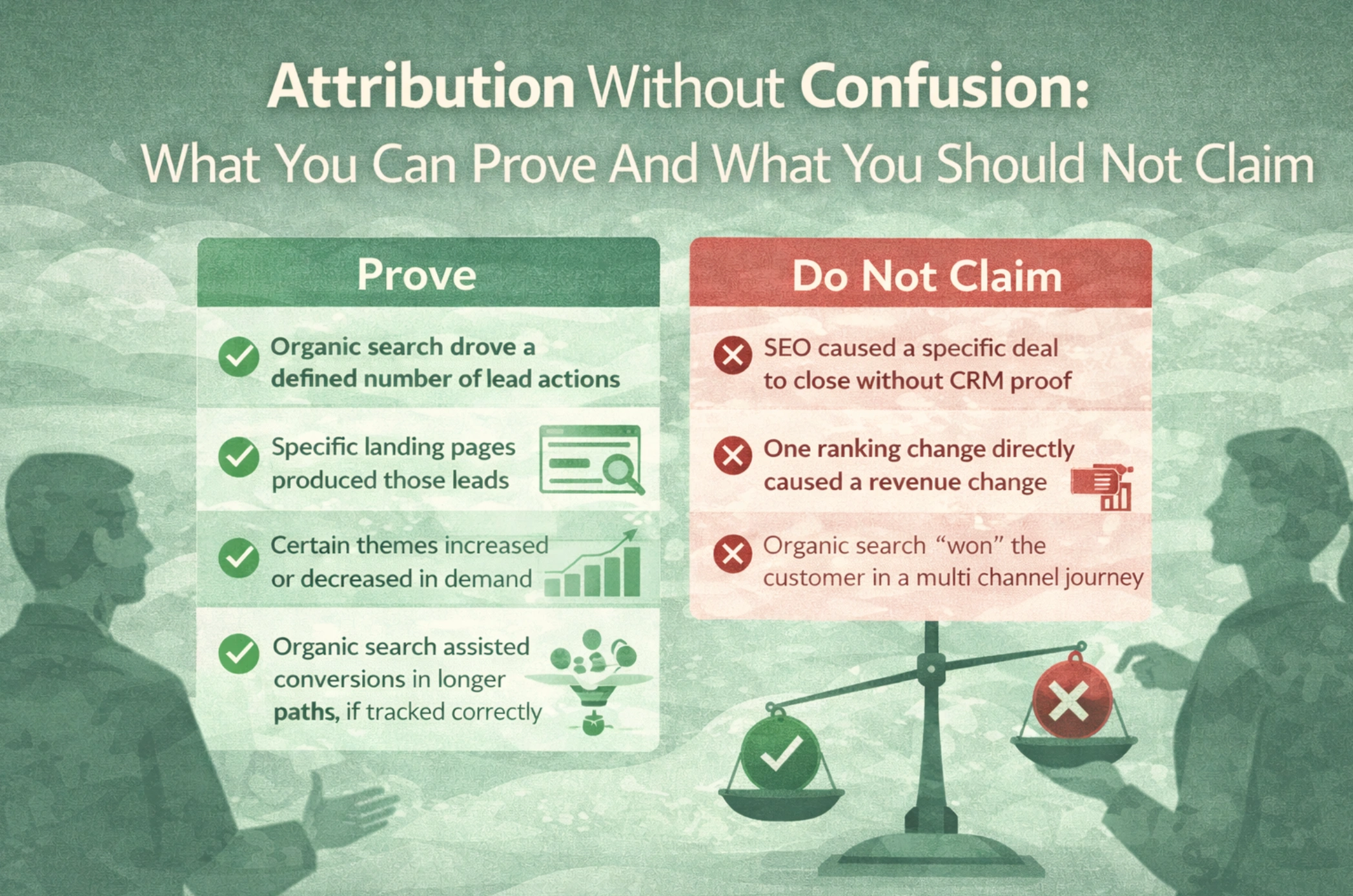
Attribution is where SEO reporting can get slippery. The fix is to be precise about what the data can support.
You can usually prove these points.
- Organic search drove a defined number of lead actions
- Specific landing pages produced those leads
- Certain themes increased or decreased in demand and clicks
- Organic search assisted conversions in longer paths, if tracked correctly
Avoid these claims unless you have strong systems in place.
- SEO caused a specific deal to close without CRM proof
- One ranking change directly caused a revenue change
- Organic search “won” the customer in a multi channel journey
Use attribution reports as context, not as the headline. Clarity beats certainty. Most executives will trust a calm, honest SEO report more than a confident one that overreaches.
Reporting Cadence: Weekly Signals, Monthly Decisions, Quarterly Strategy
The right cadence keeps the work stable and prevents reaction to noise.
Weekly signals should be light.
- Indexing and coverage issues
- Sudden drops in clicks or impressions
- Tracking anomalies for lead actions
- Early performance after new launches
Monthly reporting is where the real decisions happen.
- Theme level demand and performance
- Landing page conversion rate trends
- Content priorities and pruning decisions
- UX and performance constraints impacting lead generation
Quarterly reporting is where you adjust direction.
- What categories you are winning or losing
- Which segments produce higher quality leads
- What website improvements unlock better conversion
- What the next quarter should focus on
This is also where brand clarity often shows up indirectly. When positioning improves, brand demand tends to strengthen over time, and non brand CTR can rise because the offer is clearer. That is why SEO reporting and brand strategy are connected, even when the workstreams are separate.
-1.webp)
The Most Common SEO Reporting Mistakes That Break Trust
Clients rarely lose trust because of one bad month. They lose trust because the report feels disconnected from reality.
Avoid these reporting mistakes.
- Reporting rankings without showing lead impact
- Reporting traffic without separating brand vs non brand
- Reporting sitewide averages instead of page-level performance
- Changing what counts as a lead without documenting it
- Overcrediting SEO for revenue without attribution discipline
- Adding too many SEO KPIs and hiding the story
Another common issue is ignoring the website experience. If the site is slow, unclear, or hard to navigate, lead generation will cap out even when SEO visibility improves. Reporting should surface that early.
A Reusable SEO Reporting Framework For Any Business
A good SEO report should follow the same structure every month. It makes change easier to understand.
Use this format.
- Outcome: organic leads, conversion rate, and one note on lead quality
- Drivers: what pages or themes caused the change
- Constraints: what limited results, such as tracking, UX, or performance
- Actions: what you will do next, and what it is expected to improve
This framework also improves communication. The report reads like an operating update, not a marketing recap. That is the tone clients understand.
When SEO Reporting Should Trigger Website, UX, Or Tracking Work
SEO reporting should not just explain performance. It should tell you what kind of work will create the next lift.
Use the patterns below.
If impressions rise but clicks do not, prioritize titles, snippets, and intent match. If clicks rise but leads do not, prioritize landing page clarity, CTA placement, form UX, and trust content. If leads rise but quality drops, tighten qualification, narrow topic focus, and refine the offer.
In many cases, the best next step is a systems fix.
- Tracking fixes: align GA4 key events, form tracking, and CRM handoff
- UX fixes: reduce friction on key pages and simplify forms
- Performance fixes: improve mobile speed and stability
- Navigation fixes: make key pages easier to find and understand
This is where SEO reporting becomes a bridge between marketing and product. It turns metrics into actions that improve lead generation.
If a business needs support across these pieces, a marketing agency can help connect the reporting, the site improvements, and the execution so results are reflected in leads, not just in charts.
.webp)
Turn SEO Reporting Into Growth Decisions
SEO reporting should never feel like a monthly ritual that checks a box. At its best, it becomes a decision system. It tells you where demand is rising, which pages are earning the right clicks, where users hesitate, and what needs to change to turn visibility into lead generation.
That is also where Brand Vision brings the most value. Reporting is only useful when it connects clean measurement to real execution, across SEO, landing page clarity, UX, site performance, and conversion paths. When those pieces move together, the numbers stop being abstract. They become predictable inputs you can manage, month after month.
If you want SEO reporting that your leadership team can trust and act on, start a conversation with Brand Vision. Request a project outline through our marketing consultation and audit, and we will map your KPIs to leads, identify the bottlenecks holding conversion back, and give you a plan built for measurable growth.



%2520(1).png)