In many growing companies, the brand begins with a person. A founder posts on LinkedIn, speaks on podcasts, and becomes the main reason customers say yes. At some point, a harder question arrives: should the future of the business sit on that personal brand, a separate business brand, or both.
This decision is strategic. Buyers, candidates, investors, and potential hires can evaluate both a leader and the company before they ever speak with sales. A visible executive can humanize the business, but that visibility only helps when it reinforces the company’s promise rather than competing with it. (LinkedIn Marketing Solutions)
This guide helps you decide how personal and business brands should work together, how your website and marketing should reflect that choice, and what to do if you need to evolve from one model to another.
Personal Brand vs Business Brand Key Differences
At the highest level, the difference is simple.
- A personal brand is the market’s perception of an individual.
- A business brand is the market’s perception of a company as a separate, transferable asset.
To make this practical, compare the two across a few core dimensions:
- Primary face of the brand. A personal brand puts an individual in front. A business brand leads with the company name, logo, and visual identity.
- What actually drives trust. Personal brands rely on reputation, expertise, and personality. Business brands build trust through track record, client results, and the strength of the team and systems.
- Where ownership sits. A personal brand lives with the person and follows them from role to role. A business brand lives with the company, independent of any one individual.
- How value and exit work. It is hard to sell or separate a pure personal brand. A strong business brand can be sold, merged, or spun off without the founder attached to every deal.
- Speed to traction. Personal brands usually gain attention faster, especially on social platforms. Business brands can be slower to take off but tend to be stronger at scale once the system is in place.
- Key risks. With a personal brand, reputation and key person risk concentrate in one individual. With a business brand, the risk is that it feels faceless or generic if no one humanises it.
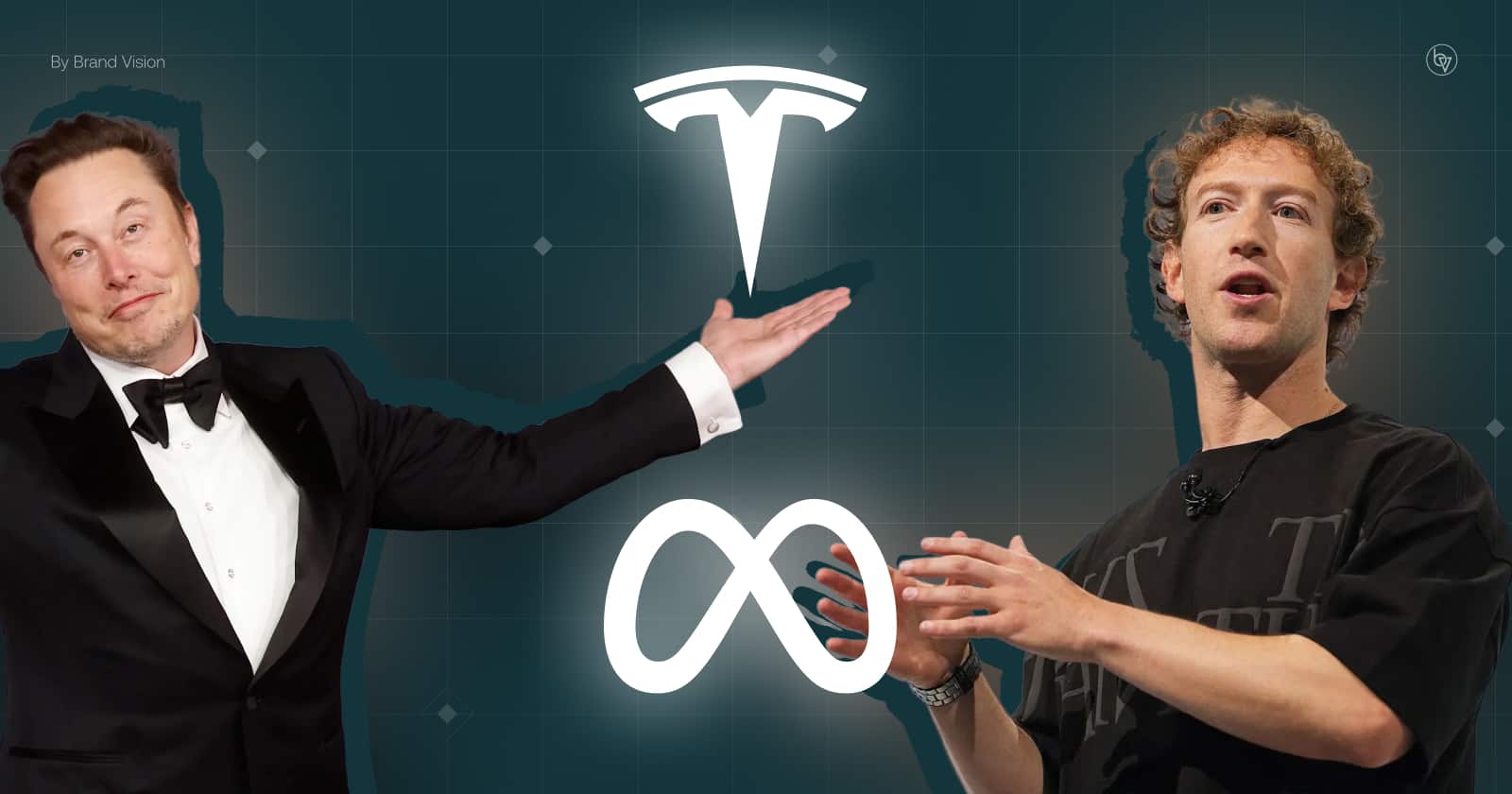
For many founder-led companies, the best answer is not a pure either-or choice but a managed hybrid where the personal and business brands reinforce each other rather than compete.
Why This Choice Matters More in 2026
Two shifts make the personal brand vs business brand decision more strategic than it was a decade ago.
First, leadership visibility increasingly shapes how people interpret the company. LinkedIn’s research reflects the broader shift toward executive-led thought leadership and visible leadership in company communication. Georgetown University notes that 40 percent of millennials say they check a CEO’s personal brand before deciding whether to work at a company.
Second, trust now sits both with companies and individual leaders. Edelman’s 2024 Trust Barometer reports that business remains the most trusted institution globally, ahead of government, media, and NGOs. At the same time, people worry that leaders across institutions may mislead them, so visible, accountable leadership matters.
Digital platforms intensify both sides. It has become easier than ever for a founder to grow a personal audience. It is also easier for a misaligned personal brand to create confusion for a business brand. The structure you choose must reflect how you plan to market, hire, and exit, not just how you like to show up online.
How Personal Brands Work for Founders, CEOs, and Experts
A strong personal brand makes the founder or executive the clearest expression of the company’s value. When it works, the benefits are significant.
Typical advantages include:
- Faster relationship building. Personal content can feel more direct and human than corporate posts, especially when the leader has a clear point of view and responds as a person rather than a logo.
- Access to opportunities. Speaking invitations, partnership requests, and deal flow often follow the person leaders see in their feeds, not the logo alone.
- Talent and stakeholder pull. Research highlighted by Georgetown shows that candidates can use a leader’s online presence as one signal when judging the company’s culture and direction.
Personal brands are especially powerful when:
- The offer depends on expertise or a distinctive point of view.
- Sales cycles are relationship-led and trust-intensive.
- The firm is small, early, or deliberately boutique.
There are trade-offs. The company’s pipeline and perceived value become tightly tied to one individual. If that leader changes focus, burns out, or faces a reputation issue, the impact lands directly on revenue and hiring. Marketing teams must also work harder to convert personal attention into structured demand for products and services.
How Business Brands Work as Scalable, Transferable Assets
A business brand turns the company itself into the enduring asset. The founder still matters, but the story, visuals, and promise sit with the organisation.
Core strengths of a business brand include:
- Scalability. Sales, marketing, and delivery can be led by teams, not just the founder. A clear business brand gives every employee a shared story to tell.
- Transferability. The brand can survive leadership changes and succession. It can be sold, merged, or licensed.
- Risk management. Reputation and operational risk are distributed across the company and its governance, not one individual’s profile.
Business-first brands are especially suitable when:
- You are building a multi-founder or multi-office organisation.
- Long-term plans include sale, merger, or succession beyond the founder.
- The sector is regulated or conservative, where corporate reputation and continuity matter as much as personality.
The main drawback is speed. Early on, a pure business brand can feel abstract. Without a visible leader, the brand can look polished but distant. That is why many companies combine a strong business brand with visible leadership rather than choosing only one or the other.
Framework: When to Lead With Personal, Business, or a Hybrid Brand
There is no universal rule, but there is a useful decision framework. It starts with a few grounded questions and then shifts to stage-based guidance.
Questions to Ask Before You Decide
Ask these questions with your executive team and board:
- What is the time horizon and likely exit path? Lifestyle business, long-term independent company, or eventual sale.
- Where does trust currently sit? Are customers buying because of the founder, the company, or both.
- How concentrated is delivery in one person? Can the company deliver its promise if the founder steps back for six months.
- What does your pipeline depend on? Speaking and personal content, or repeatable campaigns and partner channels.
- Who will own key IP? Content, methodologies, and product roadmaps should sit in entities that align with your legal and financial plans.
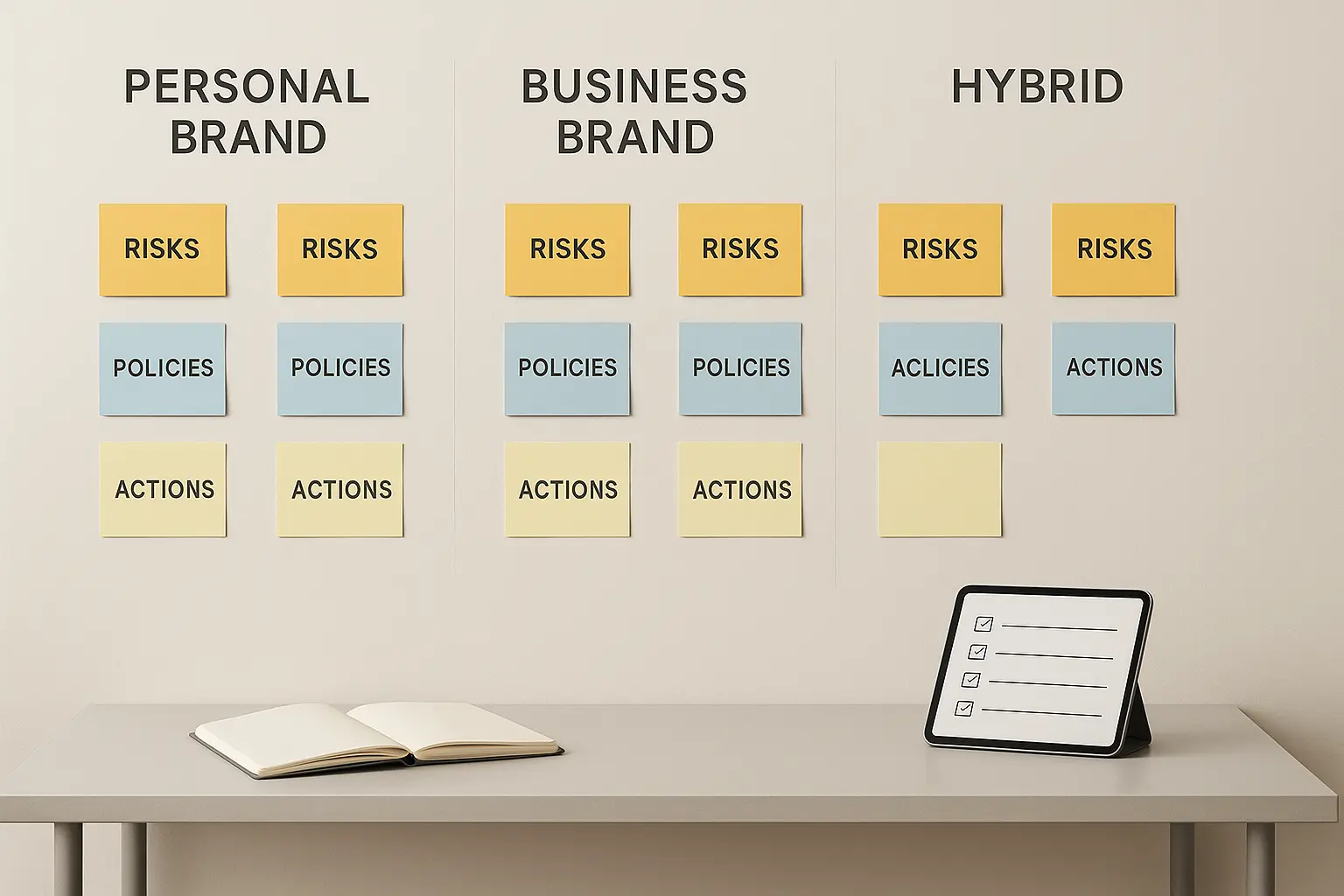
If most of your current demand and delivery rely on one person, a hybrid model can be a safer transition than abruptly removing the founder from the story. If leadership disagrees about where trust actually sits, use brand research to test customer perceptions rather than relying only on internal assumptions.
Stage-Based Guidance: Pre-Launch, Early Growth, Scale, Exit
A practical approach is to let your brand structure evolve with the company stage.
- Pre-launch. If early demand is genuinely founder-led, the personal brand can carry more of the first-stage attention while the company name, promise, and identity are established in parallel.
- Early growth. Shift more attention into company-owned assets, such as the website, email list, and team-led content, without forcing the founder to disappear. For a new venture, startup marketing should turn founder visibility into repeatable company demand rather than leave acquisition dependent on one profile.
- Scale. Invest intentionally in the business brand. Build a clear brand strategy, visual identity, and messaging system that any team member can use. Deepen your website, content library, and case studies so that new clients can engage without needing a call with the founder.
- Exit or succession. Prioritise the business brand. Clarify how the founder’s name and likeness can be used post-exit. Ensure contracts, IP, and brand guidelines make it easy for a buyer or successor to continue operations without confusion.
At each stage, you can adjust how prominent the founder is in frontline marketing, but the underlying goal is simple. Use the personal brand to open doors and the business brand to hold value over time.
Designing a Hybrid Brand System That Doesn’t Confuse Customers
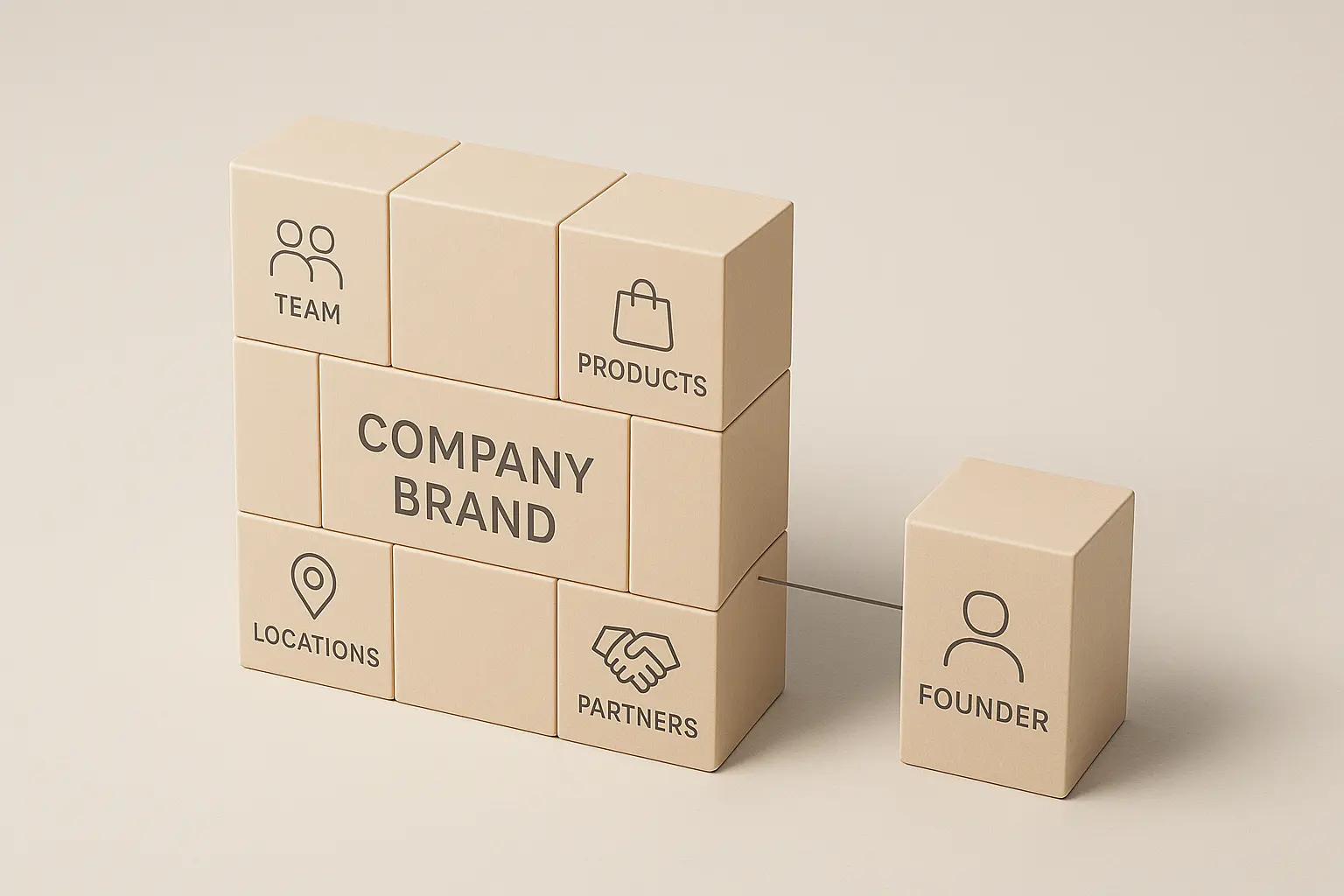
A hybrid model is often the most realistic answer. It works when there is sharp clarity on how the personal and business brands relate.
Who Owns What? Governance for Hybrid Brands
In a well-governed hybrid system:
- The business brand owns the promise, visual identity, product names, and client experience.
- The personal brand expresses leadership, perspective, and narrative, and points back to the company.
- Both are guided by a joined-up brand strategy, not improvised post by post.
Practical guardrails often include:
- A written agreement on how the founder’s name and likeness can be used alongside the company brand.
- Clear topics that the founder will speak about publicly and topics that stay with the corporate account or spokesperson.
- A consistent approach to crisis and reputation management so the founder and company reinforce, rather than contradict, one another.
Many companies formalise this work with a dedicated brand strategy project that defines architecture, messaging, and roles. Partnering with a specialist branding agency and a structured brand strategy engagement can turn that intent into a usable system rather than a slide deck.
For a Canadian company expanding beyond one founder into multiple offices or leadership groups, a Canadian branding and marketing agency can help translate that governance into consistent messaging and digital execution across markets.
How Your Website Should Reflect a Hybrid Brand
Your website is where the relationship between personal and business brands becomes clearest. A hybrid system usually works best when:
- The company brand leads the homepage hero. Visitors should see the company name, core value proposition, and primary calls to action.
- The founder appears as a featured expert and story, with a strong “About the founder” or “Leadership” section that connects their narrative to the company’s mission and clients.
- Navigation makes it easy to move from content authored by the founder to service pages and contact paths.
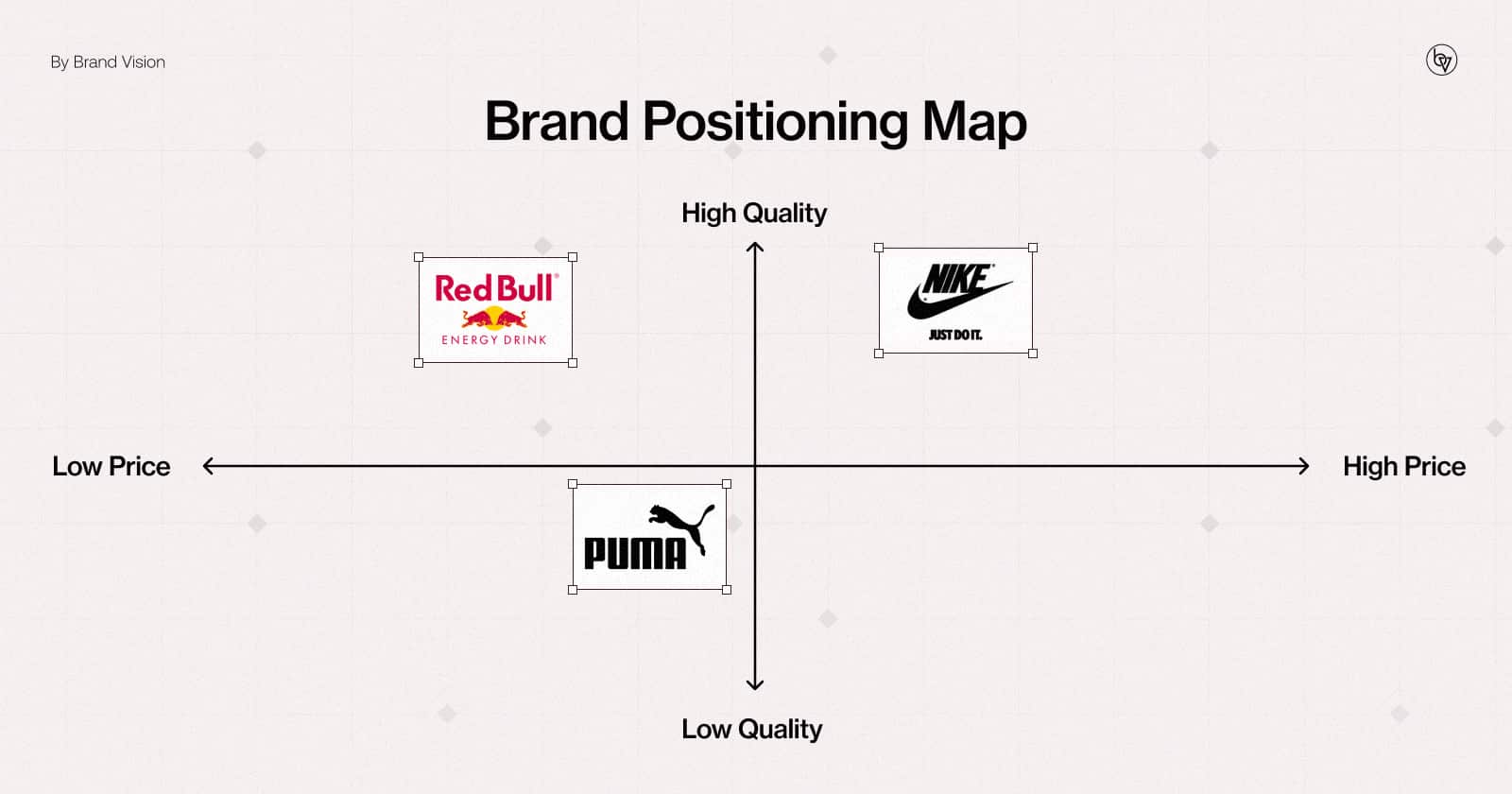
Done well, the visitor experiences one brand system with different lenses, not two competing brands fighting for attention. If the company-level promise is still unclear, reviewing brand positioning examples can help separate the business’s enduring position from the founder’s personality.
Step-by-Step: Building a Personal Brand That Feeds the Business
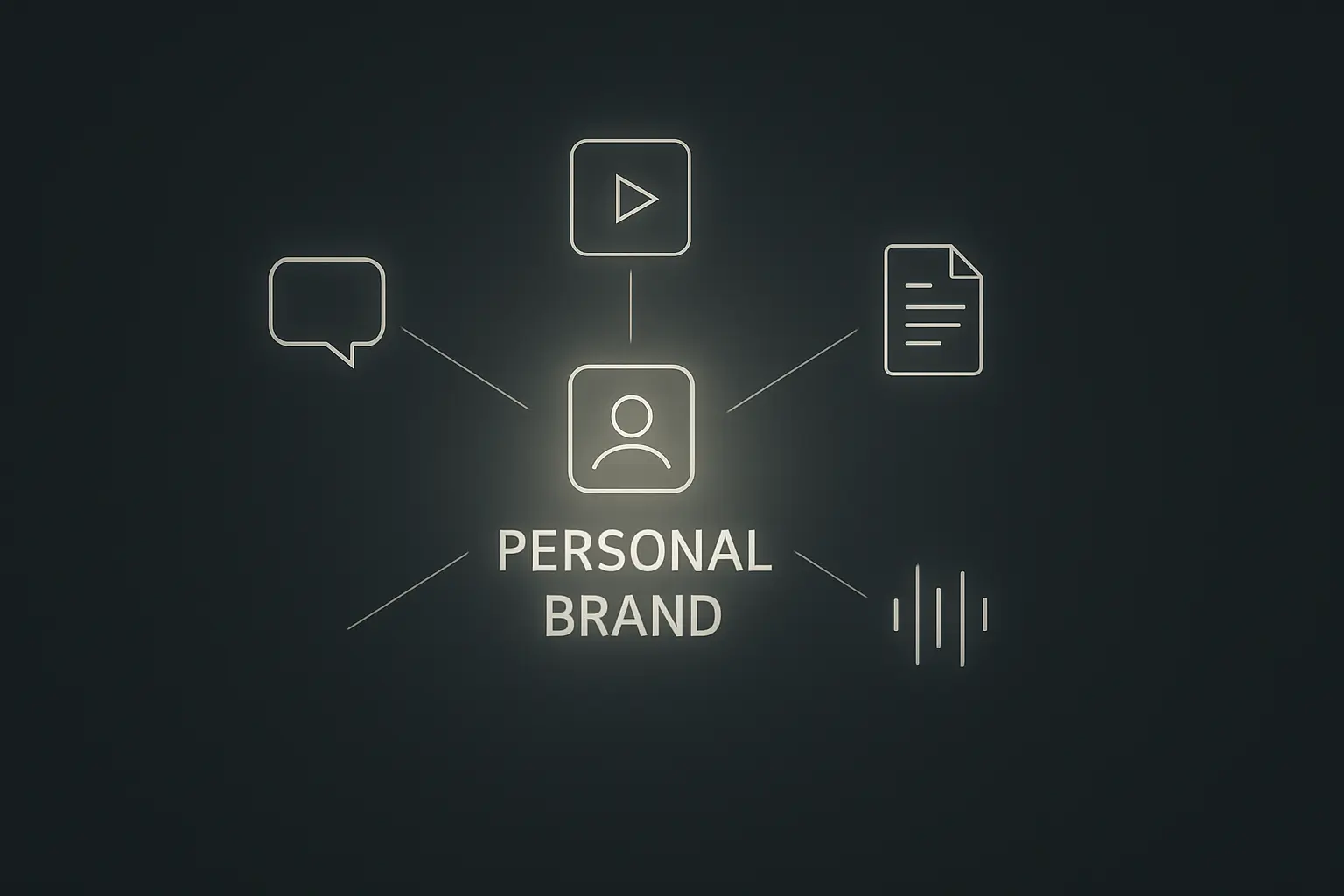
A personal brand has most value when it sends attention to assets the company owns. That requires more structure than occasional posts.
Designing Your Signature Story and Content Pillars
Start with a simple narrative and a few content pillars.
- Define your core promise. In one or two sentences, state the specific change you help your audience achieve.
- Choose three to five content pillars. For example: market trends, behind-the-scenes at your company, client lessons, and leadership reflections.
- Anchor your story in lived experience. Georgetown and other sources stress that authentic, consistent behaviour is what creates a credible personal brand over time, not slogans alone.
The goal is not to turn yourself into an influencer. It is to make it easy for your team to plan posts, clips, and articles that feel coherent and that lead naturally back to your offers.
Linking Every Personal Post Back to the Company Brand (Without Spamming)
A useful rule is to design each personal brand asset with a quiet path back to the business. That can include:
- A call to action that points to a relevant case study or page on your site.
- A mention of how your team handled a specific problem.
- A link to a simple lead magnet or resource under the company domain.
Think in terms of cadence. Not every post should be promotional. One illustrative mix to test is:
- 60 percent education and perspective.
- 20 percent behind the scenes and culture.
- 20 percent invitations to work with you, attend an event, or explore a specific offer.
Treat that split as a starting framework rather than a platform rule. The useful principle is simpler: lead with expertise and perspective often enough that commercial invitations feel relevant when they appear.
Step-by-Step: Strengthening the Business Brand (Especially After Starting as a Personal Brand)
Many founders reach a point where their own name is on the door, but the company has outgrown that structure. The goal is to strengthen the business brand without losing the equity in the personal one.
Renaming: When (and When Not) to Move Away From Your Own Name
A rename is a major step. It makes sense when:
- Multiple partners or senior leaders now share responsibility for growth.
- The company serves markets or regions where the founder is not visible.
- An eventual sale or partial exit is likely within the next few years.
Signals that you might not need a full rename yet include:
- The business is still closely tied to a single expert service.
- Most clients arrive directly through referrals to the founder.
- The founder intends to remain hands-on in delivery for the long term.
If you do rename, treat brand naming as one part of a broader rebranding a founder-led company, not as a cosmetic swap. Update positioning, messaging, and visual identity together so the new business brand feels like a natural progression rather than a disconnected pivot.
Website and UX Changes That Signal “We’re a Company, Not Just a Person”
Your website and digital experience should make the shift visible. Practical steps include:
- Moving from a first-person narrative to a team-based story with clear pages for leadership, delivery teams, and the broader organisation.
- Enhancing service pages so they read as company capabilities, not just an individual’s services, supported by case studies, process visuals, and testimonials.
- Refreshing the design system to reflect a more mature visual identity while keeping a few subtle references to the founder’s earlier brand where it helps continuity.
- Reviewing UX design flows so contact forms, pricing pages, and booking paths are clearly owned by the company, not by one person’s inbox.
This is also a strong moment to invest in foundational site work such as navigation, responsive performance, and content structure. Partnering with a senior web design agency makes it easier to translate the brand shift into a clear, fast, accessible site that signals the scale of the organisation.
Risks and Governance: Reputation, Succession, and Exit Planning
Personal and business brands both carry risk. What changes is where that risk sits and how it is managed.
Key risk areas to plan for include:
- Reputation concentration. If most public commentary comes from one leader, their missteps or personal opinions can quickly become associated with the company. This is especially sensitive in sectors where Edelman’s trust research shows that people are wary of leaders appearing to mislead them.
- Succession and continuity. A sudden absence, illness, or exit can create confusion if the market has not seen other leaders or a strong business brand.
- Legal and IP boundaries. Without clear agreements, it can be unclear who owns content, courses, or other IP created under a personal brand while working inside the business.
To reduce these risks:
- Treat personal brand activity as part of leadership responsibility, with clear policies about topics, disclosures, and crisis alignment.
- Build a visible bench. Encourage other senior leaders to share their expertise where appropriate, so the brand is not viewed as a single person.
- Create or update brand guidelines that cover both corporate and personal brand behaviour, then use a periodic marketing consultation and audit to check for gaps. A structured review can give you an external view on whether your brand system is supporting or limiting your strategy.
Risk management here is not about limiting personality. It is about making sure that leaders and the organisation are aligned in how they show up and how they respond under pressure.
FAQ: Common Questions About Personal vs Business Brands
Should my domain be my name or the company name?
If you plan to build a sellable or scalable firm, favour the company name for your main domain and keep your name for personal content and speaking. Many leaders maintain both a company site and a simple personal hub that points back to the business.
Can I move from a personal brand to a business brand later?
Yes, and many do. The transition works best when you plan it in stages: introduce the company brand early, gradually move core content and offers under the company, and keep the personal brand for thought leadership rather than day-to-day operations.
Do B2B buyers really care about personal brands?
Most B2B buyers care about risk, clarity, and results. Personal brands matter because they signal competence and values. Research from LinkedIn and others shows that buyers often view thought leadership from executives as a more trustworthy indicator of capability than marketing materials alone.
What if my personal brand is already strong and my company is new?
In that case, use a hybrid structure. Keep publishing under your name, but link consistently to your company site, sign deals under the company, and introduce clients to your team early in the relationship. Over time, shift more storytelling and case studies to company channels.
Is there a difference between a “creator brand” and a personal brand?
A creator brand often relies on content monetization and direct audience revenue. A personal brand, in this context, is broader. It includes how you show up to investors, employees, partners, and the media. The mechanics overlap, but the strategic goal is different. Most founders should treat personal brand as an element of their leadership, not as a separate product.
Key Takeaways for CEOs and Marketing Leaders
The personal brand vs business brand decision is not a one-time choice. It is an ongoing design question about where trust, growth, and value will sit in your organisation over the next decade.
For most leaders, a few principles hold:
- Use your personal brand to open doors and build trust at the edge of the company.
- Use your business brand to hold value, structure, and continuity in one clear system.
- Treat brand structure as a strategic asset, not a side effect of social media habits.
- Align your website, content, and visual identity so that personal and company stories feel like parts of the same whole.
- Reinforce that structure with clear governance, risk management, and a path for succession.
If you are navigating this decision now, consider a focused working session with your leadership team and advisors, grounded in your pipeline, hiring goals, and exit horizon. You may choose to deepen your company brand, refine your executive presence, or both.
When you are ready to translate that decision into brand architecture, visual identity, and a site that reflects your next stage of growth, start with Brand Vision or explore how our branding and B2B marketing teams support founder-led organisations as they mature from person-first reputation to durable, business-first brands. If you want a direct next step, discuss your brand structure with Brand Vision.