Kellogg’s marketing history illustrates a familiar challenge for established food brands: staying recognizable while people’s routines, budgets and media habits change. Cereal competes for attention on crowded shelves, but its most familiar characters and packaging cues remain valuable brand assets.
The Kellogg’s portfolio is a useful case for examining positioning, product occasions, retail distribution and cultural partnerships. These are observations from public campaigns and brand materials, not a report on the companies’ internal marketing processes.
For marketing teams, the transferable question is how to maintain familiar identity cues while adapting messages and buying experiences to new audiences.
The Kellogg's Brand in 2026: Who Owns What and Why It Matters
The Post-Separation Brand System
Kellogg's marketing strategy now operates inside a more complex corporate reality. In 2023, the former Kellogg Company separated into Kellanova and WK Kellogg Co, with the Kellogg's brand remaining on packaging across both businesses in different markets and brand families (Kellanova).
That structure changed again in 2025. Ferrero completed its acquisition of WK Kellogg Co in September, covering cereals sold in the United States, Canada and the Caribbean (Ferrero). And Mars completed its acquisition of Kellanova on December 11, 2025, including Kellogg’s international cereal business (Mars).
Those transactions left familiar Kellogg’s cereal brands under different corporate owners across regions. Keeping recognizable characters, packaging and messages coherent is an important strategic challenge, but the public record does not establish one shared internal marketing playbook.
The Real Risk: Fragmented Brand Governance
Ownership changes can create a risk of brand drift as packaging, claims and campaign decisions evolve. For any multi-brand portfolio, the safeguard is a clear positioning brief and visual rules that teams can apply across channels, rather than assuming consistency will happen automatically.
This is where many companies benefit from a disciplined brand strategy and measurement loop. If your team is rethinking governance, a marketing consultation and audit can surface where messaging and channel execution have drifted, and what needs to be standardized.
View this post on Instagram
A post shared by Kellogg's Frosted Flakes (@kelloggsfrostedflakes)
The Pillars of Kellogg's Marketing Strategy
Several recurring themes emerge from the public campaigns and retail presence of Kellogg’s cereal brands:
- Kellogg's brand positioning stays clear across sub brands and eras.
- Audience planning can distinguish household decision-makers, product preferences and eating occasions rather than assuming everyone shops alike.
- A mature portfolio must balance recognizable core products with selective innovation.
- Kellogg's distribution strategy treats the shelf and the digital shelf as one system.
- Marketing campaigns can keep recognizable mascot assets while connecting them to new cultural moments.
- Digital creative can build familiarity and support consideration at retail.
- Kellogg's brand identity is enforced through packaging and design rules that scale.
Kellogg's Brand Positioning: What the Brand Stands For Now
From Morning Routine to Anytime Ritual
Kellogg's brand positioning started with breakfast, but the modern bet is broader. Cereal has to compete with grab and go items, high protein snacks, and skip breakfast behavior. So Kellogg's marketing strategy expands usage occasions without losing the core meaning of cereal as a simple, familiar, dependable food.
A clear example is the push to position cereal as an anytime snack, not just a morning meal, including creative that frames cereal as an evening reward (Canadian Grocer coverage). That is a brand positioning move, not just a campaign idea. It reframes when the product belongs, which changes who buys it and how often.
Nostalgia Without Feeling Stuck
Kellogg's marketing strategy leans on recognition, then updates the wrapper. Mascots, jingles, and long running assets do the heavy lifting of memory. New collaborators and formats refresh the signal.
In February 2026, Frosted Flakes partnered with rapper J.I.D to reinterpret the 1990s “Hey Tony” jingle, keeping Tony the Tiger at the center of the campaign (WK Kellogg CO). The collaboration is rooted in 1990s creative, not the 2016 resurgence trend. Both illustrate how recognizable cultural cues can be revisited without replacing a brand’s core identity.
Health Signals That Stay Credible
Health claims are another constraint for cereal brands. Ingredient scrutiny, regulation and different nutritional expectations require product-specific language. A family cereal and a wellness-oriented product may emphasize different benefits, but each claim needs to match what the label and product can support.
This is where Kellogg's brand identity becomes a trust lever. Claims, typography, and pack hierarchy matter. If health language feels inflated, trust drops. The lesson is to treat claims as governance, not copywriting.
Kellogg's Target Audience: Segmenting the Cereal Buyer
Kids, Parents, and Household Habit
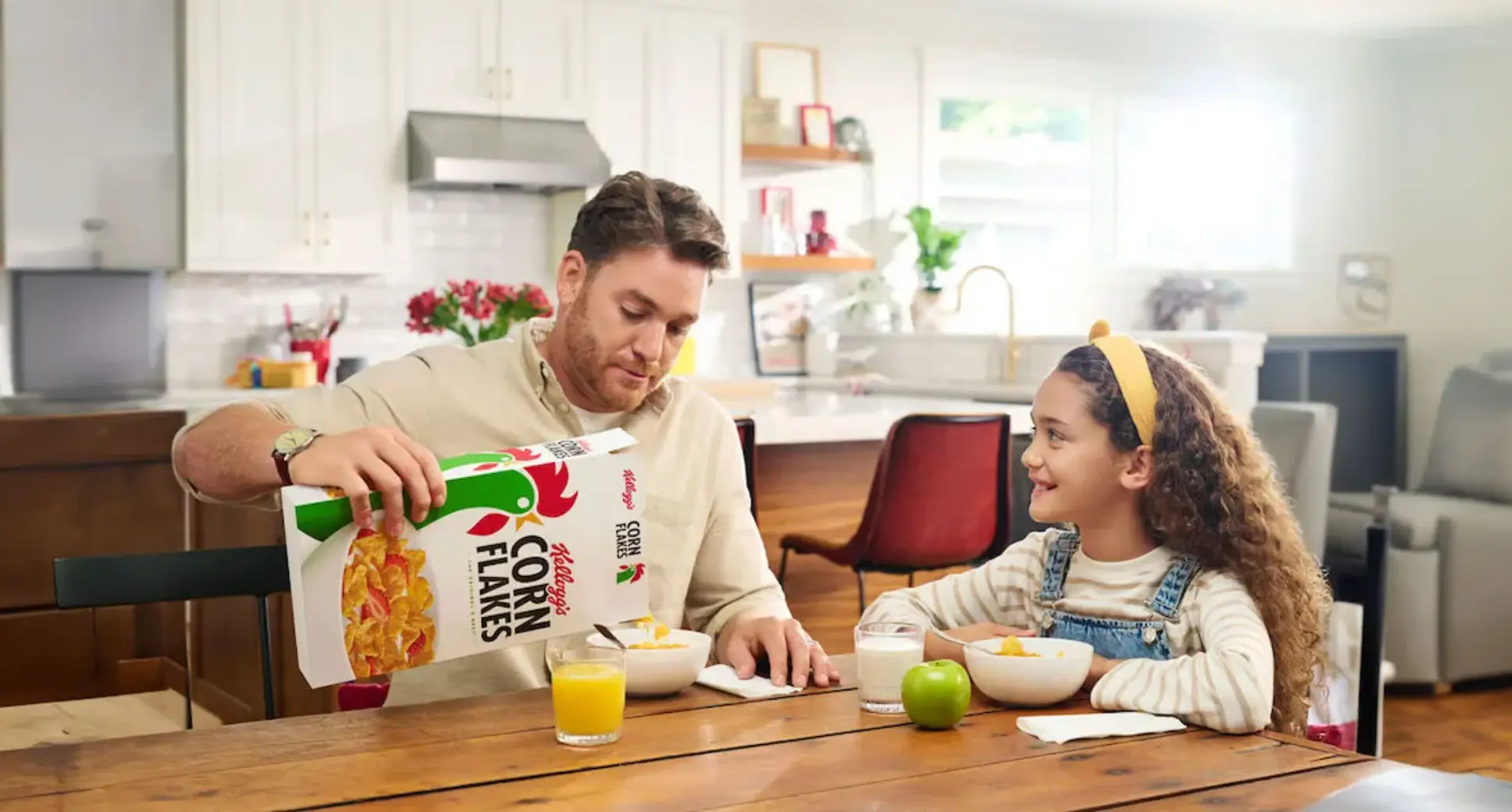
Kellogg's target audience is not just kids. It is a two step purchase loop: children influence, but parents approve and repurchase. Kellogg's marketing strategy supports that loop by pairing child friendly brand cues with parent friendly cues like familiarity, convenience, and controlled portioning.
For household brands, mascots can create quick recognition across generations. The marketing challenge is to appeal to young consumers without overlooking the parents or caregivers who make many repeat purchases.
Adults Who Still Buy Cereal
Kellogg's target audience also includes adults who buy cereal for themselves, including households without kids. This segment is often under served by brand voice that skews too juvenile. Kellogg's marketing strategy addresses it through sub brands and product ladders that signal function, not cartoon fun.
Special K is the clearest example of a brand built around adult identity cues. The messaging has evolved over the years, but the underlying role is stable: help an adult feel in control of routine and health. That role is Kellogg's brand positioning applied to a different buyer mindset.
Occasion-Based Segments That Drive Growth
A strong segmentation model includes occasions, not just demographics. Kellogg's target audience expands when cereal becomes a desk snack, a post workout bite, or an evening treat. Each occasion has a different driver: convenience, comfort, energy, or habit.
Occasion-based segmentation matters when cereal is positioned as breakfast, an afternoon snack or an evening treat. Before expanding a claim or pack format, brand research can test which needs and words resonate with actual shoppers. Retail naming and search terms should then reflect the occasion honestly.
Kellogg's Product Strategy: Portfolio Design and Innovation
Core SKUs vs Limited Editions
Kellogg's marketing strategy treats the core as sacred. Core SKUs create mental availability and repeat purchase. Limited editions create news value and retail excitement, but they should not dilute recognition.
The tactical rule is to keep the core pack structure stable while letting limited editions live inside a controlled template. That is Kellogg's brand identity doing work. It prevents novelty from looking like a different brand.
Renovation: Ingredients, Claims, and Compliance
Product renovation is a marketing input, not just an R and D project. As health scrutiny rises, formula changes and claim discipline become part of Kellogg's brand positioning. It is also a hedge against reputational risk.
After Ferrero’s WK Kellogg acquisition announcement, reporting highlighted the pressure to respond to health expectations and ingredient scrutiny in cereals (Reuters). Even if you do not follow food categories, the broader point holds: when the category’s trust is questioned, product decisions become marketing decisions.
Value Packs, Mix Packs, and Trial
Pack formats can reduce trial friction in a cereal category. Where a portfolio offers variety packs, multipacks or smaller sizes, shoppers can explore flavors or fit purchases to household budgets without committing to a larger single box.
Different formats may help brands serve different price points, occasions and retail spaces. Their actual effect on shelf visibility and conversion needs to be tested, rather than assumed from package size alone.
Kellogg's Distribution Strategy: Retail, E Commerce, and the Digital Shelf
Shelf Reality: Price, Promotion, and Placement
In grocery, availability, shelf placement, pricing and packaging all shape the purchase decision. For teams responsible for food and beverage marketing, those fundamentals should be coordinated with product claims, promotion schedules and shopper expectations, especially when budgets are tight.
Kellogg's marketing strategy does not treat distribution as a separate function. It is where the brand promise meets a real shopper moment. If a brand is out of stock, the brand does not exist.
Searchability: How Cereal Wins Online
Kellogg's distribution strategy now includes retail search. Shoppers look up cereal by need state: high protein, kid friendly, low sugar, gluten free, quick snack. If your product content is thin, you disappear.
The digital shelf needs accurate product names, consistent categories, clear pack shots and descriptions that reflect real attributes. These principles also appear in ecommerce product page design, where images, delivery details and buying options help shoppers evaluate an offer.
Omnichannel Consistency
The physical shelf and the digital listing should convey the same verifiable claims, pack hierarchy and recognizable brand cues. For food and retail teams serving Chicago, a marketing agency in Chicago can connect regional retail positioning with the website and campaign experience.
This is one reason Kellogg's brand identity is so tightly linked to distribution outcomes. The visual system is not decoration. It is a conversion asset.
Kellogg's Marketing Campaigns: Characters, Culture, and Partnerships
Mascots as Long Term IP
Kellogg's marketing strategy benefits from one of the most durable assets in consumer branding: mascots that have stayed recognizable across decades. Tony the Tiger, Toucan Sam, and the Rice Krispies characters do more than entertain. They create rapid recognition and act as shorthand for taste, fun, and trust.
Kellogg's marketing campaigns use these characters like IP. The characters are consistent, but they travel into new media formats as platforms change. That is how you keep memory stable while still being current.
Sports, Music, and Cultural Moments
The brand has a long history of attaching itself to moments that already have attention, then using its own brand cues to stay recognizable inside that attention. Recent examples include sports activations and partnerships tied to Tony the Tiger and Frosted Flakes.
This is a key idea for Kellogg's marketing strategy: borrow reach, but do not borrow identity. The partnership should feel like the brand is hosting, not renting.
Purpose and Community Programs
Kellogg's marketing strategy also uses purpose programs that fit the brand’s role in family life. Mission Tiger is a clear example, tied directly to Tony the Tiger and youth sports support. WK Kellogg describes Mission Tiger as supporting thousands of schools and millions of sports and play experiences through partnerships like DonorsChoose (WK Kellogg Co).
Purpose works when it is legible. It should connect to the brand’s meaning, not sit beside it. That alignment strengthens Kellogg's brand positioning and gives Kellogg's marketing campaigns a deeper reason to exist.
Kellogg's Digital Marketing: Always On Content With Retail Proof
Social Creative That Travels
Short videos, recognizable characters and creator-led formats offer cereal brands ways to adapt familiar assets for social channels. Public campaign examples show the creative direction, but not the performance of every channel or format.
The reusable lesson is to keep a small toolkit of visual, sonic and character cues. These assets can make content more recognizable while giving creative teams room to adapt to different channels.
Creator Partnerships That Fit the Brand
Kellogg's digital marketing can take cultural partnerships without losing brand clarity because the core icon remains present. When a creator partnership works, it is because the creator is an amplifier, not a replacement for the brand.
This is a useful test for any marketing leader. If you remove the influencer, is the brand still recognizable. If the answer is no, the partnership is doing the brand’s job for it.
Data, Testing, and Practical Measurement
For consumer food brands, useful measures go beyond video views to product consideration, retail availability, trial and repeat purchases. Linking creative results to sell-through is a measurement goal, not a claim that Kellogg’s publishes a particular internal attribution model.
For teams building a measurement and experimentation loop, the operational discipline matters as much as the creative. This is where content teams often benefit from a unified site and funnel experience, supported by web design services and a UI UX design agency that can align pages, templates, and tracking.

Kellogg's Brand Identity: Packaging, Design Systems, and Trust
Packaging as Performance Media
Kellogg's brand identity shows up first in packaging. In many categories, the box is the highest reach media unit because it is seen repeatedly at home. It is also the primary thumbnail on retail sites. That makes packaging a performance asset.
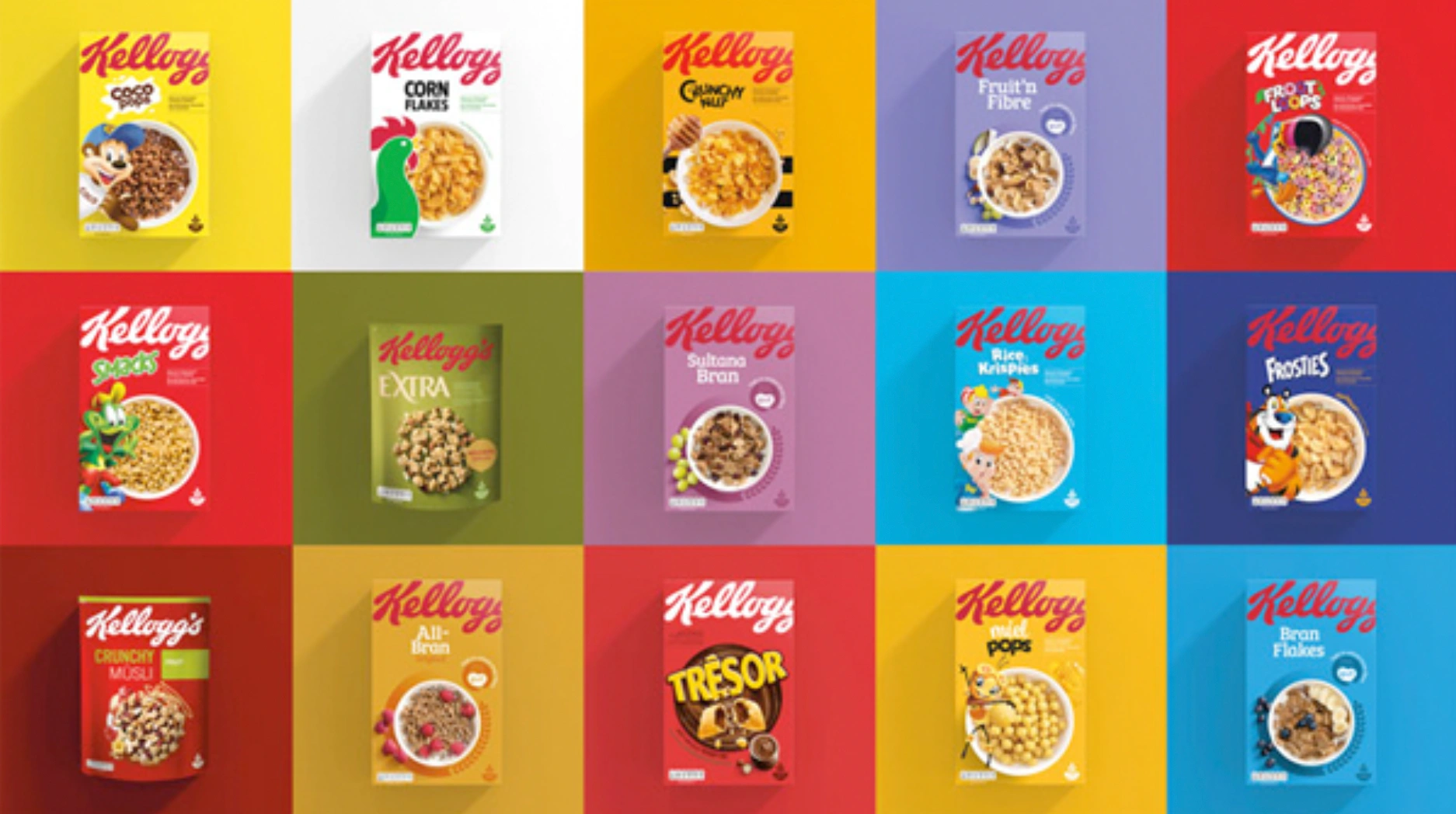
Packaging works as a visual system of hierarchy, color, typography and recognizable character cues. A visual identity system can document those rules, while graphic design services help translate them into shelf-ready packs and campaign materials. The goal is clear recognition at a glance, with accurate product information close up.
Consistency Across Sub Brands
Kellogg's brand identity has to hold across different cereal brands with different emotional jobs. Fun kids cereals should feel playful. Adult cereals should feel controlled and confident. The parent brand cues still need to be legible.
Different products may need different tones while still sharing recognizable visual cues. For teams managing several sub-brands, branding services can help organize the rules, with a consistent visual identity system for packaging, campaigns and digital layouts.
Digital UX That Matches the Shelf
Kellogg's marketing strategy is strongest when the digital experience reinforces what the shelf already promised. Product pages should load fast, show pack shots clearly, and make ingredients and claims easy to find. Brand pages should feel consistent across regions and sub brands.
This is where Kellogg's distribution strategy and Kellogg's brand identity converge again. If a shopper sees one story on shelf and a different story online, confidence drops. Consistency is conversion.
Operating Rhythm: How Large Brands Protect Consistency at Scale
A complex food brand portfolio needs regular reviews of audience behavior, product claims, creative assets and retail content. Public Kellogg’s campaigns demonstrate how familiar characters can be adapted, but do not reveal the full internal cadence of those decisions. For businesses defining their own guardrails, brand strategy services can help establish roles and review standards.
A practical operating model includes:
- A small set of non negotiable brand assets that must appear in every campaign.
- A shared claims and compliance framework tied to product renovation.
- A retail content standard for images, naming, and product descriptions.
- A measurement model that connects creative performance to sell through.
If you run a complex business with multiple products and stakeholders, this is the same discipline used in B2B category leaders. It is also why many teams treat brand and site governance as a revenue problem, not a design preference. For B2B organizations that need structured positioning and consistent demand generation, a B2B marketing agency can help align the message, the experience, and the measurement.
Key Lessons You Can Borrow From Kellogg's Marketing Strategy
The useful lesson from Kellogg’s public marketing is not a single campaign formula. It is the value of durable characters, relevant product occasions and recognizable packaging. Teams can borrow those principles without copying the cereal category.
- Write your positioning in plain language, then reflect it in design and packaging.
- Define audiences by decision-maker and buying occasion, not demographics alone.
- Treat retail availability and digital shelf content as marketing priorities.
- Build campaigns around recognizable assets, then update the cultural context.
- Measure creative against useful shopper and business outcomes.
- Protect identity with practical templates and clear review ownership.
For teams coordinating brand positioning, packaging and digital experiences, Brand Vision can help translate the priorities into an actionable plan. You can discuss your brand system with our team.