Tommy Hilfiger offers a useful case in refreshing fashion campaigns without losing the identity behind them. Its red, white and blue codes, modern-prep styling and partnerships give new collections a familiar frame. For teams managing several channels, the lesson is how consistent creative decisions support a changing product and media calendar.
The case extends beyond apparel. Teams with many products, partners or markets need an agreed visual language, useful product information and clear responsibilities for each channel. These principles apply wherever teams need consistent decisions across channels.
At A Glance
- The Tommy Hilfiger marketing strategy keeps brand identity stable, then creates controlled spikes through brand collaborations.
- Influencer marketing is treated as distribution, with repeatable formats and clear partner fit.
- Direct-to-consumer investment keeps the experience consistent even when customers buy through different channels.
- Social media strategy functions like a living lookbook, not a quote feed.
- Sustained brand recognition depends on consistent execution, not one perfect launch.
The Strategy in One Sentence
Tommy Hilfiger keeps recognizable brand cues in view while using collaborators, entertainment and its own shopping channels to renew attention. The examples below show how that balance appears in public campaigns, not an inside account of the company’s planning process.
The useful distinction is between signals worth preserving and campaign elements that can change. New creative can reflect the season without asking shoppers to relearn the brand.
The Brand Codes That Make Tommy Hilfiger Instantly Recognizable
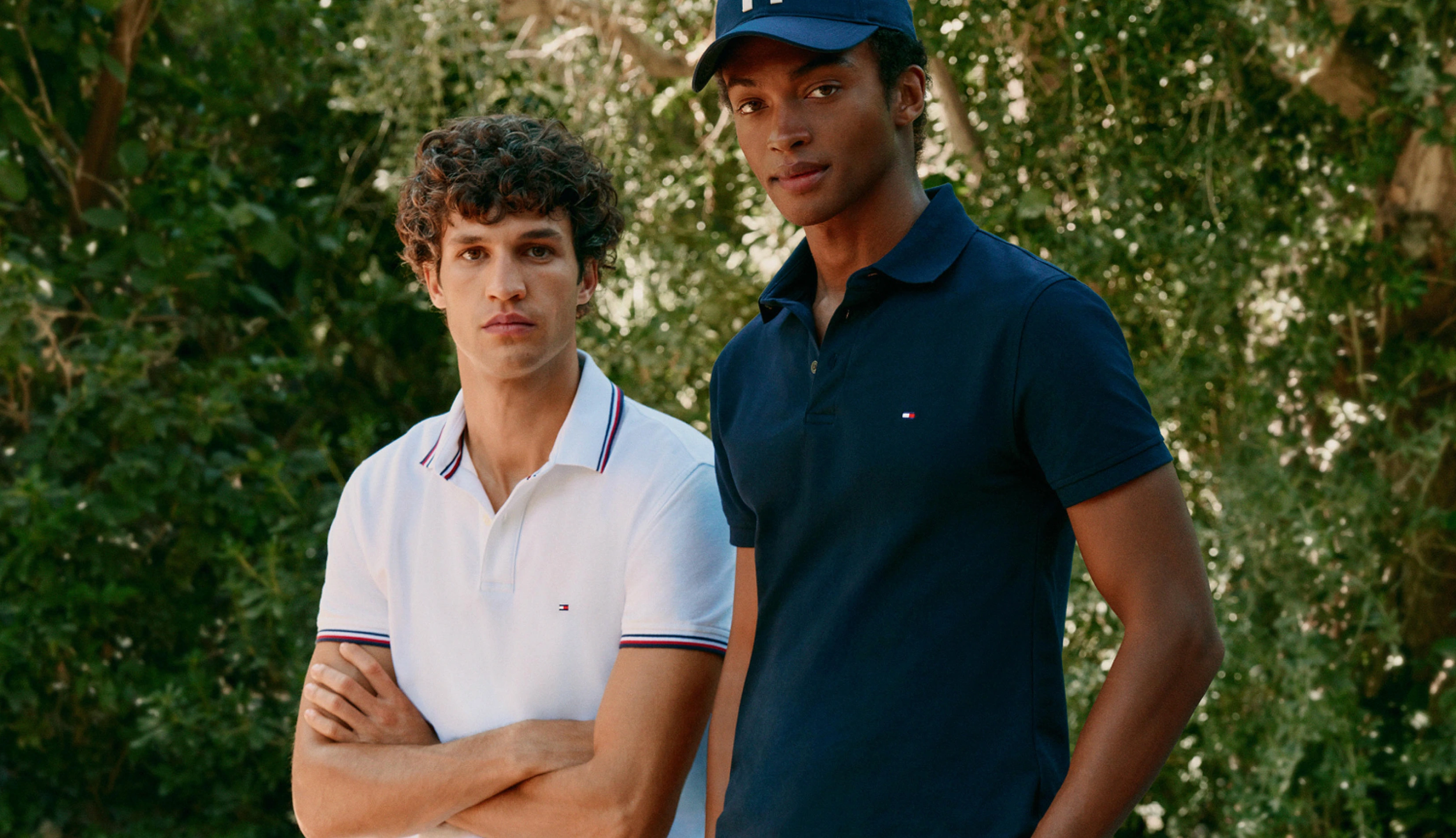
Brand codes are recognizable choices repeated across product design, photography, retail and digital experiences. Tommy Hilfiger’s red, white and blue palette and preppy styling are easy to recognize across formats. For teams developing their own system, visual identity design helps define which cues should remain consistent and where variation is useful.
This is where brand identity stops being a creative conversation and becomes a management conversation. Standards reduce debate, speed up production, and prevent drift. For many organizations, working with a branding services is less about taste and more about making consistency possible at scale.
The Visual System Behind Recognition
Tommy Hilfiger’s visual language combines familiar color, classic American-prep references and contemporary styling. These cues let individual campaigns change the scene while retaining recognition.
This is also why brand collaborations can work without feeling like a costume. When a collaborator brings a new audience, the codes keep the product anchored. The Tommy Hilfiger marketing strategy can stretch because the foundation is visible.
Brand Identity as a Governance Problem
For teams managing multiple channels, a brand identity guide needs more than an asset folder. It should distinguish non-negotiable elements from seasonal choices and explain how partners can use them. These are broadly useful governance principles, not verified details of Tommy Hilfiger’s internal approval process.
An effective review process can help campaigns move quickly without making each partner invent the visual system anew. Teams still need to test whether the standards support creative quality and consistent presentation.
Positioning and Target Audience: Modern Prep for Global Culture
Tommy Hilfiger’s public identity centers on classic American style interpreted for modern audiences. A clear position gives the brand room to present updated silhouettes and cultural partnerships without abandoning recognizable references. For businesses defining a similar discipline, brand strategy sets out which audiences, benefits and proof points should guide execution.
That positioning may help explain the brand’s premium-lifestyle presentation, but it does not by itself establish customers’ willingness to pay. The relevant lesson is to keep pricing, product quality and the visual promise aligned rather than assume identity alone supports a premium.
Three Buyer Jobs This Brand Serves
As an illustrative planning framework, three buyer jobs can help explain how shoppers might approach a fashion collection. They are analytical examples, not customer segments that Tommy Hilfiger has formally disclosed:
- The uniform buyer who wants reliable polish without overthinking.
- The trend translator who wants familiar shapes updated by season.
- The fan community buyer who shows up because of an ambassador or collab moment.
Different ambassadors can make a collection relevant to distinct audiences, but that should be evaluated through actual audience research and campaign results rather than assumed from an example segmentation.
What Good Fashion Brand Marketing Looks Like in 2026
In a digital shopping experience, fit, styling and wearability information can help people evaluate what they are buying. Social creative can provide that context alongside a consistent visual identity.
The Tommy Hilfiger marketing strategy stays product centered. The brand identity is the frame, but the product is the content. That is how fashion brand marketing stays credible even when the cultural cycle moves quickly.
Product and Collaboration Strategy: Keep the Core, Rotate the Edge
Product range clarity matters to shoppers. Tommy Hilfiger pairs recurring prep staples with collection changes and collaborations that can draw attention without requiring a wholly new identity.
This balance keeps the brand from over promising. Influencer marketing can bring people in once. Product clarity and consistent execution are what keep them. The Tommy Hilfiger marketing strategy protects the core and uses the edge for heat.
A Repeatable Brand Collaborations Playbook
Brand collaborations tend to work when they follow a repeatable structure:
- Pick a collaborator with real audience pull and a defined point of view.
- Keep at least one brand code constant so recognition carries through.
- Build a small set of hero items that photograph well in social media strategy.
- Create a release moment that feels like an event, not a restock.
A dated example is the 2019 TommyXZendaya collaboration, launched through the TOMMYNOW show as part of an immediately shoppable runway format (TommyXZendaya press release). It illustrates how entertainment and product availability can be planned together, rather than providing evidence for the results of later campaigns.
Why Collaborations Need Guardrails
Brand collaborations fail when they behave like shortcuts. The risk is dilution. If every collab looks different, brand identity becomes unclear and fashion brand marketing becomes expensive to explain.
For another brand planning collaborations, recognizable identity cues, a clear product role and defined partner responsibilities can reduce the risk of an inconsistent result. The brand’s public executions offer examples of that balance, not a published list of its internal guardrails.
Channel Strategy: Direct-to-Consumer, Wholesale, and Licensing
Multi-channel brands need to coordinate wholesale, licensing and direct-to-consumer. Each has different commercial responsibilities, yet shoppers should still recognize the product, imagery and message. For U.S. retail teams working across markets, a branding agency in the USA may help adapt creative standards across locations without treating American style itself as a reason to hire a provider.
Owned stores and ecommerce give a company more control over merchandising, presentation and the path to purchase than third-party environments. Wholesale and licensing still have distinct commercial roles; owned channels should inform the wider experience rather than be described as its sole control center.
Why Direct-to-Consumer Control Changes the Work
Direct-to-consumer gives retail teams room to test photography, product details, checkout clarity and customer communications. In other consumer categories, ecommerce marketing can connect these decisions with retention and merchandising goals. The relevant lesson is to keep the owned experience coherent without assuming it can control wholesale partners.
For many companies, the website is the flagship store. This is where a web design agency and a UI UX design agency become part of the growth system, not a separate project. The Tommy Hilfiger marketing strategy works better when direct-to-consumer execution is coherent and easy to maintain.
Sales Quality and Discount Discipline
Channel strategy is also about sales quality. PVH has described planned actions to improve sales quality in Europe, including deliberate reductions that trade volume for healthier demand patterns (PVH). That kind of decision is marketing, because discount behavior trains buyers.
PVH’s third-quarter 2025 report showed Tommy Hilfiger revenue up 1% on a reported basis but down 2% at constant currency (PVH). PVH’s owned digital commerce figures cover directly operated channels across its businesses, not Tommy Hilfiger alone. These disclosures illustrate why teams should distinguish brand performance from companywide channel measures.
Campaign Strategy: Entertainment, Influencers, and Pop-Up Moments
Campaigns are where brand identity becomes culture. Tommy Hilfiger has often treated campaigns like moments, not just media. That includes runway theater, city based activations, and ambassador driven storytelling that feels timely.
The same campaign identity can appear in press coverage, creator content, stores and owned channels. Whether each placement increases sales is a separate measurement question.
Influencer Marketing as Distribution
Influencer marketing works when it is planned like a distribution channel. Creator fit, content formats, rights, and a plan for reuse. When that structure is missing, the work turns into one off posts with no memory.
The Stray Kids partnership is a clean example of global fan culture meeting mainstream fashion brand marketing. PVH framed the Fall 2024 work as a New York City campaign built for international reach (PVH). Reuters has also documented how K pop ambassadors have become a dominant visibility engine for fashion brands chasing global attention (Reuters).
Here, an ambassador partnership serves both a creative and a distribution role. Its value still depends on fit, content quality and measurable outcomes.
Tentpole Moments That Convert
TOMMYNOW is a useful historical example because it linked entertainment to commerce. The brand used see now, buy now mechanics and augmented reality to make a runway moment shoppable beyond the venue (TOMMYNOW press release). That idea still matters in 2026, even if the platforms changed.
The deeper point is rhythm. A tentpole moment creates a spike in demand. Direct-to-consumer channels capture it while intent is high. That is the Tommy Hilfiger marketing strategy working as an operating model, not a seasonal mood.
Digital Strategy: Social-First Storytelling and Shoppable Experiences
Digital is where modern fashion brand marketing either coheres or fractures. A common failure mode is fragmentation: social media strategy lives in one silo, paid media in another, and the site feels disconnected from both. Customers feel that gap immediately.
The Tommy Hilfiger marketing strategy aims for coherence. Social is not separate from commerce. It is the front door into direct-to-consumer behavior, and the website needs to finish the job.
Social Media Strategy That Feels Like a Style Guide
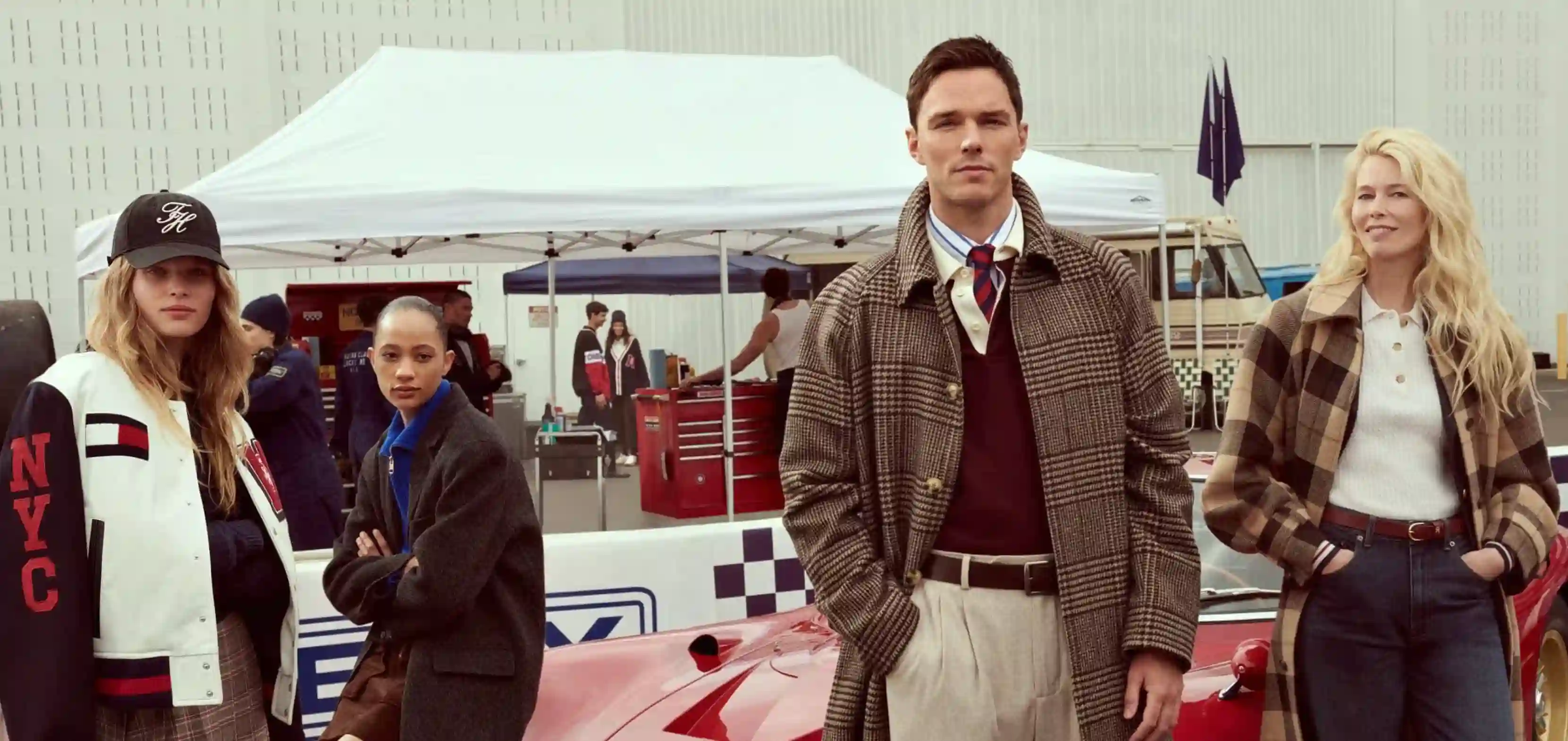
A useful apparel social feed functions like a living lookbook, showing styling, fit and collection changes while repeating familiar brand codes. PVH’s February 2026 Spring campaign announcement featured Patrick Schwarzenegger and Abby Champion alongside a wider cast, bringing the brand’s American-prep identity into a new seasonal setting. This is a documented creative example, not proof of sales lift.
This consistency also makes brand collaborations easier to read. Audiences do not have to relearn the brand each time. The Tommy Hilfiger marketing strategy uses familiar codes so new moments feel like chapters, not detours.
E-Commerce UX That Removes Hesitation
Online apparel shoppers need help judging fit, fabric, styling and fulfillment. Clear photographs, useful sizing information and easy-to-find policies support those decisions. The ecommerce product page design guide gives teams a more detailed checklist for testing these elements.
Search visibility also depends on how clearly products are named, categorized and explained. A broader SEO agency can address sitewide search issues, while ecommerce SEO focuses on catalog discoverability, product data and shopping intent. Neither approach guarantees a conversion lift.

Brand Governance: How Consistency Survives Trend Cycles
Most brands do not fail because they lack ideas. They fail because they cannot keep execution consistent as platforms and teams shift. Governance is what makes a strategy durable.
An effective brand governance model distinguishes stable identity cues from seasonal concepts and campaign-specific creative. Those responsibilities should be documented across marketing, retail and digital teams rather than inferred from the brand’s public work alone.
Refresh Cadence Without Rebrands
A practical cadence has three layers:
- Core codes that rarely change.
- Seasonal themes that change several times per year.
- Campaign moments that create spikes without rewriting the brand.
Written standards can make approvals more consistent and reduce duplicate decisions across teams. Businesses defining those responsibilities may work with a branding agency to connect positioning, identity and execution. The objective is a system those teams can actually maintain.
Measurement Without Vanity Metrics
Executives tend to distrust influencer marketing when measurement is vague. The fix is to track outcomes tied to purpose: direct-to-consumer conversion rate, new customer mix, repeat purchase signals, and the performance of hero items tied to brand collaborations.
PVH’s disclosures are a reminder that even creative brands treat reporting as discipline, not opinion (PVH FY2024 results). The Tommy Hilfiger marketing strategy earns credibility because the system can be monitored and adjusted without losing the brand.
FAQ
What makes Tommy Hilfiger’s approach different from typical fashion brand marketing?
The difference is structure. It treats brand identity as a governed system, not a seasonal mood. That makes campaigns easier to repeat and makes creative faster to approve. Fashion brand marketing becomes clearer when the codes stay stable.
How do brand collaborations avoid diluting the brand?
Brand collaborations avoid dilution when the brand codes stay visible. The collaboration should introduce a new audience, not replace the brand. Clear guardrails around aesthetic, hero items, and release moments protect brand identity while still creating attention.
Is influencer marketing still worth it in 2026?
Influencer marketing is worth it when it is run like a channel. That means creator fit, repeatable formats, rights for reuse, and measurement tied to outcomes. In fashion brand marketing, creators also reduce uncertainty by showing fit and styling in real contexts.
Why is direct-to-consumer so central to this model?
An owned storefront gives a business greater control over product presentation and the buying experience. It can set useful standards for other channels, though wholesale, licensing and marketplace partners have different rules and constraints.
What should a social media strategy include for an apparel brand?
A social media strategy should function like a style guide. Show fit, styling, and what is new this season. Repeat the brand identity cues often enough that customers can recognize them quickly. This also makes influencer marketing content feel native rather than disconnected.
Key Lessons Brands Can Borrow From the Tommy Hilfiger Marketing Strategy
The transferable lesson is not to copy the aesthetic but to build repeatable decisions about what stays recognizable and where campaigns can change. Apply those principles to your own audience, products and retail channels.
- Document brand identity codes as standards, not vibes.
- Use brand collaborations as controlled experiments, not permanent pivots.
- Treat influencer marketing as distribution with governance, formats, and reuse plans.
- Invest in direct-to-consumer experience so customers get one consistent story.
- Build social media strategy like a product guide, with fit and styling clarity.
- Align website, creative, and reporting so fashion brand marketing does not fragment.
For related brand examples, compare the Nike marketing strategy and Bottega Veneta's marketing strategy. If your team needs a clearer process for creative standards and digital channels, a marketing consultation and audit can help prioritize the work.