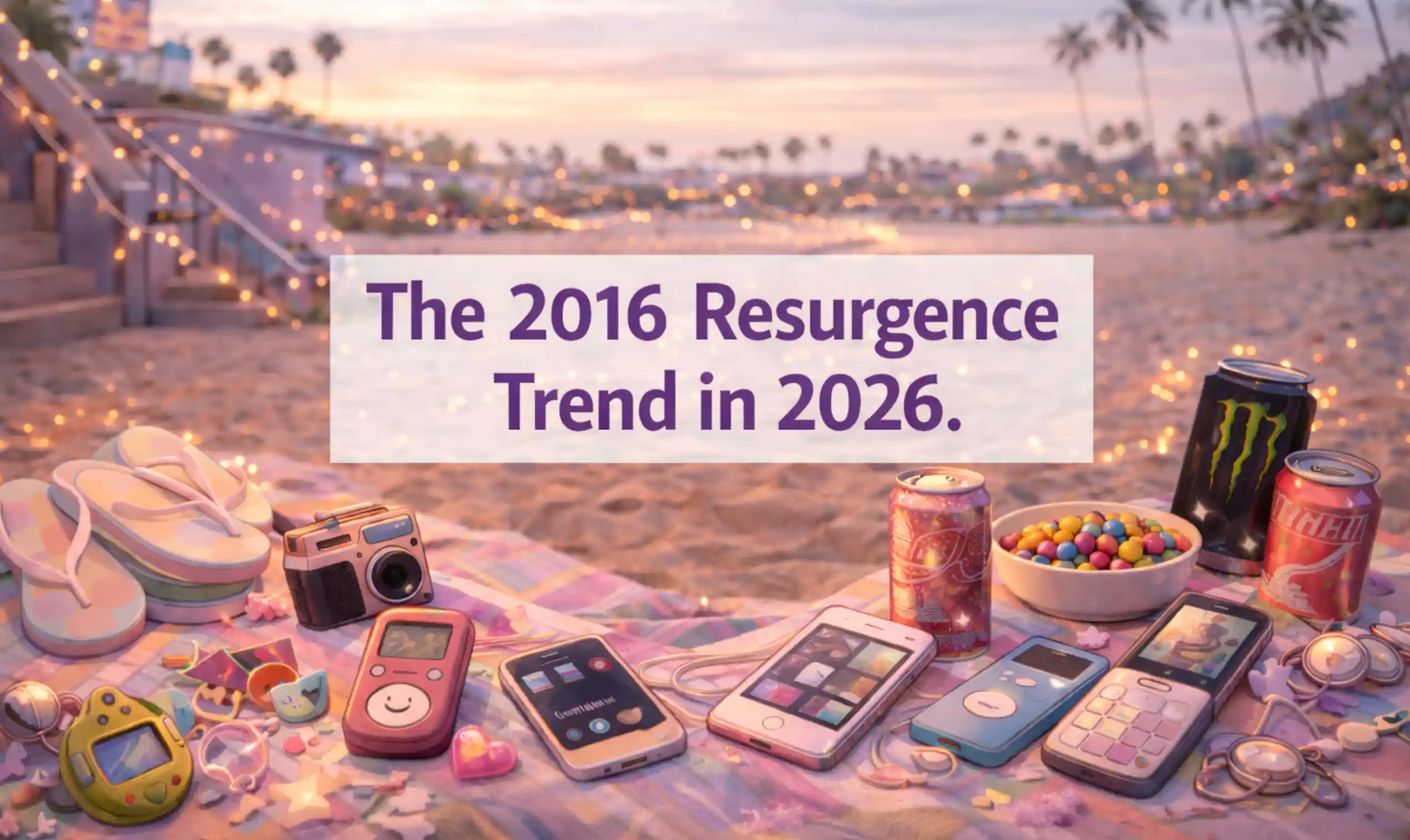
The 2016 resurgence trend resurfaced as a social-media reference point in early 2026, bringing back old filters, memes, music and casual photo styles. For marketers, the useful question is not whether to copy the look, but whether any of its cues fit the audience, product and experience after the click.
The trend does not describe every Gen Z buyer. Some people remember sharing photos and memes in 2016; others know the period mainly from reposts and newer creators. A throwback can open a conversation, but a collage of references without a relevant product story may feel forced.
At a Glance
- The 2016 resurgence trend works best when it is tied to a real product story and a clean customer journey.
- The 2016 aesthetic is a set of cues, not a single look. Use it selectively, then modernize the experience.
- Gen Z nostalgia is split between older Gen Z with lived memory and younger Gen Z who inherits the era through TikTok trends.
- Nostalgia marketing can lift recall and engagement, but it must be measurable and accessible.
Why 2016 Feels Close Again
In January 2026, social users revisited mid-2010s filters, meme formats and old camera-roll photos. The trend drew coverage across social and culture media, including (Forbes). Vogue’s January 2026 coverage documented the throwback photo dumps and pop-culture references. Those observations establish the trend, not a universal preference for the past.
Age matters. Pew uses 1997 as the beginning of Generation Z(Pew Research Center). By 2016, older members were teenagers, while younger members were children or had not yet formed strong memories of the era. Before briefing creative, distinguish personal nostalgia from an aesthetic learned through social media.
The familiar sounds, photo filters and short formats make 2016 references easy to recognize and remix on social platforms. Their visibility does not mean an algorithm automatically rewards throwback content. Brands should test whether the cue leads to meaningful engagement with the offer.
What the 2016 Resurgence Trend Actually Includes
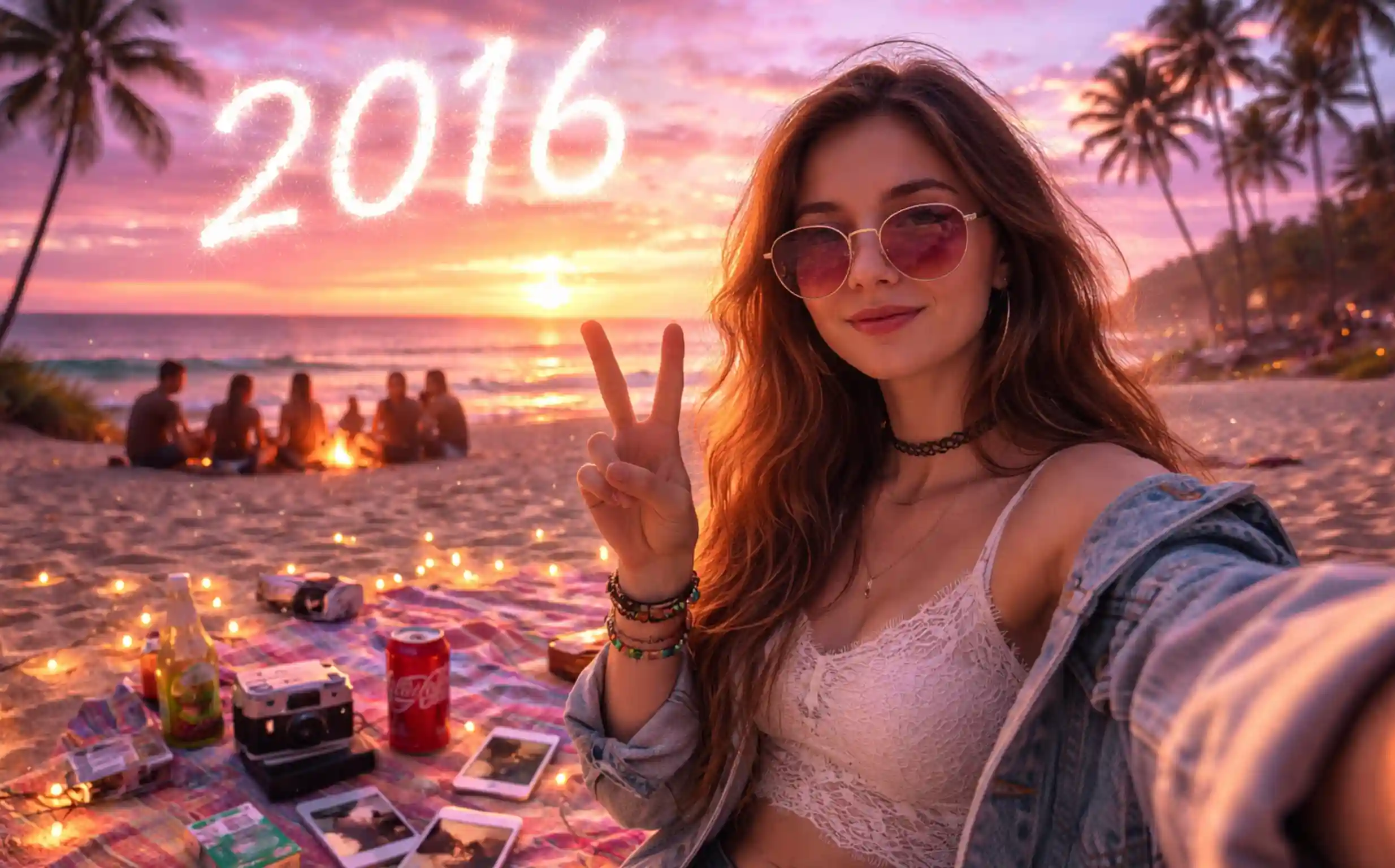
The 2016 resurgence trend in marketing is often described as throwback content, but the working parts are more specific. It is a bundle of platforms, formats, and visual habits from the mid 2010s that can be reinterpreted for today.
The Platforms and Formats
In 2016, the internet’s center of gravity was different. Snapchat Stories, early Instagram aesthetics, Vine era pacing, and meme formats that favored simplicity defined what felt native. Today, brands simulate those constraints on purpose.
- Short loops, quick cuts, and lo fi pacing that feels less produced
- Story style narratives built around a single moment, not a full campaign arc
- Casual captions that leave room for the audience to finish the joke
This is where TikTok trends make the 2016 resurgence trend scalable. The goal is not to mimic old platforms. The goal is to borrow the interaction pattern.
The Visual Cues
The 2016 aesthetic includes specific cues that people recognize immediately.
- Flash photography, simple color, and a slightly imperfect texture
- Early influencer styling, including basics paired with one standout accessory
- Type and layouts that resemble early social cards and meme templates
These cues can work in creative, packaging, and website design. They also can feel cheap fast, which is why restraint matters.
The Mood Shift
The 2016 resurgence trend is also a mood shift. It suggests a preference for playful sincerity over constant irony, and for shared reference points over micro niche obscurity. That is why Gen Z nostalgia attaches to 2010s nostalgia as an era, not just a single product.
The Psychology Behind Gen Z Nostalgia
For some audiences, familiar sounds and images offer a sense of comfort or shared identity. For others, the appeal is playful discovery rather than lived memory. Do not assume the same trigger works across every age group. A related example appears in our breakdown of nostalgia marketing during the holidays.
Comfort, Control, and Identity
Nostalgia can influence feelings of connection and how people weigh value. Controlled experiments published in the Journal of Consumer Research (Journal of Consumer Research) explored how nostalgic states can reduce the desire for money; they do not establish a predictable conversion lift. An explainer from Ivey Business School (Ivey Business School) discusses circumstances in which nostalgic messaging may affect purchase decisions.
For Gen Z nostalgia, the comfort is not just the past. It is the feeling of being online before everything became a performance. When teams use mid 2010s cues, they are often trying to borrow that comfort and translate it into attention.
Collective Memory for a Decade That Was Mostly Online
2010s nostalgia is different from 1990s nostalgia. A lot of the memory is mediated through saved photos, reposted memes, and algorithm resurfacing. That matters because it makes the 2016 marketing trend easy to remix, but also easy to counterfeit.
Use brand research to learn which memories and references buyers actually recognize. An older audience may remember a 2016 app or event directly; a younger audience may respond to a creator’s reinterpretation. Choose the reference for its relevance to the product, not because the year is trending.
The Business Case for Nostalgia Marketing in a 2016 Frame
Nostalgia marketing is not new. What is new is how fast the cycle is moving and how quickly audiences tire of forced references. In practice, nostalgia marketing works best when it is treated like a product and experience decision, not just a content decision. The 2016 marketing trend can still deliver performance when it is tied to a real strategic job.
Creative Constraints and Recognition
The 2016 look gives teams a recognizable set of creative constraints. It can shorten early exploration, but familiarity and recall should be measured rather than presumed. Start with a cue that the actual audience understands, not a long checklist of visual references.
- A clearer starting point for testing creative directions
- Recognition signals to measure across creative variants
- Less explanation only when the intended audience recognizes the reference
Hootsuite’s Social Trends report notes nostalgia and remix culture as a recurring pattern in social, which aligns with why this kind of creative performs when it is done cleanly (Hootsuite). If you want a broader view of comeback patterns beyond aesthetics, see The Biggest Marketing Resurgences of 2025.
Community Signals and Shared Language
The 2016 resurgence trend is also a community signal. It lets people self identify without saying much. That is why it shows up in creator briefs, in comments, and in remember when formats that invite participation.
Deloitte’s research on digital media also points to Gen Z relying on social platforms for discovery and recommendations, which makes the creative language of those platforms more important than ever (Deloitte). If Gen Z nostalgia lives in the feed, the feed’s grammar matters.
A Practical Framework: The 3 Layer 2016 Playbook
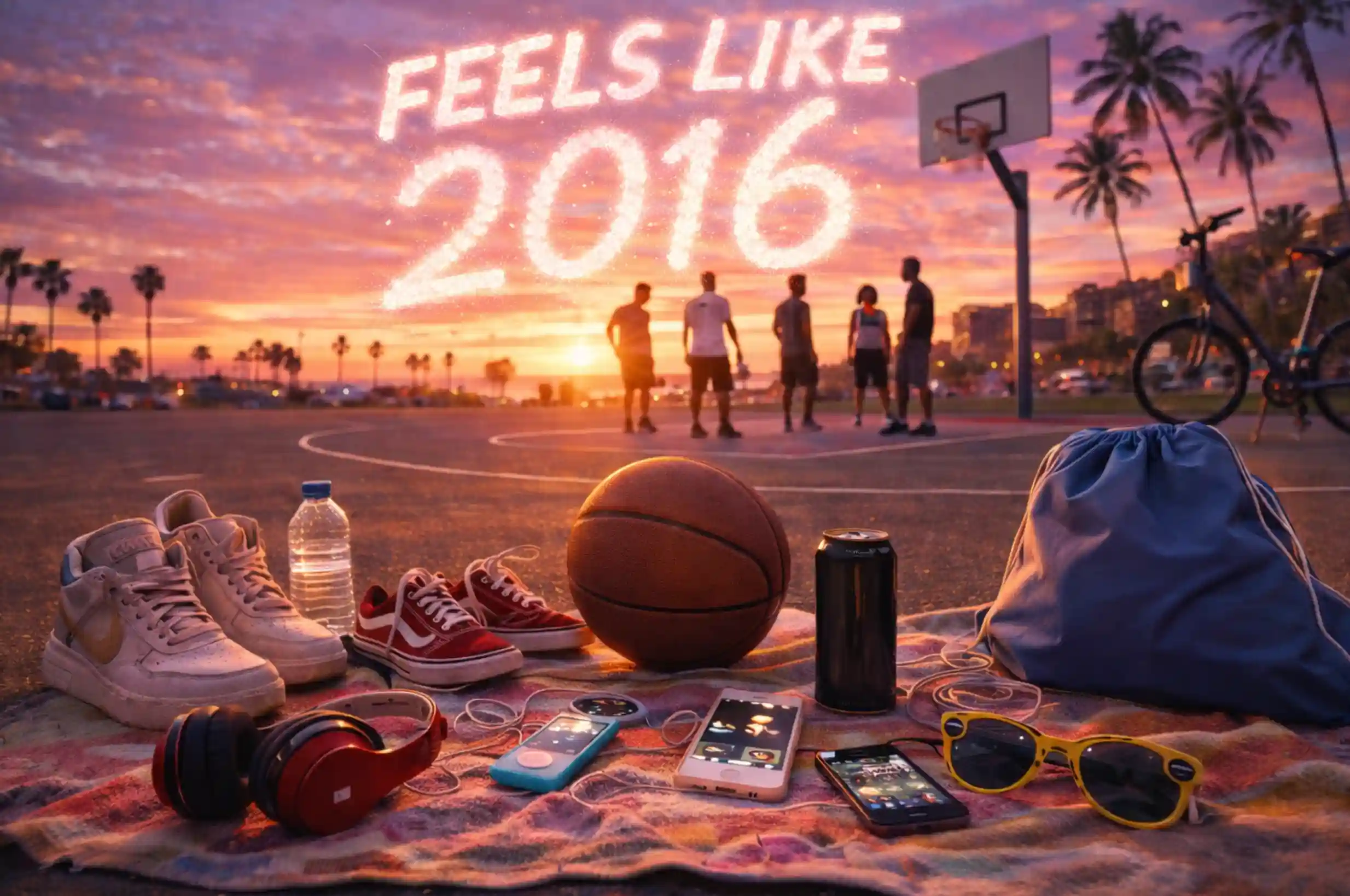
A practical campaign can move from a recognizable visual signal to a clear product story and then to a useful experience after the click. This three-layer framework complements broader aesthetic marketing, which depends on consistent brand cues rather than one isolated throwback.
Layer 1 Surface Cues
Surface cues are the first second. They answer, is this for me.
- Use one or two 2016 aesthetic markers, then stop
- Keep the hook visual, not verbal
- Make the brand mark present but not dominant
Surface cues are how TikTok trends travel. They are not where meaning lives.
Layer 2 Story Cues
Story cues create relevance. They answer, why does this exist.
- Tie the throwback to a real benefit, not a random reference
- Anchor to a moment that matters to the audience, like first phone, first playlist, first group chat
- Use product proof in the same frame, so the story does not float away
This is where Gen Z nostalgia becomes useful for brands that need to sell, not just entertain.
Layer 3 System Cues
System cues are the experience after the click. They answer, can I trust this.
- A fast, mobile first landing page that loads without friction
- Clear information hierarchy that respects skim behavior
- A conversion path that does not punish the curious
This layer is where many campaigns fail. The creative uses 2010s nostalgia, but the website feels heavy and generic. If the system does not match the promise, the 2016 resurgence trend becomes a bait and switch.
Where Marketers Are Using the 2016 Aesthetic Right Now
The 2016 resurgence trend is showing up across the funnel, not just in social.
Social Content and Creator Briefs
Creators can interpret the 2016 aesthetic without being handed a script. Brief around the audience, the product truth, usage rights and the desired next step. For a Chicago retail activation that also uses local creators, a marketing agency in Chicago can coordinate the regional campaign and its landing-page experience. This is an example of local execution, not evidence that the trend is stronger in Chicago.
- Ask for 2016 pacing or throwback story format, not 'do 2016'
- Define one non-negotiable product truth
- Let the creator choose the reference point, so it feels lived
This approach respects Gen Z nostalgia and reduces the risk of cringe.
Product Drops and Packaging
In product, the 2016 resurgence trend often shows up as limited drops, revived colorways, or packaging that nods to older design language. The key is to connect the drop to a reason.
- Anniversary logic or archive logic that is credible
- A modern upgrade that justifies the return
- A clear inventory plan so scarcity is not fake
This is nostalgia marketing with operational discipline.
Events, Retail, and Experiential
2010s nostalgia can be physical. Pop-ups referencing an old bedroom, hallway or festival look can create a participatory setting, but the experience should fit the audience and offer. A Montreal-based team, for example, could use a marketing agency in Montreal to coordinate local creative and registration pages without treating the city as a source of the trend.
- Build one memory set that captures the era
- Keep the flow simple so lines do not kill the mood
- Make sharing optional, not required
For venues, ticketed events or pop-up launches, entertainment marketing connects the theme to accessible booking or inquiry paths. Offer a useful experience first, then measure registrations, qualified enquiries or purchases rather than counting only photos and shares.
Email and Lifecycle Touchpoints
Email is underrated for Gen Z nostalgia because it is private and direct. A 2016 throwback subject line can work, but the body has to deliver value.
- Use the 2016 aesthetic in small ways, like one visual module or one line of copy
- Keep the message short, with one main action
- Link to a landing page that matches the promise
If you need a system to connect creative to conversion, a marketing consultation and audit can map the full journey and identify where nostalgia marketing is being lost after the click.
How to Bring the Trend to Your Website Without Breaking UX
The 2016 resurgence trend often starts in social, but the website is where credibility is proven. The goal is to borrow the feel without copying old design patterns that hurt usability.
Design Principles to Keep It Modern
Keep the 2016 cues in a limited campaign layer, while retaining modern navigation and page structure. A documented visual identity design system can specify what changes for the campaign and which core brand assets stay consistent.
- Use contemporary layout structure, then add a single throwback module
- Keep navigation simple and consistent across devices
- Make product and proof easy to find within one scroll
A strong web design agency can translate these cues into clean components that load fast and stay maintainable.
Accessibility and Performance Guardrails
If you use flash, texture, or lo fi visuals, you still need accessibility. Gen Z nostalgia does not excuse poor contrast or unreadable type.
- Check contrast ratios and font sizes
- Ensure motion is optional and does not trigger discomfort
- Keep the page light so mobile performance stays strong
For teams rebuilding experiences, UI UX design agency support helps turn trend driven creative into usable flows.
Content Governance So It Does Not Rot
Trends expire. Systems last. Build governance so the throwback layer does not become a dated layer that no one owns.
- Create a component library for throwback modules
- Set a review cadence to retire old references
- Document what must remain consistent, like claims, pricing, and core messages
This is also where brand systems matter. A disciplined branding services can define how nostalgia fits within a long term identity, instead of becoming a one off.
The Mistakes That Make the 2010s Nostalgia Feel Fake
The market is now trained to spot imitation. These mistakes do not just reduce engagement. They reduce trust.
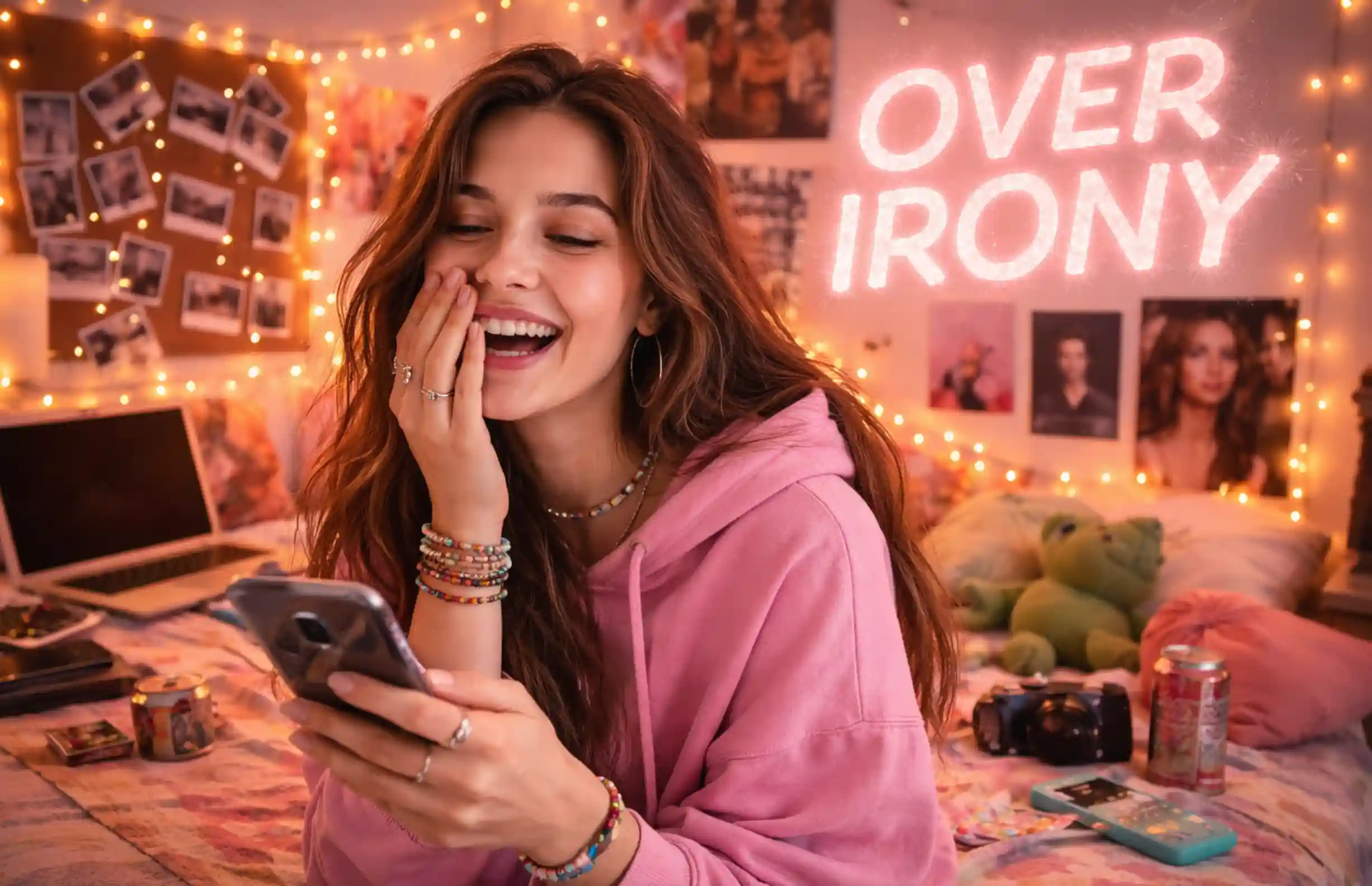
Over Irony
If everything is a joke, nothing is a promise. Gen Z nostalgia often contains humor, but it also contains sincerity. Brands that lean too hard on irony can seem detached.
Copycat Creative
The 2016 resurgence trend has patterns that everyone can borrow. Copying a specific creator’s style or a specific meme template too closely is risky. It can feel like theft, not homage.
Forgetting the Product
Nostalgia marketing that never lands on a product truth is a dead end. 2010s nostalgia should be the hook, not the entire pitch. If the offer is not clear, the audience moves on.
Measurement: Proving the 2016 Resurgence Trend Drives Pipeline
The 2016 resurgence trend should earn its place in the plan. That requires measurement tied to business outcomes.
What to Track
Use a short scorecard that connects top of funnel signals to intent.
- Creative: thumb stop rate, watch time, saves, and shares on TikTok trends
- Site: landing page bounce, scroll depth, and key clicks
- Revenue proxies: demo requests, qualified leads, add to cart, or booked calls
If organic visibility matters, coordinate campaign landing pages with your SEO agency plan and write content that answers actual search needs. For teams aligning the campaign with positioning and channel standards, a branding agency can help keep creative and the website consistent. Neither link is a promise that nostalgia keywords will rank.
How to Run a Clean Test
A clean test compares the 2016 aesthetic against a control creative, while keeping the offer constant.
- Hold the product claim stable.
- Change only the creative wrapper, including the 2016 resurgence trend cues.
- Measure the full path, not only the first click.
This is how nostalgia marketing becomes a repeatable lever rather than a one time spike.
A Calm Way to Start: A 30 Day Pilot Plan
If you want to use the 2016 resurgence trend without committing your whole brand to it, start small and learn fast.
Week 1: Choose the reference point.
- One memory cue your audience recognizes
- One product truth you can prove
- One channel where TikTok trends already shape behavior
Week 2: Build the system.
- A landing page with clear hierarchy and fast load
- A short email or retargeting follow up
- A simple analytics dashboard
Week 3: Publish and listen.
- Post two creative variants
- Watch comments for language cues and objections
- Adjust based on what people say, not only what they click
Week 4: Decide what scales.
- Keep the best performing cues
- Retire what feels forced
- Document learnings as a playbook
If you operate in B2B or professional services, the same logic applies. A B2B marketing agency can help translate cultural cues into credible decision maker journeys.
FAQ
What is the 2016 resurgence trend in marketing?
The 2016 resurgence trend is the use of mid 2010s internet cues, formats, and aesthetics to create fast recognition and participation, especially in social content. It works when the throwback is tied to a real offer and a clean experience after the click (Forbes).
Why does Gen Z nostalgia focus on 2016 instead of earlier decades?
Gen Z nostalgia often anchors to years that align with formative online life, like early social platforms, first phones, and first shared meme eras. For many, 2016 is recent enough to feel personal while still distant enough to feel like 'before things changed' (Pew Research Center).
Is nostalgia marketing only for consumer brands?
Nostalgia marketing can work in B2B as well, but the execution changes. Use the 2016 aesthetic lightly, then prioritize clarity, proof, and frictionless conversion paths. In B2B, the nostalgia should signal humanity, not immaturity.
How do you keep 2010s nostalgia from feeling fake?
Start with one true reference, then build a modern story around it. Avoid copying a creator’s exact style, and do not rely on irony alone. If the product truth is weak, the 2016 resurgence trend will not save it.
What is the best place to use the 2016 aesthetic on a website?
Use the 2016 aesthetic in modular moments, like a hero visual treatment, a single interactive module, or a campaign landing page. Keep navigation and core layout modern, accessible, and fast.
A Closing Note for Leaders
The 2016 resurgence trend is a reminder that marketing is not only about novelty. It is also about shared language and clean experiences. Use Gen Z nostalgia with respect. Use nostalgia marketing with proof. Use 2010s nostalgia as a bridge to something durable, not as a mask.
For a measured throwback campaign, Brand Vision can help connect creative direction, website experience and practical success measures. You can discuss your campaign and website priorities with the team.