
Puma’s marketing strategy in 2026 is no longer defined by one campaign line. After a strategic reset in the second half of 2025, the company entered 2026 as a transition year, with priorities centered on becoming one global sports brand, reconnecting product development with storytelling, improving distribution quality, and concentrating on Football, Running, Training, and Sportstyle Prime & Select (PUMA 2026 transition-year update). Recent platforms such as Go Wild and FOREVER. FASTER. still matter because they show how Puma has framed speed, sport, and emotion, but they are now best read within that broader reset.
For Brand Vision, the useful agency lens is the connection between positioning, identity, digital experience, and execution. Puma is a strong case because the company is trying to make those pieces work as one system rather than asking campaigns to carry the brand alone. The lessons translate to consumer brands, service businesses, and B2B companies, even when the scale and channel mix are very different.
Key Takeaways
- Puma brand strategy in 2026 centers on a reset toward one global sports brand, stronger product stories, and tighter distribution discipline.
- Go Wild and FOREVER. FASTER. remain useful recent campaign platforms, but they do not fully describe the company’s current 2026 priorities.
- Football, Running, Training, and Sportstyle Prime & Select are the four focus categories Puma has identified for its current strategy.
- Athletes, teams, federations, product icons, and owned channels all support the same job: making Puma more distinctive and relevant to consumers.
Executive Summary: Puma’s 2026 Reset and Marketing Priorities
Puma’s marketing strategy matters in 2026 because the company is rebuilding brand relevance while deliberately accepting a transition year. Its official reset calls for clearer global positioning, more integrated product development and storytelling, better-managed go-to-market decisions, and fewer distribution practices that weaken desirability (PUMA strategic priorities). That makes the case more useful than a simple campaign recap: it shows what happens when a global brand decides the operating model behind marketing needs to change.
The North Star
The current North Star is explicit: Puma wants to become a top-three global sports brand and return to above-industry growth with healthy profitability over the medium term. The brand-side expression of that goal is “one global sports brand,” supported by global product ranges and global product stories across markets (PUMA strategic priorities). Speed still belongs to Puma’s heritage, but the 2026 strategy puts equal weight on product relevance, storytelling, and channel quality.
The Conflict
Puma has described the problem more directly than many brand analyses do. In its 2025 reset, the company said the brand had become too commercial, with muted brand heat, weak sales quality, and a product range that was not cutting through. The 2026 challenge is therefore not simply to generate more attention. It is to rebuild desirability while simplifying the product portfolio and improving where and how the brand is sold (PUMA strategic priorities).
What Changed by 2026
Go Wild was announced in March 2025 as a global campaign designed to continue through 2025 and 2026, with sport-specific chapters and major calendar moments (PUMA newsroom announcement). Independent reporting described it as Puma’s largest global campaign and linked it to higher marketing investment (Marketing Dive coverage). Later in 2025, however, Puma initiated a broader reset. By February 2026, the company was describing the year as transitional and emphasizing four focus categories, product icons, distribution quality, and global storytelling (PUMA 2026 update). PUMA Go Wild remains important context, but it should not be treated as the whole 2026 strategy.

Origins & Evolution: From Campaign Platforms to the 2025 Reset
Puma’s history is long, but the useful marketing lens is simple. The brand has always balanced sport performance with culture adjacency. That balancing act is now the central advantage. Puma's marketing strategy works when it makes that dual identity feel intentional rather than accidental.
The Catalyst
The catalyst was not one isolated campaign. Puma’s own reset identified a broader relevance problem: the brand had become too commercial and needed stronger product distinction, clearer positioning, and better distribution. That diagnosis changed the strategic conversation from “what campaign comes next” to “what operating choices make the brand more desirable again” (PUMA strategic priorities).
Strategy Then vs Strategy Now
The 2024 FOREVER. FASTER. work and the 2025 Go Wild campaign show Puma using broad brand platforms to connect performance with culture. The strategy now adds a more operational layer: one global sports brand, fewer and clearer focus categories, stronger product franchises, more integrated product-and-story development, and tighter management of distribution and promotions. In other words, the brand platform still matters, but execution discipline has moved closer to the center of the strategy.
That shift matters for leaders because it changes planning. The useful question is not only, “What campaign do we run this quarter?” It is also, “Which product stories, channels, and customer experiences reinforce the position we want to own?” Marketing strategy becomes a business system when campaign ideas and operating choices point in the same direction.
The Strategic Pivot
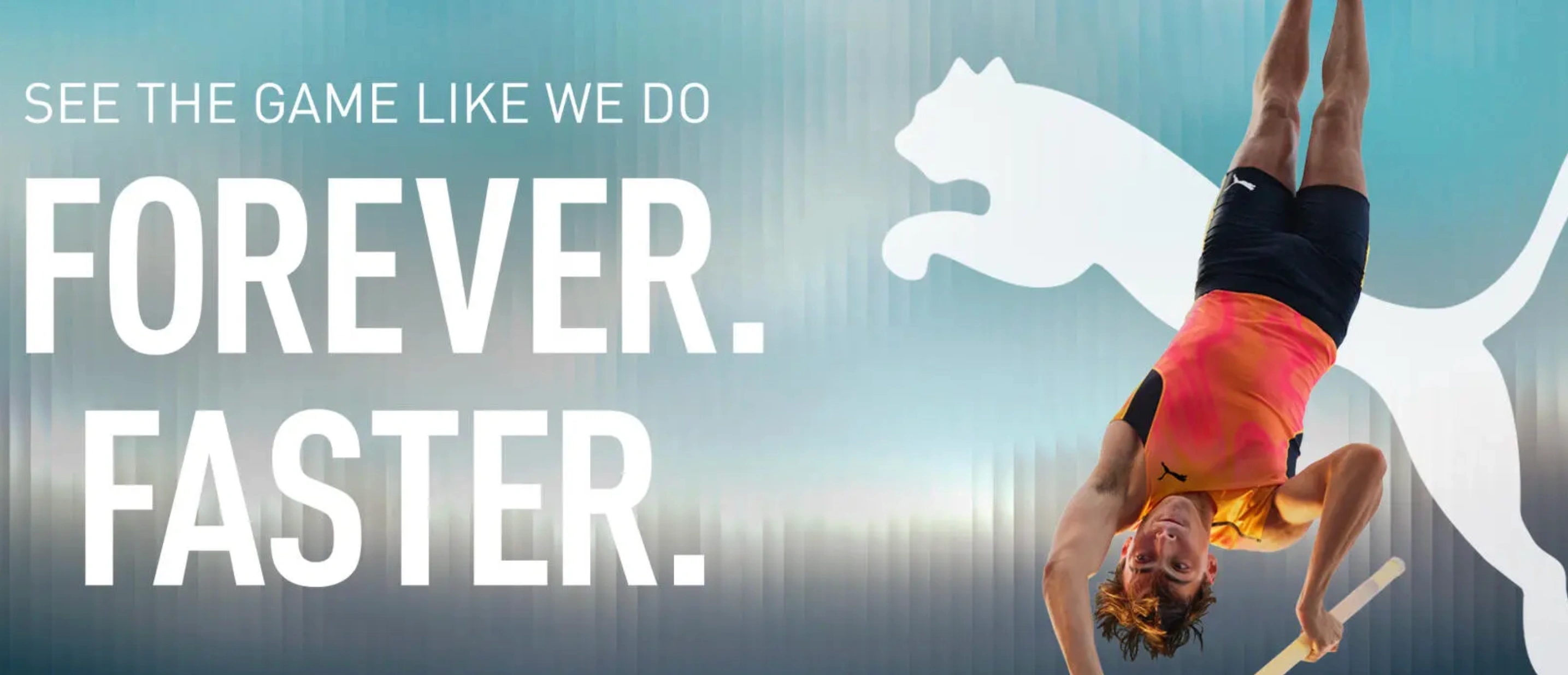
Puma’s 2024 brand campaign put “See The Game Like We Do: FOREVER. FASTER.” at the center of its sports positioning (PUMA newsroom on the 2024 brand campaign). Go Wild broadened the emotional territory in 2025, framing sport around self-expression and everyday participation (PUMA Go Wild release). The larger pivot came later in 2025, when Puma reset the business around a clearer performance-first identity, integrated product storytelling, selected product icons, and higher-quality distribution (PUMA strategic priorities). For brand leaders, that sequence is the more useful lesson: campaign platforms can create meaning, but the operating model has to protect it.
A Practical Framework for Reading Puma’s 2026 Strategy
Puma’s marketing strategy becomes easier to understand when you translate it into frameworks. The goal is not to force a brand into a template. The goal is to clarify what is working, what is risky, and what is transferable. This section uses 4 Ps, SWOT, and a positioning map as practical tools, not academic exercises.
4 Ps Analysis
Product
Puma’s 2026 product strategy is more focused than the article’s earlier framing suggested. The company has identified Football, Running, Training, and Sportstyle Prime & Select as priority categories, while also emphasizing product icons such as the Suede and performance platforms such as NITRO™ (PUMA strategic priorities). The marketing lesson is that product franchises need distinct stories that can repeat across seasons.
Price
Puma has not published a simple “pricing position” for the brand, so it is safer to look at promotion discipline instead of guessing at a price tier. The reset includes reducing sales promotions and discounting in channels where they weaken brand desirability (PUMA strategic priorities). That makes price presentation part of brand management, not just a merchandising decision.
Place
Distribution is a stated part of Puma’s reset. The company is withdrawing from wholesale channels it believes damage desirability, managing the channel mix more actively, and aiming for a higher direct-to-consumer share over time (PUMA strategic priorities). For other brands, the transferable point is that where a product appears can reinforce or undermine the position marketing is trying to build.
Promotion
Promotion is moving toward more focused investment and tighter integration with product storytelling. Go Wild remains a useful example of a repeatable campaign platform (PUMA Go Wild announcement), while the 2026 reset emphasizes global product stories and higher visibility for performance products. The lesson is to make campaign reach reinforce a clear product and brand priority rather than operate as a separate layer.

SWOT Breakdown
Strengths
- Deep sports heritage and athlete partnerships that support performance credibility.
- Recognizable product and campaign assets, including NITRO™, the Suede, FOREVER. FASTER., and Go Wild.
- A clearer global operating model that brings brand marketing, product, creative direction, innovation, and go-to-market closer together.
Weaknesses
- Puma itself acknowledged muted brand heat, weak sales quality, and a product range that was not cutting through before the reset.
- A transition year creates execution risk while the company simplifies products, channels, and internal processes.
Opportunities
- Use the 2026 World Cup to showcase football products and athlete partnerships on a global stage.
- Build Running around NITRO™ and Training around the HYROX partnership.
- Strengthen Sportstyle through archive icons and sharper product storytelling.
Threats
- Strong competitors can outspend or out-distribute Puma while it is rebuilding brand heat.
- Reducing lower-quality distribution and promotions can create short-term sales pressure during the transition.
- Macroeconomic and geopolitical uncertainty can make a multi-market reset harder to execute consistently.
Positioning Map
A simple analytical positioning map can still be useful, as long as it is treated as an interpretation rather than a published Puma framework. Put performance credibility on one axis and cultural relevance on the other. Puma’s reset is trying to strengthen the performance side through Football, Running, Training, and product technology while using Sportstyle, product icons, and storytelling to preserve cultural relevance. The goal is not to occupy a theoretical quadrant. It is to make the brand easier to understand and more desirable in actual buying contexts.
Audience Segmentation: Who Puma Needs to Win
The key to understanding Puma's marketing strategy is to stop thinking in demographics alone. Puma builds around mindsets, behaviors, and use contexts. That makes targeting more flexible and messaging more durable.
Practical Audience Segments
Puma does not publish a single ideal customer profile in the sources cited here. A more useful analysis is to look at overlapping buyer contexts shaped by sport, style, and use case.
- The performance-first runner who cares about feel, pacing, and improvement.
- The sports culture fan who uses football, basketball, or motorsport as identity signals.
- The style-driven buyer who wants a silhouette that looks current but does not feel overly precious.
- The value-aware shopper who still wants cultural credibility.
Puma can speak to these groups with shared brand language while changing the proof by category. For a consumer brand, that is a useful B2C marketing principle: keep the core position stable, then adapt the message to the decision context rather than inventing a new identity for every audience.
A Jobs-to-Be-Done Lens
A jobs-to-be-done lens is another analytical tool, not a claim about Puma’s internal segmentation. It helps explain why performance, identity, and confidence can coexist inside the same brand.
- “Help me feel fast,” which is both literal and emotional.
- “Help me look like I belong,” especially in sport culture moments.
- “Help me stay consistent,” where routine sports like running create identity.
- “Help me express confidence,” which sits at the heart of Go Wild’s tone.
The point is not that every campaign needs to speak to every job. It is that a durable brand platform gives category teams a shared language while allowing the evidence to change by sport, product, and occasion.
Segmentation by Sport, Use Case, and Story
The clearest 2026 segmentation signal is Puma’s focus on four categories: Football, Running, Training, and Sportstyle Prime & Select. Each gives the brand a different use context and proof system, from World Cup visibility to NITRO™ running technology and HYROX training credibility (PUMA 2026 update). The practical takeaway is to segment by decision context, then design content and landing pages around what each audience needs to believe. The earlier campaign also showed how a global platform could rotate through category spotlights over time (PUMA Go Wild release).
Recent Campaigns & Creative Execution
Recent campaigns still explain how Puma builds memory, even though the company’s current strategy is broader than those campaigns. The useful question is how each platform turns a brand idea into repeatable creative across sports, products, athletes, and channels.
Flagship Campaign 1: Go Wild
Go Wild launched in March 2025 around self-expression, everyday athletes, and the emotional side of sport. Puma said the platform was designed to run through 2025 and 2026, with category spotlights across sports (PUMA Go Wild announcement). Reporting at launch described it as Puma’s largest global campaign and connected it to increased marketing investment (Marketing Dive). It remains a strong example of campaign-platform design, even though the later 2025 reset changed the wider strategic context.
Why it works as a Puma marketing strategy move
- It expands the emotional space of Puma brand positioning without abandoning performance.
- It creates a flexible creative frame for multiple sports.
- It gives Puma marketing campaigns a consistent language that can scale.
What to look for if you are benchmarking execution
- Does the story land in motion, not just in slogans.
- Do product moments feel like proof of the platform rather than separate content.
- Does the digital experience reinforce the feeling through pace, clarity, and flow.
Flagship Campaign 2: FOREVER. FASTER. See The Game Like We Do
FOREVER. FASTER. is a longer-running Puma idea, and the 2024 campaign brought it forward with “See The Game Like We Do: FOREVER. FASTER.” (PUMA newsroom release on the 2024 campaign). The strategic value is the way an attribute, speed, becomes a recognizable point of view rather than a narrow technical claim.
Why it works for Puma brand strategy
- It gives the Puma brand identity a single, repeatable claim.
- It makes performance feel cultural rather than technical.
- It supports athletes and categories without forcing unnatural messages.
For decision makers, the lesson is platform discipline. Puma marketing campaigns can change casts and sports, but the platform stays recognizable. That consistency is what builds memory structures over time.
Content and Storytelling Pillars
In 2026, the more useful content framework is tied to the reset rather than to slogans alone. Four themes can guide how the current strategy is interpreted:
- Performance proof rooted in Football, Running, and Training
- Product icons and technologies that give stories something concrete to center on
- Global storytelling that stays recognizable across markets and channels
- Athletes, teams, federations, and cultural partnerships that extend credibility and reach
For other brands, those pillars should map to site architecture, merchandising, and content operations. This is where web design becomes part of campaign execution because navigation, landing pages, and product storytelling determine what happens after attention arrives. Retail-led teams can also compare these lessons with Brand Vision’s guide to fashion marketing strategies, where product narrative, creators, commerce, and brand consistency have to reinforce one another.
The X Factor
Puma’s creative advantage is not one slogan. It is the possibility of aligning sport credibility, product proof, recognizable brand codes, and repeatable storytelling. The 2025 reset raises the bar for that alignment because campaigns now have to support a clearer product and distribution strategy instead of compensating for inconsistency elsewhere.
A practical test remains useful: if someone sees a clip or product story with the logo removed, are the motion, casting, product cues, and tone distinctive enough to suggest Puma? Recognition should come from a system of cues, not from the logo carrying the whole message.
Five Recognizable Puma Slogans and What They Signal
Slogans matter when they are treated as brand language rather than campaign decoration. Puma has used short lines to encode different parts of its identity across eras. The five examples below are useful historical signals of how the brand has framed speed, optimism, self-expression, and sport.
- Go Wild
Signal: sport as self-expression and emotional release, designed as a platform through 2025 and 2026 (PUMA Go Wild). - FOREVER. FASTER.
Signal: speed as identity, not just as function, anchoring Puma brand positioning across sports (PUMA 2024 brand campaign). - See The Game Like We Do
Signal: a point of view claim, framing Puma as the brand that sees sport differently through speed (PUMA 2024 campaign). - Only See Great
Signal: optimism, ambition, and self belief, built around ambassador stories (PUMA Only See Great). - She Moves Us
Signal: women’s sport, culture, and empowerment as a brand priority, activated through ambassadors and storytelling (PUMA She Moves Forward release).
The lesson is not that Puma should keep every line active at once. It is that durable brand language needs hierarchy. FOREVER. FASTER. has carried a long-running performance idea, while Go Wild, Only See Great, and She Moves Us illustrate how campaign language can explore narrower emotional or audience territories without replacing the whole brand system.
Brand Identity Codes: The Marketing Identifiers People Recognize Instantly
Puma’s marketing still depends on recognizability, but the reset makes recognizability more than a creative question. A clear visual identity gives product, photography, casting, layout, motion, and retail a coherent system that can support clearer product franchises and a more focused sports identity. Repetition makes those cues efficient because audiences do not have to relearn the brand every time.
The identity codes below are useful when studying how Puma turns strategy into recognizable execution.
Speed as a visual language
Puma repeatedly uses motion cues, dynamic poses, and fast pacing in film and editing. The creative does not just say fast. It moves fast. That consistency makes Puma marketing campaigns feel like part of a family.
A global platform with category proof
The reset now gives the global platform a more concrete structure: one sports brand, four focus categories, stronger product icons, and more integrated storytelling. Go Wild and FOREVER. FASTER. remain recognizable campaign references, but the current category strategy gives the brand clearer proof points in Football, Running, Training, and Sportstyle (PUMA strategic priorities).
Ambassadors as narrative, not as decoration
Only See Great is built around ambassador stories rather than isolated product pushes (PUMA Only See Great). She Moves Us expands the brand’s lens on women’s sport and culture through ambassador storytelling (PUMA She Moves Forward). These are not just endorsements. They are narrative vehicles for Puma brand positioning.
The digital shelf as brand reinforcement
For many companies, brand identity weakens on the website when campaign language, navigation, product information, and interaction design feel disconnected. A speed-oriented brand story should be supported by fast pages, clear paths, and accessible design. Teams applying the Puma case can use UI UX design principles to reduce friction while keeping the experience consistent with the brand.
At Brand Vision, we approach this as an information-architecture and brand-system problem: the positioning should be visible in navigation labels, category structure, page hierarchy, and recurring creative modules. The goal is consistency from the first campaign impression through the owned digital experience.
Collaborations & Distribution: How Puma Collaborations Travel Across Channels
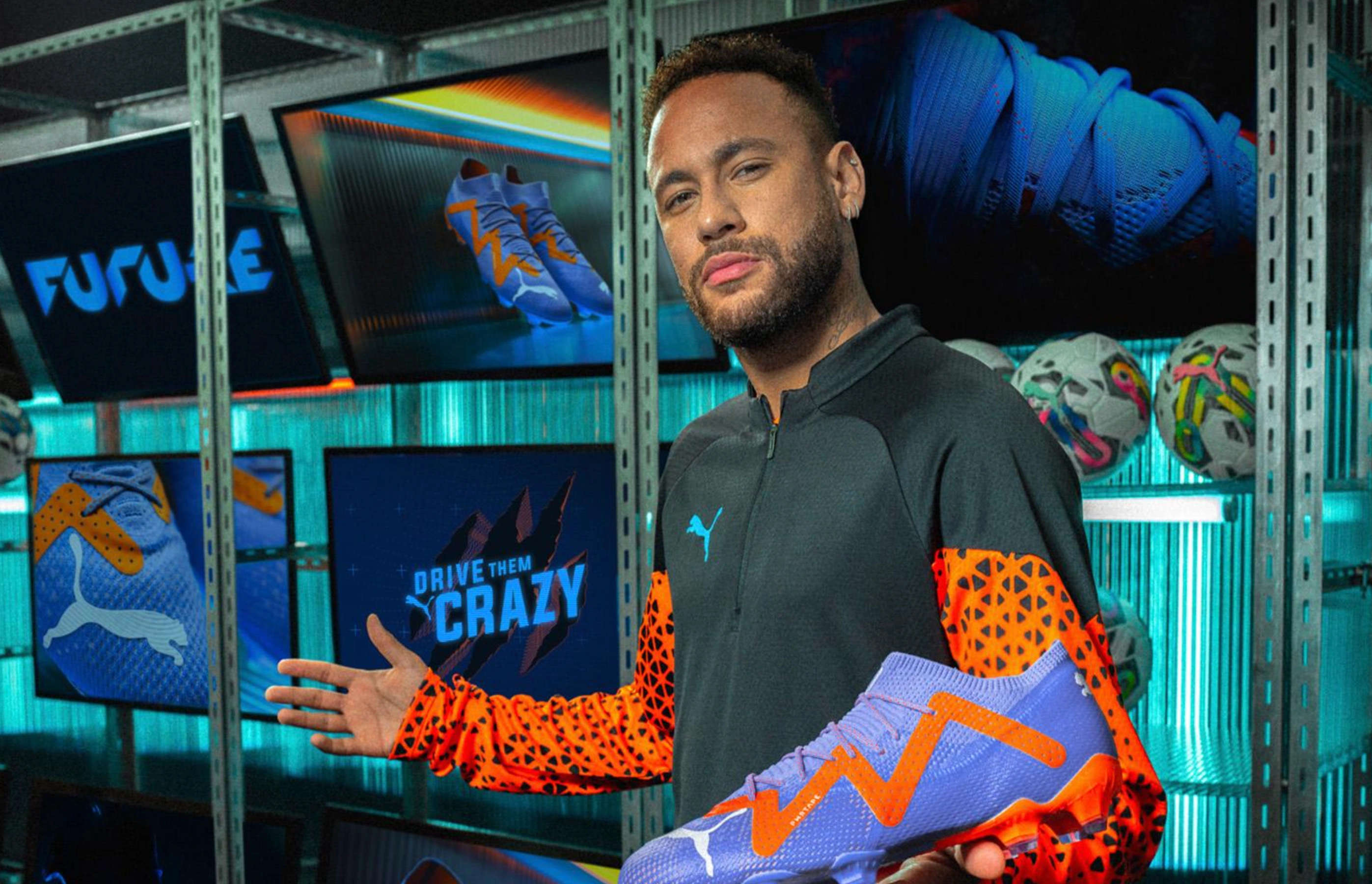
Puma collaborations are not a side show. They are part of distribution strategy. The best partnerships do three jobs at once: they create attention, they carry meaning, and they open doors to audiences that would take years to build from scratch. Puma's marketing strategy uses collaborations to sharpen brand positioning, not to distract from it.
Strategic Alliances
Partnerships remain central to sports credibility and reach. Puma’s mix can be read across three broad partnership roles:
- Sport credibility partnerships, where performance and competition anchor the story.
- Culture credibility partnerships, where music, fashion, and creators extend identity.
- Community partnerships, where local activations and grassroots energy build trust.
The strategic test is whether a partnership strengthens the identity and product story Puma is trying to build. A famous collaborator can generate attention, but the partnership becomes more valuable when it reinforces performance credibility, a product franchise, or a clear cultural role instead of becoming a separate identity.
Omnichannel Mix
Puma marketing campaigns use a blended channel approach. Go Wild was described as a global campaign spanning many markets, which implies a broad media footprint (PUMA Go Wild release). In practical terms, the channel mix tends to separate into primary and supportive layers. PUMA’s original campaign plan explicitly described category spotlights continuing across 2025 and 2026 (PUMA Go Wild release).
Primary channels
- Film and social video that establishes the platform
- Retail and ecommerce merchandising that converts interest into sales
- Sports moments and events that give credibility and earned discussion
Supportive channels
- Creator content and ambassador storytelling that extends reach
- Email and on-site content that deepens consideration
- PR and editorial placements that validate the campaign's meaning
This is where brands often underperform. They spend on awareness but fail to build a coherent path to purchase. A strong Puma marketing strategy benchmark is how well your owned channels do the heavy lifting after the first impression. If you need a clean operational model for this, pair campaign planning with SEO services so your content and landing pages capture demand that already exists.
Paid vs Earned vs Owned
Puma's marketing strategy uses paid media to establish platforms, earned media to validate relevance, and owned media to convert. The lesson for leaders is budget allocation. If owned media is weak, paid becomes a tax. If owned media is strong, paid becomes leverage.
Owned media includes the website experience, product storytelling, category navigation, and post-click depth. This is why a collaboration strategy should be planned with your digital shelf team, not just your creative team. A collaboration that trends but lands on a generic product page is wasted attention.
Measurement Framework: How Leaders Can Evaluate Puma’s Strategy
Public sources do not reveal Puma’s complete internal marketing stack or KPI dashboard. A useful analysis should therefore separate what the company has disclosed from the measurements an outside leader might use to evaluate whether the strategy is working.
What the Marketing Stack Needs to Support
Whatever tools Puma uses, the operating model needs to support a few functions reliably:
- Measurement across campaign, ecommerce, and retail touchpoints
- Product and content operations that keep global stories consistent
- Customer and audience data that supports owned-channel relationships
- Merchandising and product-feed coordination across direct and wholesale channels
- Search and content systems that capture high-intent demand after campaigns create awareness
The transferable point is governance. A brand reset only works if product, marketing, sales, ecommerce, and channel teams can execute the same priorities without recreating the strategy in each department.
A Practical Funnel View
Awareness
At awareness, athlete partnerships, the 2026 World Cup, product storytelling, and campaign platforms can build visibility around the performance-first reset. This stage should make the new priorities easier to recognize, not simply maximize impressions (PUMA 2026 update).
Consideration
At consideration, the brand needs product proof: technology, fit, athlete credibility, product icons, and clear category stories. Historical ambassador platforms such as Only See Great remain useful examples of how people can carry product and brand meaning together (PUMA Only See Great).
Conversion
At conversion, distribution quality, merchandising, availability, and low-friction digital experiences determine whether brand interest becomes a sale. This is where the reset’s channel discipline matters most, because a strong campaign cannot compensate indefinitely for a weak purchase path.
Suggested Key Performance Indicators
These are not presented as Puma’s internal KPIs. They are a practical scorecard a marketing leader could use to test whether a strategy like this is moving in the intended direction.
- Share of search and branded query growth as a proxy for demand
- Conversion rate and revenue per session on key category pages
- Email capture rate and repeat purchase indicators
- Creative effectiveness metrics like view-through completion and lift studies
- Category sell-through during spotlight windows
- Customer acquisition efficiency trends over time
The important discipline is to connect brand measures to commercial outcomes without collapsing everything into last-click attribution. Brand demand, product sell-through, owned-channel growth, and conversion efficiency should be read together.
Critique & Actionable Takeaways: What Leaders Can Learn
Puma’s marketing strategy is strong, but no strategy is risk-free. The most useful analysis pairs lessons with constraints. This section is designed to be practical for founders, CMOs, and growth leaders who need to make decisions, not collect trivia.
Five Transferable Lessons
Five lessons stand out from Puma’s reset and recent campaign history without requiring other brands to copy its aesthetics.
- Choose a small number of durable strategic priorities, then make campaigns support them instead of substituting for them.
- Treat identity codes and product franchises as long-term assets that make every new story easier to recognize.
- Use collaborations to add credibility or reach, not to replace the brand’s own point of view.
- Make the website and digital shelf part of the campaign system so product stories survive after the first impression.
- Measure brand demand, channel quality, conversion, and repeat behavior together so short-term performance does not erase long-term positioning.
If you want to operationalize these lessons, start with the brand foundation and the owned experience. A focused branding team can clarify positioning and identity cues, while a modern site ensures the story remains coherent through research, comparison, and conversion.
The principle also scales down. A consumer business choosing a branding agency in Chicago still needs one positioning system to guide identity, campaigns, and digital execution rather than treating each channel as a separate brand.
Critical Analysis
The main risk is execution during transition. Puma is trying to improve desirability while reducing lower-quality distribution, cutting promotions, simplifying the product portfolio, and concentrating investment. Those moves can strengthen the brand if they are coherent, but they can also create short-term sales pressure and expose gaps if product stories do not become more distinctive quickly enough (PUMA strategic priorities).
There is also a focus risk. Four priority categories create clarity, but each still needs distinct product proof and creative. If every category uses the same emotional language without a clear reason to believe, the brand can become consistent without becoming more compelling.
Future Outlook
Puma has described 2026 as a transition year and says it is positioning the business for a return to healthy, above-industry growth from 2027. The immediate brand opportunities are concrete: World Cup visibility in Football, NITRO™ in Running, HYROX in Training, and stronger use of archive icons in Sportstyle (PUMA 2026 update).
For leaders, the broader implication is that campaign platforms work best when product, storytelling, distribution, and the owned digital experience reinforce the same priorities. A reset becomes credible when customers can feel the difference in what is launched, how it is presented, and where it is sold.
What Puma’s 2026 Strategy Teaches Brand Leaders
Puma’s 2026 marketing strategy is best understood as a reset, not simply a continuation of Go Wild or FOREVER. FASTER. The company is narrowing product priorities, rebuilding desirability, improving distribution quality, and tying product development more closely to global storytelling. The durable lesson is that recognizable campaigns work better when the operating system underneath them is equally coherent.
If your own challenge is aligning positioning, identity, and digital execution, Brand Vision’s branding services cover the work itself, while teams comparing an integrated branding agency can review the broader agency approach. For a scoped marketing plan, you can also start with a marketing strategy consultation.