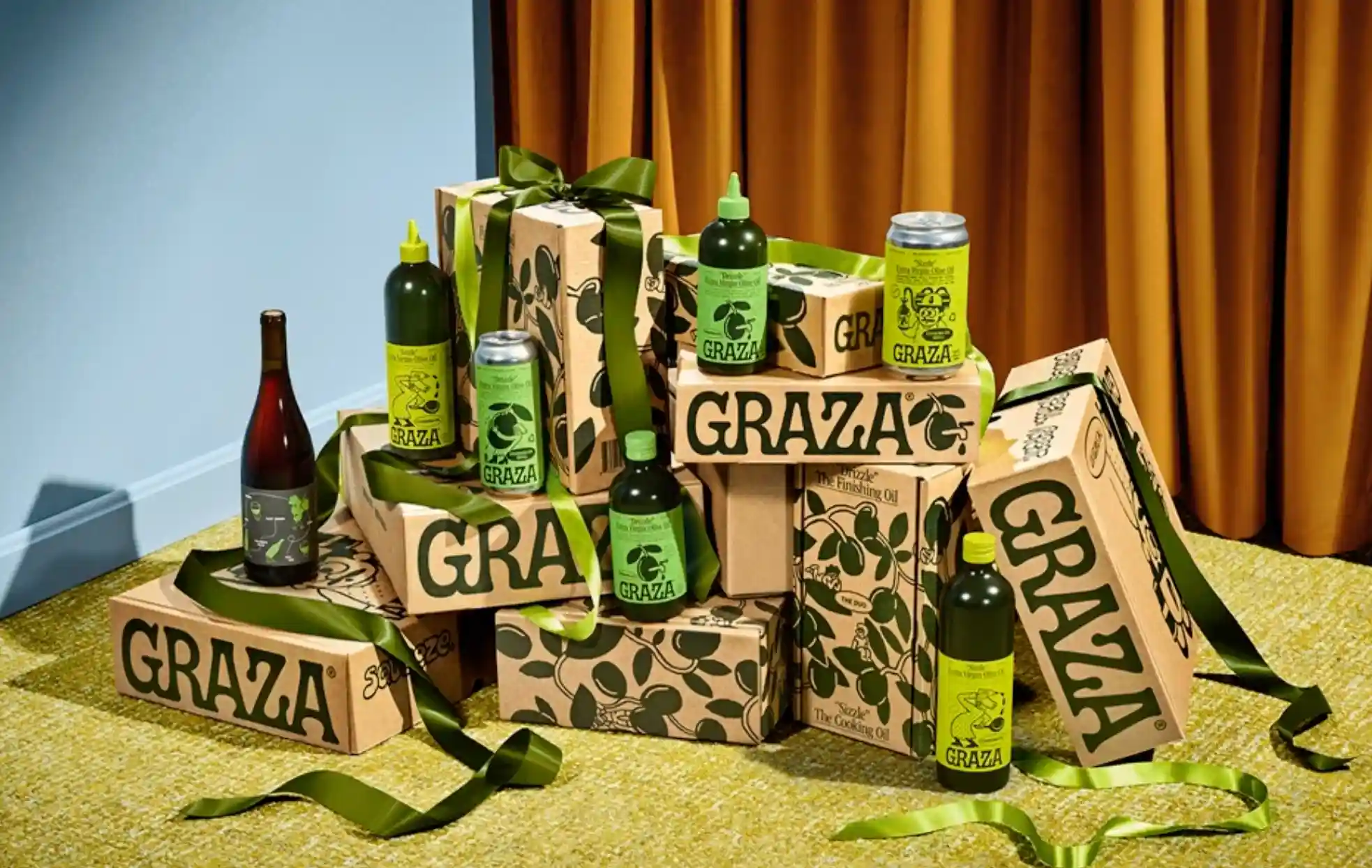
Olive oil is a crowded pantry category, often sold through provenance, varietals, and traditional packaging. Graza entered with a different proposition: make the product easier to use, easier to recognize, and easier to talk about. That approach fits a broader food and beverage marketing shift toward pantry products that carry visible design and cultural meaning. In just a few years, Graza moved from DTC newcomer to a nationally distributed brand. Its marketing strategy is a useful case study in how to rebrand expectations around an everyday staple without making the product harder to understand.
- Graza's strategy combines fresh design, simple positioning and culture-led distribution instead of competing on origin stories alone.
- Graza marketing shows how to ride the food as status wave without losing everyday usability or being written off as a gimmick.
For founders and marketers, the useful lesson is how brand positioning, packaging, creator seeding, and distribution reinforce one another. Brand Vision uses Graza here as an independent case study, not as an example of work our agency created for the brand.
At a Glance
Graza launched DTC on January 11, 2022, and sold out following the launch, with influencer gifting playing an important role in early demand. Marketing Brew By 2025, Inc. reported that Graza was available at more than 11,000 retailers and ranked as the fifth-largest national olive oil brand per Nielsen; the company also told Inc. it represented 24 percent of olive oil category growth that year. (Inc.) (Food Network)
- Graza's success is built on single-origin Spanish oil, distinctive squeeze packaging and a playful identity that cuts through the aisle. (Gambero Rosso)
- Graza marketing strategy moved from DTC and influencer seeding into omnichannel distribution at Whole Foods, Target, Costco and Walmart without losing its “cool pantry” image. (Drivepoint)
Food As Status: The Cultural Wave Graza Rode
Graza arrived as pantry products were becoming more visible signals of taste, with premium olive oil, tinned fish, condiments, and other staples increasingly discussed as attainable status goods. Waitrose research covered by The Guardian described olive oil, balsamic vinegar, and tinned fish as part of that shift. (The Guardian) The same dynamic helps explain what makes a brand look premium: perceived value comes from a system of cues, not price alone.
- Graza marketing leans into food as status by making the bottle something you leave on the counter, not hiding in a cupboard.
- Graza strategy positions the brand as an “everyday flex” that still feels attainable, rather than a distant luxury olive oil only chefs would know.
Packaging And Aesthetics: The Squeeze Bottle As Signal
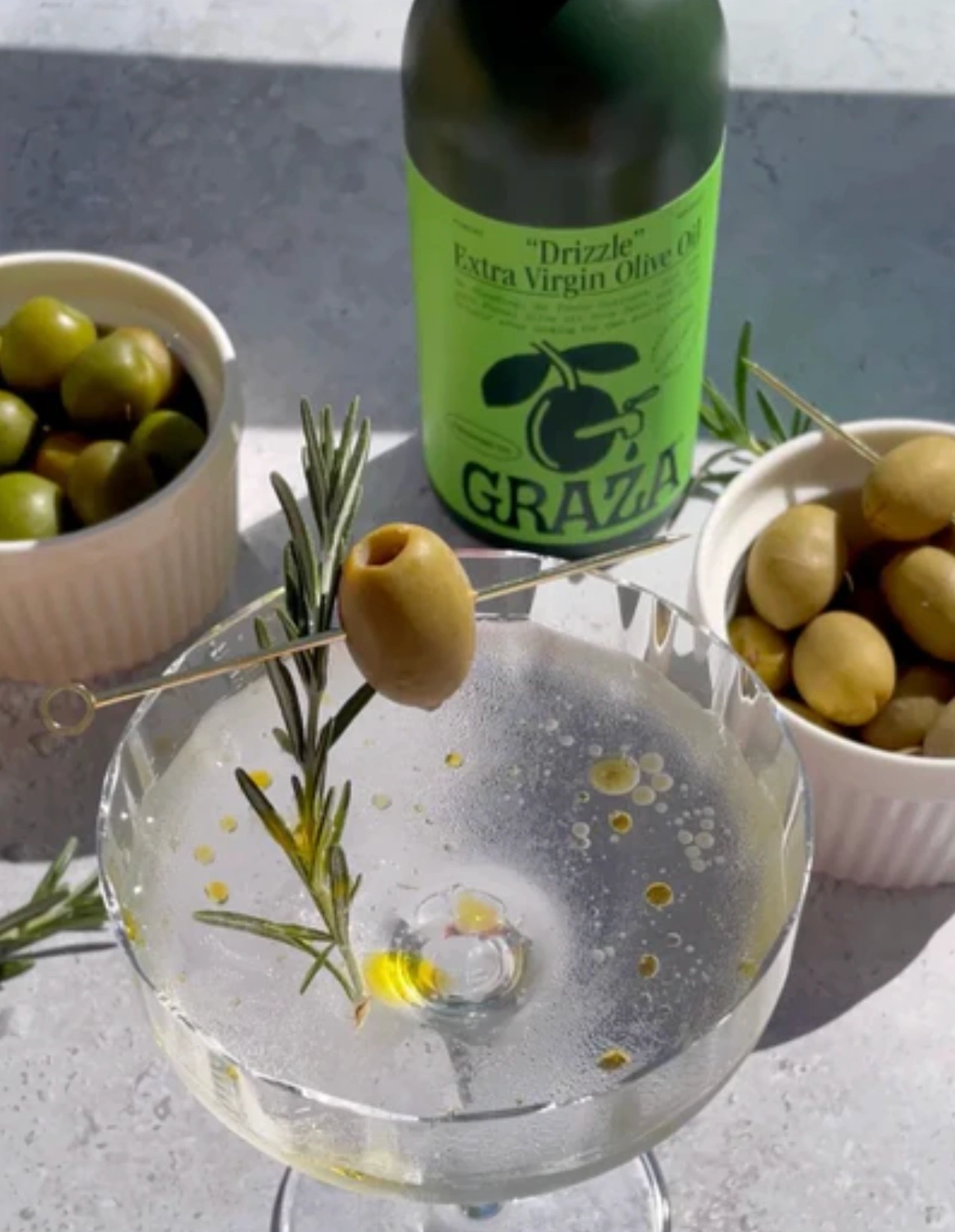
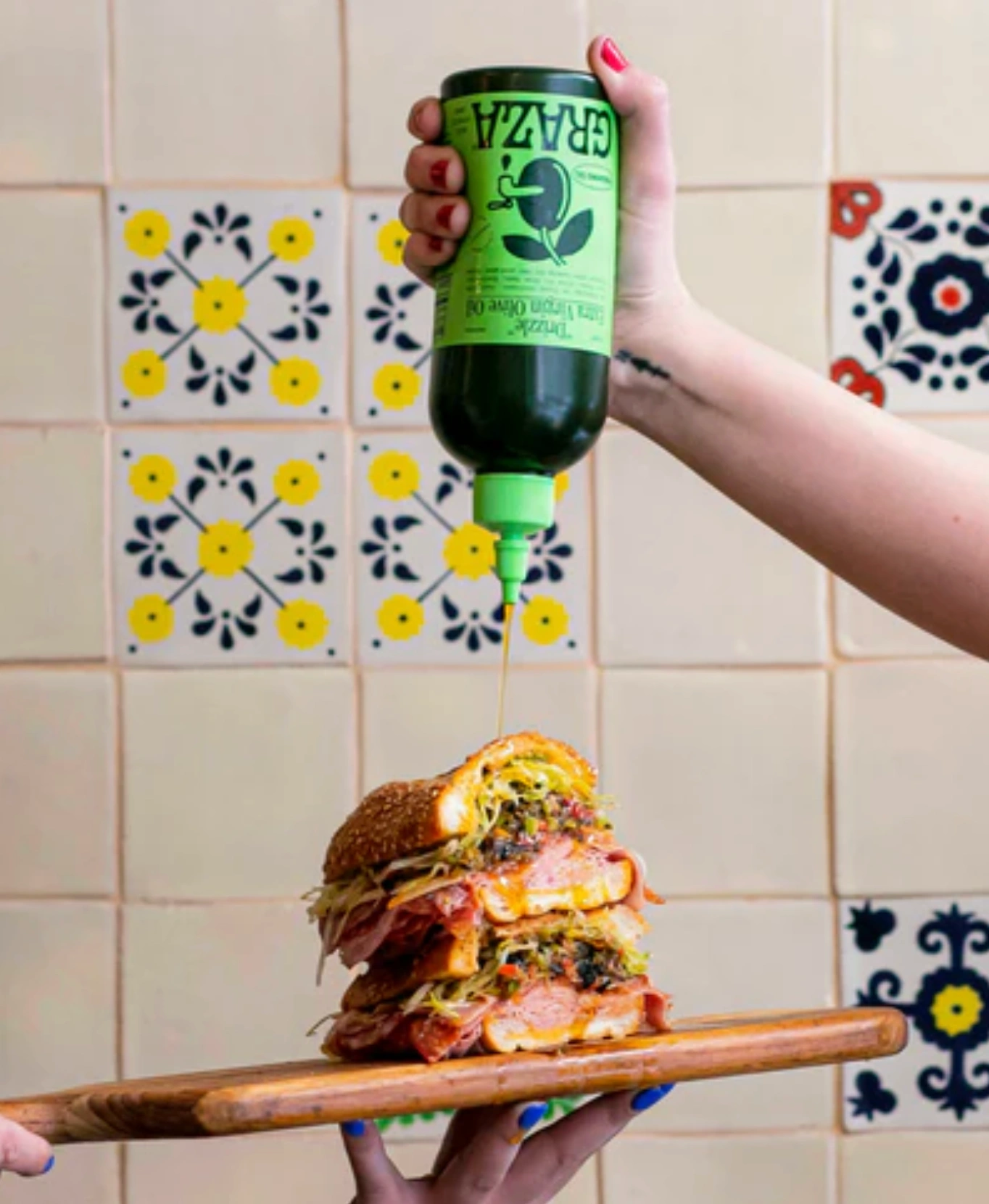
Graza’s most visible move is the opaque green squeeze bottle, a shape closer to diner ketchup than old-world olive oil. Founder Andrew Benin has said he wanted “olive oil that lives on the stove” and saw squeezability as both a functional improvement and a visual disruption in a sea of glass. (Taste) Shopify’s brand case study describes Graza branding as “unfussy, bold and friendly,” using cartoon olives and big type to remove intimidation from olive oil while making the product instantly recognisable online and on shelf. (Shopify)
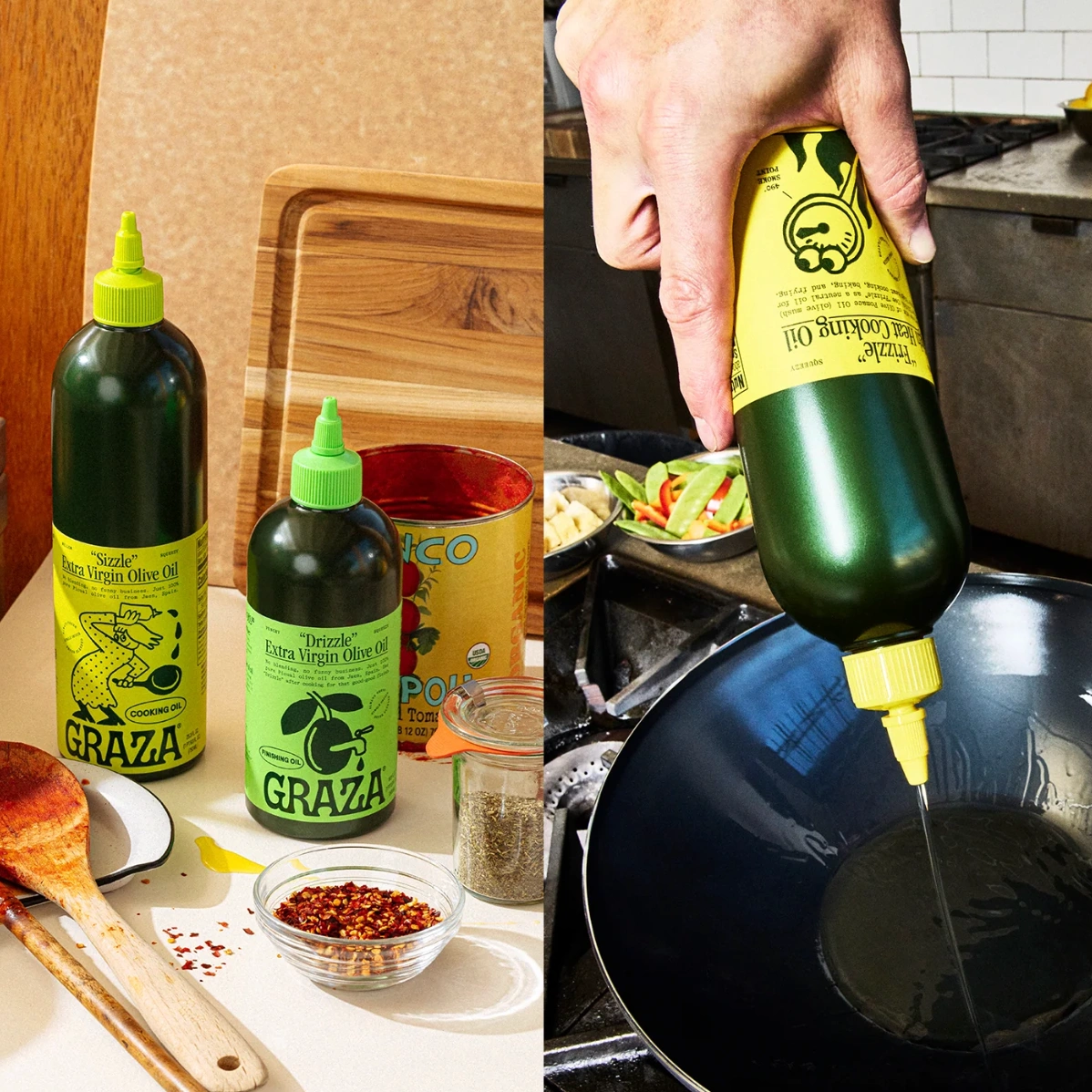
- The bottle format supports Graza marketing around use cases, since Sizzle and Drizzle can literally be squeezed where you need them during cooking.
- Visually loud but simple packaging turns Graza into a design object that invites photography and UGC. For other product brands, packaging graphic design has to balance shelf recognition, information hierarchy, and production constraints rather than imitate Graza’s specific bottle.
Naming And Positioning: Sizzle, Drizzle, Frizzle
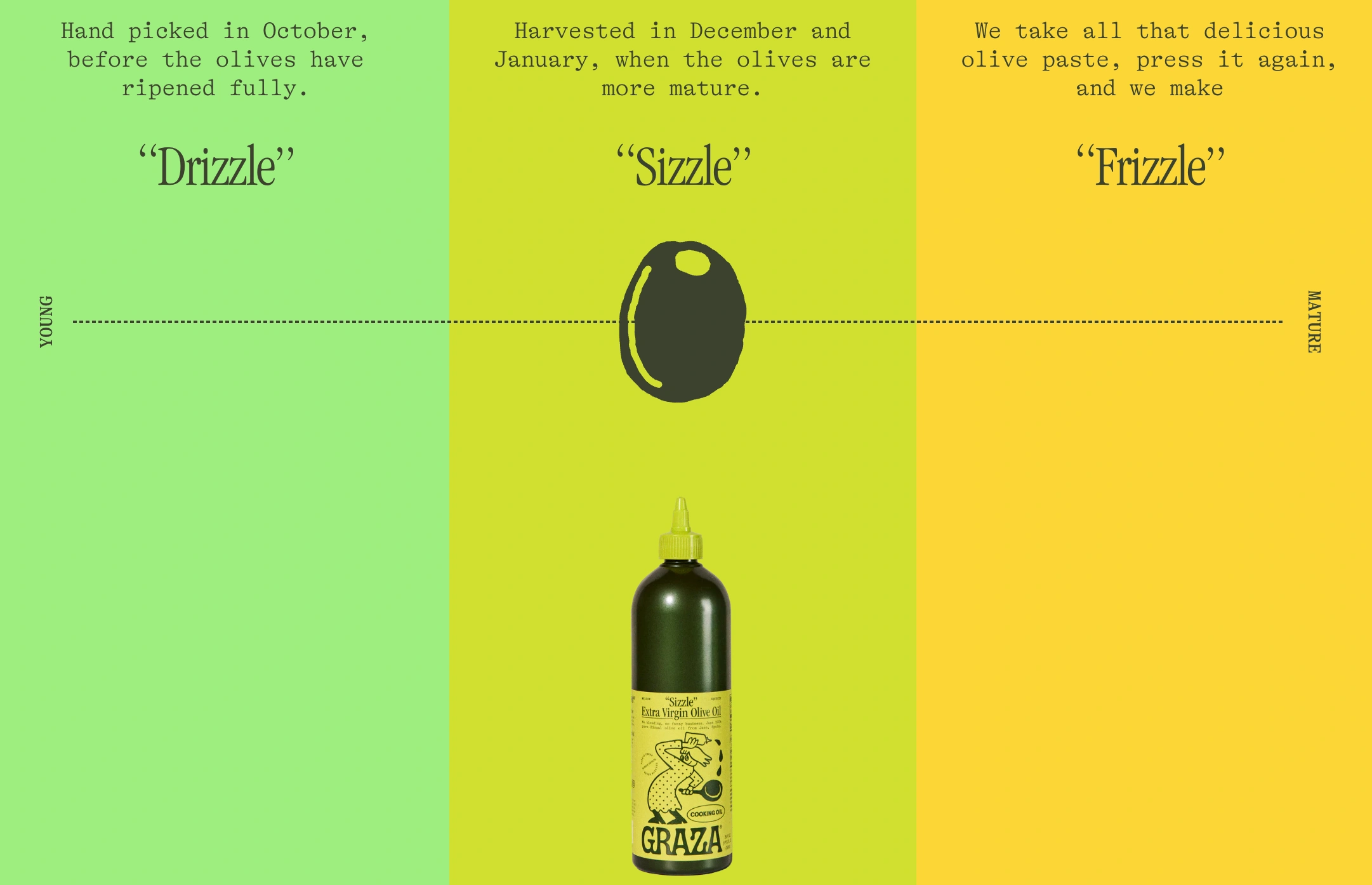
Instead of leading only with region or technical olive-oil language, Graza uses behavior-based names. Sizzle is positioned for everyday cooking, Drizzle for finishing, and Frizzle, introduced in 2025, for high-heat cooking. Forbes reported that Frizzle uses olive pomace derived from the remnants of Graza’s EVOO production, alongside EVOO, and launched in squeeze, spray, and jug formats. (Forbes) The broader lesson is that product naming can reduce decision friction when the names map to real use cases.
- Clear names and usage cues make it easier for mainstream shoppers to choose between products without learning specialist terminology. A different category can use the same principle without copying the aesthetic; Laneige’s product-led marketing, for example, organizes a broad beauty line around memorable hero-product stories.
- This straightforward positioning is a quiet part of Graza's success because it aligns packaging, copy and real kitchen behaviour. Before applying the same logic elsewhere, customer and category research can test which use cases actually matter to buyers.
Influencer First Launch: DMs Instead Of TV Spots
Graza's launch strategy was heavily social and creator-driven. Marketing Brew reports that consultant Kendall Dickieson sent more than 100 packages to influencers ahead of the January 2022 debut, using direct outreach and timing larger creator deliveries close to launch rather than relying on traditional advertising. (Marketing Brew) The publication credits smaller-creator gifting with helping the launch sell out.
- Graza's strategy treated creators as partners and early adopters rather than just paid media, which built credible buzz and early trust.
- The squeeze bottle and playful names gave creators a product that was easy to demonstrate in native cooking content, which helped early visibility without proving that creator activity alone caused later growth.
Culture, Content And Community As Amplifiers
Once the initial buzz hit, Graza marketing leaned into culture and community rather than rushing straight into big-budget campaigns. An analysis of Graza's marketing strategy describes how the brand built a “beloved” status through content that highlighted user recipes, restaurant collabs and humour about its own hype, instead of only polished product shots. (Informatechtarget) On its own blog, Graza even pokes fun at itself, responding to a comment that “you are just an olive oil company” by reframing that as “an olive oil company that makes people smile.” (Graza)
- This tone of voice keeps Graza marketing from feeling too precious and helps defuse critique around food as status branding.
- UGC reposts, restaurant collaborations, and limited product drops give fans ongoing reasons to talk about the brand between major launches.
Omnichannel Expansion: From DTC To Costco Without Losing Edge
After the DTC sellout, Graza expanded across retail while keeping its core packaging and positioning recognizable. Drivepoint describes a measured account-selection approach across retailers such as Whole Foods, Target, and Walmart. (Drivepoint) Inc. later reported more than 11,000 retail doors, including Costco, and a fifth-place national ranking in olive oil based on Nielsen data. (Inc.) For a consumer brand planning national retail expansion, a US branding agency can help adapt positioning and channel execution without treating every retailer as the same market.
- Consistent packaging and story across channels helped Graza feel like “the same brand” whether you meet it on TikTok, at Whole Foods or in a Costco aisle.
- Smart sequencing of accounts is a big part of Graza's success because it preserved scarcity and excitement during rapid growth.
New Formats: Glass Bottles And High-Heat Oil As Brand Signals
In 2025, Graza added glass-bottle versions of Sizzle and Drizzle alongside its squeeze bottles, giving shoppers another packaging option while the brand continued to emphasize refillability and recyclable can refills. (Food Network) Frizzle also launched in squeeze, spray, and jug formats, extending the brand into high-heat cooking without abandoning the use-case naming system.
- These moves show Graza's strategy using line extensions to deepen its position in the kitchen rather than to chase random categories.
- Product updates anchored in function and sustainability support Graza marketing messages around quality and modernity, which matter in the food as status conversation.
Post Rollout Success
Graza’s growth came from making a familiar category easier to recognize and easier to use. The squeeze bottle, use-case naming, creator-first launch, and retail expansion reinforce the same positioning rather than operating as unrelated tactics. The transferable lesson is not that every pantry brand should look like Graza; it is that a clear product idea becomes stronger when packaging, naming, content, and distribution repeat it consistently.
FAQ
What is the core Graza marketing strategy?
The core Graza marketing strategy is to make high-quality, single-origin olive oil feel fun and everyday through squeeze bottle packaging, simple use-based naming and a creator-first social presence that spreads the brand through real cooking content rather than traditional ads.
How does food as status factor into Graza's success?
Food as status is central to Graza's success because the brand understands that customers now use pantry items to signal taste, so it designs bottles and campaigns that people want to display and share while keeping the product accessible and practical.
Why is Graza’s squeeze bottle so important for the brand?
The squeeze bottle is both a functional upgrade and a visual signature, making Graza easy to use on the stove and easy to recognise on social media or in stores, which supports both Graza's strategy and Graza's marketing.
How big is Graza now in the olive oil market?
In 2025, Inc. reported that Graza was the fifth-largest national olive oil brand in the United States based on Nielsen data. The company also told Inc. that it represented 24 percent of olive oil category growth that year.
What can other brands learn from Graza's strategy?
Other brands can learn to pick one or two strong differentiators, like packaging and tone, align them with cultural shifts, such as food as status and then scale distribution carefully so that early buzz turns into sustained success.
How Business Owners Can Apply Graza’s Marketing Strategy In 2026
Graza didn’t win by explaining olive oil harder. It won by making the product easier to choose, easier to use, and easier to show. If you want to apply the same playbook, start by tightening one clear promise and then design every touchpoint to reinforce it, especially the parts that travel on social and in-store.
- Make the offer instantly legible. Graza’s Sizzle and Drizzle naming is a reminder that customers buy clarity. If your product needs a glossary, you probably need positioning work and a sharper brand strategy before you scale.
- Treat packaging like media. In 2026, your packaging is content and it’s often your first impression. Build a system that photographs well, reads fast, and stays consistent across channels. This is where strong visual identity and real branding work pays off.
- Seed creators with a real reason to post. Graza gave creators a product and use case that fit native cooking content. For your own brand, build creator outreach around genuine product utility and measure what happens after the post instead of treating reach as the outcome.
- Go omnichannel without breaking the vibe. Retail expansion works when the brand still feels like itself everywhere. That means your site, product pages, and landing flows need to match the shelf experience. For a consumer brand, consumer and ecommerce marketing should connect retail discovery, repeat purchase, and owned digital channels. If your online experience is the weak link, fix it with a conversion-focused web design agency and a friction-reducing UI UX design agency.
- Run a quick reality check before you scale. If you’re unsure which lever will matter most for growth, do a focused marketing consultation to pressure test your positioning, channels, and rollout plan before spending on production or ads. Once category demand is established, an SEO agency can support organic product discovery and durable search demand.
If you want the short takeaway, Graza’s marketing strategy proves that modern brand growth comes from turning a product into a clear, shareable system, not a complicated story. In 2026, the brands that win are the ones that remove decision friction, look unmistakable in feeds, and stay consistent when they move from niche hype to mainstream carts.