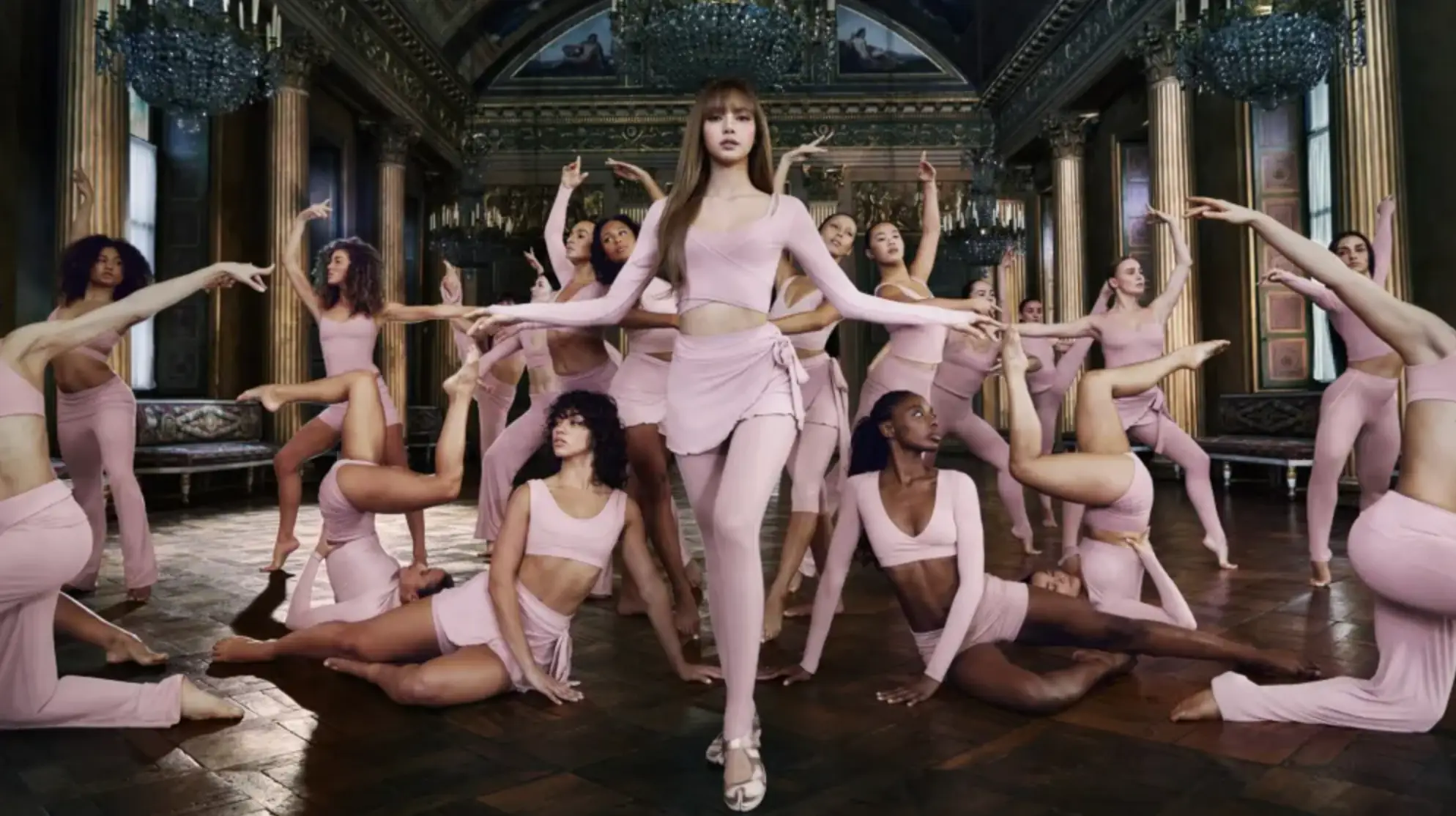
Balletcore marketing is showing up in places that used to feel immune to internet aesthetics: performancewear, skincare, intimates, retail design, even B2B landing pages. Balletcore marketing works because it reads as controlled and intentional, not loud. In a market full of sameness, softness becomes a way to signal taste, care, and restraint.
For decision makers, this is not about bows or pastel palettes. It is about what the aesthetic communicates, and how quickly it moves people from curiosity to trust. Used carefully, those cues can clarify the brand promise and make the product experience easier to understand. Any effect on conversion still depends on the audience, offering, and usability.
At a Glance
- Balletcore marketing is a visual and behavioral system, not a costume.
- The winning version pairs softness with discipline, structure, and proof.
- Rhode and SKIMS offer different examples of soft, disciplined visual branding.
- Nike’s NikeSKIMS Spring ’26 line explicitly frames “the modern ballerina” as performance inspiration, showing the look has crossed into major brand systems. (Nike newsroom release)
- Lyst ranked Miu Miu second among brands in Q4 2025 and included UGG Zora Ballet Flats among its hottest products, showing how recognizable brands and ballet-inspired items gained attention in that quarter. (The Lyst Index)
Why Softness Became a Serious Business Signal
Balletcore marketing can be read as a response to visual fatigue, offering a quieter alternative to constant novelty and noise. Quiet luxury marketing offers a calmer promise: the brand has taste, the product has intent, and the customer will not regret the choice later.
That appetite for softer, more ornate femininity has also been visible in platform trend reporting. Pinterest’s annual forecast for 2025 highlighted a rise in ultra feminine celebration aesthetics like “Rococo Revival,” which signals sustained demand for delicate, romantic visual language beyond a single fashion cycle. (Pinterest Predicts newsroom)
The aesthetic also fits how people shop now. A feed scroll is not a brand journey, it is a series of split second judgments. A softer presentation may make unfamiliar products seem more approachable, provided the claims and details remain clear.
The Cultural Shift Behind the Look
Softness is not new, but its meaning has changed. For years, hyper feminine aesthetics circulated as internet micro trends. Vogue captured how “balletcore” and coquette culture became a broader symbol in the last few years, tied to the figure of the “girl” in culture. (Vogue)
Demand signals have followed the story. One example is the ballet sneaker wave, where Marie Claire reported a 1,300% quarterly increase in global searches for ballet sneakers, citing Lyst’s Q1 2025 Index. (Marie Claire trend report)
In 2026, the shift is that the aesthetic is no longer just styling. It is a market language. Brands are using it to frame restraint as premium, comfort as status, and care as competence. Quiet luxury marketing is the bridge that makes that translation credible.
What Balletcore Means in Brand Terms
Balletcore marketing is a set of signals that say: this brand is precise. It is not frantic. It does not need to shout. That changes how people interpret quality, even before they see ingredients, specs, or price.
It also creates a clear mental model of the customer. Ballet is disciplined. It is practiced. It is repetition with intent. Soft luxury branding borrows that emotional logic and applies it to product use. You are not just buying a balm or a bodysuit. You are buying a routine you can maintain.
In practice, balletcore marketing blends three ideas:
A brand positioning framework helps clarify the promise those cues should reinforce before creative execution begins.
- A soft surface: light, matte, airy, minimal.
- A structured body: sharp hierarchy, consistent systems, measured choices.
- A proof layer: performance, outcomes, credibility markers.
The Softness Stack: A Practical Framework
Balletcore marketing scales when it is treated like a system, not a moodboard. The simplest way to operationalize it is to build a softness stack, layered from product reality to digital experience.
Product, Packaging, and Touchpoints
Soft luxury branding starts with what people touch. Even digital first brands eventually meet the physical world through packaging, returns, retail, and customer support.
Look for consistency across:
- Materials and finishes that feel calm and durable, not flimsy.
- Packaging that prioritizes legibility and spacing over decorative noise.
- A return and support flow that feels gentle but firm, with clear expectations.
When the product and touchpoints are coherent, balletcore marketing becomes believable. Without that coherence, it reads as costume.
Visual Identity and Creative Direction
Quiet luxury marketing in this context is an editing practice. It is less about adding ballerina cues and more about removing everything that does not serve the frame.
A workable creative direction often includes:
- A restrained palette with one signature neutral.
- Typography that privileges readability and hierarchy.
- Photography that favors light control, skin texture, and negative space.
- Motion that feels like breath: slower, smoother, less bouncy.
If you need a system to govern those choices, this is where branding services and a defined visual identity matter.
Experience Design and Conversion Details
Balletcore marketing lives or dies on execution. The website has to feel like the product does. This is where a web design agency and a UI UX design agency can connect the visual direction to navigation, accessibility, and useful page flows. Results should be measured rather than assumed.
Practical details often look like:
- Fewer competing calls to action per page.
- Strong product detail pages with tight hierarchy and real proof.
- Microcopy that is calm and specific, not cute.
- Accessibility and performance that keep the experience stable.
Softness without usability is just decoration. Softness with usability becomes quiet confidence.
Brand Examples: Rhode, SKIMS, and the New Soft Standard
Balletcore marketing is easiest to see when you compare brands that use restrained creative cues but execute them differently. For consumer-brand marketing, the useful lesson is how each brand connects its visual language to a specific product promise, not whether the look generates likes.
Rhode and the Clean Studio
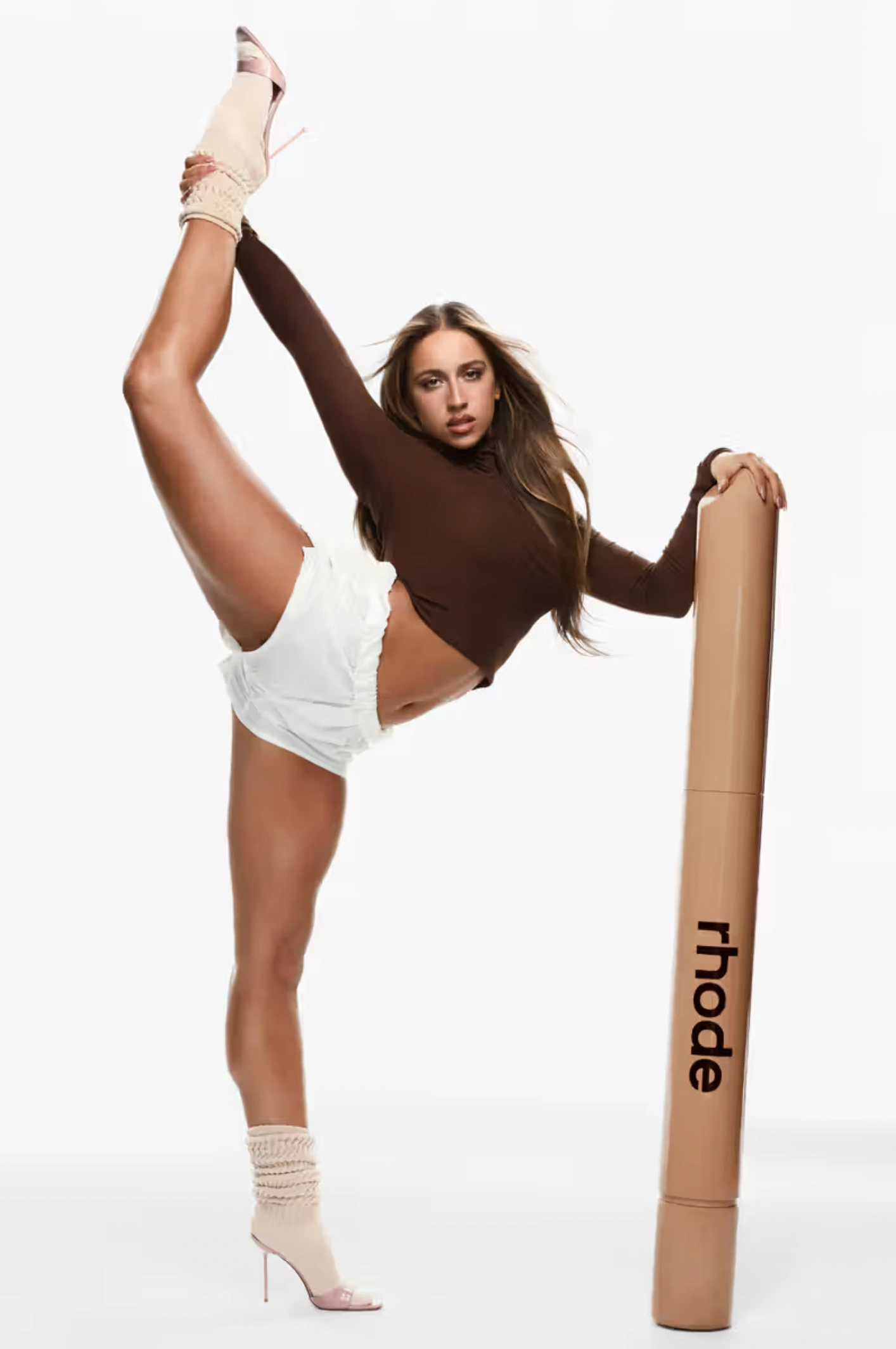
Rhode’s presentation is not literal ballet, but it uses related cues: soft lighting, closely cropped product imagery, and routine-led messaging. Its clean studio aesthetic gives the product room to lead without relying on ornate ballet motifs.
What to borrow:
- Product as hero, not lifestyle as distraction.
- A narrow set of visuals repeated until they become recognizable.
- Routine framing that makes re-purchase feel like self management.
SKIMS and Sculpted Comfort
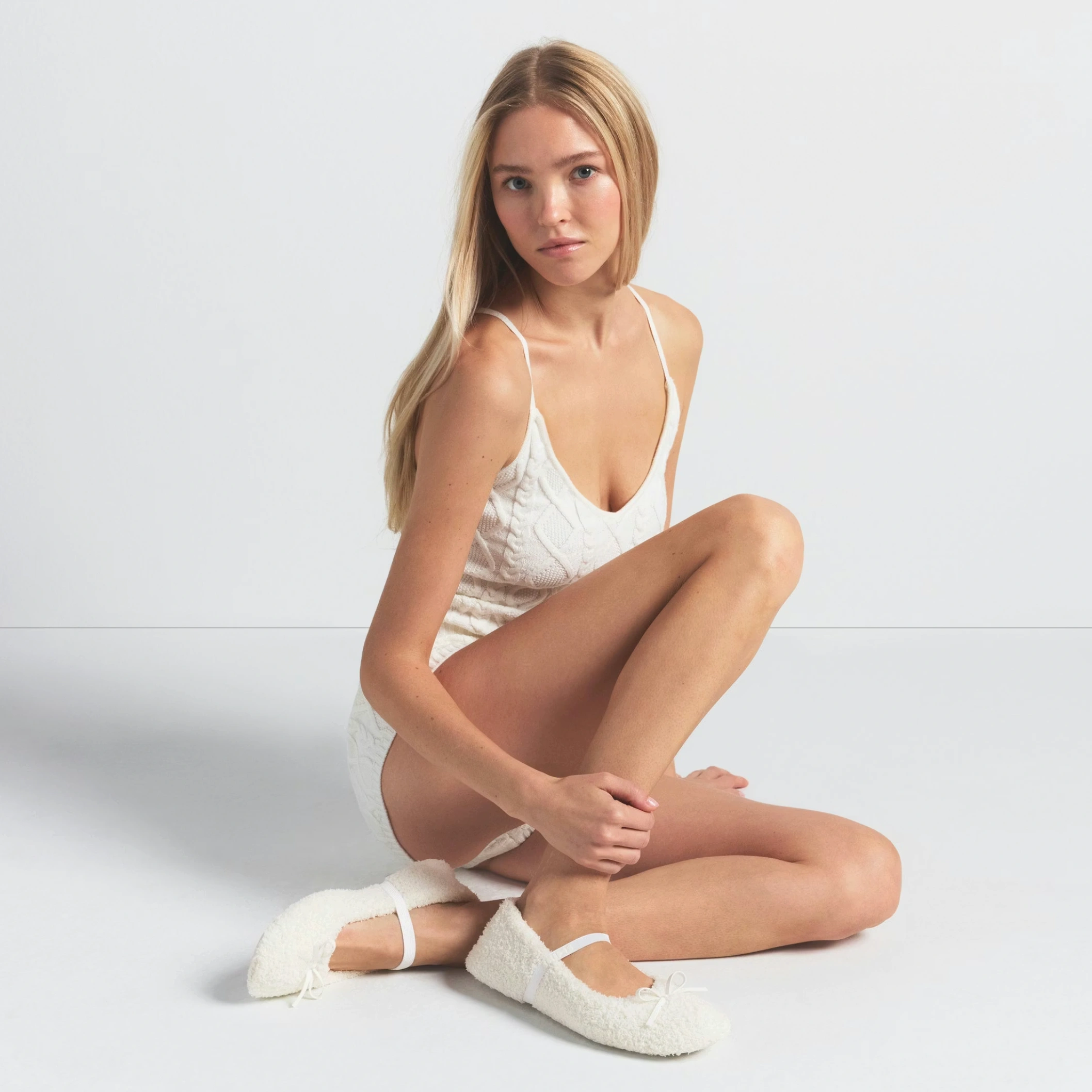
SKIMS takes softness and adds structure. The product story is comfort, but the visual language is control. That mix is why balletcore marketing fits SKIMS even when the styling is not overtly ballet.
What to borrow:
- Clear category architecture so shoppers do not get lost.
- Fit and fabric language that reads as functional proof.
- Creative that is minimal, then reinforced through repetition.
NikeSKIMS and Performance as Grace
Nike described the NikeSKIMS Spring 2026 collection as a system of dress inspired by the modern ballerina, with apparel, accessories, and footwear balancing softness with performance. It features the NikeSKIMS Rift Satin shoe, whose satin upper and midfoot strap reference the collection’s ballet-inspired direction. (Nike newsroom release)
This matters because it signals the aesthetic has moved beyond micro trend language. It is now a platform for product design and brand narrative at global scale. Quiet luxury marketing in performancewear is not about fragility. It is about discipline and control.
The Miu Miu Signal in Luxury
In its Q4 2025 Index, Lyst ranked Miu Miu second among brands and placed UGG’s Zora Ballet Flats among the quarter’s hottest products. These are separate signals of brand strength and ballet-inspired product interest, not proof that flats drove Miu Miu’s ranking. (The Lyst Index)
For marketers, the lesson is not to chase shoes. It is to identify one micro icon that makes the whole world feel coherent. Balletcore marketing often succeeds because the icon is easy to recognize, easy to photograph, and easy to repeat.
Where Soft Aesthetics Show Up Online
Balletcore marketing shows up in your digital surfaces even if you never reference ballet. People read websites the way they read packaging. They infer quality from spacing, hierarchy, and what you choose not to say.
Website Design Patterns
Soft luxury branding online relies on clear hierarchy and deliberate use of negative space. Common patterns include:
- A hero section with one claim and one primary action.
- Product or service pages that start with outcomes, then show proof.
- A consistent image system that does not change style every section.
- A typography rhythm that makes scanning easier.
Pastel text and muted calls to action still require accessible brand color pairings; restrained color should never come at the cost of legibility.
If your site needs a governance reset, a marketing consultation can diagnose where softness is helping, and where it is hiding clarity.
Social and Creator Patterns
Quiet luxury marketing on social has a different constraint: it must perform in motion. Softness becomes a cadence.
The patterns that scale:
- Routine content that looks like practice: apply, repeat, refine.
- Creator partnerships that feel like a fit, not a shoutout.
- Editing that keeps the frame stable across posts.
The Guardian has noted how coquette culture and bows became a visible signal in mainstream fashion cycles, and ballet adjacent aesthetics traveled with it. (The Guardian)
View this post on Instagram
A post shared by Khloud Shehata (@kaiadde)
How to Apply the Look Without Losing Brand Clarity
Balletcore can be useful, but it can also dilute a brand if it becomes surface-level mimicry. The goal is not to look like everyone else. The goal is to make the brand’s value easier to understand.
Start with brand strategy: decide which parts of the promise a softer direction can genuinely reinforce.
Start by choosing your softness level:
- Soft cues only: lighting, spacing, typography, and tone.
- Soft product world: materials, packaging, service flow, and community content.
- Full aesthetic world: retail, events, collaborations, and a signature icon.
For many teams, the first two levels are easier to maintain. A full aesthetic world can require more coordination, consistency, and budget.
A Miami retailer considering this direction could work with a marketing agency in Miami to match the creative approach to its audience, channels, and landing-page goals before commissioning a larger campaign.
Measurement That Ties to Pipeline
Engagement alone does not show whether a visual shift helped the business. Measure changes in the site experience and customer response before drawing conclusions.
Track:
- Conversion rate changes on pages where you simplified hierarchy.
- Return visitor rate after you introduced routine based content.
- Support ticket themes before and after packaging and UX shifts.
- Assisted conversions from informational pages.
If you are investing in content distribution, connect the system to organic demand through an SEO agency approach that prioritizes clarity, structure, and intent.
Common Mistakes to Avoid
Quiet luxury marketing fails when it confuses minimalism with meaning. The most common mistakes are:
- Soft visuals with vague claims and no proof.
- Too many neutrals, no signature, no memory.
- A site that looks calm but navigates poorly.
- Copy that is soft in tone but unclear in promise.
A Practical Checklist for Teams
Use this checklist to move from inspiration to execution without losing your core positioning. Begin with audience and brand research to check whether the visual cues fit what customers actually value.
- Brand system
- Define three non negotiables: palette logic, typography rules, image style.
- Choose one micro icon and one routine that you can repeat for a year.
- Document tone rules so softness does not become vague.
- Product and touchpoints
- Audit packaging legibility and support flows for clarity.
- Align materials and finishes with what you claim in messaging.
- Make returns and exchanges feel firm, clear, and respectful.
- Digital experience
- Reduce each page to one primary action.
- Tighten hierarchy so proof appears before persuasion.
- Validate accessibility and performance so softness does not add friction.
- Team alignment
- Create a shared asset library and enforce version control.
- Review weekly output for drift, not just for quality.
- Tie creative shifts to one metric you will own.
FAQ
What is balletcore in simple terms?
Balletcore marketing is the use of soft, disciplined cues to signal taste, care, and control. It blends minimal visuals with structured messaging so the brand feels calm and intentional. The best version reduces friction and increases trust, because buyers understand what the product is, who it is for, and why it is worth choosing.
Why are brands leaning into softer aesthetics right now?
Many categories are saturated with loud claims and constant launches. Softer aesthetics give buyers a break. They also make routines feel easier to keep, which supports retention. Cultural trends around comfort, wellness, and restraint have made quiet luxury marketing feel like a safe default.
How do you keep a soft aesthetic from feeling generic?
You need one signature element that is recognizable. That could be a product shape, a texture, a specific lighting approach, or a single icon. Pair it with clear hierarchy and proof. Soft luxury branding feels distinct when it has a sharp point of view underneath the calm surface.
What is the fastest place to apply this on a website?
Start with the homepage hero and your highest intent landing pages. Reduce competing calls to action. Clarify one promise. Move proof higher. If you want a second step, review your product or service pages for hierarchy and readability.
The Soft Era Is Here, But the Strategy Still Matters
Balletcore marketing works best as a considered creative direction, not an aesthetic added for novelty. Across categories, its restrained cues can support clearer positioning when they are consistent with the product and customer experience. Treating softness as a system also makes it easier to govern and evaluate.
If you want to translate this aesthetic into a site and brand system that performs, start with a clear audit and a small set of governed rules. Start a conversation with Brand Vision, or discuss your brand and website when you have a specific project in mind.