
Today, the tech world is changing rapidly due to widespread cloud adoption, the artificial intelligence (AI) revolution, significant IT talent skill gaps, and the growing need for scalable, competitive IT solutions.
76% of tech companies report challenges in filling roles due to a lack of the necessary skills, and 51% of firms are experiencing severe AI talent shortages. The global shift toward online work from home has fundamentally changed what developers expect from employers, making flexible remote arrangements a baseline requirement rather than a perk when competing for top Eastern European and Latin American tech talent. These significant challenges reshape the global tech talent landscape and change the approach to building teams and hiring niche specialists.
A remote-first approach is a priority for most businesses, and the majority of them are hiring tech talent overseas. There are various countries to hire developers in 2026 globally, but established leaders are Eastern Europe, Latin America, and Southeast Asia. Why do tech companies source talent there? Let’s hash out the main reasons.

Emerging IT Talent Markets to Watch in 2026
With a plethora of countries to hire remote tech talent, many companies find it challenging to make the right choice and find an outsourcing hub that meets their business needs. Therefore, here is an overview of the best IT Talent countries to help organizations make the right choice.
Eastern Europe — Rapidly Growing Engineering Hub
Central and Eastern Europe is currently a hub for technology-driven enterprises, with the IT sector being one of the most rapidly developing in the region. Most Eastern European countries account for around 40% of the global market share. IT outsourcing in Eastern Europe is highly popular due to its large talent base, favorable tax policy, and robust tech ecosystem. Venture capital investment in Central and Eastern Europe (CEE) reached €700 million in the first quarter of 2025, up 9% from the previous year. Usually, late-stage AI businesses with definite market traction secure major funding rounds.
In Europe, the average innovation index is 42.73, indicating strong digital infrastructure, high-quality STEM education, and a stable business environment. The area boasts a workforce of over 1.2 million developers, with the IT talent pool in Poland alone at 600,000. Eastern European developers deliver cutting-edge AI/ML, gaming, fintech, and healthtech solutions. With competitive rates, it has become a primary outsourcing destination for businesses of all sizes and across various domains. However, due to a highly competitive market, talent acquisition in the IT sector requires strategic approaches to stand out and hire developers in 2026.
Key Eastern European outsourcing destinations in 2026 are:
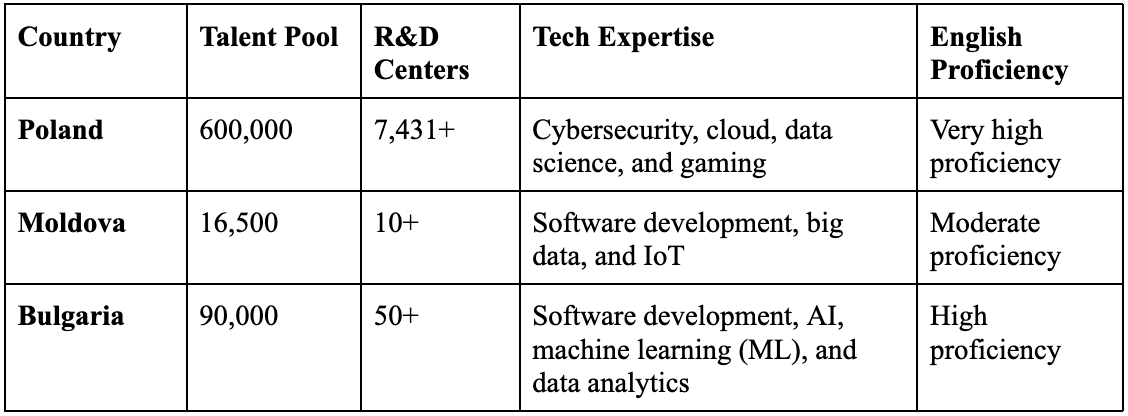
The region’s highlights are:
- Perfect cost-to-quality ratio.
- Ongoing digital transformation.
- Strong government support.
- Overlap with EU/US business hours.
Disadvantages are:
- Complex legal and tax systems.
- Competitive IT talent market.
Here are the salaries for specialists with 3+ years of experience.
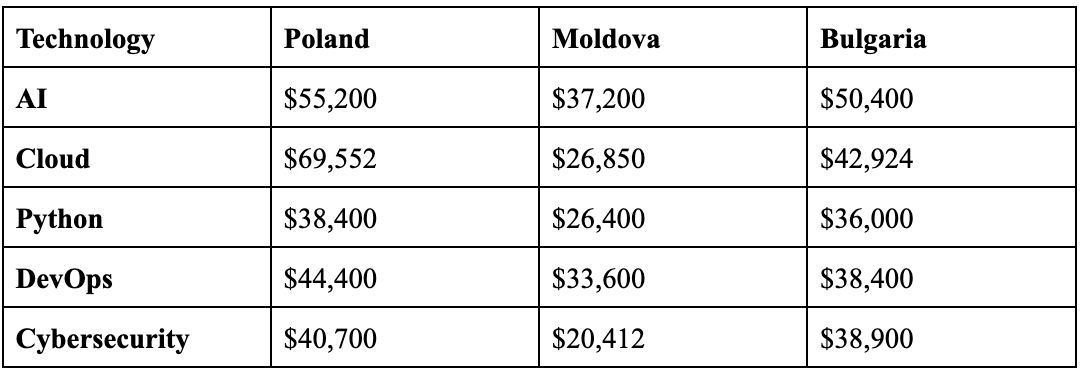
* Data is based on independent research conducted using salaryexpert.com, indeed.com, worldsalaries.com, and glassdoor.com
Latin America — Nearshore Benefits for US Companies
This region is known for its highly skilled developers and a robust tech ecosystem, attracting foreign investment. Google plans to open the second data center in LatAm, investing $850 million. Major IT hubs are focused on advancing their tech transformation, and the average innovation index is 23.92, showcasing the region’s efforts to boost research, development, and overall digital resilience.
Over 20,000 tech startups operate in e-commerce, fintech, and healthtech industries, building high-end solutions for a variety of clients.
Top IT talent markets in LatAm are the following:
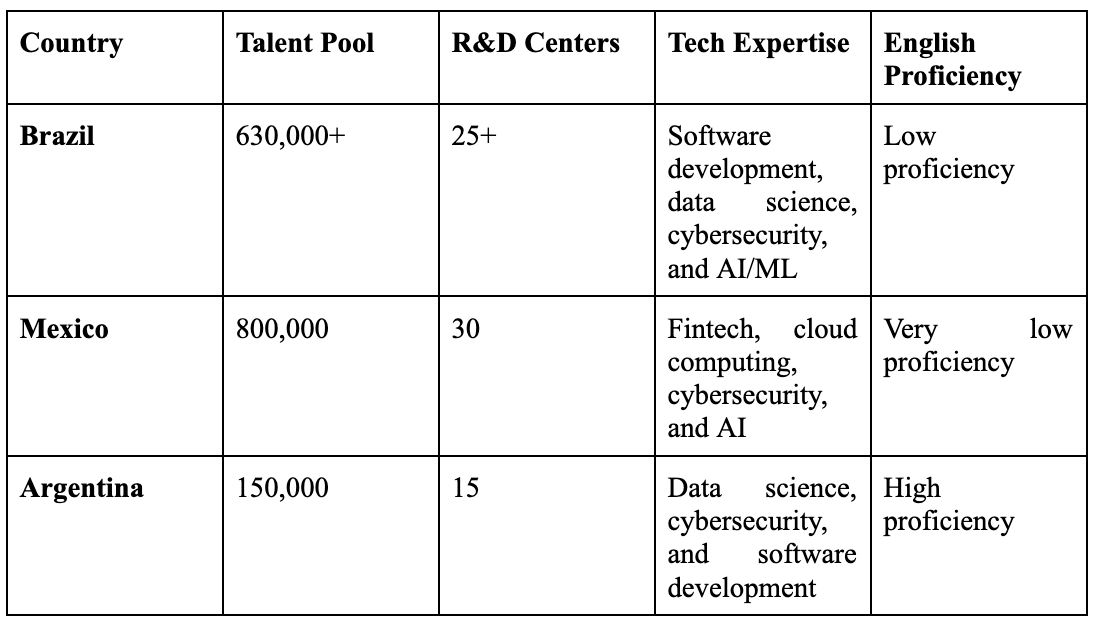
The region’s strengths are:
- Solid tech expertise.
- A large nearshore IT talent pool of 2.2 million developers.
- Cultural and time zone proximity for U.S.-based companies.
- ~30-50% lower rates than in the USA.
Downsides are:
- Infrastructure variability.
- Potential miscommunication due to inefficient English proficiency in some countries.
Mid-level annual salary overview in these emerging markets by technology:
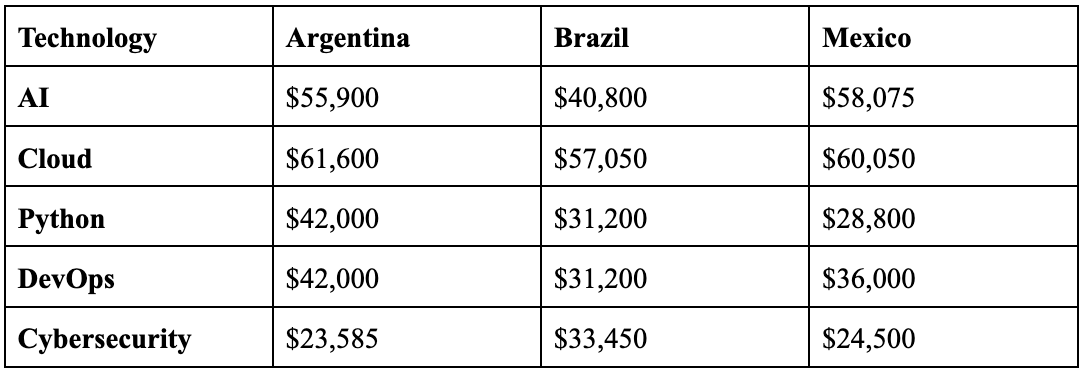
* Data is based on independent research conducted using salaryexpert.com, indeed.com, and glassdoor.com
Southeast Asia
Southeast Asia (ASEAN) is a booming tech hub for startups, SMEs, and large corporations seeking high-quality deliverables, stable workflows, and competitive rates. The IT outsourcing market in ASEAN is projected to reach US$18.02 billion by 2030, reflecting significant market growth and demand for IT services.
ASEAN is home to numerous unicorns and 1.3 million developers proficient in Python, Java, JavaScript, React, and .NET, and experienced in working with cutting-edge technologies like AI/ML, cloud computing, and data science.
Major countries for global IT outsourcing:
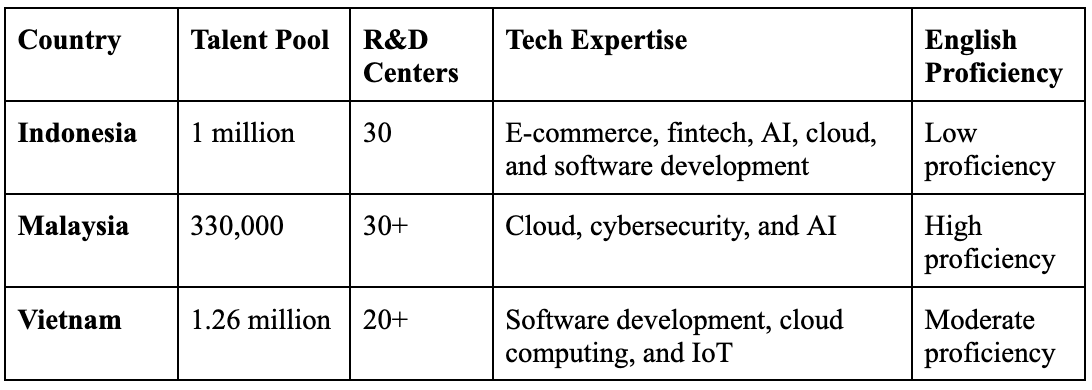
Key advantages are:
- 60-80% cost savings compared to the USA.
- Strong government support.
- Expertise in niche technologies like AI, cloud, and data science.
- Multicultural environments.
Drawbacks are:
- Quality inconsistency.
- Cultural misalignment with Western agile workflows.
Here are the wages for mid-level experts in Southeast Asia:
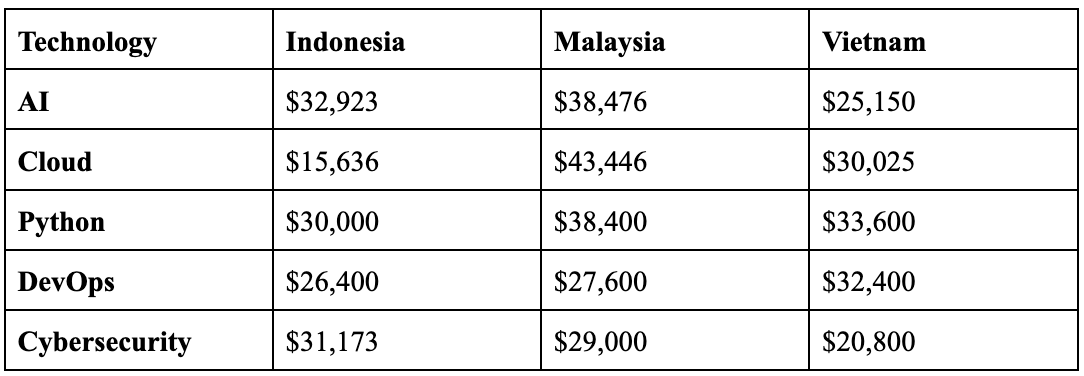
* Data is based on independent research conducted using salaryexpert.com, worldsalaries.com, and glassdoor.com
How to Choose the Right Outsourcing Region for Your Company
The right hiring destination allows you to tap into a talent pool with specialized expertise at rates that align with your project and business needs. To make a wise decision and hire tech talent globally efficiently, consider these practical tips.
- Choose the fastest-growing countries with the right tech specialization and a vast talent pool, ensuring you can build high-quality talent pipelines without delay. If you are looking for strong AI and gaming expertise, consider Poland. For complex cybersecurity projects, you can hire top tech talent in Bulgaria.
- Time zone affinity significantly boosts productivity and enables swift decision-making. Drastic time differences may lead to delayed responses, missed deadlines, and a lack of real-time support. However, with effective project management and transparent communication, these issues can be successfully mitigated.
- Low software development costs can be a key factor, but not the main one. Select a region with rates that align with your budget, while ensuring the quality of the deliverables remains high. Hiring in Asia can be significantly cost-efficient, but the quality of outcomes varies. In this case, you can consider Eastern Europe, which also offers competitive rates and builds digital solutions in line with the highest development and security standards.
- Strong security and compliance measures help safeguard your intellectual property and avoid data breaches, which cost USD 4.4 million globally. Most Eastern European countries have strong national cybersecurity laws and are aligned with comprehensive regulatory frameworks, such as GDPR and the NIS2 Directive.
- English language proficiency ensures that your remote developers can communicate their needs efficiently and understand your requirements and the necessary documentation. So, source talent from regions with high and very high English proficiency to maximize efficiency and maintain seamless coordination.

Final Thoughts
Thus, Eastern Europe and Latin America are the top emerging tech talent markets that are shaping the future of global employment, offering tech firms access to skilled professionals worldwide. They are also known for their time zone alignment, excellent price-to-quality ratio, and a favorable environment for tech-enabled companies.
To gain a competitive advantage, tech businesses should look beyond market specialization and the size of the tech talent pool, considering factors such as the taxation system, the ease of doing business, and cultural alignment. The right market choice enables faster scaling, reduced risk, and long-term success in this dynamic industry.


%2520(1).png)