Most B2B websites have a quiet problem. They sit packed with information: service pages, case studies, pricing tables, about sections. A visitor lands, reads a few lines, loses interest, and leaves before anything actually communicates. The page is full, but the message never lands.
Video changes that equation. Not because it is fashionable, but because it does something static text physically cannot. It holds attention, conveys tone, and explains complexity in seconds. Recent video marketing benchmark data shows that homepage videos pull a 24% play rate, video galleries 20%, and product pages 15%, while pages without video have no equivalent engagement signal to measure.
The placement of a video on a page is now one of the clearest performance levers a B2B marketing team has. For B2B companies operating on long sales cycles and trust-based decisions, the video layer of a website is one of the most overlooked components of the conversion stack.
Why B2B Buyers Expect Video Before Any Sales Conversation
The buying process has shifted decisively over the past several years. B2B buyers now complete most of their evaluation independently, well before reaching out to a vendor. They watch demos, scan case studies, and form opinions on fit, credibility, and capability through what is publicly available on a site. By the time a prospect makes contact, the shortlist is usually already set.
When a visitor lands on a service page and cannot quickly understand what the company does, who it serves, and why it is worth a conversation, they leave. Video closes that gap fast. A well-produced 90-second homepage video can communicate positioning more clearly than three pages of body copy.
The benchmark data backs it up: video on homepages outperforms every other page type for engagement, a finding consistent with how buyers actually browse websites today. This matters more for service-based businesses than for product companies. For agencies, consultancies, production firms, and professional services, the offering is expertise and trust.
Video lets a prospect hear a voice, see a process, and form a sense of the team behind the work before any meeting is booked. The principles behind that visual layer overlap closely with landing page design fundamentals, where clarity in the first five seconds determines whether anyone scrolls further.
The Video Formats That Actually Drive B2B Conversions
Different formats solve different problems across the buyer journey. A homepage explainer creates clarity. A customer testimonial reduces perceived risk. A product walkthrough helps buyers evaluate fit. Corporate videos build credibility and reinforce brand positioning. When teams place the wrong format in the wrong context, engagement metrics may look fine, but conversions stall because the video answered a question no one was asking yet.
Homepage Brand Video
The homepage video carries the heaviest weight because it shapes the first impression. A strong one answers three questions in 60 to 90 seconds: what the company does, who it serves, and what working with the team actually looks like. It is not a commercial. It is closer to a handshake.
The goal is not to sell. The goal is to make the right visitor feel they have landed in the right place and want to keep reading.
Explainer and Product Demo Videos
For SaaS companies and technology brands, explainer videos rank among the highest-converting assets a site can carry. When a visitor tries to understand how a platform works, a 90-second animated explainer accomplishes what a feature list cannot. It shows the product in motion, in context, solving a real problem.
Recent marketing benchmark data confirms that video remains one of the most commonly used content formats among marketers. On product pages specifically, it consistently outperforms static images and text on time-on-page and form completion. Companies that lean into explainer video on product pages tend to see compounding gains across organic traffic, paid landing page performance, and inbound demo volume.
Testimonial and Case Study Videos
Written testimonials are easy to fabricate, and most buyers know it. Video testimonials are harder to fake. Hearing a real customer describe the problem, the solution, and the outcome ranks among the most persuasive elements a B2B website can carry.
A specialized corporate video production team will confirm what the placement data shows: testimonial videos positioned near a contact form or pricing page consistently lift conversion rates. At that stage of the buyer journey, prospects are actively weighing risk, and hearing directly from a peer who has measurable results delivers the reassurance needed to move forward.
About Us and Culture Videos
People buy from people, especially in B2B, where contracts are large and relationships extend across years. A well-produced culture or team video humanizes a brand in a way a headshot grid never will. It builds familiarity before the first sales call, shortening the trust-building work that would otherwise happen in early conversations.
Process and Industrial Videos
For manufacturing, construction, industrial, and logistics companies, showing the process often is the pitch. A walkthrough of a facility, production line, or operational workflow gives procurement teams immediate insight into scale, standards, and capability. Two minutes of well-shot process footage often communicates more than a twelve-page capabilities document, and it does so without asking the buyer to read.
Where Video Belongs on a B2B Website
Placement matters as much as the video itself. The benchmark data confirms what experienced marketers have long suspected: homepages, video galleries, and product pages produce the strongest play rates, while case study, events, and about pages cluster near the bottom. The companies that win with video are the ones that match format to placement and apply B2B website design principles to the surrounding page architecture.
Above the fold on the homepage. This is the most valuable real estate on any B2B site. An autoplay muted brand video in the hero section immediately signals professionalism and holds visitors from the first second.
Service and product pages. A short explainer on each service page answers questions before buyers think to ask them. It also extends time on page, which signals relevance to search engines.
Landing pages. When paid campaigns drive traffic to a landing page, a relevant video almost always lifts conversion. The video carries the persuasion load while the form captures the lead.
Near the contact form or quote request. A short testimonial or results-focused clip placed adjacent to the CTA is one of the easiest conversion wins available. The visitor is already interested. The video closes the gap.
What Separates a High-Converting B2B Video From One That Gets Ignored
Production quality signals trust before anyone presses play. A grainy, poorly lit video on a corporate website does more than fail to convert. It actively damages credibility and suggests the company is less established, less detail-oriented, or both.
Forrester research on B2B website performance has found that nearly every site evaluated across twelve industries scored poorly on customer engagement, largely because content focused on company capabilities rather than buyer concerns. Video is often where that disconnect becomes most visible.
For a buyer evaluating a $50,000 contract, the quality of a company's video content reads as a proxy for the quality of the work itself. Beyond production value, a handful of factors consistently separate high-converting B2B video from the rest:
A clear hook in the first 6 to 8 seconds. Most viewers decide whether to keep watching almost immediately. The strongest videos lead with the problem the company solves, not with company history.
Captions on every video. Recent industry data shows 71% of teams now use closed captions, and for good reason. A meaningful share of B2B video is watched without sound, particularly in open-plan offices. Captions are no longer optional.
A specific call to action. A vague "Contact" prompt is not a call to action. "Get a free 15-minute strategy review" is. Specificity moves people; vagueness does not.
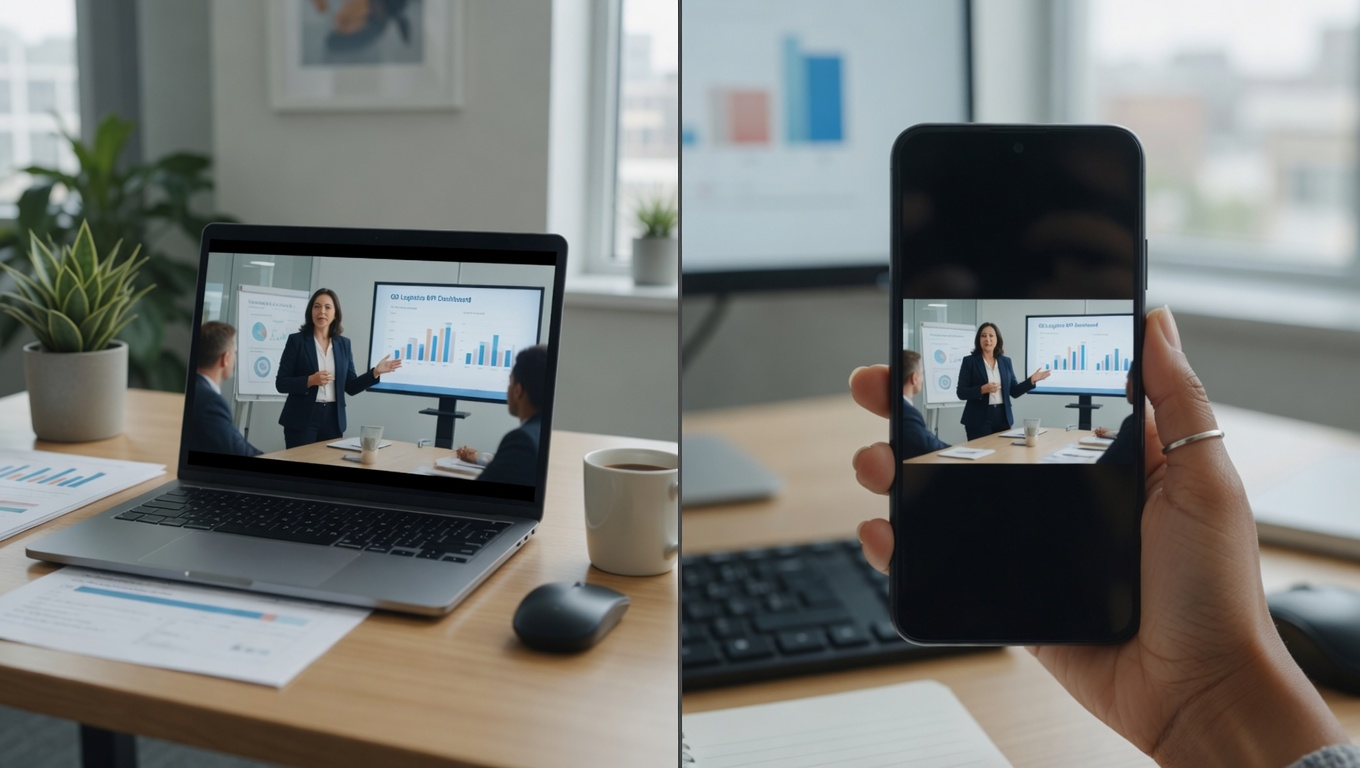
Mobile-optimized playback. A meaningful share of B2B research now happens on phones. Video that does not play cleanly on mobile loses leads the company has already earned through other channels.
The Most Common Mistakes B2B Companies Make With Website Video
Even companies that invest meaningfully in video often undermine the work. A few recurring mistakes are worth knowing before any budget gets committed.
Defaulting to generic stock footage. Stock footage of people shaking hands in a glass office tells a visitor the company has nothing original to say. Real footage of the actual team, the actual process, and the actual clients consistently outperforms generic visual filler.
Producing one video and calling it done. A single homepage video is a start, not a strategy. A complete video layer covers key service pages, product pages, testimonials, and social channels. Companies that produce a coordinated set tend to see compounding lift across rankings and inbound volume.
Skipping the strategy conversation with the production team. A capable B2B video production partner does not just arrive on set and shoot. The strongest production companies help shape the message, define the audience, and pressure-test placement before a single camera turns on. That upstream strategic layer is what separates video that looks polished from video that actually converts.
Auditing an Existing Website for Video Gaps
For teams unsure where to start, a structured audit usually surfaces the biggest gaps quickly. Marketers should walk through their own site the way a prospect would: cold, with no internal context, and with limited patience. With most of the B2B buying journey now happening before a buyer ever contacts a vendor, the website often is the first and only impression a prospect gets.
Three diagnostic questions tend to expose most of the weaknesses. Does the homepage immediately communicate who the company serves and what they do? Do any of the service pages actually demonstrate the service rather than describe it? Is there any social proof on the site more credible than a written quote?
Most B2B websites fail at least two of those three. The pages exist, but they do not communicate clearly, build trust, or guide visitors toward action. In a competitive market, a website that does not communicate effectively is a website that does not convert, regardless of how much traffic it attracts.
Video is no longer optional infrastructure for B2B. For the companies winning new business in 2026 and beyond, it is often the difference between a website that earns inquiries and one that simply exists online.
The Practical Path Forward
There is a version of every B2B website that works. It earns trust quickly, communicates value clearly, and turns the right visitors into qualified pipeline. Video is one of the fastest routes to that state, not because it is trendy, but because it aligns with how modern B2B buyers actually evaluate companies before making contact.
When prospects are deciding whether to trust a vendor with significant budget, they want three things: clarity, credibility, and proof. Video delivers all three more efficiently than any other format on a website.
Start with one video. Place it where it matters most. Measure the lift. Build the rest of the video layer from there, page by page, format by format. The compounding effect is what separates companies that treat video as a checkbox from those that treat it as core infrastructure.


%2520(1).png)