
Brand authority is misunderstood as a marketing outcome when it is actually a structural one. Companies that read as authoritative in their category are not louder than competitors. They are more consistent, more specific, and more disciplined about the proof they put behind every claim.
The difference shows up in how buyers describe the brand to peers, how search engines surface it, and how durable its premium pricing is when the category gets crowded. Authority compounds quietly, then becomes visible all at once.
Most companies treat brand authority as a function of volume. More content, more campaigns, more visibility. The math does not work. Saturated categories punish volume. They reward signal.
A B2B brand that publishes one well-sourced industry analysis per quarter will compound more brand authority than a competitor that publishes three thin posts a week. The audience reading both can tell within fifteen seconds which one knows the subject and which one is performing knowledge.
This piece breaks down what brand authority actually is, how it gets built when the category is crowded, and the operating commitments that separate brands compounding credibility from those generating noise. The work begins with a defensible brand strategy that defines what the company stands for before any tactic is selected, because every brand authority signal downstream is shaped by that decision.
Why Brand Authority Has Become a Structural Advantage
In categories where every competitor has access to the same channels, the same tools, and the same playbooks, what separates the brands that compound from the brands that stagnate is rarely creative talent. It is structural credibility.
Buyers in saturated markets are overwhelmed by options. The brand that reads as the obvious answer wins not because it is shouting louder, but because it has reduced the cognitive load of choice.
Research published by a leading consulting firm on brand strategy found that as choice expands, brand trustworthiness becomes more important to consumers, not less, with risk reduction emerging as the single most important brand function for online shoppers.
The implication is that brand authority is not decorative. It is functional. A buyer choosing between five vendors uses authority signals to eliminate options before any rational comparison begins.
This shifts the strategic question for marketing leaders. Brand authority is not what gets said about the company. It is what makes the company easy to choose.
That distinction changes everything about how brand authority gets built. Loud campaigns make the brand visible. Disciplined consistency makes the brand chooseable. Saturated markets reward the second far more than the first, because visibility without credibility just adds to the noise the buyer is trying to filter.
The brands that compound credibility over time treat every customer-facing surface as a credibility test. The website. The proposal. The case study. The social post. Each surface either reinforces the position the brand is staking out, or undercuts it.
Inconsistent surfaces are the most common failure mode in saturated markets, because every team in the company is generating output and few of them are coordinated against a single brand position.
Authority Comes From Specificity, Not Volume
The single biggest mistake in brand authority work is confusing it with content production. Companies that publish constantly without a clear point of view generate volume without authority.
The audience reads the output and cannot articulate what the brand stands for, because the brand has not committed to a position sharp enough to be remembered. This is where most failed positioning work breaks down: the team writes prolifically without ever forcing a decision about what the company refuses to say.
Specificity is the multiplier. A B2B services brand that publishes a single annual report on a tightly defined industry problem will be referenced by competitors, cited by analysts, and remembered by buyers.
The same brand publishing 50 generic posts on adjacent topics will be ignored. Specificity creates ownership of a category corner. Volume without specificity creates fatigue.
Recent buying-trend research found that B2B buyers begin their journey with a shortlist of roughly four vendors and a strong preference for reputation as the top selection driver, with more than half of decisions hinging on prior brand recognition.
The implication for marketing leaders is direct: if a brand is not specific enough to be remembered, it does not make the shortlist, and the rest of the funnel never matters.
The discipline of specificity requires saying no more often than saying yes. The brand decides which two or three topics it will own, which audiences it will serve, and which adjacent topics it will explicitly not address.
The discipline shows up in a few practical commitments:
- A defined editorial position. The brand has a thesis about its category that it can state in one sentence. That thesis runs through every published asset. New content is tested against the thesis before it ships, and content that contradicts or dilutes the thesis is rejected.
- A narrow set of recurring claims. Authoritative brands repeat themselves on purpose. The same two or three core arguments appear, in different angles and contexts, across years of content. Repetition is not redundancy. It is how positions become associated with the brand in the audience's memory.
- Sourcing standards higher than the category norm. Every disputed claim is attached to a verifiable source. The audience learns that the brand is unwilling to publish a number it cannot defend. That standard becomes a brand authority signal of its own.
- A rejection list as long as the publication list. For every topic the brand publishes, several were considered and discarded for not fitting the position. Authority is built as much by what gets refused as by what gets shipped.
Companies that internalize this discipline produce less content and earn more credibility. The audience starts referencing the brand as a source. Search engines surface it on category-defining queries.
Competitors cite it. None of those outcomes are accidents of volume. They are direct consequences of deciding what the brand will and will not say.
Backlinks and Editorial Mentions Still Drive Authority Signals
Search authority is one of the few brand signals that compounds without active marketing investment, but only when the underlying content earns the links it gets.
A 2025 outlook on B2B content marketing found that LinkedIn was the top organic distribution channel for B2B brands, with sustained year-over-year growth as marketers shifted budget toward channels where credible content compounds.
The mechanism is the same one that drives editorial backlink value: credible third-party endorsement carries more weight than self-published claims. The audience trusts what others say about the brand more than what the brand says about itself.
The temptation in saturated markets is to chase volume of links the same way brands chase volume of content. The math fails the same way. A single link from a respected industry publication carries more brand authority weight than dozens of links from low-credibility sources.
Search engines have become extremely effective at distinguishing between the two. The brands that compound credibility through search treat link-building as an editorial discipline, not a procurement function.
The same logic applies to brand mentions in trade press, analyst reports, and industry research. A reference in a peer-reviewed analyst note has compounding effect. The brand becomes part of the vocabulary used to describe the category.
That positions it for inclusion in every future analyst conversation about that category. Companies that understand this invest in original research, primary data, and distinct points of view that earn coverage on merit, rather than chasing coverage through paid placements that the audience has learned to discount.
Consistency Across Every Brand Surface
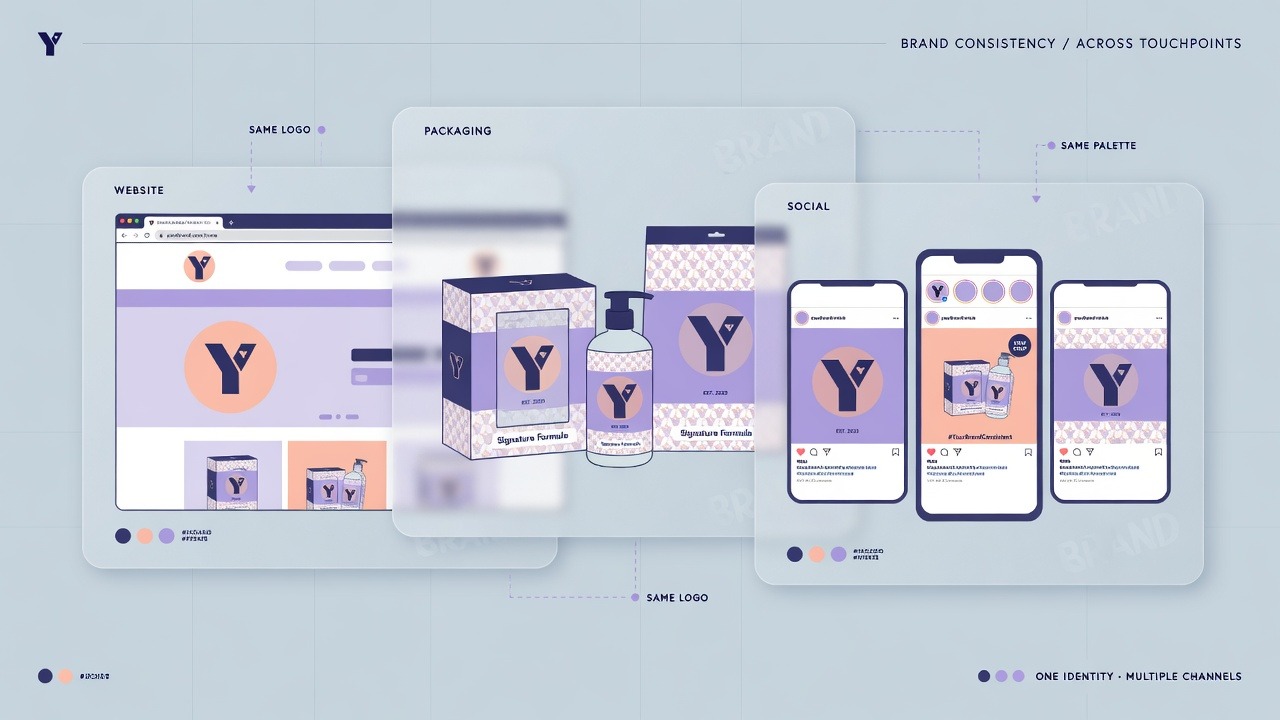
Brand authority is reinforced or eroded at every customer touchpoint. A polished website paired with sloppy proposals undercuts the brand. A sharp social presence paired with a confused product page does the same.
Consistency is not a design preference. It is the operational discipline that makes everything the brand does add up to a single impression in the audience's mind.
Trust is built slowly through extended interactions that meet user expectations consistently across every surface. Every interaction the audience has with the brand contributes to the cumulative judgment of whether the brand is trustworthy enough to choose. Inconsistency between surfaces is one of the fastest ways to break that judgment.
A coherent visual identity is the foundation, but visual consistency is only the most obvious layer. Brand authority requires consistency across:
- Voice and messaging. The way the brand talks about itself, its category, and its customers stays recognizable across every surface. A writer reading three randomly selected pieces of brand content can tell they came from the same company.
- Quality of execution. The standard set on the highest-visibility surface is held on every other surface. The proposal looks as deliberate as the homepage. The internal documentation reflects the same standard the marketing team applies to public-facing work.
- Service and product experience. The promises made in marketing match the experience delivered in the product. Brands that compound credibility refuse to ship marketing claims their product cannot back up.
- Operational reliability. Response times, follow-through on commitments, and accuracy of information all contribute to the audience's running judgment of whether the brand is serious. The unglamorous parts of operations are where authority gets built or broken.
Brands that operate at scale across multiple channels invest in systems that make this consistency repeatable. Style guides, design systems, content review processes, and customer experience standards all serve the same purpose.
That purpose is removing the variance that erodes credibility over time. The brands that succeed in this discipline can extend into new channels without losing recognizability. That is what allows agencies operating at the campaign or activation level, including Activate Inc, to maintain a consistent identity even as the format of audience engagement shifts from digital to physical to event-based.
Proof Beats Persuasion in Crowded Categories
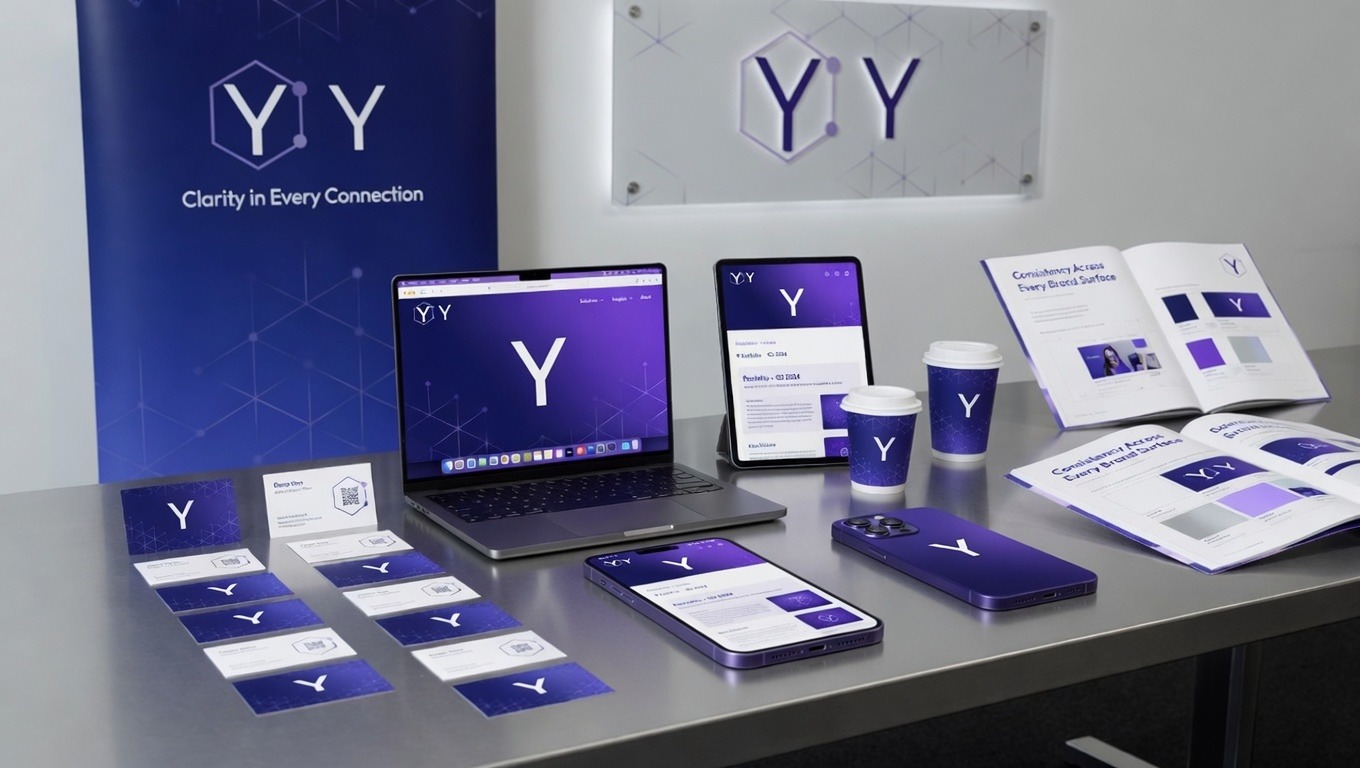
When buyers in saturated markets are evaluating vendors, the brands that win are not the ones with the most polished claims. They are the ones with the strongest evidence.
Specific results from comparable customers, documented methodology, and named outcomes carry more weight than any creative campaign. The audience has been trained to discount marketing language and reach for proof instead.
A widely cited business school study on customer emotion documented that emotionally connected customers are significantly more valuable than satisfied customers, with measurable lifts in revenue and retention across product categories.
The pathway to that emotional connection in B2B contexts runs through proof. A buyer reading a case study with named clients, documented before-and-after metrics, and methodology details is forming a different relationship with the brand than one reading aspirational copy.
The first feels like evidence. The second feels like marketing. Brand authority lives in the gap between those two reading experiences.
The proof discipline shapes how authoritative brands present themselves:
- Specific is better than general. "Increased qualified pipeline by 47 percent over six months for a mid-market SaaS client" carries more weight than "drives growth for clients."
- Named is better than anonymous. Case studies that identify the client, the team that worked on it, and the conditions under which results were achieved are more credible than redacted versions.
- Methodology is better than outcome alone. Showing the work behind the result lets the audience evaluate whether the approach would translate to their context.
This commitment to proof is operationally expensive. It requires permission processes for client naming, rigor in measurement, and willingness to publish results that include the failures and qualifications honest measurement surfaces.
The brands that pay this cost build credibility that compounds for years. The brands that take shortcuts build claims the market eventually discounts.
What This Looks Like in an Operating System
Brand authority is not a campaign. It is an operating system. The brands that compound brand authority over time have built three connected commitments into how the company runs.
A defined position they can state in one sentence. A consistent execution standard across every surface. A proof discipline that earns the credibility every claim depends on. The connection between position, execution, and proof is what holds an operating system for authority together; without that connection, even strong tactics fail to add up to recognizable brand presence in the market.
Each commitment depends on the others. A defined position without execution consistency reads as a slogan. Execution consistency without a defined position reads as polish without purpose.
Proof without either reads as defensive marketing. The three commitments only generate brand authority when they operate as a single system. That is why most companies that try to manufacture authority through tactics alone fail. The tactics work only when the underlying system is in place.
Operating teams that internalize this approach treat brand authority as a long-term asset rather than a quarterly metric. They invest in the unglamorous infrastructure: the style guide that prevents drift, the editorial calendar that enforces specificity, the case-study program that earns proof.
UX research on web credibility documented that trust is a long-term proposition built slowly through extended interactions where the brand's actual behavior matches its claims over time. Operating systems for brand authority succeed because they make that consistency repeatable across the years required for the trust to compound.
These investments rarely produce the dramatic short-term results that quarterly reporting rewards. They produce something more durable: a brand position that the market remembers, references, and chooses by default when the category becomes too crowded for any other selection method to work.
The companies that build this kind of brand authority hold a structural advantage that is very difficult for competitors to attack. New entrants can match the website. They can copy the messaging.
They cannot replicate years of compounded credibility built on consistency, specificity, and proof. That moat is what makes brand authority work the most strategically important investment a company can make in a category that is going to keep getting more crowded.
The Discipline That Compounds
Brand authority in saturated markets is built the way every durable asset is built: through repeated, disciplined choices over time, in the unglamorous direction that most competitors will not commit to.
The brands that win this work are not the most creative, the most resourced, or the loudest. They are the ones that decided what they stood for, executed consistently against that decision across every surface, and earned the proof that gives every claim its weight. That is the work. There is no shortcut, and that is precisely why it compounds.


%2520(1).png)