
Managing sales across Amazon, Shopify, eBay, Walmart, and other platforms?
If you thought the hard part was getting orders, think again. Once the orders start coming in, it becomes increasingly difficult to keep track of everything - and this is where multichannel sales tracking comes into play.
In this article, we’ll explain why this is such a prominent issue and the best tool to get the job done.
Let’s waste no time and get into it.

Why Multichannel Sales Tracking Is So Hard for Growing Ecommerce Brands
Every channel comes with its own dashboard, its own format, and its own quirks - it can be difficult enough just learning one of these.
Selling on Amazon, Shopify, eBay, and social media at once? Now you've got four different systems that don't talk to each other at all.
Sales data quickly becomes a mess, and it becomes harder and harder to know what is actually working and what isn’t.
Some of the most common tracking challenges include:
- Inconsistent reporting periods across platforms
- Different metrics and KPI definitions
- Time zone discrepancies affecting daily totals
- Delayed data updates vary by channel
- Currency conversions for international sales
- Inventory numbers that don't sync in real-time
As you scale, everything just gets harder and harder to keep track of, including payment processing.
With each platform having its own fees, payout schedules, and reporting, you won’t actually know what is coming in each month.
Inventory mismanagement is also a real risk when stock isn’t synced, and that in itself can also be very problematic.
What to Look for in Multichannel Ecommerce Sales Tracking Software
Picking tracking software isn’t just about features - it’s about what actually makes your life easier across platforms.
Here are the key features to look out for.
Centralized Order Management
Your software should pull in orders from every channel, right into one dashboard.
No more hunting through separate marketplaces or missing orders because you forgot to check somewhere.
Inventory Synchronization
You want real-time updates that adjust stock everywhere the moment a sale happens.
That’s what keeps overselling (and angry emails) at bay.
Revenue and Fee Tracking
The platform should break out sales by channel and factor in all those unique fee structures. You need to see your actual profits, not just gross sales numbers.
Analytics and Reporting
Good reporting lets you spot trends, compare channels, and find growth opportunities. Customizable reports that fit your business? That’s a must.
Scalability and Integration
Pick a solution that grows with you and connects to the platforms you use now - and the ones you might add later. Integrations with top marketplaces, carts, and shipping carriers save you headaches down the line.
Automation Capabilities
Automated workflows for orders, inventory, and updates cut down on busywork. The more you sell, the more this matters.

Types of Multichannel Sales Tracking Tools (And Their Limitations)
There are a few flavors of multichannel sales tracking tools out there.
Each one solves a different problem, but very few are perfect for everyone.
Analytics-only platforms
These focus on reporting and dashboards.
They pull in sales data and make it look pretty, but they don’t handle inventory or order syncing. You’d still need other tools for fulfillment, and then it’s a question of whether the new software works with the existing (or not in many cases).
Inventory management systems
These are all about keeping your stock in line across channels. They’re great for avoiding overselling, but usually fall short on financial reporting and deep analytics.
Traditional ERP systems
These handle everything - accounting, procurement, warehouse ops.
You’re probably asking yourself what the downside is here.
Well, they’re complex, take months to set up, and can slow your team down with a steep learning curve.
These are almost always custom-built for large enterprises.
Best Multichannel Ecommerce Sales Tracking Software Overall: Goflow
Given all these options, you’re probably wondering if there is a solution that works for any number of channels and is easy to use. For this, Goflow is by far the best option.
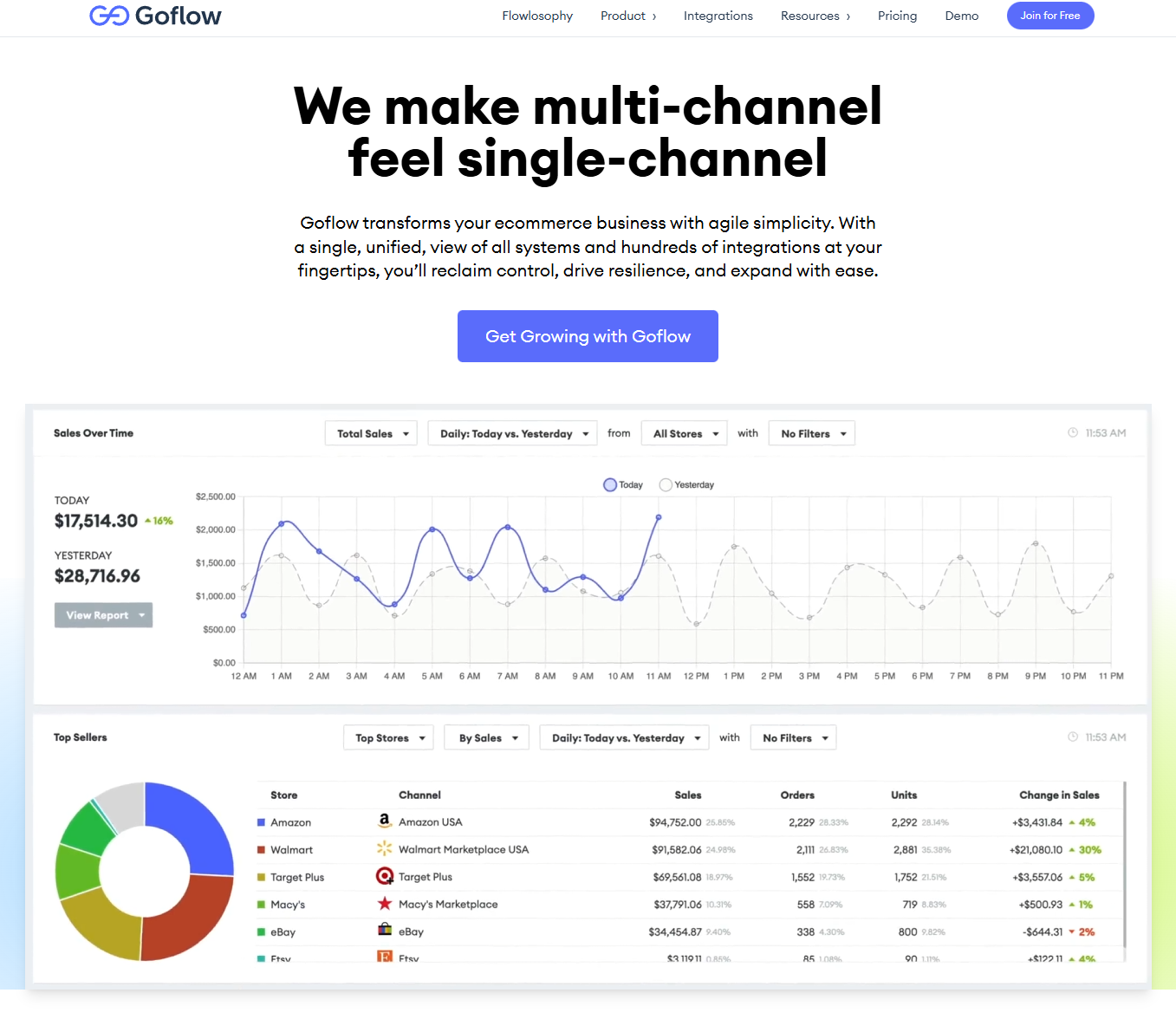
Goflow is for serious ecommerce operations - it centralizes orders, inventory, shipping, listings, and analytics from over 250 marketplaces and channels.
Key Features include:
- Real-time inventory sync across every connected channel
- Automated order routing and workflow management
- Centralized shipping and fulfillment tracking
- Multi-channel listing management
- Built-in analytics and reporting tools
- Seamless integration with Amazon, Shopify, Walmart, eBay, and much more
The platform basically acts as your operations HQ.
Goflow is aimed at mid-size to enterprise sellers who need automation at scale. It’s built to handle complex workflows that just aren’t manageable by hand anymore.
Common Mistakes Brands Make When Tracking Multichannel Sales
Lots of brands start out tracking multichannel sales with spreadsheets.
That can work for a while, but as your business grows, it can become very difficult if you aren’t keeping track of everything and updating the spreadsheet regularly.
Some other very common tracking mistakes with multichannel sales include:
- Not pulling data from every channel into one place
- Missing real-time inventory updates across platforms
- Overlooking the unique performance metrics for each channel
- Using tools that don't sync or share info with each other
- Forgetting to follow the full customer journey across all touchpoints
Simply put, if you aren’t staying on top of all of your channels, you are going to miss out on opportunities for growth, as you won’t know what is performing and what isn’t.
The best way to counteract this is to use a multichannel ecommerce tracking software like Goflow - it’s more than worth the investment.


%2520(1).png)