

Rhode’s marketing strategy combines founder visibility, a tightly controlled product assortment, recognizable creative direction, social distribution, and an ecommerce experience built around product desire. Hailey Bieber’s audience helped the brand attract attention at launch, but celebrity alone does not explain the business Rhode became. The stronger story is how the product, visual system, campaigns, and customer journey reinforced one another.
Rhode launched in June 2022 and quickly became a useful consumer marketing case study. It started with a small group of skincare essentials rather than a large catalogue, built a highly recognizable “glazed” aesthetic around them, and used social content to turn product textures, packaging, routines, and limited releases into repeatable creative material. This breakdown is shaped by the real brand, web, and growth work we do at Brand Vision, with the focus on what other founders can actually learn from Rhode’s system.
From a Focused Launch to a $1 Billion Acquisition Deal
Rhode’s early growth is easier to understand through disclosed figures than through the revenue estimates that circulated after launch. Forbes reported in late 2022 that the brand had built a waitlist of about 700,000 people across its initial products, while Bieber said revenue was on track to reach eight figures but did not provide a specific number. That is more reliable than the earlier chart in this article that estimated $10 million in 2022, $50 million in 2023, and $100 million in 2024.
The most useful later figure came from e.l.f. Beauty. When it announced an agreement to acquire Rhode in May 2025, the company disclosed that Rhode generated $212 million in net sales for the 12 months ended March 31, 2025. The transaction closed in August 2025 for $800 million at closing, with up to another $200 million tied to future performance. The deal therefore carried potential consideration of up to $1 billion rather than proving that Rhode had generated $1 billion in sales.
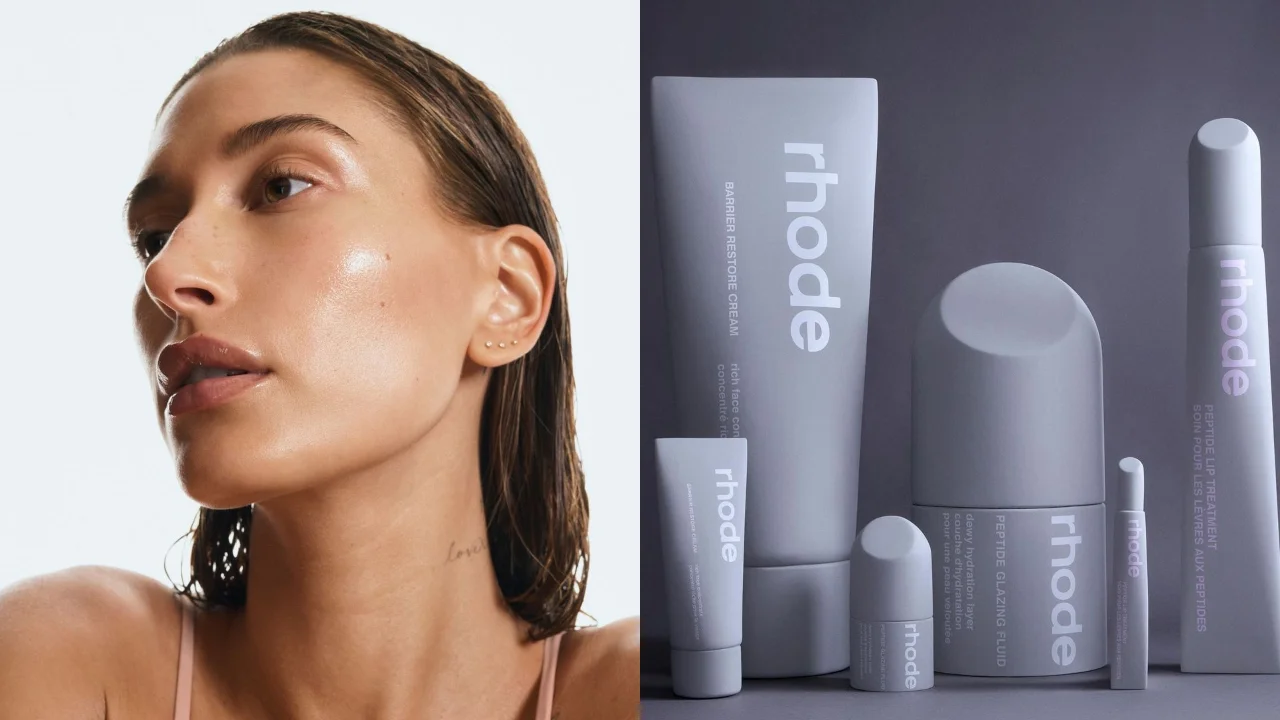
That growth gives the marketing discussion a stronger foundation. Rhode was not simply creating viral beauty content. It was building a direct-to-consumer business with enough demand, repeatable brand equity, and category expansion potential to become attractive to a larger beauty company.
A Small Product Line Made the Brand Easier to Understand
Rhode launched around a small set of core products, including Peptide Glazing Fluid, Barrier Restore Cream, and Peptide Lip Treatment. A narrow assortment helped customers understand the routine and gave the brand a few hero products to repeat across founder content, creator posts, product photography, and press coverage.
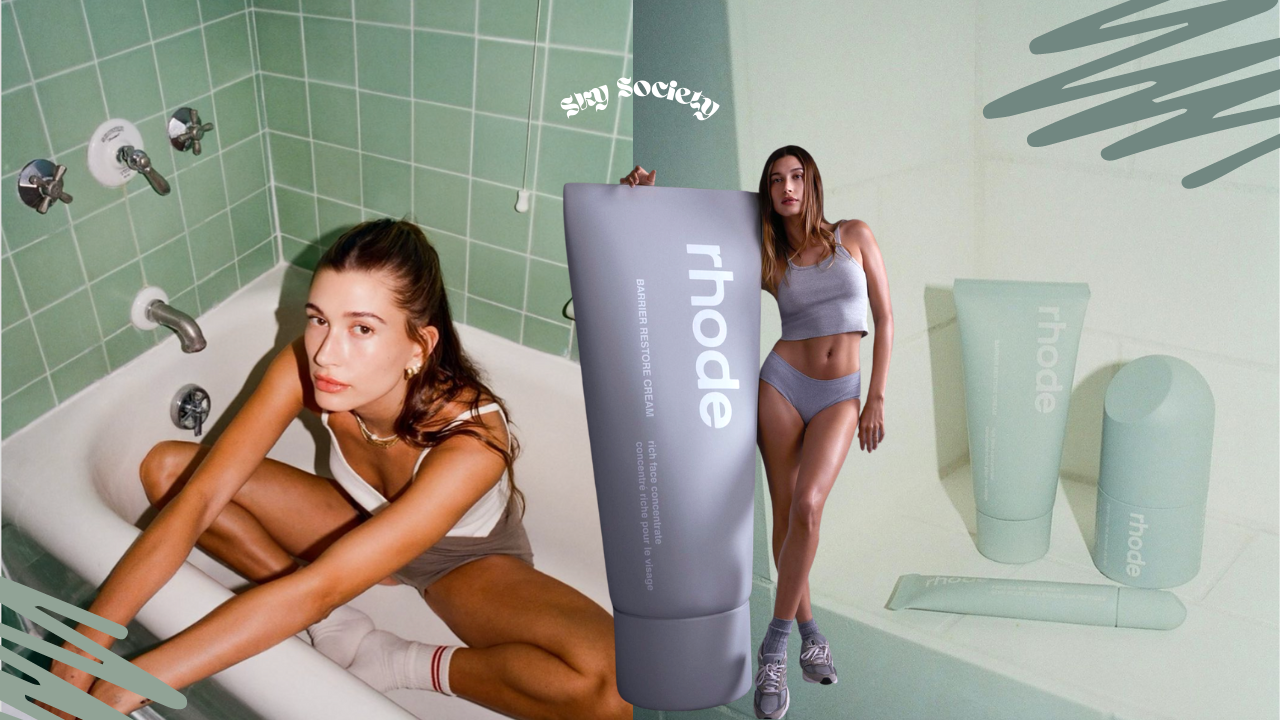
This restraint supported Rhode’s brand strategy. The company did not need to explain dozens of products at once. Instead, it could build memory around a few textures, package shapes, product names, and routines. The “glazed” language attached the skincare outcome to a visual idea that was easy to reproduce in photography and short-form video.
For founders, the lesson is not that every business should launch with three products. It is that a product line should be easy to understand. A smaller range can make positioning, content production, inventory planning, and customer education more focused when the offer is still being established.
Founder Visibility Became a Distribution Channel
Hailey Bieber’s personal audience gave Rhode an immediate advantage, but the brand used that reach in a way that was closely tied to product usage. Get Ready With Me videos, routine demonstrations, close-up texture shots, launch posts, and founder appearances made the products part of an existing content behaviour rather than a separate stream of conventional advertisements.
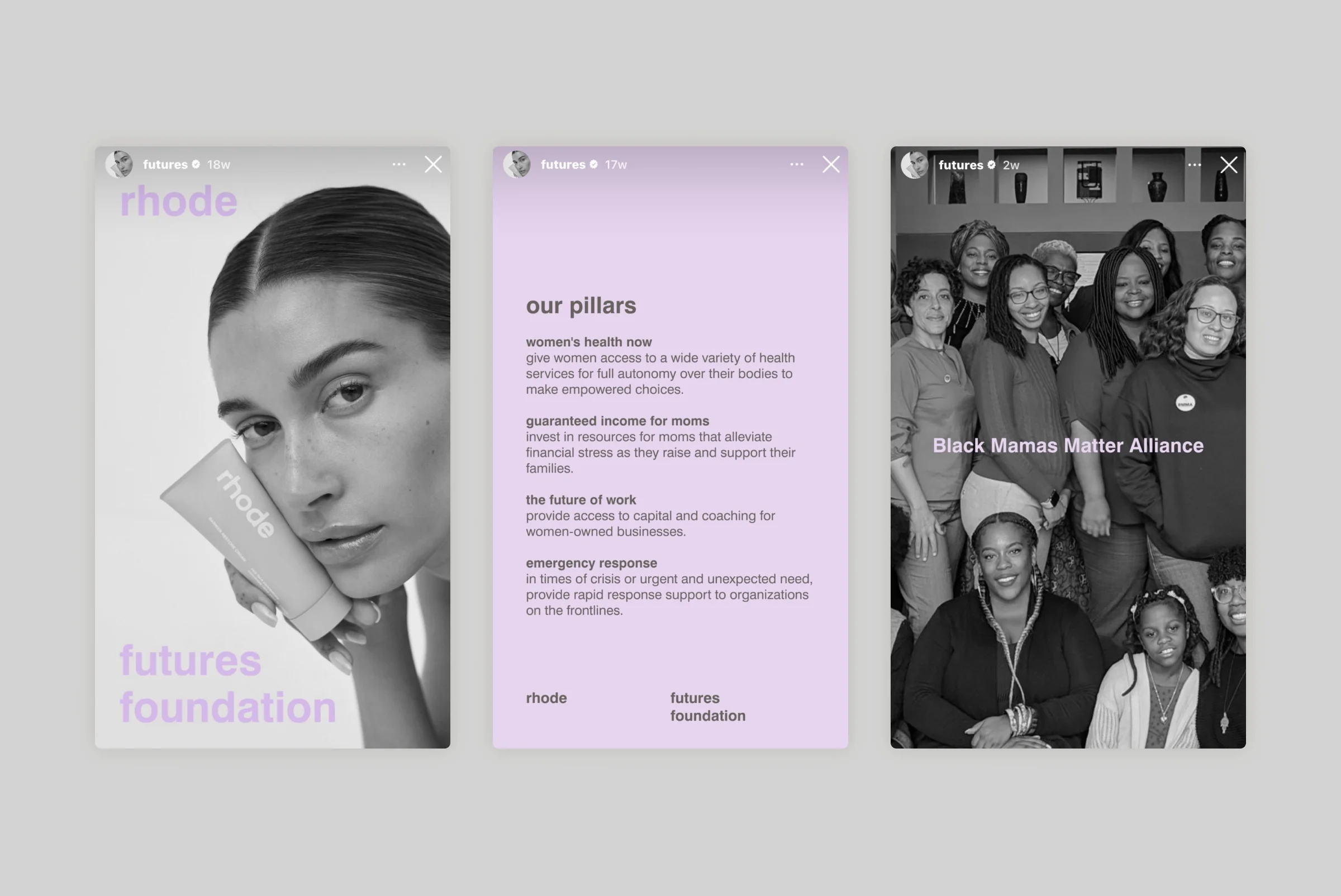
That founder-led approach also works because Rhode has a visual system that can survive without Bieber appearing in every frame. Its visual identity relies on restrained packaging, product close-ups, glossy skin, food references, muted neutrals, and occasional bursts of colour. Those elements give creators and customers recognizable material to work with while keeping the brand coherent.
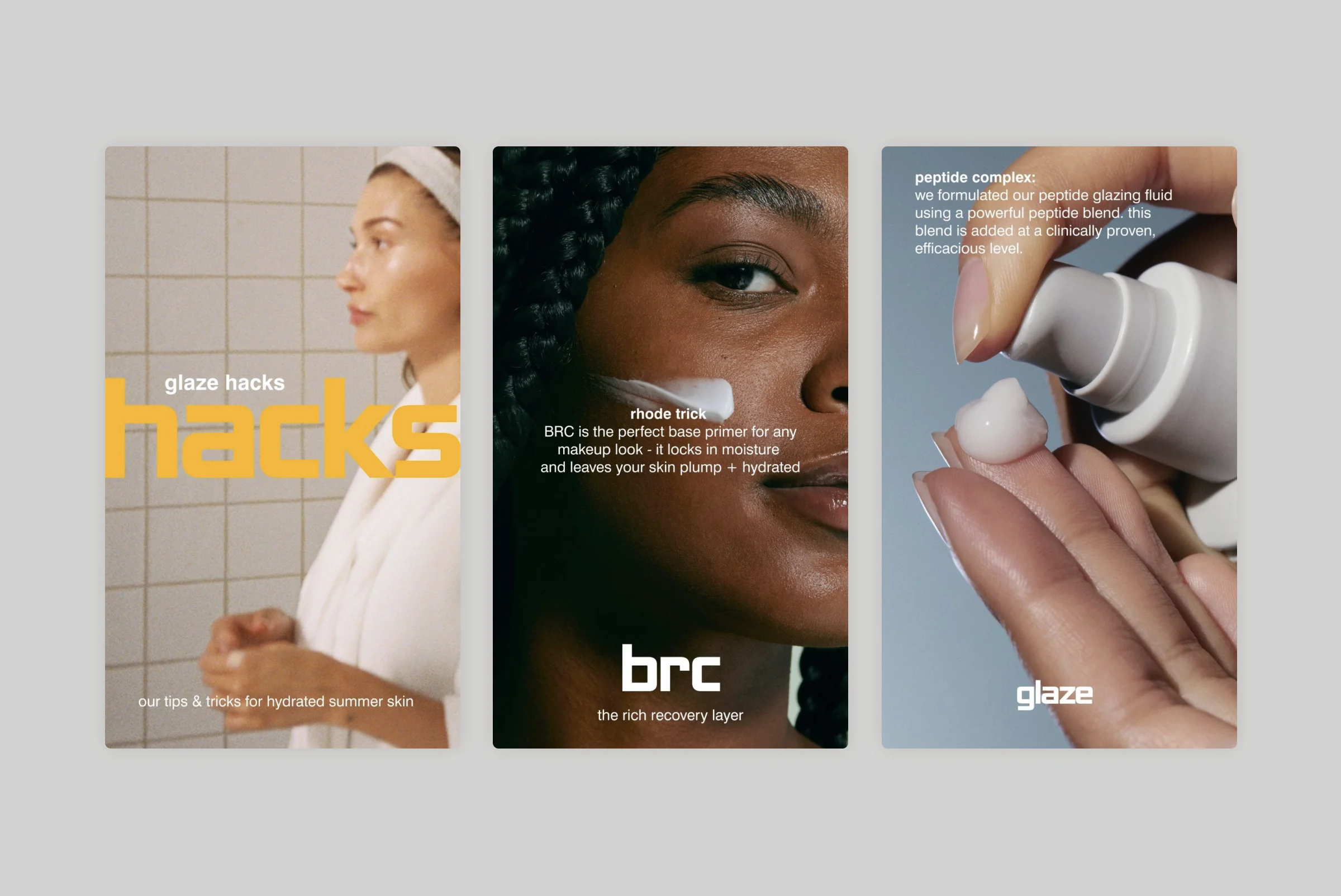
The practical lesson is to make founder content repeatable. A founder can create trust and attention, but the company still needs visual rules, product stories, and content formats that employees, creators, and customers can use without requiring the founder in every post.
Food, Texture, and Product Naming Created Shareable Campaign Ideas
Rhode’s marketing repeatedly turns product benefits into sensory language. Words such as “glaze,” “toast,” “raspberry jelly,” and “espresso” make texture and shade easier to imagine. That approach became especially visible around Peptide Lip Treatment and Peptide Lip Tint, where food-inspired creative gave the campaigns an immediate visual hook.
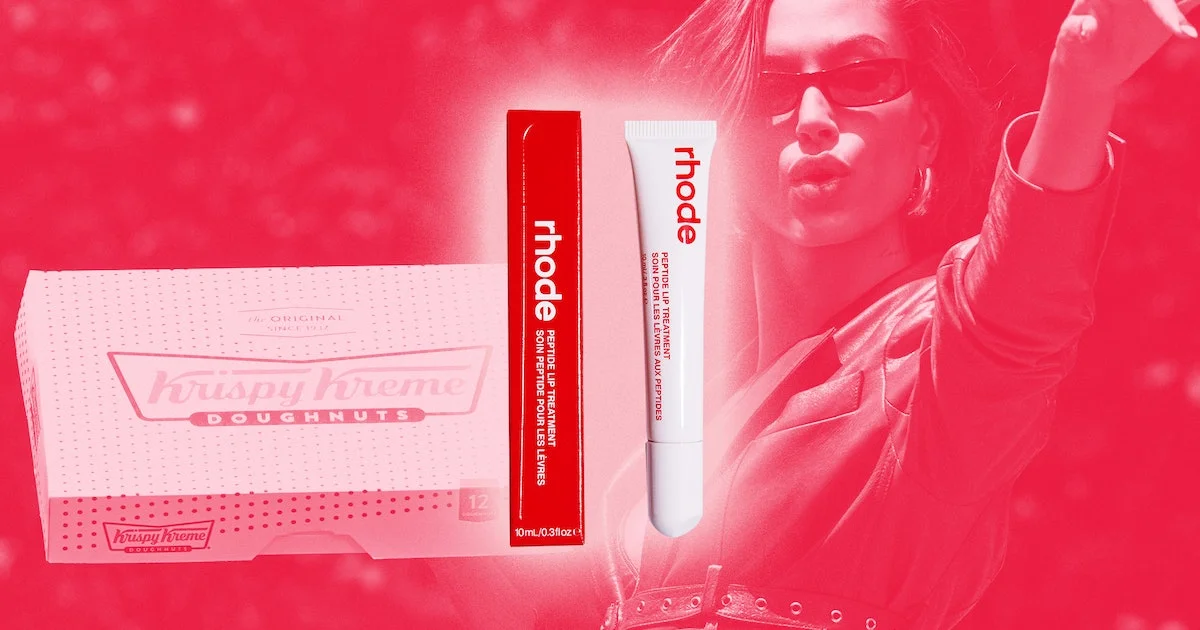
The Strawberry Glaze collaboration with Krispy Kreme is a clear example. The product name, colour, food association, and founder’s existing “glazed” language all supported the same concept. The campaign felt larger than a standard limited edition because each part of the creative system reinforced the same memory cue.
This is also where packaging design and art direction become commercial tools. The package does not need to be complicated to be distinctive. It needs enough recognizability that a close-up image, unboxing video, or product held in someone’s hand still reads as the brand.
The Ecommerce Experience Carried the Same Brand World
Rhode’s website extends the product styling rather than treating ecommerce as a separate utility layer. Product photography, typography, whitespace, copy, and mobile layouts support the same minimal, glossy aesthetic customers see on social. That makes website design part of the marketing system rather than simply the place where transactions happen.
Shopify’s partner directory states that VAAN worked with Rhode to build its Shopify site and continues to support development, design, and strategy. That makes Rhode a relevant example of Shopify storefront design: the commerce platform handles the transaction infrastructure, while the brand layer has to preserve product storytelling and make the path to purchase clear.
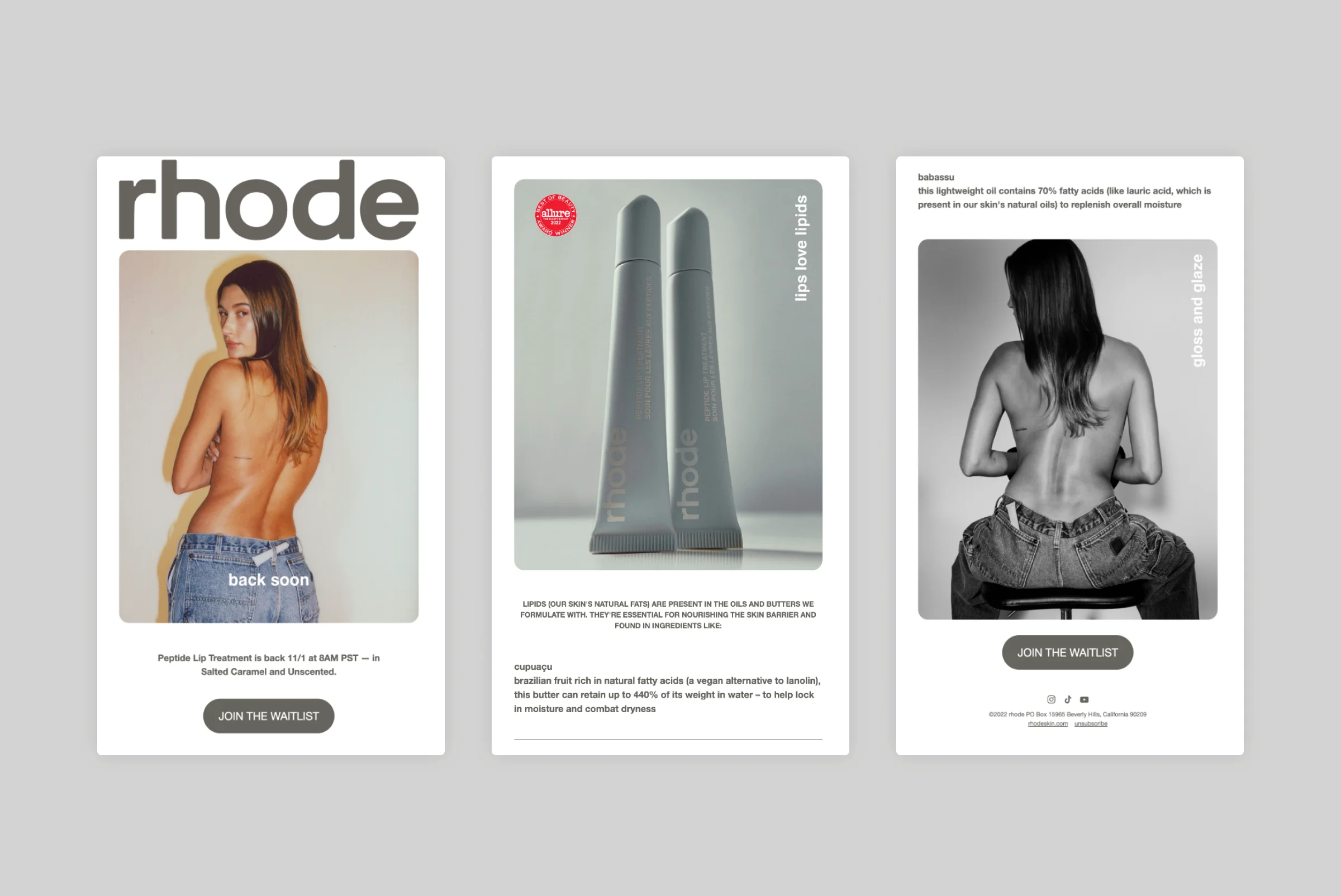
As the assortment grows, the digital challenge becomes harder. Customers need to distinguish skincare from hybrid makeup, compare shades, understand routines, and move between inspiration and checkout. A strong UI/UX design system helps the site scale without losing the simplicity that made the early brand easy to navigate.
Retail Expansion Changed Rhode From DTC-Only to Omnichannel
For its first years, Rhode built the business largely through its own ecommerce channel. That gave the company direct control over product presentation, customer data, launch timing, waitlists, and the relationship between social attention and checkout.
The next stage changed the distribution model. After e.l.f. Beauty completed the acquisition, Rhode launched at Sephora in North America and expanded to the U.K. in 2025. In 2026, e.l.f. announced a wider Sephora rollout across European markets. Rhode’s own current FAQ also lists Sephora in the U.S., Canada, and U.K., alongside MECCA availability in Australia and New Zealand.
This expansion is important because retail is not only a sales channel. It changes how people discover, test, compare, and purchase products. Rhode now has to maintain the same brand clarity across its own storefront, retail shelves, retailer product pages, testers, merchandising, and in-store customer experience.
The Trademark Dispute Ended Through Settlement, Not a Court Win
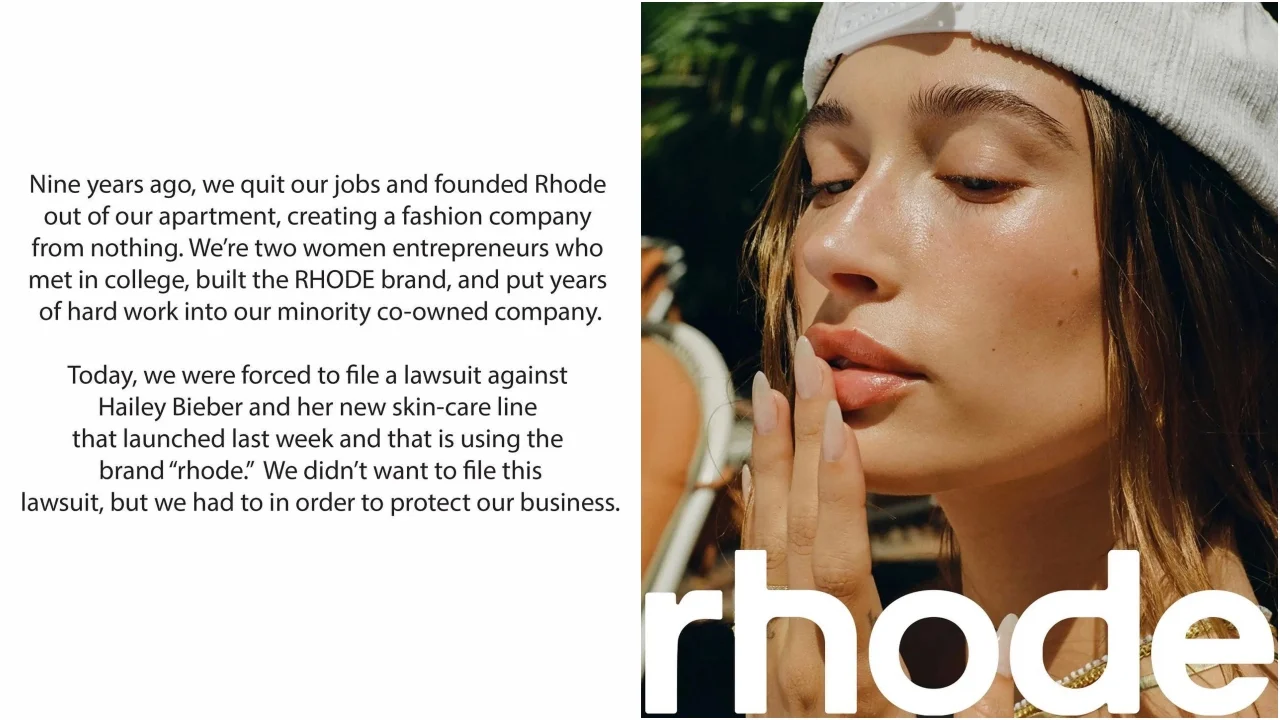
Rhode’s naming history also needs careful wording. A fashion company called RHODE sued the skincare business in June 2022, alleging trademark infringement. The court denied the fashion company’s request for a preliminary injunction, which allowed Bieber’s brand to keep operating while the case continued.
The case was later dismissed in September 2023 after the parties told the court they had reached agreement on the core terms of a settlement. That is different from saying the court ruled that Rhode had won the trademark dispute. For founders, the practical lesson is to conduct brand naming and trademark review early, because a name that works creatively can still create legal and operational risk.
What Business Owners Can Learn From Rhode in 2026
Rhode’s marketing strategy is useful because the system is consistent. Product assortment, founder content, naming, packaging, photography, ecommerce, retail expansion, and campaign concepts all reinforce a recognizable point of view. The transferable lesson is not to copy glazed skin or food-inspired launches. It is to make each part of the customer experience feel like it came from the same brand.
- Build the brand world before scaling media. Clear branding gives content, packaging, web design, and campaigns a common set of rules.
- Keep hero products easy to understand. A sharp product story gives creators and customers something specific to repeat.
- Design for sharing without making every asset look like a social post. Packaging, texture, naming, and photography can create natural moments people want to capture.
- Use scarcity carefully. Waitlists and limited releases can concentrate attention, but they should not become a substitute for reliable supply and customer trust.
- Make the path from content to purchase simple. Social interest should lead to a product page, shade choice, routine, or checkout without unnecessary friction.
- Build a brand that can outgrow the founder. Celebrity or founder visibility can open the door, but the identity has to remain recognizable when someone else is telling the story.
For a beauty founder choosing a San Francisco branding partner, the same principle applies: define the product promise and visual system first, then decide how founder content, packaging, ecommerce, and campaigns will express it consistently in the market.
Rhode’s growth shows what can happen when a product-focused brand makes every touchpoint reinforce the same idea. If you want help reviewing how your own positioning, identity, website, and campaigns connect, contact Brand Vision to discuss the priorities.
More Marketing Strategy Breakdowns


.avif)