Nike athlete deals are more useful to study as long-term brand platforms than as one-off sponsorships. The strongest relationships connect an athlete’s story to product meaning, recurring creative, and distribution across seasons rather than relying on a single burst of attention.
Decision makers care because athlete partnerships can influence several parts of the marketing system at once: product storytelling, campaign attention, retail demand, and the digital experience people reach after a launch. The value still depends on fit, execution, and measurement rather than the athlete relationship alone.
From a Brand Vision agency perspective, athlete-led marketing is a useful case study because it forces brand, product, creative, distribution, and digital experience to work from the same brief. The transferable lesson is system design, not celebrity scale.
Key Takeaways
- Nike treats athlete partnerships as long-term marketing commitments. Its FY2026 filing reports approximately $15.5 billion in endorsement contract obligations, including associated marketing commitments, with about $1.7 billion payable within 12 months.
- The examples in this article mix current 2026 Nike athletes with historical relationships. Tiger Woods, for example, is a legacy case: his 27-year Nike partnership ended in January 2024.
- Nike’s current signature-athlete model is visible in 2026 through Caitlin Clark, Sabrina Ionescu, and A’ja Wilson, each with active signature-product programs.
- The marketing lesson is not that an endorsement guarantees demand. The value comes from connecting the partnership to a clear product story, repeatable creative, and an experience that can handle the attention it earns.
Why Nike Athlete Deals Matter to the Brand
Nike athlete deals matter because a well-matched partnership can make a product story easier to recognize and repeat. That is a brand-clarity question: the athlete should reinforce what the product or category stands for, not simply add visibility. A defined brand strategy gives partnerships a clearer role before campaign assets are produced, while the existing branding services layer supports the broader system.
These deals also change how a brand plans its content. A strong partnership does not create one ad. It creates a stream of assets that can be localized, adapted to new channels, and retold through different angles without losing coherence. Nike funds that coherence at a scale most brands never see. Its fiscal 2025 report listed endorsement contract obligations of $16.2 billion, with $1.6 billion due within a year, which is what it costs to keep a system like this running across hundreds of athletes and leagues.
For current context, Nike’s FY2026 filing reports approximately $15.5 billion in endorsement contract obligations, including associated marketing commitments, with about $1.7 billion payable within 12 months. That figure is a contractual obligation measure, not annual endorsement spend. (Nike FY2026 Form 10-K)
There is a practical reason this matters in 2026. Athlete launches can create concentrated traffic around product drops, games, tournaments, or campaign releases. Teams should have campaign pages, measurement, and UX ready before those moments rather than assuming attention will translate into conversion on its own.
Ten Athletes Behind Nike Endorsements and Advertisements
These ten profiles show different roles athlete partnerships can play, using both current 2026 Nike relationships and historical examples. Inclusion in this list is not a claim that every athlete profiled remains under an active Nike sponsorship as of October 2026.
LeBron James
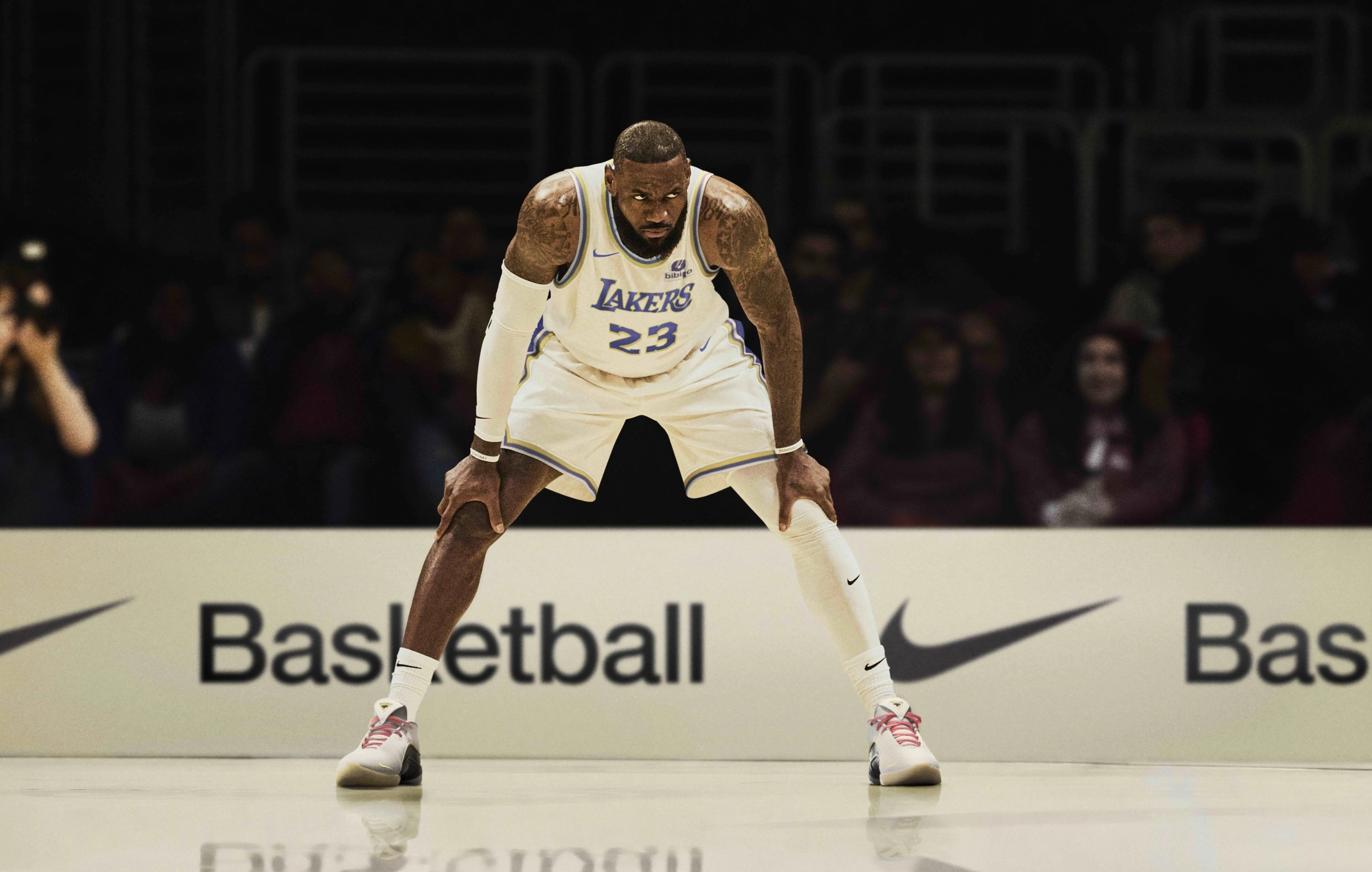
LeBron James is the clearest example of an endorsement working as long-term brand infrastructure. In 2015 Nike signed him to the first lifetime deal in the company’s history, later reported to be worth more than a billion dollars over its life. That kind of commitment gives Nike a stable anchor for basketball storytelling and product momentum in a category that changes fast.
- Deal role: legacy anchor the brand can build around for years
- What Nike gets: multi-season relevance without rebuilding the story each year
- What the audience gets: a familiar performance and leadership reference point
- Where it shows up: signature product storytelling, campaign casting, cultural moments
- The marketing lesson: pick one or two long-term anchors, then compound the story
- The execution requirement: campaign pages have to handle traffic spikes with clear hierarchy and fast load times
Serena Williams
Serena Williams is a long-running Nike relationship that shows how performance, cultural identity, and design language can compound over time. Her Nike deal was publicly documented years ago, and ESPN’s reporting from 2003 framed the early agreement as a major long-term deal with royalties and performance incentives.
What Serena adds is range. She has been positioned as an athlete, a style force, and a broader symbol of self-definition, which widens the contexts where Nike can tell a coherent story. It also raises the bar for craft. When a partnership reaches across sport and culture, the campaign page and the shopping experience cannot look generic.
For marketing leaders, her example supports one principle: an endorsement should not only amplify your message, it should sharpen it. The best partnerships make a brand feel more specific. If yours makes the brand blurrier, the deal is working against you.
Caitlin Clark
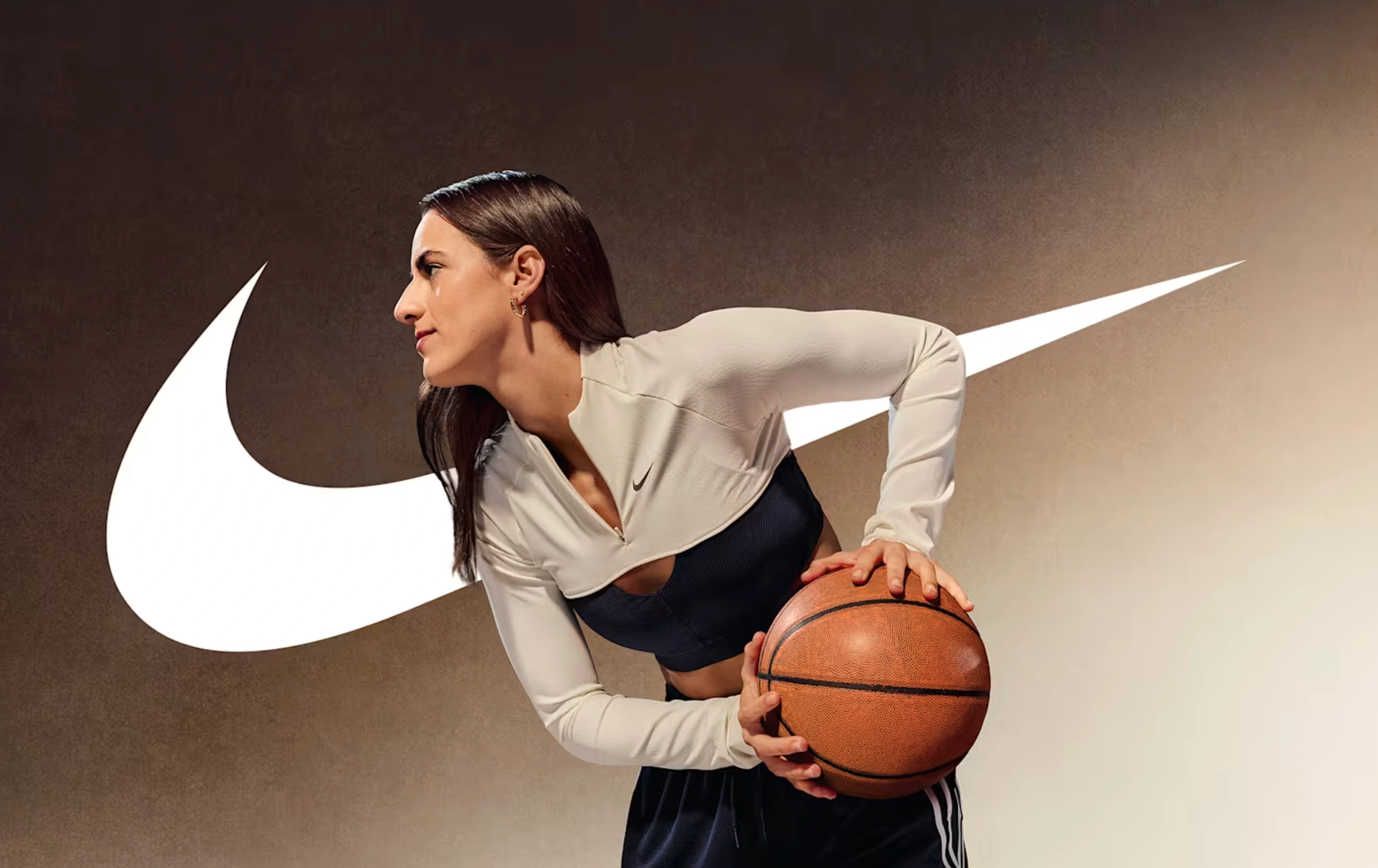
Caitlin Clark shows how a signature athlete can be built in real time, with public signals that tell the market where the partnership is headed. Nike Basketball introduced her as a signature athlete and unveiled a signature logo, which Nike’s own release documents as one of the clearest markers of deeper investment. The financial commitment matched the framing. Her move to a signature deal was reported by ESPN at eight years and $28 million with her own shoe, described as the richest sponsorship contract for a women’s basketball player.
That signature program is now active in market: Nike unveiled the Caitlin 1 in September 2026, with the global launch beginning October 1. The collection shows how a signature logo design, product system, and athlete story can operate as one recognizable platform. (Nike Caitlin 1 announcement)
- Deal role: signature builder and future category pillar
- What Nike gets: a defined identity asset it can deploy across channels
- What the audience gets: a clear way to categorize the athlete and anticipate the product
- Where it shows up: signature identity, footwear roadmap, campaign casting
- The marketing lesson: signal the structure of a partnership early, because clarity beats complexity
- The execution requirement: align creative, product pages, and conversion flows before peak attention hits
Sabrina Ionescu
Sabrina Ionescu is a clean example of a partnership translating into a product narrative that stays active season after season. When Nike publishes detailed storytelling around her footwear, as it did with the Sabrina 3 release, it signals more than a routine launch. It ties the athlete’s identity to a specific performance promise and design language.
Nike continued that relationship in 2026 with the Sabrina 4 footwear and apparel collection, unveiled in April and launched in July. (Nike Sabrina 4 announcement)
The value here is repeatability. A signature line creates recurring moments for storytelling that can support retail, social, creator partnerships, and live activations without a new premise each time. The athlete becomes the thread that makes frequent content feel coherent.
This is also where digital execution earns its keep. Product-led athlete marketing drives high-intent clicks, so the pages behind it need fast load times, scannable structure, and accessibility that holds under traffic. Without that, the partnership produces awareness with no payoff.
A’ja Wilson
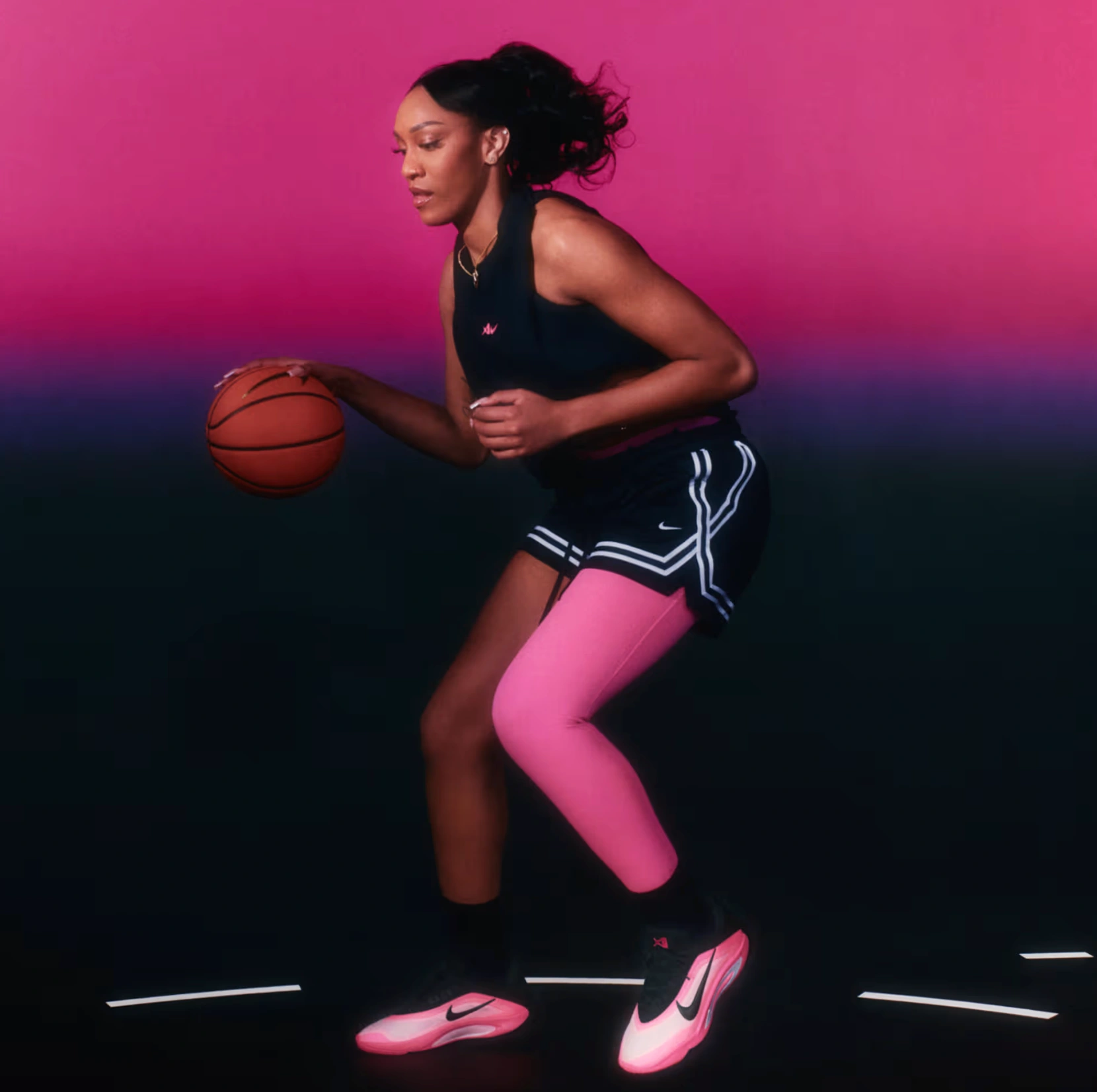
A’ja Wilson shows how an endorsement can help define a category and reinforce leadership. When an athlete is positioned as a dominant performer with a clear identity, the brand can build campaigns that feel precise, and precision is what makes both advertising memorable and product claims credible. Her presence also reinforces Nike’s read of women’s basketball as a growth engine rather than a side story.
Nike’s March 2026 A’Two announcement confirms that Wilson is in the second year of her Nike signature-athlete journey, with a second signature shoe and expanded apparel collection. (Nike A’Two announcement)
Her strategic value is clarity. The audience understands her role immediately, which makes the creative work more efficient. The brand does not have to explain why she matters, so it can spend that space on product, emotion, and the specific moment it wants to own.
Kylian Mbappé
Kylian Mbappé is the case for operating at global scale. Football stars at his level do not sell in one market. They carry the brand’s identity across countries, leagues, and tournaments, which makes them a distribution asset as much as an endorsement. For Nike, that supports consistency across regions while still allowing local storytelling.
The hard part is the interplay between global consistency and local adaptation. A partnership at this level needs a creative system that can flex without losing the core idea. That is a governance problem, not only a creative one. It takes a shared asset library, clear rules for tone and visuals, and page templates that keep the experience consistent from market to market.
Vinícius Júnior
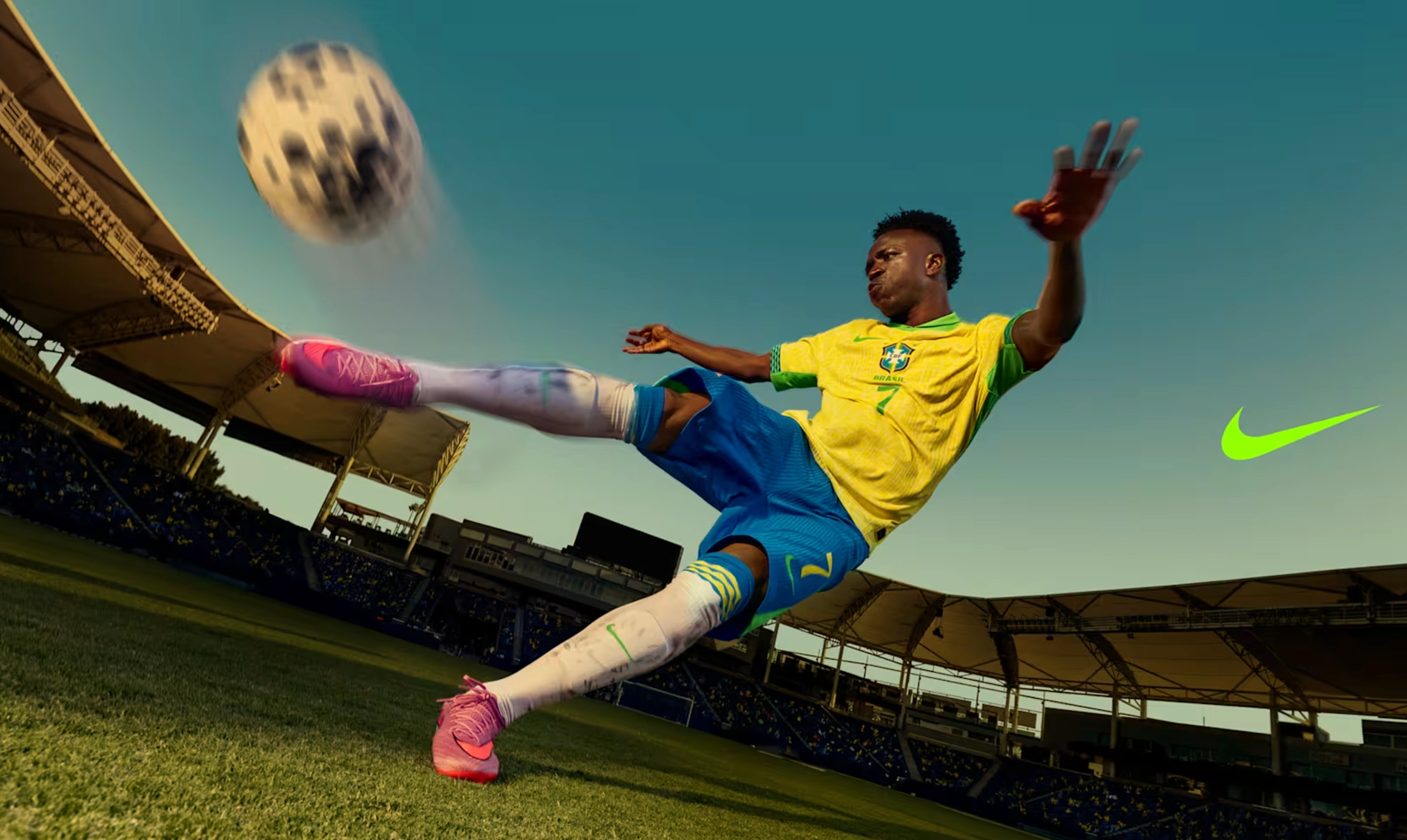
Vinícius Júnior shows how a deal can connect performance with a distinct creative identity. In a crowded attention environment, distinctiveness is the asset. An athlete who brings a recognizable style or energy gives the brand more creative angles without diluting the message.
He is also a reminder that partnerships are judged in context. The same athlete can mean different things to different audiences, which is why audience overlap analysis matters. Reach alone does not justify a partnership. Who is paying attention, what they care about, and how the story connects to the product, those are the tests.
Naomi Osaka
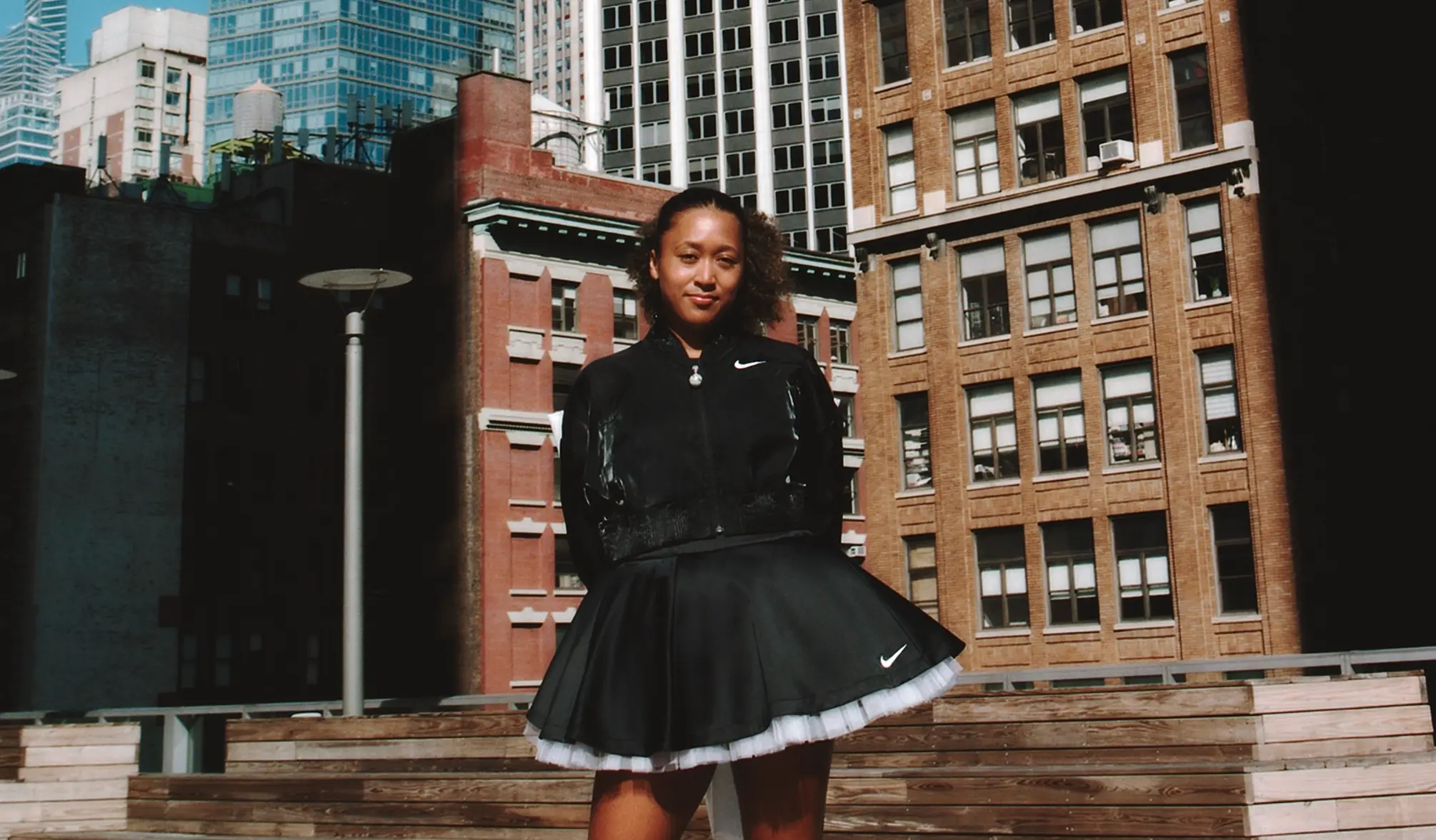
Naomi Osaka shows how an endorsement can live where performance meets a wider cultural narrative. That intersection raises the standard for craft, because audiences notice immediately when the experience feels careless.
- Deal role: cultural connector with performance credibility
- What Nike gets: a voice that carries beyond pure sport moments
- What the audience gets: a story that feels personal, modern, and grounded
- Where it shows up: brand storytelling, lifestyle contexts, campaign narratives with restraint
- The marketing lesson: cultural relevance demands precision in copy, design, and pacing
- The execution requirement: minimal, fast, accessible landing experiences protect the brand’s credibility
Sha’Carri Richardson
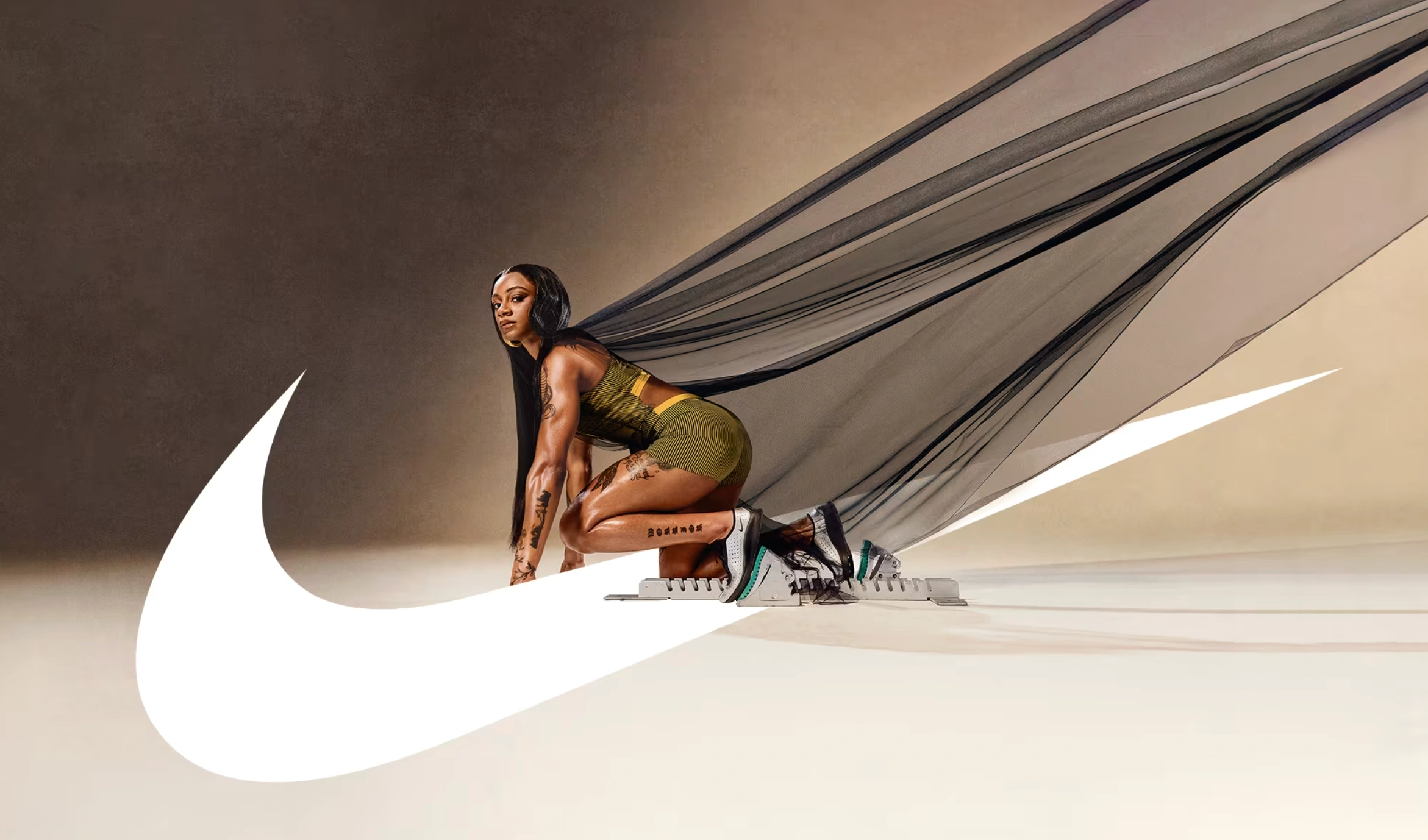
Sha’Carri Richardson brings speed, identity, and modern visibility. Track athletes tend to succeed in marketing when the brand builds a clear narrative around what makes them distinct, rather than treating them as a generic performance symbol. The framing has to be specific, not general admiration.
Her presence also points to the value of moments. Track produces spikes of attention around major events, and brands that plan for those spikes can convert interest into lasting relationships. Brands that do not plan miss the window, because the traffic arrives before the experience is ready.
A practical move is to pre-build campaign landing pages with modular sections, then swap content quickly as the moment evolves. That lowers launch risk, improves governance, and keeps the brand consistent under pressure, which is exactly when audiences form lasting impressions.
Tiger Woods
Tiger Woods belongs in this article as a historical Nike case, not a current 2026 sponsored athlete. Woods and Nike ended their 27-year partnership in January 2024, closing one of the company’s most visible long-term athlete relationships. (Associated Press)
The marketing lesson is continuity across the life of a partnership, including how a brand handles the end of one. Nike and Woods provide a historical example of a relationship that accumulated meaning over decades before both sides moved on.
For marketers outside sports, a legacy anchor can be a founder, a long-term ambassador, or a partner organization that signals credibility. The useful question is whether the relationship can support a coherent narrative for as long as the partnership remains strategically relevant, not whether it lasts indefinitely.
How Nike Athlete Partnerships Connect Attention to Product
Athlete partnerships can create attention, but the marketing job is to connect that attention to a clear product story and a useful next step. The strongest systems make product meaning easier to understand, repeat a coherent story, and reduce friction in the experience people reach after the campaign.
Clarify product meaning. When a deal connects to a product, the audience can repeat the point in one sentence, whether that is about speed, control, durability, or confidence. The best work does not hide the product behind vague inspiration. It makes the product part of the athlete’s identity.
Repeat a coherent story. These partnerships work because they compound. The story shows up across campaigns and product moments, and a signature identity gives the brand a stable frame that can adapt without breaking.
Land the story in a strong experience. Even a strong endorsement fails if the landing experience is slow, confusing, or inaccessible. Partnership campaigns should be paired with:
- Fast page speed and mobile stability
- Clear hierarchy with short blocks of copy
- Accessible design patterns and readable type
- Simple conversion paths that match intent
If campaign traffic rises but downstream actions do not, the landing experience is one place to investigate alongside offer, audience quality, pricing, and campaign-message fit. Our piece on why a website isn’t converting walks through the broader diagnosis, while UI UX design can address interaction and decision-path friction when the experience itself is the problem.
Partnership demand can also extend beyond the launch window when useful product and campaign pages remain discoverable through search visibility and SEO, but search should complement rather than be credited with creating durable demand by itself.
What Marketers Can Borrow From Nike Signature Athletes
A signature relationship is not a single campaign. It is a multi-year platform with a defined identity, a product roadmap, and consistent storytelling cues. When Nike introduced Caitlin Clark as a signature athlete and revealed a signature logo, it showed how public signals reduce ambiguity and help the market understand what is coming next. Here are four principles you can borrow, even if you are nowhere near sports.
For a different sports-and-lifestyle case, The North Face marketing strategy shows how product credibility, culture, collaborations, and brand consistency can work together without relying on one athlete-led platform.
- Make the role explicit. Define what the partner represents. Are they proof, culture, innovation, or reliability? If you cannot name the role in a sentence, the creative will drift. This is the same discipline that anchors a good brand development process: decide what the thing stands for before you produce anything.
- Tie the story to a product or offer. Nike keeps the product central. You can do the same by tying a partnership to a clear offer, feature, or outcome. This matters most in B2B, where buyers need specificity to justify action.
- Build a repeatable content system. Plan content in series, not one-off posts. A series supports steady learning and better performance over time, and it makes the site easier to maintain because templates and modules get reused.
- Treat the landing page as part of the campaign. Partnership work should not point at generic pages. It should land on experiences designed for intent, with clean structure and minimal friction. If your campaign landing pages need rebuilding, that usually starts with a reliable web design approach and a clear governance plan.
Practical Checklist: Building Your Own Endorsement System
Nike’s athlete deals are built on systems, and you can build a smaller version of the same thing. The key is to align strategy, creative, and execution. Use this to pressure-test your next partnership.
Partner selection
- The role is defined in one sentence.
- Audience overlap is real, not assumed.
- Proof is visible and credible.
- Risk factors are reviewed and documented.
Offer and product alignment
- The partnership connects to a specific offer or product.
- The proof supports the claim you want to make.
- The story can be repeated across multiple moments.
Creative system
- Visual and tone rules are written down.
- A content series is planned, not a single asset.
- Rights and usage terms are clear for future adaptation.
Digital execution
- Landing pages are built before the peak moment.
- Pages load fast and read cleanly on mobile.
- Accessibility and readability are checked.
- Analytics is configured to measure real outcomes.
Governance
- A single owner is responsible for updates.
- The CMS workflow supports quick swaps.
- The brand style system is documented.
The purpose of this checklist is to make each partnership easier to evaluate and improve. Performance still has to be measured against the campaign’s specific objectives rather than assumed to compound automatically.
Frequently Asked Questions About Nike Athletes
Which athletes are sponsored by Nike?
Nike continues to work with athletes across major sports, but public partnership status changes over time. Current 2026 examples confirmed in Nike’s own materials include signature basketball athletes Caitlin Clark, Sabrina Ionescu, and A’ja Wilson, while LeBron James remains a notable long-term Nike example through his lifetime agreement. This article also profiles historical relationships such as Serena Williams and Tiger Woods; Woods’ Nike partnership ended in January 2024.
What is the biggest Nike athlete deal?
The largest athlete deal in Nike’s history is LeBron James’s lifetime agreement, signed in 2015 as the first lifetime contract the company had ever offered an athlete. Nike has never disclosed the terms, but James’s business partner later said the lifetime value tops a billion dollars, which would make it Nike’s biggest single athlete commitment.
How do Nike’s contracts with athletes work?
Nike’s filings show that endorsement contracts can include base compensation, minimum guaranteed royalties, athletic-achievement bonuses, royalties on future product sales, and product provided to endorsers. As of May 31, 2026, Nike reported approximately $15.5 billion in endorsement contract obligations, including associated marketing commitments, with about $1.7 billion payable within 12 months. (Nike FY2026 Form 10-K)
What is a Nike signature athlete?
A Nike signature athlete has their own branded product line, usually a signature shoe and sometimes a logo, which marks the deepest tier of investment. Caitlin Clark and Sabrina Ionescu are recent examples. A signature deal is a multi-year platform with a defined identity and a product roadmap, not a one-off campaign.
Why do Nike’s athlete endorsements work so well?
Nike’s strongest athlete partnerships are useful because they connect a recognizable person, product meaning, recurring creative, and distribution over time. That does not guarantee demand, but it gives the brand a repeatable structure to test and improve across seasons.
A Calm Close: Turning Partnerships Into Durable Brand Assets
Nike’s athlete strategy is useful because many of its most visible relationships extend beyond isolated sponsorship ads into product, identity, storytelling, and distribution systems. Current signature programs and historical partnerships show different versions of that model.
If your team is planning partnerships and wants them to drive real outcomes, the next step is not louder creative. It is a stronger system across brand, digital, and governance. If you want to pressure-test that system, start a conversation with our team.
A partnership is only as strong as the system you build around it. The athlete is the story. The system is what makes it last.