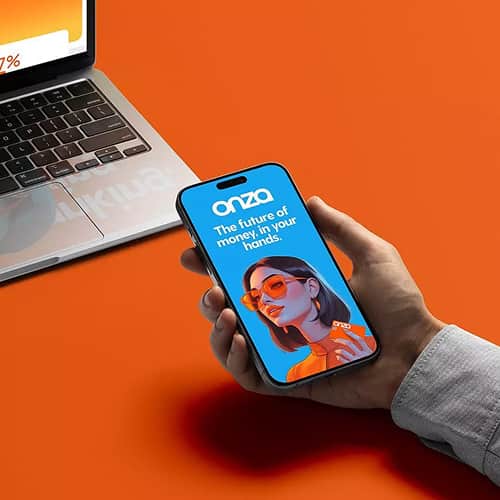
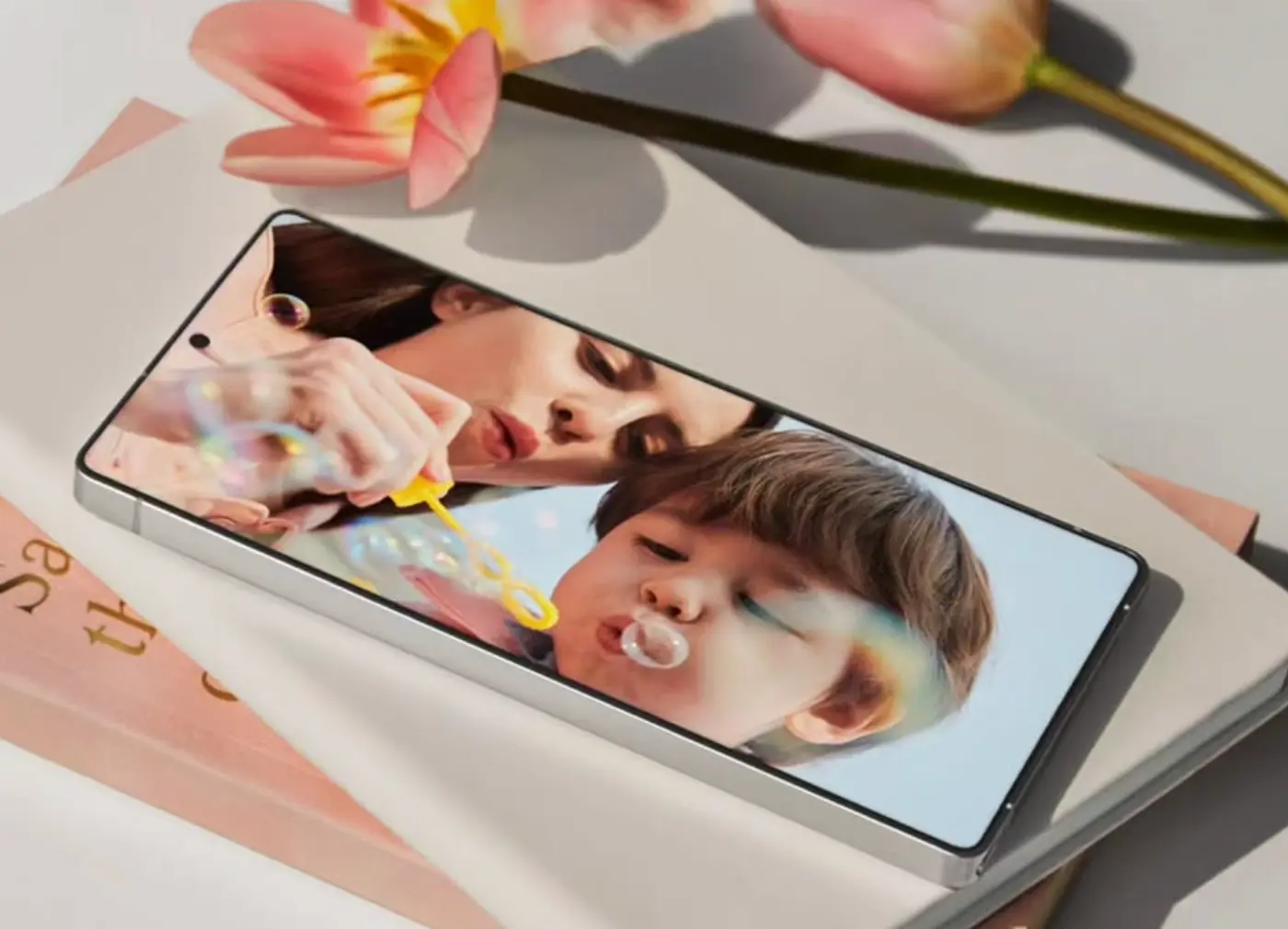
The Samsung marketing strategy in 2026 is built for a market where premium phones behave like platforms, not just devices. Hardware still matters, but the differentiators people remember are the habits a phone creates and the ecosystem it pulls you into. That framing is the Samsung marketing strategy in its simplest form.
In practice, the Samsung marketing strategy shows up in the launch cycle, partnership choices, and operating habits that keep Samsung’s message coherent at global scale. For leaders building their own operating model, the Samsung marketing strategy is useful because it stays consistent across products and regions.
What Samsung Is Doing Differently in 2026
- A single narrative thread. Galaxy AI becomes the headline across flagship, foldable, and ecosystem devices, so launches feel connected instead of seasonal.
- A portfolio mindset. The Samsung product lineup is marketed as a ladder, moving users from entry points to premium experiences through trade in, upgrades, and ecosystem pull.
- Brand consistency with local execution. Samsung campaigns are built on shared assets and a shared promise, then adapted into market specific activations and creator formats.
- Partnerships that reduce friction. Samsung partnerships with platforms, sports properties, and app ecosystems make the experience feel “native” instead of bolted on.
- A digital first commerce loop. Samsung digital marketing is tied to retail moments, product pages, and post purchase onboarding, not only awareness.
Taken together, these moves describe the Samsung marketing strategy as a system, not a campaign.
.webp)
A Six-Part Operating System
A useful way to read the Samsung marketing strategy is as an operating system with six connected parts. If one piece is missing, the brand message weakens at the moment of purchase.
- Narrative: one simple claim that can hold the entire year.
- Portfolio: each product tier has a specific job in the customer journey.
- Proof: demos and use cases that show the claim in real life.
- Partnerships: distribution and credibility borrowed from other platforms.
- Conversion: a buying experience that makes comparisons easy.
- Retention: onboarding, updates, and ecosystem value that keep customers.
The Market Context Samsung Is Responding To
Smartphone demand stabilized in 2025, but growth came with tighter competition for attention. Counterpoint Research reported that global smartphone shipments grew 2% year over year in 2025, with Apple at 20% share and Samsung close behind at 19% share. (Counterpoint’s 2025 market summary)
That context changes what “winning” looks like. In a flatter market, the Samsung marketing strategy needs to do three things at once: protect premium positioning, move volume through the middle of the market, and keep the brand culturally relevant without drifting off message.
Three pressures show up in almost every 2025 to 2026 smartphone launch plan:
- AI is moving from novelty to expectation. Brands have to explain what AI does, not that it exists.
- The upgrade cycle is longer. Marketing has to create a reason to switch that feels tangible.
- Retail and carrier environments are crowded. The story has to land in seconds at the shelf.
The Samsung marketing strategy answers these pressures with one narrative and many proofs.
For leaders, the useful takeaway is that Samsung is marketing a relationship, not a device. The phone is the entry point. Retention is the goal. That is why the Samsung marketing strategy keeps returning to ecosystem value.
Samsung Branding: One Brand, Many Categories, One Story
Samsung branding in 2026 is less about a single hero product and more about a trusted umbrella across categories. Phones, TVs, appliances, and wearables all carry the same promise: the devices work together, and the experience is designed to feel modern and dependable.
Brand Architecture That Reduces Choice Anxiety
A key move in Samsung branding is clarity in naming. “Galaxy” carries personal tech. “Bespoke” signals home and lifestyle. The main brand stays visible, but sub brands do the work of segmentation. It is Samsung branding built for scale and for faster browsing.
This approach also protects premium perception. The flagship name carries status. The foldable names carry identity. The mid tier stays simple. When Samsung branding is working, customers can explain the difference in one sentence.
Design Language That Travels Across Categories
Samsung branding is also disciplined in tone and design. Product language is practical. Benefits are framed as outcomes: better photos, faster workflows, clearer translation, simpler routines. That keeps Samsung branding credible in markets where consumers have become skeptical of feature lists.
Samsung branding benefits from third party validation too. Interbrand’s Best Global Brands 2025 list placed Samsung among the top global brands. (Interbrand) Brand Finance’s Global 500 2025 coverage also keeps Samsung in the top tier on brand value and strength. (Brand Finance)
The lesson is not to copy Samsung’s scale. It is to copy the clarity. Samsung branding works because it reduces confusion across a wide catalog, and it does not change its core promise every quarter.
The Samsung Product Lineup as a Marketing Engine
The Samsung product lineup is not only an assortment. It is a conversion pathway. Each tier has a job, and messaging is calibrated to move people upward over time.
Flagship and Foldable Roles
At the top, the flagship Galaxy S25 series is positioned as the default premium Android choice, with AI capability as a practical differentiator. Foldables like Galaxy Z Fold7 and Galaxy Z Flip7 extend that premium story into form factor identity, where the device is also a social signal. This is the Samsung product lineup acting as both performance and identity.
Mid-Tier Scale Without Dilution
In the middle, the Samsung product lineup relies on the Galaxy A series to drive volume, often through carrier promotions and trade in programs that lower the upfront decision. The messaging typically stays simple: camera, battery, durability, and “enough” performance for daily life.
The strategic point is that the Samsung product lineup does not try to make every tier feel like the flagship. It makes the flagship feel worth it, while keeping mid tier messaging clean and easy to compare.
Ecosystem Products That Increase Lifetime Value
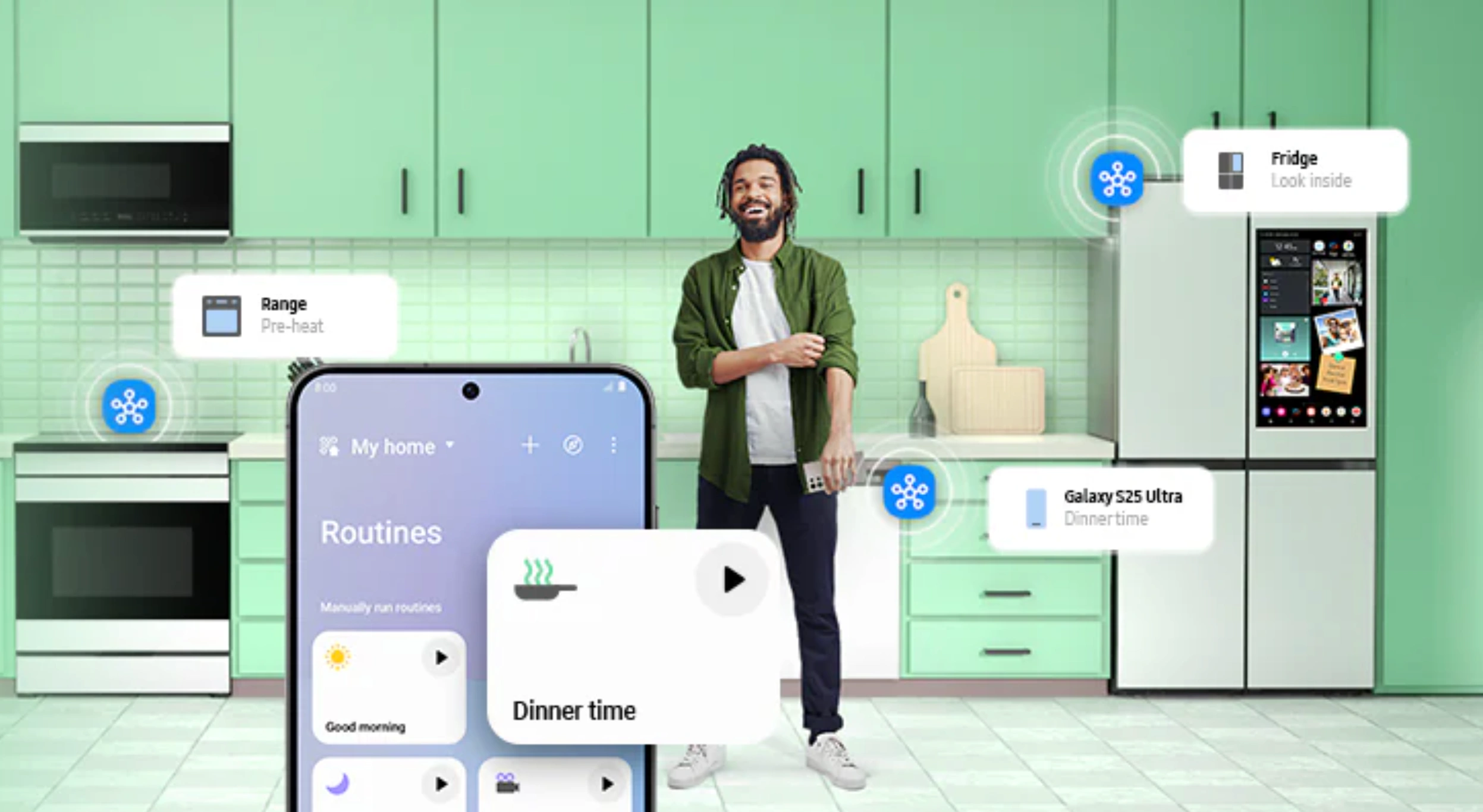
Beyond phones, the Samsung product lineup includes tablets, wearables, TVs, and home products that create ecosystem pull. The marketing job is to show how these products reduce friction across routines.
A practical way to think about the Samsung product lineup is as a ladder:
- Entry: mid tier phones that win on value and availability.
- Upgrade: flagships and foldables that win on identity and capability.
- Attach: wearables, tablets, and accessories that extend the experience.
- Retain: software updates and cross device features that make switching feel costly.
This ladder is the engine behind the Samsung marketing strategy.
For marketers, this is where the Samsung marketing strategy becomes operational. The Samsung product lineup gives the brand many entry ramps, but each ramp points toward a premium ecosystem.
Galaxy AI as the Unifying Message
Galaxy AI is not a feature list. It is the language Samsung uses to connect devices, updates, and partnerships into one story. In practice, Galaxy AI shifts the conversation from specs to daily value.
AI as a Benefit Story, Not a Spec Story
The most effective Galaxy AI messaging is built around moments people recognize: translating a call, fixing a photo, summarizing text, or getting help while multitasking. This is why Galaxy AI performs well in short form video. The demo is the headline.
That approach also supports pricing. When Galaxy AI is positioned as time saved or frustration removed, premium pricing reads as more rational.
Platform Partnerships That Make AI Feel Real
Samsung has supported its positioning with platform level integration. The Galaxy S25 series launched with deeper Google Gemini integration, and Samsung later announced a Gemini Live update that enables real time visual conversations on Galaxy S25 devices. (Gemini)
From a marketing standpoint, Galaxy AI does three jobs:
- It makes the benefits easy to demonstrate in content that people actually watch.
- It creates a reason to upgrade beyond camera or processor improvements.
- It supports ecosystem pull, since the same Galaxy AI language can be used across phone and foldable experiences.
The discipline is repetition with variation. Galaxy AI stays consistent as the umbrella, while the use cases shift by segment and by product.
View this post on Instagram
A post shared by Samsung (@samsung)
Launch Marketing in Practice: Galaxy S25 Global Activations
One of the most visible parts of the Samsung marketing strategy is how launches are treated as cultural events. Samsung campaigns for the Galaxy S25 series leaned into immersive activations across markets, using local settings to make global messaging feel specific.
Samsung’s global newsroom documented a set of Galaxy S25 launch activations, ranging from transit takeovers to experiential events designed to put AI capabilities in people’s hands. (Samsung News)
How Samsung Campaigns Move From Global to Local
These activations show how Samsung campaigns are structured:
- A central narrative, then modular execution. The same feature story is told through many formats.
- High visibility moments that earn press, then a long tail of creator content.
- Retail adjacency. Experiential marketing is often placed near places people can purchase or preorder.
Samsung campaigns work best when the audience can see a real demo, not a tagline. The experience becomes proof. The content becomes distribution. Samsung campaigns then cascade into paid, owned, and partner distribution.
What to Copy on a Smaller Budget
For teams without Samsung’s budget, the transferable practice is to design one anchor activation you can film from five angles. Then distribute it through owned channels, partners, and creators. The point is not spectacle. It is a clear demo that makes the claim feel true.
Collaboration Marketing: Samsung Partnerships That Create Reach
Samsung partnerships in 2025 to 2026 are less about logo swaps and more about product placement that feels natural inside moments people already care about. The strongest examples sit at the intersection of culture and utility. Samsung partnerships are selected for repeatable proof, not one-off reach.
Olympics as Product Placement at Scale
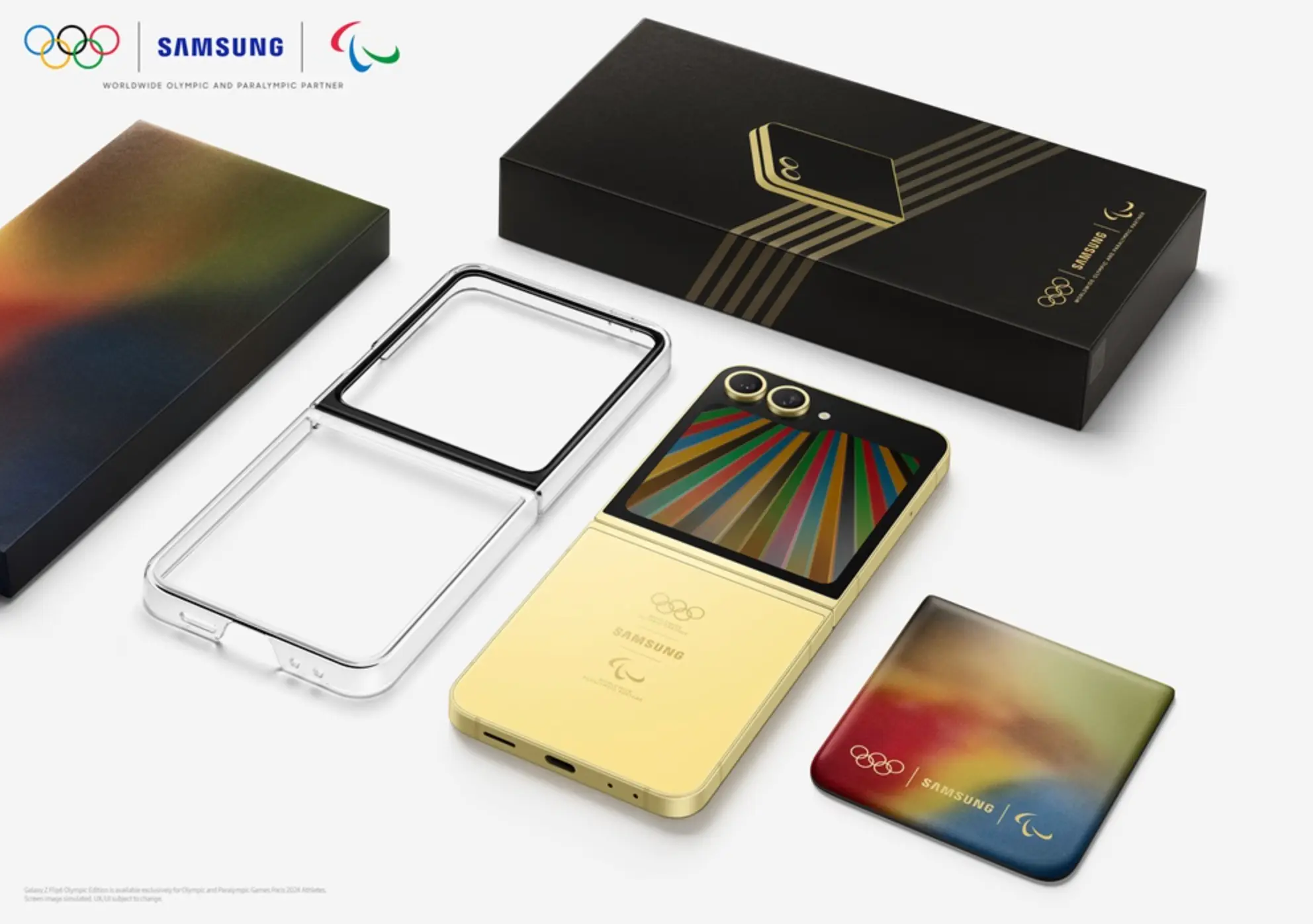
Samsung announced a Galaxy Z Flip7 Olympic Edition designed for athletes, with services tailored to the Games time experience and a “Victory Selfie” integration. (Samsung News)
This is one of the clearest “product as media” moments in Samsung partnerships. The device is not only a prize. It becomes a camera in the hands of the athletes, inside a moment the world watches.
Gaming and Community Partnerships
Samsung partnerships also show up in community environments like gaming. At Gamescom 2025, Samsung highlighted a gaming focused showcase built with partners and community experiences. (Samsung)
The strategic thread is consistency. Samsung partnerships are chosen because they can demonstrate the same product truth in different contexts: performance, creativity, connection, and speed.
Channel Strategy: Retail, E-Commerce, and Samsung Digital Marketing
The Samsung marketing strategy is hard to separate from distribution. Samsung sells through carriers, retailers, and its own direct channels, and each path shapes messaging.
Direct-to-Consumer as a Signal
Direct channels let Samsung control storytelling, bundling, and trade in logic. They also support the premium signal. When the brand’s own store experience is clean and comparison friendly, it raises expectations for the category.
Retail and Carrier as Conversion Multipliers
Retail and carrier partnerships turn the portfolio into a visible ladder. The role of messaging is speed: what is different, who it is for, and why the price makes sense today.
Always-On Samsung Digital Marketing
Samsung digital marketing sits at the center of this mix because it connects awareness to purchase. It is where customers compare models, check trade in values, and evaluate bundles. Samsung digital marketing is also where the brand can retarget based on intent signals, not broad demographics.
Three patterns stand out in Samsung digital marketing:
- Launch windows are treated like a campaign season, with product pages, preorder benefits, and content synchronized.
- Personalization is built around use cases, not demographics. Camera, productivity, gaming, and travel are treated as shopping intents.
- Post purchase content is part of the funnel. Onboarding, tips, and updates keep the customer engaged after checkout.
When Samsung digital marketing is done well, it feels like guidance, not pressure. The experience answers questions in the same order the customer asks them.
Measurement and Governance: How the Samsung Marketing Strategy Stays Consistent
Consistency at Samsung’s scale requires process. The Samsung marketing strategy is built on governance that protects brand meaning while allowing regional teams to move fast.
The KPI Stack
KPI here means key performance indicator. For 2026, the most important measurement shift is that AI messaging must be tied to behavior, not only reach. If Galaxy AI is the promise, teams need to track adoption and repeat usage, not only impressions.
A simple KPI stack for a Samsung style approach includes:
- Brand metrics: consideration, preference, and trust.
- Commerce metrics: conversion rate, attach rate for accessories, and trade in uptake.
- Product metrics: feature activation, retention, and service usage.
Brand Governance Without Slowing Execution
Governance is not paperwork. It is how you keep Samsung campaigns coherent across formats and markets. The most useful model is a split between what cannot change (the promise, the language, the core visuals) and what must change (format, local partners, and distribution mechanics).
This is also where the Samsung marketing strategy becomes durable. Teams can iterate without rewriting the brand every time. Without this measurement discipline, the Samsung marketing strategy would fragment.
Key Lessons Leaders Can Borrow From Samsung’s Playbook
The Samsung marketing strategy is not a template, but it offers patterns that translate well to other brands.
A Checklist for Your Next Launch
- Pick one message that can hold the year.
If your positioning changes every quarter, you will spend budget reteaching the market. Samsung’s focus on Galaxy AI shows what sustained repetition can do when the story stays practical. - Treat the product portfolio as a journey.
The Samsung product lineup is marketed as an upgrade path. Build entry points, and make the next step obvious. - Design partnerships for proof, not prestige.
Samsung partnerships work when they showcase a real behavior, like sharing, translating, or creating content in the moment. - Build campaigns as modular systems.
Samsung campaigns scale because assets can be recombined. One big idea becomes dozens of executions. - Make digital the connective tissue.
Samsung digital marketing is not only performance media. It is the bridge between interest, purchase, and ownership.
If you want more brand strategy case studies like this, our Brand Vision Insights hub is a useful reference set.
A Short Note on Web Experience and Conversion
Where UX Carries the Brand
Samsung’s approach is a reminder that brand is experienced through interfaces. For most buyers, the website is the product briefing, the comparison tool, and the checkout line.
When teams invest in strong creative, the next question is whether the destination is doing its job. That is where structured UX work and governance matter, from navigation to accessibility to performance.
In our work at Brand Vision, we often see the same issue: campaigns are memorable, but the buying path is fragmented. The fix is rarely a new headline. It is usually a clearer information architecture, stronger page hierarchy, and faster pages, supported by durable design systems.
If your brand is entering a new category or expanding a product range, it can help to align brand positioning with experience design. A grounded starting point is a short brand strategy review paired with an audit of the web journey.
Teams that need deeper execution support typically separate responsibilities across a branding agency that offers web design services, or a UI UX design agency so creative, UX, and engineering stay aligned. For organic growth, the same discipline applies to information architecture and SEO strategy.
.webp)
A Successful Next Step
If you are studying the Samsung marketing strategy to pressure test your own plan, focus on the system, not the stunts. Choose a clear narrative, map your product journey, and align partnerships and channels to prove the promise.
If you want a second set of eyes on positioning, channel mix, and on site conversion, start with a focused set of marketing consultation services and a short brief your team can execute.



%2520(1).png)