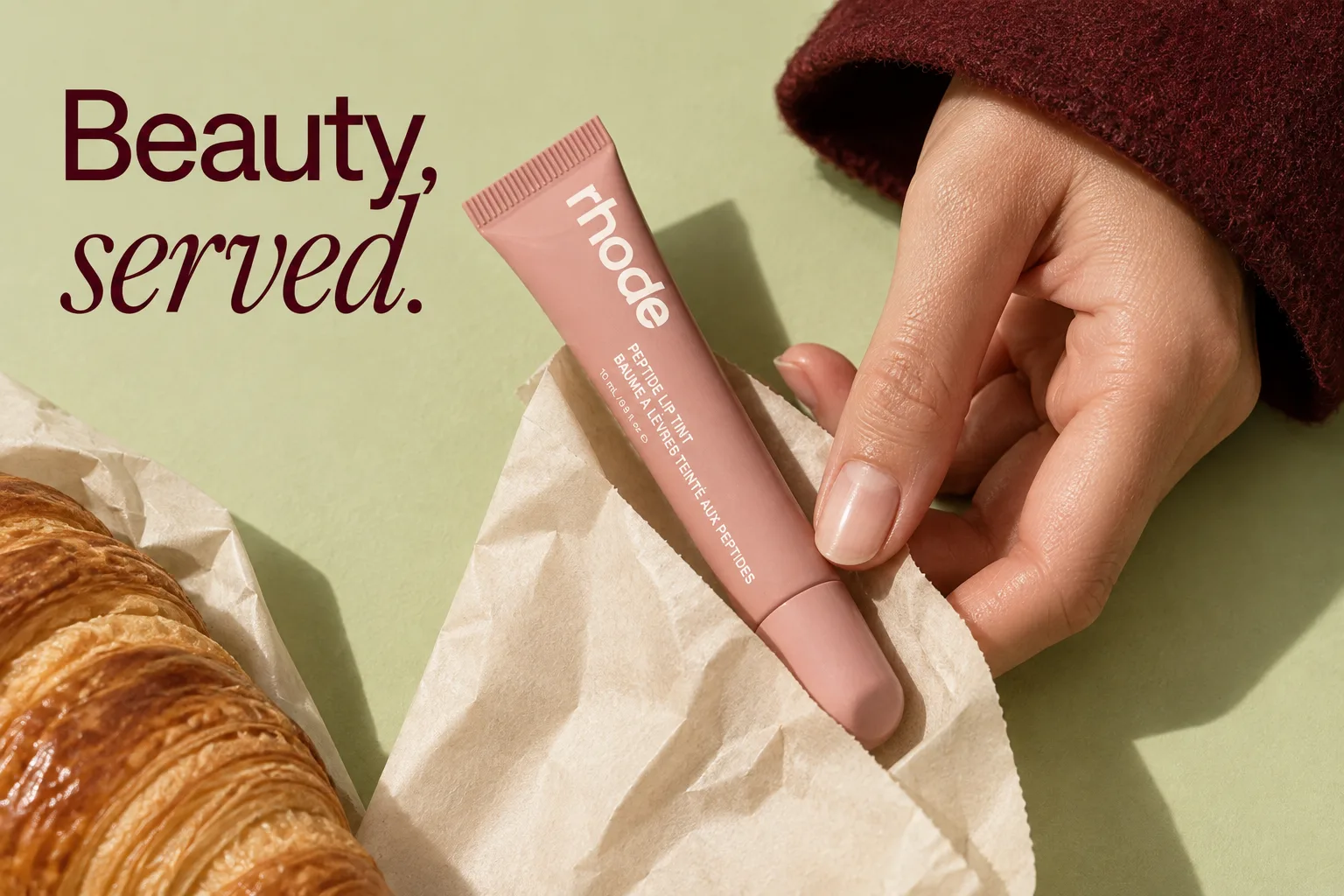
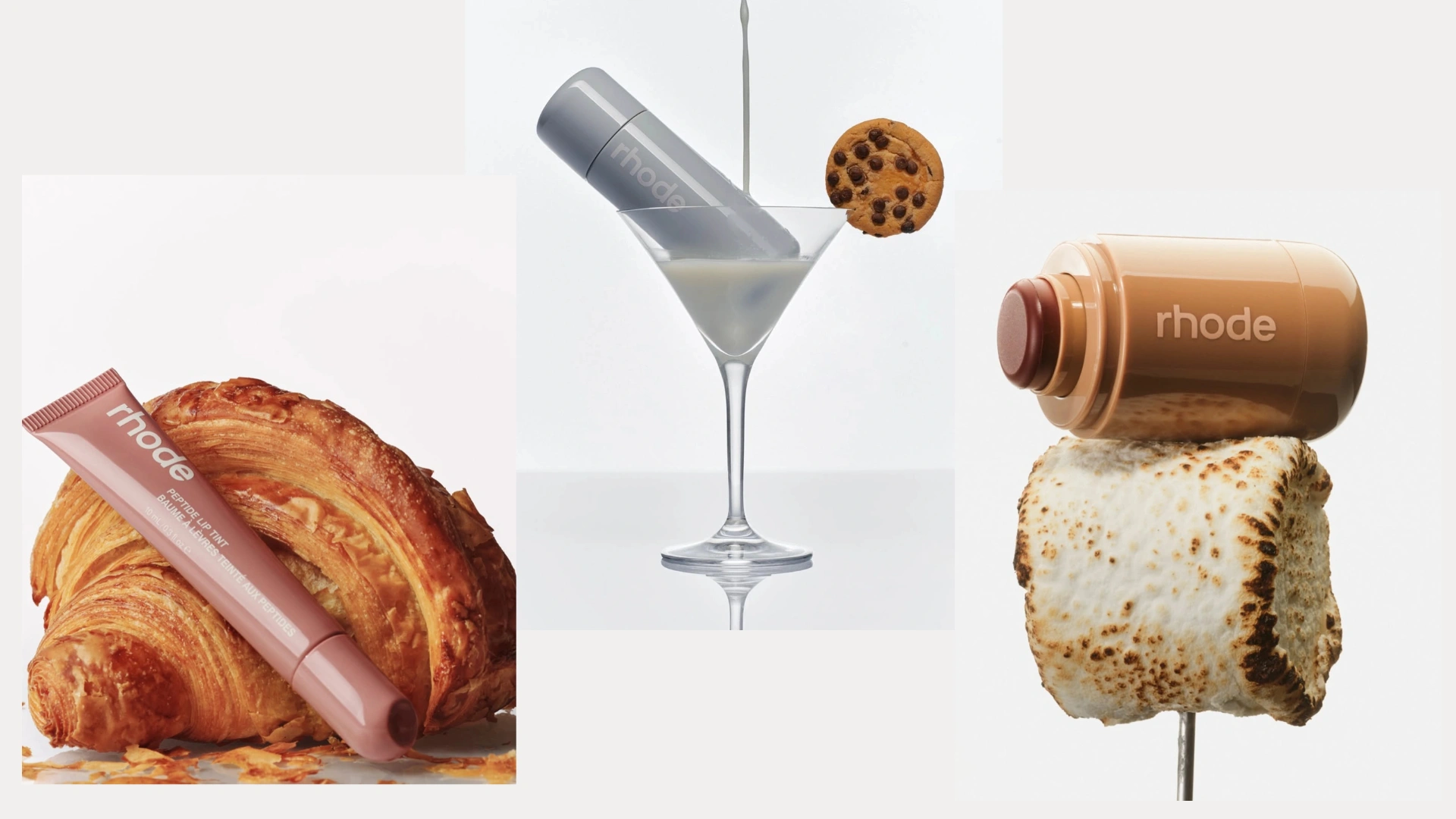
Rhode does not market lip products only by talking about lips. It often places them inside a visual world of desserts, café tables, glossy fruit, cream, and other food cues. A $20 Peptide Lip Tint can be photographed like a pastry or named like something on a menu, making the product feel less like an isolated cosmetic and more like part of a familiar treat ritual.
That approach appears across beauty, but Rhode has made it especially recognizable. Glossier, Too Faced, and other brands have also used edible-sounding names or dessert-coded visuals. The useful question is not whether a croissant can somehow cause a lipstick sale. It is how food imagery can make a beauty product easier to notice, imagine, remember, and position emotionally.
Food-associated marketing works best as a branding device, not a scientific shortcut. It borrows sensory associations people already understand, then connects them to a product through photography, naming, colour, packaging, and copy. Rhode’s campaigns show how that system can become a repeatable part of a brand rather than a one-off visual gimmick.
Key Takeaways
- Rhode food marketing uses dessert and café imagery to frame beauty products as sensory, familiar, and indulgent.
- Food cues can influence attention and food perception, but that research does not prove that dessert imagery directly causes cosmetic purchases.
- Rhode extends the idea beyond photography through product naming, colour, packaging, and limited scented releases.
- Rhode’s business growth is real, but its sales and acquisition cannot be attributed to food imagery alone.
The Comfort Aspect: Why Treat Imagery Feels Familiar
Food-associated marketing starts with familiarity. Dessert, coffee, fruit, and bakery imagery already come with cultural associations around pleasure, routine, reward, hospitality, or comfort. A beauty brand can borrow those associations without claiming the cosmetic itself produces the same response as eating the food.
The neuroscience should be handled carefully. Sugar and rewarding foods interact with systems involving dopamine, the neurotransmitter tied to pleasure and motivation, but it is too strong to say a beauty photograph recreates that chemical response. Research on visual food cues shows that appearance, visibility, colour, portion and other visual factors can affect food acceptance and consumption. Applying that finding to a cosmetic campaign is a marketing interpretation, not a proven one-to-one effect.
That distinction makes the Rhode example more useful. The campaign does not need a neurological claim to work creatively. A croissant, espresso, strawberry, or soft-serve reference gives the viewer a sensory idea in seconds. The product inherits part of that visual vocabulary, which can make the campaign feel warmer and more specific than a plain pack shot.
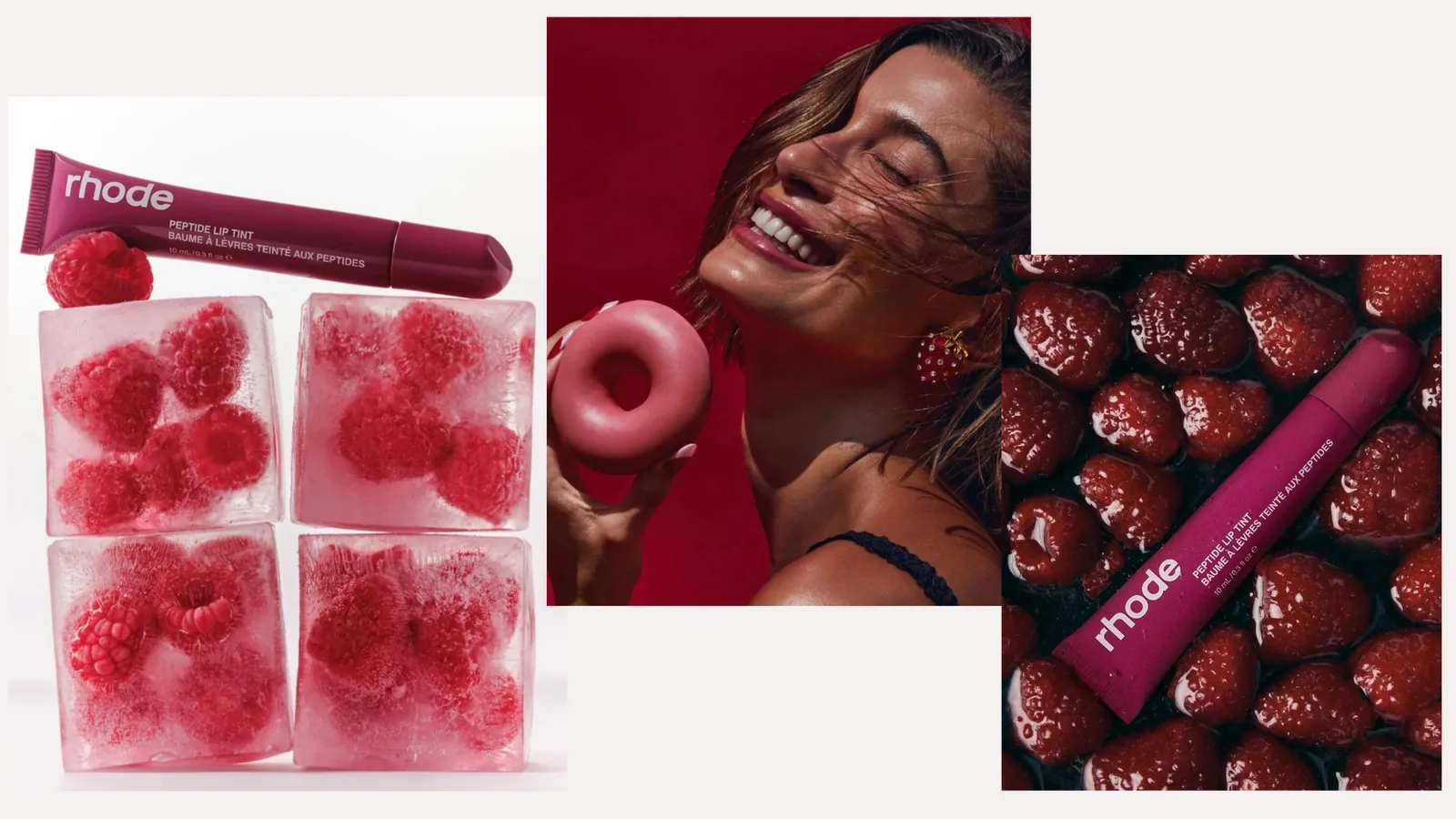
The Appealing Aspect: Visual Delight and Aesthetic Harmony
The clearest case for food imagery is visual. Desserts, fruit, coffee, and glossy sauces give campaigns colour, texture, shape, reflection, and contrast. Research reviewing visual design cues in food choice shows that design can influence attention, affect, perceptions, attitudes, and behaviour in food contexts (review). Beauty marketers can use similar visual principles without pretending the research measured cosmetics.
Rhode’s art direction repeatedly matches food cues to the product world: pinks beside strawberry tones, caramel browns beside espresso or toast references, glossy finishes beside glaze, fruit, or syrup. The result feels coherent because the food prop and the product share a palette and texture language.
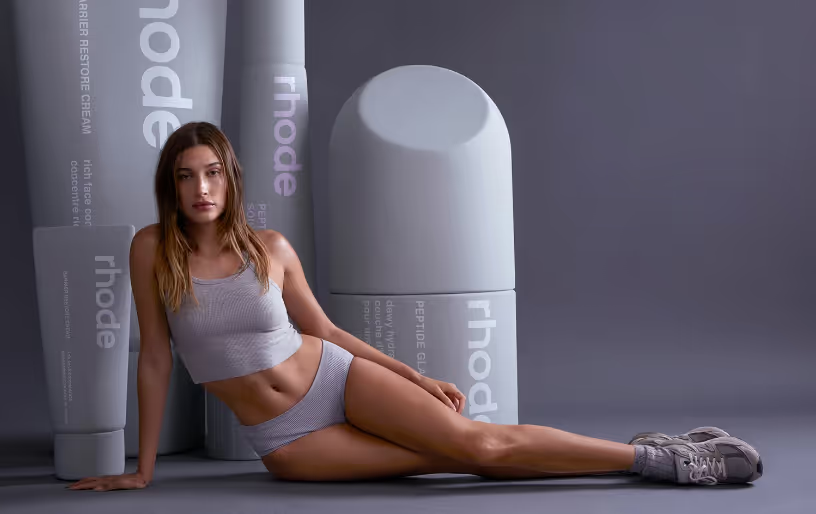
That is where a disciplined visual identity matters. Food is only the prop. Recognition comes from repeating the same colour logic, photography treatment, packaging, typography, and product styling across campaigns. Campaign graphic design can then extend those rules into launch assets without making every post look identical.

Food-associated marketing is therefore less about proving that a dessert makes a product more valuable and more about designing a frame in which the product feels intentional. The visual relationship can make the shade, texture, or mood easier to understand before the viewer reads any copy.
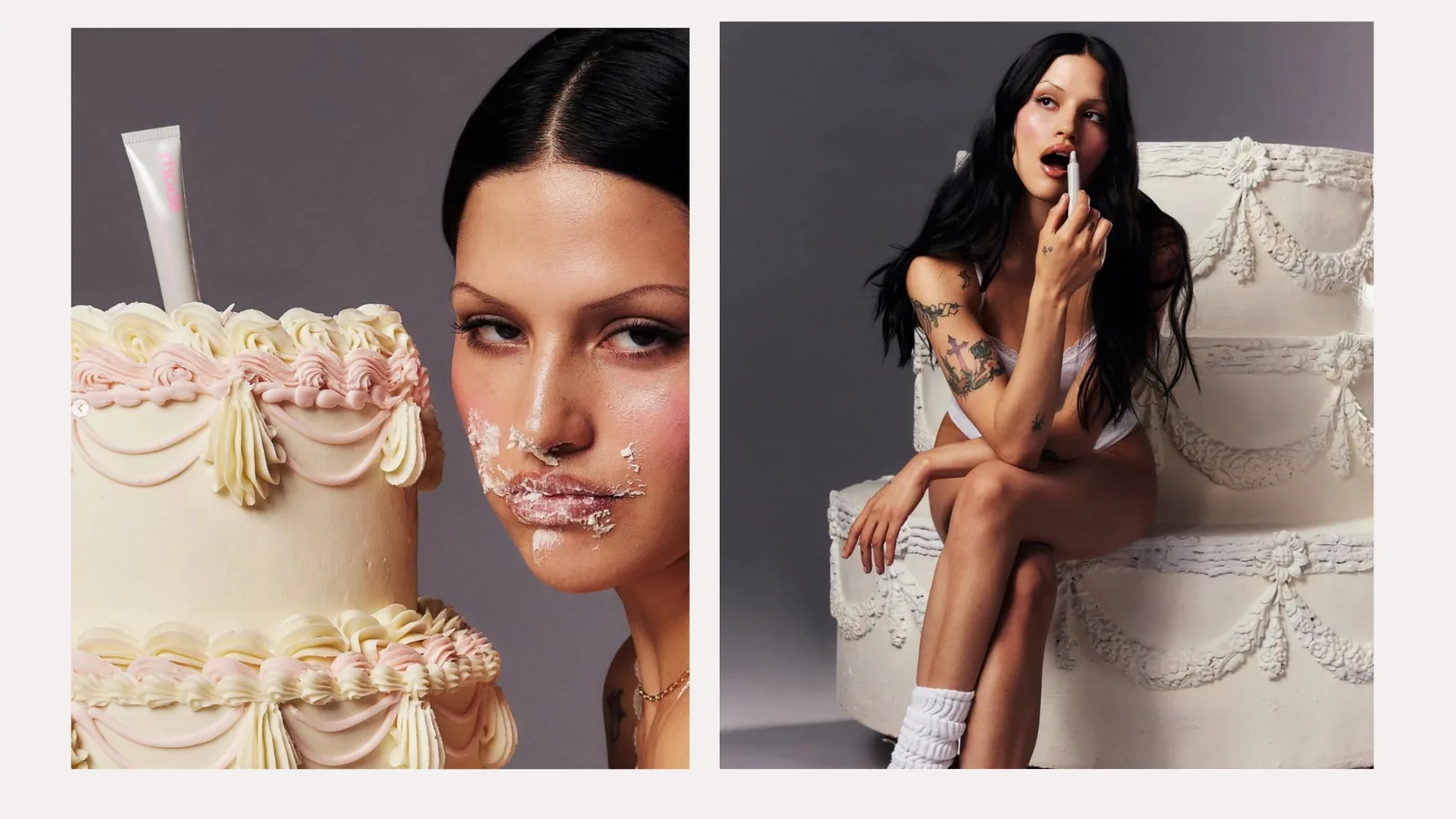
The Accessible Aspect: Framing Beauty as a Small Indulgence
Pairing a beauty product with a coffee, pastry, or other everyday treat can also change the frame around the purchase. The product is placed inside a familiar ritual of small indulgence rather than presented as a distant luxury object. That may make the creative feel more accessible, but it should be described as positioning rather than a guaranteed psychological pricing effect.
Rhode’s U.S. Peptide Lip Tint is currently listed at $20 on its own site. At that price, the product can plausibly sit inside the “little treat” territory that many consumer brands use in messaging, but a photo of a latte does not mathematically re-anchor a customer’s willingness to pay. Price, product performance, founder visibility, reviews, distribution, scarcity, and competition all shape the decision.
For consumer brands, the more transferable lesson is to understand what purchase occasion the product belongs to. B2C marketing becomes clearer when the campaign knows whether it is selling a routine, a gift, a replacement, an upgrade, or a small discretionary reward.
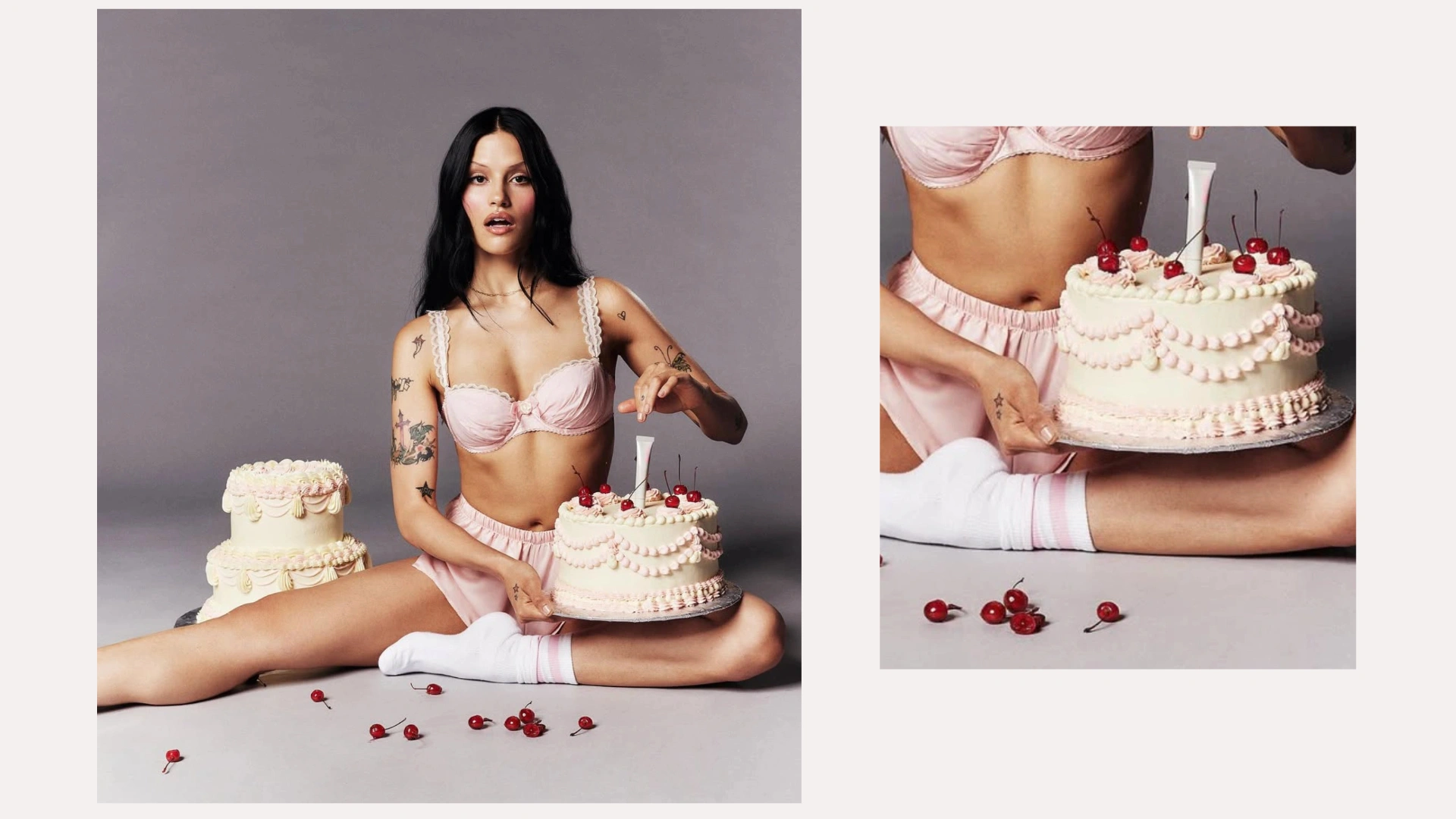
The Feel-Good Aspect: Emotional Resonance Through Indulgence
Beauty has long used language around reward, self-care, pleasure, and transformation. Dessert imagery gives those ideas a concrete visual form. A moisturizer beside cake or a lip tint beside espresso can signal indulgence faster than a paragraph of copy, especially on social platforms where the image has to do the first part of the work.
Rhode, founded by Hailey Bieber, has repeatedly used frosting, fruit, glaze, whipped textures, café settings, and other food-adjacent references. The same broader beauty culture produced trends such as strawberry girl makeup and glazed donut skin. What these examples share is not a proven sales mechanism. They share an efficient language for turning colour, shine, texture, and mood into something people can picture immediately.
Brands should test whether that emotional language actually fits their audience. Brand and audience research can help distinguish a genuinely resonant association from a trend the team simply likes aesthetically.
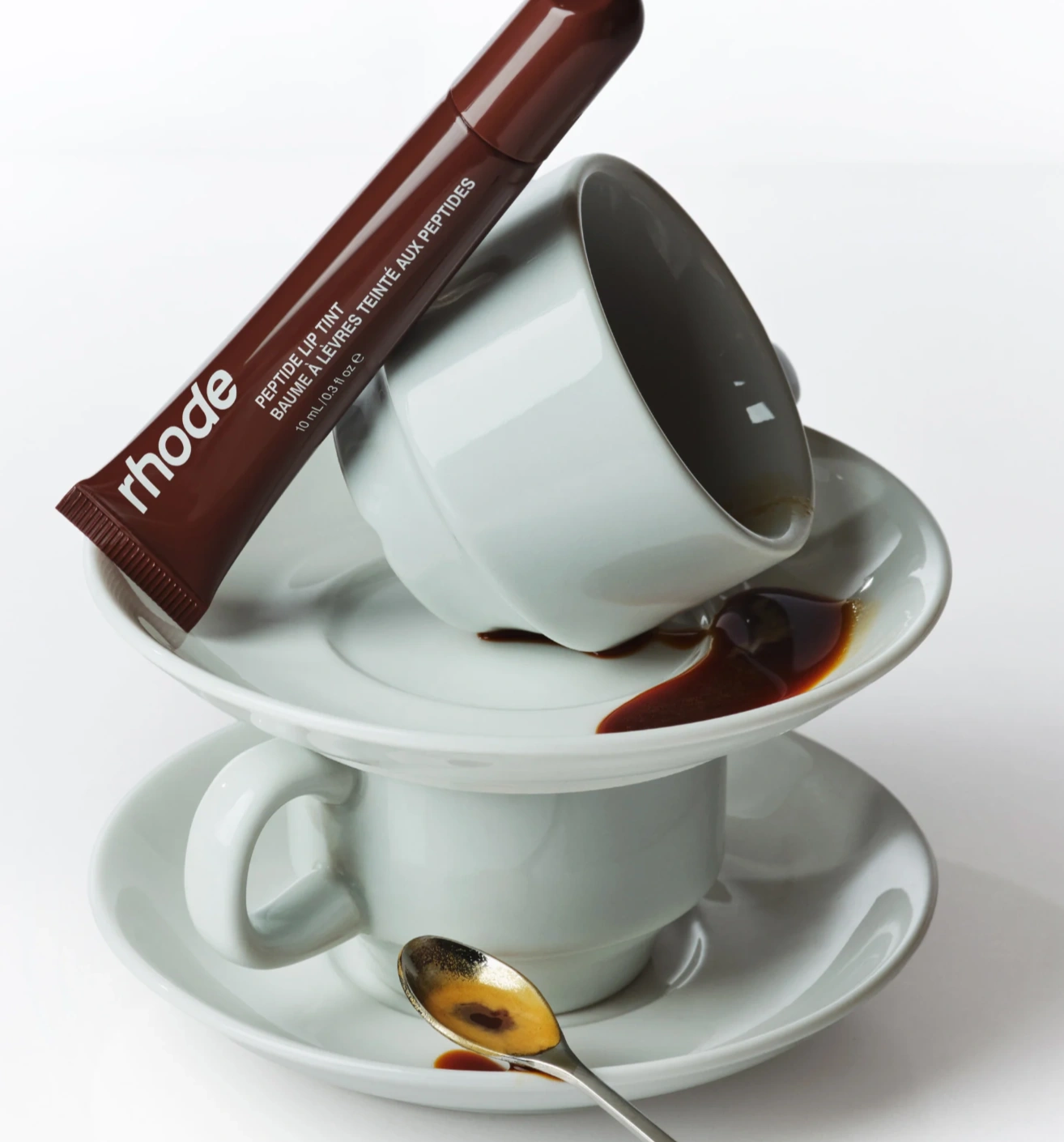
A Cleaner, Almost Edible Vibe: Why “Yummy” Language Works
Food language can also make a beauty product feel simpler, softer, or more familiar than a technical ingredient list. A vanilla reference, berry name, buttery texture, or glaze metaphor gives customers an intuitive description before they understand the formula. Tie a product to the idea of food and it can read as simple and pure, even when that impression says nothing about what is actually in the product.
That is an important boundary. Food-coded naming should not be treated as evidence that a formula is more natural, safer, cleaner, or healthier. Those are separate product claims that need separate substantiation.
For branding, the value is language and memory. Words such as creamy, glazed, toast, jelly, butter, or espresso can make shade and texture easier to imagine. A focused product naming system can use that kind of vocabulary deliberately while still keeping claims accurate.
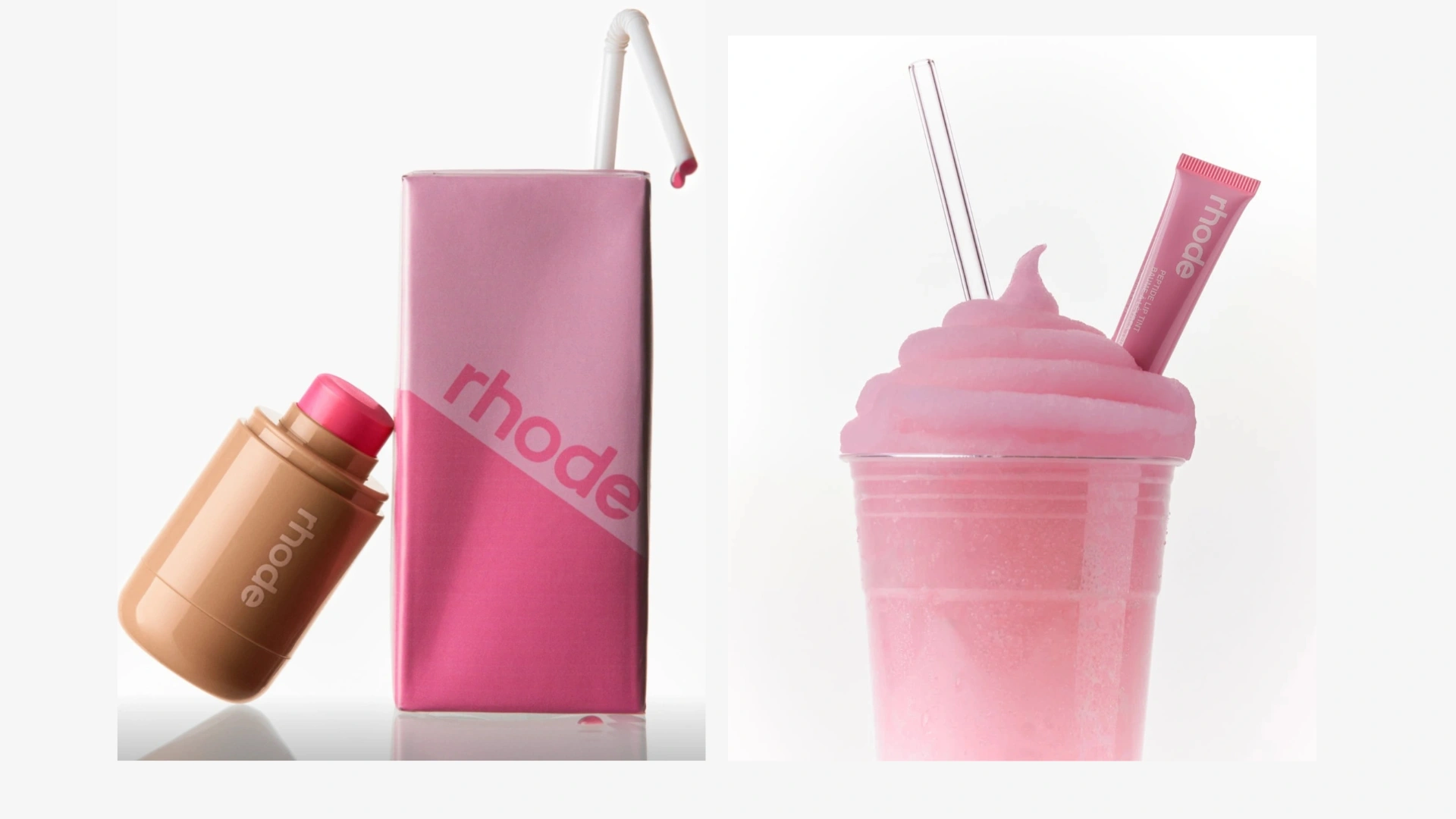
Case Study: Rhode and Its Dessert-Driven Branding
Rhode is one of the clearest beauty examples of food-associated marketing used as a repeatable brand device, and its wider marketing playbook is worth studying on its own. Food references appear across product names, seasonal launches, campaign styling, founder content, and retail activations. The visual system makes those references feel like part of Rhode rather than random props.
The product naming has changed over time, so the current context matters. Core Peptide Lip Tint shades still include food-coded names such as Espresso, Toast, Raspberry Jelly, and PBJ. Rhode’s 2025 limited scented set went further, describing Espresso as tiramisu, Ribbon as vanilla soft serve, Toast as crème brûlée, and Raspberry Jelly as ripe raspberry (Rhode). Current core product pages describe the standard formula as fragrance-free, so those dessert scents should be understood as a specific limited release rather than a permanent feature of every tint.
The scale of the business is well documented. Rhode went from launch in 2022 to $212 million in net sales in under three years, and e.l.f. Beauty agreed to acquire it in 2025 in a deal valued at up to $1 billion. e.l.f. later disclosed that the acquisition closed on August 5, 2025, with $800 million paid at closing and up to $200 million in potential earnout consideration (e.l.f. Beauty).
Those numbers establish Rhode’s commercial success. They do not isolate dessert imagery as the cause. e.l.f.’s own acquisition materials point to content, commerce, community, product innovation, direct-to-consumer growth, and expansion potential. Food-associated creative is better understood as one memorable part of a larger brand system.
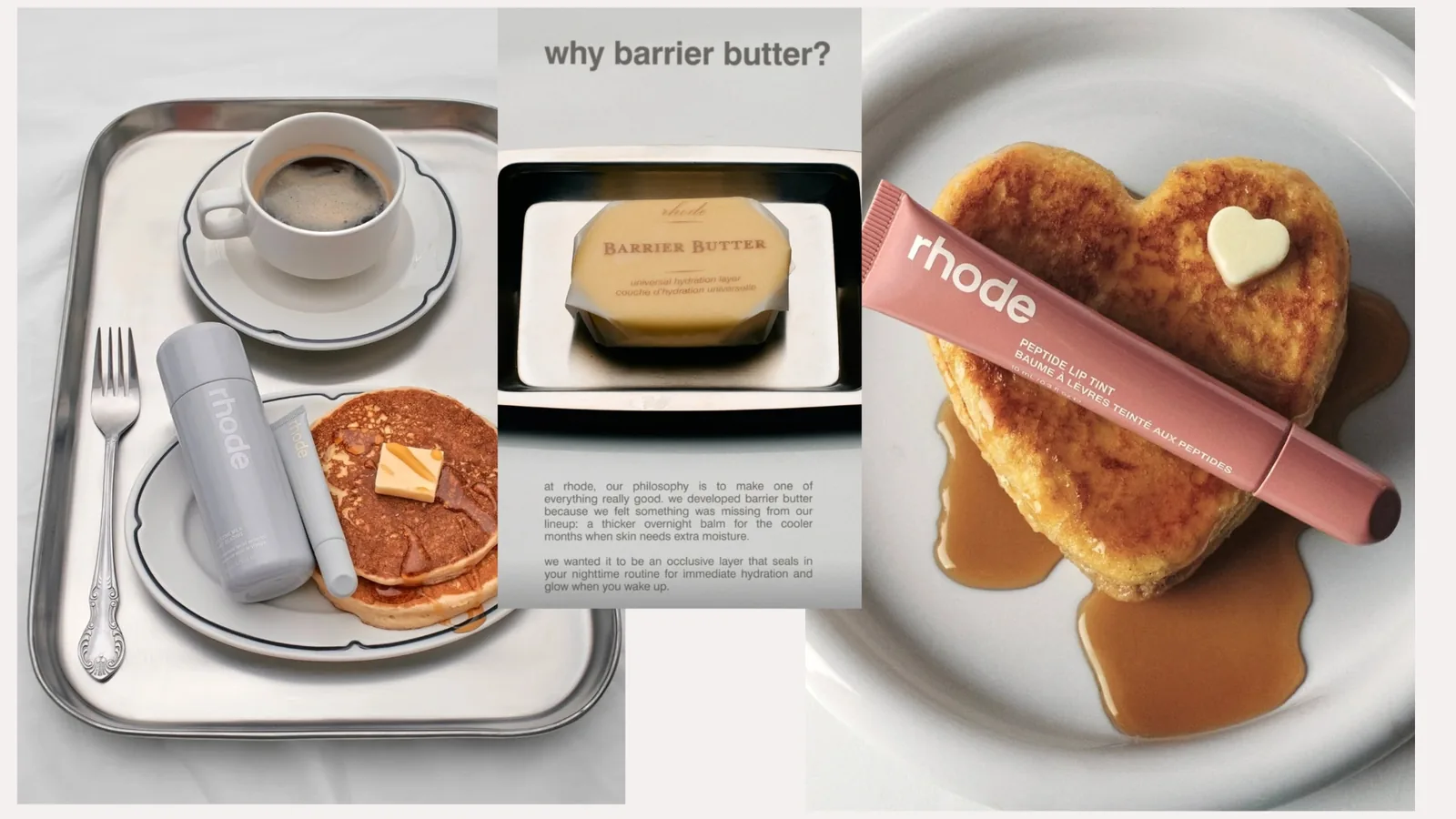
A Sweet Recipe for Brand Success
Food-associated marketing works when the cue supports something the brand already owns: a texture, shade, product benefit, tone, or purchase occasion. The prop is not the strategy. The strategy is the relationship between the product and the feeling the creative makes easy to understand.
Rhode keeps that relationship consistent across names, photography, packaging, social content, and launches. That consistency matters more than the specific dessert. Another brand could use freshness, ritual, craftsmanship, nostalgia, or another sensory world without copying Rhode’s frosting and café imagery.
The broader beauty market also keeps experimenting with this crossover. Rhode’s 2025 Mallorca activation included a collaboration with Magnum ice cream, showing how the food-beauty connection can expand from photography into real-world partnerships and events. The important test is still fit: the collaboration has to reinforce the brand rather than distract from it.
How Business Owners Can Apply This in 2026
If your product benefits from a sensory story, start by defining the association before designing the campaign. Decide whether the brand should feel creamy, refreshing, crisp, warm, bright, playful, indulgent, or something else. Then make sure the product and audience can support that promise.
Build the association consistently across the customer journey. A campaign may begin on social, but the product page, packaging, photography, naming, and checkout experience should feel connected. A web design agency can translate the same visual language into the digital experience, while ecommerce SEO can help product and category pages capture demand from shoppers who arrive through search rather than a campaign.
Finally, test rather than assume. Compare creative, product-page behaviour, conversion, repeat purchase, and customer feedback. A marketing consultation can help organize the message and measurement plan, while an SEO agency can support discoverability once the product story is clear.
Frequently Asked Questions
What is Rhode’s food marketing strategy?
Rhode uses food-coded product names, dessert and café imagery, glossy textures, colour pairings, and occasional scented limited editions to make beauty products feel more sensory and memorable. The tactic is part of a wider brand system rather than a standalone growth strategy.
Why does Rhode use food and dessert imagery in its advertising?
Food gives the brand a fast visual vocabulary for texture, shade, indulgence, and familiarity. Research shows that visual food cues can shape attention and perception in food contexts, but there is not evidence that a dessert prop automatically makes a cosmetic sell better.
What is sensory marketing, and how does Rhode use it?
Sensory marketing uses cues tied to sight, sound, smell, touch, or taste to shape how an experience is perceived. Rhode uses visual texture, colour, glossy finishes, food names, and, in some limited releases, fragrance. The current core Peptide Lip Tint formula is described as fragrance-free.
Does marketing beauty products like food actually drive sales?
Rhode’s sales prove that the brand grew quickly, not that food imagery caused the growth. Rhode generated $212 million in net sales in the 12 months ended March 31, 2025, and e.l.f. completed its acquisition later that year. Product performance, founder visibility, distribution, ecommerce, community, launches, and creative all contributed to the larger business.
Which other beauty brands use food marketing besides Rhode?
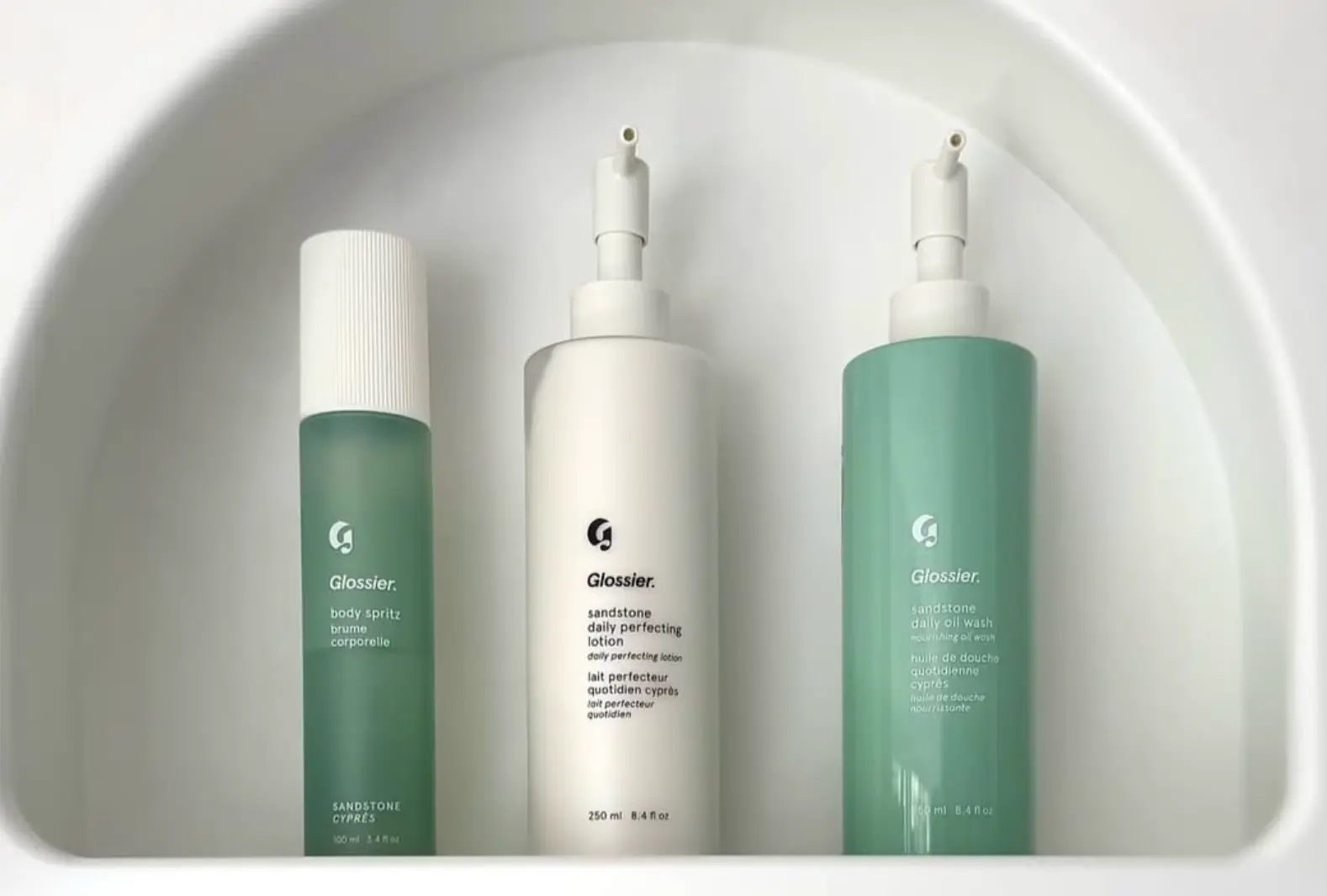
Glossier and Too Faced have both used food-adjacent naming, colour, or campaign cues. Glossier's broader marketing strategy is a useful comparison because it shows how a beauty brand can build emotional familiarity through community, product presentation, and a consistent brand world.
Rhode’s strongest lesson is not to copy dessert styling. It is to make product, naming, imagery, and customer experience reinforce the same idea. If you want an outside review of how those pieces connect in your own brand, contact Brand Vision to discuss the priorities.






.webp)