
Glossier's marketing strategy began with a simple advantage: unusually close access to beauty customers before the brand sold a product. Emily Weiss built that conversation through Into the Gloss, and comments, emails, interviews, and early social engagement helped shape product ideas long before a storefront existed. The brand's earliest advantage was not scale. It was closeness. Glossier describes these roots in its own origin story.
Glossier officially launched in 2014 and grew into a modern beauty staple by making the customer part of the process. In July 2021, Glossier raised an $80 million Series E that valued the company at $1.8 billion at the time. The funding supported its return to physical retail alongside its direct-to-consumer (DTC) business. (Retail Brew)
Glossier also shifted from pure DTC into broader retail access as the brand matured. Its first retail partnership brought Glossier into Sephora across the U.S. and Canada in February 2023, making products easier to discover and try outside the brand's own channels. (Allure)
How Glossier Built a Recognizable Brand Identity
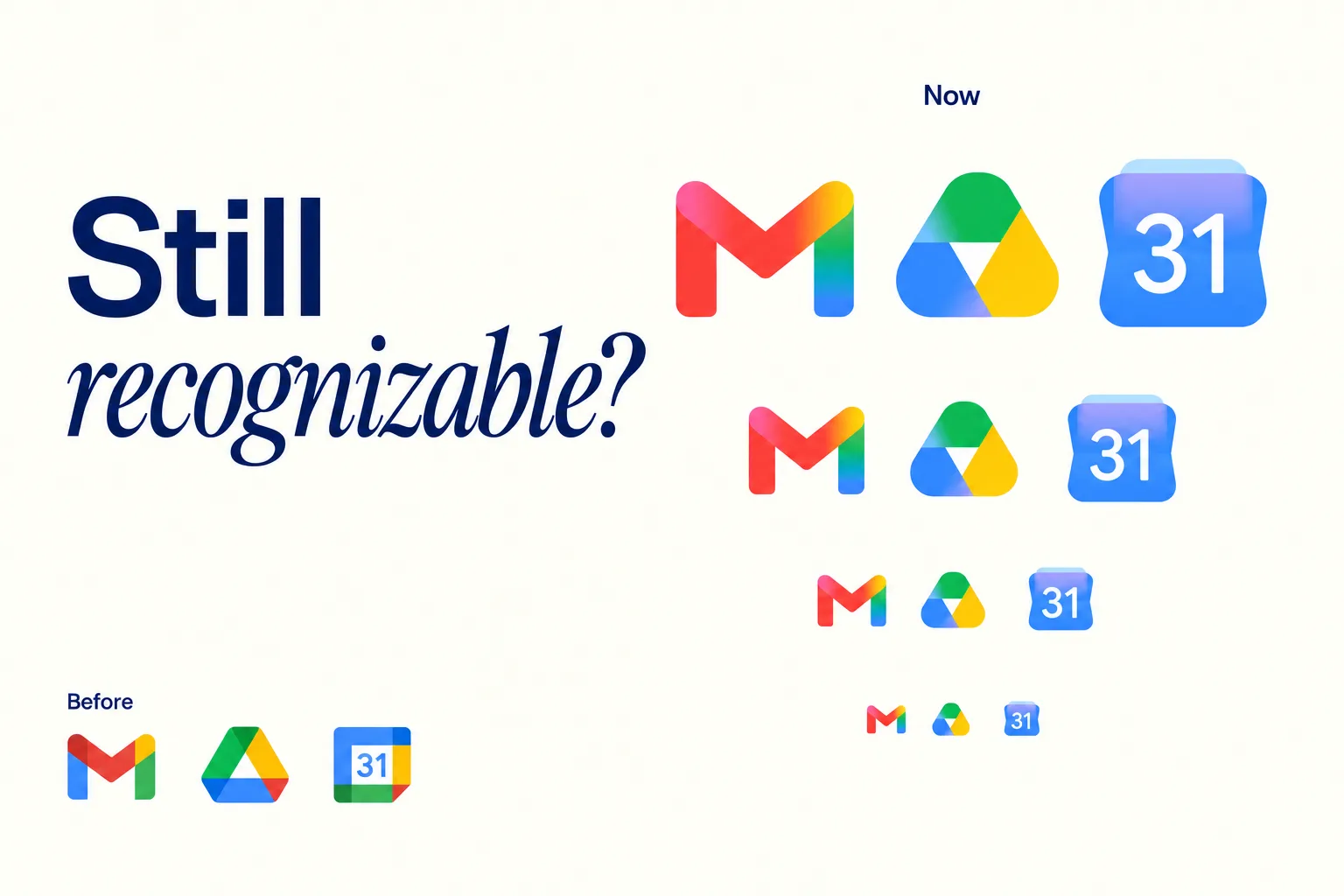
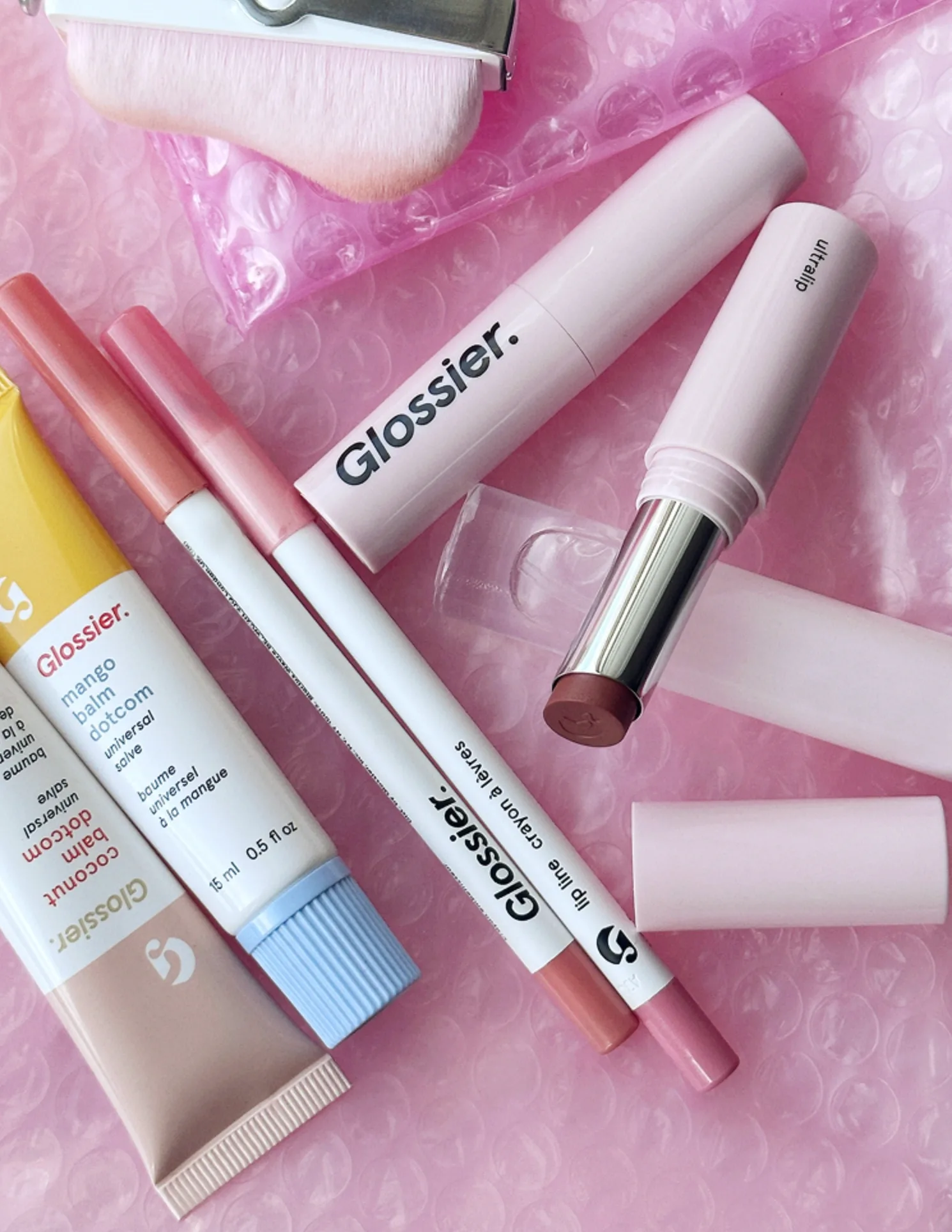
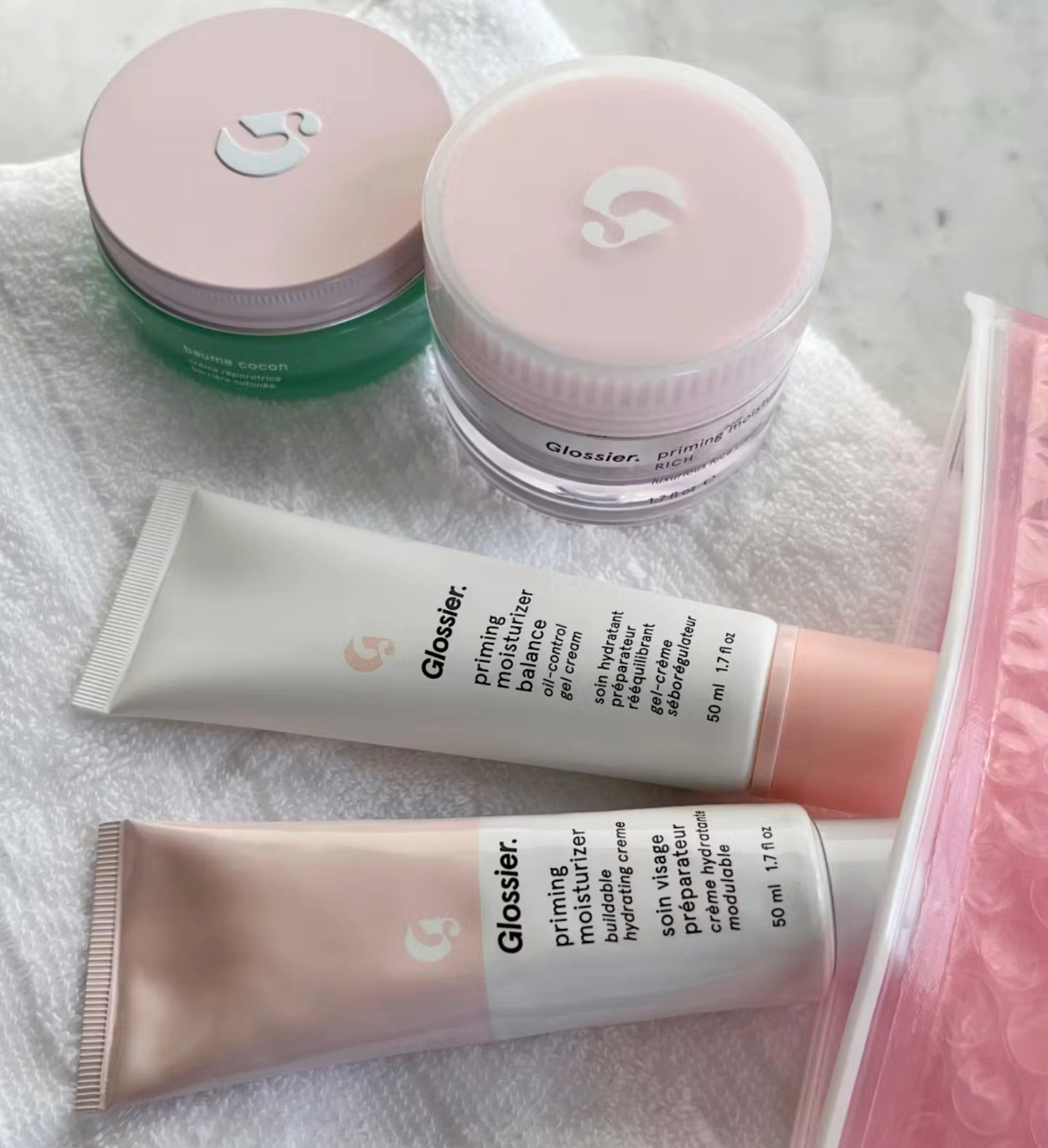
Glossier's advantage is not only product. It is a system of cues that repeat everywhere customers touch the brand. The clean packaging, consistent tone, and calming visual language make it recognizable at a glance. That kind of repetition is what turns a brand into a shorthand.
A clear brand identity is built through decisions that compound over time: what the packaging feels like, how the copy reads, how the product pages guide you, and how the social feed looks from one campaign to the next. Businesses that want that level of cohesion usually start by tightening the foundations through a dedicated branding agency, then anchoring the narrative through brand strategy work that keeps every channel aligned.
Glossier also treats the visual system like a real asset, not decoration. The colour palette, typography choices, and product photography style stay consistent enough to create instant recognition. That is the difference between a nice aesthetic and a durable visual identity that customers can spot without reading the label.
5 Marketing Strategies Behind Glossier's Growth
Glossier's marketing strategy is built around five repeatable levers: consumer-centric decision making, word of mouth momentum, experiential retail, content that drives trust, and a shopping experience that removes friction. Those levers show up across launches, community engagement, and how the brand earns attention without constant reinvention.
1. Build Products From Customer Feedback
Glossier's customer participation has a concrete example. In January 2015, Emily Weiss asked Into the Gloss readers to describe their ideal face wash, including how it should feel, smell and fit into their routines. The questions invited specific product feedback, giving the team a clearer starting point than a general request for opinions.
Consumer-centric marketing works best when it is structured:
- Feedback is captured consistently across social, customer support, and reviews.
- Insights are tagged by theme so patterns become obvious.
- The language customers use becomes the language the brand launches with.
This approach keeps the brand close to real routines. It also reduces the guesswork that makes many launches feel disconnected from what people actually want. For another business, structured audience research can help test whether recurring comments reflect a wider customer need.
2. Turn Customers Into Distribution
Word of mouth scales when the product experience gives people something simple to talk about. Glossier benefits from the kind of everyday utility that drives recommendations naturally: products that fit into routines, packaging that feels giftable, and a tone that encourages sharing without pressure.
Word-of-mouth marketing gets stronger when there are clear triggers:
- A signature product people recommend by name.
- A routine that is easy to demonstrate in a short clip.
- A social proof loop where customers feel seen when the brand replies or reposts.
In beauty, the best word of mouth is often visual. That is where Glossier's community content can complement its own campaigns.
3. Make Retail Part of the Brand Experience
Glossier's physical retail spaces translate the brand into real life. Pop-ups and stores create a sensory layer that DTC cannot fully replicate, and they generate content that customers want to share because the environment is designed for it. Retail becomes both distribution and media.
Experiential marketing works best when it has a clear purpose:
- A reason to visit that feels time-sensitive, like a launch or limited drop.
- A store flow that encourages discovery and trial.
- A photo moment that is tasteful and intentional, not forced.
The retail shift also ties directly to accessibility. When Glossier entered Sephora in February 2023, it became easier for new customers to test products in person, which can reduce hesitation for first-time buyers. (Newswire)
4. Use Editorial Content to Build Trust
Content was part of Glossier's story before it started selling products. Into the Gloss created an editorial foundation that made product launches feel like a continuation of the conversation, not a pivot into selling. That editorial DNA still shows up in how the brand talks about routines, ingredients, and results.
A useful content mix for a beauty brand includes:
- Education that answers real questions without sounding clinical.
- Product storytelling focused on use, not hype.
- Customer content that shows products being used in different routines.
When content is consistent, it keeps the brand present even when someone is not shopping. That presence supports long-term demand.
5. Make Ecommerce Easy to Understand
Glossier's Milky Jelly Cleanser product page brings product imagery, ingredient information and morning and evening application instructions together. That gives shoppers practical information alongside the brand story. The lesson for a storefront is to answer the questions customers need resolved before buying, then test how well the page supports those decisions.
A strong site does more than look good:
- It guides customers to the right product faster.
- It removes friction on mobile.
- It turns browsing into confident buying decisions.
Businesses improving their shopping experience can start with conversion-minded web design, then use a focused UX audit to find where navigation, product information, or checkout flow is creating unnecessary hesitation.
How Glossier Uses Social Media and UGC
Glossier makes community a visible part of its social media presence. That is why the brand tends to feel conversational rather than broadcast. It is also why the feedback loop stays alive. When you treat comments and creator content as insight, social becomes product intelligence, not just reach.
One useful element is the user-generated content (UGC) loop. Customers post routines, the brand amplifies, and the community learns what to buy from real usage instead of polished ads. That loop also keeps the brand credible because it is anchored in ordinary people, not only high-production campaigns.
Beauty brands can adapt this approach by giving each platform a clear job:
- TikTok can support discovery and routine demos.
- Instagram can reinforce brand identity and product familiarity.
- YouTube gives space for longer tutorials and creator storytelling.
- Pinterest can support intent-driven browsing for products and routines.
This system is easier to sustain when the brand stays consistent across every touchpoint. Leadership changes can also influence how a brand evolves. In September 2025, reporting on Colin Walsh's appointment as CEO described Glossier's expansion across its own channels and retail partners. (Retail Dive)
Exclusive launches and limited editions also work as a social trigger. They give people a reason to talk right now, and they create a rhythm that keeps the catalogue feeling active. It is a controlled form of urgency that can drive action without turning the brand loud.

Glossier's 2026 Strategy: Hero Products, Fragrance and Omnichannel Reach
Glossier's current distribution model is much broader than its original DTC playbook. Its official store page currently lists locations in Atlanta, Boston, Brooklyn, Dallas, Washington, Las Vegas, London, Los Angeles, New York, Philadelphia and Seattle, while its authorized retail network includes Sephora, Space NK, Mecca and Amazon. Glossier's help centre also lists TikTok Shop and international shipping to more than 180 countries. For multi-location brands, that kind of physical footprint makes accurate location information and local search visibility part of the customer journey, even when discovery begins on social or through a retail partner.
Leadership and product focus have also shifted. Colin Walsh became CEO in 2025, and 2026 industry reporting describes a return to hero products and fragrance rather than expanding the assortment for its own sake. Glossier You has grown into a fragrance family, while Cloud Paint and other established products remain central to the catalogue. In June 2026, Retail Dive reported a $45 million revolving credit facility intended to support Glossier's next stage of growth.
This makes the modern Glossier lesson different from the 2010s DTC story. Community still matters, but the brand now has to coordinate owned ecommerce, wholesale, stores, international shipping, and hero-product franchises without losing recognizability. For brands managing the same owned-versus-retail balance, ecommerce SEO can support product and category discovery on the owned site without pretending search replaces retail or community demand.
What Business Owners Can Learn From Glossier
Glossier's biggest lesson is that growth becomes easier when the systems reinforce each other. Community, product, content, ecommerce, retail, and distribution are not separate strategies. They form one loop around how customers discover, choose, and return to a product.
Build a feedback loop you can actually use. Capture customer input consistently, tag it by theme, and decide what changes as a result. For businesses that need an outside lens, a marketing consultation can help map what is working, what is leaking demand, and what should be prioritized first.
Make the brand recognizable through consistency. The value comes from repeating the same positioning, visual cues, product story, and tone as the business expands into new channels.
Treat the website like a product, not a brochure. It is where owned-channel attention turns into revenue, so product discovery, education, navigation, merchandising, and checkout need the same discipline as the products themselves.
Use social as a community channel, not a billboard. Reply, listen, and build formats that invite participation. That rhythm is how you earn repeat attention. Business owners who want more breakdowns like this across marketing, branding, and business strategy can explore more Brand Vision articles.
Glossier shows how a brand can build familiarity when its channels reinforce the same promise. The practical lesson is to connect customer feedback, consistent presentation and a useful shopping experience, then measure which changes help your own business.








.webp)