Brand collaborations are essential in cultivating brand identity. For many teams, they function as a distribution channel that borrows attention, compresses time to demand, and creates a clear reason to visit, click, and buy.
The Coca-Cola x Crocs collaboration is a useful case because it is simple on the surface and disciplined underneath. Two recognizable variants. Clear brand codes. Built-in personalization. A drop format that the Crocs audience already understands. For leaders, the value is not novelty. It is the mechanics.
If you track partnerships as an operating system, not a one-off, this collaboration offers a clean blueprint for partner fit, creative restraint, and launch execution. It also highlights where most teams underinvest: the web experience, measurement plan, and governance that converts attention into durable growth.
The Quick Take
- The Coca-Cola x Crocs collaboration translates Coca-Cola’s most recognizable cues into a product format Crocs fans already collect, customize, and share.
- The drop format matters as much as the design. Scarcity and timing create urgency, but only if the path to purchase is fast, accessible, and clear.
- The collaboration works because the “why together” is instantly legible. The product looks like the brand before a logo ever appears.
- For marketers, the repeatable lesson is not “do a fun collab.” It is “build a partner program with rules: fit, offer, creative system, distribution plan, and KPIs.”
What the Coca-Cola x Crocs Collaboration Is
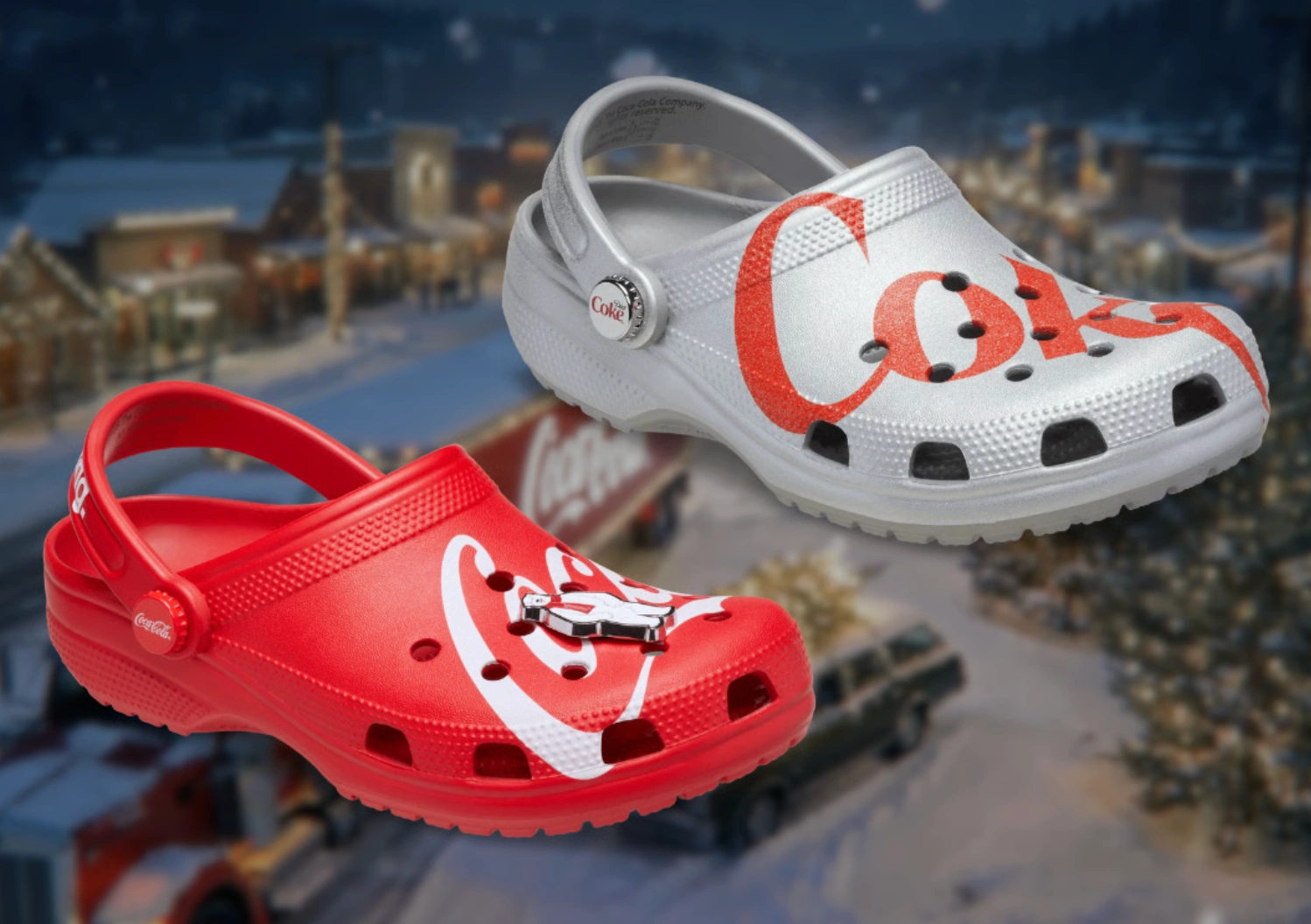
The Coca-Cola x Crocs collaboration is a co-branded product drop built on two familiar Coca-Cola variants: Coca-Cola Classic and Diet Coke, translated into Crocs Classic Clogs.
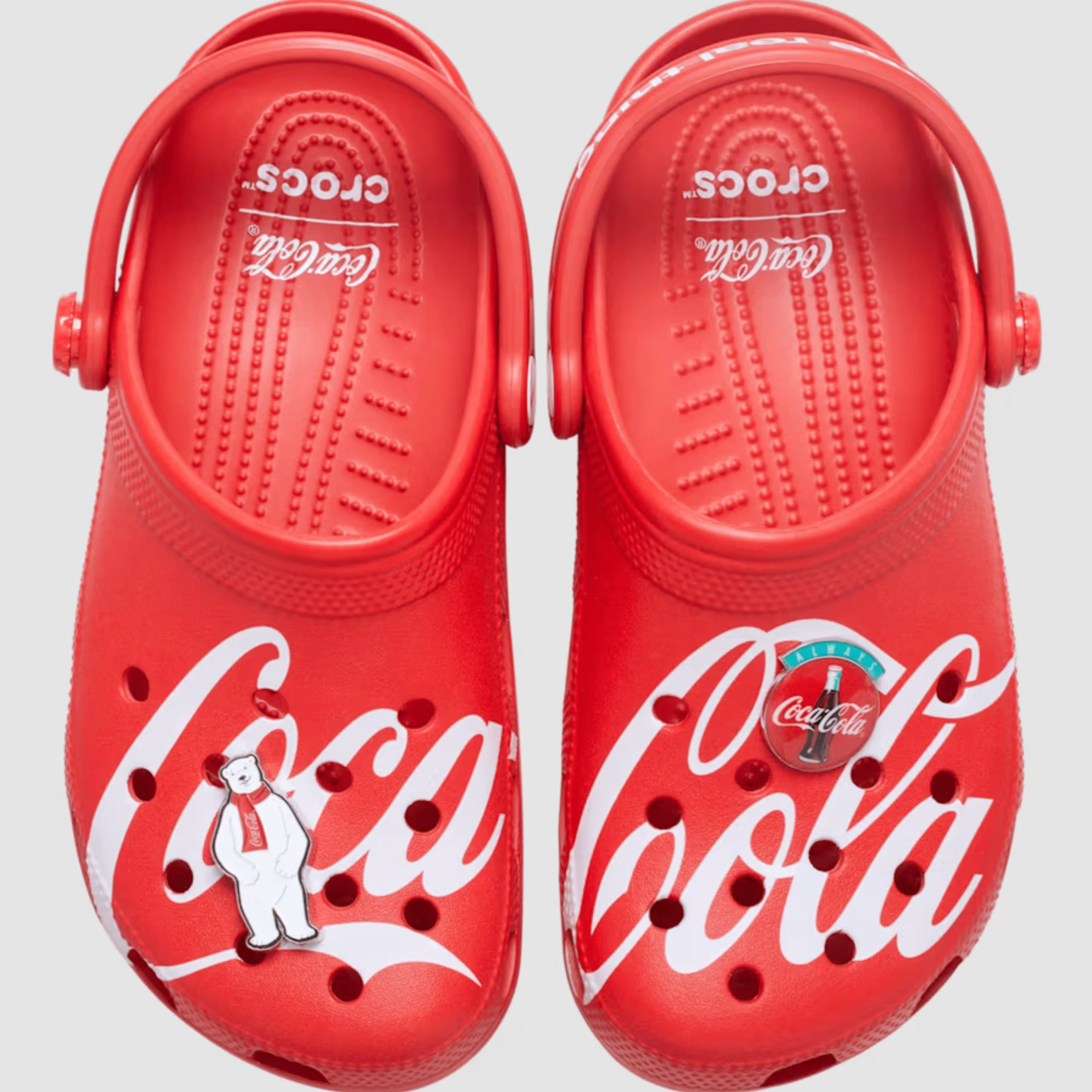
At a product level, the collaboration leans on recognizable cues, including signature color stories and well-known taglines. At a campaign level, it uses a format Crocs has trained its audience to expect: limited edition releases that feel collectible, easy to photograph, and easy to customize.
This matters because many brand partnership marketing efforts fail in the first five seconds. The audience should not need context to understand what they are looking at. This collaboration is designed to be understood on scroll, on shelf, and on a product page.
Drop Details: Styles, Jibbitz Charms, Release Date, and Price
Two SKUs carry most of the story, which is part of the point. The more complex the assortment, the harder it is to make the drop legible.
What’s included
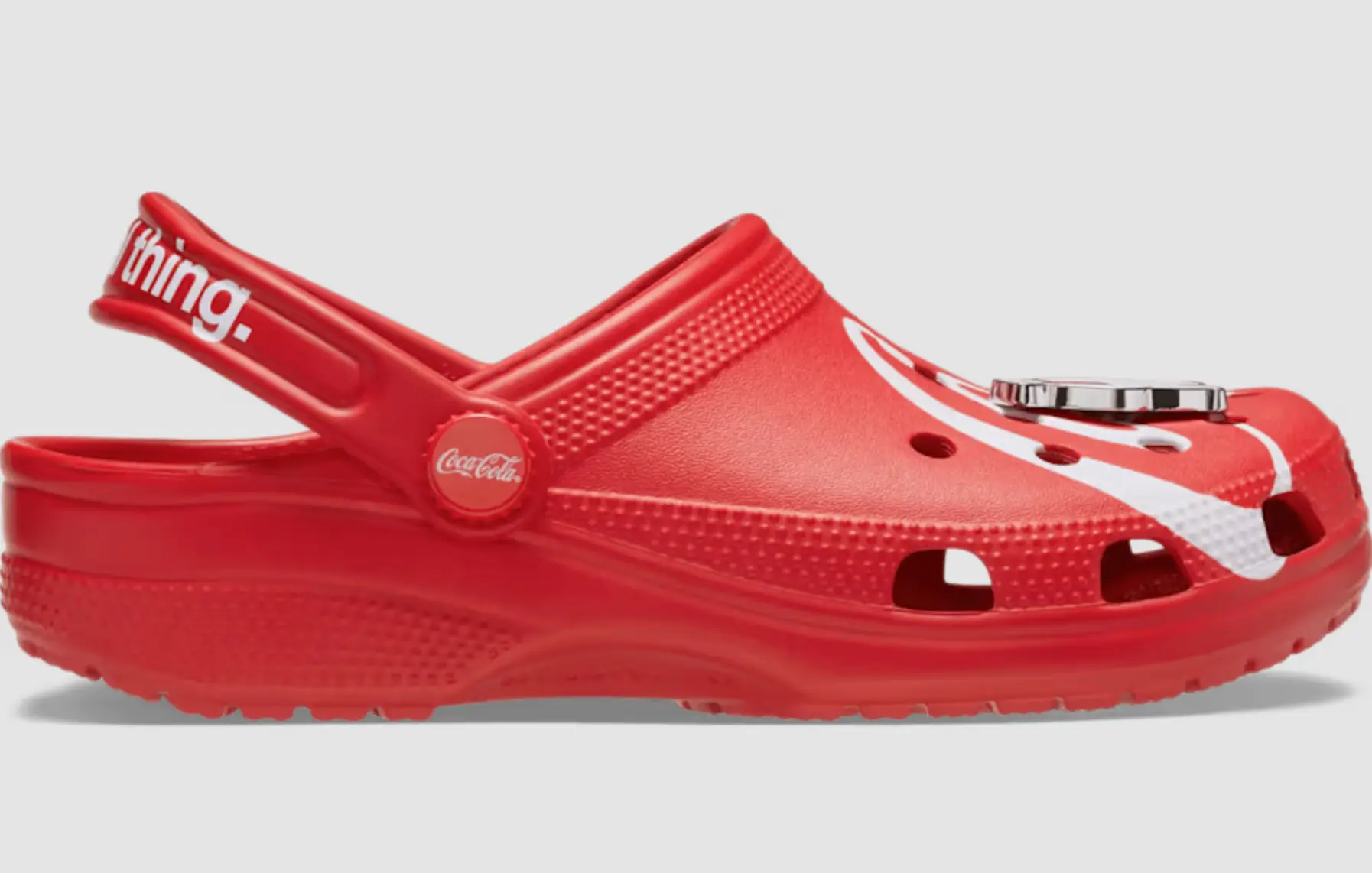
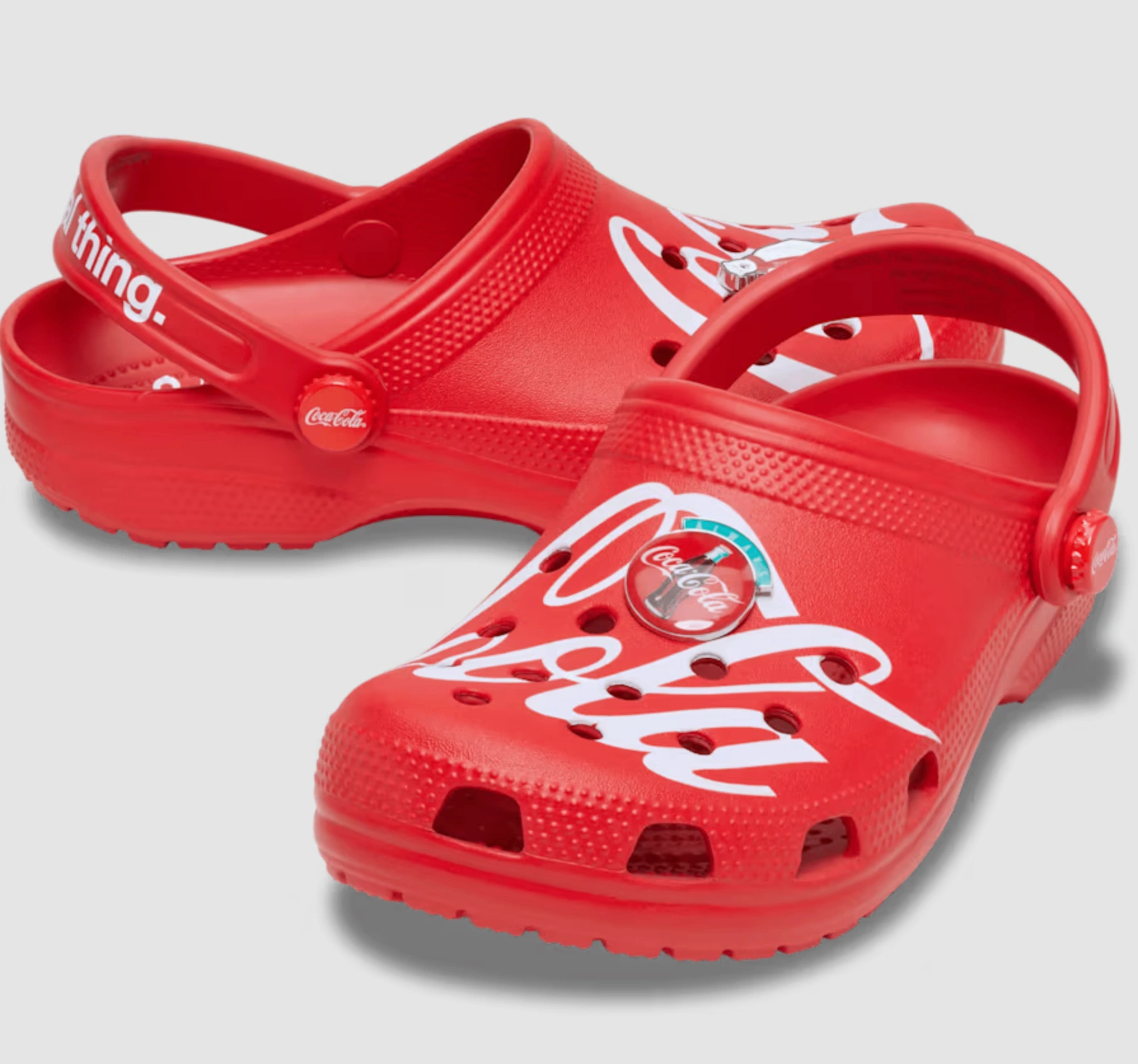
- Coca-Cola Classic Clog: A red forward design with “It’s the real thing.” on the heel strap, plus included Jibbitz charms and room for additional personalization via the Crocs ecosystem. See the official product details on the Coca-Cola Classic Clog.
- Diet Coke Classic Clog: A silver forward look with an allover glitter motif and “just for the taste of it!” on the heel strap. See details on the Diet Coke Classic Clog.
Release timing and pricing
- Release reporting indicates a January 13, 2026 launch and a $70 retail price point in adult sizing, as covered by SneakerNews.
From a limited edition collaboration standpoint, the discipline is visible: two products, clear naming, and recognizable codes. The customer’s decision is not “what is this.” It is “which one am I.” That is a better place to start.
Why the Partnership Works
Most co branding strategy conversations get stuck at “audience overlap.” Overlap matters, but it is not enough. The Coca-Cola x Crocs collaboration works because it combines overlap with contrast and keeps the message simple.
A practical way to evaluate collaborations like this is to look for three alignments.
- Code alignment
Coca-Cola has a deep library of visual and verbal assets. Crocs is a strong canvas brand with a silhouette that reads quickly. The collaboration makes the codes do the work. - Format alignment
Crocs customers already understand the drop and customization culture. The collaboration is not asking them to learn a new behavior. It is feeding an existing one. - Distribution alignment
A collaboration only performs if people can find it, understand it, and purchase it without friction. That means clean product pages, clear release communication, and a launch UX that survives traffic spikes.
For decision-makers, this is the key point: the partnership is not a logo swap. It is a product plus distribution system designed for speed, clarity, and sharing.
The Crocs Collaboration Engine: Scarcity, Customization, Community
Crocs has built a modern collaborations strategy that behaves like a demand loop.
- Scarcity creates a reason to act now. Limited drops compress consideration time. They also generate predictable search demand around release timing, availability, and resale.
- Customization turns customers into creators. Jibbitz charms are not a footnote. They are a built-in user generated content engine, plus an add on path that can lift order value and repeat purchases.
- Community gives the product social context. The conversation is often “show your pair,” not “read the copy.” That changes how you design your campaign assets and landing pages.
This system is supported by real business scale. Crocs reported record 2024 revenues of $4.1 billion, underscoring how meaningful the platform has become beyond a single product line, according to a Crocs investor release (Crocs, Inc. Reports Record 2024 Results).
For marketers planning a Crocs brand collaboration (or borrowing the model in another category), the takeaway is operational. If your product can be customized, you can design the content engine into the SKU itself. If it cannot, you need another participation mechanic that is just as simple.
What Coca-Cola Gets Out of Crocs
Coca-Cola does not need awareness. What it benefits from is fresh context. The Coca-Cola x Crocs collaboration extends brand memory into a wearable object that is easy to share, easy to gift, and easy to spot in a photo.
Three practical benefits stand out.
- Cultural adjacency without building a new category from scratch. Footwear is not Coca-Cola’s core business, but licensing and partnerships allow the brand to show up in new places with controlled risk.
- A collectible format that creates repeatable moments. A can is a can. A clog is a canvas, especially when personalization is part of the offer.
- An on-ramp to new conversations. The product is playful, but the strategy is serious: build more occasions where the brand is seen and discussed in a non traditional setting.
If you want the broader context of Coca-Cola’s long term brand building approach, the related analysis in Coca-Cola Marketing Strategy: A Comprehensive Case Study is a useful reference point for how the company sustains consistency across decades while still adapting to new channels.
The Co Branding Strategy Framework: Fit, Story, and Proof
A collaboration can be creative and still fail if the operating plan is thin. The goal is repeatable outcomes. That requires a framework you can reuse.
Partner Fit: Overlap, Contrast, and a Clear “Why Together”
Start with a fit check that is more rigorous than “our audiences match.”
- Overlap: Who will immediately recognize both brands, and why do they care?
- Contrast: What does each brand borrow from the other that it cannot credibly claim alone?
- Behavior: Does the partner audience already buy in your format, at your price point, through your channels?
A useful internal test is whether the “why together” can be said in one sentence without adjectives. If it cannot, the campaign will spend too long explaining itself.
Offer Design: What’s Exclusive and What’s Repeatable
The Coca-Cola x Crocs collaboration keeps the offer clear. Two variants. Distinct cues. Built-in personalization.
For your own limited edition collaboration planning, define:
- What is exclusive (SKU, color, packaging, access window).
- What is repeatable (landing page template, email flows, creative modules, measurement plan).
- What is optional (creator seeding, retail activations, events).
This is also where brand architecture matters. Many teams treat collaborations as a creative sprint, then patch the brand guidelines at the end. The better approach is to start with the brand system and design the drop inside it. If you need to tighten the fundamentals, a disciplined branding agency can help teams build guardrails that keep collaborations from diluting the core.
.webp)
Creative System: One Story, Many Assets
The collaboration’s creative is built on high recognition assets: color, typography, and familiar taglines. That reduces cognitive load and increases shareability.
For a brand collaboration campaign, build a creative system that covers:
- One hero story and one supporting proof point.
- Product first visuals that remain legible on mobile.
- A modular toolkit for paid, organic, email, and on site assets.
- Accessibility checks for contrast, typography, and alt text.
Treat these assets like a mini design system. It improves speed, governance, and consistency across channels. This is often where a strong UI UX design agency can add leverage, especially when the campaign spans product pages, landing pages, and conversion flows.
Operating Plan: Ownership, QA, and Risk Controls
Most collaboration failures are operational.
Build a simple operating plan:
- Clear owner for product, creative, web, paid, CRM, and support.
- QA checklist for the web funnel, including peak traffic testing.
- Customer support readiness for sizing, shipping, returns, and out of stock scenarios.
- Legal review for licensing, claims, and usage rights.
- A post drop plan for retention, not just recaps.
This is not bureaucracy. It is how you protect the brand when attention spikes.
Launch Execution: Distribution, Web Design, and UX
The moment a collaboration becomes real is not the announcement. It is the first customer session that tries to buy.
Build a Landing Path That Holds Up Under Surge
High intent traffic behaves differently during a drop. People arrive fast, impatient, and mobile heavy. If your launch path is unclear, you will donate conversions to resellers, aggregators, and screenshots.
A practical launch path includes:
- A single, stable landing destination that routes to the right product pages.
- Clear “where to buy” guidance by region and channel.
- Inventory visibility where possible, or transparent messaging when inventory is constrained.
- A fallback capture path when items sell out (email, SMS, or waitlist).
This is where disciplined site execution matters. Teams that treat drop pages as disposable often pay twice: once in lost conversion, and again in lost trust. If your site foundation is not ready for surge traffic, a specialized web design agency can help you build launch templates that are fast, resilient, and maintainable for future drops.
Performance and Accessibility Are Part of the Brand
Performance is not just technical. It is perception. Slow pages make a brand feel disorganized, especially during a high attention moment.
Two data points are worth keeping in mind:
- Google’s performance case study work has shown conversion lift associated with small improvements in mobile speed (Web Dev).
- Baymard’s ongoing research tracks cart abandonment as persistently high across ecommerce, reinforcing how fragile checkout intent can be (Baymard).
For collaborations, treat accessibility and speed as launch requirements:
- Meet baseline accessibility standards for contrast, focus states, and readable type.
- Keep pages lightweight and stable under load.
- Remove non essential scripts from drop critical templates.
- Confirm analytics still fires under consent and privacy settings.
If you want drop demand to compound after launch, connect the moment to search. Collaborations generate weeks of branded and non branded queries. A disciplined SEO services layer helps convert that attention into durable traffic rather than a one day spike.
Retention Loop: Email, SMS, and Post Drop Flows
The best collaboration marketing does not end at sell out.
Build the retention loop:
- Capture first party data with a clear value exchange (early access, restock alerts, related drops).
- Segment new to brand customers vs returning customers.
- Create post drop flows that introduce the core line, not just the collaboration.
- Use content to answer practical questions that reduce returns (fit, care, shipping expectations).
In Brand Vision work, a common pattern is that the drop drives traffic, but the post drop experience decides whether the brand keeps the customer. That is a lifecycle design problem, not an ad problem.
Measurement: A KPI Stack Leadership Will Trust
A collaboration should be measured like a launch program. Not a vibes score.
The KPI stack needs to cover attention, action, quality, and operational integrity.
Attention and Demand Signals
These are leading indicators. Useful, but not sufficient.
Track:
- Earned reach and share rate.
- Branded search lift and query volume.
- Traffic composition (new vs returning, by channel).
- Email and SMS sign ups driven by the drop.
Conversion and Revenue Signals
These define whether the collaboration actually performed.
Track:
- Product page conversion rate and add to cart rate.
- Checkout completion rate and payment failure rate.
- Revenue, margin, and return rate.
- New customer share, not just total volume.
If you are B2B, translate “purchase” into pipeline actions:
- Demo requests, qualified form fills, booked calls.
- Lead quality and velocity, not just lead count.
Retention, Brand Lift, and Operational Integrity
This is where leadership confidence comes from.
Track:
- Repeat purchase rate over 30, 60, 90 days.
- Cross sell attachment (did customers buy core products later).
- Support volume, refund rates, and sentiment drivers.
- Site uptime, page speed, and error rates during peak traffic.
The point is clarity. A collaboration can be loud and still underperform. A good measurement plan prevents the team from confusing attention with impact.
Risks and Governance: Where Collaborations Break
Collaborations fail in predictable ways. The Coca-Cola x Crocs collaboration avoids several common traps by keeping the offer simple and the codes consistent. That discipline is worth copying.
Key risks to plan for:
- Brand dilution: If the partner’s tone conflicts with yours, the internet will notice faster than your team does.
- Quality mismatch: If product quality, packaging, or fulfillment fails, the collaboration becomes a complaint engine.
- Channel confusion: If customers cannot tell where to buy, they will buy elsewhere, or not at all.
- Data loss: If tracking is incomplete, you will not know what worked, which makes the next drop harder to justify.
- Accessibility and performance debt: If the site fails under load, the brand takes the blame, not the server.
Governance does not need to be heavy. It needs to be explicit:
- Partner fit criteria, documented before contracts.
- Creative and legal rules, enforced through a shared review cadence.
- Web and analytics QA, treated like launch gating items.
- Post-launch review with decisions, not just reporting.
For teams that want outside validation before a public drop, a structured marketing audit can surface funnel gaps, analytics issues, and UX friction points that quietly erase ROI.
.webp)
Key Lessons for Brands
- Keep the “why together” simple enough to understand on scroll.
- Design the product so it carries the brand without relying on a logo.
- Build participation into the offer, whether through customization, collectibles, or utility.
- Treat the landing path and checkout as part of creative. They shape perception under pressure.
- Plan for the post drop period. Retention is where collaboration value compounds.
- Measure the collaboration like a program: attention, action, conversion quality, and operational integrity.
- Use collaborations as a capability, not a one off. Systems beat isolated moments.
If you want additional examples and a broader pattern library, 2025 in Review: Top 10 Collaborations That Went Viral maps repeatable mechanics across multiple categories. For Crocs specific context on how the brand built its position through fundamentals, Success of Crocs: Mastering the 4 P's of Marketing is a useful complement.
FAQs
When is the Coca-Cola x Crocs release date?
Launch reporting points to January 13, 2026, with pricing and timing covered by SneakerNews. Availability can vary by region and retailer.
How much do the Coke Crocs clogs cost?
Reported retail pricing is $70 in adult sizing. Exact pricing and inventory can shift by channel and market.
What is included in the Coca-Cola Crocs Classic Clog drop?
Two Classic Clog variants anchor the drop: Coca-Cola Classic and Diet Coke. Both emphasize recognizable brand cues and personalization via Jibbitz charms. Product details are listed on Crocs’ official pages for the Coca-Cola Classic Clog and Diet Coke Classic Clog.
Is this a limited edition collaboration?
The collaboration is positioned in the limited-edition drop model Crocs is known for. In practice, “limited” can mean time boxed, inventory capped, or both, depending on how the release is managed.
What should marketers copy from this brand collaboration campaign?
Copy the discipline, not the surface. Partner fit you can explain in one sentence. A product that is instantly legible. A launch path that converts under surge. A KPI plan that leadership trusts.
If you are building a collaboration roadmap and want an execution plan that holds up across creative, UX, and measurement, start with Brand Vision and request a scoped marketing audit.

%2520(1).png)
.png)