
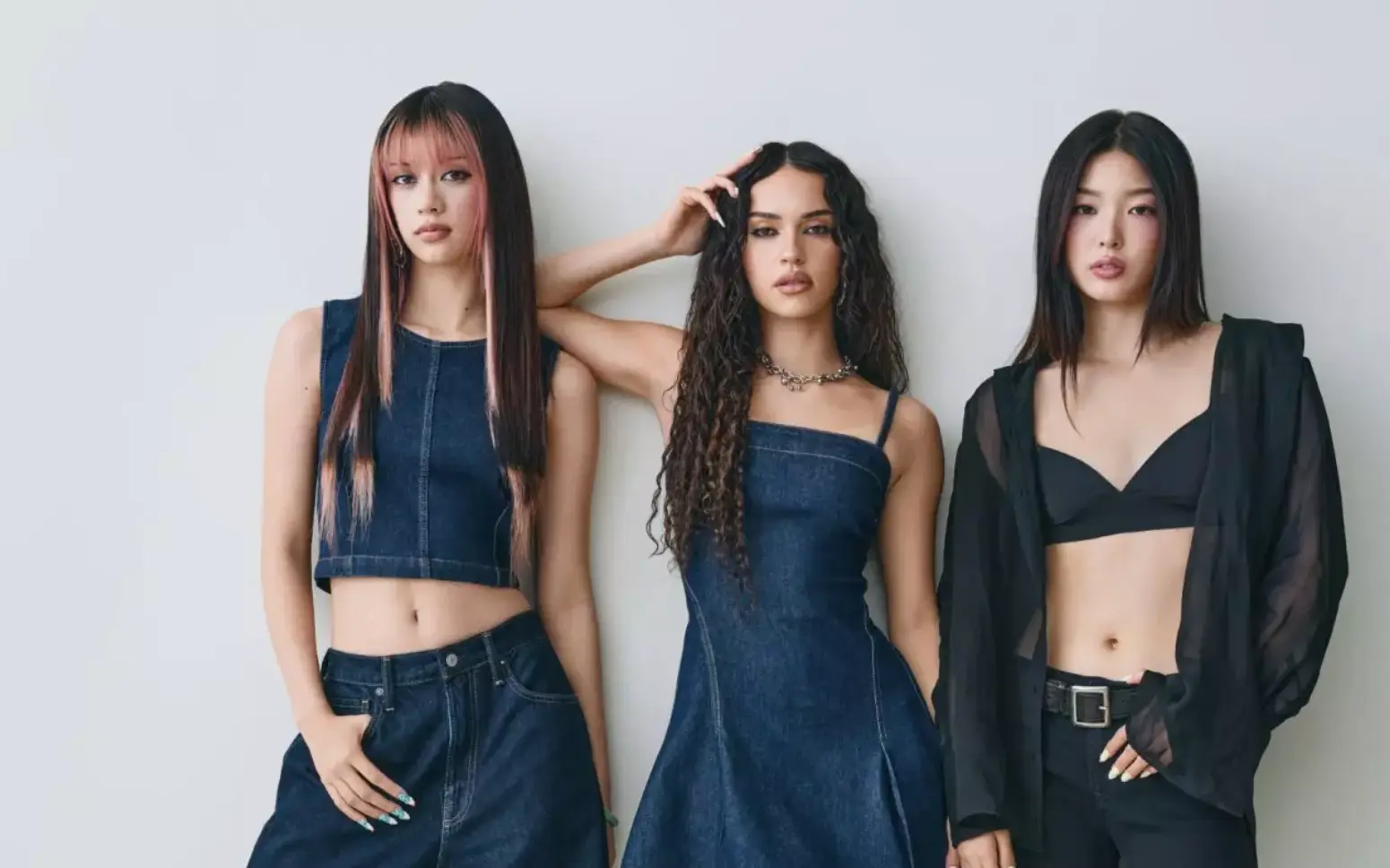
The strongest brand collaborations of 2025 combined complementary audiences with a product, sponsorship, or experience people could actually engage with. Across food, fashion, sports, beauty, and technology, the recurring pattern was clear: partner fit mattered as much as reach, and the execution had to give audiences something specific to share, try, or buy.
At Brand Vision, collaboration strategy is best treated as part of a broader marketing strategy, not as a standalone publicity tactic. This review looks at ten notable 2025 collaborations and the practical mechanics behind their partner fit, product design, launch execution, and measurement.
What the Strongest 2025 Collaborations Had in Common
Brand partnerships are not new, but the strongest 2025 examples on this list set a high bar for fit and execution. They gave audiences something tangible to respond to, whether that was a product, menu item, sponsorship moment, or physical experience, and made the role of each partner easy to understand.
Three structural patterns defined the top collaborations of 2025:
- Product or experience led. The clearest partnerships launched something real: a product, menu item, sponsorship activation, or physical experience. The collaboration gave people more than an announcement to react to.
- Distribution considered early. The creative and launch mechanics matched the channels where each audience already discovered products, creators, sports, or culture.
- Clear brand equity exchange. Each partner contributed something the other could use, such as reach, credibility, cultural relevance, product capability, or access to a specific audience.
With that framework established, here are ten of the top brand collaborations of 2025, analyzed for replicable strategy.
1. Dove x Crumbl Cookies
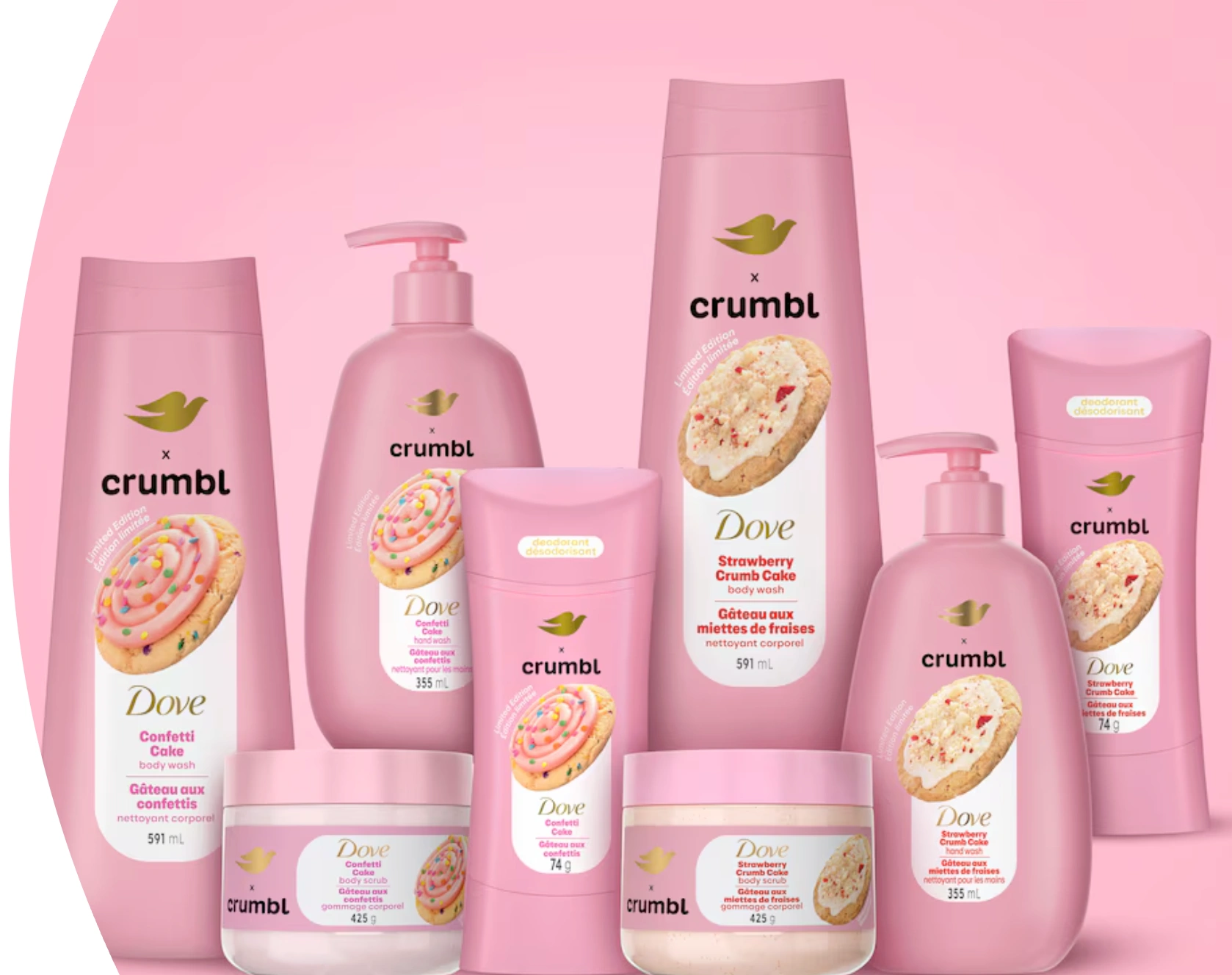
Dove and Crumbl turned a niche internet obsession into a mainstream, retail-first drop. The collaboration was built for both shelf and feed, with a clear path to purchase. Unilever documented in its official campaign recap that the range met a six-month sales goal in one month, with more than half of buyers being first-time Dove customers.
Why This Partnership Worked
- Shared aesthetic territory. Both brands operate in comfort, indulgence, and self-care. The audience overlap was precise, not forced.
- Retail-first distribution. The product was available in stores, which created a physical touchpoint that amplified the social conversation.
- Scarcity mechanics. A limited-run structure created urgency and rewarded early movers, which compressed the social response timeline.
What Smaller Brands Can Replicate
Identify a brand in an adjacent category that shares your audience psychology rather than your industry. Your collaboration does not need a national rollout. A limited co-created product in one market can use similar scarcity and shared-distribution mechanics at a smaller scale. Define the equity exchange clearly before you approach any partner: what does each brand bring, and what does each brand receive?
2. Bad Bunny x adidas Originals: Gazelle Cabo Rojo
The final installment of Bad Bunny and adidas's Gazelle City Series was more than a product drop. The Cabo Rojo colorway, inspired by Puerto Rico's pink salt flats, embedded cultural identity into a globally distributed product. adidas Originals confirmed the global release in an official announcement, one of the top brand collaborations of 2025 for how it transferred cultural credibility to audiences a heritage sportswear brand cannot reach through traditional advertising.
Why This Partnership Worked
- Cultural specificity at scale. The colorway told a story rooted in a specific geography and identity, giving the launch a culturally specific narrative for sharing and discussion.
- Series structure. A multi-drop architecture builds anticipation across releases. Each launch benefits from the equity built by the previous one.
- Celebrity as co-designer, not endorser. Bad Bunny held creative authority in the product. That distinction made the collaboration feel authentic rather than transactional.
What Smaller Brands Can Replicate
If you are partnering with a creator, give them genuine creative input. The difference between an endorsement and a collaboration is authorship. A local artist or creator with deep credibility in a specific community can be more useful than a broad-reach influencer with no contextual connection. Brand Vision's influencer marketing guide covers creator fit, rights, and measurement, while the brand strategy behind a collaboration should still begin with cultural and audience alignment.
3. Swarovski x Ariana Grande
In January 2025, Swarovski partnered with Ariana Grande on a limited-edition crystal capsule collection. As detailed in JCK's collection review, the partnership placed the heritage crystal brand inside a contemporary fashion and pop-culture context. Among the collaborations on this list, it is a useful example of using partner association and product design to support a broader repositioning.
Why This Partnership Worked
- Repositioning through association. Grande did not just wear the product. She was the brand signal. Her presence communicated to a younger audience that Swarovski was a brand worth paying attention to.
- Aesthetic coherence. The collection reflected Grande's personal style: soft pastels, maximalist sparkle, playful energy. The design was not Swarovski with Grande's name on it. It was a genuine synthesis.
- Fanbase as a distribution layer. Grande's audience gave the collection a built-in community for conversation, styling content, and organic sharing around the launch.
What Smaller Brands Can Replicate
If your brand needs to reach a new audience segment, a well-structured collaboration can support that shift by borrowing relevance from a well-matched partner. The key is selecting someone whose audience already associates them with qualities your brand can credibly share. A strong visual identity is important here because the two visual systems still need to coexist without feeling forced.

4. Crocs x Touchland
The Crocs x Touchland collaboration produced a Crocs-inspired EVA case for Touchland hand sanitizer mists. The case uses Jibbitz charms and a metal keyring so it can clip to a bag, keys, or belt loop, rather than snapping onto a Crocs shoe. WWD reported strong launch demand, while Touchland's product recap documents the case design and carrying mechanism.
Why This Partnership Worked
- Functionality as the hook. The case gave Touchland's mist a portable, customizable holder that could clip to items people already carry, while borrowing Crocs' recognizable perforated design and Jibbitz system.
- Shared cultural positioning. Both brands occupy the same 'unapologetically practical and fun' territory. The collaboration felt inevitable once you saw it.
- Designed for visible use. The colorful cases and charms turned an everyday personal-care product into an accessory that could appear naturally in bags, travel routines, and social content.
What Smaller Brands Can Replicate
Look for partners whose product ecosystem creates a natural adjacency to your own. Collaboration marketing is most defensible when the combined product does something neither brand could do alone. Ask: does this partnership solve a problem or create a new use case? If the answer is yes, you have a product-led collaboration. If the answer is only 'it looks cool together,' you have a campaign, not a partnership.
5. Apple x Hermes: Apple Watch
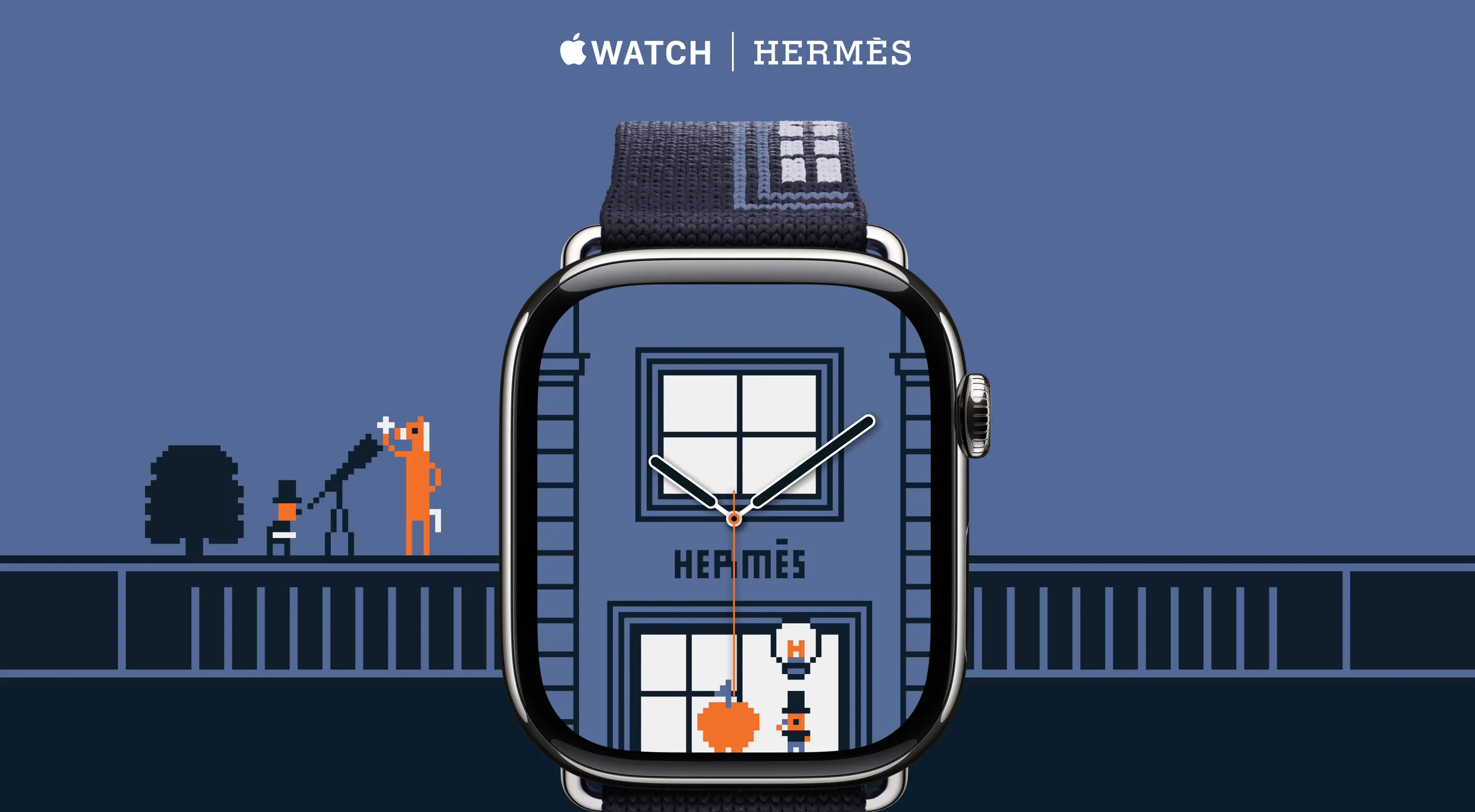
The Apple x Hermès partnership is a long-running example of collaboration as a recurring product system rather than a one-time launch. The current collection is available directly on Apple.com. Its longevity demonstrates a different collaboration model: each iteration can reinforce the association between Apple's technology platform and Hermès' design heritage.
Why This Partnership Worked
- Mutual elevation through contrast. Apple brings technology and scale. Hermès brings heritage, craft, and exclusivity. Each partner contributes a recognizable strength without asking the other to abandon its core identity.
- Product integration over product placement. The Hermes bands and watch faces are designed, not licensed. The integration depth signals genuine creative collaboration.
- Compounding association. Repeated releases can build familiarity with the partnership over time in a way a single drop cannot.
What Smaller Brands Can Replicate
Not every collaboration needs to be a one-time event. A structured, ongoing partnership with a complementary brand can become part of your brand identity over time. Consider a formal annual or seasonal collaboration with a partner whose values align with yours. Document the partnership consistently across your digital presence. Over time, the association itself becomes a positioning asset. This is how brand development works at a structural level.
6. LEGO x Nintendo: Mario Kart Expands LEGO Super Mario
LEGO and Nintendo expanded the existing LEGO Super Mario system in 2025 with six LEGO Super Mario: Mario Kart sets that launched on January 1. LEGO's official announcement explains that the sets can add a digital layer when used with interactive LEGO Mario, Luigi, or Peach figures, while the broader system remains available on the LEGO Super Mario product hub. The 2025 story was an expansion of a continuing partnership, not a May relaunch.
Why This Partnership Worked
- Hybrid play without abandoning the core product. The Mario Kart sets remain physical LEGO builds, with optional interactive audio and visual effects when paired with compatible digital figures.
- Multi-generational IP recognition. Mario Kart and LEGO both have long histories, giving the collaboration relevance to children as well as adults already familiar with the properties.
- Expandable IP architecture. The modular system supports additional sets and characters without requiring a completely new partnership structure for every release.
What Smaller Brands Can Replicate
When evaluating a collaboration, map the full decision-making unit, not just the end user. If one person buys the product for another, the partnership needs to make sense to both the user and the buyer. That can shape everything from partner selection to the product story and launch channels.
7. Red Bull Racing x McDonald's
McDonald's became an official Oracle Red Bull Racing partner for eight weeks around the 2025 São Paulo Grand Prix. BlackBook Motorsport covered the deal, while McDonald's Brazil operator Arcos Dorados documented McDonald's branding on the front of the car's halo and team garage, Red Bull menu availability, and public activations tied to the race.
Why This Partnership Worked
- Event and market fit. The partnership concentrated its launch around Brazil's Formula 1 moment, giving the collaboration a clear place, audience, and reason to pay attention.
- Event-driven launch. Debuting around a high-profile race created a natural news hook and connected restaurant activity with the sporting event.
- Two-sided visibility. McDonald's appeared on Oracle Red Bull Racing assets while McDonald's restaurants in Brazil added Red Bull availability and partnership activations, giving both brands consumer-facing touchpoints.
What Smaller Brands Can Replicate
Formalize your informal partnerships. If you already have a working relationship with a complementary brand through shared clients, events, or networks, evaluate whether a structured collaboration makes sense. Define the bi-directional value clearly: what distribution does each partner gain, and how is that measured? A well-structured collaboration agreement protects both parties and creates a framework for compounding the relationship over time.
8. Here We Flo x Chelsea FC Women
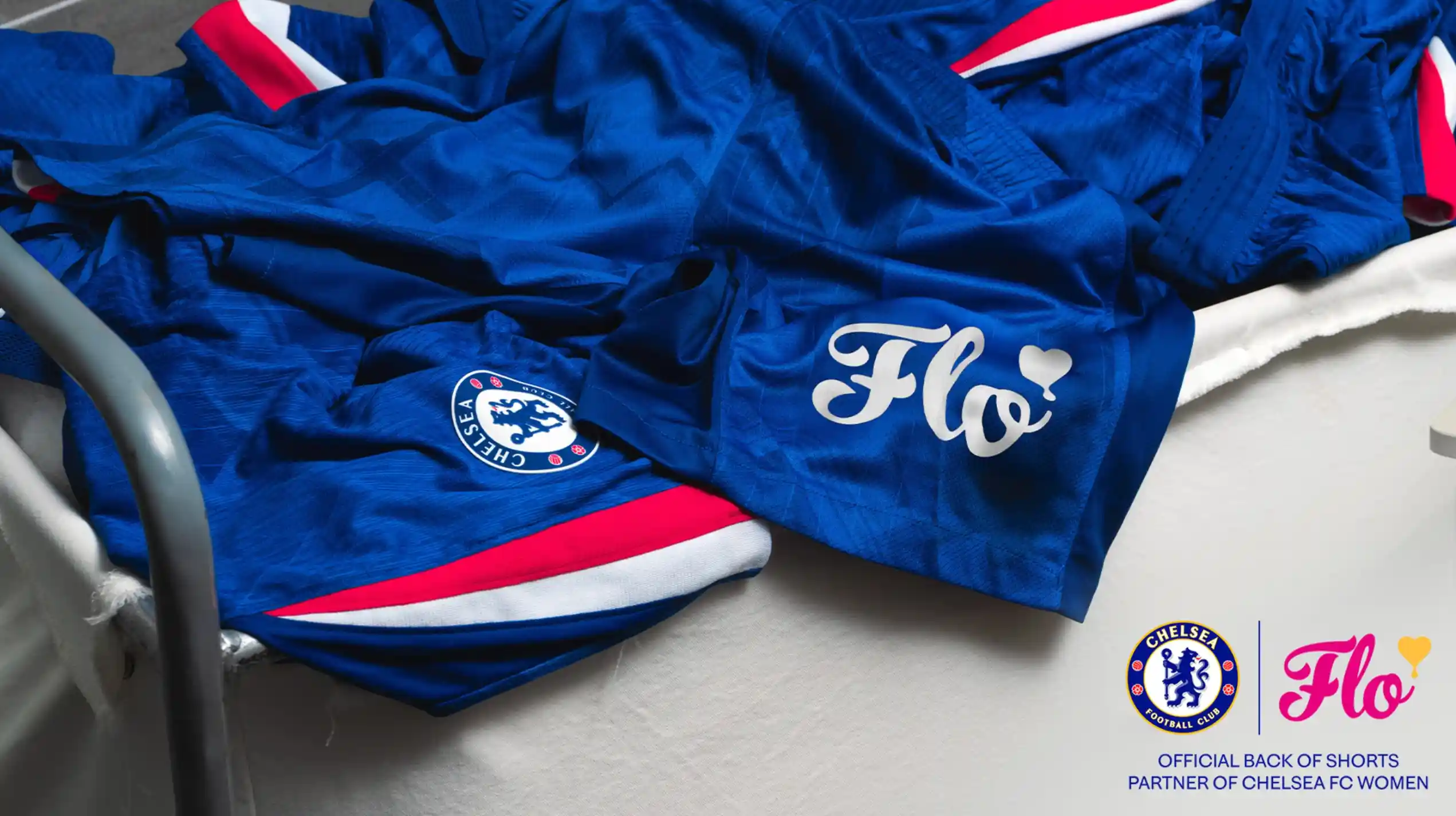
Period care brand Here We Flo became the back-of-shorts sponsor for Chelsea FC Women for the 2025/26 WSL season. The partnership opened with a deliberate provocation: players walked out with shorts marked to simulate period stains. Chelsea FC published the full campaign announcement on its official website, making this one of the top brand collaborations of 2025 because it used a sports sponsorship to make a cultural statement, not just earn logo placement.
Why This Partnership Worked
- Brand purpose as media strategy. The provocation was not shock value. It was a coherent extension of Here We Flo's positioning around normalizing women's health. The action matched the message.
- Contextual credibility. A women's football partnership for a women's health brand is obvious in the best sense. The alignment was immediately legible to the target audience.
- Earned-media potential. The stained-shorts launch created a single visual moment that could travel across sports, lifestyle, and women's-health coverage without changing the core message.
What Smaller Brands Can Replicate
A meaningful sponsorship does not require a major-club budget. Community organizations, local sports teams, and events can be useful when their audience and values align closely with the brand. A smaller, well-matched partnership can be more relevant than a broad sponsorship with little contextual fit. This is core to how a disciplined branding agency should evaluate partnership positioning.
9. Pinterest x Chamberlain Coffee
Pinterest and Chamberlain Coffee collaborated to launch a Sea Salt Toffee coffee blend. Among the top brand collaborations of 2025, this one is instructive for its clarity of execution. Pinterest documented it in its official Newsroom announcement, noting it was the platform's first-ever co-branded physical product. The product was direct, the distribution was immediate, and the social content was native to how both brands already operated.
Why This Partnership Worked
- Product fit with platform behavior. Pinterest is a discovery and aspiration platform. A new coffee flavor is precisely the kind of sensory discovery the platform's audience searches for.
- Creator brand with an established content engine. Emma Chamberlain's audience and Chamberlain Coffee's existing content model gave the launch a natural creator-led distribution layer.
- Routine integration. Coffee is a daily habit. Inserting a new flavor into an existing routine lowers the adoption barrier significantly compared to introducing a new behavior.
What Smaller Brands Can Replicate
Select collaboration partners whose audiences are already discovering products in your category. Platform alignment can matter as much as raw audience size, especially when a smaller partner has stronger relevance to the intended customer. Ensure your web design and development can handle collaboration-driven traffic and explain the offer clearly, because a confusing or slow landing experience can undermine the attention the partnership creates.
10. Foxtron x Mitsubishi: OEM EV Partnership
On May 7, 2025, Mitsubishi Motors and Foxtron Vehicle Technologies, a Foxconn subsidiary, signed a memorandum of understanding for the OEM supply of an electric vehicle. Mitsubishi's official release states that Foxtron will develop the model, Yulon Motor will manufacture it in Taiwan, and Mitsubishi plans to introduce it in Australia and New Zealand in the second half of 2026. Reuters in its automotive coverage also covered the agreement. Because the vehicle had not launched in 2025, this example is better read as a notable strategic partnership announcement than as a proven market success.
Why This Partnership Is Strategically Notable
- Capability expansion through partnership. The agreement gives Mitsubishi a route to add an EV developed by a specialist Foxconn subsidiary without presenting the relationship as a conventional co-branded consumer launch.
- Clear operating roles. Foxtron is responsible for development, Yulon Motor for manufacturing in Taiwan, and Mitsubishi for bringing the OEM model into its Oceania product plan.
- Specific launch market and timing. The announcement tied the project to Australia and New Zealand in the second half of 2026, giving the partnership a concrete commercial next step.
What Smaller Brands Can Learn
The announcement of a collaboration is itself a brand signal. If you are planning a significant partnership, structure the announcement to communicate the strategic intent, not just the product. Who are the partners? What does each bring? What does the combination make possible that neither could achieve alone? Answering those three questions clearly turns a product launch into a positioning statement. A strong marketing consultation process can help you structure that narrative before you go to market.
A Practical Framework for Building Your Own Collaboration Strategy in 2026
The examples above vary widely in scale and business model, but they point to a reusable planning process. For growing brands, the following framework is a practical starting point for structuring a partnership before creative development begins.
Step 1: Define the Equity You Bring and the Equity You Need
Before approaching any partner, be explicit about what your brand contributes and what it lacks. Distribution reach? Cultural credibility? Technical capability? Audience trust in a specific segment? Mapping this clearly ensures you select the right partner and structure an exchange that is genuinely bilateral.
Step 2: Identify Partners with Complementary Audience Psychology
The most effective brand partnership examples from 2025 were built on shared audience values and behaviors, not just overlapping demographics. A partner whose audience already thinks the way your ideal customer thinks is more valuable than a partner with a large audience that skews in a different direction. This is where brand research pays dividends.
Step 3: Build a Product or Experience, Not a Campaign
Collaboration marketing is most defensible when it produces something tangible. Define what your collaboration will create. A product, a content series, a physical event, a tool, a co-authored report. The artifact is the distribution mechanism. Without it, you are organizing a logo swap.
Step 4: Engineer the Launch for Your Distribution Channel
Determine where the collaboration will live before you finalize the creative. If the primary channel is TikTok, the product reveal, unboxing, and co-creator content should work naturally in that format. If the channel is LinkedIn, the tone and case-study framing should meet professional expectations. The landing experience matters too: a clear brief for a UI/UX design agency should connect campaign interest to the next action.
Step 5: Define Measurement Before Launch
Set success metrics before the campaign begins: brand lift, new audience reach, co-attributed revenue, search demand, qualified traffic, or earned-media share, depending on the objective. If search visibility is part of the goal, define how your SEO agency or internal search team will measure branded and collaboration-related demand after the initial campaign window.
Final Thoughts: Build Collaborations That Compound
The strongest collaborations on this list stood out because the partnership logic was easy to understand. The brands aligned around a product, experience, or sponsorship moment; each partner contributed a distinct asset; and the launch gave audiences a concrete reason to engage.
For growing brands, the takeaway is not to replicate the scale of these partnerships. It is to replicate the discipline: find the right partner, define what each side brings, build something useful or memorable, launch it where the audience already spends attention, and measure the outcome.
Several of 2025's strongest examples treated collaboration as a brand strategy decision rather than a logo-sharing exercise. That distinction is more reusable than any individual tactic in the list.
If your team is planning a brand partnership, Brand Vision can help connect the collaboration to a clear brand and campaign strategy. Talk with Brand Vision about your next campaign.



%2520(1).png)






