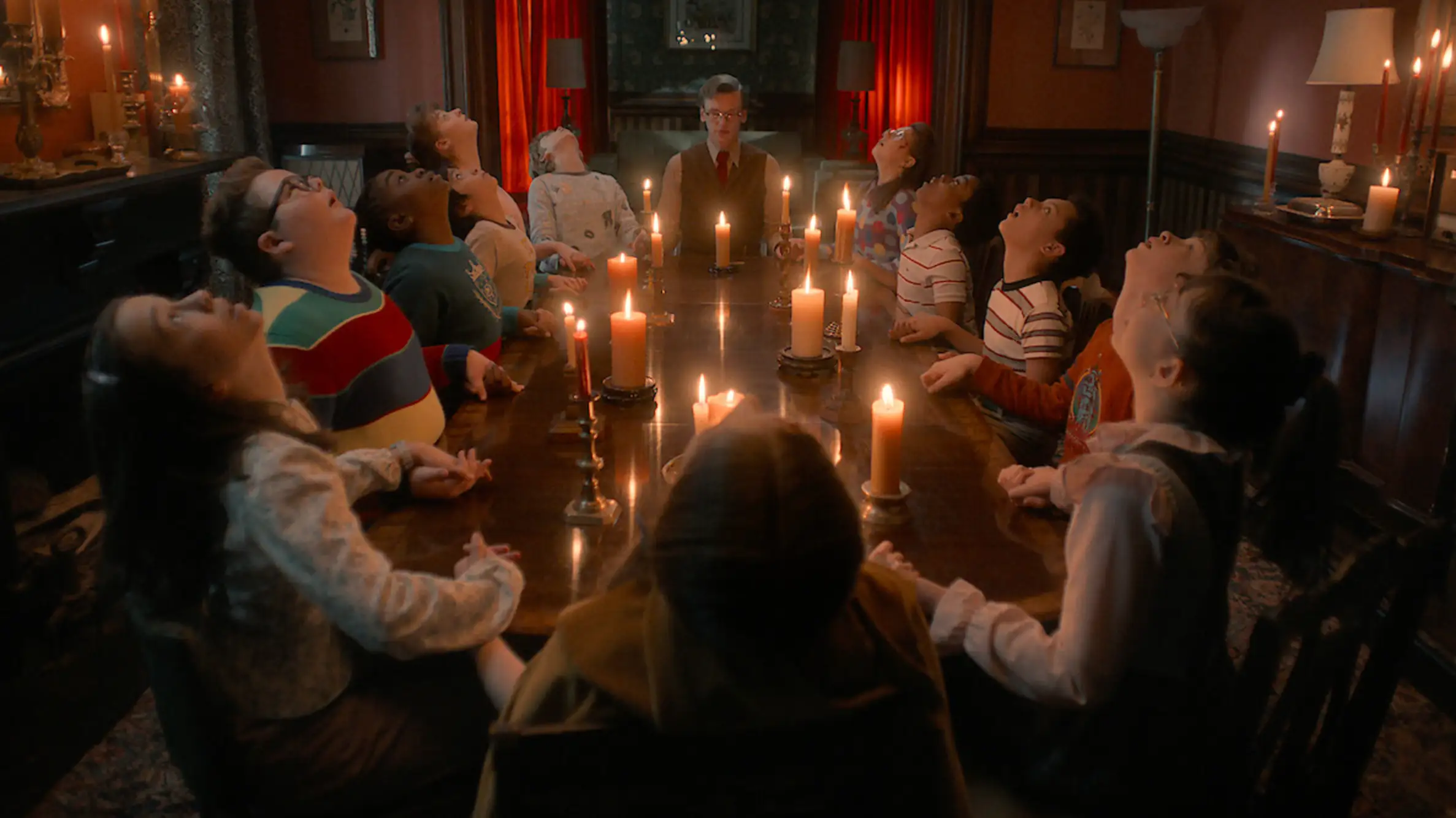
The marketing around Stranger Things Season 5 is useful for a simple reason. It shows what happens when an entertainment launch is treated like an operating system, not a single campaign. Timing, partnerships, retail, social, and real-world experiences were designed to work together.
For leaders responsible for growth, brand, or demand, the takeaway is not “do a pop-up.” The takeaway is how to design a launch that holds attention over weeks, converts attention into action, and stays coherent while dozens of partners participate.
Season 5 also arrived with a built-in cadence: four episodes on Nov. 26, three on Dec. 25, and the finale on Dec. 31, with consistent global release timing. That structure alone changes the marketing job. It creates multiple peaks, not one. It also creates multiple chances to win back lapsed viewers and keep active fans engaged. (Netflix)
Why the Stranger Things Season 5 launch mattered for marketers
This was not a niche fandom activation. Netflix has described Stranger Things as its first franchise, and the scale is closer to a global consumer brand than a typical streaming title. Fast Company reported Netflix said Season 4 reached 140.7 million views globally. (Fast Company)
Season 5’s marketing matters because it solved three problems most brands face, regardless of category.
- Sustained attention: how to stay present without exhausting the audience.
- Coherence at scale: how to involve many partners without creating creative chaos.
- Conversion pathways: how to turn interest into measurable action across channels.
If you sell a complex product, run seasonal launches, or depend on partner ecosystems, the mechanics are familiar. The setting is different. The system design is the lesson.
The three-volume release as an attention strategy
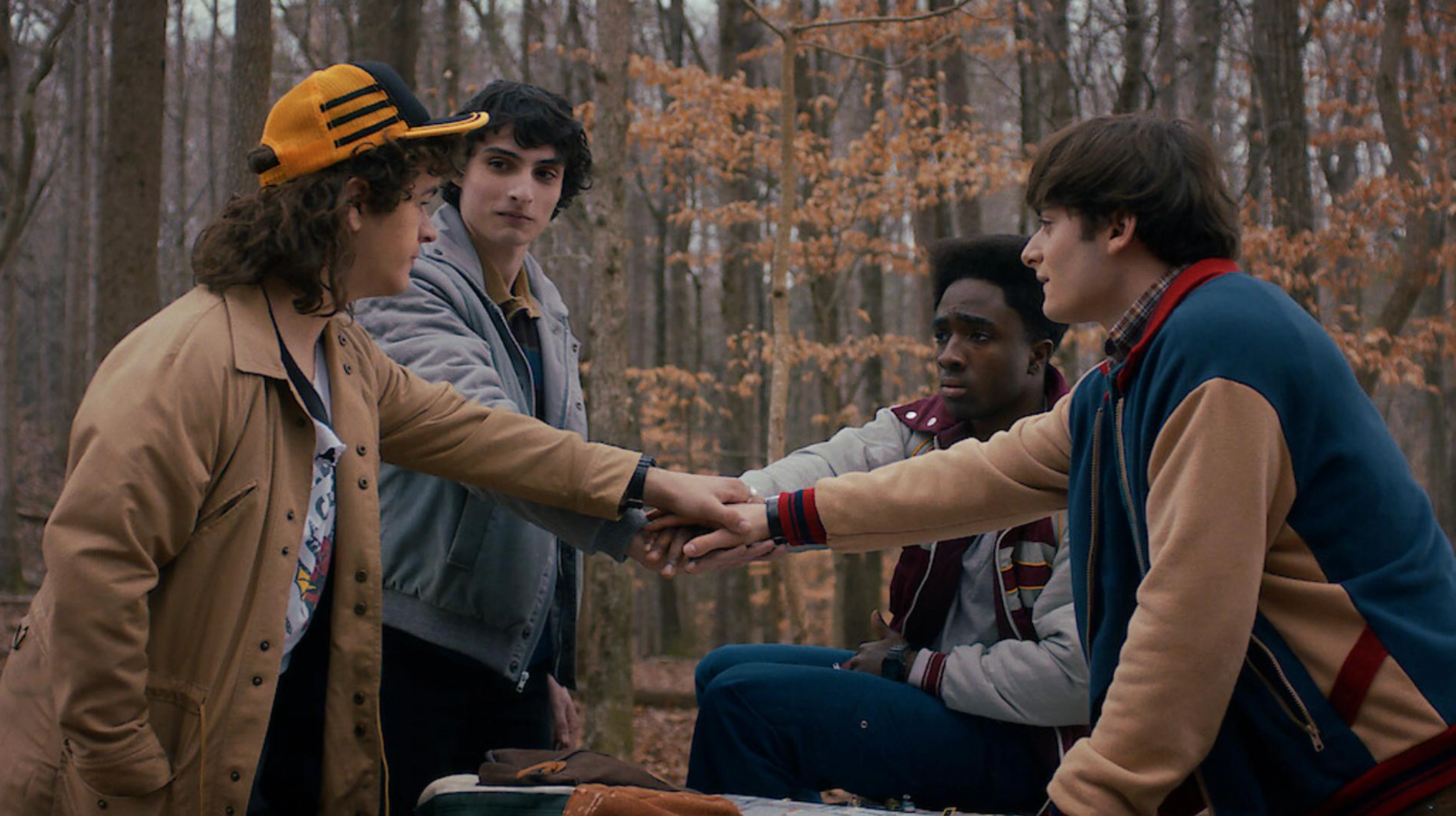
A three-part release is a marketing advantage when it is treated as one plan, not three separate promotions. Netflix’s own schedule made the pattern clear: Volume 1, Volume 2, then a single finale episode on New Year’s Eve. (Netflix)
For marketers, the key is the shape of the attention curve.
- Pre-launch: reacquire the audience. Remind them what they loved and what they forgot.
- Launch window 1: give people a reason to show up immediately.
- Interlude: keep the conversation alive without repeating the trailer.
- Launch window 2: re-ignite interest, and make it easy for late joiners.
- Finale: turn the ending into an event, not just a release.
This is the same logic behind strong product marketing calendars. You do not want one spike and a quiet month. You want a sequence of peaks that ladder to a decision.
The partnership engine: co-marketing at scale without dilution
Season 5’s partnerships were broad by design. License Global described collaborations spanning toys, apparel, home goods, food and beverage, plus immersive experiences, with retail programs layered in. (License Global)
That breadth can break a brand if the system is loose. Here, it worked because the partnerships behaved like a portfolio: each partner played a specific role in distribution, culture, and commerce.
To apply this, it helps to think in three parts: portfolio design, integration depth, and consistency controls.
Build a partner portfolio, not a partner list
A long list of partners is not automatically a strategy. The more useful question is what each partner contributes.
A strong partner portfolio covers distinct jobs:
- Reach: access to an audience you do not efficiently reach alone.
- Context: a product category that makes the story feel real in daily life.
- Format: a new way for people to interact, collect, or share.
- Distribution: retail shelves, delivery apps, search surfaces, or game platforms.
Season 5 shows this across categories. There were food and beverage partners, retail activations, digital platform tie-ins, and gaming integrations. (Netflix)
For non-entertainment brands, the translation is direct. You want partners that expand the format of your story, not just place your logo next to theirs.
The integration ladder: from packaging to participation
Not all collaborations are equal. The most effective ones move beyond themed packaging into participation.
Use this five-level ladder to evaluate partnership depth:
- Packaging only
- Limited edition design, but no campaign behavior.
- Product ritual
- A product that fits a repeatable moment (watch nights, gatherings, commute).
- Content integration
- Ads, social series, or on-platform content that people actually share.
- Interactive mechanic
- A scavenger hunt, hotline, or game layer that invites action.
- Real-world experience
- Retail build-outs, events, or limited installations with measurable attendance.
Stranger Things Season 5 hit the top of the ladder repeatedly. Adweek reported a Google Search scavenger hunt, a KFC “hotline” experience in the U.K., and retail execution that went beyond a themed aisle. (Adweek)
When you brief partnerships, specify which rung you are buying. Then staff accordingly. Interactive mechanics and physical experiences require legal, ops, QA, and customer support, not just creative.
Keep the brand world consistent across partners
Co-marketing fails when the audience senses the brand is being stretched. Stranger Things avoided that by insisting partners speak the same visual and narrative language.
Examples reported in industry coverage include:
- Doritos creative built around retro presentation, including an 80s-style “Telethon for Hawkins.” (Adweek)
- Gatorade returning an 80s-era Citrus Cooler flavor with period cues like glass bottles.
- A LEGO Creel House set with 2,593 pieces, built as a collectible object with embedded references. (Adweek)
The mechanism is familiar to any scaled brand. You are not just approving assets. You are protecting a system.
This is where brand work stops being subjective. It becomes governance. If your organization needs that kind of discipline across campaigns, the simplest place to start is a documented identity and usage system, supported by consistent rollout planning. (Brand Vision)
Retail as media: Target turned stores into a set
Retail is often treated as a channel. In this campaign, retail behaved like a stage.
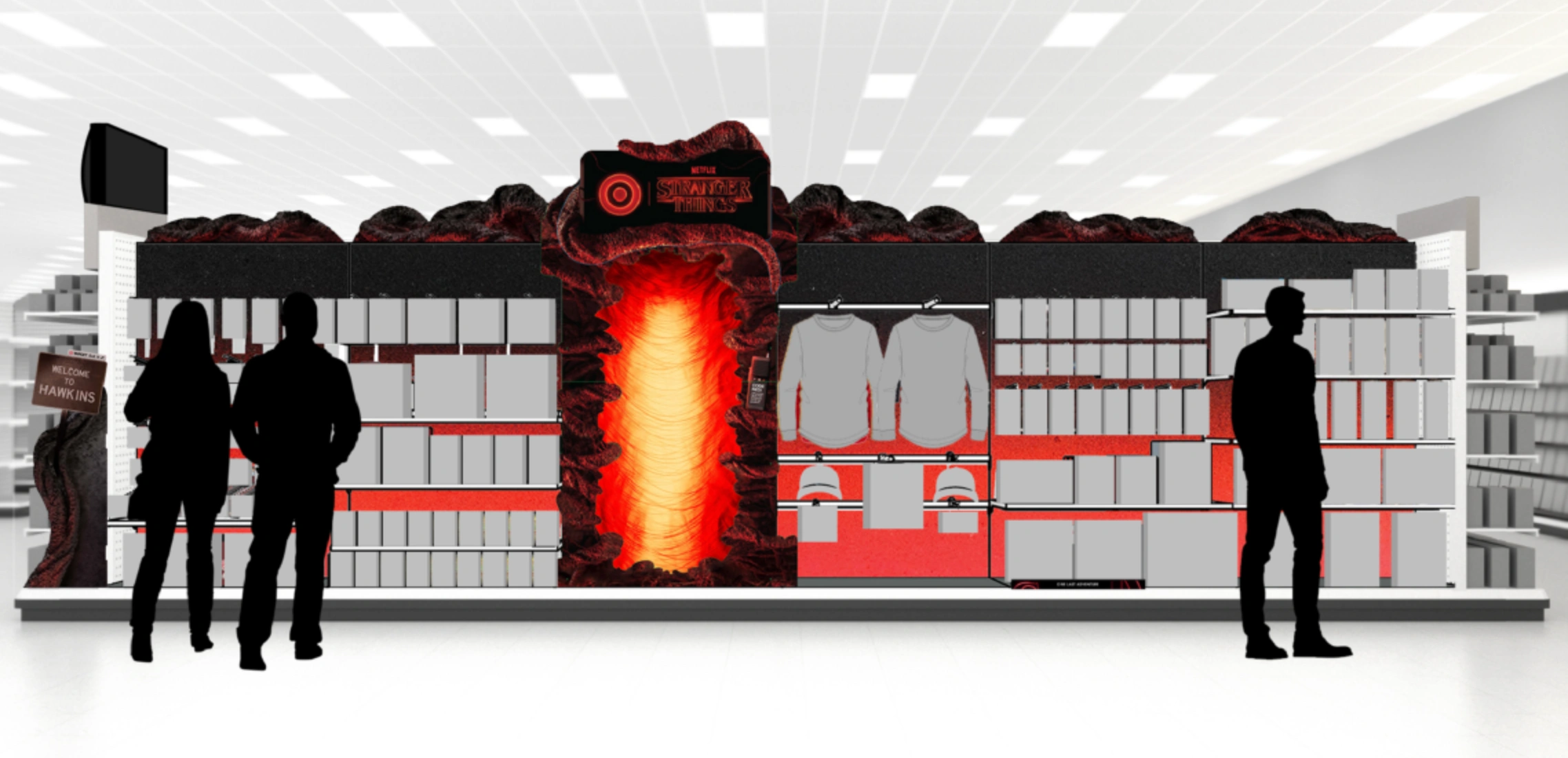
Target’s own fact sheet positioned the partnership as a full experience: 150+ new items, over half exclusive, an in-store shopping environment that brings Hawkins and the Upside Down to life, and a national marketing campaign co-created with Netflix featuring show talent. (Target Corporation)
Two things matter here.
First, physical space creates memory. A themed shelf is a photo. A recreated 1987 Target is a story people can enter. Target described producing a period-perfect commercial and recreating a 1987 store environment with Netflix’s creative team. (Target Corporation)
Second, drops create a reason to return. The fact sheet outlines an October launch with additional product drops through November, tied to the show’s release cadence. (Target Corporation)
Exclusives, drops, and physical discovery
If you want a retail program to behave like marketing, design for three outcomes:
- Discovery: make it visually unmissable, but easy to understand.
- Shareability: ensure there is at least one object people will photograph.
- Repeat visits: plan timed drops, not a single launch day.
Target listed examples that fit “shareability” directly, including a Demogorgon-shaped popcorn bucket and other collectible objects. (Target Corporation)
What this teaches about digital merchandising
Most brands do not have physical aisles. They do have a website.
The same principles apply online:
- One clear landing destination that acts as the home for the campaign.
- A navigation path that matches user intent: “watch,” “shop,” “visit,” “learn,” “share.”
- Fast, stable performance during peaks.
- Accessibility that holds under real traffic.
If your launch relies on a landing page, treat it as a product. Plan the information architecture, the content system, the QA cycle, and the monitoring plan. That is the difference between attention that bounces and attention that converts. (Brand Vision Web Design Services)
Social loops and earned media: rewatching as reacquisition
The most practical lesson from Season 5 is that social content was not treated as a trailer dump. It was treated as lifecycle marketing.
Fast Company reported Netflix ran a pre-launch rewatch campaign that generated 5.7 billion earned global social impressions. It also reported Netflix cited 11.5 billion total earned social impressions for Season 5 before the final volumes released, and one throwback video alone earned over 215 million impressions globally. (Fast Company)
Those numbers matter less than the mechanism behind them.
Rewatch campaigns that behave like lifecycle marketing
A rewatch campaign is reacquisition. It brings people back into the product before you ask them to adopt the new release.
To make this work in other categories:
- Segment the audience by familiarity. New, lapsed, active.
- Give each segment a different “reason to return.”
- New: a clear on-ramp.
- Lapsed: a recap and a stake.
- Active: behind-the-scenes and deeper detail.
- Build a content calendar that aligns with the launch cadence, not the posting cadence.
This is where many teams drift. They post every day but do not ladder toward a moment.
Throwbacks, behind-the-scenes, and “proof of fandom”
Season 5’s marketing leaned on what fans already value: characters, nostalgia, and the feeling of being part of the story.
Fast Company described Netflix using cast throwbacks and behind-the-scenes content to re-engage fans. (Fast Company)
For brands, the translation is “proof of craft.” People share what feels authentic and specific. That could be:
- A product prototype story.
- An internal debate about a feature.
- A customer success moment told with restraint.
- A timeline that shows how something evolved.
The goal is not to overshare. The goal is to make the work visible.
View this post on Instagram
A post shared by Stranger Things Netflix (@strangerthingstv)
Interactive hooks that travel fast
Interactive mechanics spread because they are not just content. They are tasks.
Adweek and License Global both reported a Google Search scavenger hunt tied to Stranger Things, triggered by searching the show name and decoding clues. (Adweek)
This pattern travels across industries:
- A calculator or diagnostic.
- A short quiz with a meaningful output.
- A scavenger hunt inside your product.
- A limited digital badge that signals participation.
If you build an interactive layer, involve UX early. Friction will kill completion rates. (UI/UX design agency)
Experiences people can attend: turning fandom into attendance
Experiential marketing is often treated as a gamble. In the Stranger Things system, it is treated as a parallel distribution channel.
Fast Company reported Netflix planned fan events across 32 cities in 23 countries, including a “One Last Ride” cycling event with over 50,000 attendees and a Stranger Things-themed float at the Macy’s Thanksgiving Day parade, shown to millions. (Fast Company)
The point is not that every brand should do a drone show. The point is that experiences create a second kind of media: content made by attendees.
Why “local” made a global franchise feel close
Large brands often struggle to feel personal. Events solve this when they are designed with local detail and clear participation.
A practical way to translate this:
- Pick 3 to 5 “anchor” cities where you can deliver quality.
- Design a repeatable event format, not a one-off.
- Build a kit: signage, staffing model, run-of-show, safety checklist, and a content capture plan.
It is better to do fewer events with consistent quality than many events with uneven execution.
Operational reality: safety, capacity, and flow
Experience marketing becomes brand risk when operations are underestimated.
If you run activations, treat these as non-negotiable:
- Capacity planning and queue design
- Accessibility and mobility considerations
- On-site support and clear escalation paths
- A privacy plan if you capture emails, photos, or scans
- Post-event follow-up that respects consent
This is the unglamorous work that protects reputation and improves conversion.
Merch and product design: nostalgia that works in real life
Merch succeeds when it becomes part of a ritual.
Season 5 leaned heavily into categories that naturally show up in group moments: snacks, beverages, home goods, and collectibles. License Global listed food and beverage partners such as Eggo, Doritos, Kellogg’s cereal, Chips Ahoy!, General Mills, Gatorade, and others. (License Global)
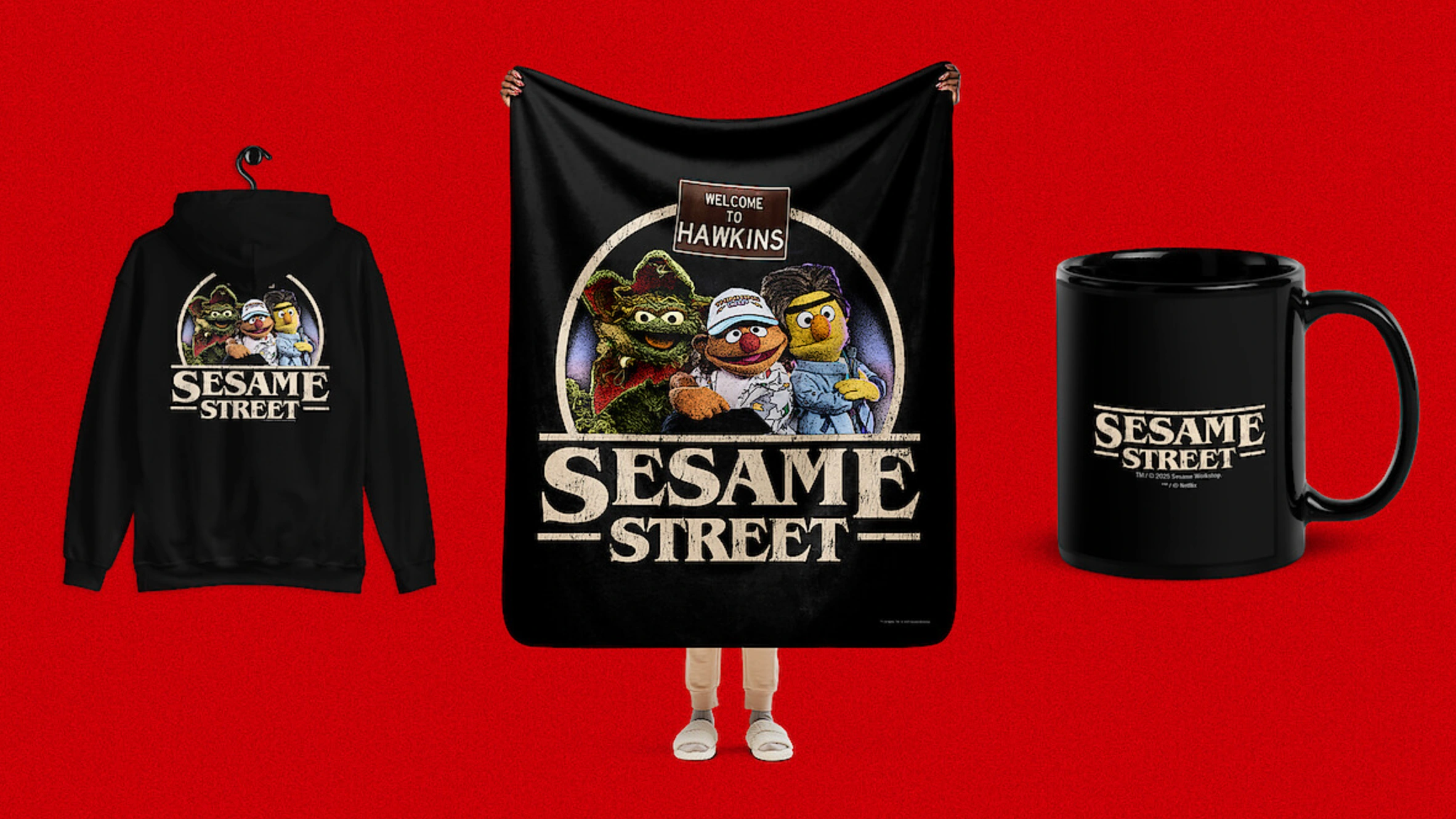
Adweek highlighted specific executions that map to everyday behavior: Doritos limited flavors and packaging, Eggo limited packs, and Gatorade product returns. (Adweek)
Food and beverage as ritual
Food works because it is already shared. It does not require a new habit.
Marketing Brew also reinforced that Stranger Things brand moments have historically felt authentic inside the show’s world, and noted Netflix previously said earlier brand moments in the show were not paid integrations. It also cited Eggo reporting a spike in social mentions and a sales lift around Season 2. (Marketing Brew)
The lesson: the best product collaborations are not random. They are narrative-consistent and behavior-consistent.
Collectibles, games, and formats built for sharing
Collectibles are marketing when they are designed to be shown.
Adweek and License Global both called out gaming partnerships and branded play formats, including collaborations that bring Stranger Things into existing game ecosystems. (Adweek)
For most brands, the equivalent is “artifact design”:
- A template people want to copy.
- A physical mailer worth keeping.
- A limited digital asset that signals membership.
- A partner bundle that solves a real task.
If the object is only decorative, it will be forgotten quickly. If it is useful or identity-relevant, it will travel.
The creative system: nostalgia, constraints, and brand safety
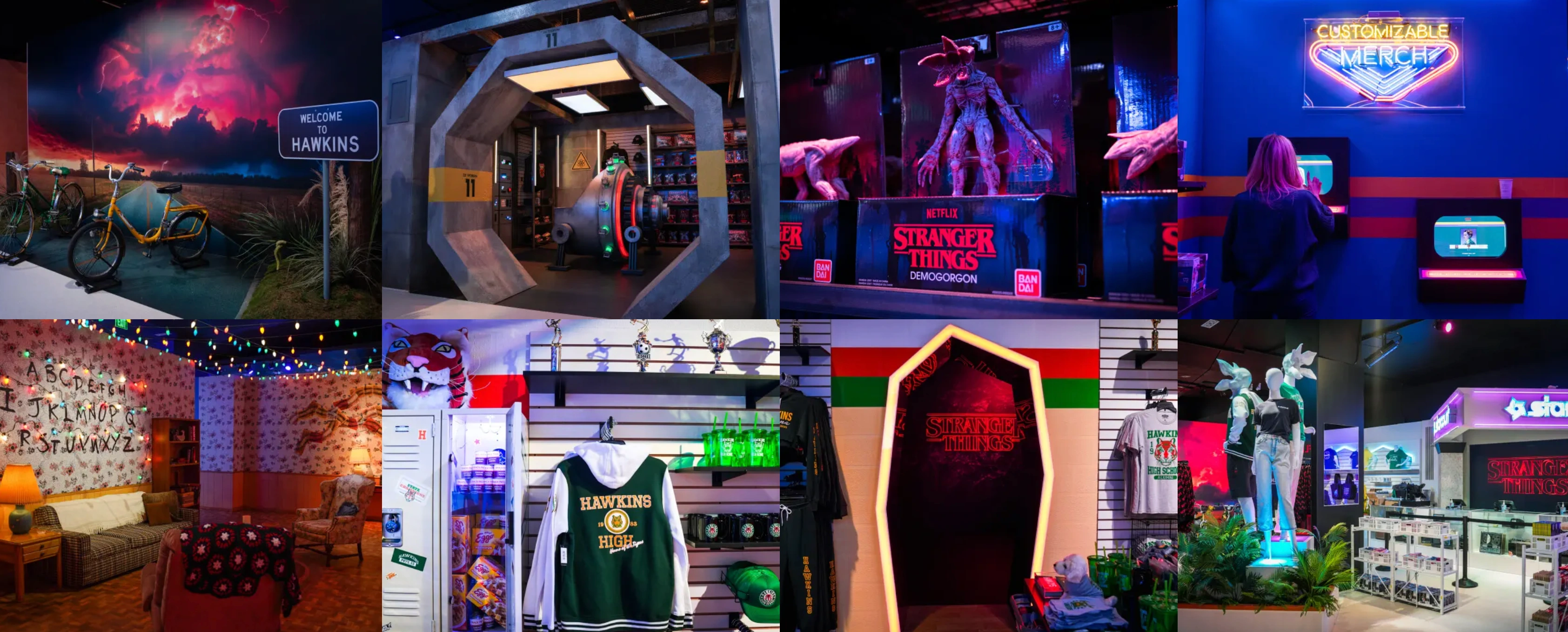
A common mistake in nostalgia marketing is treating the past as decoration. Season 5 used the 1980s as a system: a consistent set of cues that partners could adopt while staying recognizable.
That system showed up across campaigns described in trade coverage: retro packaging, period-style creative, and a repeated “Upside Down” concept that works visually across categories. (Adweek)
Constraints are not limiting. They are what allow scale without chaos.
The 1980s aesthetic as a design system
If you want coherence across many touchpoints, define:
- Color and typography rules
- Photography and illustration rules
- A small set of repeatable motifs
- A voice guide for copy
- Layout patterns for digital and physical media
In practice, this is not only “brand.” It is a production tool. It reduces review cycles and prevents off-model executions.
Accessibility and performance still matter
When attention spikes, experience quality matters more, not less.
If you run campaign hubs or product drops, ensure basics are covered:
- Mobile readability and tap targets
- Fast load performance during peaks
- Accessible contrast and keyboard navigation
- Clear, descriptive links and predictable layout
These are not only usability choices. They affect discoverability and conversion.
If you want a grounded checklist for how UX supports search and engagement, this is a useful reference point: (Designing for SEO: UX/UI essentials)
.webp)
What B2B and non-entertainment brands can borrow
Most brands do not have a decade of fandom. They do have something audiences can care about: a problem solved, a community served, a standard raised, a transformation enabled.
The transferable lesson is the system, not the IP.
The story to system framework
Use this framework to translate a “campaign idea” into a repeatable launch system.
- Story
- One clear narrative people can repeat in a sentence.
- Surfaces
- Where the story appears: site, email, social, retail, partners, events.
- Actions
- What people can do: try, book, download, attend, share, refer.
- Signals
- Proof that action happened: badges, receipts, UGC templates, confirmations.
- Measurement
- A small set of metrics per layer, so you do not confuse reach with outcomes.
This is how entertainment marketing becomes useful to an executive team. It turns creativity into a managed system.
A co-marketing checklist that reduces risk
Before you sign a partner, run this checklist.
- Audience overlap: is there real adjacency, not just scale.
- Value exchange: what does each side give and receive.
- Integration depth: which ladder rung are you targeting.
- Creative governance: who approves what, on what timeline.
- Legal and privacy: what data is captured, how it is stored, how consent is handled.
- Operational readiness: support tickets, inventory, fulfillment, on-site ops.
- Measurement plan: what will be reported, and when.
If your business depends on partner ecosystems, this is a strategic advantage. It reduces risk and speeds execution.
Measurement and governance: making the campaign repeatable
The biggest difference between a strong launch and a strong marketing organization is governance. Repeatability comes from decisions being recorded, not rediscovered.
Season 5 coverage makes clear the campaign spanned many layers: social impressions, retail drops, and a large set of experiences and partnerships.
To manage something similar, align measurement to the layer.
KPIs that match each layer of the campaign
A practical model:
- Awareness layer
- Reach, share of voice, earned impressions, branded search lift
- Consideration layer
- Time on page, video completion, email sign-ups, event RSVPs
- Conversion layer
- Trial starts, demos booked, purchases, partner sell-through
- Retention layer
- Repeat visits, repeat purchases, renewals, referrals
Avoid collapsing everything into one metric. That is where teams start arguing instead of improving.
Approval workflows and partner guardrails
Document these, even if you are moving fast:
- Brand usage do’s and don’ts
- Safe topics and off-limits topics
- Approval stages and maximum turnaround times
- Asset naming, version control, and final file storage
- A single “source of truth” hub for partners and internal teams
If your team is also trying to improve search performance while you scale content and launches, make sure the technical foundations are owned. (SEO services at Brand Vision)
.webp)
Launch checklist: an implementation template
Use this as a practical template for your next major launch, whether it is a product, a platform release, or a campaign tied to a seasonal moment.
- Define the attention calendar
- 3 to 5 moments, not one launch day
- One reason to show up at each moment
- Build the campaign hub
- Clear IA: what, why, how, and next action
- Monitoring plan for traffic spikes
- Accessibility checks before launch
- Design partner roles
- Portfolio across reach, context, format, distribution
- Integration ladder rung for each partner
- Create participation mechanics
- One interactive hook that invites action
- One shareable artifact people want to post
- Plan experience capture
- Event content plan and permissions
- Clear follow-up sequences
- Establish governance
- Approval workflow and guardrails
- Measurement plan per layer
A calm next step for teams that want this level of coordination
Stranger Things Season 5 marketing worked because it treated distribution, experience, and partnerships as one coordinated system. That is the part worth borrowing.
If your team is planning a launch that needs to hold attention across multiple weeks and multiple channels, the first step is usually not more content. It is a clearer structure: a campaign hub, a usable creative system, and a partner plan that is governed rather than improvised.

%2520(1).png)
.png)